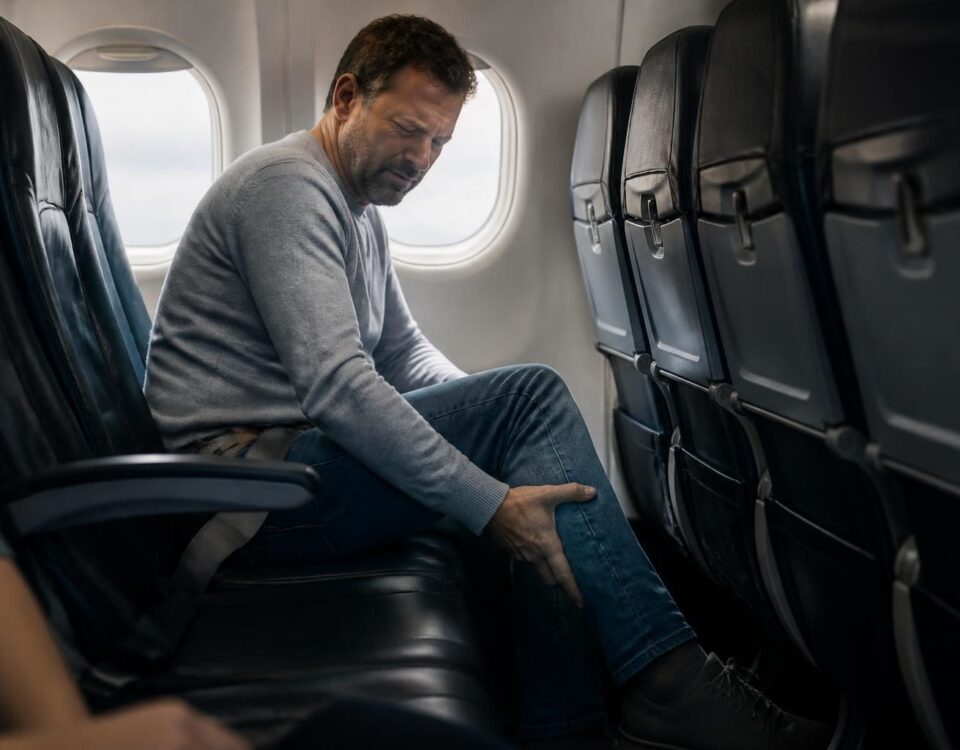
Herniated disc and driving: why symptoms may worsen
29/08/2026
Sciatica in Montreal: pain that radiates down the leg when coughing
30/08/2026
IN BRIEF
| What is sciatica in drivers? It is pain that can radiate down the leg after several hours of driving, often related to prolonged sitting and an imbalanced pelvis. What are the benefits? Adopting a suitable posture and taking regular breaks can relieve, prevent relapses, and improve comfort on the road. How does it work? By reducing immobility, rebalancing the pelvis, and promoting micro-movements and smooth breathing, you decrease tension on the nerve and gradually regain mobility during trips. In Montreal, this advice is particularly useful for long-haul drivers. |
For sciatica in drivers, pain can radiate down the leg after several hours of driving. The issue is not the driving itself, but the posture and mechanical context: prolonged sitting, imbalanced pelvis, vibrations, and stress that increase tension on the nerve.
- Typical symptoms: pain that appears after 20-30 minutes, relief upon exiting the vehicle and after walking; sometimes the area can extend to the buttock or back.
- Good reflex: adjust the seat so that the hips are slightly above the knees and maintain a fluid posture; avoid stiffening.
- Trip management: take breaks every 30 to 45 minutes, walk for a few minutes, and practice calm breathing to relieve tensions.
- Leg position: knee slightly bent, foot on the pedal without full extension; avoid keeping the leg constantly tense.
- Long-term goal: improve mobility and daily movements to gradually reduce pain while driving.
This article, written by a health professional, explains why sciatica can manifest in drivers after several hours of driving. It describes the simple mechanisms, typical signs, and practical measures to limit pain in the leg. The aim is to keep moving, improve posture, and organize effective breaks without risks.
Causes and mechanisms in drivers
Sciatica is the pain that follows the path of the sciatic nerve. In drivers, three elements play a key role: a prolonged seated position, a misaligned pelvis while driving, and vibrations that fatigue the muscles. These factors can irritate the nerve and increase pain in the leg, without necessarily causing a serious injury. The problem is generally functional and reversible when posture and rhythm of trips are adjusted.
Signs and safety
Typical signs include pain appearing after a trip, sometimes radiating down the leg, which can decrease with walking or upon exiting the vehicle. The pain may be stronger than in the lower back. In cases of marked weakness, difficulty in lifting the foot, or significant loss of sensitivity, it is important to consult quickly.
Road management and practical tips
Driving should be accompanied by simple adjustments and regular breaks. Adjust the seat to reduce lumbar pressure, keep the knees slightly bent, and avoid sudden twists. The upper body should remain relaxed, and breathing should be smooth to decrease tension in the pelvis and buttock. Plan breaks every 30 to 45 minutes. During these breaks, walk, breathe deeply, and gently mobilize the pelvis to get the nerve circulating again.
Driving position and breaks
The ideal position involves a slightly tilted seat, hips slightly above the knees, and the pelvis stable without excessive arching. The leg should remain slightly bent and the foot placed on the pedal without full extension. The upper body should be free; shoulders remain relaxed, and breathing aligns with the body’s rhythm. Regular breaks are more effective than prolonged maintenance of the same position.
When to consult and care options
If the pain persists despite adjustments and breaks, or if it is accompanied by notable weakness, obtaining a professional evaluation is useful. A coordinated approach may be considered to adapt work and commuting, and to guide toward available services in your area. For additional resources and advice, you can check information on Sciatica and calf pain after driving and Sciatica in Terrebonne: lumbar pain with shooting pain in the leg. Other useful resources can be found on neurovertebral decompression and on CliniQUE TAGMED.
For comprehensive and personalized approaches, certain clinical facilities offer specialized assessments and concrete advice for drivers. Visit the pages of the resources mentioned above for information tailored to your situation.
Medical disclaimer: The information and advice provided on this site do not replace the opinion, diagnosis, or treatment of a healthcare professional. Please note that Dr. Sylvain Desforges, osteopath, is neither a doctor of medicine nor a physician, and is not a specialist in a medical specialty as defined by the Collège des médecins du Québec. Manual therapy, functional medicine, and sports medicine as described on this site exclude any treatment or medical diagnosis made by a physician or specialist. Always consult your doctor for any medical questions. For more details, please read our full Legal Notice.
- Prolonged seated position limits micro-adjustments and stresses the sciatic nerve.
- Misalignment of the pelvis and slight rotation increase traction on the nerve.
- Vibrations and postural fatigue increase tension and nerve sensitivity.
- Stress and muscle tension elevate muscle contraction and pain.
- Long trip pain worsens after several hours of driving.
- Regular breaks every 30–45 minutes: get out, walk, breathe, loosen the pelvis.
- Seat adjustment slight incline, hips above the knees, pelvis supported without arching.
- Leg position knee slightly bent, foot within reach of the pedal.
- Upper body relaxed shoulders, loose arms, smooth breathing.
- Active breaks 2–5 minutes of pelvic and hip mobilization.
- Avoid sudden twists and bends when getting in and out or lifting.
- Comfort adjustments lumbar cushion useful if compatible with posture.

If you are a driver and pain in the leg occurs after several hours at the wheel, you are looking for concrete solutions to remain effective on the road. This article offers you simple and effective adjustments on posture, breaks, and mobility to relieve Sciatica without radically changing your work rhythm.
Why pain occurs in drivers
Driving combines several unfavorable factors for the sciatic nerve: prolonged seating position, a little mobilized pelvis, and micro-shifts that pull the leg asymmetrically. Vibrations and postural fatigue also increase nerve sensitivity, and pain can gradually develop over a long drive.
Sciatica and pain that appears after a few minutes of walking
IN BRIEF Sciatica is a pain that follows the path of a nerve root from the lower back down to the leg. When it appears after a few minutes of walking, it indicates nerve irritation or compression, often due to…

Sciatica and prolonged walking: why does the pain increase?
IN BRIEF In brief, sciatica is pain that follows the path of the sciatic nerve and can intensify during prolonged walking, especially in the presence of lumbar stenosis or a herniated disc. The goal is an active and tailored management…
Seat adjustments and driver posture
Seat adjustment
Adjust the seat so that the pelvis is slightly supported and that the hips are above the knees, without excessive arching. Slightly incline the backrest to limit lumbar pressure and avoid a rigid posture that does not allow sufficient mobility.
Leg and foot position
Keep knees slightly bent and ensure that the foot can reach the pedal without fully extending the leg. Balanced supports avoid repeated traction on the sciatic nerve and reduce the risk of pain after several hours of driving.
Release the upper body and improve breathing
Relaxed shoulders, loose arms, and smooth breathing help to decrease tension in the pelvis and buttocks. Controlled breathing can positively influence pain tolerance and comfort over long distances.

Sciatica and walking: helpful or aggravating?
IN BRIEF In brief, sciatica and walking is the analysis of whether walking can help or worsen pain related to the sciatic nerve. What is it? Sciatica is pain that radiates from the lower back down the leg, often due…

Sciatica and travel return: pain that travels down the leg
IN SHORT Sciatica is pain that runs down the leg, caused by irritation or compression of the sciatic nerve. In the context of return from travel, it may appear after long trips or repetitive movements. In practice, understanding this mechanism…
Trip management: breaks and movements
Frequency and nature of breaks
Plan breaks every 30 to 45 minutes and get out of the vehicle for a few steps. Micro-movements allow circulation to resume and avoid the accumulation of tension around the sciatic nerve.
What to do during breaks
Walk for 2 to 5 minutes, breathe deeply, and gently move your hips. Avoid immediately sitting in another seat; alternating between walking and resting reduces pain and eases the return to driving.

Sciatica and travel: how to recognize a worsening
IN BRIEF In brief, sciatica and travel describe the worsening of sciatic pain during a trip, with radiation into the leg and radicular signs. Benefits: it allows for quick identification of warning signs, adjustment of breaks and movements, and traveling…
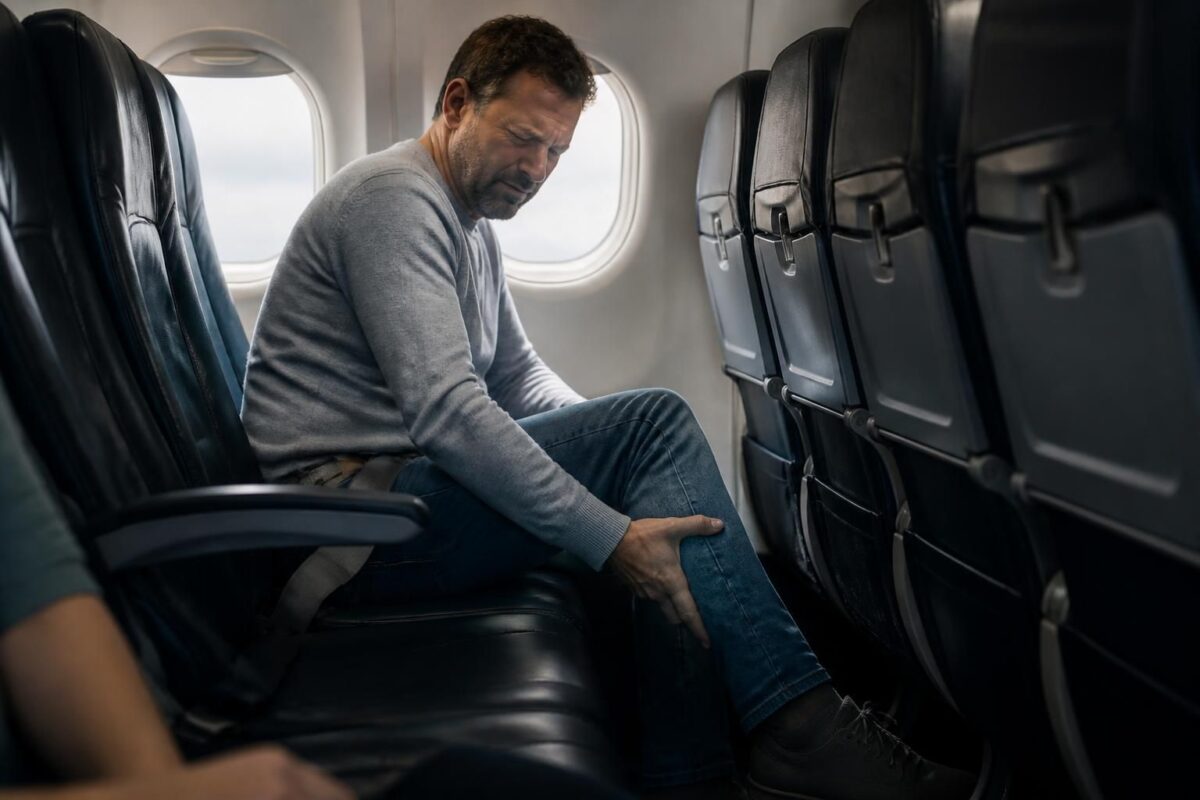
Sciatica and airplane: prolonged sitting and leg pain
IN BRIEF In brief, sciatica related to prolonged sitting on the plane describes pain that arises or worsens when one remains seated for long periods during a flight, due to pressure on the lumbar discs and the sciatic nerve. How…
Longer driving without pain
Adopt a daily mobility routine
Incorporate micro-stretches and simple exercises that promote mobility of the pelvis and lumbar region, without excessively straining the sciatic nerve. The more your body moves throughout the day, the less problematic driving becomes.
Postural awareness and stress management
Maintain a dynamic posture while driving: micro-adjustments, conscious breathing, and relaxation of the back and buttock muscles. Stress can increase muscle tension and exacerbate pain; managing these elements helps to drive longer with comfort.

Sciatica and train: pain after a long journey
IN BRIEF In brief, Sciatica after a long train journey is pain that radiates along the sciatic nerve after long periods of sitting. The problem often arises from an inadequate posture and a poorly mobilized pelvis during the trip. The…

Sciatica and subway: stay standing or seated?
IN BRIEF In short, sciatica and metro: staying standing or sitting is a practical question for daily commutes. The goal is to manage pain without restricting mobility, favoring appropriate postures and micro-breaks to avoid twists and asymmetrical loads. Main benefits:…
Warning signals and when to consult
If the pain lasts longer, if you experience a loss of strength in the leg or neurological issues, it is important to consult a professional promptly. An appropriate assessment allows for adjustments in exercises and treatments to safely return to the road gradually.
| Element | Concise observation |
|---|---|
| Prolonged sitting position and pelvic imbalance | Pain that worsens after several hours and resolves upon getting out of the vehicle. |
| Pelvis and rotation | Slight rotation of the pelvis pulls the sciatic nerve, especially on long trips. |
| Vibrations and postural fatigue | Muscle fatigue that increases nerve sensitivity and pain. |
| Stress and vigilance | Stress and muscle tension that amplify discomfort. |
| Typical driving signs | Progressive pain, improvement at a stop, absence of loss of strength. |
| Aggravating elements | Seat too far back, rigid back, leg constantly tight, and trips without breaks. |
| Seat adjustment | Slightly inclined seat, hips near the knees, pelvis supported without excessive arching. |
| Leg position | Knee slightly bent, foot on the pedal without full extension. |
| Breathing and upper body | Relaxed shoulders, smooth breathing to reduce tension in the lower back. |
| Breaks and mobility | Break every 30-45 minutes, walk 2-5 minutes and gentle mobilization. |
Drivers’ testimonials on sciatica: leg pain after several hours
“As a professional driver, I spend hours at the wheel and, after several hours, it’s the pain in the leg that shows up. My buttock burns and my leg feels heavy. By adjusting the seat and taking regular breaks, I regained comfort and can continue driving without pain overwhelming the rest of my day.”
“The sciatica wouldn’t leave me on long trips: pain in the leg that intensifies with vibrations and immobility. I started using a lumbar cushion and varying my position every 30 minutes; since then, relief is immediate during driving and lasting after arriving.”
“The vibrations and lack of adjustments made everything more painful on long drives. I impose breaks every 30 to 45 minutes and do micro-movements of pelvis rotation. Result: the pain in my leg decreases and I can finish my journeys without grimacing.”
“After several hours behind the wheel, the pain often intensifies when I have to lift my foot or tilt my pelvis. Today, I adjust the seat so that my hips are slightly above my knees and I incorporate micro-movements. The sciatica calms down and the pain in my leg becomes less noticeable.”
“The most important thing is to listen to your body. When I feel a strain, I stop, breathe, and do gentle pelvic movements. Thanks to this, my daily commutes no longer turn into a trial and the pain in my leg becomes more tolerable after a few minutes of walking.”
“As a driver, we often seek quick relief. Proper seat adjustments, regular breaks, and simple exercises have allowed me to significantly reduce symptoms related to sciatica while driving. Outside the vehicle, on days when I stay active, the pain in my leg is significantly less present upon arrival.”
Dr. Sylvain Desforges, a recognized expert in osteopathy, naturopathy, and manual medicine, embodies an approach focused on innovation and efficiency. As the founding president of TAGMED clinics and head of the ACMA association, he unites rigorous clinical practice with a constant search for new solutions. His journey illustrates a continuous quest to improve care for patients suffering from chronic pain and musculoskeletal dysfunctions.
His approach is based on a simple conviction: each patient is unique and deserves care based on evidence. In the complex field of sciatica, he prioritizes a comprehensive assessment that combines the principles of osteopathy, manual medicine, and complementary approaches to identify the real cause and propose a personalized plan. He is particularly interested in integrating advanced technologies such as spinal decompression, laser therapy, and shockwave therapies to optimize rehabilitation and speed the return to normal activity.
For drivers, pain radiating down the leg after several hours of driving is not just a common ailment; it is often a sign of an unfavorable physical and mechanical context: prolonged sitting, limited pelvic mobility, vibrations, and muscle tensions. Dr. Desforges proposes a multidisciplinary and progressive approach aimed not only at relieving pain but also at restoring pelvic dynamics, reducing tension on the sciatic nerve, and preventing recurrences during long trips.
His method combines precise manual techniques, ergonomics advice, and targeted exercises, tailored to each driver’s profile. The goal is to release tensions, improve pelvic mobility, and restore smooth breathing, which directly influences posture and the relaxation of muscles around the pelvis. Additionally, technologies such as laser and shockwave therapy sessions can be employed when symptoms persist, to increase circulation, promote tissue healing, and release stubborn points of tension.
Specifically, the management of a driver suffering from sciatica revolves around a precise diagnosis, followed by an adaptable treatment plan: optimizing the initial position in the vehicle, establishing regular active breaks, proposing mobility exercises, and breathing techniques to reduce overall tension. The aim is to create a daily routine that allows for pain-free driving while strengthening preventative mechanisms for future trips.
Dr. Desforges firmly believes that the road to relief involves appropriate education, simple actions, and coordination with other professionals when necessary. This patient-centered care philosophy, based on evidence, allows for transforming a pain associated with driving into a more serene and sustainable driving experience. To discover his approach and the services offered by his teams, contact TAGMED clinics and engage in a personalized and effective process.
This brief summary reminds us that sciatica sometimes manifests as pain in the leg after several hours of driving. For drivers, the pain often arises from a mechanical context and prolonged sitting position. This article details the causes, practical actions for pain-free driving, and warning signals, with useful resources for further exploration.
Causes and mechanisms specific to driving
Driving brings together several factors that strongly mobilize the sciatic nerve. The pelvis is minimally mobile over long periods, micro-adjustments are rare, and the nerve glides less, which can cause pulling sensations. Postural imbalance is common: a tighter right leg, uneven support, and slight pelvic rotation can lead to asymmetric tension on the nerve, especially on long trips. The vibrations from the road and postural fatigue exacerbate tension and increase nerve sensitivity. The stress and vigilance required for driving add another muscular component that can amplify pain.
Simple actions to relieve and prevent
To limit pain, prioritize an appropriate sitting posture and regular breaks. Adjust the seat: a slight tilt, height that places the hips slightly above the knees, and pelvis stabilized without excessive arching. Position the legs with one knee slightly bent and feet reaching the pedals without forced extension. Relax the upper body and emphasize smooth breathing to reduce tension in the pelvis and buttock. Breaks every 30 to 45 minutes, with 2 to 5 minutes of walking and some gentle pelvic movements, often do more good than any perfect seat adjustment.
Practical resources and comprehensive methods on driving with sciatica are available here: Sciatica and car: why driving can worsen the pain, and Driving and sciatica: relieving pain.
Warning signs and when to consult
Note the signals that require professional evaluation: loss of strength in the leg, sudden difficulty in raising the foot, significant paresthesia, urinary or bowel disorders, fever or general malaise. Pain that improves upon getting out of the car and mainly hinders walking is generally functional and reversible, but persistence or worsening merits a medical opinion.
Action plan for trips and daily life
To drive sustainably without pain, combine daily mobility, proper posture, and gradual trip progression. Work on active breaks and gentle pelvic exercises, and prioritize shorter trips with frequent stops. The integration of a lumbar cushion can help, provided it does not impose a rigid posture. For further exploration, consult resources and testimonials that address similar cases and practical advice.
To broaden perspectives and find concrete cases, you can explore additional testimonials and advice on these sites: calf pain and significant lumbar pain, pain that extends below the knee, deep gluteal pain and radiation in the thigh, car and sciatica, and increased pain in the car, permanent numbness.
For structured and personalized support, you may consider a progressive plan that combines education, exercises, and daily adaptations. Additional resources and guided formats can be accessed through the links above and the recommended partners.

Dr Sylvain Desforges, B.Sc., D.O., N.D., osteopath, is the founding president of TAGMED and of the ACMA association. He dedicates his practice to chronic spinal pain, low back pain and symptoms compatible with sciatica, particularly when pain radiates toward the buttock, leg, calf, foot or toes.
Through SOS Sciatique, he publishes educational content on sciatica symptoms, possible causes such as disc herniation, disc narrowing, foraminal stenosis or irritation of a lumbar nerve root, as well as non-surgical approaches that may be considered according to the evaluation. At Clinique TAGMED, care may include, depending on the case, motorized neurovertebral decompression, specific osteopathic care or precision percussion.
For an evaluation related to sciatica treatment in Montreal / Mount Royal or sciatica treatment in Terrebonne, please consult the services available at Clinique TAGMED.
Medical disclaimer
The information published on SOS Sciatique is provided for educational purposes only and does not replace a consultation, diagnosis, opinion or treatment provided by a physician or another authorized healthcare professional. The author of this article is neither a medical doctor nor a specialist in a medical specialty recognized by the Collège des médecins du Québec. The osteopathic, manual medicine or functional support approaches described on this site do not constitute medical acts and are not intended to replace medical follow-up.
Consult a physician or emergency service in cases of loss of bladder or bowel control, anesthesia in the saddle area, significant or progressive weakness in the leg or foot, fever, recent trauma, severe pain or rapid worsening of symptoms. For more details, please read our Legal Notice.