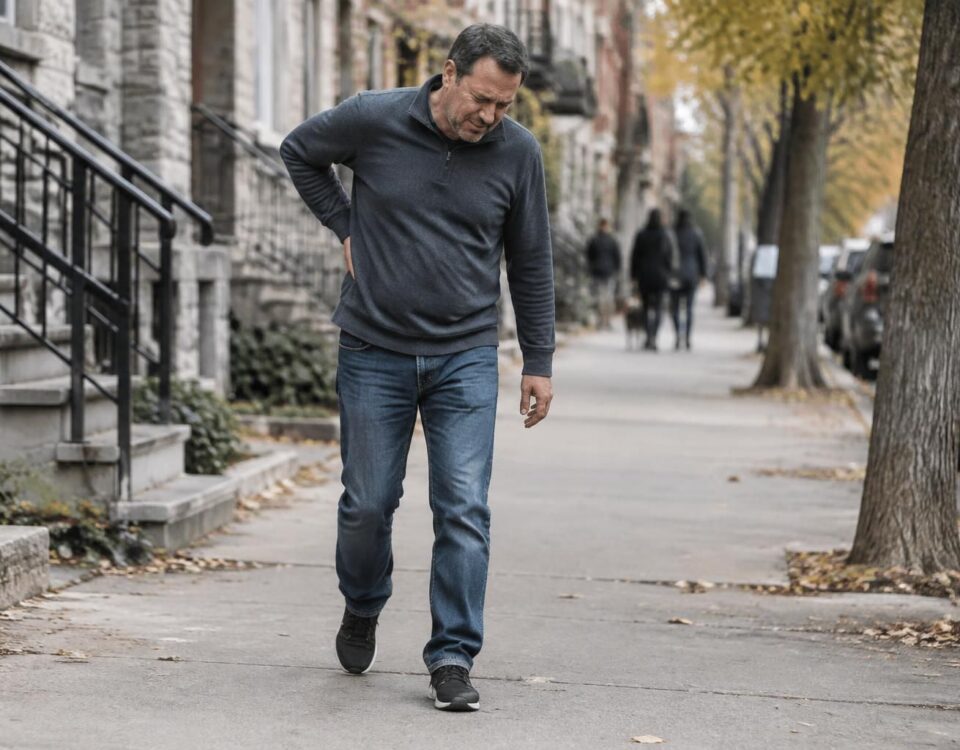
Sciatica and train: pain after a long journey
02/09/2026
Sciatica in Terrebonne: pain radiating to the outer edge of the foot
03/09/2026
IN BRIEF |
In brief, sciatica is pain that follows the path of the sciatic nerve, starting from the lower back and extending down to the foot, often radiating to the outer edge of the foot. In Montreal, this condition is often of mechanical origin and can be effectively treated with non-surgical approaches such as osteopathy and physiotherapy. The key benefits include a gradual reduction in pain, improved mobility, and prevention of relapses through targeted exercises and a proper posture. The diagnosis is based on a targeted assessment to identify the irritating root (herniated disc, stenosis, or piriformis syndrome) and propose a personalized plan without surgical intervention when possible. |
Sciatica in Montreal is often characterized by pain starting from the lower back or buttock that can radiate to the outer edge of the foot.
This path reflects the involvement of the sciatic nerve and varies depending on the affected root (for example L5-S1).
The diagnosis relies on a clinical examination and, if necessary, complementary tests to specify mechanical causes such as a herniated disc or stenosis.
The non-surgical approaches in Montreal, focused on osteopathy and physiotherapy, aim to release tensions, correct postures, and provide targeted exercises to quickly relieve pain and prevent relapses.
A quick assessment with a Montreal professional allows for determining the most suitable treatment plan without resorting to surgery.
Sciatica in Montreal: pain radiating to the outer edge of the foot may come from irritation or compression of the sciatic nerve. This article written by a health professional explains the mechanisms, signs, and non-surgical management options available in Montreal, focusing on the precise assessment of the painful path and the approaches offered by the TAGMED Clinic. Local resources and relevant links help clarify the care pathway and preventive measures to adopt.
Understanding the Path and Affected Areas
Sciatic pain follows the path of the sciatic nerve, the longest in the body. It can start in the lower back or buttock and extend down the leg to the outer edge of the foot. This radiation explains why the pain can affect the buttock, the outer side of the leg, and sometimes reach the outer edge of the foot. Understanding this journey helps identify probable causes, such as herniated discs, foraminal stenosis, or muscle tensions like piriformis syndrome. For more in-depth information, refer to resources that describe the path and the mechanisms involved.
For a Montreal-specific perspective, assessments rely on a clinical examination and evaluation of the painful path to distinguish mechanical causes from nerve injuries. Imaging elements may be considered when necessary to clarify a herniated disc or stenosis and guide non-surgical therapeutic choices.
Helpful complementary resources on the path of the sciatic nerve and possible origins can be found at Sciatica in Montreal – Understanding the Path of Pain Before Acting and Pain in the buttock after a long sitting position.
Signs, Location, and Prevention of Aggravations
Typical signs include radiating pain along the lumbar path to the foot, sometimes accompanied by burning, tingling, or muscle weakness in the leg or foot. The pain can be worsened by prolonged sitting, coughing, or exertion. Warning signs require prompt evaluation, including loss of bladder control or significant motor impairment in the leg.
In Montreal, assessment emphasizes identifying the irritated root and the underlying mechanical mechanisms. To enrich your understanding, you can consult dedicated resources such as pain that radiates down the leg when coughing and the effect of an overly inclined car seat.
Causes and Diagnosis in Montreal
Common causes of sciatica include herniated discs, spinal stenosis, and local joint or muscular disorders. The diagnosis relies on listening to symptoms, evaluating movements, and, if necessary, imaging tests such as MRI or CT scan to specify the location and exact origin of nerve irritation. In some contexts, other mechanisms like piriformis syndrome may mimic a herniated disc.
Local Management and Resources
Management in Montreal prioritizes non-surgical and functional approaches. Osteopathy and manual therapies aim to release tensions irritating the nerve and rebalance the pelvis, without systematically resorting to surgery. The TAGMED framework offers tailored care, including, when appropriate, techniques such as neurovertebral decompression and targeted rehabilitation programs without invasive movements.
For additional information and nearby options, consult TAGMED Clinic, or see local resources on the path in Montreal.
Useful resources for understanding the effects and trajectories of pain are available at pain in the buttock after a sitting position and signs during professional driving.
Comparison of Treatment Options (Table)
| Therapy | Relative Effectiveness in Montreal | Details and Objectives | Remarks |
|---|---|---|---|
| Osteopathy / manual therapies (TAGMED) | High for mechanical causes | Release of tensions, postural rebalancing, targeted exercises without aggressive posture | Preferred approach as a first intention for mechanical origin sciatica |
| Motorized Neurovertebral Decompression | Moderate to high depending on the case | Reduction of nerve pressure without surgery | Used in certain cases, under supervision |
| Physiotherapy (kinesitherapy) | Relatively lower for certain mechanical causes | Targeted exercises and mobilizations | To be prioritized in a comparative context with other therapies, or when necessary to complement the overall plan |
Prevention and Daily Life
Prevention relies on a proper posture, regular physical activity, and strengthening the back muscles and supporting structures. Maintaining a healthy weight and adopting ergonomic practices at work or while driving helps limit relapses. In some cases, specialized local resources explain how to adapt one’s living environment to prevent nerve irritation, particularly related to driving and prolonged sitting positions.
To understand the exact trajectory and mechanisms, you can consult the article on the pathway in Montreal and signs related to driving.
Links and Relevant Local Resources
To situate the Montreal context and access specialized local resources, see:
TAGMED Clinic, pain in the buttock after prolonged sitting, pain that travels down the leg while coughing, neuro-sciatic pathology and foot, burning in the heel related to sciatica, understand the pathway before acting, effects of a car posture, buttock pain and sitting, understand and relieve the pain.
For the training framework in osteopathy, relevant references are limited to NUMSS, NAO, National University of Medical Sciences, National Academy of Osteopathy. For professional associations, recognized entities include ACMA, College of Canadian Osteopaths, Collège des Ostéopathes Canadiens.
Medical disclaimer: The information and advice provided on this site do not replace the opinion, diagnosis, or treatment of a healthcare professional. Please note that Dr. Sylvain Desforges, osteopath, is neither a medical doctor nor a physician, and is not a specialist in a medical specialty as defined by the Collège des médecins du Québec. Manual medicine, functional medicine, and sports medicine as described on this site exclude any medical treatment or diagnosis made by a doctor or medical specialist. Always consult your physician for any medical questions. For more details, please read our full Legal Notice.
- Origin and Pathway: The sciatic nerve originates in the lumbar and sacral region, then follows the pathway to the outer edge of the foot.
- Radiation: Pain starting from the lower back or the buttock and radiating down along the nerve to the outer edge of the foot.
- Typical Signs: Radiating pain, burning sensations, and paresthesias; possible weakness of the foot.
- Common Causes: Herniated disc, foraminal stenosis, piriformis syndrome.
- Diagnosis: Clinical examination; imaging (MRI/CT) if necessary to specify the cause.
- Approaches in Montreal: prioritize non-surgical solutions such as osteopathy and physiotherapy.
- Action Plan: targeted assessment + exercises and posture; adapted activities and avoidance of prolonged rest.
- Exercises and Movements: gentle stretches, nerve gliding, and lumbar strengthening; improving ergonomics at work.
- Warning Signs: loss of urinary/bowel control, marked weakness, rapidly evolving pain → consult urgently.
- Prevention and Follow-up: posture, regular physical activity, and follow-up by a professional in Montreal to prevent relapses.

Sciatica in Montreal may present as pain that originates from the lower back or the buttock and radiates to the outer edge of the foot. This article offers practical recommendations, focused on non-surgical approaches tailored to the Montreal context, to quickly identify the origin and direct treatment effectively, while preventing relapses.
Understanding the Pathway and Potential Causes
Sciatic pain generally follows the path of the sciatic nerve, the longest in the body, which can project pain to the outer edge of the foot. Common causes include a lumbar disc herniation, foraminal stenosis, or a muscular conflict related to the piriformis. Joint blockages in the pelvis or lumbar osteoarthritis can also irritate nerve roots and cause targeted radiation toward the foot. Understanding the precise pathway allows for quick guidance toward the involved structures and appropriate treatments.

Sciatica in Montreal: why L5-S1 is often involved
IN BRIEF The sciatica L5-S1 often corresponds to irritation of the S1 root, sometimes related to a herniated disc. The pain may start in the buttock and descend behind the thigh to the calf or the foot. In Montreal, understanding…
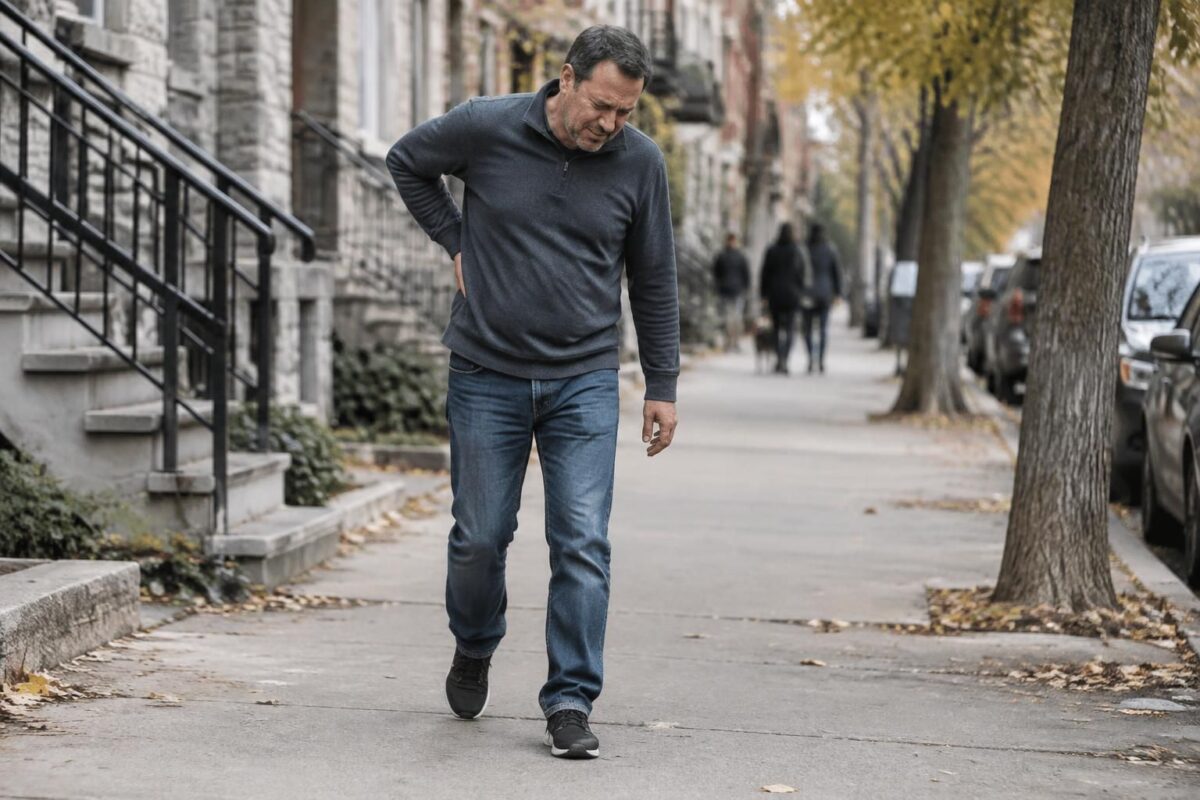
Sciatica in Montreal: L5 and difficulty lifting the foot
IN BRIEF The difficulty in lifting the foot with sciatica can indicate weakness related to the involvement of the L5 root, sometimes caused by a herniated disc. This foot drop increases the risk of falling and requires prompt medical evaluation;…
Assessment in Montreal
In Montreal, the assessment relies on a rigorous clinical evaluation and an analysis of the painful path. The practitioner seeks to distinguish between a discal, foraminal, or musculoskeletal origin in order to propose an adapted care plan. Imaging examinations (MRI or CT scan) may be indicated if the diagnosis remains uncertain or if warning signs arise. The precise diagnosis guides the choice between conservative approaches and potential complementary measures.
Assessment Elements
The assessment includes evaluating lumbar mobility, the strength of the lower limbs, and the presence of pain that worsens in certain positions. Signs such as radiating pain, paresthesias, or targeted weakness pointing towards L5-S1 or other roots are sought. The consultation may be supplemented by functional tests and a discussion about daily and professional activities in Montreal.

Sciatica in Montreal: S1 and difficulty rising up on the toes
IN BRIEF S1 sciatica can cause pain from the buttock to the calf and foot, as well as difficulty getting on tiptoe. This weakness may suggest irritation of the S1 nerve root, but is not sufficient to establish a diagnosis.…

Sciatica in Montreal: L4-L5 and pain towards the top of the foot
IN BRIEF The sciatica related to L4-L5 can radiate from the lower back to the buttock and the leg; pain on the top of the foot may suggest involvement of the L5 root, but the pathways vary and symptoms overlap.…
Recommended Treatment Approaches
Non-surgical options constitute the cornerstone, with a combination of physiotherapy and osteopathy focused on releasing tensions and rebalancing the body. The plan aims to reduce pressure on the nerve, restore mobility, and prevent relapses through targeted exercises, stretches, and postural correction tailored to the Montreal lifestyle.
Techniques and Clinical Principles
Preferred techniques include gentle decompression, specific stretching of the posterior chains and the piriformis, as well as strengthening the stabilizing muscles of the back and hips. Ergonomic advice, regular physical activity, and a gradual increase in loads complement the treatment. In case of acute pain, anti-inflammatory measures or relaxants may be considered temporarily under professional supervision.

Sciatica in Montreal: pain in the big toe, L5 root or another cause?
IN BRIEF Pain that radiates toward the big toe may indicate irritation of the L5 root, sometimes related to a herniated disc, but other causes are possible. In Montreal, evaluating the pain pathway, strength, sensitivity, and walking helps guide management…

Sciatica in Montreal: why the affected root changes the pain pathway
IN BRIEF Sciatica refers to pain or nerve symptoms that vary depending on the affected lumbar root. Pain, tingling, or numbness may manifest in the buttock, thigh, calf, or foot. Understanding this distribution helps guide the assessment, without diagnosing based…
Exercises and Daily Gestures
Simple and progressive exercises, such as nerve glides and gentle stretches, help to release the nerve and improve posture. Integrating a core and glute strengthening program is recommended, while avoiding painful movements. Adopting ergonomics suitable for work in Montreal, varying sitting and standing positions, and prioritizing suitable physical activity can help prevent recurrences and sustainably improve quality of life.

Sciatica in Montreal: L4-L5 disc, L5-S1 disc, and leg pain
IN BRIEF Sciatica refers to pain that can radiate from the lower back or buttock down the leg, sometimes related to nerve irritation near the L4-L5 or L5-S1 discs. The level of the disc alone is not sufficient to identify…

Sciatica in Montreal: understanding the lumbar levels on an MRI
IN BRIEF A lumbar MRI shows the levels of the spine, such as L4-L5 and L5-S1, where a narrowing or herniation may sometimes be associated with sciatica. In Montreal, understanding these images along with the pain pathway, walking, and neurological…
When to Seek Immediate Attention
Seek immediate consultation in case of loss of urinary or bowel control, marked weakness, or significant neurological discomfort. Emergency signs require immediate medical attention. In the absence of these signals, an evaluation by an osteopath or physiotherapist in Montreal can establish a personalized plan to address the mechanical cause and promote effective recovery without surgery.
| Aspect | Concise Statement |
|---|---|
| Origin and Path | The sciatic nerve originates from the lumbar region and traverses the buttock and then descends along the leg to the foot, explaining the radiation to the outer edge of the foot. |
| Typical Location | Pain starts from the lower back or buttock and radiates to the outer edge of the foot, potentially affecting the toes. |
| Signs and Symptoms | Sharp pain or burning, paresthesias, and sometimes weakness or numbness of the foot or toes. |
| Common Causes | Lumbar disc herniation, foraminal stenosis, piriformis syndrome and other mechanical constraints. |
| Red Flags / Emergencies | Loss of bladder or bowel control, progressive weakness or sudden and intense pain require urgent evaluation. |
| Diagnosis and Imaging | Thorough clinical examination; MRI or CT scan if necessary to confirm the origin and guide treatment. |
| Non-Surgical Approaches in Montreal | Osteopathy and physiotherapy focused, exercises and posture to free the nerve and strengthen the back, without surgery. |
| Prevention and Rehabilitation | Adapted posture, regular physical activity, and a stretching/strengthening program to prevent recurrences. |
| Goals and Follow-up | Quick and sustainable relief, improved mobility and prevention of relapses through a personalized plan and follow-up. |
Testimonials on Sciatica in Montreal: Pain Radiating to the Outer Edge of the Foot
Claire, Montreal: My Sciatica manifested as pain that started from the lower back and radiated to the outer edge of the foot. After a few weeks of consultations and targeted exercises with an osteopathic approach in Montreal, the pain gradually decreased, and I returned to my daily activities without discomfort.
Ahmed, Montreal: The pain started in the lower back and followed the path of the sciatic nerve to the outer edge of the foot. With a treatment plan focused on the mechanical cause and adapted exercises, I experienced significant improvement without resorting to surgery, with a gradual return to my professional activities.
Sophie, Montreal: After the postpartum period, pain radiating to the outer edge of the foot became disabling. By combining gentle osteopathic techniques and a targeted exercise program, the pain reduced, and my mobility returned, allowing me to resume my daily activities smoothly.
Isabelle, Montreal: Initially thinking the pain came from a single spot, the pathway of the sciatic nerve showed me that it also radiated to the outer edge of the foot. Joint mobilizations and postural advice brought notable improvement, and I regained better stability of the pelvis and back.
Olivier, Montreal: Understanding the pathway of the sciatic nerve and acting early with a non-surgical approach in Montreal was crucial. The combination of osteopathy and specific exercises allowed me to extinguish the pain and return to my sports and professional activities more quickly.
Marianne, Montreal: The pain that started in my back and radiated down to the outer edge of my foot complicated my days. After a detailed assessment and a personalized program, the tensions were released and the pain diminished, allowing me to live freely again.
About the author
Dr. Sylvain Desforges, B.Sc., D.O., N.D., osteopath, is the founding president of TAGMED and the ACMA association. He dedicates his practice to chronic pain of the spine and lower back pain associated with sciatica, particularly when the pain radiates to the buttock, leg, calf, foot, or toes.
Through SOS Sciatique, he publishes educational content on the symptoms of sciatica, possible causes such as herniated discs, disc compression, foraminal stenosis, or irritation of a lumbar nerve root, as well as on non-surgical approaches that may be considered based on the evaluation. At the TAGMED Clinic, treatments may include, depending on the case, motorized neurovertebral decompression, specific osteopathy, or precision impactors.
For an evaluation related to treatment of sciatica in Montreal or nearby, consult the services available at the TAGMED Clinic.
Dr. Sylvain Desforges, expert in osteopathy, naturopathy, and manual medicine, is the founding president of the TAGMED clinics and the ACMA association. His professional journey is oriented towards an approach of innovation in care for health, with particular attention to chronic pain of the spine and sciatica that radiates to the outer edge of the foot. His practice is evidence-based and combines detailed clinical assessment, non-invasive treatments, and advanced technologies to sustainably improve patients’ well-being. This philosophy guides his work in Montreal and the surrounding areas, closely aligned with local realities.
In the context of sciatica in Montreal, Dr. Desforges targets the mechanical origin of the pain: herniated disc, foraminal stenosis, piriformis syndrome, or other constraints that compress or irritate the sciatic nerve. His approach prioritizes non-surgical care: targeted osteopathy, physiotherapy, and postural rehabilitation. When necessary, he offers non-invasive technological options such as motorized spinal decompression, complemented by adjunct therapies like laser or shockwave therapy, to promote recovery and prevent relapses without resorting to surgery.
The evaluation is based on a detailed clinical examination and a precise mapping of the painful pathway to identify the irritating root. The practitioner determines whether the pain is of discal, foraminal, or musculoskeletal origin and may use imaging studies (MRI or CT scan) when necessary to clarify the diagnosis. In Montreal, this approach relies on collaboration between osteopaths and physiotherapists, fostering a multidisciplinary and preventive approach focused on reducing nerve pressure and rebalancing the body to limit radiation toward the outer edge of the foot.
The therapeutic plan is personalized and progressive. After the assessment, it may combine manual techniques, customized exercise programs, and postural advice for daily activities. Patient education plays a central role: understanding the mechanisms of pain and knowing which movements to favor or avoid helps prevent mistakes and speed recovery. Coordination with local professionals ensures consistent care, integrating mobility, strengthening, and relapse prevention strategies to effectively address the pain radiating to the outer edge of the foot.
This Montreal approach is part of a holistic vision of health: it views radicular pain as a signal to be interpreted within its global and environmental context. By targeting mechanical causes and promoting functional rehabilitation, Dr. Desforges helps patients resume their active lives and maintain their mobility over the long term. In the Montreal area, his commitment translates into accessible and personalized care, focused on the effectiveness of non-surgical approaches and preventing relapses.
This text provides a clear perspective on sciatica in Montreal, with pain that can radiate to the outer edge of the foot. It covers typical mechanisms such as herniated disc, stenosis, and piriformis syndrome, as well as a non-surgical approach centered on osteopathy and physiotherapy for quick and lasting relief. The text highlights targeted evaluation, daily movements, and local resources, with concrete examples of patient pathways and practical advice for acting without surgery. To enhance your understanding, you can consult dedicated resources on topics related to the foot, pain, and sciatica in Montreal: tingling in the big toe and L5 root, The solution for sciatica, and understanding your sciatica.

Dr Sylvain Desforges, B.Sc., D.O., N.D., osteopath, is the founding president of TAGMED and of the ACMA association. He dedicates his practice to chronic spinal pain, low back pain and symptoms compatible with sciatica, particularly when pain radiates toward the buttock, leg, calf, foot or toes.
Through SOS Sciatique, he publishes educational content on sciatica symptoms, possible causes such as disc herniation, disc narrowing, foraminal stenosis or irritation of a lumbar nerve root, as well as non-surgical approaches that may be considered according to the evaluation. At Clinique TAGMED, care may include, depending on the case, motorized neurovertebral decompression, specific osteopathic care or precision percussion.
For an evaluation related to sciatica treatment in Montreal / Mount Royal or sciatica treatment in Terrebonne, please consult the services available at Clinique TAGMED.
Medical disclaimer
The information published on SOS Sciatique is provided for educational purposes only and does not replace a consultation, diagnosis, opinion or treatment provided by a physician or another authorized healthcare professional. The author of this article is neither a medical doctor nor a specialist in a medical specialty recognized by the Collège des médecins du Québec. The osteopathic, manual medicine or functional support approaches described on this site do not constitute medical acts and are not intended to replace medical follow-up.
Consult a physician or emergency service in cases of loss of bladder or bowel control, anesthesia in the saddle area, significant or progressive weakness in the leg or foot, fever, recent trauma, severe pain or rapid worsening of symptoms. For more details, please read our Legal Notice.