


Sciatica in Terrebonne: radiating pain in the leg after physical exertion
30/09/2026
Herniated disc and sciatica: when to reassess symptoms
30/09/2026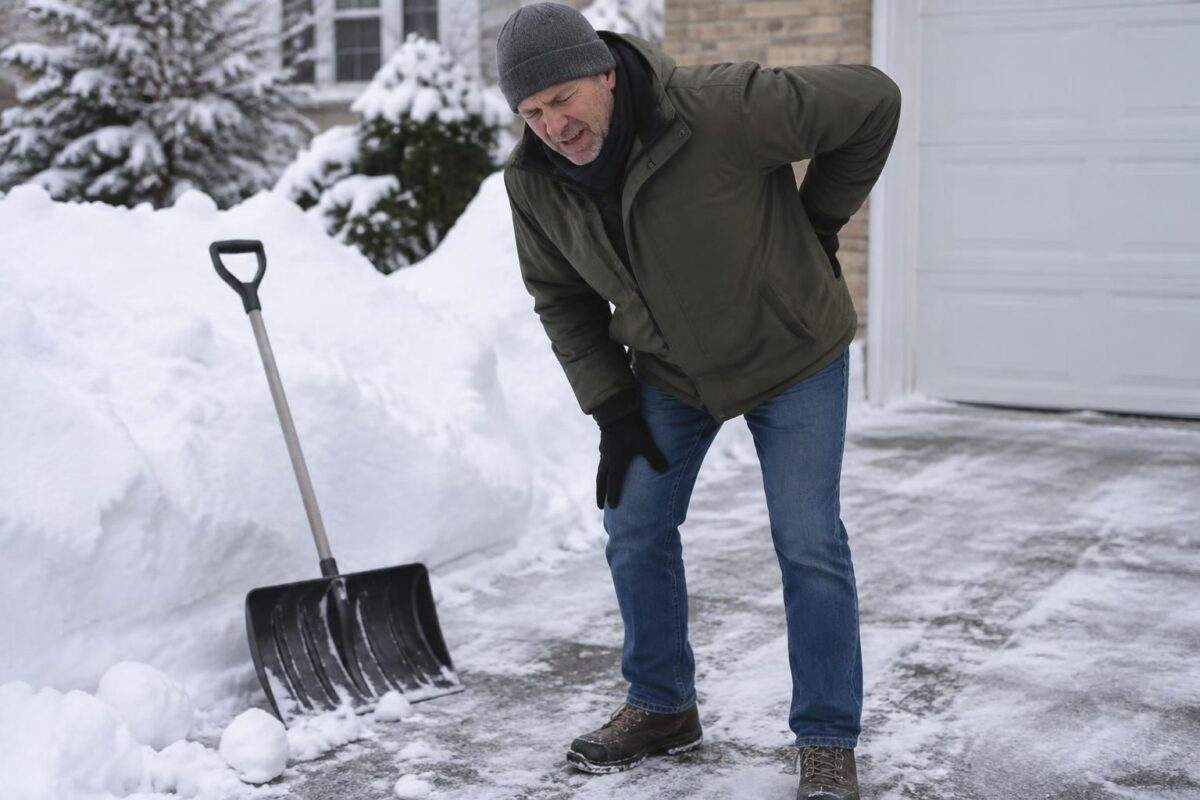
IN BRIEF
| Post-shoveling sciatica refers to lower back pain that may radiate into the buttock and leg, sometimes triggered by lifting heavy snow or repetitive twisting. Pushing snow, lightening the loads, and taking breaks help reduce strain on the back. Consult a professional if the pain persists, worsens, or is accompanied by weakness; loss of bladder or bowel control requires urgent assistance. |
Sciatica and Pain After Shoveling
Shoveling can put significant strain on the lower back. Repetitive movements, heavy loads, and trunk rotations can trigger or worsen lower back pain, sometimes accompanied by pain that descends into the buttock or leg. This radiation might suggest sciatica, but it does not definitively determine the cause.
After shoveling, stop the activity if the pain increases, avoid lifting heavy loads, and gradually resume your movements. Consult a health professional if the pain persists, worsens, or is accompanied by weakness. Loss of bowel or bladder control or significant weakness requires urgent evaluation.
After shoveling, pain in the lower back that radiates to the buttock or leg may suggest irritation of the sciatic nerve without confirming the cause. Bending movements, heavy loads, and trunk rotations can trigger lower back pain or worsen existing symptoms. Here’s how to recognize important signs, reduce strain on your back, and know when to seek an evaluation. Shoveling requires sustained effort. A person often lifts, pushes, or throws heavy snow while bending and twisting the trunk. Cold and fatigue can also render movements less controlled. Pain may occur during the activity or in the hours that follow. Pain after shoveling does not automatically mean that a herniated disc or sciatica is present. It may also stem from irritation of the back muscles or joints. An evaluation helps to better understand the symptoms and determine if a medical examination is necessary. Pain consistent with sciatica often starts in the lower back or buttock and radiates down a leg. It can reach the thigh, calf, or foot. Some people also experience tingling, numbness, or a sensation of weakness. The pain may increase when bending, lifting a load, or remaining in the same position for long periods. The presence of these symptoms alone does not identify their origin. An evaluation of sciatic pain can help clarify the next steps suitable for your situation. Several habits can increase strain on the lower back: For more prevention tips, consult these resources on shoveling and back pain and on the effects of shoveling on the musculoskeletal system. These pages are general informational resources and do not replace professional evaluation. Stop shoveling if the pain increases or if you have difficulty controlling your movements. For now, avoid lifting heavy loads, throwing snow, and repeating the action that clearly triggers the pain. Gradually resume your activities according to your tolerance, without forcing through significant pain. Persistent pain, pain that radiates down the leg, or a limitation of activities justifies an evaluation. The professional can examine your symptoms and direct you to appropriate care. If non-surgical intervention is considered, options at the TAGMED Clinic in Montreal or Terrebonne depend on the evaluation and your situation. Management of sciatica in Montreal / Mont-Royal and services at the TAGMED Clinic in Terrebonne are presented online. If your health allows you to shovel, prepare yourself and distribute the effort. Wear warm clothing that does not restrict your vision. Use a shovel that is suited to your height and strength. Clear snow in small amounts and push it rather than lifting it whenever possible. When you must lift snow, keep it close to your body and avoid twisting the trunk with the load. Move slowly, take breaks, and shovel in several short periods rather than waiting for a thick layer to accumulate. Also check the condition of the ground to limit the risk of falling. More practical tips are provided in this article on mistakes to avoid when shoveling to prevent injury. People with a history of heart problems, high blood pressure, lower back pain, or falls should consult a health professional before engaging in significant exertion. If shoveling poses a risk to you, entrusting the task to someone else or to a snow removal service may be a precautionary measure. Request an evaluation if the pain does not improve, limits your activities, or radiates down the leg. Seek prompt attention if you notice a loss of strength, new difficulty walking, or worsening numbness. Recurring pain after each storm also merits evaluation to explore potential factors. Consult emergency services immediately in case of loss of bladder or bowel control, numbness in the saddle area, or significant or progressive weakness in a leg or foot. Chest pain, marked shortness of breath, malaise, or dizziness during shoveling also require urgent help. To better understand pain that radiates down the leg, you can read this information on sciatica. Pain down to the ankle can have various causes; only a professional can assess your situation and recommend appropriate action. About the Author Dr Sylvain Desforges, B.Sc., D.O., N.D., osteopath is the founding president of TAGMED and the ACMA association. He dedicates his practice to chronic pain of the spine, lower back pain, and pain compatible with sciatica, especially when the pain radiates down to the buttock, leg, calf, foot, or toes. Through SOS Sciatique, he publishes educational content on the symptoms of sciatica and possible causes, such as a herniated disc, a disc pinch, foraminal stenosis, or irritation of a lumbar nerve root. At the TAGMED Clinic, treatments may include, based on the evaluation, motorized neurovertebral decompression, specific osteopathy, or a precision impactor. For an evaluation related to sciatica treatment in Montreal / Mont-Royal or sciatica treatment in Terrebonne, check the available services at the TAGMED Clinic. Medical disclaimer: The information and advice provided on this site do not replace the opinions, diagnoses, or treatments of healthcare professionals. Please note that Dr. Sylvain Desforges, osteopath, is neither a medical doctor nor a physician, and is not specialized in a medical specialty as defined by the Collège des médecins du Québec. Manual medicine, functional medicine, and sports medicine as described on this site exclude any treatment or medical diagnosis made by a physician or specialist physician. Always consult your doctor for any medical questions. For more details, please read our complete legal notice. The information published on SOS Sciatique is provided for educational purposes and does not replace a consultation, diagnosis, opinion, or treatment performed by a physician or other licensed healthcare professional. The author of this article is neither a physician nor a specialist in a medical specialty recognized by the Collège des médecins du Québec. The approaches of osteopathy, manual medicine, or functional support described on this site do not constitute medical acts and are not intended to replace medical follow-up. Consult a doctor or emergency service in case of loss of bladder or bowel control, numbness in the saddle area, significant or progressive leg or foot weakness, fever, recent trauma, severe pain, or rapid aggravation. For more details, please read our legal notice.Sciatica and Pain After Shoveling: Why the Back May React
When Pain May Suggest Sciatica
Shoveling Habits That May Increase Pain
What to Do if Pain Develops After Shoveling
How to Reduce Risks for Your Next Shoveling
When to Consult After Pain Related to Shoveling
- Lower back pain radiating to the buttock or leg
- Tingling or numbness in the leg or foot
- Pain worsened by twisting or shoveling snow
- Stop if the pain increases; avoid straining
- Favor small shovels and push the snow if possible
- Consult if the pain persists, radiates, or limits your activities
- Seek urgent help in case of progressive weakness or loss of bladder or bowel control

After shoveling, lower back pain radiating to the buttock or leg may indicate irritation of the sciatic nerve, although it does not allow for determining the cause alone. Adopt cautious gestures, avoid straining, and monitor the progression of symptoms. Intense, persistent pain, or pain accompanied by weakness warrants evaluation by a healthcare professional.

Sciatica and pain relieved while seated: consider stenosis?
IN BRIEF A sciatica relieved in a seated position may suggest a lumbar stenosis and neurogenic claudication, but this sign alone is not sufficient for a diagnosis. Observing walking, weakness, and symptom evolution helps guide the evaluation and compare signs…
Why can shoveling trigger sciatic pain?
Shoveling and snow removal often combine repetitive movements, lifting loads, and trunk rotations. Wet snow can be particularly heavy. Fatigue and cold can also make movements less controlled. This exertion can cause muscle or joint pain; sometimes, pain radiates from the lower back to the buttock and leg, which may be compatible with sciatica.
However, pain that radiates down the leg does not, on its own, confirm nerve compression or a herniated disc. Symptoms such as tingling, numbness, or weakness must be taken seriously and evaluated according to their intensity, duration, and progression.
Sciatica and pain that worsens when walking
IN BRIEF A sciatica that worsens with walking is pain radiating from the buttock down the leg, exacerbated by walking. Several causes are possible: this symptom alone does not suffice for a diagnosis. Temporarily reduce walking duration, change positions, and…
What to do in the hours following snow removal?
Reduce effort without completely immobilizing
Stop shoveling and activities that significantly worsen the pain. As symptoms allow, short movements and changes in position may be preferable to prolonged immobility. Gradually resume your activities, without trying to “push through” sharp pain that extends further down the leg.
Choose cautious comfort measures
You may try a comfortable position and apply cold or heat according to what alleviates your discomfort, protecting the skin and limiting the duration of application. Avoid forced stretches, sudden manipulations, and heavy lifting as long as the pain is significant. Before taking medication, check with a pharmacist or a doctor to ensure it is appropriate for your situation and other treatments.

Sciatica and pain that improves when walking
IN SUMMARY Sciatica is pain that radiates from the lower back or buttock down to the leg, sometimes all the way to the foot. If it decreases with walking, a gentle and regular walk can help limit stiffness and maintain…
When to seek an evaluation?
Consult a healthcare professional if the pain does not improve after a few days, limits your activities, returns with each snow clearing, or is accompanied by persistent numbness or tingling. New or growing weakness in the leg or foot requires prompt evaluation. A professional can examine your symptoms and guide you towards appropriate care; exercises or treatments must be tailored to your condition.
Consult an emergency service immediately in case of loss of control of the bladder or bowels, numbness in the saddle area, significant or rapidly progressive weakness, or severe pain that worsens. Chest pain, unusual shortness of breath, discomfort, or dizziness during exertion also require immediate cessation of activity and urgent assistance.

IN BRIEF Sciatica is pain that often starts from the lower back or buttock and travels down the leg. Pain that worsens at the end of the day may be related to activities or prolonged positions, but it is not…
Preventing further pain while shoveling
Before starting, warm up for a few minutes and wear clothing that does not restrict your movements or vision. Use a shovel suitable for your height and push the snow rather than lifting it when possible. If you must lift it, take small amounts, keep the load close to your body, and bend your hips and knees without twisting your trunk suddenly. Move your feet to change direction.
Break the shoveling into short periods and take regular breaks. Be particularly cautious if you already have lower back pain, a heart condition, high blood pressure, osteoporosis, or if you are inactive. Depending on your health condition, having someone else do the work may be the safest solution.

Sciatica and pain that worsens in the evening
IN BRIEF more painful sciatic pain in the evening is often related to inactivity, fatigue, and increased attention to sensations. This does not necessarily mean that the nerve is worsening. Gently changing positions, walking for a few minutes, and finding…
About the Author
Dr. Sylvain Desforges, B.Sc., D.O., N.D., osteopath, is the founding president of TAGMED and the ACMA association. He dedicates his practice to chronic spinal pain, lower back pain, and pain consistent with sciatica.
Medical Warning: This information is provided for educational purposes and does not replace a consultation, diagnosis, or treatment by a licensed healthcare professional. The author is neither a doctor nor a specialist in any medical specialty recognized by the Collège des médecins du Québec. Osteopathy or manual medicine approaches do not replace medical follow-up.

Sciatica and pain when turning in bed
IN BRIEF Sciatica can cause pain when turning in bed, as certain movements irritate the lower back or leg. Turn slowly, moving your shoulders and hips together; a cushion between the knees or under the knees can improve comfort. If…
Sciatica and Pain After Shoveling: Guidelines to Distinguish Them
| Indicator | Sciatica or Pain After Shoveling |
|---|---|
| Possible Trigger | Shoveling can cause lower back pain or awaken pre-existing radicular pain. |
| Pain Area | Lower back pain often stays in the back; sciatica can radiate down into the buttock and leg. |
| Aggravating Factors | Lifting a heavy load, bending, or twisting the trunk can worsen symptoms. |
| Numbness or Tingling | They may accompany nerve irritation, but are not sufficient to confirm sciatica. |
| First Steps | Stop the effort, avoid loads, and gradually resume according to your tolerance. |
| When to Seek an Evaluation | If the pain persists, radiates, or limits your activities, consult a healthcare professional. |
| Signs of Emergency | Significant or progressive weakness, saddle anesthesia, or loss of bowel or bladder control: medical emergency. |

Sciatica and pain when getting out of bed
IN BRIEF Sciatica upon getting out of bed is pain that radiates from the lower back to the buttock or leg and can be more pronounced after the night. Gradually rising, moving gently, and finding a comfortable sleeping position can…
Illustrative Testimonials: Sciatica and Pain After Shoveling
The stories below are fictional and presented for educational purposes. They illustrate different ways in which lower back pain or pain consistent with sciatica can occur after shoveling. Each situation is different and requires appropriate assessment.
“The pain went down my leg after shoveling.”
After lifting several shovels of wet snow, I felt pain in my lower back. The next day, it extended into my buttock and the back of my thigh. I stopped shoveling and sought advice from a professional, as the pain persisted and limited my movements.
“I thought it was just a simple soreness.”
I shoveled quickly, frequently twisting my trunk to throw the snow. A lower back pain appeared, then shooting pains towards my calf. Since the symptoms did not improve after a few days, I made an appointment to have my condition assessed and receive appropriate advice.
“Fatigue changed my way of moving.”
At first, I felt fine. But as I got tired, I lifted heavier loads and kept my back less straight. A sharp pain manifested in my lower back, with tingling in one leg. I interrupted the task and avoided resuming shoveling until my symptoms were clarified.
“I could no longer stand for long.”
After a long session of snow removal, I felt pain in my buttock that intensified when I stood or walked. A healthcare professional helped me understand the next steps and determine which activities to modify during my recovery.
“I learned to manage shoveling better.”
My lower back pain returned after heavy snowstorms. I started breaking the task down, pushing the snow when possible, and avoiding rapid twists. These adjustments can reduce strain, but they do not replace an evaluation if the pain radiates down the leg, persists, or is accompanied by a loss of strength.
Pain that radiates into the buttock, leg, or foot after shoveling can have several causes. Consult a healthcare professional if it persists, worsens, or limits your activities. In case of significant or progressive weakness, loss of bowel or bladder control, or numbness in the saddle area, seek medical care promptly.

Sciatica and difficulty finding a comfortable position
IN BRIEF Sciatica is a pain that often starts in the lower back or buttock and radiates down the leg, sometimes making it difficult to find a comfortable position. Alternating positions, avoiding postures that aggravate the pain, and trying a…
Sciatica and Pain After Snow Shoveling
Shoveling may seem like a routine winter task, but it requires sustained effort in the back, shoulders, hips, and legs. Lifting a shovel that is too loaded, bending repeatedly, or twisting quickly with a load can irritate the lumbar structures. In some people, this irritation accompanies pain that radiates into the buttock or leg and may suggest sciatica.
The term sciatica generally describes pain related to irritation of a nerve root in the lower back. It may manifest as pain, tingling, numbness, or burning sensations in the buttock, thigh, calf, or foot. Shoveling does not necessarily mean a nerve is affected: local pain may also result from muscle or joint overload. An evaluation is necessary to better understand its origin.
After a heavy snowfall, several factors may combine: cold muscles, fatigue, heavy loads, and repeated bending or twisting movements. Fatigue can also change posture and make movements less controlled. Therefore, lower back pain that appears during exertion or in the following hours deserves monitoring, especially if it radiates down a leg or limits usual activities.
To reduce risks, start by warming up for a few minutes and wear clothing that keeps you warm without obstructing your vision. Choose a shovel that is suitable for your height and strength. When possible, push the snow rather than lifting it. If you need to move it, take small amounts, keep the load close to your body, and bend your hips and knees while maintaining your back in a comfortable position. Move your feet to change direction instead of twisting your trunk with a full shovel.
The rhythm matters as much as the technique. Break up the work, take regular breaks, and drink water. If you are less active, have a history of lower back pain, or have a cardiovascular condition, it may be wise to consult a healthcare professional before shoveling. Chest pain, unusual shortness of breath, dizziness, or discomfort during exertion require immediate cessation of activity and urgent assessment.
If the pain persists for several days, intensifies, radiates down the leg, or is accompanied by loss of strength or sensation, consult a qualified professional. An assessment helps distinguish possible causes and guide care according to your situation. Non-surgical approaches, such as education on movements, functional support, or certain manual interventions, may be considered after an appropriate assessment. The goal is to promote a gradual return to activities and limit recurrences, without assuming that a single method works for everyone.
Dr. Sylvain Desforges, B.Sc., D.O., N.D., osteopath, is the founding president of TAGMED clinics and the ACMA association. His practice notably focuses on managing chronic spinal pain and integrating care and technologies, including spinal decompression, when indicated. Management options depend on the assessment and the situation of each individual.
Medical warning: this content is educational and does not replace a consultation, diagnosis, or treatment by a licensed healthcare professional. Seek medical attention promptly for loss of bowel or bladder control, anesthesia in the saddle region, significant or progressive weakness, fever, recent trauma, or rapid worsening of pain.
Shoveling can trigger temporary lower back pain or worsen pain radiating into the buttock and leg, sometimes consistent with sciatica. Fatigue, heavy loads, repetitive bending, and trunk rotations increase stress on the back. Recognizing signs to watch for, adapting your technique, and knowing when to request an assessment can help limit injuries and resume activities cautiously.
Why can shoveling cause sciatica-like pain?
Shoveling snow stresses the back, shoulders, arms, and hips, often repeatedly and in cold weather. A shovel that is too heavy, a bent posture, or lifting and throwing snow while twisting the trunk can irritate lumbar structures. In some individuals, this overload may also provoke existing lower back pain.
A so-called “sciatic” pain typically manifests in the lower back or buttock and can extend into the thigh, calf, or foot. It may be accompanied by tingling, numbness, or a feeling of weakness. These symptoms alone do not determine the cause: an assessment by a healthcare professional is necessary to clarify what is happening.
After shoveling, local muscle pain does not automatically equate to sciatica. However, pain radiating into the leg, returning with certain movements, or accompanied by neurological symptoms warrants special attention. To better understand the signs to watch for, consult this article on sciatica symptoms.
Movements that increase stress on the back
Sudden movements, twisting under load, and holding a heavy shovel away from the body can increase the effort required from the lumbar region. Wet snow is particularly demanding: it is better to move small amounts and avoid lifting or throwing a large load over your shoulder.
Fatigue can also alter posture and make movements less controlled. Pain in the lower back, shoulders, or knees is frequently reported after snow removal. The article from Accès Physio on shoveling and pain in the back, shoulders, and knees presents other factors to consider.
Reducing the risk while shoveling
Before starting, a few minutes of gentle movements to mobilize the shoulders, hips, and back can prepare the body for exertion. Dress warmly, choose a shovel suited to your height, and make sure you can see obstacles clearly. Icy and uneven surfaces increase the risk of falling.
Whenever possible, push the snow rather than lift it. When you need to move it, take a small amount, bring the load close to your body, bend your knees and hips, and keep your back in a comfortable position. Move to where you want to drop the snow instead of twisting quickly with a loaded shovel.
Break the task into segments, take regular breaks, and drink water. Shoveling in several short periods may be less strenuous than a prolonged session, especially if you are less active or already have pain. You can find more practical tips in the guide from Action Sport Physio on preventing injuries while shoveling and snow blowing.
When to request an assessment?
Consider consulting a healthcare professional if the pain persists, limits your activities, radiates into the leg, or is accompanied by numbness or loss of strength. An assessment helps better understand the symptoms and determine appropriate options for your situation. Resources on lower back pain related to snow removal are also offered by Physio SL.
Chest pain, unusual shortness of breath, discomfort or dizziness during exertion require immediate cessation of activity and urgent care. Seek immediate assistance in case of loss of bowel or bladder control, numbness in the saddle area, or significant or progressive weakness in a leg or foot.
Support options after shoveling
Depending on the assessment and symptoms, support may aim to reduce pain, improve mobility, and help you gradually resume your activities. To learn more about approaches discussed in physiotherapy and spinal decompression, consult the article from AMS Clinic on shoveling and back pain. However, the choice of an approach should consider your health status and does not replace medical advice when needed.
At the TAGMED Clinic, an evaluation can allow for a discussion of symptoms and possible care according to your situation. Check the services related to the treatment of sciatica in Montreal / Mont-Royal or to the treatment of sciatica in Terrebonne.
About the author
Dr Sylvain Desforges, B.Sc., D.O., N.D., osteopath, is the founding president of TAGMED and the ACMA association. He dedicates his practice to chronic spinal pain, low back pain, and pain associated with sciatica, particularly when the pain radiates to the buttock, leg, calf, foot, or toes.
Through SOS Sciatique, he publishes educational content on the symptoms of sciatica, its possible causes, and non-surgical approaches that may be considered based on the evaluation. At the TAGMED Clinic, care may include, depending on the case, motorized neurovertebral decompression, specific osteopathy, or precision tapping.
Medical warning
The information published on SOS Sciatique is provided for educational purposes and does not replace a consultation, diagnosis, opinion, or treatment performed by a physician or other licensed healthcare professional. The author of this article is neither a physician nor a specialist in a medical specialty recognized by the Collège des médecins du Québec. The approaches of osteopathy, manual medicine, or functional support described on this site do not constitute medical acts and are not intended to replace medical follow-up.
Consult a physician or an emergency service in case of loss of bowel or bladder control, anesthesia in the saddle area, significant or progressive weakness of the leg or foot, fever, recent trauma, severe pain, or rapid worsening. For more details, please read our Legal Notice.

Dr Sylvain Desforges, B.Sc., D.O., N.D., osteopath, is the founding president of TAGMED and of the ACMA association. He dedicates his practice to chronic spinal pain, low back pain and symptoms compatible with sciatica, particularly when pain radiates toward the buttock, leg, calf, foot or toes.
Through SOS Sciatique, he publishes educational content on sciatica symptoms, possible causes such as disc herniation, disc narrowing, foraminal stenosis or irritation of a lumbar nerve root, as well as non-surgical approaches that may be considered according to the evaluation. At Clinique TAGMED, care may include, depending on the case, motorized neurovertebral decompression, specific osteopathic care or precision percussion.
For an evaluation related to sciatica treatment in Montreal / Mount Royal or sciatica treatment in Terrebonne, please consult the services available at Clinique TAGMED.
Medical disclaimer
The information published on SOS Sciatique is provided for educational purposes only and does not replace a consultation, diagnosis, opinion or treatment provided by a physician or another authorized healthcare professional. The author of this article is neither a medical doctor nor a specialist in a medical specialty recognized by the Collège des médecins du Québec. The osteopathic, manual medicine or functional support approaches described on this site do not constitute medical acts and are not intended to replace medical follow-up.
Consult a physician or emergency service in cases of loss of bladder or bowel control, anesthesia in the saddle area, significant or progressive weakness in the leg or foot, fever, recent trauma, severe pain or rapid worsening of symptoms. For more details, please read our Legal Notice.


