Sciatica and carrying grocery bags: load and twist
26/11/2026
Sciatica in Terrebonne: disc desiccation and radiating pain
27/11/2026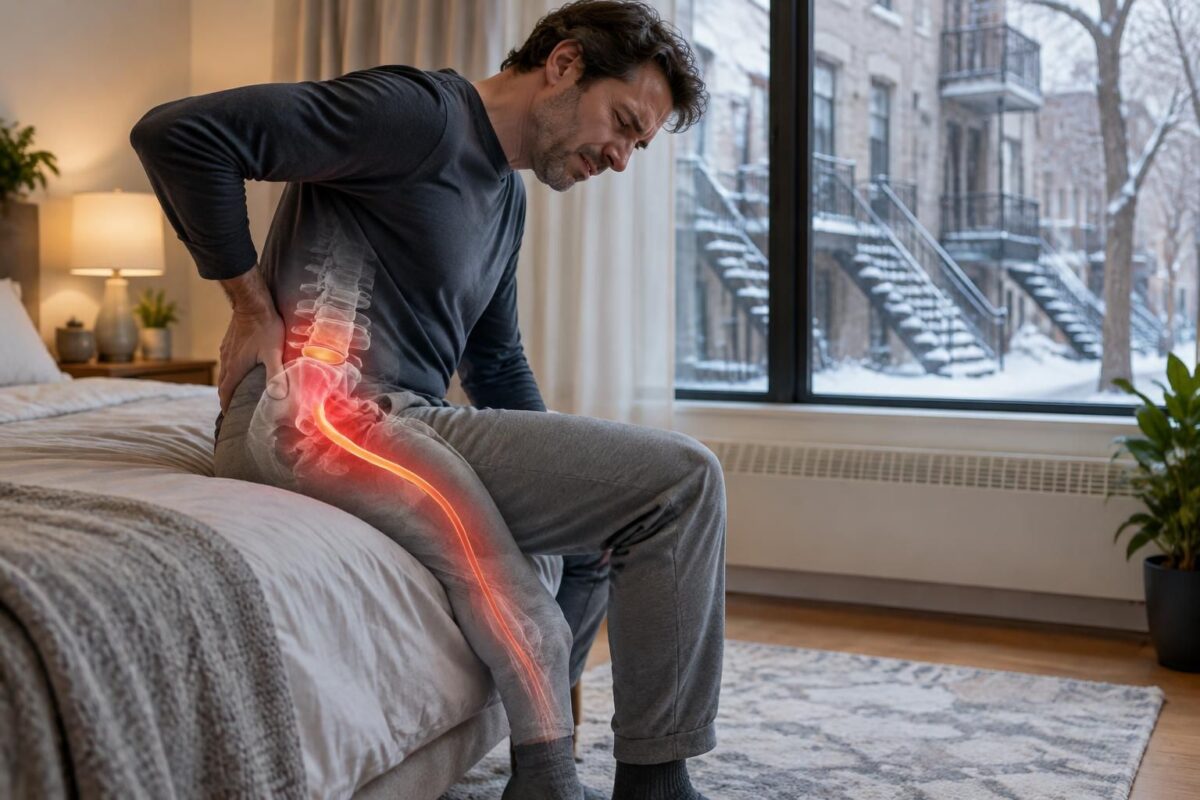
IN BRIEF
| Disc dehydration refers to a decrease in hydration of a lumbar disc; it does not necessarily mean that it causes sciatica. In Montreal, pain radiating from the lower back or buttocks down to the leg should be assessed based on its trajectory, intensity, sensitivity, and impact on activities. Examination and, if necessary, imaging help guide the next steps and consider appropriate support, without treating an isolated image. |
Disc dehydration, which is a decrease in hydration of a lumbar disc, can appear on imaging without causing pain. Its significance must be assessed based on symptoms and examination. When pain starts from the lower back or buttock and travels down into the leg, sometimes with tingling or numbness, nerve irritation is possible. A personalized evaluation in Montreal helps examine mobility, strength, and sensitivity to guide the next steps. New or progressive weakness, urinary or bowel issues, or numbness of the perineum require urgent medical evaluation.
A disc dehydration refers to a decrease in hydration of a disc between the vertebrae. It can appear on imaging without causing pain. If symptoms extend into the buttock or leg, an evaluation should check their trajectory, intensity, sensitivity, and their possible connection to imaging results. In Montreal, appropriate management begins with this alignment and then considers the person’s evolution and needs.
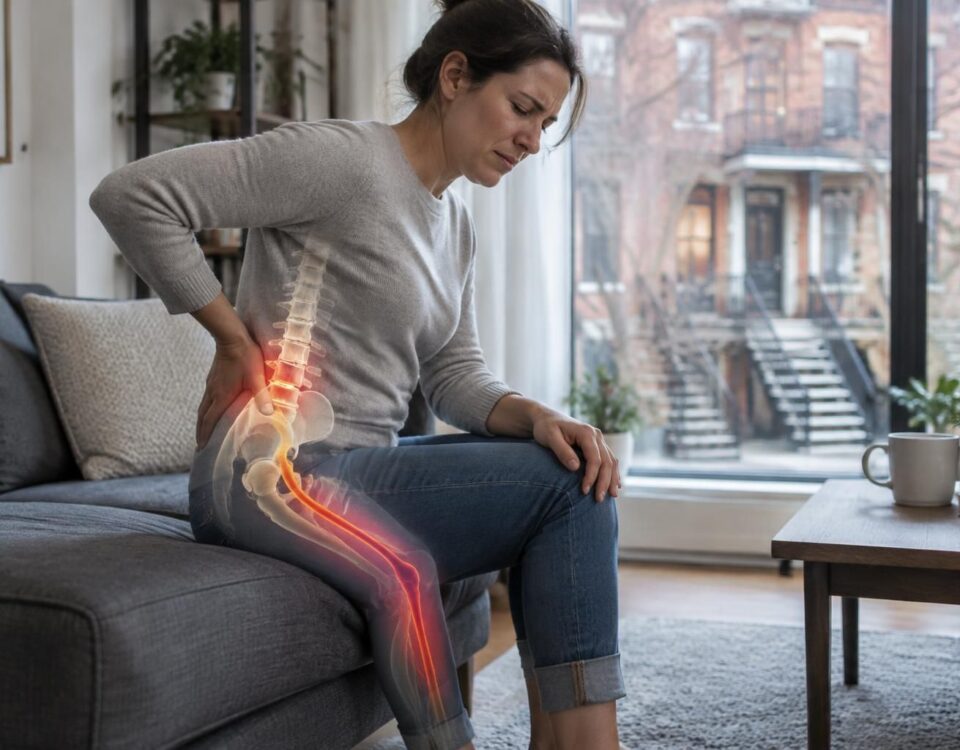
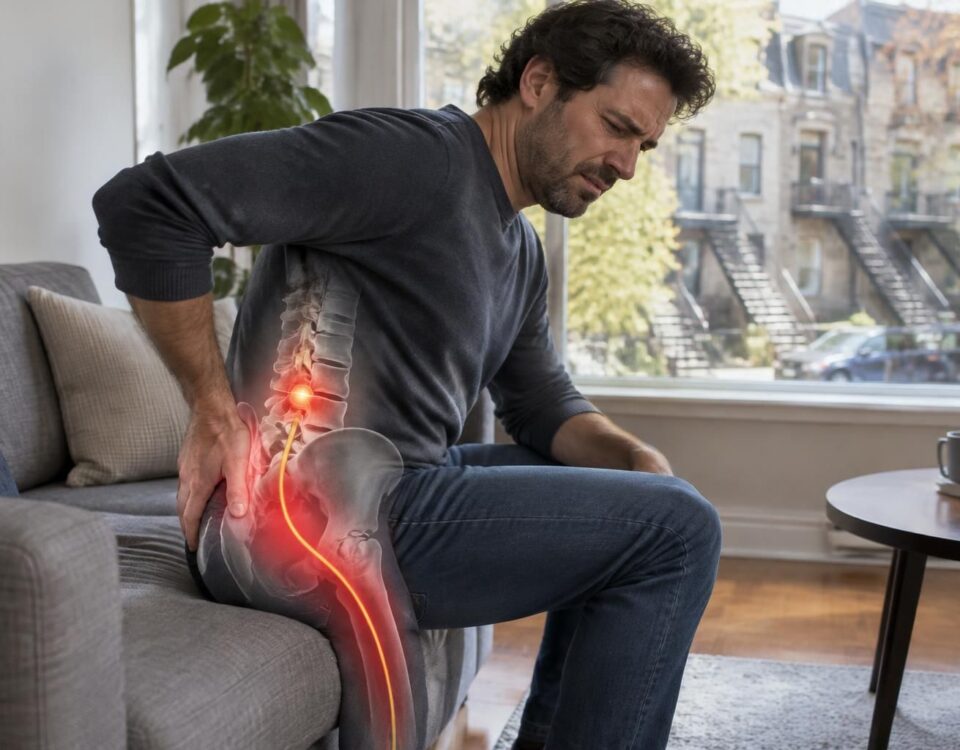
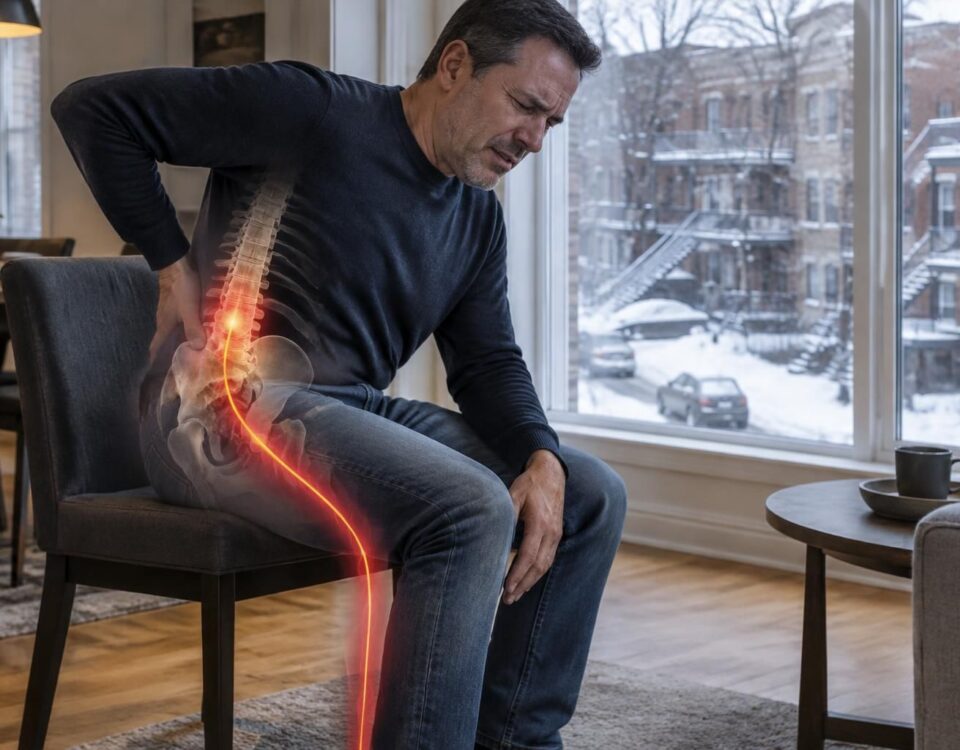
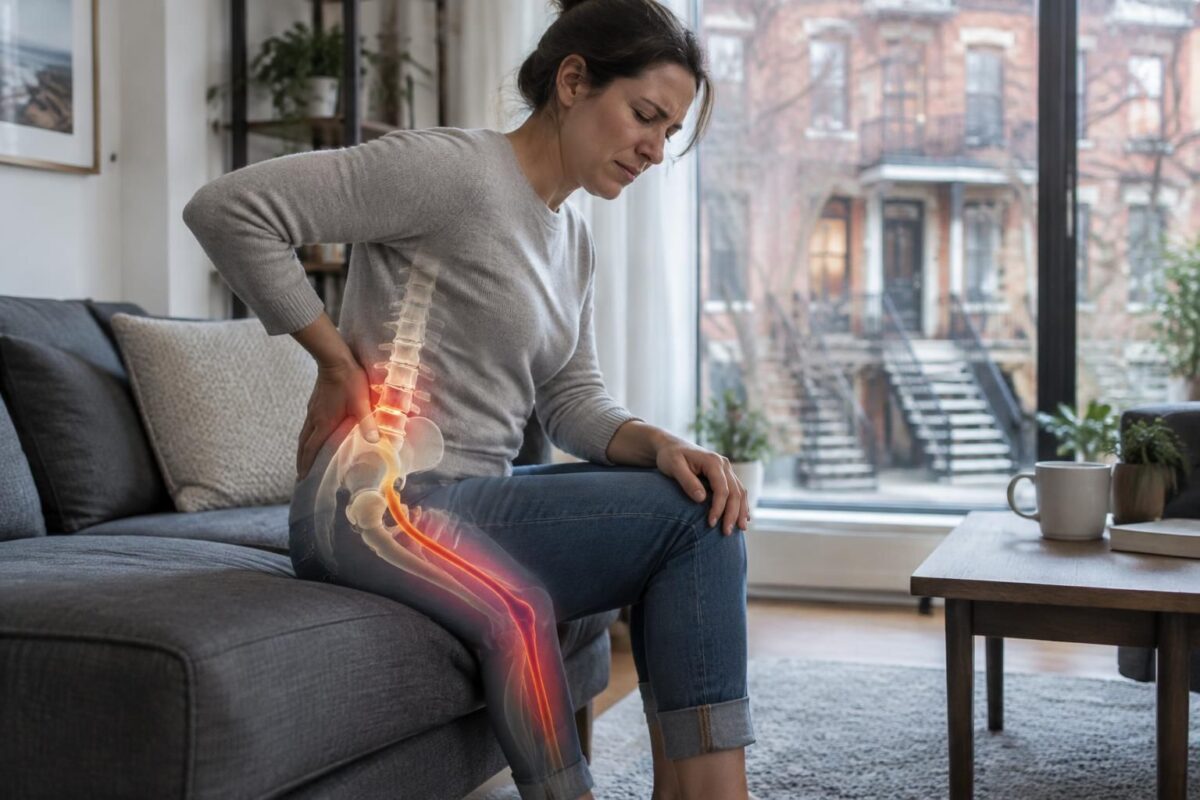
Lumbar pain extending into a buttock or leg may be compatible with sciatica, also called radicular pain in some contexts. This trajectory may be accompanied by burning, jolts, tingling, or numbness. Sitting, walking, or certain movements may become painful.
Disc dehydration is a descriptive finding: the disc appears less hydrated on imaging. This finding alone does not identify the cause of symptoms or determine their severity. The entire clinical picture must be considered.
What does disc dehydration mean?
Intervertebral discs are located between the vertebrae and help distribute stress. Over time, their composition and appearance may change. An MRI may then describe a dehydration, a loss of height, a bulging, or a protrusion.
These changes are sometimes observed in individuals who experience no pain. Conversely, a person may have significant symptoms without imaging fully explaining what they feel. Therefore, the image must be compared to symptoms, the affected side, and examination results.
Dehydration, protrusion, and disc herniation
These terms do not refer to exactly the same thing. Dehydration describes a reduction in disc hydration. A disc protrusion describes a bulging of its contour. A herniation refers to a more localized exit of disc material. The clinical significance depends in particular on the affected area and the concordance with observed signs.
A visible protrusion does not automatically imply significant nerve compression. To understand what this result may mean, consult the information on disc protrusion and sciatica.
Sciatica in Montreal: possible annular tear and nerve irritation
IN BRIEF A disc tear is a small lesion of the disc that can sometimes contribute to irritation of a nerve root and symptoms of sciatica, such as pain radiating down the leg. It does not always mean that a…
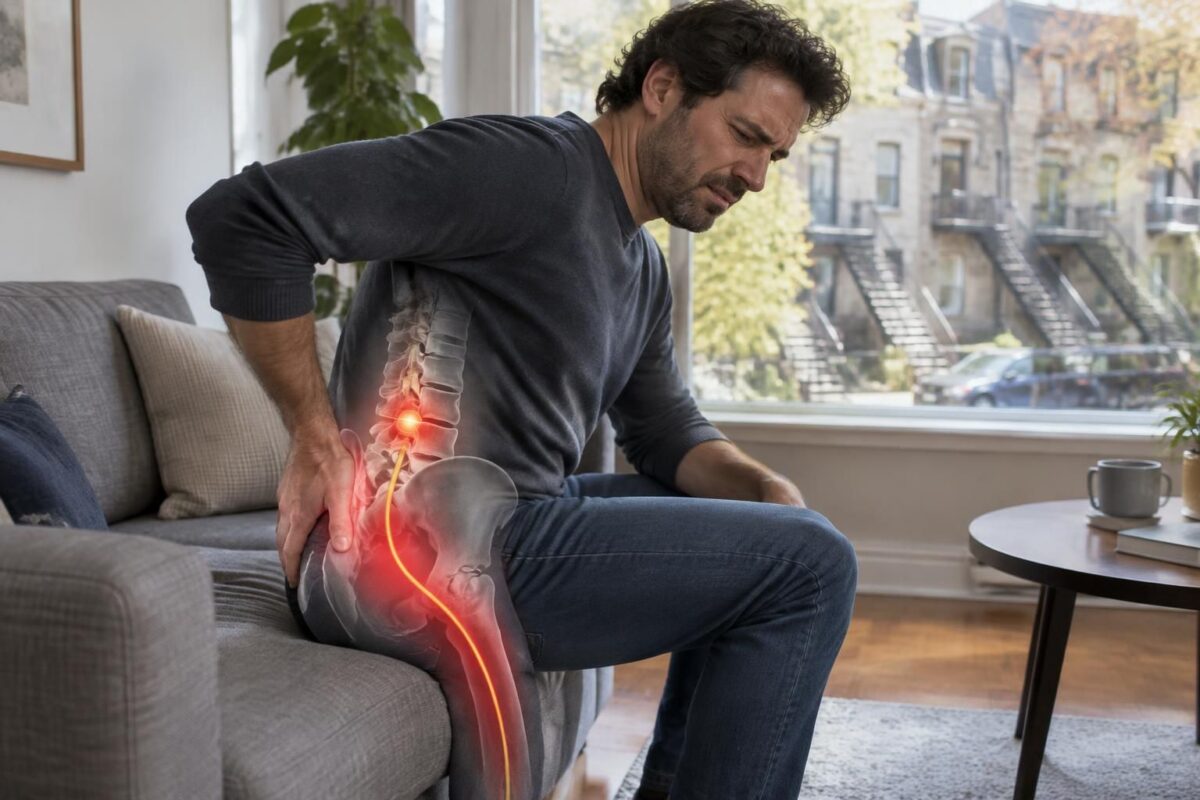
Sciatica in Montreal: disc bulge and buttock pain
IN BRIEF A disc bulge can irritate a nerve root and cause buttock pain, sometimes accompanied by pain that travels down the leg: this is referred to as symptoms compatible with sciatica. In Montreal, an evaluation helps specify the cause…
Why can pain radiate down the leg?
Radiating pain can occur when a lumbar or sacral nerve root is irritated. A herniation or protrusion may sometimes reduce the space around a root, but other causes are possible. Age-related changes, narrowing of the canal or foramina, or musculoskeletal and joint problems can also produce similar symptoms.
The trajectory of the pain provides clues, but it is not sufficient to establish a diagnosis. Associated symptoms and their evolution also matter. To better understand the possible relationship between a herniation and sciatic pain, refer to this explanation on disc herniation and sciatica in Montreal.
The trajectory of symptoms and nerve roots
Depending on the affected root, pain or changes in sensitivity can affect different areas of the leg and foot. The trajectory, however, is not the same for everyone. It should be interpreted with the examination, and not used alone to deduce the level affected.
The pages on pain trajectories according to roots L4, L5, and S1 and on L5-S1 herniation with pain towards the foot present these markers. Pain in the foot does not, by itself, confirm an issue at a specific level.
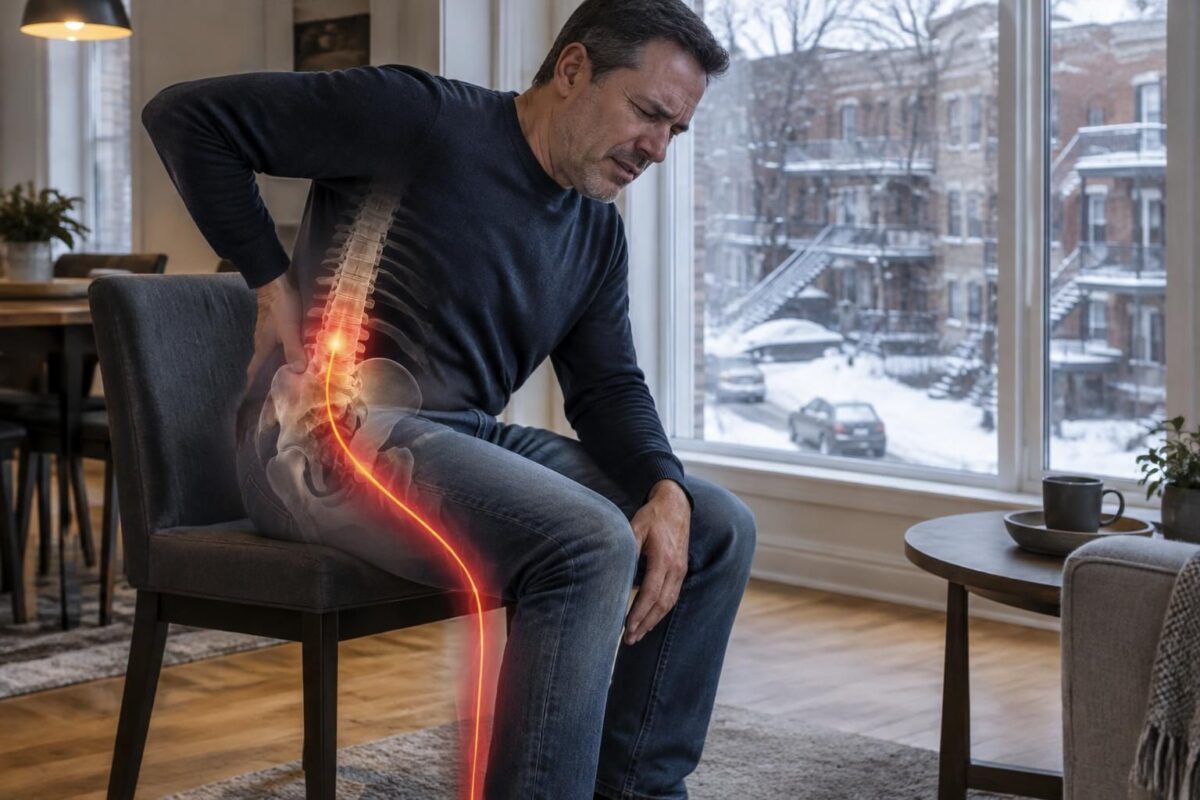
Sciatica in Montreal: disc protrusion and pain under the knee
IN BRIEF A disc protrusion can irritate a nerve root and contribute to sciatica with pain below the knee, sometimes down to the calf or foot. In Montreal, an evaluation helps clarify the cause of symptoms and consider suitable non-surgical…

Sciatica in Montreal: herniated disc and painful cough
IN BRIEF Sciatica is a pain that extends from the lower back to the buttock and leg; a herniated disc can irritate a nerve root. Coughing can exacerbate the pain by increasing pressure in the back. In Montreal, an evaluation…
Sciatica in Montreal: symptoms to watch for
Manifestations vary from person to person. They may include pain in the buttock or leg, sensations of burning, electric shocks, tingling, or reduced sensitivity. Some people also notice a decrease in strength or difficulty walking normally.
The presence, distribution, and progression of these signs guide the next steps. A new or progressive weakness warrants a quick evaluation, especially if the foot raises less well or if the leg gives way. For more information, read about disc herniation accompanied by weakness of the leg as well as L4-L5 protrusions and pain in the leg.
Neurological symptoms should not be taken lightly. This resource describes nerve signs to monitor in cases of sciatica in Montreal.

Sciatica in Montreal: pain worsened when sitting and lumbar disc
IN BRIEF Worsening sciatica in a sitting position may be related to lower back irritation, sometimes associated with a disc, without this sign being sufficient to establish the cause. In Montreal, an evaluation that considers symptoms, strength, sensitivity, and function…

Sciatica in Montreal: pain worsened by flexion and disc-related cause
IN BRIEF Flexion-Aggravated Sciatica is pain that starts in the lower back and may radiate into the buttock or leg; irritation related to a lumbar disc can be a possible cause. In Montreal, an assessment helps clarify the origin of…
How is an evaluation conducted?
A useful evaluation begins with the history of the symptoms: their onset, duration, trajectory, intensity, and effect on sleep or activities. The professional also inquires about previous episodes, any care already received, and examinations performed.
The examination may focus on walking, strength, sensitivity, and certain movements or tests adapted to the presentation. Imaging results, when available, are compared with the side and level of symptoms. An isolated image is not enough to choose a management plan.
Based on the findings, a medical consultation or additional investigation may be indicated. The page dedicated to understanding the causes and symptoms of sciatica in Montreal also offers general guidelines.
What management options should be considered?
The plan depends on the probable cause, the intensity of the symptoms, their duration, and neurological signs. Conservative options may include advice on adapting activities and manual care appropriate to the situation. Techniques should respect the individual’s tolerance and be reassessed according to progress.
At the TAGMED Clinic, an assessment may determine if an approach such as specific osteopathy, precision impacting, ormotorized neurovertebral decompression can be discussed. Decompression may not be suitable for everyone, does not guarantee results, and does not replace a required medical examination or referral to another professional.
To learn about the services offered in Montreal and their possible indications, visit the TAGMED Clinic for sciatica in Montreal or the information page on sciatica and its management options.
A personalized assessment can also help clarify the next steps when lower back pain radiates into the leg. The TAGMED Clinic receives individuals in Mont-Royal, Montreal, at 1140 Beaumont Avenue. The services and care available depend on the consulted professional and their field of practice.
When should you consult quickly or urgently?
Some signs require urgent medical evaluation: a new loss of bladder or bowel control, numbness in the perineum or saddle region, significant or rapidly progressing weakness, or recent foot drop. Pain after a significant trauma, fever, or general deterioration also necessitate prompt medical attention.
These symptoms should not wait for a routine appointment. If in doubt about an emergency, contact medical services. Information on sciatica management in Montreal and nerve signs to monitor do not replace a medical assessment.
About the author
Sylvain Desforges, B.Sc., D.O., N.D., Doctor of Osteopathy and Naturopath, is the founding president of TAGMED and the ACMA association. His practice is dedicated to chronic pain in the spine, lower back pain, and pain consistent with sciatica, including those radiating to the buttock, leg, calf, foot, or toes.
Through SOS Sciatique, he publishes educational content on the symptoms of sciatica, possible causes such as disc herniation, disc pinch, foraminal stenosis, or irritation of a lumbar nerve root, as well as on non-surgical approaches that may be considered depending on the assessment. At the TAGMED Clinic, care may include, depending on the case, motorized neurovertebral decompression, specific osteopathy, or precision impacting.
For an evaluation related to sciatica treatment in Montreal / Mont-Royal or sciatica treatment in Terrebonne, consult the services available at the TAGMED Clinic.
Medical Disclaimer
The information published on SOS Sciatique is provided for educational purposes and does not replace a consultation, diagnosis, opinion, or treatment performed by a doctor or another licensed health professional. The author of this article is neither a doctor nor a specialist in a medical specialty recognized by the Collège des médecins du Québec. The osteopathy, manual medicine, and functional support approaches described on this site do not constitute medical acts and are not intended to replace medical follow-up. Consult a doctor or an emergency service in case of loss of bladder or bowel control, anesthesia in the saddle region, significant or progressive weakness of the leg or foot, fever, recent trauma, severe pain, or rapid deterioration. For more details, please read our Legal Notice.
Medical Disclaimer: The information and advice provided on this site do not replace the advice, diagnosis, or treatment of a healthcare professional. Please note that Sylvain Desforges, B.Sc., D.O., N.D., Doctor of osteopathy, is neither a doctor of medicine nor a physician and is not a specialist in a medical specialty as defined by the Collège des médecins du Québec. Manual medicine, functional medicine, and sports medicine as described on this site exclude any treatment or medical diagnosis made by a physician or medical specialist. Always consult your doctor for any medical questions. For more details, please read our Complete Legal Notice.
Understanding symptoms
- Disc desiccation: a sign of dehydration of the disc, which does not prove the cause of the pain on its own.
- Radiating pain: can descend from the lower back or buttock to the thigh, calf, or foot.
- Assessment: relates the symptom path, strength, and sensitivity to imaging if relevant.
Next steps
- Adapt activities and favor tolerated movements rather than prolonged immobility.
- Consider individualized care in Montreal, with reassessment of progress.
- Consult urgently in case of progressive weakness, loss of bladder or bowel control, or numbness of the perineum.

A pain that starts from the lower back or the buttock and descends into the leg may suggest sciatica, but several causes are possible. Disc dehydration, meaning a reduction in hydration of a disc, may appear on imaging without being responsible for symptoms. Therefore, to choose the next steps in Montreal, it is essential to correlate the pain trajectory, neurological signs, daily limitations, and examination results rather than rely on an isolated image. The discs between the vertebrae help distribute stresses and allow movements of the spine. Over time, their water content may decrease. This phenomenon, sometimes described in an MRI report as disc dehydration, can be part of common degenerative changes. This finding alone does not prove that a nerve is compressed nor does it explain pain in the leg. A protrusion or herniated disc may sometimes reduce the space for a nerve root, but its relevance depends particularly on the level, side, and correlation with symptoms. Some radiating pains come from muscular or joint structures and do not necessarily correspond to nerve irritation. Pain can extend from the lumbar region to the buttock, back of the thigh, calf, or foot. It may be accompanied by burning, tingling, or numbness. Walking, prolonged sitting, or certain movements can exacerbate it. A decrease in strength deserves special attention, especially if it is new or worsening. During an evaluation, the professional may inquire about the duration of symptoms, positions that modify them, and their effect on sleep and activities. Walking, strength, and sensitivity may also be examined. If imaging exists, it should be interpreted in light of these observations; a visible anomaly is not automatically the cause of pain. In the absence of urgent signs, maintaining a tolerable activity is often preferable to complete immobility. Short walks, regular position changes, and a gradual return to tasks can help preserve function. Adjust movements according to your symptoms, and seek advice if an activity causes persistent worsening. A conservative approach may combine progressive exercises, functional education, and, depending on the assessment, suitable manual techniques. At the TAGMED Clinic, options like specific osteopathy or motorized neurovertebral decompression may be discussed for certain profiles. They are not suitable for everyone, do not guarantee results, and do not replace medical advice if neurological impairment is suspected. A reassessment allows for checking progress and modifying the plan as needed. For lower back or sciatic pain in Montreal, an individualized evaluation can help clarify limitations and next steps. Available care depends on the situation and the professional involved. Do not continue routine management in case of new urinary or bowel disorders, loss of sensation in the perineum or saddle area, significant or rapidly progressive weakness, or recent onset of a dropped foot. Severe pain that worsens rapidly, trauma, fever, or general deterioration also justifies prompt or urgent medical evaluation. Sylvain Desforges, B.Sc., D.O., N.D., Doctor of Osteopathy and naturopath, is the founding president of TAGMED and the ACMA association. His practice focuses particularly on chronic spinal pain, lower back pain, and pain consistent with sciatica. This content is provided for educational purposes and does not replace a consultation, diagnosis, or medical follow-up. The author is neither a physician nor a specialist in a medical specialty recognized by the Collège des médecins du Québec. The osteopathy and manual therapy approaches described do not constitute medical acts.Disc dehydration: what does this result mean?
Recognizing symptoms and assessing their evolution
The path and sensations matter
What measures to consider in Montreal?
When to seek medical help quickly?
About the author
Medical disclaimer
| Clinical marker | To remember |
|---|---|
| Disc dehydration | A less hydrated disc, sometimes visible on imaging. |
| Link with sciatica | The image alone does not prove the cause of radiating pain. |
| Pain trajectory | Pain can go from the lower back or buttock to the leg. |
| Other sensations | Burning, shocks, tingling, or numbness may occur. |
| Evaluation | Correlate symptoms, mobility, and neurological signs. |
| Imaging | Compare the observed level and side with the clinical picture. |
| Management | Adapt activities and exercises to tolerance and evolution. |
| In Montreal | An individualized assessment can guide the next steps. |
| Urgent signs | Progressive weakness, urinary or bowel disorders: consult urgently. |
Important note: the stories below are fictional examples written for educational purposes. They do not correspond to real patient testimonies and do not predict the outcome of care.
Illustrative example — pain that descends into the leg
“My pain started in the lower back, then extended to the buttock and the back of the thigh. Staying seated for long periods and walking longer distances became difficult. I learned that pain of this type can be consistent with sciatica, but an examination is necessary to understand its origin.”
Illustrative example — dehydration visible on imaging
“My imaging exam mentioned disc dehydration. I thought this finding necessarily explained all my pain. I was reminded that a dehydrated disc can be visible without causing symptoms: the image must be compared with the pain trajectory, strength, and sensitivity, as well as the results of the clinical evaluation.”
Illustrative example — tingling and functional discomfort
“In addition to the pain in my leg, I sometimes felt tingling all the way to my foot. Their intensity varied with positions and movements. A careful assessment can help clarify whether these manifestations indicate nerve irritation or another cause of pain.”
Illustrative example — individualized support in Montreal
“I was looking for an approach suited to my limits rather than a one-size-fits-all program. The assessment considered my activities, the movements that increased or decreased my symptoms, and the neurological signs to monitor. Care and exercise options should be chosen based on each situation, with no guarantee of results.”
The disc dehydration refers to a change in the disc, but on its own, it is insufficient to establish the cause of pain radiating into the leg. A protrusion or herniation can sometimes contribute to the irritation of a nerve root, while muscular or joint issues may produce similar symptoms. The concordance between symptoms, examination, and imaging, when relevant, is essential.
In case of new or progressive weakness, foot drop, loss of bladder or bowel control, or numbness in the perineal area, seek medical evaluation promptly. These signs should not wait for a routine appointment.
Sylvain Desforges, B.Sc., D.O., N.D., Doctor of Osteopathy and naturopath, is the founding president of TAGMED clinics and the ACMA association. His professional journey is dedicated to supporting individuals living with persistent pain, particularly in the lower back and along the leg. He has an interest in health innovation and the integration of manual approaches and technologies, including motorized neurovertebral decompression, when they can be considered after an individualized assessment.
In Montreal, pain that starts from the lower back or buttock and extends into the thigh, calf, or foot may suggest sciatica or radicular pain. The term “sciatica” describes a set of symptoms; it does not designate a specific cause on its own. Irritation of a lumbar nerve root may be involved, but muscular or joint pains can sometimes produce similar sensations. Walking, prolonged sitting, and certain movements can then become difficult.
The disc dehydration corresponds to a decrease in the hydration of an intervertebral disc, often observed with age-related changes. It may appear on imaging without causing pain. Its presence alone is not sufficient to explain radiating symptoms: one must examine their path, evolution, and effects on activities, then compare them to the imaging findings when relevant.
A protrusion or disc herniation, degenerative changes, spinal canal narrowing, or foraminal stenosis may also be associated with nerve irritation. However, a visible contact between a disc and a root does not automatically indicate significant compression. The concordance between the affected side, painful area, muscle strength, sensitivity, and examination results is essential for interpreting the situation with caution.
Symptoms vary from person to person: pain in the buttock or leg, burning, electric shock, tingling, numbness, or sometimes, decreased strength. An evaluation may focus on the history of symptoms, gait, lumbar movements, and those of the pelvis or hips, as well as strength and sensitivity tests. If the observed signs warrant it, a medical consultation or further investigation may be recommended.
In an individualized approach, osteopathic support may include manual techniques adapted to tolerance, guided movements, progressive exercises, and advice for resuming activities. Maintaining tolerable activity, regular position changes, and appropriate progression may be preferable to complete immobility in several situations. Motorized neurovertebral decompression may be discussed for certain profiles, but it is not suitable for everyone nor guarantees a result. The plan must be reassessed based on functional evolution and symptoms.
A sudden or rapidly progressive weakness, foot drop, loss of bladder or bowel control, or loss of sensation in the perineum require urgent medical evaluation. Severe pain, fever, or recent trauma also warrant quick attention. These signs should not be managed solely within the framework of a routine appointment.
About the author: Sylvain Desforges dedicates his practice to chronic spinal pain, low back pain, and symptoms consistent with sciatica. The care available at TAGMED Clinic depends on the assessment and the professionals involved.
Medical disclaimer: This information is educational and does not replace consulting, diagnosing, or treatment by a licensed healthcare professional. The author is neither a physician nor a specialist in a medical specialty recognized by the Collège des médecins du Québec. The approaches presented do not constitute medical acts and do not replace medical follow-up.
In Montreal, disc dehydration may appear on imaging without causing symptoms. When lower back pain radiates into the buttock or leg, its origin should be evaluated taking into account the pain’s pathway, strength, sensitivity, and daily limitations, rather than relying on the image alone.
Disc dehydration and radiating pains: key points to consider
Dehydration refers to a decrease in the hydration of an intervertebral disc. It may accompany age-related changes, but does not automatically mean that a nerve is compressed or that the disc is the cause of the pain. A protrusion, herniation, annular tear, or foraminal narrowing may also be observed; their relevance depends on their concordance with symptoms. Consult these explanations on the nerve root, disc, and foramen, disc protrusion and disc herniation, as well as the annular tear and possible nerve irritation.
A pain referred to as sciatica can radiate from the lower back to the buttock, thigh, calf, or foot. Burning sensations, electric shocks, tingling, or reduced sensitivity may accompany it. However, foot pain can sometimes occur without marked lower back pain: the symptom trajectory and their context help guide the evaluation. Prolonged sitting, especially while driving, can also be difficult for some individuals; see these pointers on pain that hinders driving.
An individualized evaluation documents the history of symptoms, their evolution, and their effect on walking, sleep, and activities. It can also include observation of gait, strength and sensitivity testing, as well as comparison with already performed imaging exams when relevant. The goal is to understand if the findings align with the clinical picture and to determine if a medical consultation or further investigation is indicated.
Depending on the situation, maintaining well-tolerated activities, gradual movements, adapted exercises, or manual techniques may be considered as elements of management. The management of sciatica in Montreal and information on lumbar disc pain treatment can help learn about the options available. For additional information, also refer to this guide on sciatica and its treatments in Montreal, the Sciatica Clinic, and this article on back pain, herniated disc, and sciatica. Care should be chosen according to the evaluation and the individual’s needs; no method guarantees a particular result.
A new or progressive weakness, a dropped foot, a leg giving way, loss of sensitivity in the perineum, or new urinary or intestinal issues require urgent medical evaluation. Do not wait for a routine appointment if you experience these signs, a significant trauma, fever, or a rapid deterioration of general condition.
About the author
Sylvain Desforges, B.Sc., D.O., N.D., Doctor of Osteopathy and naturopath, is the founding president of TAGMED and the ACMA association. He dedicates his practice to chronic spinal pain, particularly lower back pain and pain compatible with sciatica. Through SOS Sciatique, he publishes educational content on symptoms, possible causes, and non-surgical approaches that may be considered based on the evaluation.
Medical Disclaimer
This information is provided for educational purposes and does not replace a consultation, diagnosis, or treatment by a licensed healthcare professional. The author is neither a physician nor a specialist in a medical specialty recognized by the Collège des médecins du Québec. The approaches of osteopathy, manual medicine, or functional support described do not constitute medical acts and do not replace medical follow-up. For more details, consult the Legal Notice of SOS Sciatique.

Discogenic sciatica in Montreal: why some stretches worsen
IN BRIEF Disc-related sciatica refers to pain related to the irritation of a nerve root, often near a herniated disc. Certain stretches, especially those that emphasize bending or pull on the leg, can worsen symptoms rather than relieve them. In…

Sciatica disc in Montreal: movements to avoid at the start
IN BRIEF Disc-related sciatica refers to pain related to the irritation of a nerve, sometimes associated with a lumbar disk. Initially, avoid movements that worsen your symptoms, such as lifting a load by bending over or performing repeated twists. Adjusting…

Sylvain Desforges, B.Sc., D.O., N.D., docteur en ostéopathie
Dr Sylvain Desforges, B.Sc., D.O., N.D., osteopath, is the founding president of TAGMED and of the ACMA association. He dedicates his practice to chronic spinal pain, low back pain and symptoms compatible with sciatica, particularly when pain radiates toward the buttock, leg, calf, foot or toes.
Through SOS Sciatique, he publishes educational content on sciatica symptoms, possible causes such as disc herniation, disc narrowing, foraminal stenosis or irritation of a lumbar nerve root, as well as non-surgical approaches that may be considered according to the evaluation. At Clinique TAGMED, care may include, depending on the case, motorized neurovertebral decompression, specific osteopathic care or precision percussion.
For an evaluation related to sciatica treatment in Montreal / Mount Royal or sciatica treatment in Terrebonne, please consult the services available at Clinique TAGMED.
Medical disclaimer
The information published on SOS Sciatique is provided for educational purposes only and does not replace a consultation, diagnosis, opinion or treatment provided by a physician or another authorized healthcare professional. The author of this article is neither a medical doctor nor a specialist in a medical specialty recognized by the Collège des médecins du Québec. The osteopathic, manual medicine or functional support approaches described on this site do not constitute medical acts and are not intended to replace medical follow-up.
Consult a physician or emergency service in cases of loss of bladder or bowel control, anesthesia in the saddle area, significant or progressive weakness in the leg or foot, fever, recent trauma, severe pain or rapid worsening of symptoms. For more details, please read our Legal Notice.