Sciatica in Montreal: disc desiccation and radiating pain
27/11/2026
Sciatica and Cauda Equina Syndrome: Signs to Know
27/11/2026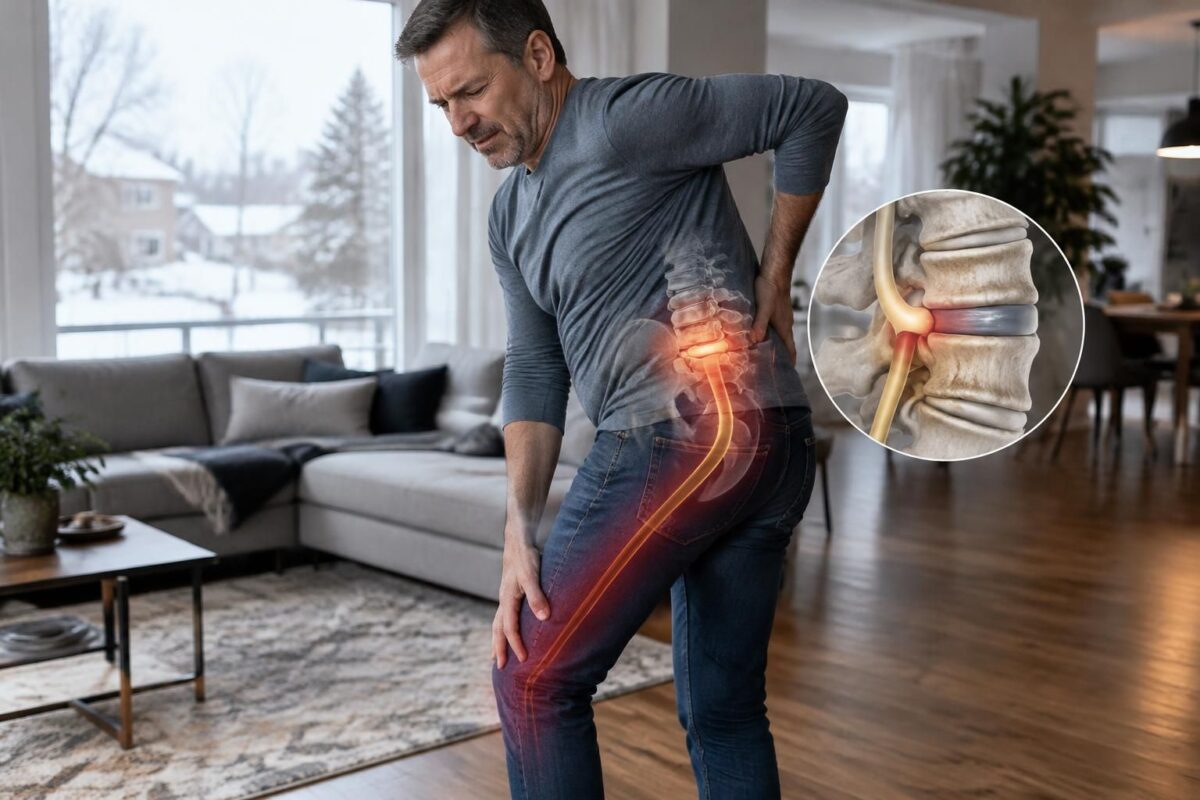
IN SHORT Disk dehydration corresponds to a loss of hydration of a disk and can contribute to lower back pain, sometimes accompanied by sciatica radiating to the buttock or leg. In Terrebonne, an assessment allows for the exploration of possible causes of symptoms and consideration of appropriate management options, without presuming that dehydration is the sole origin. |
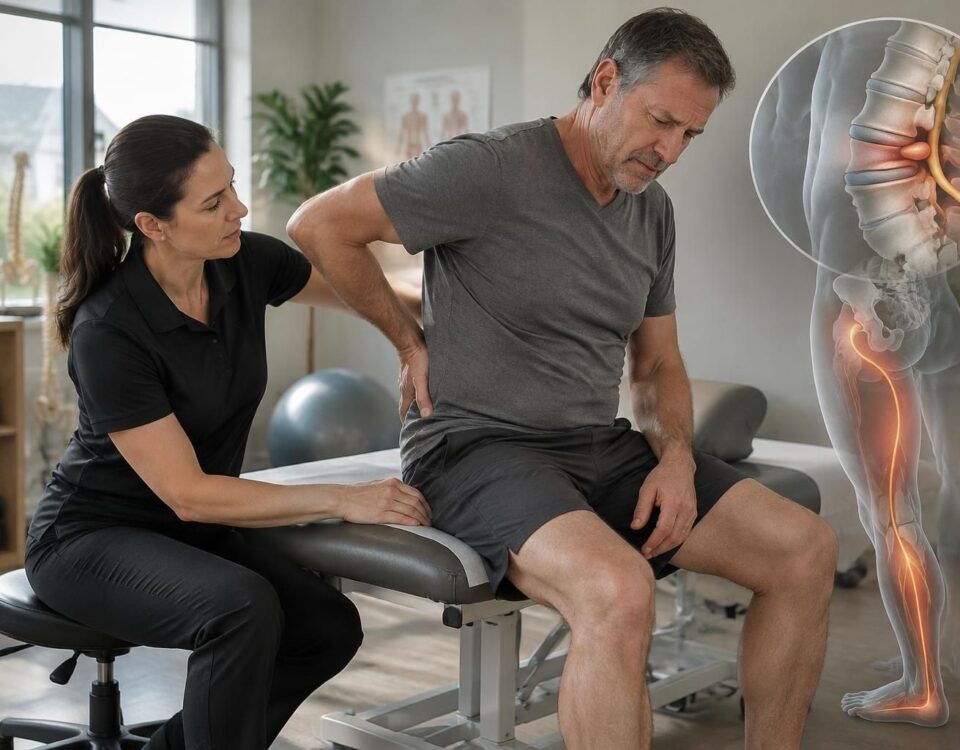
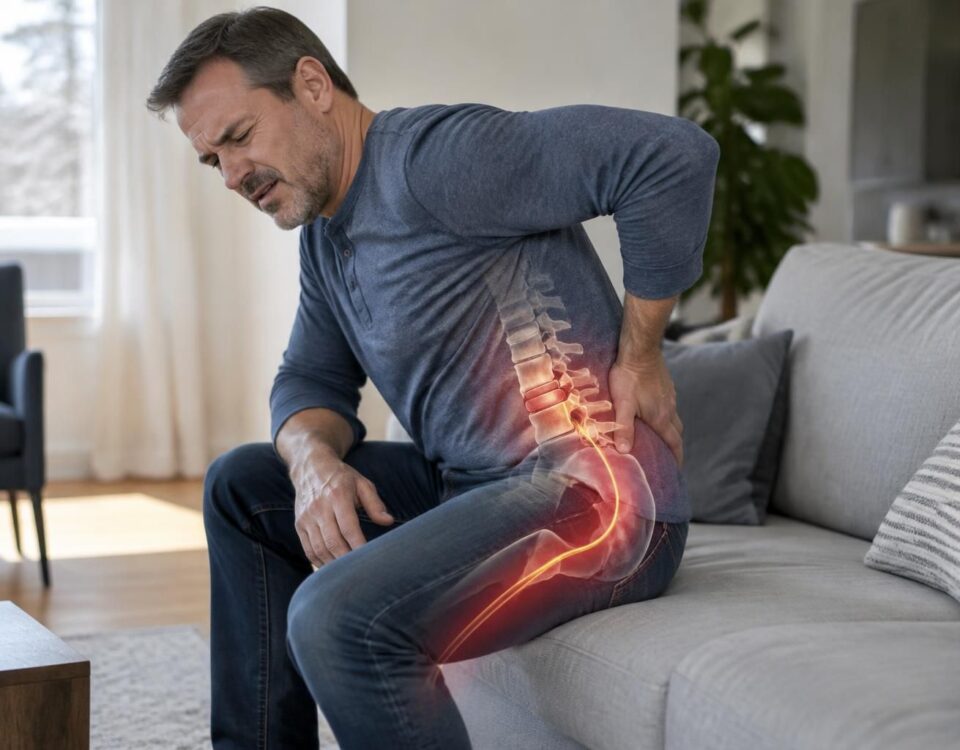
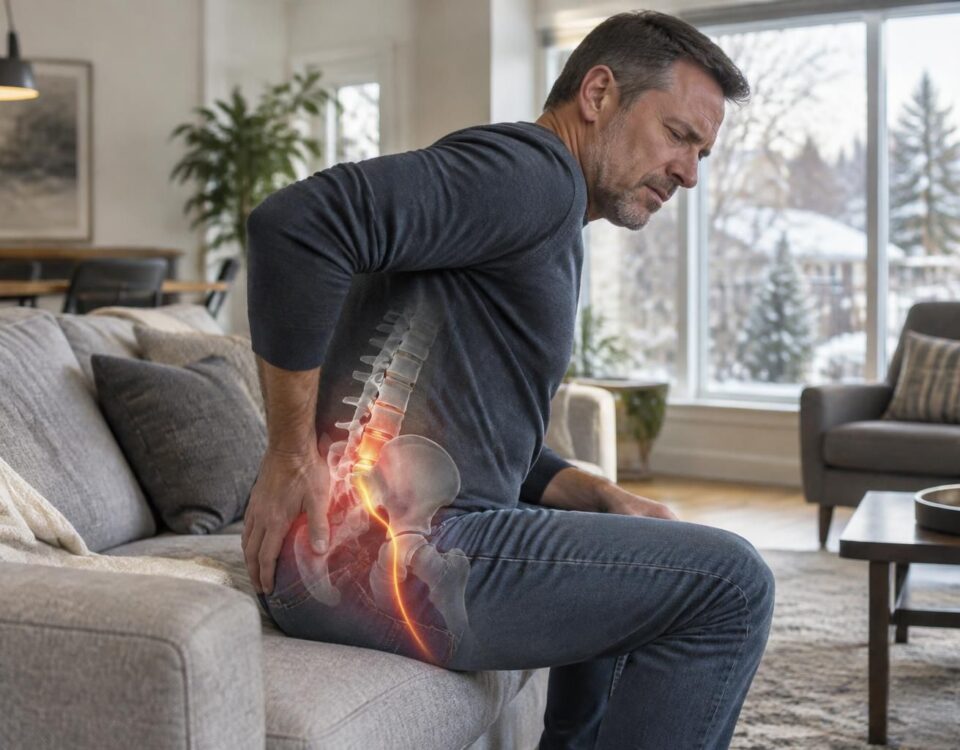
In Terrebonne, disk dehydration can sometimes be associated with lower back pain radiating to the buttock or leg. However, these symptoms alone do not determine the cause: a professional evaluation is necessary.
Depending on the situation, a non-surgical approach may be considered to assist in the management of pain compatible with sciatica. In case of significant or progressive weakness, loss of bowel or bladder control, or numbness in the saddle area, seek medical attention quickly.
Disk dehydration refers to a loss of hydration of a disk between the vertebrae. It may appear on imaging, but does not on its own prove the cause of pain that radiates to the buttock or leg. In Terrebonne, an assessment must take into account symptoms, their evolution, and the results of the clinical examination to guide the person towards cautious management.
What does disk dehydration mean?
Intervertebral disks are located between the vertebrae. They help distribute loads and allow for movement of the spine. Over time, a disk may lose some of its water. An imaging report may then mention dehydration or degenerative changes.
This finding is common and does not always mean that a disk is causing symptoms. Some people have dehydration without pain. To understand radiating pain, the professional must compare imaging with reported signs and examination results.
Sciatica in Terrebonne: disc degeneration and symptoms in the leg
IN BRIEF Disc degeneration-related sciatica refers to pain that radiates from the lower back to the buttock and down the leg when a nerve root is irritated. It may be accompanied by tingling, numbness, or weakness. In Terrebonne, an evaluation…
Sciatica in Terrebonne: possible annular tear and nerve irritation
IN BRIEF A disc tear is a small lesion of the disc that can sometimes irritate a nerve root and contribute to sciatica, with pain radiating to the buttock or leg. However, it is not always the cause: an assessment…
Why can pain radiate down the leg?
Pain that starts from the lower back and spreads to the buttock, thigh, calf, or foot may be compatible with irritation of a lumbar nerve root. A herniated disk, narrowing of the openings where nerves pass, or other changes in the spine can sometimes contribute to the symptoms. Dehydration alone cannot confirm their origin.
The affected area and the path of the pain provide clues, but they are not enough to establish a diagnosis. Pain in the foot can also occur without marked lower back pain. To better understand this picture, consult our article on foot pain without lower back pain.
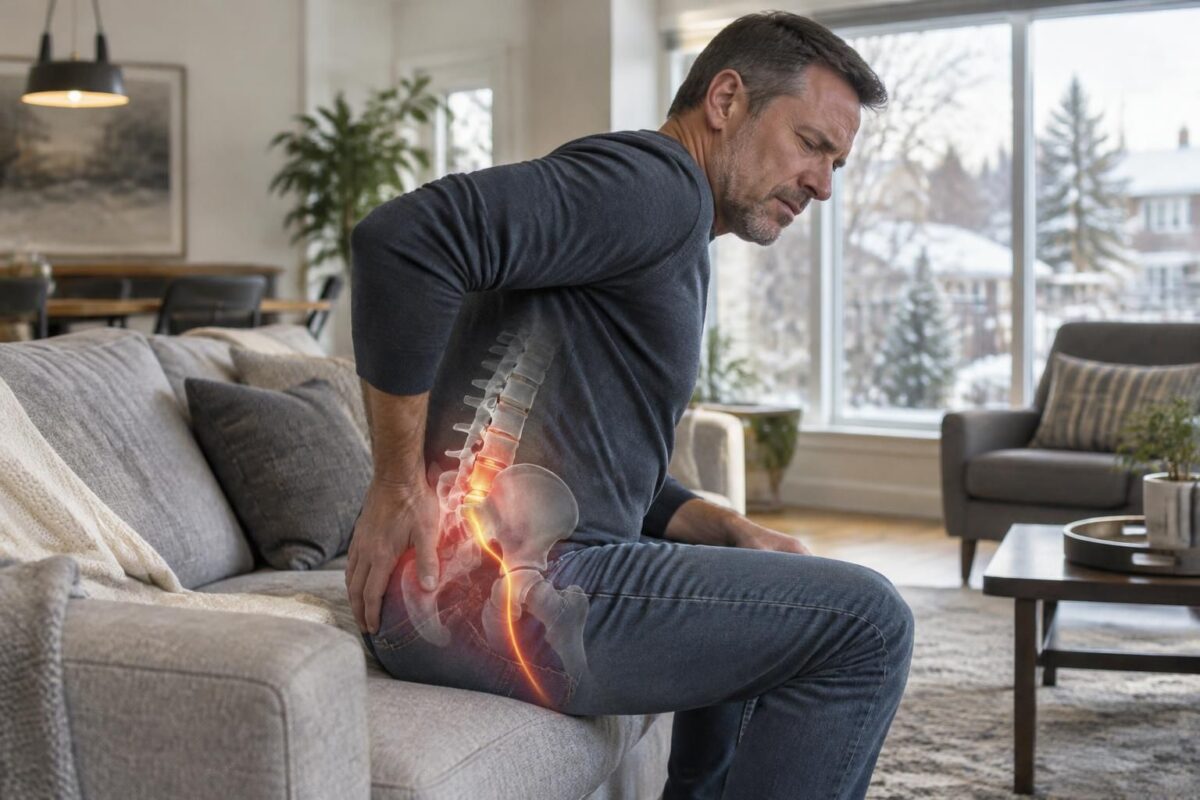
Sciatica in Terrebonne: disc bulge and buttock pain
IN BRIEF Sciatica related to a disc bulge can cause buttock pain, sometimes accompanied by pain that radiates down the leg. An assessment in Terrebonne helps clarify the cause of the symptoms and determine suitable non-surgical options, without guaranteeing a…
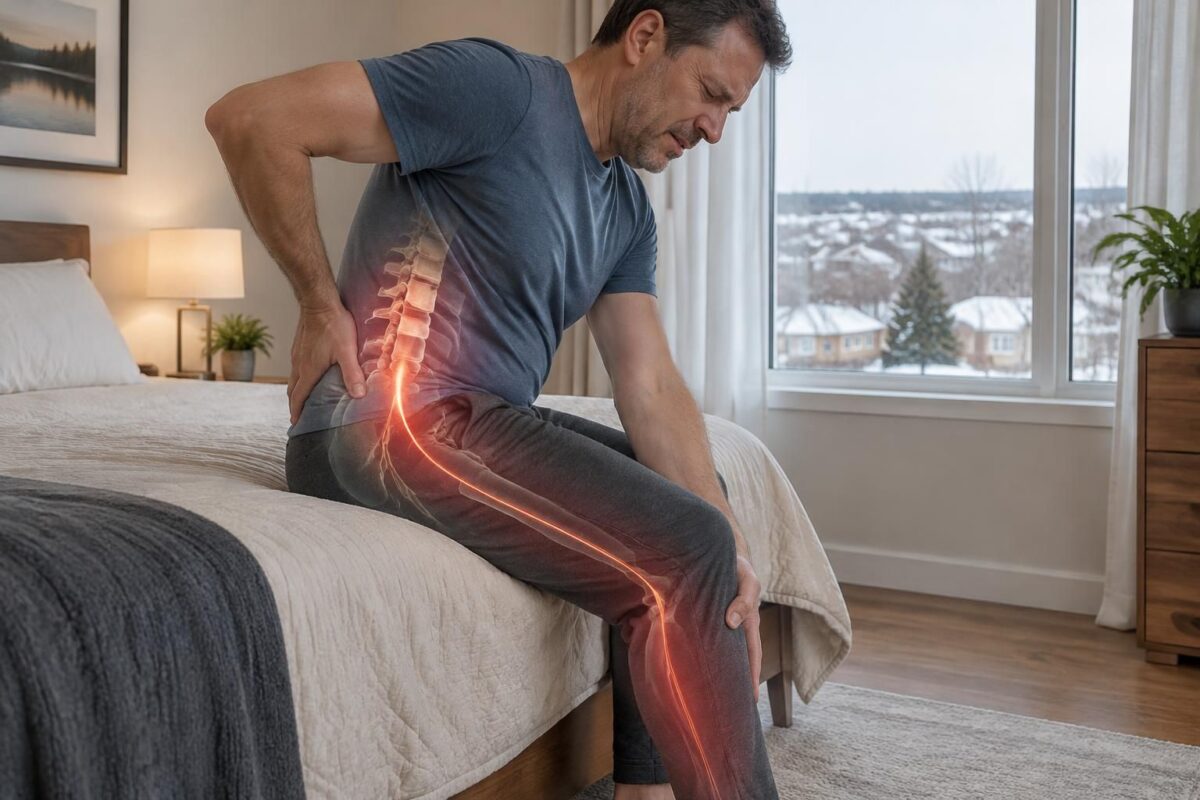
Sciatica in Terrebonne: disc protrusion and pain under the knee
IN BRIEF A sciatic pain related to a disc protrusion can cause lower back or buttock pain that radiates below the knee, sometimes accompanied by tingling or numbness. In Terrebonne, an assessment helps distinguish nerve-related pain from a knee problem…
The level of the disk alone does not explain the symptoms
The L4-L5 and L5-S1 levels are often examined when a person has symptoms compatible with sciatica. However, the presence of a change at one of these levels does not automatically confirm that it is responsible for the pain. The interpretation depends on the overall clinical picture.
To discover the general differences between these levels, read our presentation on L4-L5 and L5-S1. You can also consult our article on why L5-S1 is often involved.
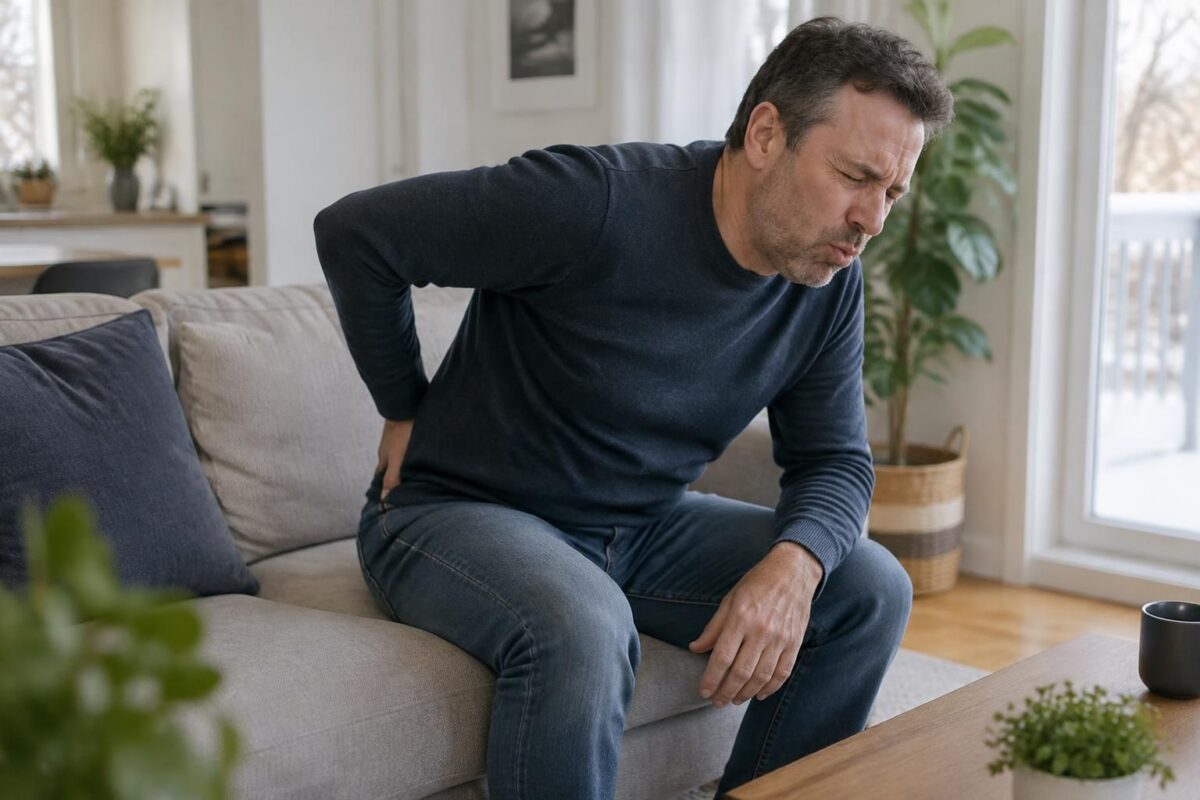
Sciatica in Terrebonne: disc herniation and painful cough
IN BRIEF In Terrebonne, sciatica related to a herniated disc may be accompanied by pain that increases when coughing, as the pressure exerted can further irritate a nerve root. An evaluation helps to understand the origin of the symptoms and…

Sciatica in Terrebonne: pain worsened in sitting position and lumbar disc
IN SHORT Aggravated sciatica in a sitting position may be related to the irritation of a lumbar nerve root, sometimes associated with a lumbar disc. In Terrebonne, varying positions, taking short active breaks, and getting an evaluation can help better…
The clinical examination helps guide management
An evaluation examines notably the path of pain, numbness, tingling, and changes in strength or sensitivity. The professional also considers the evolution of symptoms, activities that aggravate them, and previous examinations. This approach helps determine if a medical consultation or further examinations are necessary.
Symptoms associated with irritation of L5 or S1 may be similar. The clinical examination helps to clarify hypotheses and avoid drawing conclusions from an image alone. To learn more, consult our article on irritation of L5 or S1 and the importance of clinical examination.

Sciatica in Terrebonne: pain worsened by flexion and disc-related cause
IN BRIEF Aggravated sciatica by flexion is pain that starts in the lower back and radiates into the buttock or leg; a lumbar disc herniation can irritate a nerve root, although it may not be the only possible cause. In…

Disc herniation in Terrebonne: why some stretches worsen
IN BRIEF Discogenic sciatica is pain related to the irritation of a nerve, sometimes worsened by certain stretches that intensify the symptoms. In Terrebonne, avoiding movements that cause pain to radiate down the leg and focusing on an appropriate approach…
Choosing a cautious approach in Terrebonne
The choice of care depends on the symptoms, the examination, and the general state of the person. An image showing dehydration is not enough to determine treatment. A cautious approach considers the person’s goals and respects the limits of each intervention.
At Clinique TAGMED, the evaluation may lead to a discussion about available options, which may include, depending on the case, motorized neurovertebral decompression, specific osteopathy, or precision percussion. These approaches may not be suitable for all situations and do not replace a medical diagnosis. To understand the principles of a cautious choice, read our article on lumbar roots and the choice of a cautious treatment.
For an evaluation related to sciatica, consult the services for treatment of sciatica in Terrebonne. The proposed management depends on the evaluation and situation of each individual.
When to seek medical assistance quickly
Consult a doctor or emergency service quickly in cases of loss of bowel or bladder control, numbness in the saddle area, significant or progressive weakness of the leg or foot, fever, recent trauma, severe pain, or rapid worsening.
About the author
Sylvain Desforges, B.Sc., D.O., N.D., Doctor in Osteopathy and Naturopath, is the founding president of TAGMED and the ACMA association. He dedicates his practice to chronic spinal pain, lower back pain, and pain compatible with sciatica, particularly when the pain radiates to the buttock, leg, calf, foot, or toes.
Through SOS Sciatique, he publishes educational content about the symptoms of sciatica, possible causes such as herniated disc, disc pinching, foraminal stenosis, or irritation of a lumbar nerve root, as well as on non-surgical approaches that may be considered based on the evaluation. At the TAGMED Clinic, treatments may include, depending on the case, neurovertebral decompression, specific osteopathy, or precision percussion.
For an evaluation related to sciatica treatment in Montreal or Mont-Royal, or sciatica treatment in Terrebonne, consult the available services at the TAGMED Clinic.
Medical Warning
The information published on SOS Sciatique is provided for educational purposes and does not replace a consultation, diagnosis, opinion, or treatment performed by a physician or another licensed healthcare professional. The author of this article is neither a physician nor a specialist in a medical specialty recognized by the Collège des médecins du Québec. The osteopathic, manual medicine, or functional support approaches described on this site do not constitute medical acts and are not intended to replace medical follow-up. Consult a doctor or emergency service in case of loss of bladder or bowel control, numbness in the saddle region, significant or progressive weakness of the leg or foot, fever, recent trauma, severe pain, or rapid deterioration. For more details, please read our Legal Notice.
Medical Disclaimer: The information and advice provided on this site do not replace the opinion, diagnosis, or treatment of a healthcare professional. Please note that Sylvain Desforges, B.Sc., D.O., N.D., doctor of osteopathy, is neither a medical doctor nor a physician, and is not a specialist in a medical specialty as defined by the Collège des médecins du Québec. Manual medicine, functional medicine, and sports medicine as described on this site exclude any treatment or medical diagnosis performed by a physician or specialist. Always consult your doctor for any medical questions. For more details, please read our complete Legal Notice.
- Disc desiccation: loss of hydration of a disc, sometimes associated with stiffness or lower back pain.
- Radiating pain: may radiate from the buttock down to the thigh, calf, or foot.
- Evaluation in Terrebonne: helps clarify symptoms and options suited to your situation.
- Do not confuse: visible desiccation on imaging does not, by itself, prove the cause of the pain.
- Non-surgical approaches: may be considered after an evaluation, depending on symptoms and context.
- Consult quickly in case of progressive weakness, loss of bladder or bowel control, or numbness in the saddle region.

Disc desiccation refers to a reduction in the hydration of a disc between the vertebrae. It can be observed on imaging and sometimes coexist with pain that radiates into the buttock or leg, but it is not always the cause. In Terrebonne, an appropriate evaluation helps clarify symptoms, identify signs requiring medical advice, and choose cautious measures to promote mobility.
Disc Desiccation and Sciatica: Understanding the Link
The intervertebral discs help distribute forces and allow movements of the spine. Over time, or in certain contexts, their water content may decrease: this is what is called disc desiccation. This finding may appear in an imaging report without necessarily causing pain.
A pain referred to as “sciatica” may manifest as low back pain radiating to the buttock, thigh, calf, or foot. Tingling or numbness may also be present. Several factors may contribute to these symptoms, including irritation of a nerve root, a herniated disc, or narrowing of the spaces through which nerves pass. Imaging alone does not always determine the source of pain: symptoms and clinical examination must also be considered.
Recommendations for Better Management of Radiating Pain
Stay Active Without Overexerting
When pain allows, short walks and gentle movements can help maintain daily activities. However, avoid movements that trigger significant or lasting aggravation, and temporarily adapt tasks that require lifting, twisting the trunk, or staying in the same position for a long time. Prolonged bed rest is generally not a recommended strategy without professional advice.
Observe the Evolution of Symptoms
Note when pain occurs, positions that modify it, and any presence of tingling or weakness. This information can support a professional evaluation. If symptoms persist, frequently recur, or limit your activities, seek advice from a licensed healthcare professional to determine the next steps. A manual or functional approach may be considered based on the evaluation but does not replace a medical diagnosis or indicated follow-up.
Choose an Appropriate Evaluation in Terrebonne
For pain consistent with sciatica in Terrebonne, seek an evaluation that takes into account their distribution, duration, your functional capabilities, and your history. Depending on the situation, non-surgical care may include movement advice, tailored exercises, or manual therapy approaches. Motorized neurovertebral decompression, specific osteopathy, or other modalities may not be suitable for everyone: their relevance must be discussed on a case-by-case basis, without a guarantee of outcome.
When to Consult Quickly
Consult a doctor or emergency service without delay in case of loss of bladder or bowel control, numbness in the saddle region, significant or progressive weakness of the leg or foot, fever, recent trauma, severe pain, or rapid worsening. These signs require prompt medical evaluation.
About the author
Sylvain Desforges, B.Sc., D.O., N.D., Doctor of Osteopathy and Naturopath, is the founding president of TAGMED and the ACMA association. His practice focuses particularly on chronic spinal pain, lower back pain, and pain compatible with sciatica. At the TAGMED Clinic, care may include, depending on the assessment, motorized neurovertebral decompression, specific osteopathy, or precision impact therapy.
Medical disclaimer
This information is provided for educational purposes and is not a substitute for consultation, diagnosis, advice, or treatment performed by a doctor or other licensed health professional. The author is neither a physician nor a specialist in a medical specialty recognized by the Collège des médecins du Québec. Osteopathy, manual therapy, or functional support approaches do not constitute medical acts and do not replace medical follow-up.
| Marker | Key Points |
|---|---|
| Disc dehydration | Less hydrated disc, often related to age. |
| Radiating pain | Can travel from the buttock down the leg. |
| Link to sciatica | A disc image does not confirm, alone, the cause of the symptoms. |
| Signs to watch | Tingling, numbness, or weakness in the leg. |
| Evaluation in Terrebonne | A professional can examine the symptoms and functional capabilities. |
| Possible approach | Non-surgical care is chosen based on assessment and tolerance. |
| Consult quickly | Progressive weakness, loss of bladder or bowel control, or numbness in the saddle region. |
Important: the testimonials below are fictional and written for illustrative purposes. They do not correspond to real patient opinions and do not guarantee any results.
“The pain went down to my calf”
In Terrebonne, a person described in this example feels lower back pain radiating into the buttock and calf. An imaging exam suggests disc dehydration. They are seeking to better understand the possible link between disc changes and their symptoms, and to have their situation assessed before considering care.
“I wanted to understand what disc dehydration meant”
In this fictional scenario, a person consults after learning they have reduced hydration of an intervertebral disc. Their pain sometimes radiates to the leg. They want a clear explanation of their imaging report and to know which non-surgical options might be appropriate based on the assessment of their symptoms.
“The symptoms varied from day to day”
This example features a person from Terrebonne whose lower back pain is accompanied by sensations of pulling or tingling in the leg. The presence of disc dehydration on imaging alone is not enough to explain all the symptoms: clinical examination and the evolution of the pain are also important.
In cases of radiating pain, an individual evaluation can help distinguish possible causes and determine if a non-surgical approach is suitable. Care should be chosen based on the person’s situation; no testimony or treatment can promise a result.
About the author
Sylvain Desforges, B.Sc., D.O., N.D., Doctor of Osteopathy and Naturopath, dedicates his practice to supporting individuals living with chronic spinal pain, lower back pain, and symptoms compatible with sciatica. As the founding president of TAGMED clinics and the ACMA association, he is interested in health innovation and the reasoned integration of manual approaches and technologies into care plans.
In Terrebonne, a pain that starts from the lower back and descends into the buttock or leg can be challenging on a daily basis. Some individuals describe shooting pains, burning sensations, tingling, or a feeling of weakness. These manifestations may be compatible with irritation of a lumbar nerve root, but they do not alone establish a diagnosis. An evaluation by a licensed health professional is important to clarify possible causes and determine the appropriate course of action.
Among the elements sometimes observed during an imaging examination is disc dehydration, which means a decrease in the hydration of an intervertebral disc. This change can appear with aging and does not automatically mean it is responsible for the pain. Its significance should be interpreted alongside symptoms, clinical examination, and the complete medical history. A herniated disc, foraminal stenosis, or other factors may also be considered by the professional conducting the evaluation.
Sylvain Desforges’ approach aims to better understand the functional repercussions of symptoms: tolerance for walking, working, sitting, or usual activities. Depending on the situation, support may include specific osteopathy, tailored advice, and technological modalities such as motorized neurovertebral decompression. These services are not suitable for everyone and are considered on a case-by-case basis, after examining needs and contraindications. They do not replace a medical diagnosis or necessary care.
His work in the management of chronic pain is based on an individualized approach and the goal of improving comfort and function, without promising specific results. The relevance of an approach depends in particular on the likely origin of the pain, its duration, its evolution, and the overall state of the person. At the TAGMED Clinic, the available options can be discussed so that everyone can better understand the services offered and their potential place in a care pathway.
Individuals looking to explore support options for sciatica in Terrebonne can request an evaluation at the TAGMED Clinic. A consultation allows for a review of symptoms, goals, and possible options, while guiding towards a physician when necessary.
Medical warning: This information is provided for educational purposes and does not replace a consultation, diagnosis, opinion, or treatment from a physician or another authorized healthcare professional. The author is neither a physician nor a specialist in a medical specialty recognized by the Collège des médecins du Québec. The approaches described do not constitute medical acts. Seek immediate medical attention in case of loss of urinary or bowel control, numbness in the saddle region, significant or progressive weakness, fever, recent trauma, severe pain, or rapid worsening.
Disc dehydration refers to a decrease in hydration of an intervertebral disc. It may appear in imaging without being, on its own, evidence that the disc is causing the symptoms. In Terrebonne, when lower back pain radiates to the buttock or leg, the evaluation aims to correlate the symptoms, clinical examination, and imaging results to determine the management options that can be considered.
Disc Dehydration and Radiating Pain in Terrebonne
A less hydrated disc may show changes in height or contour, but radiating pain may also be related to other factors, such as irritation of a nerve root or referred pain from nearby structures. The difference between radicular pain and referred pain depends in particular on the pathway of the pain, associated sensations, and examination results. An image alone is therefore not sufficient to establish the cause.
Burning sensations, tingling, or numbness in the foot may sometimes accompany nerve irritation, but they do not allow for a diagnosis to be made in isolation. To better understand this type of manifestation, consult our article on burning in the foot and possible nerve compression. Calf pain that resembles a cramp may also require careful evaluation, as several causes are possible.
The location of the symptoms can provide clues, without confirming a precise level of the spine on its own. For example, calf pain can be examined in the context of a possible issue in the L5-S1 region and symptoms in the calf. Other patterns may associate buttock pain with a disc bulge, but this link must be interpreted with caution and according to the entire case.
To delve deeper into these situations, you can consult information on calf pain resembling a cramp and on disc bulge associated with buttock pain. These resources are educational: they do not replace a consultation or the interpretation of an examination by an authorized healthcare professional.
If the pains persist or limit your activities, an individualized evaluation can help clarify the factors to consider and discuss non-surgical approaches suitable for your situation. At the TAGMED Clinic, options may include, depending on the evaluation, specific osteopathy or motorized neurovertebral decompression. To learn about the available services, consult the page dedicated to sciatica treatment in Terrebonne. No results can be guaranteed, and care does not replace medical follow-up when indicated.
About the author
Sylvain Desforges, B.Sc., D.O., N.D., Doctor of Osteopathy and Naturopath, is the founding president of TAGMED and the ACMA association. He dedicates his practice to chronic spinal pain, lower back pain, and pain compatible with sciatica.
Medical warning
The information published on SOS Sciatique is provided for educational purposes and does not replace a consultation, diagnosis, opinion, or treatment carried out by a physician or another authorized healthcare professional. The author is neither a physician nor a specialist in a medical specialty recognized by the Collège des médecins du Québec. Seek immediate medical attention in case of loss of urinary or bowel control, anesthesia in the saddle region, significant or progressive weakness of the leg or foot, fever, recent trauma, severe pain, or rapid worsening. For more details, consult the Legal Notice.

Sylvain Desforges, B.Sc., D.O., N.D., docteur en ostéopathie
Dr Sylvain Desforges, B.Sc., D.O., N.D., osteopath, is the founding president of TAGMED and of the ACMA association. He dedicates his practice to chronic spinal pain, low back pain and symptoms compatible with sciatica, particularly when pain radiates toward the buttock, leg, calf, foot or toes.
Through SOS Sciatique, he publishes educational content on sciatica symptoms, possible causes such as disc herniation, disc narrowing, foraminal stenosis or irritation of a lumbar nerve root, as well as non-surgical approaches that may be considered according to the evaluation. At Clinique TAGMED, care may include, depending on the case, motorized neurovertebral decompression, specific osteopathic care or precision percussion.
For an evaluation related to sciatica treatment in Montreal / Mount Royal or sciatica treatment in Terrebonne, please consult the services available at Clinique TAGMED.
Medical disclaimer
The information published on SOS Sciatique is provided for educational purposes only and does not replace a consultation, diagnosis, opinion or treatment provided by a physician or another authorized healthcare professional. The author of this article is neither a medical doctor nor a specialist in a medical specialty recognized by the Collège des médecins du Québec. The osteopathic, manual medicine or functional support approaches described on this site do not constitute medical acts and are not intended to replace medical follow-up.
Consult a physician or emergency service in cases of loss of bladder or bowel control, anesthesia in the saddle area, significant or progressive weakness in the leg or foot, fever, recent trauma, severe pain or rapid worsening of symptoms. For more details, please read our Legal Notice.