Sciatica in Montreal: herniated disc and painful cough
23/11/2026
Sciatica and pain with progressive weakness
23/11/2026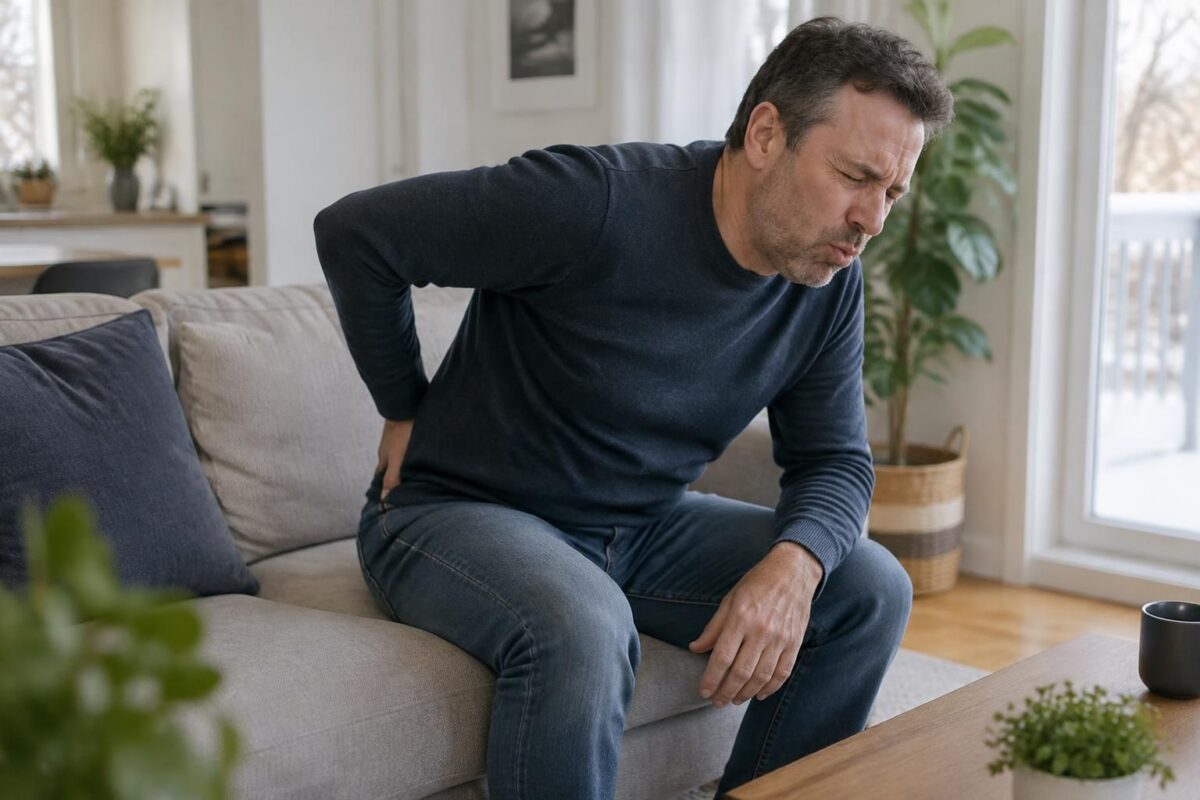
IN BRIEF In Terrebonne, sciatica related to a herniated disc may be accompanied by pain that increases when coughing, as the pressure exerted can further irritate a nerve root. An evaluation helps to understand the origin of the symptoms and to consider appropriate care, without guaranteeing results. Gradual weakness, significant loss of sensitivity, or urinary or bowel problems require urgent consultation. |
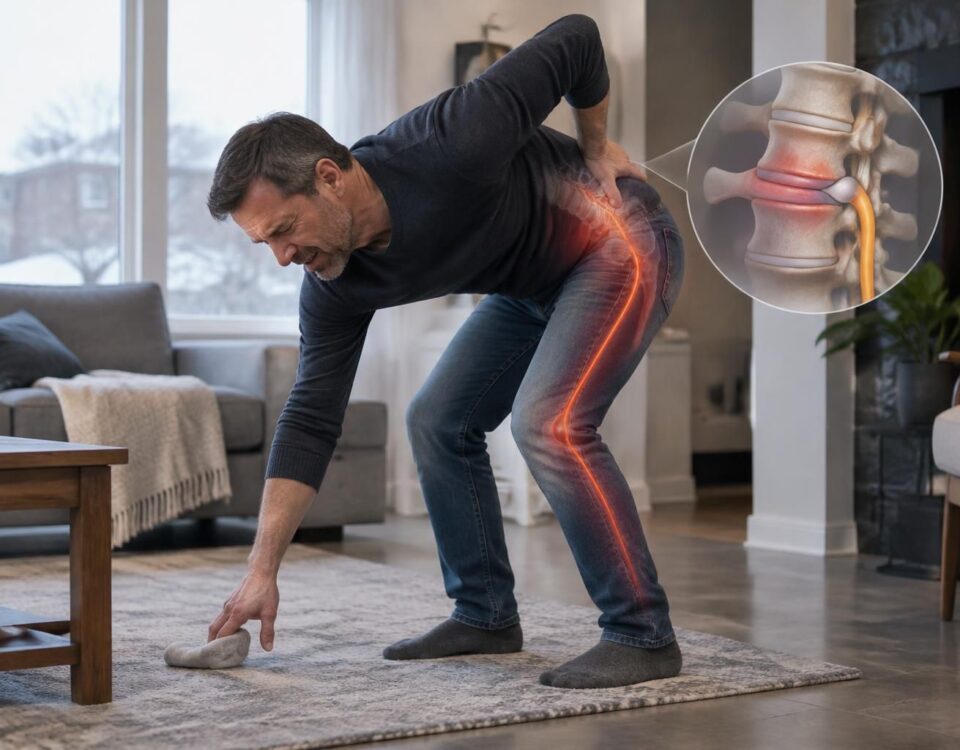
In Terrebonne, pain that starts from the lower back and descends into the leg may be compatible with sciatica. In the presence of a herniated disc, coughing can sometimes worsen the pain by increasing pressure in the back, but this symptom alone is not enough to confirm the cause. An evaluation provides a better understanding of the symptoms and considers appropriate options, including non-surgical approaches as required.
Consult a healthcare professional quickly if the pain worsens or is accompanied by significant weakness, loss of bowel or bladder control, or numbness in the saddle area.
In Terrebonne, a painful cough accompanied by pain that descends into the buttock or leg may be related to irritation of a lumbar nerve root, sometimes associated with a herniated disc. Coughing may temporarily increase the pain, but it is not sufficient to confirm a hernia. An evaluation helps to clarify the symptoms, rule out signs of urgency, and discuss appropriate management options.
Why can coughing increase sciatica pain?
Coughing causes a brief increase in pressure in the trunk and mobilizes the back and abdominal muscles. If a lumbar nerve root is already irritated, this action can make the pain sharper during coughing, sneezing, or sometimes straining to have a bowel movement. The pain may remain in the lower back or spread to the buttock, thigh, calf, or foot.
Pain triggered by coughing does not automatically mean that a herniated disc is present. Other causes can produce similar symptoms. The healthcare professional evaluates the location of the pain, its evolution, the presence of numbness, and the strength of the leg. Imaging is not necessary in all cases; a doctor can determine its usefulness based on the situation.
When can a herniated disc be involved?
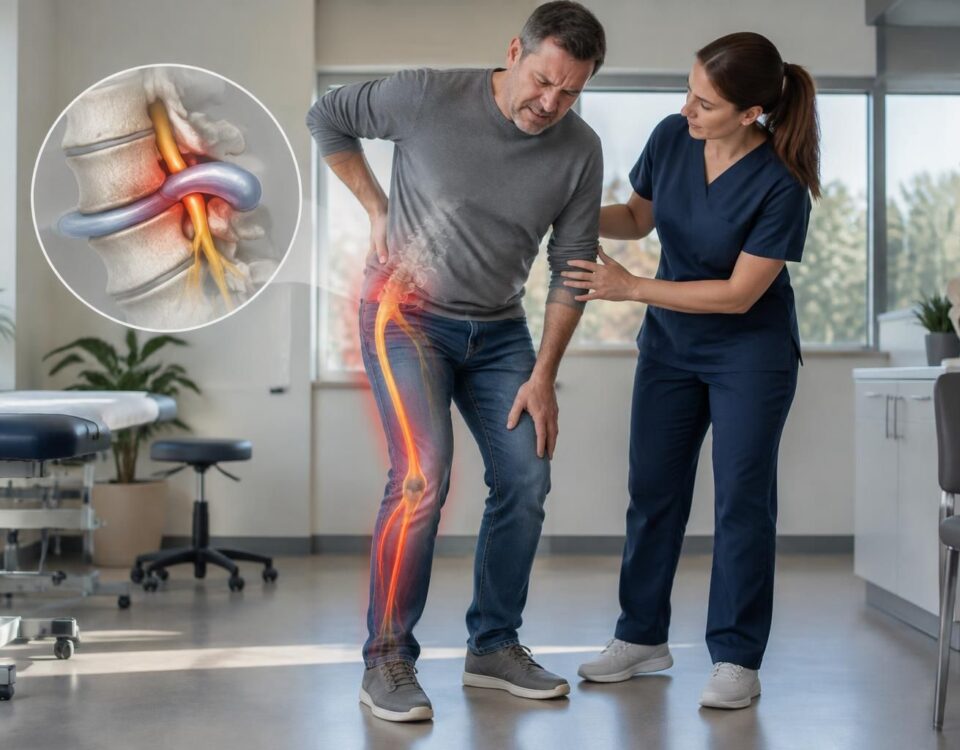
A herniated disc occurs when part of the intervertebral disc protrudes and can irritate a nerve root. Depending on its location and the signs observed, it can contribute to lower back pain or sciatic-type pain. Only a qualified healthcare professional can provide a medical diagnosis. The results of imaging must also be interpreted alongside symptoms and clinical examination.
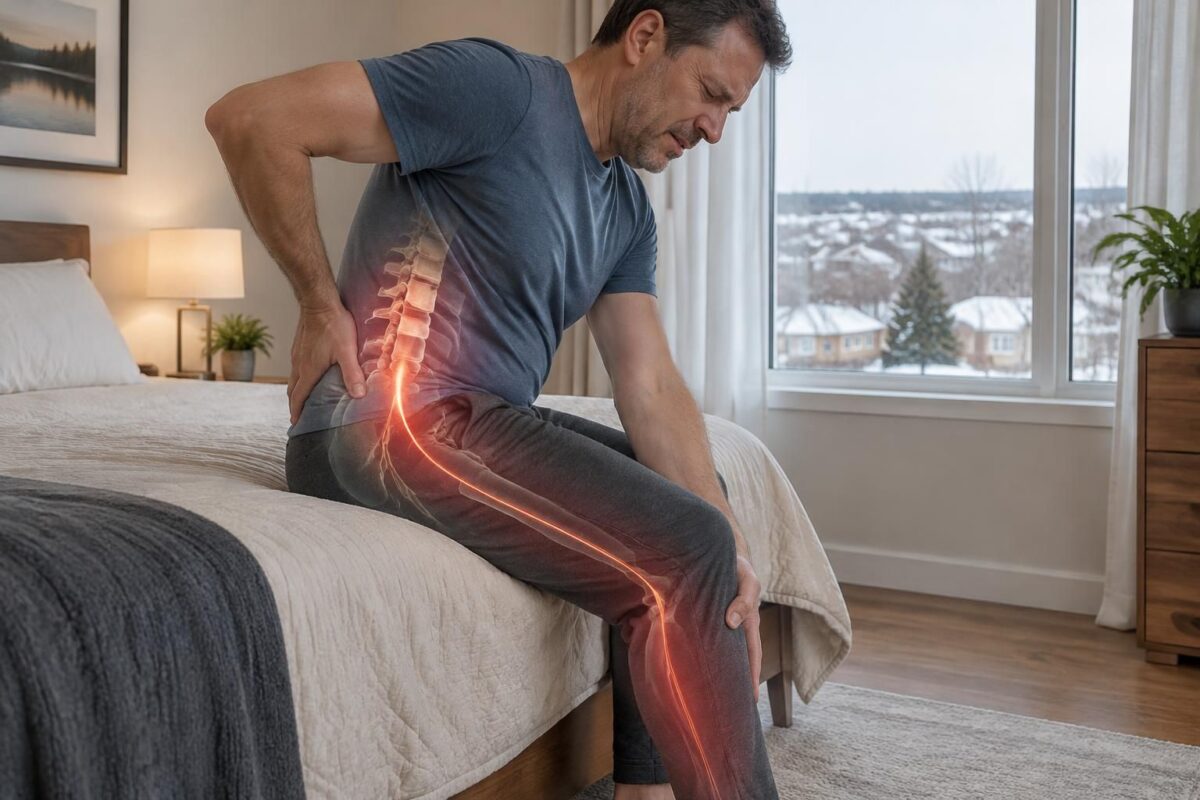
Sciatica in Terrebonne: disc protrusion and pain under the knee
IN BRIEF A sciatic pain related to a disc protrusion can cause lower back or buttock pain that radiates below the knee, sometimes accompanied by tingling or numbness. In Terrebonne, an assessment helps distinguish nerve-related pain from a knee problem…

Sciatica in Terrebonne: pain worsened in sitting position and lumbar disc
IN SHORT Aggravated sciatica in a sitting position may be related to the irritation of a lumbar nerve root, sometimes associated with a lumbar disc. In Terrebonne, varying positions, taking short active breaks, and getting an evaluation can help better…
Symptoms to watch for
Sciatica can cause pain that follows part of the nerve path, with or without lower back pain. Some people experience tingling, numbness, or weakness. Note the activities that aggravate the pain, its duration, and the affected areas. This information can help during the assessment.
Consult a doctor or emergency service quickly in case of loss of bowel or bladder control, numbness in the saddle area, significant or progressive weakness of the leg or foot, fever, recent trauma, severe pain, or rapid worsening. These signs require immediate medical evaluation.

Sciatica in Terrebonne: pain worsened by flexion and disc-related cause
IN BRIEF Aggravated sciatica by flexion is pain that starts in the lower back and radiates into the buttock or leg; a lumbar disc herniation can irritate a nerve root, although it may not be the only possible cause. In…

Disc herniation in Terrebonne: why some stretches worsen
IN BRIEF Discogenic sciatica is pain related to the irritation of a nerve, sometimes worsened by certain stretches that intensify the symptoms. In Terrebonne, avoiding movements that cause pain to radiate down the leg and focusing on an appropriate approach…
Adjusting daily movements without straining
When coughing triggers pain, it may be useful to temporarily limit the movements that exacerbate it, without trying to “tough it out” through severe pain. For advice on dressing and common movements, check our article on sciatica and adapting daily movements.
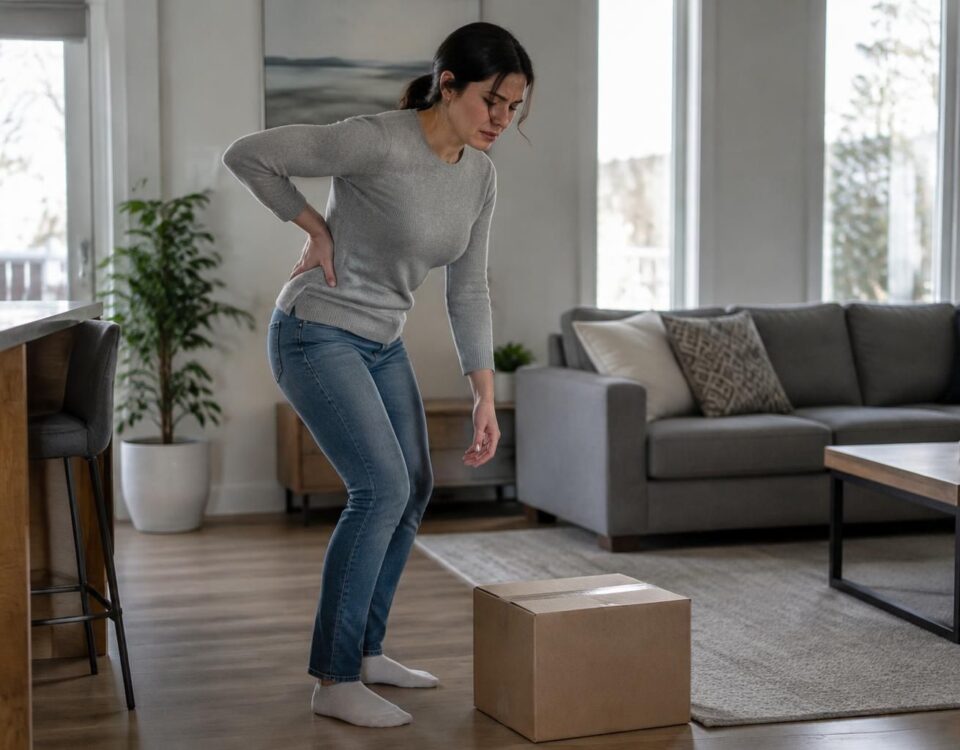
Bending forward may also increase symptoms in some individuals, but the reaction varies depending on the cause and stage of pain. Our page on sciatica and bending forward explains why this movement deserves individual evaluation. In the presence of a suspected or diagnosed herniated disc, avoid starting exercises or stretches without advice tailored to your situation.
When pain limits activities
Pain that prevents walking, sleeping, or performing usual tasks deserves special attention. The article Disabling sciatica: what to do when the leg limits activities provides guidelines for recognizing functional limits and knowing when to seek help.
The fear of moving can also set in after several painful episodes. It does not mean that the pain is imaginary. A gradual and well-guided approach can help prevent worry and reduced activity from perpetuating difficulties. To learn more, read Sciatica and fear of moving: how to avoid the vicious circle and Sciatica and controlled movement: why adaptation matters.

Sciatica disc in Terrebonne: movements to avoid at the beginning
IN BRIEF Disc-related sciatica corresponds to a nerve irritation that can cause pain from the lower back to the buttock or leg. Initially, avoid movements that worsen the pain, such as deep bends, sudden twists, and carrying heavy loads. In…

Sciatica in Terrebonne: disc herniation with leg weakness
IN SHORT Sciatica related to a disc herniation can cause pain that radiates down the leg, sometimes accompanied by weakness. In Terrebonne, an assessment helps guide management based on symptoms and their progression. A new, significant, or progressive weakness requires…
Assessment and management options in Terrebonne
A consultation can help clarify the nature of the symptoms and determine if medical referral is necessary. At the TAGMED Clinic, the offered services may include, depending on the evaluation and situation, specific osteopathy, precision percussion, or motorized neurovertebral decompression. These approaches do not replace a medical diagnosis and are not suitable for everyone. The appropriateness of care particularly depends on the symptoms, history, and possible contraindications.
To learn about assessment options and available services, check the page on sciatica treatment in Terrebonne or the site of the TAGMED Clinic. If your symptoms suggest an emergency, consult a doctor or emergency service first.
About the author
Sylvain Desforges, B.Sc., D.O., N.D., Doctor of Osteopathy and Naturopath, is the founding president of TAGMED and the ACMA association. He dedicates his practice to chronic pain of the spine, lower back pain, and pain associated with sciatica, particularly when the pain radiates down to the buttock, leg, calf, foot, or toes.
Through SOS Sciatica, he publishes educational content on sciatica symptoms, possible causes such as herniated discs, disc pinching, foraminal stenosis, or irritation of a lumbar nerve root, as well as on non-surgical approaches that may be considered based on the evaluation. At TAGMED Clinic, care may include, depending on the case, motorized neurovertebral decompression, specific osteopathy, or precision impactors.
For an evaluation related to sciatica treatment in Montreal / Mont-Royal or sciatica treatment in Terrebonne, check the services available at the TAGMED Clinic.
Medical Disclaimer: The information and advice provided on this site do not replace the opinion, diagnosis, or treatment of a healthcare professional. Please note that Sylvain Desforges, B.Sc., D.O., N.D., Doctor of osteopathy, is neither a medical doctor nor a physician, and is not a specialist in any medical specialty as defined by the Collège des médecins du Québec. Manual therapy, functional medicine, and sports medicine as described on this site do not include any medical treatment or diagnosis performed by a physician or specialist. Always consult your doctor for any medical questions. For more details, please read our Full Legal Notice.
When Coughing Aggravates Pain
- A cough or sneeze can intensify pain that radiates from the lower back to the leg.
- A herniated disc may be involved, but this symptom alone cannot confirm the diagnosis.
- Note where the pain radiates and whether any tingling or weakness occurs.
In Terrebonne: Get the Situation Assessed
- An assessment allows for the examination of symptoms and the consideration of non-surgical options tailored to your case.
- Consult quickly if the pain worsens or if progressive weakness appears.
- In case of loss of bowel or bladder control or numbness in the saddle area, seek emergency care.

In Terrebonne, a painful cough associated with sciatica can occur when a herniated disc or nerve irritation makes certain movements and pressure variations more sensitive. This symptom alone does not confirm a herniation. An assessment helps to understand the situation, identify the signs that require medical advice, and choose appropriate measures to limit discomfort.
Why Can Coughing Intensify Sciatic Pain?
Sciatica refers to pain that follows the course of an irritated nerve, often from the lower back to the buttock and leg. A lumbar herniated disc can, in some cases, contribute to the irritation of a nerve root. Coughing, sneezing, or straining can then temporarily increase pain, especially if the lumbar region is already sensitive.
Pain may be felt as a sharp, burning, or shooting sensation. It may radiate down to the calf or foot, sometimes accompanied by tingling or numbness. However, several problems can cause similar symptoms. Avoid concluding that you have a herniated disc based solely on pain triggered by coughing.
Recommendations for the First Few Days
Adopt Tolerable Movements
If the pain allows, continue light daily activities while adapting them. Short walks may be preferable to prolonged immobility, but it’s best to temporarily reduce movements that significantly worsen symptoms, such as lifting a load while bending or making a sudden twist. Change positions regularly and resume efforts gradually.
Try Coughing Without Straining Your Back
At the moment of coughing, some people find it more comfortable to sit or gently support the trunk with their hands or a cushion. This action is not a treatment for the cause, but it may help tolerate the effort better. If coughing persists, is accompanied by breathing difficulties, or other concerning symptoms, seek advice from a healthcare professional.
Avoid stretches, manipulations, or exercises that trigger sharp pain or worsen it down the leg. An exercise that is helpful for one person may not be suitable for another: the selection should consider your symptoms and overall condition.
When to Seek an Assessment in Terrebonne?
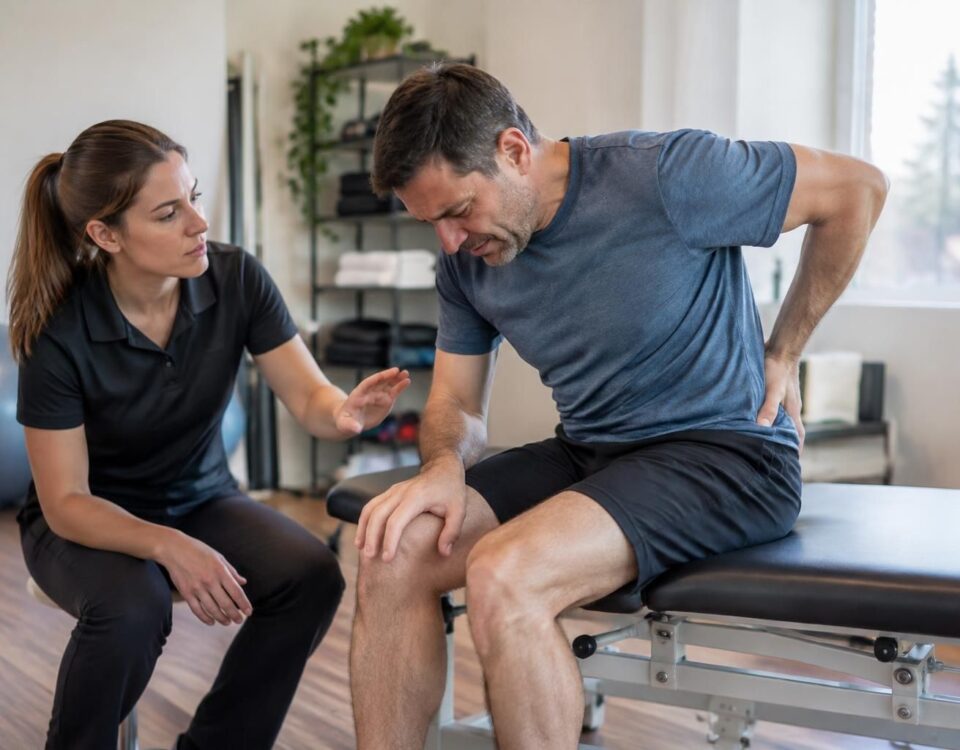
If the pain is severe, recurrent, disrupts sleep, or limits walking and activities, make an appointment with a licensed healthcare professional. An assessment can examine the evolution of the symptoms, strength, sensitivity, and movements, and determine whether medical consultation or further investigations are indicated.
At TAGMED Clinic, non-surgical support options can be discussed based on the evaluation and the individual’s situation. They may include specific osteopathy or motorized neurovertebral decompression when this approach is deemed appropriate. These interventions are not suitable for everyone and do not replace a diagnosis or medical follow-up. Personalized care in Terrebonne can help you better understand your options and plan your ongoing treatment.
Signs Requiring Urgent Attention
Consult a doctor or an emergency service promptly in case of loss of bladder or bowel control, numbness in the saddle region, significant or progressive weakness in the leg or foot, fever, recent trauma, or rapid worsening. These signs require medical evaluation and should not be addressed solely by manual care.
This content is educational and does not replace a consultation, diagnosis, or treatment by a licensed healthcare professional.
Guidelines for Understanding Sciatica Aggravated by Coughing
| Situation | To Remember |
|---|---|
| Pain that radiates down the leg | May be compatible with nerve irritation, without confirming its cause. |
| Pain worsened by coughing | Pressure may intensify symptoms; this does not prove a herniated disc. |
| Tingling or numbness | Note their location and evolution to discuss with the consulted professional. |
| Weakness in the leg or foot | A new or progressive weakness requires prompt evaluation. |
| Evaluation in Terrebonne | An examination can help clarify possible causes and suitable options. |
| Loss of urinary or bowel control | Consult an emergency service immediately. |
Illustrative Testimonials on Sciatica in Terrebonne: Herniated Disc and Cough Pain
Important Note: The examples below are fictional testimonials, written for informational purposes. They do not come from real patients and do not guarantee any outcomes. Pain radiating down the buttock or leg, particularly when accompanied by painful coughing, deserves appropriate evaluation.
Fictional Example — Pain in the Leg and Cough: “For several weeks, I had lower back pain that radiated into my buttock and leg. Coughing or sneezing sometimes intensified the pain. I sought an evaluation in Terrebonne to better understand the situation and discuss possible options.”
Fictional Example — Suspected Herniated Disc: “I had been told about a possible herniated disc, but I wasn’t sure if it explained my symptoms. The pain increased when I coughed and made certain activities difficult. The evaluation helped me take stock and figure out what steps to consider with the relevant professionals.”
Fictional Example — Persistent Symptoms: “My lower back pain returned regularly and was accompanied by unpleasant sensations in my leg. Since coughing sometimes triggered a sharp pain, I chose not to ignore the problem and sought advice.”
A cough-related pain can occur with various back or nerve problems; it does not, by itself, confirm a herniated disc or sciatica. The diagnosis and management options should be determined based on the history of symptoms and an appropriate evaluation.
In Terrebonne, an evaluation can help clarify symptoms and discuss non-surgical approaches that may be appropriate, depending on the case. Manual care or functional support does not replace a diagnosis or medical follow-up.
Consult a doctor or emergency service quickly in case of loss of urinary or bowel control, numbness in the saddle region, significant or progressive weakness in the leg or foot, fever, recent trauma, or rapid worsening of pain.
Sylvain Desforges, B.Sc., D.O., N.D., Doctor of Osteopathy and naturopath, is the founding president of TAGMED clinics and the ACMA association. For several years, he has dedicated his practice to supporting people living with persistent spinal pain, lower back pain, or symptoms compatible with sciatica. His approach particularly focuses on pain that starts in the lower back and radiates toward the buttock, thigh, calf, or foot.
In Terrebonne, lower back pain that intensifies during a cough can raise questions, especially when accompanied by a sensation of discharge or burning in one leg. Coughing temporarily increases pressure in the trunk and can make an already irritated area more sensitive. However, this sign alone does not confirm a herniated disc or sciatica. The evaluation must consider all symptoms, their progression, and the individual’s history.
A lumbar herniated disc occurs when a part of the disc between two vertebrae moves and can irritate a nearby nerve root. Depending on the situation, the pain may remain primarily in the back or radiate into the buttock and leg. Numbness, tingling, or weakness may also be present. Other causes, such as nerve irritation, narrowing of the openings where nerves pass, or musculoskeletal issues, can produce similar manifestations. It is therefore advisable to avoid self-diagnosis.
In his work, Sylvain Desforges emphasizes an individualized and cautious approach. A consultation can help document the location of the pain, actions that aggravate it, functional limitations, and reported neurological signs. This information contributes to determining whether non-surgical support is appropriate or if additional medical evaluation is necessary. The proposed interventions vary according to the individual’s profile; they may include, when indicated, specific osteopathy, functional approaches, or motorized neurovertebral decompression.
Technologies and manual care do not automatically suit everyone and do not replace a medical diagnosis. Pain triggered by coughing, persistent or accompanied by symptoms in the leg, deserves appropriate attention, especially if it worsens or limits daily activities. The goal of support is to help the individual better understand their condition and consider options corresponding to their evaluation, without promising a specific outcome.
For individuals seeking an evaluation related to sciatica in Terrebonne, TAGMED Clinic offers support services according to needs and availability. It is essential to consult a doctor or emergency service promptly in case of loss of urinary or bowel control, numbness in the saddle region, significant or progressive weakness in the leg or foot, fever, recent trauma, severe pain, or rapid worsening.
The information presented is educational and does not replace a consultation, diagnosis, or treatment from a doctor or another licensed healthcare professional. Sylvain Desforges is neither a doctor nor a specialist in a medical specialty recognized by the Collège des médecins du Québec. Osteopathy, manual medicine, and functional support do not constitute medical acts.
In Terrebonne, a herniated disc can irritate a nerve root and cause pain that starts in the lower back and radiates down into the buttock or leg. Coughing, sneezing, or straining can sometimes exacerbate this pain. An evaluation helps to better understand the symptoms and determine the options to consider.
When a person coughs, sneezes, or pushes, the pressure inside the torso increases. If a lumbar nerve root is already irritated, this movement can awaken or intensify pain in the lower back, buttock, or leg. This sign may be compatible with discogenic sciatica, but is not sufficient to confirm a herniated disc: a healthcare professional must assess the symptoms and their evolution.
The pain can be sharp or burning, gradually radiate down the leg, or be accompanied by tingling and numbness. To better understand the different pain pathways, check out our article on sciatica and the pain that gradually descends. If the pain extends below the knee, towards the calf or foot, these details are useful to communicate during an evaluation.
In Terrebonne, a pain triggered by coughing should be considered alongside other symptoms: time of onset, path in the leg, numbness, and movements that worsen it. The article Discogenic sciatica in Terrebonne: why does the pain descend into the leg explains possible mechanisms, without replacing a clinical examination.
Some everyday movements can also worsen symptoms when the lower back is sensitive. Bending down to wash your feet or pick up an object from the floor can strain the lumbar region; adjust your movements and avoid straining if the pain increases. Discover the points to watch out for in these articles on lumbar flexion when washing your feet and picking up an object from the floor.
If the pain is accompanied by numbness in the foot, weakness, or difficulty walking, seek medical advice. To learn more, also check Sciatica in Montreal: herniated disc with foot numbness. In cases of loss of bladder or bowel control, anesthesia in the saddle area, significant or progressive weakness, fever, recent trauma, or rapid worsening, consult a doctor or emergency service without delay.
For an evaluation related to the treatment of sciatica in Terrebonne, inquire about the services of the TAGMED Clinic. Depending on the evaluation and the situation, the care provided may include specific osteopathy, motorized neurovertebral decompression, or precision percussion. These approaches do not replace a medical diagnosis or care recommended by a doctor.
About the author
Sylvain Desforges, B.Sc., D.O., N.D., Doctor of Osteopathy and naturopath, is the founding president of TAGMED and the ACMA association. His practice is dedicated to chronic spinal pain, lower back pain, and pain compatible with sciatica.
Medical Disclaimer
The information published on SOS Sciatique is provided for educational purposes and does not replace a consultation, diagnosis, advice, or treatment conducted by a physician or other licensed healthcare professional. The author is neither a physician nor a specialist in a medical specialty recognized by the Collège des médecins du Québec. The approaches of osteopathy, manual medicine, or functional support described on this site do not constitute medical acts and are not intended to replace medical follow-up. For more details, please read our Legal Notice.

Sciatica in Terrebonne: herniated disc with foot numbness
IN BRIEF Sciatica related to a herniated disc can irritate a nerve root and cause pain that radiates down the leg, sometimes with a numbness in the foot. In Terrebonne, an evaluation helps to better understand the symptoms and consider…

Sciatica in Terrebonne: lumbar disc and nerve root inflammation
IN BRIEF Lumbar disc-related sciatica occurs when irritation or inflammation of a nerve root causes pain that may radiate from the buttock down to the leg. In Terrebonne, an evaluation can help better understand the cause of symptoms and identify…

Sylvain Desforges, B.Sc., D.O., N.D., docteur en ostéopathie
Dr Sylvain Desforges, B.Sc., D.O., N.D., osteopath, is the founding president of TAGMED and of the ACMA association. He dedicates his practice to chronic spinal pain, low back pain and symptoms compatible with sciatica, particularly when pain radiates toward the buttock, leg, calf, foot or toes.
Through SOS Sciatique, he publishes educational content on sciatica symptoms, possible causes such as disc herniation, disc narrowing, foraminal stenosis or irritation of a lumbar nerve root, as well as non-surgical approaches that may be considered according to the evaluation. At Clinique TAGMED, care may include, depending on the case, motorized neurovertebral decompression, specific osteopathic care or precision percussion.
For an evaluation related to sciatica treatment in Montreal / Mount Royal or sciatica treatment in Terrebonne, please consult the services available at Clinique TAGMED.
Medical disclaimer
The information published on SOS Sciatique is provided for educational purposes only and does not replace a consultation, diagnosis, opinion or treatment provided by a physician or another authorized healthcare professional. The author of this article is neither a medical doctor nor a specialist in a medical specialty recognized by the Collège des médecins du Québec. The osteopathic, manual medicine or functional support approaches described on this site do not constitute medical acts and are not intended to replace medical follow-up.
Consult a physician or emergency service in cases of loss of bladder or bowel control, anesthesia in the saddle area, significant or progressive weakness in the leg or foot, fever, recent trauma, severe pain or rapid worsening of symptoms. For more details, please read our Legal Notice.