

Disc herniation and pain while walking
11/11/2026
Sciatica disc in Montreal: why the pain travels down the leg
12/11/2026
IN BRIEF Sciatica and the fear of moving can create a vicious cycle: avoidance of movement promotes stiffness and maintains worry. A gradual resumption of gentle activities, like walking, helps preserve mobility and regain confidence, without forcing or ignoring sharp pain. In Asnières-sur-Seine, appropriate support can help safely resume movement. |
The fear of moving with sciatica can lead to avoiding all activity. However, prolonged immobility risks maintaining stiffness and making daily actions more difficult. To limit this vicious cycle, gradually resume tolerable movements, like short walks, without forcing or ignoring sharp pain. If symptoms worsen or persist, seek advice from a healthcare professional.
Sciatica can be frightening and lead to limiting movement. However, avoiding all movement can increase stiffness, loss of confidence, and discomfort in daily life. To break this cycle, one must remain active gradually, respect personal limits, and seek medical advice if troubling signs appear.
Sciatic pain generally follows the path of the nerve, from the lumbar region to the buttock and leg. It can cause sharp pains, burning sensations, tingling, or numbness. These sensations can be concerning, especially when they recur during movement.
The fear of triggering pain can then lead to avoiding walking, bending, or resuming activities. This caution is understandable. However, prolonged immobility can promote stiffness and make ordinary actions more difficult. The goal is not to force but to gradually regain tolerable movements.
Why the fear of moving can perpetuate pain
The cycle of pain, worry, and avoidance
Pain often pushes one to protect themselves. One moves less, monitors every sensation, and may fear worsening an injury. This reaction can reduce daily activity. Over time, muscles lose endurance and the body tolerates certain efforts less well. A usual movement can then seem more painful.
Pain does not always mean that damage is worsening. It can vary depending on posture, fatigue, sleep, and stress levels. However, a new, intense pain or one accompanied by unusual symptoms should be evaluated by a healthcare professional.
Pain alone does not indicate the state of a disc
A medical image must be interpreted alongside symptoms and clinical examination. Some people may show visible disc abnormalities without significant pain. Conversely, pain can be real even if imaging shows no major injury. To better understand this point, consult this article on disc herniation visible without pain.
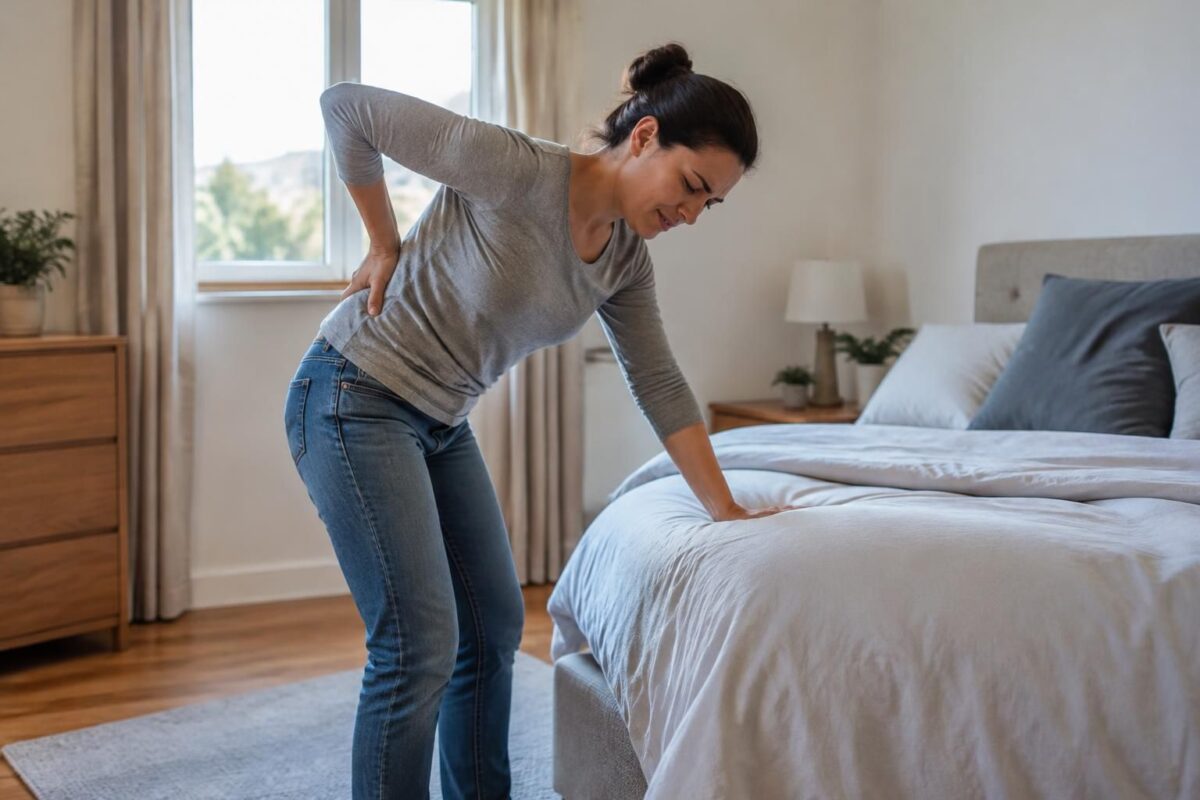
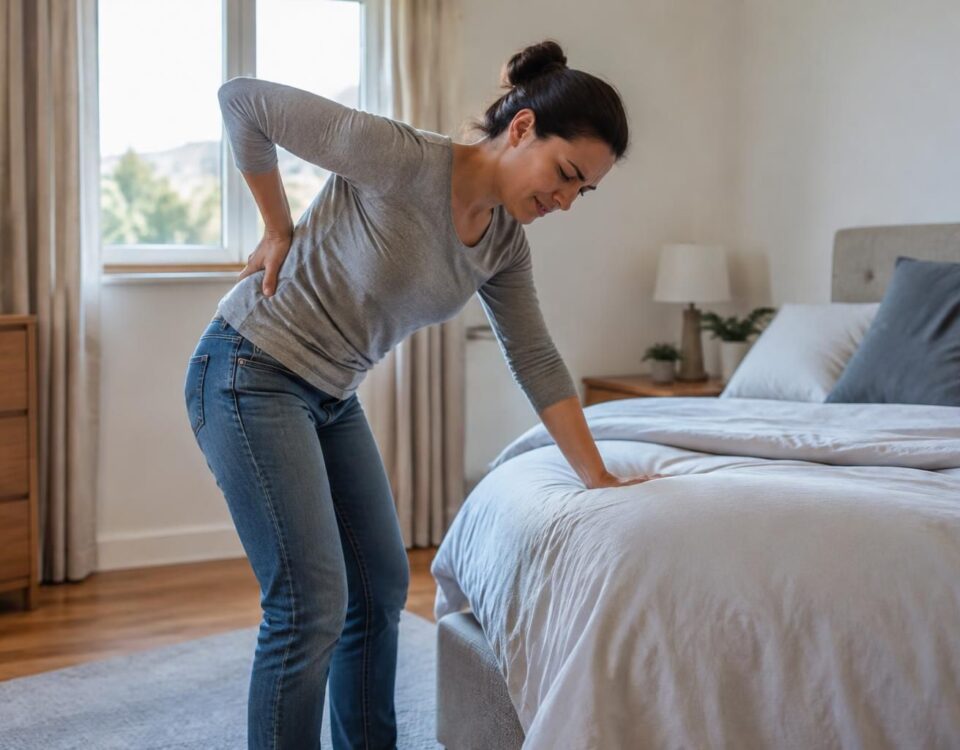
Sciatica and Making the Bed: Repeated Flexion and Lumbar Irritation
IN SHORT Sciatica is pain related to irritation or compression of the sciatic nerve. Making your bed can strain the lower back if bending is repeated, especially when rounding the back or twisting the torso. To limit lumbar irritation, bend…
How to resume movement without rushing
Start with simple and tolerable movements
Choose movements that remain bearable and increase activity in small steps. For instance, you can get up regularly, walk a few minutes on flat ground, or resume a daily task at a moderate pace. Adjust the duration based on your feelings rather than striving to meet a fixed target.
A slight transient discomfort may occur during the resumption. However, stop the movement and seek advice if the pain becomes sharp, spreads further down the leg, or is accompanied by a marked loss of strength or numbness. General advice for resuming activity is presented in this article: what to do in case of sciatica.
Avoid strict rest and sudden efforts
Rest can help for a short period if the pain is strong. Lying in bed all day is generally not a sustainable strategy. Alternate periods of rest with light activities. Also, avoid resuming intense efforts, heavy loads, or movements that consistently cause significant pain immediately.
Not all exercises are suitable for every situation. If you have a diagnosed herniated disc or another issue, seek professional advice before adding exercises or stretches. This article provides guidelines on exercises to avoid with sciatica.
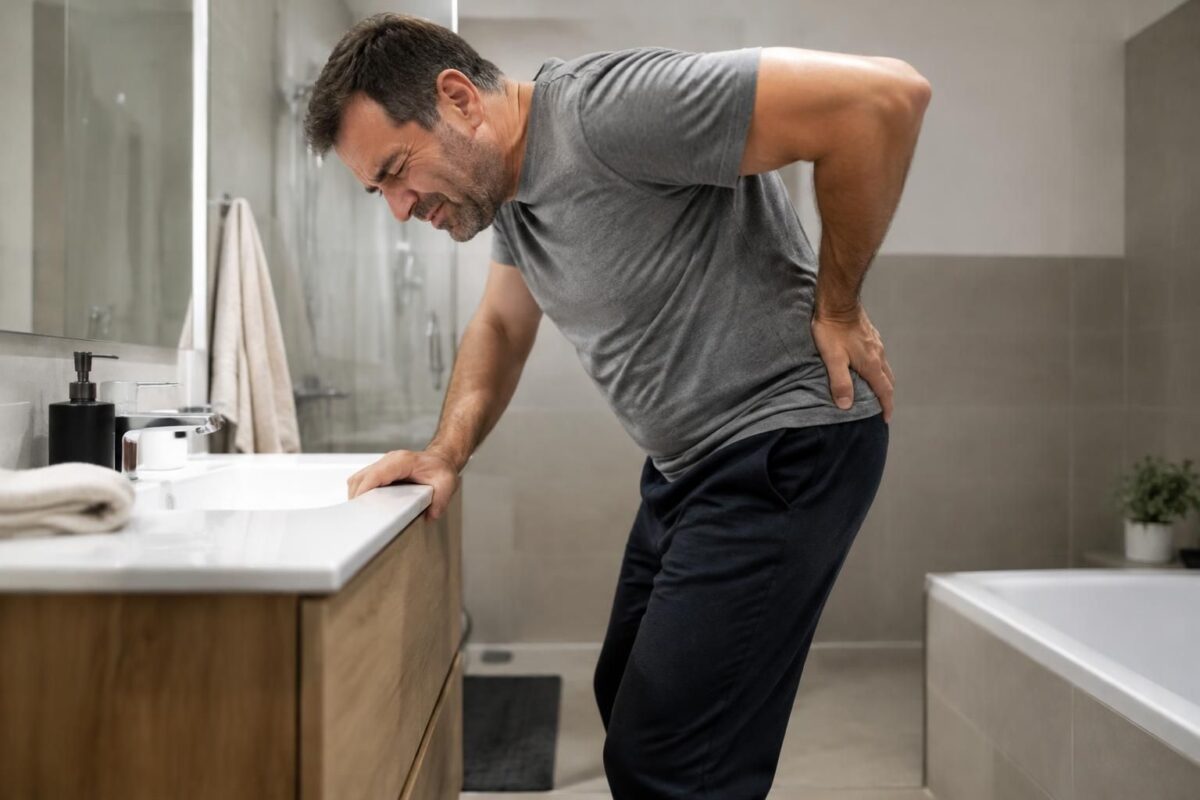
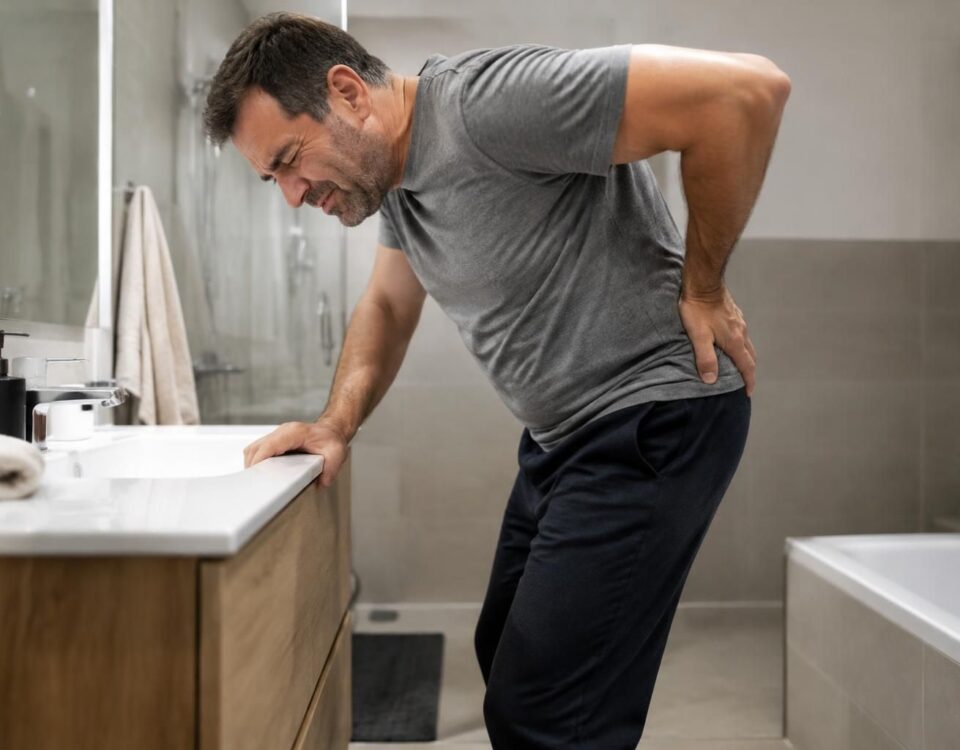
Sciatica and bending over the sink: pain in the leg
IN BRIEF Sciatica is pain related to irritation or compression of the sciatic nerve, which can extend from the lower back down to the leg. Bending over the sink can exacerbate the pain, especially if this position increases pressure on…
Adapting positions that amplify symptoms
Change positions regularly
A prolonged position can make pain more prominent. If you work seated, get up regularly and take a few steps. Use a chair that supports your back and keep your feet on the floor. There is no perfect posture for everyone: rather, seek a comfortable position and change it before discomfort increases.
A laptop positioned too low can encourage you to lean your head and back forward. Raising the screen and using a separate keyboard can make the workstation more comfortable. For other tips, consult this article on posture at a laptop.
Choose comfortable resting positions
The most helpful position is one that reduces your symptoms. Some people feel better on their side with a cushion between their knees. Others prefer to lie on their back, legs supported. The stomach position may discomfort some people, but reactions vary. Avoid staying in a posture that clearly increases pain.
Recommendations on positions to adapt are detailed in these resources: positions to avoid in case of sciatica and postures that may exacerbate discomfort.
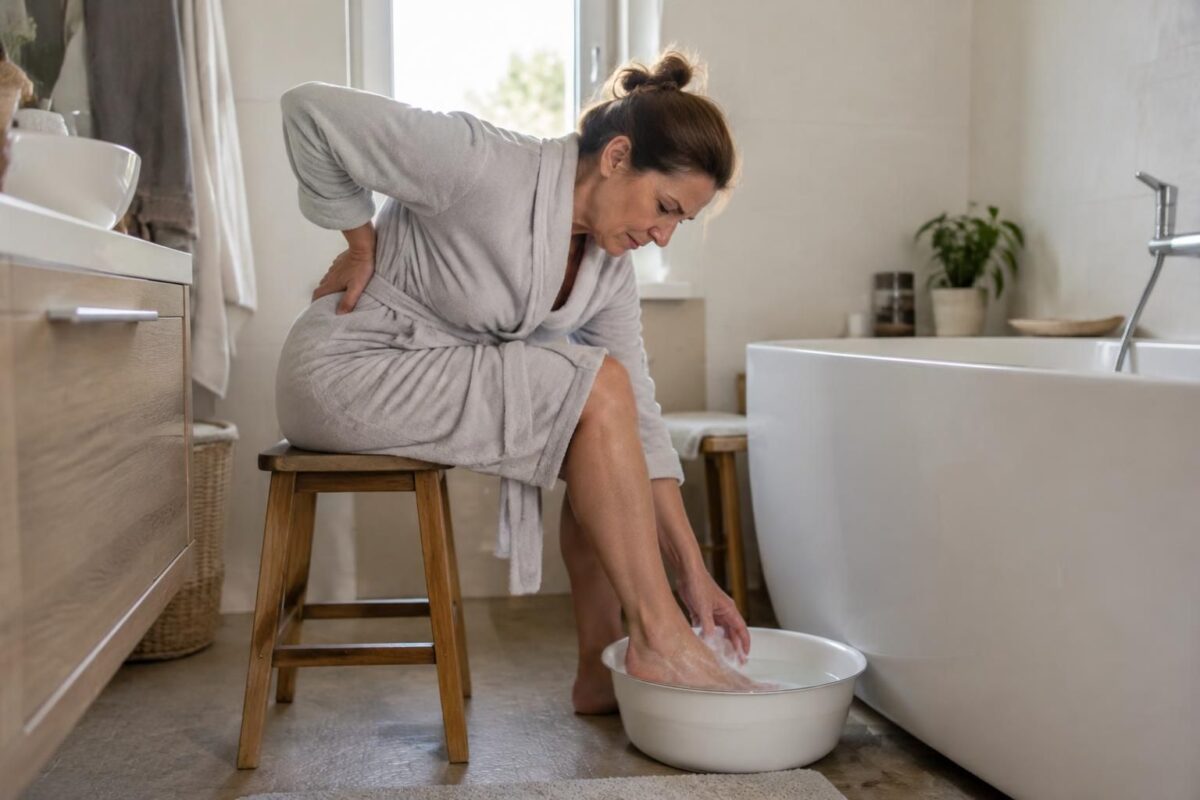
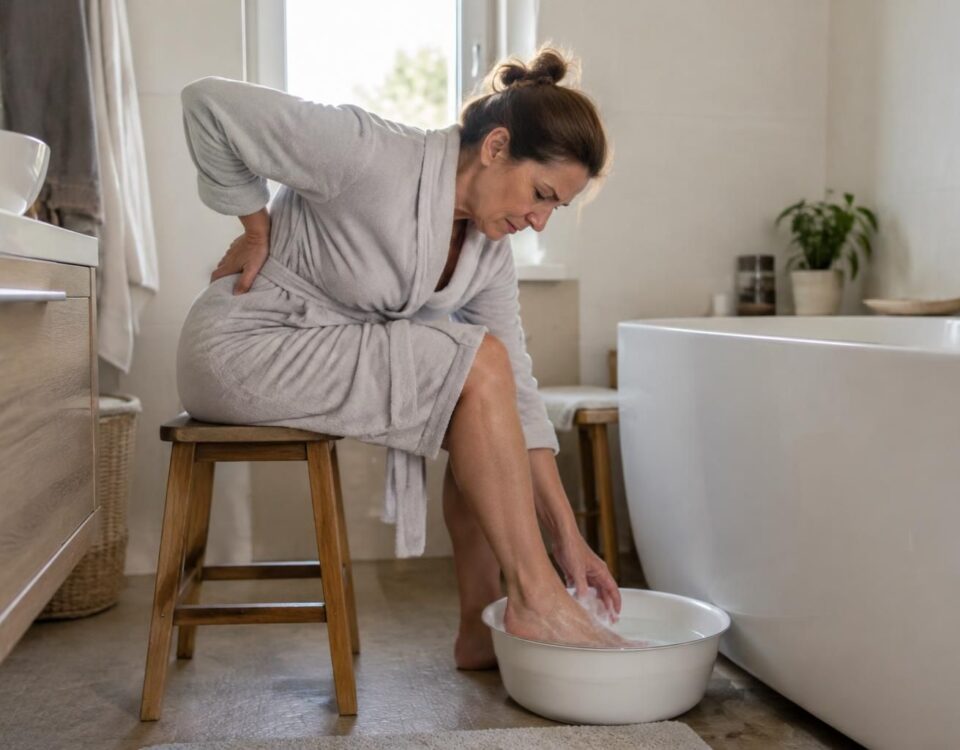
Sciatica and washing feet: lumbar flexion to monitor
IN BRIEF Sciatica can make washing your feet uncomfortable, as bending forward accentuates lumbar flexion and may trigger pain. To limit strain, sit down, bring your foot closer to you, or use a long-handled aid. These adjustments make personal hygiene…
Manage walking and daily activities
Walk according to tolerance
Gentle walking helps some people maintain their mobility. Start with a duration you can tolerate and gradually increase if symptoms do not worsen. Choose a comfortable pace and take breaks as needed. A pain that appears after a long walk indicates that it may be beneficial to temporarily reduce the duration or better distribute the effort, without automatically giving up on all activity.
To understand why pain may occur after prolonged walking, check out this information on sciatica after a long walk.
Taking into account pain after sitting
Pain in the buttock or leg after sitting for a long time does not necessarily mean that you should avoid sitting altogether. Instead, try to break up sitting periods, support your back, and stand up regularly. If the pain persists or worsens, seek professional advice. You can also read these tips on buttock pain after prolonged sitting.

Sciatica and dressing: daily gestures to adapt
IN BRIEF Sciatica can make dressing uncomfortable, but a few simple gestures help limit tension. Sit down to put on pants, socks, and shoes, choose easy-to-wear clothing, and avoid bending or twisting suddenly. These adjustments make daily dressing easier without…
When to seek a professional evaluation
Consult a healthcare professional if the pain prevents you from sleeping, walking, or performing your usual activities, if it worsens, or if it does not improve over time. Reevaluation is also useful when symptoms persist for several weeks or return frequently. This article explains when to reassess a chronic sciatic pain.
A professional can examine your symptoms, assess your strength and sensitivity, and determine if medical follow-up or imaging is necessary. Imaging does not replace clinical evaluation. To learn more about sciatica assessment, check the information from the Galilee Medical Imaging Center.
Recognizing emergency signs
Seek urgent medical assistance if there is significant loss of strength in a leg or foot, new difficulty urinating or controlling bowel movements, or loss of sensitivity in the area between the legs. Pain that occurs after trauma, accompanied by fever or associated with significant alteration of general condition also requires prompt evaluation.
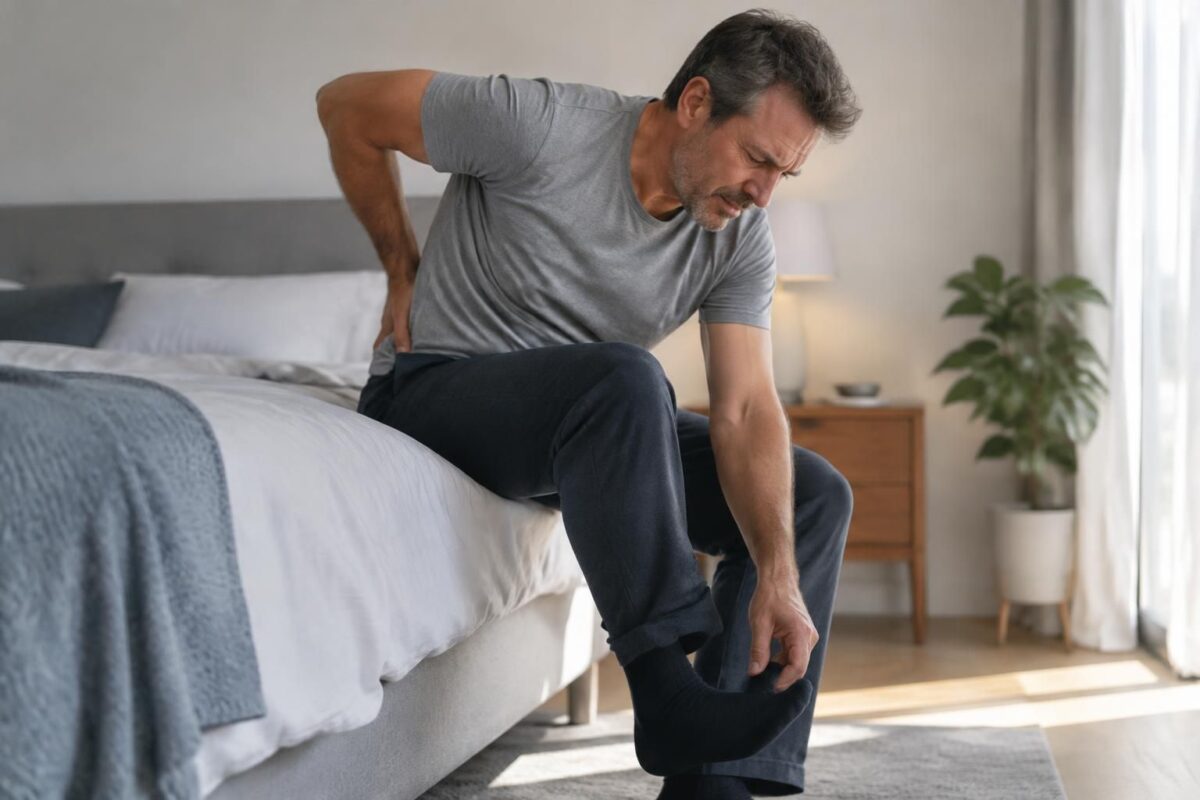
Sciatica and putting on socks: bending and pain in the leg
IN BRIEF Sciatica can make it difficult to put on your socks: bending over can increase the pain that radiates down the leg. Sitting down, using a sock aid, or avoiding painful bends can make this daily task easier. If…
Frequently asked questions about sciatica and fear of movement
Should I stop moving when sciatica hurts?
Not necessarily. It is often better to temporarily reduce activities that significantly worsen symptoms while maintaining gentle and tolerable movements. If the pain intensifies or new symptoms appear, seek professional advice.
Does pain during movement mean I am damaging my back?
Not always. Pain can increase without a lesion worsening. However, strong, persistent pain or pain accompanied by loss of strength or sensitivity should be evaluated.
How to avoid falling back into the cycle of avoidance?
Set modest and realistic goals. Note the activities you tolerated and gradually increase their duration. Improvement is not always linear: some days are more challenging than others. A professional can help tailor the resumption to your symptoms.
Should I get imaging before resuming activities?
Not systematically. The healthcare professional decides if imaging is useful based on your symptoms and the results of the examination. Images should always be interpreted in context, as a visible abnormality does not always correspond to the cause of pain.
Medical disclaimer: The information and advice provided on this site do not replace the advice, diagnosis, or treatment of a healthcare professional. Please note that Sylvain Desforges, B.Sc., D.O., N.D., doctor in osteopathy, is neither a medical doctor nor a physician, and is not specialized in a medical specialty as defined by the Collège des médecins du Québec. Manual therapy, functional medicine, and sports medicine as described on this site exclude any treatment or medical diagnosis provided by a physician or specialist. Always consult your doctor for any medical questions. For more details, please read our full Legal Notice.
What sustains fear
- Anticipating every pain and avoiding any movement.
- Staying in bed or seated for long periods without changing position.
- Interpreting a transient discomfort as a sign of damage.
How to regain confidence
- Start with short walks and gentle movements.
- Gradually increase activity according to your tolerance.
- Take a break or adapt movement if pain significantly increases.
- Consult a professional if the pain persists or worsens.

When sciatica hurts, it is natural to fear that moving will worsen the situation. However, avoiding all movement can lead to stiffness, decrease confidence, and make everyday actions more difficult. To break this cycle, gradually resume tolerable activities, adapt them to your symptoms, and seek advice from a professional if the pain persists or concerns you.

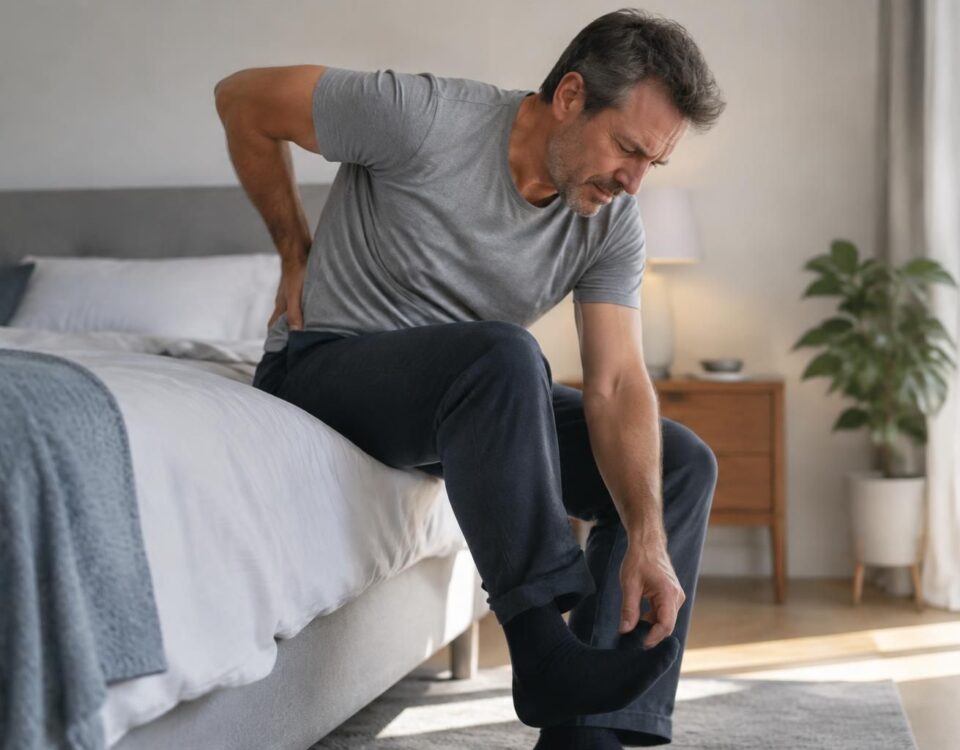
Sciatica and tying your shoes: why the pain can radiate down
IN BRIEF Sciatica is pain related to the irritation of a nerve in the lower back, which can radiate into the buttock and leg. Leaning down to tie your shoes may accentuate the pain or cause it to descend further.…
Understanding the vicious cycle of pain and fear
Pain that radiates down the buttock or leg can provoke significant apprehension: there is fear of walking, bending, or sitting. One then moves less, muscles gradually lose endurance, and the body becomes stiffer. This loss of ease can make every movement more alarming and sustain fear.
The pain is real, but it does not always mean that a movement is further damaging your back. The level of discomfort can vary according to fatigue, stress, sleep, or the duration spent in the same position. The goal is not to ignore the pain but to regain adequate activity without trying to do everything at once.

Sciatica and picking up an object from the ground: movement to watch out for
IN BRIEF Sciatica is pain that follows the path of the sciatic nerve. To pick up an object from the ground, avoid bending abruptly while rounding your back or twisting: bend your knees, tilt your hips, and keep the object…
Resuming movement without rushing
Start with an activity that is easy to manage
Choose a movement that seems accessible, such as walking for a few minutes on flat ground or changing positions regularly. Start with a modest duration, then gradually increase it if your body tolerates. Short and regular periods are often easier to manage than a significant effort followed by a long rest.
You can use a simple scale to assess your effort: before, during, and after the activity, observe if the symptoms remain bearable and if they return to their usual level after a recovery period. If an activity triggers sharp pain, marked jolts, or persistent worsening, reduce the intensity or stop and seek advice.
Alternate activity and breaks
Avoid staying in the same position for too long whenever possible. If you are working seated, get up regularly to take a few steps. If standing increases your symptoms, sit briefly or change your support. There is no perfect posture for everyone: prioritize what relieves you and vary your positions.
Avoid reactions that maintain fear
Complete bed rest for several days is generally not the best strategy for common sciatica. It can reinforce the feeling of stiffness and make recovery more difficult. Conversely, pushing through significant pain is not recommended either. Look for a balance: move gently, break tasks down, and adjust your activities day by day.
Also, avoid constantly testing your limits to see if the pain has disappeared. Instead, try to gradually resume useful movements: a few minutes of walking, a light household task, then a break. Note what helps you, without interpreting each fluctuation as a sign of new injury.
Get support at the right time
A doctor or health professional can help you assess your symptoms, choose appropriate exercises, and regain confidence in movement. Consult if the pain worsens, persists for several weeks, or severely limits your daily life. Personalized support can also help adapt the workstation, sleep, and physical activities to your situation.
If you experience weakness in a leg or foot, recent urinary or bowel issues, or loss of sensitivity in the perineal area, seek urgent medical evaluation. These signs should not be managed solely through exercises or manual therapy.
| Reflex that maintains the vicious cycle | Progressive alternative |
|---|---|
| Avoid any movement for fear of pain | Resume gentle movements, according to your tolerance |
| Stay in bed for a long time | Alternate rest and short walks |
| Wait until there is no pain to move | Gradually start again, without forcing |
| Insist despite sharp or electric pain | Reduce effort and choose a more tolerable movement |
| Stay in the same position for a long time | Change posture regularly |
| Fear every sensation in the leg | Observe the evolution without dramatizing, and seek advice if needed |
| Immediately resume intense activity | Increase duration and intensity gradually |
The testimonies below are fictional examples, written to illustrate possible experiences. Every case of sciatica is different and these accounts do not replace medical advice.
“As soon as I felt a jolt in my leg, I would stop completely. I was afraid that movement would worsen my back. By staying seated or lying down, I became increasingly stiff. My doctor advised me to gradually start walking again, without pushing my limits. I began with a few minutes, then increased based on my sensations.” — Marc, 46 years old
The fear of triggering pain can lead to avoiding almost all movements. But prolonged immobility can increase stiffness and make resuming activities more difficult. When circumstances allow, gentle and progressive movements are generally preferable to strict rest.
“I was afraid to bend down to get dressed or to get out of the car. I learned to slow down my movements, avoid sudden twists, and move my feet and pelvis together. It didn’t become easy overnight, but I regained confidence by adapting my movements rather than eliminating them all.” — Sophie, 52 years old
To limit strain on the lower back, try to bend your knees instead of rounding your back to pick something up, and turn with your feet rather than pivoting solely from your trunk. If a movement significantly increases pain, reduce its range or stop it, then seek advice from a health professional.
“I thought I had to stay in bed until the pain disappeared completely. In reality, short walks on flat ground helped me loosen up more. I took breaks whenever necessary and resumed later, without pushing myself.” — Éric, 39 years old
Gentle walking can help maintain mobility. Start with a duration you can tolerate, even if it’s short, then gradually increase if your symptoms allow. Alternating positions and taking brief active breaks can also prevent staying seated or standing for long periods without moving.
“During the first nights, I changed positions constantly because I was afraid of waking the pain. A pillow between my knees when I slept on my side, and another under my knees when on my back helped me find a more comfortable position.” — Claire, 44 years old
There is no ideal position for everyone. On your side, a pillow between your knees can help keep the pelvis aligned; on your back, support under your knees can provide comfort. The goal is to choose a position that reduces your symptoms without imposing an uncomfortable posture.
“I thought that each sensation in my leg indicated worsening. By discussing my worries with a professional, I learned to differentiate moderate discomfort from pain that forced me to stop. I resumed my activities gradually, with exercises tailored to my case.” — Nadia, 57 years old
Individualized support can help you regain confidence and choose appropriate movements. A health professional can assess your symptoms and guide you towards progressive exercises. Avoid stretches or efforts that cause sharp pain, intensifying tingling, or persistent worsening.
If the pain is accompanied by weakness in the leg or foot, urinary or bowel problems, or loss of sensitivity in the perineal area, seek medical advice promptly. These signs require evaluation without delay.
Sciatica can cause pain that goes from the lower back to the buttock and leg. Burning, tingling, or electric jolts can make ordinary movements concerning. It is then natural to fear that movement will worsen the situation. However, when this fear leads to avoiding almost all activities, it can contribute to perpetuating difficulties.
The vicious circle often starts like this: pain leads to less movement, inactivity causes a loss of strength and flexibility, and then daily tasks seem more difficult. Anxiety increases, and every sensation is interpreted as a sign of new aggravation. This reaction does not mean that the pain is imaginary: it is real, but fear and constant vigilance can amplify the handicap and limit the resumption of activities.
The goal is not to force yourself despite intense pain or to stay in bed until all symptoms disappear. Rather, it is about gradually resuming tolerable movements. Short walks on flat ground, regular changes of position, and adapted usual activities can help preserve mobility. Start at a comfortable pace, then gradually increase the duration if the symptoms remain bearable.
A slight discomfort during or after a movement does not necessarily mean that the nerve is further damaged. On the other hand, a sharp pain that clearly intensifies, increasing tingling, or new weakness should prompt you to stop the exercise and seek advice from a health professional. Stretching and exercises should remain gentle: avoid trying to “unblock” the nerve by pulling strongly on the leg or repeating a painful movement.
To regain confidence, choose a specific and realistic activity: walking for a few minutes, getting up regularly from your chair, or doing a light household task. Note what is possible and increase the effort in small steps. Conversely, sitting for a long time, lifting a load while rounding the back, or making a sudden twist can exacerbate symptoms for some people. Adapt these movements without seeking a perfect or rigid posture: varying positions is often more helpful than staying still.
Sleep, stress, and fatigue also influence how the body tolerates pain. Breaks, slow breathing, and a comfortable resting position can facilitate recovery. If the pain persists, significantly impairs walking, or does not improve, a doctor or health professional can assess the situation and propose suitable support. An urgent consultation is necessary in the event of significant loss of strength, urinary or intestinal issues, or numbness in the perineal area.
Sylvain Desforges specializes in osteopathy, naturopathy, and manual medicine. He is the founding president of TAGMED clinics and the ACMA association. His background is focused on health innovation and the management of chronic pain. He is particularly interested in integrating technologies such as spinal decompression, laser, and shockwave therapy, in addition to an evidence-based approach. His goal is to provide individualized care to support the health and well-being of patients.
The fear of moving with sciatica may seem protective, but prolonged avoidance can maintain stiffness, loss of confidence, and sensitivity to pain. To avoid this vicious circle, the aim is not to force or remain still; it is to gradually resume tolerable movements, adapt activities, and seek professional advice when symptoms warrant it.
Understanding the fear of movement cycle
When a movement triggers pain, it is natural to want to avoid it. However, if you consistently limit walking, changes of position, or everyday movements, the muscles may lose endurance and the body may become stiffer. This decrease in activity can make certain movements more difficult, increase apprehension, and give the impression that sciatica worsens as soon as you move.
Pain deserves to be taken seriously, but it does not always mean that you are damaging your back further. The intensity can fluctuate and its path can change over days. To better understand these variations, you can read information on a sciatic pain that changes path, a heavy or painful leg, or a constant pain and reasons to have it assessed.
Resuming movement without rushing
A gradual resumption is generally more beneficial than strict bed rest. Start with short activities that you can tolerate, such as walking for a few minutes on flat ground, then adjust the duration according to your response. Alternate positions and take breaks before discomfort becomes too significant. If you feel more pain upon getting up, these tips on sciatic pain upon waking can help you approach early movements more gently.
Movement should remain adapted: avoid trying to “push through” sharp pain, marked electrical sensations, or intensifying tingling. Exercises can be modified according to your symptoms; a guide dedicated to exercises to do or avoid in case of sciatica can provide general guidelines. The positions and movements that may relieve pain, as well as tips on positions to avoid, can also assist you in adapting your daily routine without considering a posture as universally good or bad.
Adapting daily movements
Try not to stay in the same position for too long, whether sitting or standing. Change support regularly, get up to walk a bit, and prefer a seat that comfortably supports your back. If standing triggers or increases your symptoms, break tasks into smaller parts and plan moments to sit or move gently. You can consult these guidelines on leg pain after prolonged standing.
To bend or lift an object, get close to it, bend your knees if necessary, and avoid twisting your torso while carrying a load. These adjustments are not meant to protect you from all movement but to make actions more comfortable during painful periods. The goal is to gradually return to your activities, adjusting their duration and intensity according to your tolerance.
When to seek assistance
If the fear of moving prevents you from walking, sleeping, or resuming your activities, a healthcare professional can help you evaluate the symptoms and establish a suitable return. Osteopathy support may be part of the options depending on the situation, in addition to medical follow-up when necessary; you can learn more about osteopathy and sciatica. An evaluation is also recommended if the pain persists or worsens, especially if its evolution concerns you.
Quickly consult a doctor in case of new weakness in the leg or foot, urinary or intestinal issues, or a loss of sensitivity in the perineal area. After trauma, or if the pain is very intense and unusual, also seek medical advice. The goal is to regain confidence without trivializing the symptoms: gradually moving, respecting your limits, and having concerning signs evaluated help prevent fear from deciding all your activities alone.

Sciatica and bending forward: lumbar disc or nerve tension?
IN BRIEF Forward-bending sciatica may be related to irritation of the lumbar disc or tension on the sciatic nerve. This movement alone does not allow for determining the cause. Identifying the movements that trigger the pain helps guide the evaluation…

Sylvain Desforges, B.Sc., D.O., N.D., docteur en ostéopathie
Dr Sylvain Desforges, B.Sc., D.O., N.D., osteopath, is the founding president of TAGMED and of the ACMA association. He dedicates his practice to chronic spinal pain, low back pain and symptoms compatible with sciatica, particularly when pain radiates toward the buttock, leg, calf, foot or toes.
Through SOS Sciatique, he publishes educational content on sciatica symptoms, possible causes such as disc herniation, disc narrowing, foraminal stenosis or irritation of a lumbar nerve root, as well as non-surgical approaches that may be considered according to the evaluation. At Clinique TAGMED, care may include, depending on the case, motorized neurovertebral decompression, specific osteopathic care or precision percussion.
For an evaluation related to sciatica treatment in Montreal / Mount Royal or sciatica treatment in Terrebonne, please consult the services available at Clinique TAGMED.
Medical disclaimer
The information published on SOS Sciatique is provided for educational purposes only and does not replace a consultation, diagnosis, opinion or treatment provided by a physician or another authorized healthcare professional. The author of this article is neither a medical doctor nor a specialist in a medical specialty recognized by the Collège des médecins du Québec. The osteopathic, manual medicine or functional support approaches described on this site do not constitute medical acts and are not intended to replace medical follow-up.
Consult a physician or emergency service in cases of loss of bladder or bowel control, anesthesia in the saddle area, significant or progressive weakness in the leg or foot, fever, recent trauma, severe pain or rapid worsening of symptoms. For more details, please read our Legal Notice.