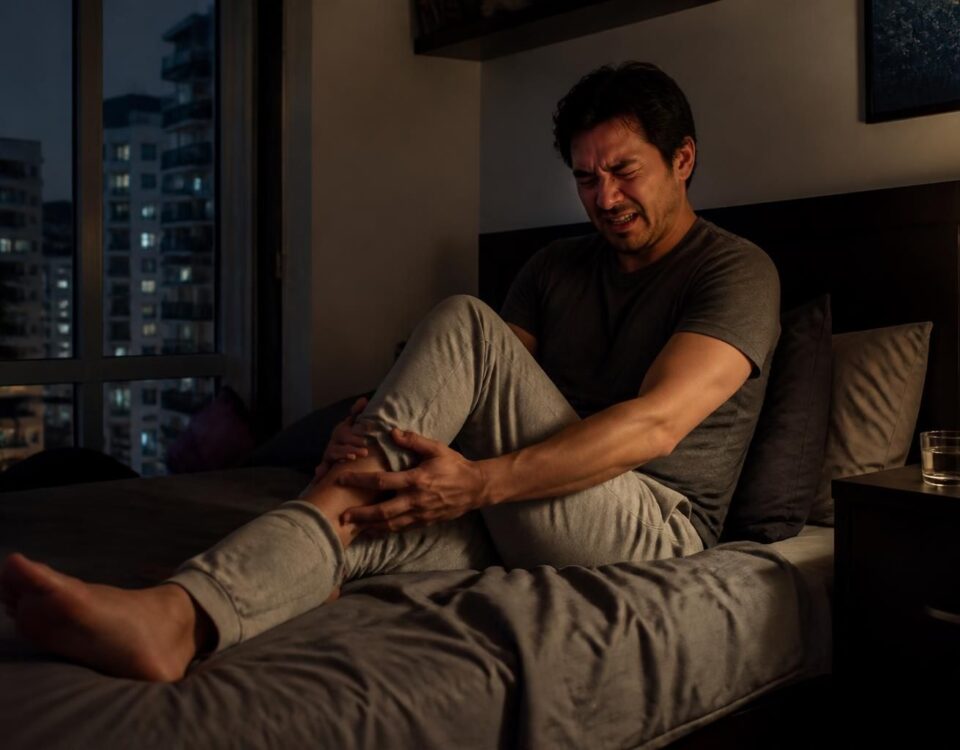
Sciatica and Traffic Jams: Immobile Position and Nerve Pain
26/08/2026
Sciatica in Terrebonne: pain that changes course over the days
27/08/2026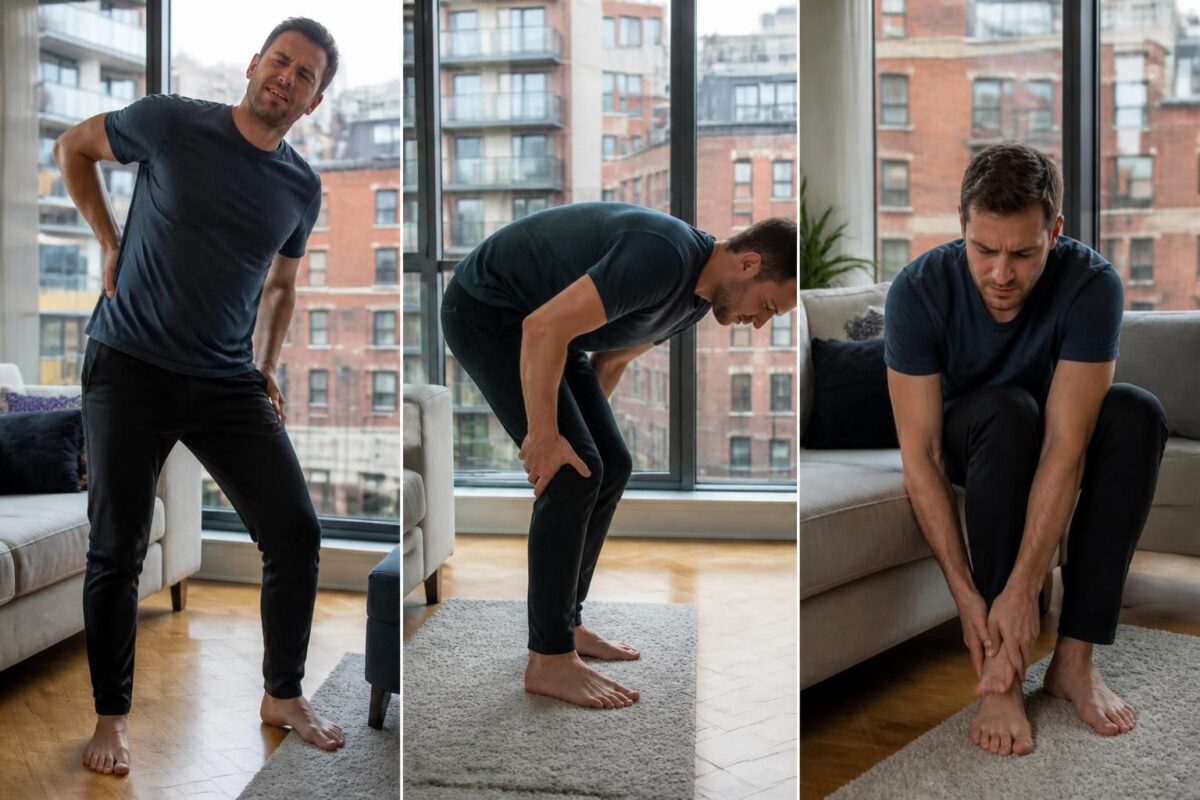
IN BRIEF
| In brief, sciatica or sciatalgia is pain related to the irritation or compression of the sciatic nerve root, which may change its course from day to day, extending from the lower back to the buttock, then down the leg and sometimes to the foot. In Montreal, this service offers a quick evaluation and non-surgical treatment options focusing on tailored exercises, postural advice, and a gradual return to activities to reduce pain and regain mobility. This approach provides a clear understanding of what sciatica is, its benefits, and how it works, with special attention to the patient’s safety and comfort. |
Sciatica in Montreal may present as a pain that changes its course over the days. It often starts in the lower back or buttock and can radiate down the leg, sometimes to the foot, with variations from day to day.
A specialized assessment helps identify the origin and propose effective non-surgical measures: tailored exercises, postural advice, and gradual return to activities to quickly alleviate discomfort and maintain your mobility in daily life.
This article, written by a healthcare professional expert in spinal pathologies, discusses sciatica in Montreal when the pain follows a path that may change from day to day. It explains why the pain may migrate, what signs to watch for, and what non-surgical options are available locally, along with practical advice and reliable resources.
Understanding Sciatica and the Changing Course of Pain
The sciatic nerve is the longest in the body. Pain affecting it can start in the lower back or buttock and radiate down the back of the leg. This pain is not always fixed; it can “change its course” depending on the day, activity, and inflammatory status. The evaluation aims to distinguish nerve irritation from other musculoskeletal causes and specify the exact pathway to guide treatment.
Why the Course May Evolve Over Days
Different factors influence the path of pain. Movement, prolonged position, and inflammation can alter intensity and affected areas. Aggravation may occur with sitting, coughing, or lifting an object. A clinical assessment allows for adjusting the care plan based on evolution.

Sciatica in Montreal: heavy leg or painful leg?
IN BRIEF In brief, sciatica is pain that radiates along the sciatic nerve, starting from the lower back or buttock down to the leg. In Montreal, this service is particularly suitable for mechanical or postural sciatica and relies on a…

Sciatica in Montreal: nighttime pain in the leg
IN BRIEF In brief, nocturnal sciatica is a root pain in the lower back that irritates the sciatic nerve and worsens when lying down, causing nighttime awakenings. In Montreal, this service offers a non-surgical approach focused on posture, bedding, and…
Signs and Symptoms to Watch For
Typical symptoms describe pain starting from the lower back or one buttock, then radiating down the back of the thigh, sometimes to the calf or foot. Burning, tingling, numbness, or muscle weakness may accompany the pain. Pain that changes its course may be accompanied by increased sensitivity to certain positions or movements, and a need to avoid specific efforts.

Sciatica in Montreal: pain from the lower back to the calf
IN BRIEF In brief, sciatica is a pain that starts in the lower back and can radiate down to the calf, caused by irritation or compression of the sciatic nerve. In Montreal, this service offers a personalized evaluation and non-surgical…

Sciatica in Montreal: hip pain or true nerve radiation?
IN BRIEF Sciatica is a nerve pain that follows the path of the sciatic nerve and can radiate from the buttock to the foot, which can be perceived as pain in the hip. Lower back pain, on the other hand,…
Diagnosis and Imaging Indications
A precise clinical examination is essential to determine the origin and exact course. Imaging may be helpful when results influence therapeutic conduct or in the presence of significant neurological signs. The doctor may recommend further examinations if symptoms persist or worsen.

Sciatica pain in Montreal: incomplete journey, should we be concerned?
IN BRIEF In brief, sciatic pain is a lumbar nerve-origin pain whose pathway may be incomplete and may not reach the foot. In Montreal, the evaluation clarifies the pathway, strength, and function, and determines if imaging can change the approach.…
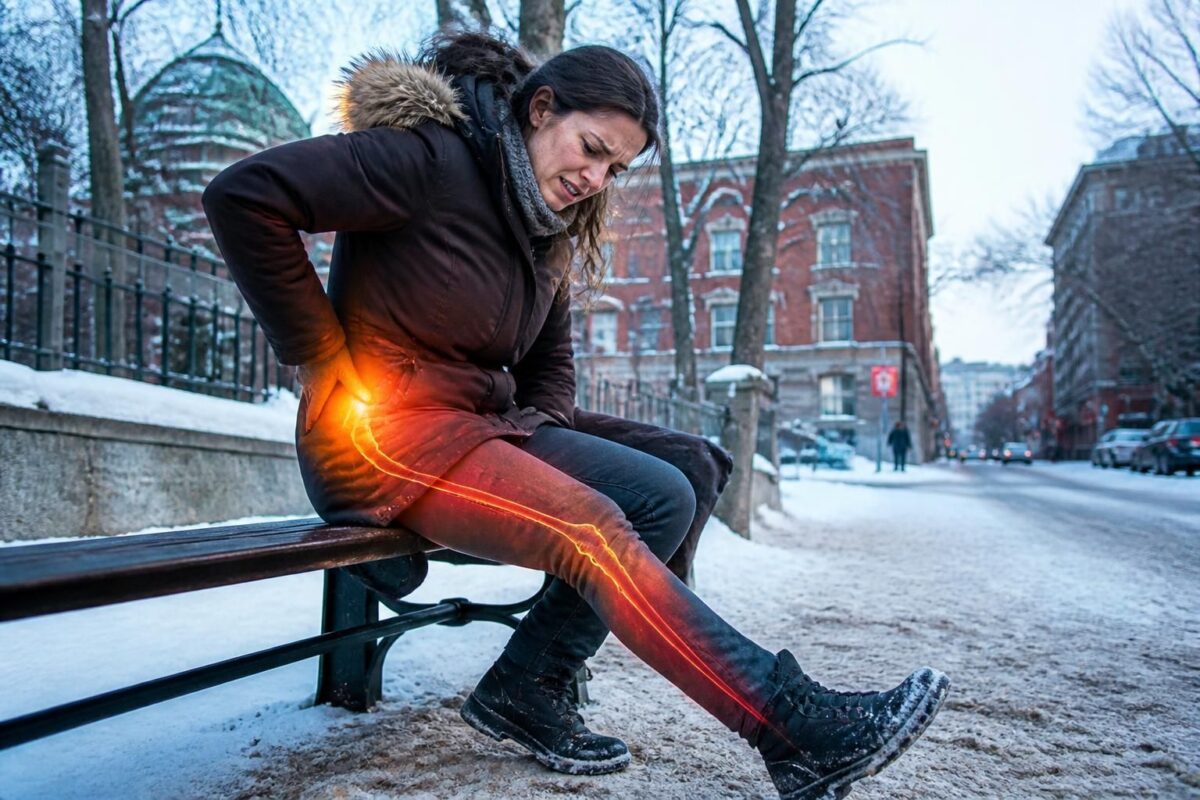
Sciatica in Montreal: pain towards the little toe and S1 root
IN BRIEF Sciatica is pain radiating along the path of the sciatic nerve, typically from the lower back to the leg and down to the little toe when the S1 root is irritated or compressed. In Montreal, this phenomenon is…
Management Options in Montreal
Most cases of sciatic pain are approached with a conservative approach. Advice on staying active without straining, exercises, and postural advice may be offered, along with a gradual return to activities. At the TAGMED Clinic in Montreal, non-surgical care may be considered based on assessment, including manual approaches and advice related to posture and movement. To access available services, visit TAGMED Clinic.
Educational resources and additional information are available on dedicated pages, including Sciatica in Montreal – understanding the path and Calf Pain Without Significant Low Back Pain. Other useful resources include PhysioSA and The Spine Page.
For information on non-surgical approaches and their comparison with other therapies, you can refer to the above resources and related specialized pages. For example, content on the following links presents cases and insights helpful for understanding the path and factors influencing pain:
For results and treatment options in Montreal or Terrebonne, you can consult TAGMED and associated resources. Additional information on the path of pain and practical advice are available in dedicated guides like Understanding the Path of Pain.
To clarify the therapeutic journey, you can also explore general resources on sciatic pain and its manifestations on Calf Pain and Interpreting Intermittent Numbness.
Supplementary content and information about the journey and the available options can be found in the following resources: Sciatica in Montreal — pathway, Calf Pain, and The Spine Page — treatments.
Medical disclaimer: The information and advice provided on this site do not replace the opinion, diagnosis, or treatment of a healthcare professional. Please note that Dr. Sylvain Desforges, osteopath, is neither a doctor of medicine nor a physician, and is not specialized in a medical specialty as defined by the College of Physicians of Quebec. The manual medicine, functional medicine, and sports medicine described on this site exclude any treatment or medical diagnosis made by a physician or specialist doctor. Always consult your doctor for any medical questions. For more details, please read our full Legal Disclaimer.
Authorized links and resources: sossciatique.com, cliniquetagmed.com, decompressionneurovertebrale.com, sosherniediscale.com, sosherniateddisc.com, sostunnelcarpien.com, sossciatique.com.
Sciatica in Montreal: pain that changes pathway over the days
- Origin and evolving pathway: pain may migrate between the buttock, thigh, and foot from one day to another.
- Variable symptoms: pain, burning, tingling, and numbness that move.
- Disposition: typically unilateral pain, caution in case of bilateral pain or weakness.
- Triggers and levers: posture and activity influence the pathway daily.
- Medical alert: marked weakness, loss of urinary control, or neurological signs require rapid assessment.
- Conservative action plan: stay active, targeted exercises, and postural advice to stabilize the pathway.
- Practical exercises: piriformis, nerve mobility, and adapted stretches under professional supervision.
- Progression: gradual progression according to tolerance and the evolution of symptoms.
- Relative rest: avoid prolonged bed rest; prefer light positions and walking.
- Local help: assessment by an osteopath or a physiotherapist for a personalized plan.

This article offers practical recommendations for sciatic pain in Montreal, where the pathway can change from day to day. The goal is to help you understand this phenomenon, identify the signals to watch for, and adopt effective conservative strategies to relieve pain quickly while preserving your mobility.
Understanding Sciatic Pain with an Evolving Pathway
The sciatic nerve is the longest in the body, and its pathway can sometimes cause sciatica that does not follow a fixed route. Pain may start in the lower back or buttock and then migrate to the back of the thigh, calf, foot, or toes. This variability may reflect nerve irritation, a slight compression, or other musculoskeletal mechanisms. A proper assessment should consider the pathway, strength, sensitivity, and reflexes, in order to distinguish nerve pain from other origins.
When to Seek Prompt Consultation
Warning Signs Necessitating Quick Assessment
-contact a professional if you experience a significant progressive weakness in one leg, a loss of urinary or bowel control, saddle anesthesia, fever associated with spinal pain, or significant trauma. These elements may indicate a neurological emergency or another medical emergency and require immediate management.
Signs Justifying Local Assessment in Montreal
If the pain persists after several weeks or continues to change pathways depending on activities, the advice of a physiotherapist or a physician can help adjust the treatment plan. Imaging is generally not the first step; it may be considered when the evolution, symptoms, or clinical results justify it to guide a treatment strategy or rule out other causes.
Practical Strategies to Favor Starting Now
Favor a relative rest and maintain gentle movements rather than prolonged immobility. Alternate positions, favor short and regular walking, and avoid activities that worsen the pain. If you sit for long periods, take breaks to move and gently stretch the muscles around the pelvis and leg.
Heat and Cold Management
Cold can help during the acute phase to reduce inflammation, practically 10 to 15 minutes repeatedly with skin protection. Heat may be useful when the pain is more chronic or associated with muscle stiffness, by applying moderate treatments to the affected areas.
Recommended Exercises and Therapies
Adapted exercises and guided manual therapy can reduce nerve irritation and improve mobility. Common options include:
– Gentle piriformis stretching with pain control,
– Gentle neural mobility to promote the sliding of nerve roots,
– Light lumbar extension and progression according to tolerance,
These exercises should be performed under initial supervision to avoid aggravating symptoms. A personalized physiotherapy plan can combine mobility, strengthening, and postural advice to support the return to daily and professional activities.
Role of Evaluation and Imaging
A comprehensive clinical evaluation remains central to linking symptoms, function, and progression. Imaging is useful when clinical data suggest a specific anomaly or when symptoms persist despite conservative treatment. The choice of examination and the timing for its use should be guided by your doctor or physiotherapist, in order not to delay effective treatments.
Preventing Recurrences and Personalized Plan
Establish a measurable plan with your healthcare professionals: functional objectives (sleep, walking, work), progressive exercises, and postural adaptations. Regular re-evaluation allows for adjustments to treatment and reduces the risk of recurrence. The goal is to maintain suitable and sustainable activity while monitoring signs that may require more specialized care.
| Observed Elements | Concise Description |
|---|---|
| Initial Location | Pain starting from the lower back or buttock, likely to migrate daily. |
| Changing Path | Path that may go through the thigh, calf, or foot and evolve from day to day. |
| Agggravating Factors | Prolonged postures and efforts that trigger pain on some days. |
| Associated Signs | Tingling, burning, fluctuating numbness or weakness. |
| Functional Impact | Activity and sleep altered depending on the day. |
| Frequent Triggers | Postural changes, cold, stress. |
| Recommended Management | Suitable activity, targeted exercises, and postural advice. |
| Observation and Monitoring | Note path and progression to adjust the plan. |
| When to Consult | Marked weakness, sphincter disorders, or fever require urgent evaluation. |
Testimonials on Sciatica in Montreal: A Pain that Changes Pathway Day by Day
“In Montreal, my sciatic pain changes its path each day. One day it starts in the lower back and moves up towards the buttock; the next day it slides behind the thigh or descends to the calf. This variability makes daily movements difficult, but I’ve learned to stay active and adapt my movements to limit flare-ups and regain comfort.”
“My pain acts like a moving itinerary around me. One day, it’s the buttock that burns, the next day, it’s the leg that reacts differently. The sciatic nerve seems to choose its path based on my position and the effort exerted. With a personalized plan, I’ve learned to identify the signals and adjust my activities to limit irritations.”
“I was afraid that this pathway would change and lead me to persistent pain. By working with an osteopath in Montreal, I discovered that sciatica can manifest with different pathways from day to day and that targeted exercises and regular follow-up can provide significant relief.”
“The pathway of the pain can start in the lower back, then descend behind the thigh and continue to the calf or foot. Today it was the calf and foot; tomorrow everything could change. Thanks to postural advice and gentle movements, I was able to resume my activities without fearing a sudden flare-up.”
“The most reassuring thing is to understand that the pain is not fixed and can vary without signs of serious aggravation. With suitable exercises and professional supervision in Montreal, I listen to my body, avoid triggering movements, and slowly progress towards better function.”
About the Author
Dr. Sylvain Desforges, B.Sc., D.O., N.D., Osteopath, an osteopath and specialist in lower back pain, is the founding president of TAGMED and the ACMA association. He dedicates his practice to chronic pains of the spine, lower back pain, and pain compatible with sciatica, using non-surgical approaches adapted to the evaluation of each patient.
Detailed Biography: Sciatica in Montreal — Pain that Changes Pathway Day by Day
Dr. Sylvain Desforges, recognized as an expert in osteopathy, naturopathy, and manual medicine, is the founding president of the TAGMED clinics and the ACMA. With a career dedicated to innovation in healthcare, he focuses his expertise on the management of chronic pain and the integration of advanced technologies aimed at improving the quality of life for his patients. In the Montreal context, his work is distinguished by a holistic and personalized approach designed for those suffering from spinal-related pain and, more specifically, from sciatica that may emerge and evolve over days.
Sciatica in Montreal is a recurring reality that can present painful and moving pathways: the pain may change its path from day to day, radiating from the lower back towards the buttock, then descending into the thigh, calf, or even the foot. In the face of this variability, Dr. Desforges proposes a rigorous and nuanced evaluation to distinguish the mechanisms at play — nerve irritation, root compression, or other musculoskeletal disorders — and to develop a therapeutic plan tailored to each patient. This approach aims not only to relieve symptoms but also to restore function and prevent recurrences, prioritizing a patient-centered and evidence-based approach.
At the heart of his work in Montreal, he favors a multidisciplinary and patient-centric approach. His goal is to untangle the signals sent by the sciatic nerve and to understand how the painful path can evolve over days. This process requires attentive listening, careful observation of movements, posture, and daily activities, as well as transparent communication with the patient regarding expectations, outcomes, and next steps. In this framework, each session is part of a measurable progression, with clear objectives and re-evaluation criteria that guide treatment adjustment.
For managing pain related to sciatica, Dr. Desforges relies on the combination of osteopathy and manual techniques associated with complementary therapies, when relevant. He integrates advanced technologies such as motorized spinal decompression, laser, and shockwave therapy in a framework that favors non-surgical approaches and gradual improvement of mobility. The goal is to alleviate nerve irritation, optimize the mobility of the segments and surrounding tissues, and allow for a safe return to activities. This combination of technical care and tailored interventions is part of a evidence-based philosophy, focused on concrete and lasting results for Montreal patients.
In practice, Dr. Desforges’ approach in Montreal consists of offering personalized plans that include postural advice, targeted exercises, and a gradual return to activities. Care is not limited to the symptomatic sphere: it aims to understand each individual’s context — work, sleep, driving, daily gestures — and to support functional mobility that promotes overall well-being. In daily practice, this translates to continuous communication, frequent adjustments of the plan, and careful attention to prevent aggravation and relapses. His commitment is to provide equitable and accessible care to all patients seeking to regain a life free from pain and limitations in the Montreal context.
Quick summary: Sciatica in Montreal can manifest as pain that changes location over the days, starting from the lower back to the buttock, then down the back of the thigh, and sometimes to the calf or foot. This article presents why this shifting may occur, how to assess it locally, and which practical, non-surgical approaches to prioritize for rapid and safe relief.
Evolution of Pain Pathway and Variable Symptoms
Sciatica can present as pain that starts in the lower back or buttock and may travel down the back of the thigh to the calf or foot depending on the day. This variability reflects the irritation or compression of one or more lumbar nerve roots (usually L4 to S3) and can be influenced by posture, activity, and mobility of the nerve.
In some cases, the pain remains localized in the buttock or thigh and does not extend to the foot, while in others, it may progress down to the calf, ankle, or foot. This mobility of the pathway necessitates a comprehensive evaluation to distinguish nerve irritation from other musculoskeletal problems and to tailor treatment in Montreal.
Causes, Pathway, and Warning Signals
The sciatic nerve is the longest in the body and there are two sciatic nerves, one for each leg. An impairment is most often unilateral, but bilateral forms can sometimes appear. In the presence of significant weakness, genital numbness, or urinary or bowel issues, it is advisable to consult a doctor or specialist promptly.
Lumbosciatica corresponds to lower back pain associated with radiating pain that descends behind the thigh to the calf or foot. The picture may vary depending on the cause (nerve irritation, mild compression, or other disorders). In Montreal, an appropriate assessment allows for clarifying the pathway, strength, and sensitivity, to guide the care plan.
How to Quickly Relieve and Act Practically
To achieve rapid relief, favor relative rest and avoid prolonged bed rest, while remaining active with gentle and appropriate movements. Alternating positions, favoring moderate walking, and avoiding sudden movements can reduce irritation and promote a gradual return to activities.
Postural advice, targeted exercises, and neural mobilization techniques can be integrated into a coordinated care plan with a physiotherapist in Montreal. The goal is to reduce nerve irritation and improve mobility, while allowing for a gradual return to work and daily activities. For practical guidance, consult dedicated resources for assessment and treatment in Montreal.
Therapeutic massage can complement to reduce muscle tension and fit into a plan including exercises, postural advice, and gradual progression. An approach combining physiotherapy and massage therapy can be particularly beneficial for sciatic pain when nerve symptoms remain moderate and without signs of nerve emergency.
Resources and Local Resources in Montreal and Surroundings
To understand the pathway and potential causes, you can explore specialized guides and articles, notably Sciatica Assessment Montreal and other educational content available online. Additional resources that are useful to consult include:
Information on practical aspects and actions to take while driving or during transfers, such as lower back pain with shooting pain in the leg, or advice on mobility and exercises. For general advice and explanations regarding the pathway of the sciatic nerve, the following links may be helpful: Terrebonne, numbness that progresses toward the foot, or tingling in the toes.
For general information on the causes and pathway of the sciatic nerve, you can consult accessible online resources such as avoidance of twists in the car and general guide on sciatic pain.
To explore the medical aspects and non-surgical options in Montreal, you can consult the following resources: Treatment of Sciatica and Sciatica Evaluation Montreal. Other informative sources on the sciatic nerve and its path are available on Hello Santé and Doctissimo.

Sciatica in Montreal: pain towards the top of the foot and L5 root
IN BRIEF Sciatica in Montreal with pain in the top of the foot and a possible involvement of the L5 root is a lumbar radiculopathy where the pain follows the path of the sciatic nerve to the dorsum of the…

Sciatica in Montreal: pain radiating to the outer edge of the foot
IN BRIEF In brief, sciatica is pain that follows the path of the sciatic nerve, starting from the lower back and extending down to the foot, often radiating to the outer edge of the foot. In Montreal, this condition is…

Dr Sylvain Desforges, B.Sc., D.O., N.D., osteopath, is the founding president of TAGMED and of the ACMA association. He dedicates his practice to chronic spinal pain, low back pain and symptoms compatible with sciatica, particularly when pain radiates toward the buttock, leg, calf, foot or toes.
Through SOS Sciatique, he publishes educational content on sciatica symptoms, possible causes such as disc herniation, disc narrowing, foraminal stenosis or irritation of a lumbar nerve root, as well as non-surgical approaches that may be considered according to the evaluation. At Clinique TAGMED, care may include, depending on the case, motorized neurovertebral decompression, specific osteopathic care or precision percussion.
For an evaluation related to sciatica treatment in Montreal / Mount Royal or sciatica treatment in Terrebonne, please consult the services available at Clinique TAGMED.
Medical disclaimer
The information published on SOS Sciatique is provided for educational purposes only and does not replace a consultation, diagnosis, opinion or treatment provided by a physician or another authorized healthcare professional. The author of this article is neither a medical doctor nor a specialist in a medical specialty recognized by the Collège des médecins du Québec. The osteopathic, manual medicine or functional support approaches described on this site do not constitute medical acts and are not intended to replace medical follow-up.
Consult a physician or emergency service in cases of loss of bladder or bowel control, anesthesia in the saddle area, significant or progressive weakness in the leg or foot, fever, recent trauma, severe pain or rapid worsening of symptoms. For more details, please read our Legal Notice.