
Sciatica disc in Terrebonne: why the pain travels down the leg
12/11/2026
Disc herniation and lumbar stiffness
12/11/2026
IN BRIEF A debilitating sciatica causes pain that travels down the leg and can limit walking, sleeping, or daily activities. If your leg is holding you back, have the cause evaluated and adjust your activities without straining: non-surgical approaches may be considered based on your situation. Consult quickly if the weakness progresses; loss of bowel or bladder control requires emergency care. |
Debilitating sciatica: what to do when the leg limits activities?
When pain that travels down the buttock or leg makes walking, working, or sleeping difficult, a professional evaluation can help pinpoint the cause and choose an appropriate management plan. In the meantime, favor tolerable movements, break down activities, and avoid staying in a position that exacerbates symptoms for long. Depending on the evaluation, non-surgical approaches, such as specific osteopathy or motorized neurovertebral decompression, may be considered.
Consult a doctor quickly if the weakness in your leg progresses. Loss of bowel or bladder control, numbness in the saddle area, or pain that worsens rapidly require urgent evaluation.
A debilitating sciatica can make walking, sitting, sleeping, or working difficult. The first step is to identify urgent signs and have the pain evaluated by a healthcare professional. Then, an appropriate plan can help better manage activities and determine if a non-surgical approach is suitable. Pain that starts in the lower back or buttock and travels down the leg may correspond to nerve irritation. It can be accompanied by burning sensations, electric shocks, numbness, or tingling. The pain can limit movement and daily tasks. The term “sciatica” describes symptoms. It does not confirm, by itself, the cause of the pain. An evaluation can help distinguish nerve root irritation from other issues affecting the back, hip, or leg. Consult a doctor or emergency service quickly if you experience significant or progressive weakness in the leg or foot, loss of bladder or bowel control, or numbness in the saddle area. Fever, recent trauma, severe pain, or rapid worsening also justify medical evaluation. These signs require special attention. Do not wait for a clinic appointment if any of them appear or worsen. Nerve pain can vary depending on posture and the duration of an activity. Some people experience more symptoms while sitting. Others notice symptoms when walking, at bedtime, or during the night. The path of the pain and changes in sensitivity can help the professional guide their evaluation. Tingling that appears at bedtime can have several explanations. To learn more, consult our article on sciatica and tingling at bedtime. The painful area alone is not enough to identify the affected nerve root. Pain towards the top of the foot may sometimes correlate with L5 root involvement. Pain in the heel may sometimes suggest S1 root involvement. These indicators do not replace a clinical evaluation. You can read our pages on pain towards the top of the foot and L5 root as well as on pain in the heel and possible S1 root. If your leg limits your activities, temporarily reduce tasks that clearly exacerbate symptoms. Break down sitting or standing periods and change position according to your tolerance. Note the activities that increase or decrease the pain. These observations can help during the consultation. Avoid pushing through pain that increases significantly or is accompanied by new weakness or loss of sensation. Do not change a prescribed treatment without discussing it with the professional monitoring you. A doctor or pharmacist can also advise you on medication use and its risks based on your health status. If sitting accentuates symptoms in your foot, describe to the professional the duration of sitting and the changes you notice. Our article on foot pain that increases when sitting provides useful pointers to better describe this situation. The healthcare professional may ask you about the onset of the pain, its path, intensity, and limited activities. They may also assess sensitivity, strength, and certain movements. Depending on the symptoms and examination results, they may recommend a medical consultation or additional tests. A herniated disc is a possible cause of sciatica pain, but it does not explain all cases. Other factors can also irritate a nerve root. To better understand this possible cause, check our page on common causes of a herniated disc and acute sciatica. Management depends on the evaluation, intensity of symptoms, and their evolution. A professional can discuss possible options and the limitations of each approach. A consultation does not guarantee a result, and care must consider your health status and functional goals. At the TAGMED Clinic, in Montreal or Terrebonne, evaluation can allow for discussion of non-surgical approaches, including specific osteopathy or motorized neurovertebral decompression when this option is appropriate. The relevance of a treatment depends on your situation and does not replace a medical diagnosis. To find out about available services, consult the pages dedicated to sciatica treatment in Montreal and Mont-Royal or to sciatica treatment in Terrebonne. Before the consultation, note how long the pain has been present, where it spreads, and what limits your activities. Mention any numbness, weakness, and recent changes. Also bring a list of your medications and the results of any previous examinations, if you have them. This information helps the professional understand the evolution of symptoms and determine the next steps. If your condition changes rapidly, seek a medical evaluation without waiting for the scheduled appointment. About the author Sylvain Desforges, B.Sc., D.O., N.D., Doctor of Osteopathy and Naturopath, is the founding president of TAGMED and the ACMA association. He dedicates his practice to chronic pain of the spine, lower back pain, and pain associated with sciatica, particularly when pain travels down to the buttock, leg, calf, foot, or toes. Through SOS Sciatique, he publishes educational content on the symptoms of sciatica, possible causes such as herniated discs, disc pinching, foraminal stenosis, or irritation of a lumbar nerve root, as well as non-surgical approaches that may be considered based on the evaluation. At TAGMED Clinic, care may include, depending on the case, motorized neuro-vertebral decompression, specific osteopathy, or precision percussion. For an evaluation related to sciatica treatment in Montreal / Mont-Royal or sciatica treatment in Terrebonne, consult the available services at TAGMED Clinic. Medical Disclaimer The information published on SOS Sciatique is provided for educational purposes and does not replace a consultation, diagnosis, advice, or treatment performed by a physician or other licensed healthcare professional. The author of this article is neither a physician nor a specialist in a medical specialty recognized by the Collège des médecins du Québec. The approaches of osteopathy, manual medicine, or functional support described on this site do not constitute medical acts and are not intended to replace medical follow-up. Consult a doctor or emergency service in case of loss of urinary or bowel control, anesthesia in the saddle area, significant or progressive weakness of the leg or foot, fever, recent trauma, severe pain, or rapid deterioration. For more details, please read our Legal Notice. Medical Disclaimer: The information and advice provided on this site do not replace the opinion, diagnosis, or treatment of a healthcare professional. Please note that Sylvain Desforges, B.Sc., D.O., N.D., Doctor of osteopathy, is neither a medical doctor nor a physician, and is not a specialist in a medical specialty as defined by the Collège des médecins du Québec. Manual medicine, functional medicine, and sports medicine as described on this site exclude any treatment or medical diagnosis made by a physician or specialist. Always consult your physician for any medical questions. For more details, please read our full Legal Notice.Spotting signs that require prompt attention
Understand why the leg limits activities
What to do when pain interferes with daily activities?
Have the cause of the sciatica evaluated
Explore management options
Preparing for a consultation
What to do right now
- Adjust your activities: temporarily reduce what exacerbates the pain.
- Stay gently active, according to your tolerance, rather than staying in bed.
- Change positions regularly and break tasks into smaller steps.
- Note your symptoms: pain pathway, numbness, and difficult movements.
To regain some margin
- Request an evaluation if the pain limits walking, sleeping, or working.
- Choose an approach suitable to your symptoms and their evolution.
- Avoid forced manipulations and exercises that significantly worsen the pain.
- Consult urgently in case of progressive weakness, loss of urinary or bowel control, or anesthesia in the saddle area.

A debilitating sciatica can make walking, working, or daily tasks difficult when the pain radiates down the leg. It is generally best to have the symptoms evaluated, stay active as much as possible, and temporarily adjust activities, while knowing how to recognize the signs that require urgent consultation.

Sciatica and pain with general discomfort
IN BRIEF A sciatica causes pain that starts in the lower back or buttock and radiates down the leg. A general discomfort, especially if accompanied by fever or rapid worsening, should not be automatically attributed to sciatica: consult a healthcare…

Sciatica and pain with a history of cancer: caution
IN BRIEF Sciatica causes pain that can radiate from the lower back down to the leg. With a history of cancer, new, persistent, or worsening pain should be quickly evaluated by a healthcare professional: its cause must be identified before…
Sciatica and pain with unexplained weight loss
IN BRIEF Sciatica causes pain that can radiate from the lower back to the buttock and leg. Associated with unexplained weight loss, it requires medical evaluation to investigate the cause: this sign alone does not confirm a precise diagnosis. Consult…
Start by assessing the situation
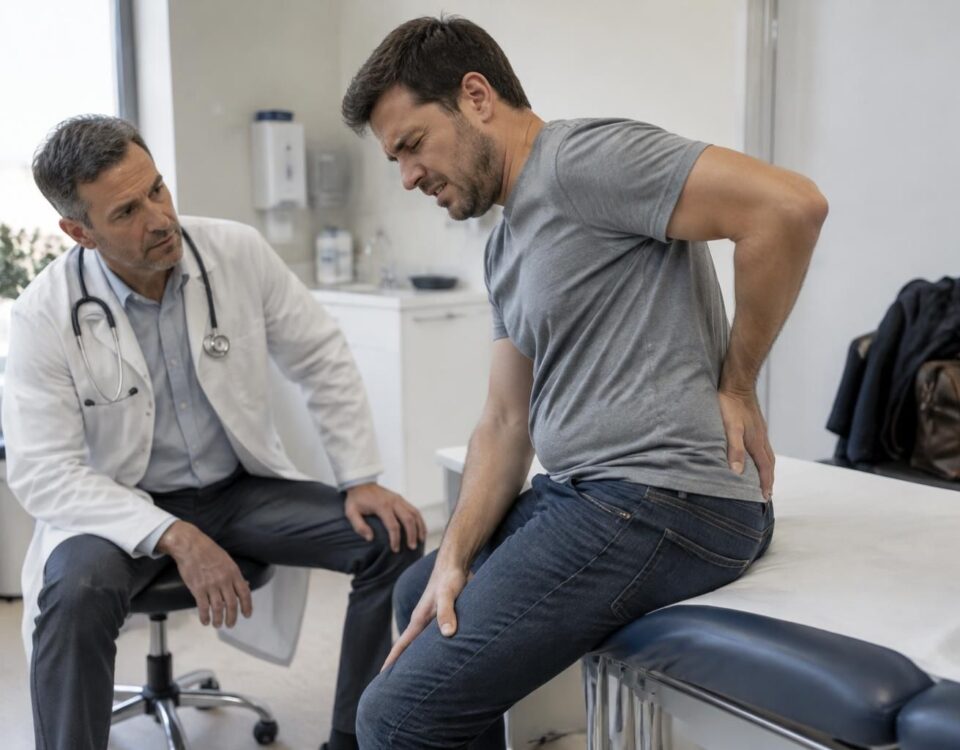
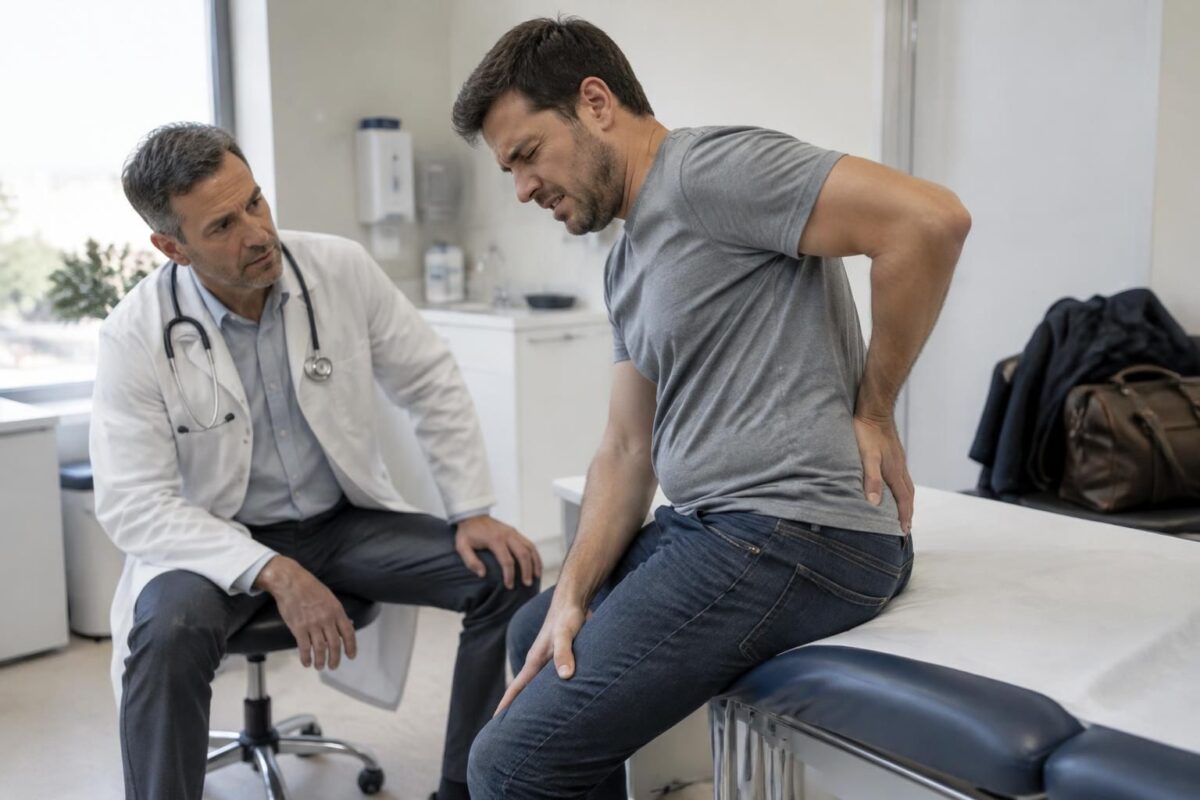
A pain that starts from the lower back or buttock and radiates into the thigh, calf, or foot may be consistent with sciatica. However, several causes are possible. A healthcare professional can examine your situation, including the strength, sensitivity, and movements of the leg, and then determine if a medical evaluation or additional tests are warranted.
Note when the pain occurs, how far it travels, what aggravates or relieves it, and whether you experience tingling or weakness. This information will help describe the evolution of your symptoms during the consultation. If the pain is new, intense, or worsening rapidly, seek advice promptly.

Sciatica and pain with fever: why consult?
IN BRIEF Sciatica with pain and fever deserves a medical evaluation: fever is not usual in simple sciatica and may signal an infection or another problem requiring care. Consult promptly, especially if the pain is intense or worsening. In cases…

Sciatica and pain after trauma: warning sign
IN BRIEF A sciatica after trauma is pain that starts from the lower back or buttock and can radiate down the leg after a fall or impact. An assessment helps to investigate the cause and determine the appropriate course of…
Sciatica and pain that appeared after an accident
IN BRIEF Sciatica after an accident is pain related to irritation or compression of the sciatic nerve, sometimes triggered or revealed by a fall or impact. It can start from the lower back or buttock and radiate down the leg.…
Adjust activities without immobilizing
Break tasks into smaller steps and vary positions
Complete bed rest for long periods is generally not recommended for lower back pain or pain consistent with sciatica. Instead, try to maintain gentle and regular movements, according to your tolerance. Take breaks, alternate positions, and divide demanding tasks into shorter steps. A short walk may be easier than a long outing, but stop or modify the activity if symptoms significantly increase.
Temporarily limit movements that trigger severe pain, such as lifting a load by bending or staying in the same position for extended periods. To resume your activities, gradually increase effort rather than abruptly reverting to your usual pace. At work, temporary adjustments—breaks, posture changes, or reducing certain tasks—can help get through this period.
Avoid improvised exercises
A movement that relieves one person may exacerbate symptoms in another. Avoid forcing a stretch or exercise that intensifies pain in the leg, numbness, or weakness. A program should take into account your examination, activity level, and reactions. Seek advice before starting targeted exercises or resuming intense training.
Understanding Support Options
Care depends on the suspected cause, the intensity of symptoms, and their progression. After an assessment, non-surgical approaches may be considered based on your situation: activity advice, adapted exercises, or manual therapy. At TAGMED Clinic, services may include specific osteopathy or motorized neurovertebral decompression when deemed appropriate. No approach is suitable for everyone; the assessment allows for discussion of options and their limitations.
Recognizing Emergency Signs
Consult a doctor or emergency service immediately in cases of loss of urinary or bowel control, numbness in the saddle region, or significant or progressive weakness of the leg or foot. Fever, recent trauma, severe pain, or rapid deterioration also warrant prompt medical evaluation.
About the Author
Sylvain Desforges, B.Sc., D.O., N.D., Doctor of Osteopathy and Naturopath, is the founding president of TAGMED and the ACMA association. His practice notably focuses on chronic spinal pain and pain compatible with sciatica.
Medical Disclaimer
This content is provided for educational purposes and does not replace a consultation, diagnosis, or treatment by a licensed healthcare professional. The author is not a doctor nor a specialist in a medical specialty recognized by the Collège des médecins du Québec. The approaches mentioned do not replace medical follow-up.
| Situation | What to Do |
|---|---|
| The leg limits walking | Temporarily reduce the duration of trips and break down activities. |
| Pain increases in a seated position | Change positions regularly and avoid sitting for long periods. |
| Daily tasks become difficult | Adapt tasks and request a professional evaluation. |
| Pain persists or worsens | Consult a healthcare professional to investigate the cause and discuss suitable options. |
| New numbness or weakness | Quickly evaluate these symptoms, especially if they progress. |
| Loss of urinary or bowel control | Consult emergency service immediately. |
| Numbness in the saddle region | Consult emergency service immediately. |
Disabling Sciatica: What to Do When the Leg Limits Activities?
The testimonials below are composite and illustrative examples. They do not correspond to identifiable patients and do not predict the evolution of sciatica. Pain that radiates down the buttock or leg can have various causes: an appropriate evaluation helps determine the next steps.
“I could no longer sit at work.” In this example, pain starts from the lower back and radiates down behind the thigh. The person explains that car rides and long periods of sitting made their days difficult. They started by alternating positions, interrupting sitting periods regularly, and noting activities that increased or decreased their symptoms. As the pain persisted, they scheduled an appointment with a healthcare professional for evaluation.
“Grocery shopping had become complicated.” Here, pain in the leg and tingling limited walking. The person temporarily broke down their outings, chose shorter routes, and requested help carrying bags. They avoided pushing through intensifying pain and sought advice on whether their symptoms required medical examination or appropriate support.
“I was afraid to move and worsen the situation.” This person reduced almost all activities for fear of triggering their pain. After receiving personalized advice, they gradually resumed certain movements, monitoring the leg’s response. The goal was not to follow a one-size-fits-all program, but to adapt activities to symptoms and received recommendations.
When the leg limits activities, avoid imposing painful exercises or maintaining a position that significantly worsens symptoms for long durations. While waiting for an evaluation, it may be helpful to alternate positions, break down tasks, and note changes in pain, numbness, or strength. These measures do not replace a diagnosis and may not be suitable for all situations.
Consult a healthcare professional if the pain persists, worsens, or prevents you from functioning normally, or if you notice significant weakness, numbness, or increasing difficulty in walking. An evaluation allows for discussion of possible causes and conceivable options based on your situation. Non-surgical treatments, including osteopathy or motorized neurovertebral decompression, are not suitable for everyone and should be considered based on the evaluation and any potential contraindications.
Consult a doctor or emergency service promptly in cases of loss of urinary or bowel control, anesthesia in the saddle region, significant or progressive weakness of the leg or foot, fever, recent trauma, severe pain, or rapid deterioration.
About the Author
Sylvain Desforges, B.Sc., D.O., N.D., Doctor of Osteopathy and Naturopath, is the founding president of TAGMED and the ACMA association. His practice is dedicated to chronic spinal pain, lower back pain, and pain compatible with sciatica, especially when the pain radiates to the buttock, leg, calf, foot, or toes.
Through SOS Sciatique, he publishes educational content on the symptoms of sciatica, possible causes — such as disc herniation, disc pinching, foraminal stenosis, or irritation of a lumbar nerve root — and the non-surgical approaches that may be considered based on the evaluation. The care offered at TAGMED Clinic may include, as appropriate, motorized neurovertebral decompression, specific osteopathy, or precision impactor.
Medical Disclaimer
The information presented is provided for educational purposes and does not replace a consultation, diagnosis, advice, or treatment provided by a physician or another licensed healthcare professional. The author is neither a doctor nor a specialist in a medical specialty recognized by the Collège des médecins du Québec. The osteopathy, manual medicine, or functional support approaches described do not constitute medical acts and are not intended to replace medical follow-up.
Disabling Sciatica: What to Do When the Leg Limits Activities?
A debilitating sciatica can turn ordinary actions—walking, sitting, driving, or sleeping—into real challenges. The pain can start from the lower back or the buttock and radiate down through the thigh, calf, or even to the foot. Tingling, numbness, or weakness may also accompany it. When the leg limits activities, it’s important to take symptoms seriously without jumping to conclusions about a specific cause.
Sciatica describes symptoms associated with irritation of a lumbar nerve root; it does not, on its own, constitute a complete diagnosis. A herniated disc, narrowing of the space around a nerve, or other issues may be involved, but only an appropriate assessment can guide the understanding of the situation. The intensity of the pain does not always allow for a clear determination of the severity of the problem.
When the pain increases, temporarily reducing certain activities may be necessary. However, remaining still for a long time is not always the best strategy. Depending on your tolerance, brief movements, regular position changes, and a gradual return to simple tasks can help maintain some mobility. Avoid forcing a movement that causes significant aggravation, and adapt efforts rather than trying to “push through” the pain.
To organize daily life, break tasks into smaller parts, schedule breaks, and choose positions that alleviate symptoms. If sitting for long periods is difficult, alternate with walking or standing as tolerated. When lifting an object, bring it close to your body and avoid sudden movements. These tips do not replace an individual evaluation, especially if symptoms persist, intensify, or interfere with sleep and essential activities.
A consultation with a licensed healthcare professional can help clarify symptoms, check the strength and sensitivity of the leg, and determine whether tests or medical follow-up are indicated. Depending on the evaluation, a plan may include movement advice, tailored exercises, or other management options. Manual approaches and care technologies may not be suitable for everyone and should not be presented as guarantees of results. The goal is to choose a cautious approach tailored to your situation and coordinated with your medical follow-up as needed.
Certain signs require urgent attention: loss of control over bladder or bowels, numbness in the saddle area, significant or progressive weakness in the leg or foot, fever, recent trauma, severe pain, or rapid worsening. If you experience these symptoms, contact a doctor or an emergency service immediately instead of waiting for a routine appointment.
About the author
Sylvain Desforges, B.Sc., D.O., N.D., Doctor of Osteopathy and naturopath, is the founding president of TAGMED and the ACMA association. His practice focuses on chronic spinal pain, lower back pain, and symptoms compatible with sciatica. He is interested in innovation in pain management and the reasoned use of different approaches, including neuro-spinal decompression, laser, and shockwaves when the evaluation indicates they may be considered.
Medical Disclaimer
This content is provided for educational purposes only and does not replace a consultation, diagnosis, opinion, or treatment by a doctor or other licensed healthcare professional. The author is neither a doctor nor a specialist in a medical field recognized by the Collège des médecins du Québec. Osteopathy, manual medicine, or functional support approaches do not constitute medical acts and do not replace medical follow-up.
When sciatica limits your activities, the goal is to understand what triggers the pain, protect your ability to move, and obtain an appropriate assessment. A painful or weak leg should not be ignored: the intensity of the symptoms, their evolution, and associated signs determine the next steps.
When leg pain becomes debilitating
Pain that radiates from the buttock down through the thigh, calf, or foot can make walking, driving, sleeping, or daily tasks difficult. Note what aggravates the symptoms, their duration and pathway, as well as any tingling, numbness, or weakness that may be present. This information will help the consulted professional assess the situation.
If the pain is accompanied by significant or progressive weakness, loss of bladder or bowel control, numbness in the saddle area, fever, or recent trauma, quickly seek medical evaluation. If severe symptoms or rapid worsening are present, contact an emergency service.
Adapting activities without remaining immobilized
In the absence of urgent signs, try breaking activities into smaller parts and alternating positions. Short periods of walking or tolerated movement may be preferable to prolonged immobility, but do not push through pain that significantly increases or causes new symptoms. Adjust the duration of driving, posture, and breaks according to your tolerance.
Pain can be influenced by various factors. To better understand certain scenarios, check our information on sciatica and calf pain after driving, cold sensation in the foot, or pain increased by sneezing or effort. However, this information alone does not determine the cause of your symptoms.
Getting the cause evaluated and possible options
A consultation can help check strength, sensitivity, movements, and the evolution of symptoms. Sciatica may be associated with irritation of a nerve root, a herniated disc, or other changes in the spine; the choice of tests and care depends on the clinical evaluation. The size of a protrusion observed in imaging does not always correlate with the intensity of the pain: also see our article on significant pain despite a small disc protrusion.
If your symptoms have appeared or changed after an injection, report it to the professional monitoring you and ask them what to do. You can also consult the information on sciatica after an injection. Do not modify a prescribed treatment or plan a new procedure without discussing it with a licensed healthcare professional.
Depending on the assessment and your needs, a non-surgical approach may be considered. At the TAGMED Clinic, care may include, depending on the case, motorized neurovertebral decompression, specific osteopathy, or precision percussion. For an evaluation related to the sciatica treatment in Montreal or Mont-Royal or the sciatica treatment in Terrebonne, consult the services of the TAGMED Clinic. These approaches do not replace a medical evaluation when it is necessary.
About the author
Sylvain Desforges, B.Sc., D.O., N.D., Doctor of Osteopathy and naturopath, is the founding president of TAGMED and the ACMA association. He dedicates his practice to chronic spinal pain, low back pain, and pain consistent with sciatica, particularly when the pain radiates down to the buttock, leg, calf, foot, or toes.
Through SOS Sciatique, he publishes educational content on the symptoms of sciatica, its possible causes — such as disc herniation, disc pinching, foraminal stenosis, or irritation of a lumbar nerve root — and the non-surgical approaches that may be considered based on the evaluation.
Medical disclaimer
The information published on SOS Sciatique is provided for educational purposes and does not replace a consultation, diagnosis, advice, or treatment provided by a physician or another licensed healthcare professional. The author of this article is neither a physician nor a specialist in a medical specialty recognized by the Collège des médecins du Québec. The approaches of osteopathy, manual medicine, or functional support described on this site do not constitute medical acts and are not intended to replace medical follow-up.
Consult a doctor or an emergency service in case of urinary or intestinal incontinence, numbness in the saddle area, significant or progressive weakness of the leg or foot, fever, recent trauma, severe pain, or rapid worsening. For more details, please read our Legal notice.
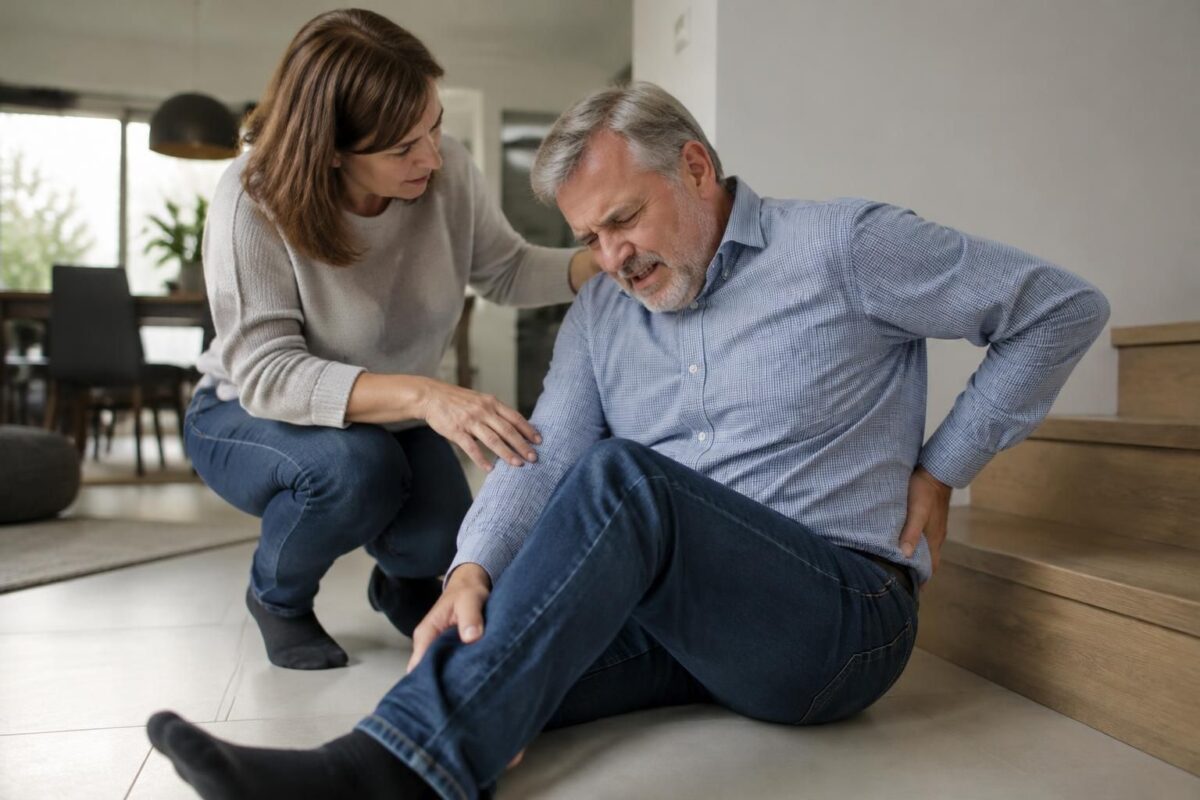
Sciatica and pain appeared after a fall
IN BRIEF A sciatic pain after a fall may stem from nerve irritation or an injury to the hip, buttock, or lower back. It can radiate down the leg and be accompanied by tingling or numbness. Rest, avoid movements that…
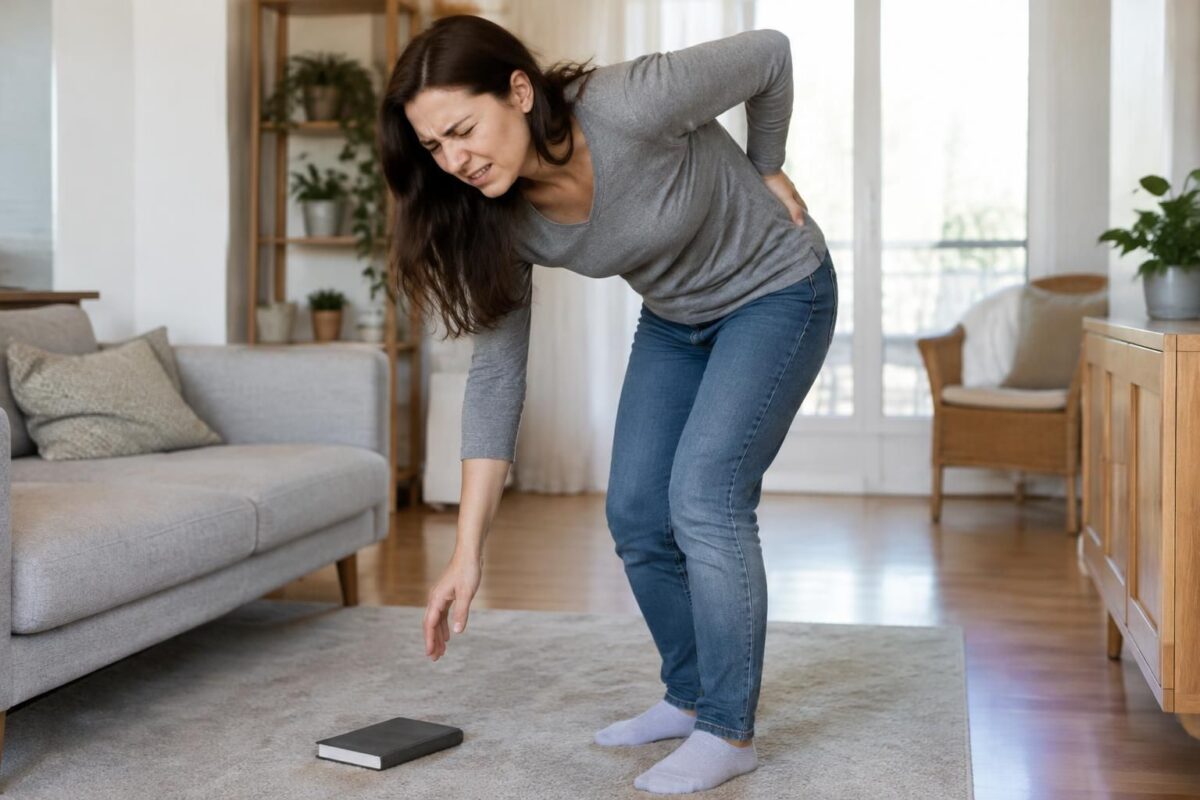
Sciatica and pain that occurred after a wrong move
IN BRIEF A sciatica that appeared after a sudden movement corresponds to a lower back pain that can radiate into the buttock and leg, sometimes down to the foot. The movement may trigger or worsen the symptoms, without revealing the…

Sylvain Desforges, B.Sc., D.O., N.D., docteur en ostéopathie
Dr Sylvain Desforges, B.Sc., D.O., N.D., osteopath, is the founding president of TAGMED and of the ACMA association. He dedicates his practice to chronic spinal pain, low back pain and symptoms compatible with sciatica, particularly when pain radiates toward the buttock, leg, calf, foot or toes.
Through SOS Sciatique, he publishes educational content on sciatica symptoms, possible causes such as disc herniation, disc narrowing, foraminal stenosis or irritation of a lumbar nerve root, as well as non-surgical approaches that may be considered according to the evaluation. At Clinique TAGMED, care may include, depending on the case, motorized neurovertebral decompression, specific osteopathic care or precision percussion.
For an evaluation related to sciatica treatment in Montreal / Mount Royal or sciatica treatment in Terrebonne, please consult the services available at Clinique TAGMED.
Medical disclaimer
The information published on SOS Sciatique is provided for educational purposes only and does not replace a consultation, diagnosis, opinion or treatment provided by a physician or another authorized healthcare professional. The author of this article is neither a medical doctor nor a specialist in a medical specialty recognized by the Collège des médecins du Québec. The osteopathic, manual medicine or functional support approaches described on this site do not constitute medical acts and are not intended to replace medical follow-up.
Consult a physician or emergency service in cases of loss of bladder or bowel control, anesthesia in the saddle area, significant or progressive weakness in the leg or foot, fever, recent trauma, severe pain or rapid worsening of symptoms. For more details, please read our Legal Notice.