Sciatica and Professional Driving: Signs Not to Underestimate
28/08/2026
Sciatica in Terrebonne: foot pain that worsens while sitting
29/08/2026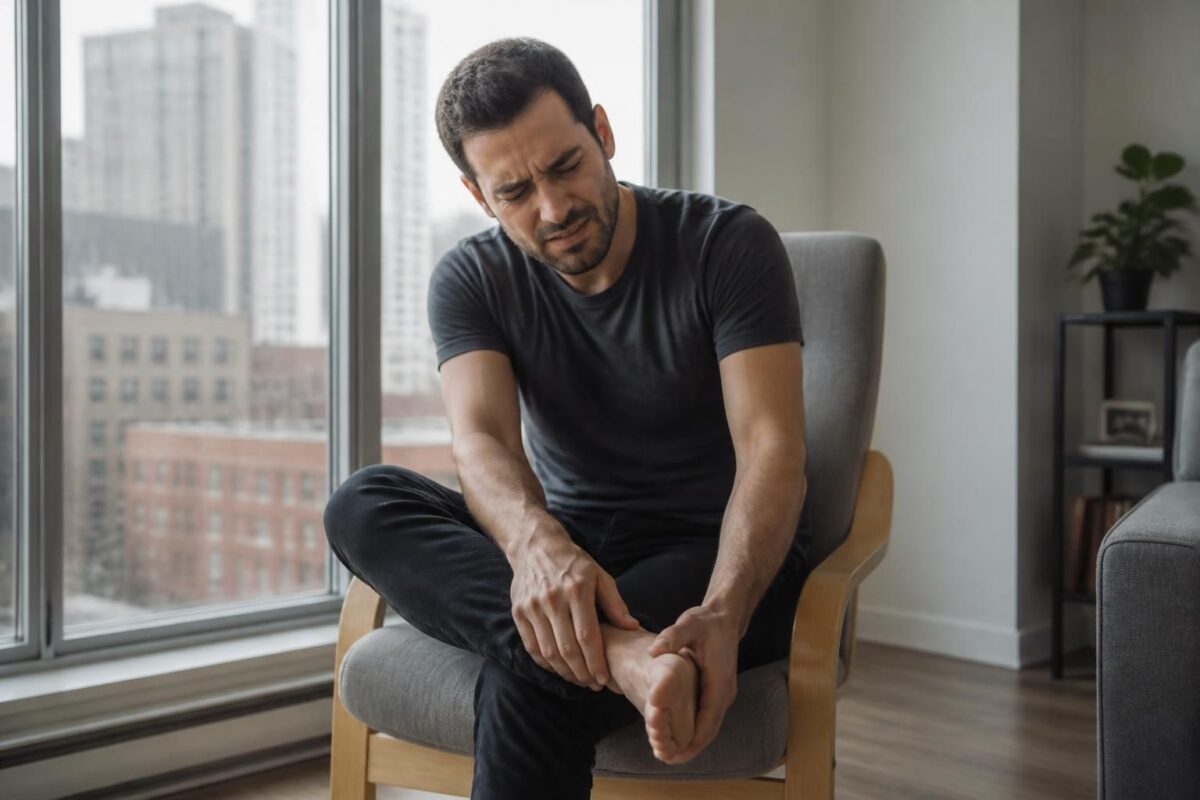
IN BRIEF |
In sciatica in Montreal is a radiating pain that starts from the lower back, follows the path of the sciatic nerve, and can extend to the foot, with frequent worsening in a sitting position. The assessment links the symptoms to function and neurology, rather than an isolated image. The main approach is a conservative approach aimed at reducing irritation, improving mobility, and allowing a gradual return to activities. Available in Montreal, this service helps identify triggers, monitor progress, and determine if additional measures or specific investigations are indicated. |
In the context of sciatica in Montreal, one may observe pain in the foot that increases when sitting for prolonged periods. This manifestation is typically related to irritation of the sciatic nerve root or disc compression, and may be exacerbated by lumbar flexion, duration without movement, and tension in the nervous system.
An effective assessment links the symptoms to function and neurological signs rather than a simple imaging. In Montreal and Mont-Royal, a conservative approach focused on tolerated activities and gradual progression, complemented by tailored exercises, may be considered.
Consult promptly if foot pain is accompanied by weakness, progressive numbness, or urinary or neurological issues.
Summary: This analysis explains why foot pain can worsen in a sitting position in patients with sciatica, the signs to watch for, and the management options suitable for Montreal and the surrounding areas. The key message is a symptom and function-centered evaluation, rather than an isolated image, to guide a conservative and safe approach, with a referral to TAGMED Clinic when necessary.
Understanding the pain radiating to the foot while sitting
Sciatica may present as pain that descends from the lumbar or buttock region down the back of the leg to the foot. This pain can be worse in prolonged sitting. The pain may be accompanied by sensations of burning, tingling, or numbness, and sometimes weakness. In some cases, the pain is associated with increased sensitivity or functional impacts during walking or wearing shoes.
Key elements of the evaluation
A useful evaluation links symptoms to function and neurological signs rather than an isolated image. The examination may include walking, assessment of strength, sensitivity, and tests tailored to the clinical presentation. Imaging is considered when relevant and after comparison with previous exams.
Simple clinical markers to know
Marker 1: Pain worsening in a sitting position may be compatible with a disc component, but this sign is not specific. Marker 2: Duration without changing positions often counts as much as the position itself. Alternating between sitting, standing, and walking can reduce irritation. Marker 3: Pain that radiates further down the leg or is accompanied by weakness deserves reassessment.
Urgencies and signs requiring prompt evaluation
A neurological or vascular emergency must be excluded before continuing routine care. Important signs include new or progressive weakness, significant numbness in the perineal region, urinary or fecal incontinence, marked bilateral pain, major trauma, or fever accompanying lumbar or radicular pain.
Evaluation and referral plan
The evaluation may follow these axes:
- History of symptoms: trajectory, duration, intensity, sleep, positions, and recurrences.
- Function and neurology: strength, sensitivity, gait, and tests adapted to the clinical picture.
- Imaging if relevant: existing results are compared with the level, side, and symptoms.
- Plan and reassessment: measurable goals and criteria for modifying the plan.
Conservative approach and options in Montreal
A conservative approach emphasizes maintaining tolerated activities and gradual progression. Rehabilitation and other measures tailored to the clinical profile may be considered. In some patients, a motorized neurovertebral decompression may be discussed, but it is not universal and requires objective reassessment.
For patients seeking specific advice on treatment and positions related to sciatica while sitting, you may consult the following resources:
- Sitting Position and Sciatica — TAGMED Clinic
- Sciatica from Sitting — TAGMED Clinic (in English)
- Pain in One Leg — Possible Case in Terrebonne
- Sciatica and Progressive Numbness
- Seat Too Low and Lumbar Radiation
For general information on mechanisms and treatments, you can also consult the following resources from the TAGMED network and associated resources:
- Herniated disc and acute sciatica — common causes
- Warm sensation in the leg — nerve pain
- Lumbar radiation and pain related to sitting
In Montreal, the TAGMED Clinic can provide tailored assessment and advice. The address is accessible via TAGMED network services.
Practical tips and daily advice
Why might the pain worsen when sitting? Lumbar flexion, prolonged time without movement, and disc or nerve sensitivity can contribute. Using a lumbar cushion may help some individuals, but alternating positions is often more effective. Tolerance for sitting varies by individual, and recovery guides daily limits.
For questions related to sitting position and sciatica, here are some useful resources:
- Sciatica and sitting position — TAGMED Clinic
- Guide to sitting position and sciatica
- Understanding sciatica and its treatments in Montreal
Contact details and clinical context
Reference address in Mont-Royal: 1140 Beaumont Avenue, Mont-Royal, QC H3P 3E5. For a quick assessment of your sciatica profile, a consultation can help clarify the probable cause, signs to watch for, and the relevance of conservative treatment or other directions.
Items to discuss during your visit
With your healthcare professional, discuss:
- The trajectory and duration of symptoms.
- The effects of sitting position and variations with daily activities.
- The presence of emergency signs or more marked radiculopathy.
- Follow-up options and reassessment of your care plan.
In terms of ethics and safety, the care framework prioritizes conservative approaches whenever possible and safe, in coordination with the TAGMED clinical team.
Medical disclaimer: The information and advice provided on this site do not replace the opinion, diagnosis, or treatment of a healthcare professional. Please note that Dr. Sylvain Desforges, osteopath, is neither a doctor of medicine nor a physician, and is not a specialist in a medical specialty as defined by the Collège des médecins du Québec. Manual medicine, functional medicine, and sports medicine as described on this site exclude any medical treatment or diagnosis made by a doctor or specialist. Always consult your physician for any medical questions. For more details, please read our full Legal Notice.
- Key sign: Pain in the foot that increases when sitting.
- Aggravating factors: prolonged sitting, lumbar flexion, disc pressure.
- Alarm signal: pain that radiates further down with weakness or numbness.
- Assessment: link symptoms to function and neurological signs, not just imaging.
- General approach: assessment focused on symptoms and function with imaging if necessary.
- Conservative management: tolerated activities, gradual progression, tailored rehabilitation.
- Evaluation elements: walking, strength, sensitivity, specific tests.
- Emergencies: new weakness, urinary issues, saddle numbness, fever, trauma.

Quick summary: This recommendation article describes how foot pain that worsens when sitting can be linked to sciatica in Montreal, what clinical signs to monitor, and what steps to prioritize, from conservative assessment to appropriate medical guidance. It offers practical advice for day-to-day action and knowing when to seek prompt consultation.
Understanding sciatic pain in the foot while sitting
Pain that extends from the lower back to the foot may reflect irritation or compression of the sciatic nerve root. When sitting, lumbar flexion and the duration without movement can increase tension on the disc and nerve pathway, exacerbating pain in the buttock, then down the back of the leg and into the foot. Effective assessment links symptoms to function and neurological signs rather than to isolated imaging. Each profile is unique: some experience gradually worsening pain, others have a more marked dispersal in certain positions.

Sciatica in Montreal: nighttime pain in the leg
IN BRIEF In brief, nocturnal sciatica is a root pain in the lower back that irritates the sciatic nerve and worsens when lying down, causing nighttime awakenings. In Montreal, this service offers a non-surgical approach focused on posture, bedding, and…

Sciatica in Montreal: pain from the lower back to the calf
IN BRIEF In brief, sciatica is a pain that starts in the lower back and can radiate down to the calf, caused by irritation or compression of the sciatic nerve. In Montreal, this service offers a personalized evaluation and non-surgical…

Sciatica in Montreal: hip pain or true nerve radiation?
IN BRIEF Sciatica is a nerve pain that follows the path of the sciatic nerve and can radiate from the buttock to the foot, which can be perceived as pain in the hip. Lower back pain, on the other hand,…

Sciatica pain in Montreal: incomplete journey, should we be concerned?
IN BRIEF In brief, sciatic pain is a lumbar nerve-origin pain whose pathway may be incomplete and may not reach the foot. In Montreal, the evaluation clarifies the pathway, strength, and function, and determines if imaging can change the approach.…
Practical tips for home and work management
Tip 1: increased pain when sitting may be compatible with a disc component, but this sign is not specific on its own.
Tip 2: the duration and variation of position count as much as posture; alternating between sitting, standing, and walking may reduce irritation.
Tip 3: pain radiating further down the leg or accompanied by weakness deserves prompt reevaluation.
The clinical context helps to distinguish a radicular irritation from other causes of leg pain. In case of loss of urinary control or other signs of emergency, immediate medical attention is needed.
When to seek quick or emergency consultation
New or progressive weakness, foot drop or increasingly giving way leg, urinary or intestinal issues, numbness of the perineum or significant bilateral symptoms: these signs require rapid evaluation and should not await a routine consultation.
Conservative action plan tailored to Montreal
Approach focused on the concordance between symptoms, examination, and potential imaging when relevant. A useful assessment compares neurological signs to function and encourages objective re-evaluation to adjust the plan. The goal is to maintain tolerated activities, progress slowly, and use measures suited to the clinical profile.
Key elements of the plan:
• Maintain tolerated activities and gradual progression of efforts;
• Targeted rehabilitation and postural advice to reduce strain on the sciatic nerve;
• Neural mobilization and specific exercises integrated into a personalized program;
• Options like Spinal decompression via motorized traction may be discussed with select patients after re-evaluation.
Exercises and postural advice to prioritize
To promote mobility and reduce irritation, three frequently used approaches in clinic are:
• Piriformis stretch: lying on the back, bring the knee toward the opposite shoulder to release the glute without sharp pain.
• Neural mobilization in a seated position: gentle back-and-forth movements with the leg and foot to promote nerve mobility without forcing.
• Light lumbar extension: in a prone position, cautious progression to support on the forearms; stop if symptoms increase in the leg.
Also consider using a cushion or lumbar support for comfort, while prioritizing alternating positions and periods of moderate activity.
Guidance and follow-up
An evaluation by a professional in Montreal can clarify the probable cause, signs to monitor, and the relevance of conservative management or other guidance. A structured follow-up allows monitoring of progress and adjustment of the plan based on results and symptom evolution.
| Element / Criteria | Concise Interpretation |
|---|---|
| Location and irritative thread | Pain starting from the lower back or buttock and descending to the foot, typical of a radiculopathy. |
| Main aggravating factor | Sitting for a prolonged time can increase pain in the foot and worsen irritation. |
| Associated clinical signs | Pain in the leg with numbness or paresthesias; weakness warranting re-evaluation. |
| Radicular vs other cause distinction | Diagnosis guided by clinical context and function; imaging alone is not definitive. |
| Relevant examinations | Functional and neurological assessment; targeted imaging if persistence or warning signs. |
| Initial therapeutic approach | Conservative approach: tolerated activities, gradual rehabilitation, and structured follow-up. |
| Specialized options | Motorized traction possible for some patients; requires objective re-evaluation and adaptation to the case. |
| Urgent signs to monitor | New weakness or urinary issues, significant bilateral pain, loss of bowel control, fever, or rapid deterioration. |
| Practical advice for sitting | Alternate positions, prioritize walking and breaks; a lumbar cushion may be helpful but is not essential. |
Testimonies on Sciatica in Montreal: foot pain worsening in a seated position
In Montreal, Julie shares that her foot pain significantly increases in a seated position. According to her, the trigger is a pain that starts from the lower back and travels up the leg to the foot, typical of sciatica. By remaining seated, she experiences an almost constant worsening, which limits daily activities and makes car trips and meetings difficult. After a symptom- and function-focused evaluation, the proposed plan includes postural adjustments, targeted exercises, and gradual progression of activities; a few weeks later, her situation improves and she can resume some activities without lasting pain.
In Montreal, Marc shares his experience: foot pain that intensifies in a seated position during long office days. He describes that the pain follows the characteristic path of the sciatic nerve and that prolonged sitting triggers a pulling sensation in the ankle and foot. After a conservative approach involving active breaks and mobility exercises, he experiences gradual reduction and regains better tolerance for driving and meetings. The evaluation highlighted the importance of assessing function and neurological signs rather than relying on a solitary image.
Claire, a resident of Montreal, experienced foot pain that increases with seated position, especially during car trips or training sessions requiring long periods of sitting. Her doctor suggested a sciatica caused by radicular irritation and not by a local injury. Thanks to a conservative plan involving guided mobility and adapted rehabilitation, her symptoms have decreased and seated periods can be managed with regular breaks and micro-pauses.
Luc, Montreal, describes a situation where foot pain especially intensifies in a seated position during commutes. The evaluation helped to distinguish a radicular irritation from other causes and led to a plan focused on maintaining tolerated activities and progression of exercises. After a few weeks, he reports significant improvement and a better ability to remain seated during meetings without pain reaching the foot.
Biography and clinical approach: Sciatica in Montreal and worsening foot pain in a seated position
Dr. Sylvain Desforges, osteopath, specialist in manual medicine and naturopathy, is the founding president of TAGMED clinics and the ACMA association. His career is guided by innovation in health and he focuses on the management of chronic pain of the spine as well as the integration of advanced technologies such as motorized spinal decompression, laser, and shockwave therapy. His mission is to provide evidence-based care to optimize the health and well-being of his patients. Discover his approach and the services available at TAGMED, which serves Montreal and Mount Royal.
In the Montreal context, sciatica frequently manifests as foot pain that intensifies when seated. This pain may start in the lower back or buttock and travel along the sciatic nerve path to reach the foot or toes. The worsening when seated results from a combination of mechanisms such as lumbar flexion, disc pressure, and nerve irritation. The approach taken is focused on congruence between symptoms, examination, and, when relevant, imaging, rather than relying on an isolated image.
Indicator 1: Pain that worsens while sitting may be compatible with a disc component, but this sign is not specific and must be interpreted with caution.
Indicator 2: The duration and fluctuations of pain matter as much as the posture itself; alternating between sitting, standing, and walking can reduce irritation and promote recovery.
Indicator 3: When pain travels further down the leg or is accompanied by weakness, a thorough re-evaluation is necessary to adjust the care plan.
For Dr. Desforges, a useful assessment links signs and symptoms to function and neurological dynamics rather than relying solely on imaging. The process includes the history of symptoms (course, duration, intensity, sleep, positions, recurrences, and previous treatments), evaluation of function and neurology (strength, sensitivity, gait, and appropriate tests), and, if relevant, imaging to compare the level and side affected. A concrete plan is then established with measurable goals, precautions, and clear criteria for modifying or stopping treatment if necessary.
From a therapeutic standpoint, the conservative approach prioritizes the maintenance of tolerated activities with gradual progression, rehabilitation, and measures tailored to the clinical profile. In selected patients, motorized spinal decompression may be discussed as an adjunct option, but it is neither universal nor guaranteed and requires objective re-evaluation. Depending on severity and progression, medical orientation towards an injection, investigation, or specialized opinion may become relevant.
A structured follow-up is essential to measure progress and adjust the care strategy as needed. In the context of consultations in Montreal and Mount Royal, Dr. Desforges offers an integrated approach that combines education, targeted exercises, and functional rehabilitation to reduce nerve irritation and encourage a gradual return to activities. If tolerance decreases rapidly, if pain becomes very debilitating, or if neurological signs progress, a prompt medical evaluation is recommended to ensure patient safety and direct towards appropriate care.
Quick summary: Sciatica in Montreal with foot pain that worsens when seated is often linked to irritation or compression of the lumbar nerve roots. This overview highlights key signs, the importance of associating symptoms with function and examination, and management pathways that prioritize a conservative approach tailored to each profile, while signaling situations that require prompt evaluation.
Clinical indicators and signs to monitor: pain that increases while sitting may suggest a disc component, but this sign alone is not specific. It is essential to examine the distribution of symptoms and their progression to distinguish radicular irritation from other causes. Indicator 1 reminds us that pain while sitting is not exclusive to a disc problem; Indicator 2 emphasizes the importance of alternating positions (sitting, standing, walking) to reduce irritation; Indicator 3 indicates that pain descending down the leg accompanied by weakness warrants a quick re-evaluation.
Evaluation and action plan: a useful assessment links symptoms to function and neurological signs rather than to an isolated image. The examination may include walking, strength, and sensitivity, with appropriate tests according to the presentation. In some cases, imaging is considered based on the clinical context and examination results. To delve deeper into nerve manifestations and possible causes, you can consult resources related to sciatic foot pain and radiculopathy.
Therapeutic approach and orientation: a conservative approach generally constitutes the first line, maintaining tolerated activities and gradually progressing exercises, strengthening, and stretching. Traction or decompression associated with objective evaluation may be considered in selected patients, but this is not universal and should be regularly re-evaluated. In cases of severity, prolonged duration, or marked neurological signs, medical orientation or targeted injection may become pertinent after examination and imaging. To enhance your understanding of mechanisms and options, consult especially the following resources and specific articles on disc recurrence factors and the impact of sitting position.
When to consult quickly: certain signals require urgent medical evaluation, such as new weakness or rapid progression, paresthesia or pain progressing towards the foot, urinary or intestinal disorders, an insensate stool, marked bilateral pain, major trauma, or fever accompanying low back pain. In the presence of these elements, prioritize a prompt medical evaluation rather than routine care.
Resources and practical insights: to delve deeper into the concepts of sciatic pain and the implications related to sitting position, discover user-friendly resources that address the impact of the sciatic nerve, signs and relief strategies, as well as postural advice and tailored exercises. Guides and online articles detail the mechanisms and accessible treatment options and offer tips on priority movements, targeted exercises, and situations to avoid. You will find information on the following links:nSciatic pain in the foot,nimpact of car posture,npain that increases when sitting,nrecurring disc factors,npain down to the foot,nunderstanding and relieving.
Sciatica in Montreal: pain towards the little toe and S1 root
IN BRIEF Sciatica is pain radiating along the path of the sciatic nerve, typically from the lower back to the leg and down to the little toe when the S1 root is irritated or compressed. In Montreal, this phenomenon is…

Sciatica in Montreal: pain towards the top of the foot and L5 root
IN BRIEF Sciatica in Montreal with pain in the top of the foot and a possible involvement of the L5 root is a lumbar radiculopathy where the pain follows the path of the sciatic nerve to the dorsum of the…

Sciatica in Montreal: pain radiating to the outer edge of the foot
IN BRIEF In brief, sciatica is pain that follows the path of the sciatic nerve, starting from the lower back and extending down to the foot, often radiating to the outer edge of the foot. In Montreal, this condition is…

Sciatica in Montreal: pain in the buttock after a long sitting position
IN BRIEF In brief, sciatalgia is pain that follows the path of the sciatic nerve, often triggered after a prolonged sitting position and lumbar irritation. In Montreal, this issue is mainly managed without surgery thanks to a careful diagnosis and…

Dr Sylvain Desforges, B.Sc., D.O., N.D., osteopath, is the founding president of TAGMED and of the ACMA association. He dedicates his practice to chronic spinal pain, low back pain and symptoms compatible with sciatica, particularly when pain radiates toward the buttock, leg, calf, foot or toes.
Through SOS Sciatique, he publishes educational content on sciatica symptoms, possible causes such as disc herniation, disc narrowing, foraminal stenosis or irritation of a lumbar nerve root, as well as non-surgical approaches that may be considered according to the evaluation. At Clinique TAGMED, care may include, depending on the case, motorized neurovertebral decompression, specific osteopathic care or precision percussion.
For an evaluation related to sciatica treatment in Montreal / Mount Royal or sciatica treatment in Terrebonne, please consult the services available at Clinique TAGMED.
Medical disclaimer
The information published on SOS Sciatique is provided for educational purposes only and does not replace a consultation, diagnosis, opinion or treatment provided by a physician or another authorized healthcare professional. The author of this article is neither a medical doctor nor a specialist in a medical specialty recognized by the Collège des médecins du Québec. The osteopathic, manual medicine or functional support approaches described on this site do not constitute medical acts and are not intended to replace medical follow-up.
Consult a physician or emergency service in cases of loss of bladder or bowel control, anesthesia in the saddle area, significant or progressive weakness in the leg or foot, fever, recent trauma, severe pain or rapid worsening of symptoms. For more details, please read our Legal Notice.