Sciatica in Terrebonne: disc degeneration and symptoms in the leg
28/11/2026
Disc herniation and pain towards the big toe
28/11/2026
IN BRIEF
| Sciatica causes pain that starts from the lower back or buttock and radiates down the leg. If the pain is extreme, persistent, or limits your activities, consult quickly to evaluate the cause and determine the appropriate management. A significant weakness, urinary or intestinal issues, or numbness in the perineum require urgent medical evaluation. |
Intense pain that radiates from the lower back or buttock into the leg deserves evaluation if it limits walking, sleeping, or activities, persists, or worsens. Consult quickly if there is marked weakness in the leg or foot. Loss of control of the bladder or bowels, newly difficulty urinating, or numbness in the perineal area requires urgent medical evaluation.
Extreme pain radiating down the leg can make walking, sleeping, and daily activities very difficult. Urgent medical evaluation is required if it is accompanied by significant weakness, urinary or intestinal issues, or numbness in the perineal region. Even without these signs, consult if the pain prevents you from functioning, worsens, or persists.
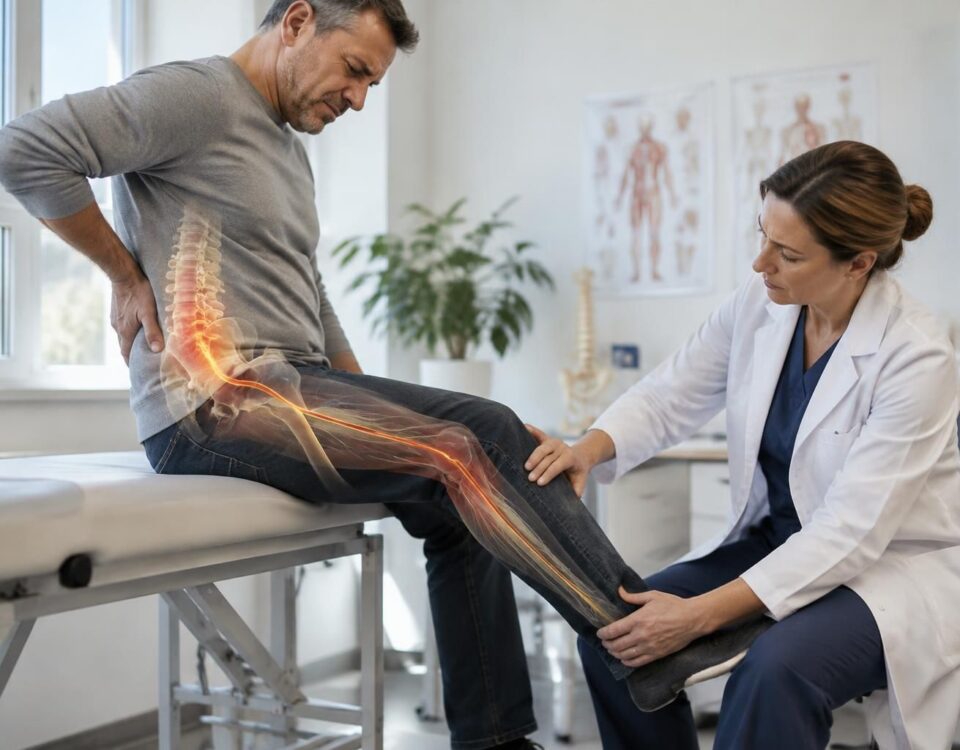
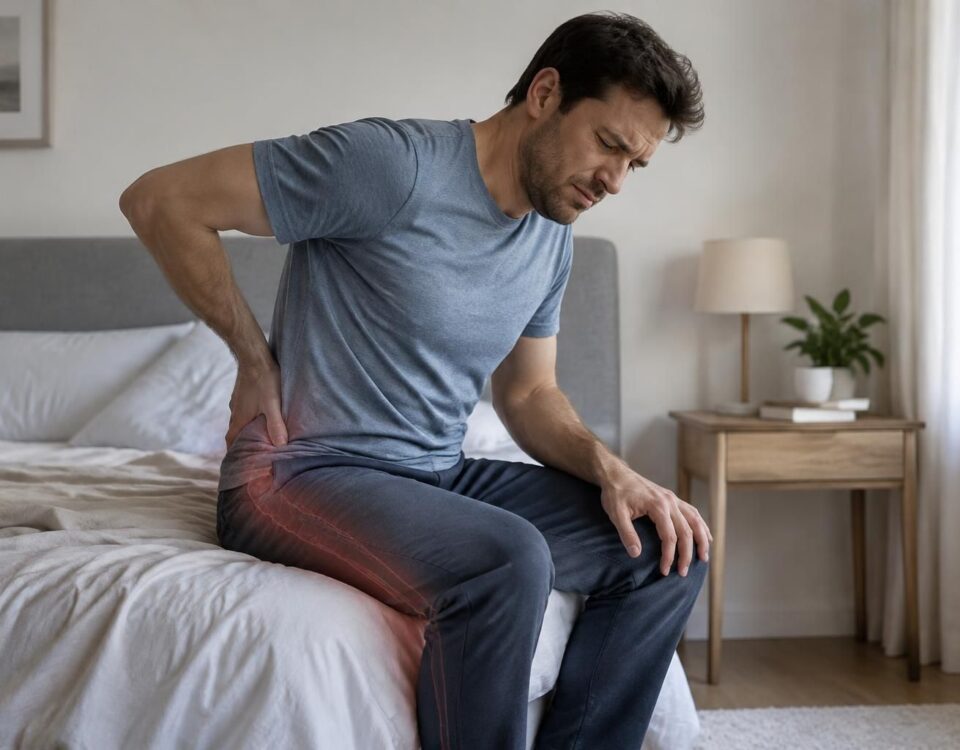
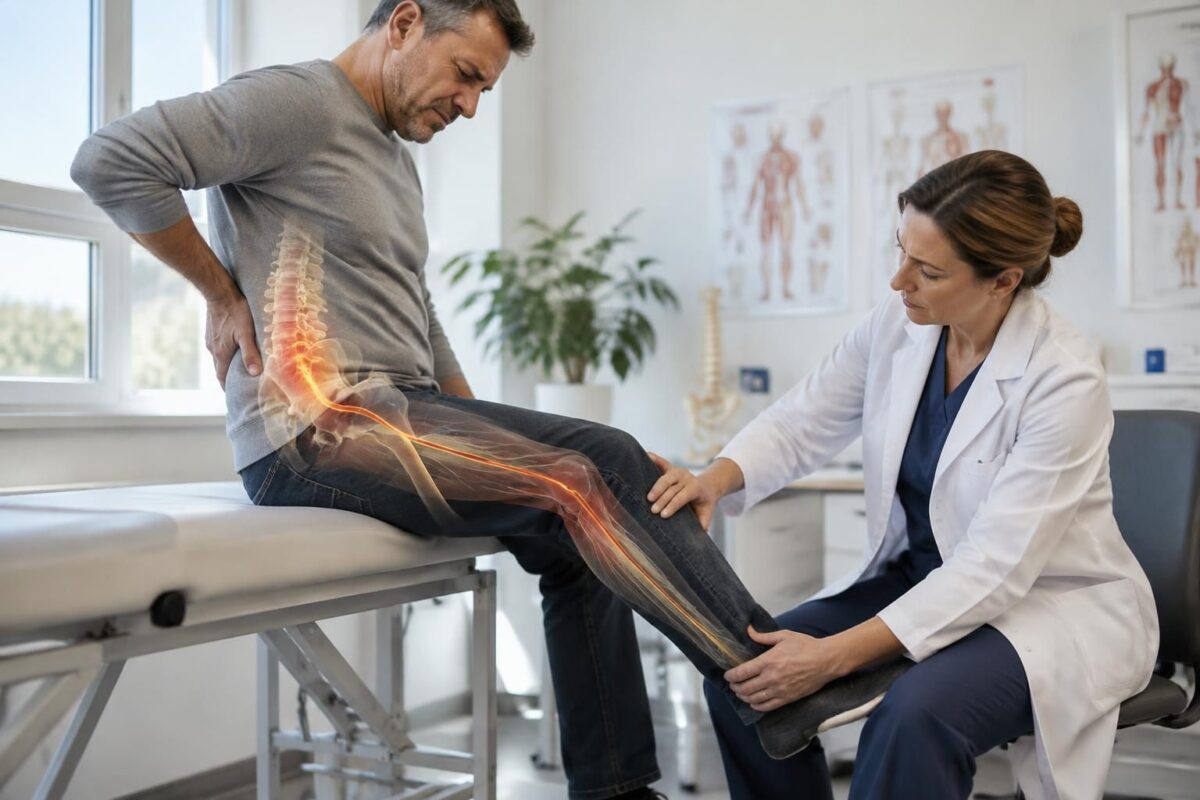
Pain that starts from the lower back or buttock and radiates into the thigh, calf, or foot may correspond to sciatica. It often affects one side only. It can cause burning, electric shocks, tingling, or numbness.
Sciatica describes a set of symptoms. It can appear when a lumbar nerve root is irritated or compressed. A herniated disc may be involved, but other factors can also contribute to the pain. Therefore, the presence of pain in the leg alone is not sufficient to confirm a diagnosis. The MSD Manual presents possible causes and associated signs.
A fissured annulus or disc bulge may sometimes be associated with nerve irritation or buttock pain. These findings should be interpreted alongside symptoms and clinical examination. For more information, consult the articles on fissured annulus and possible nerve irritation and disc bulge and buttock pain.
Consult urgently if neurological signs are present
Go to the emergency room or contact a medical service quickly if you lose control of your bladder or bowels, have new difficulty urinating, or experience loss of sensation around the perineum, genitals, or anus. These signs are rare but can indicate serious nerve damage. Numbness of the saddle area requires special attention.
A sudden or significant weakness in a leg also requires urgent evaluation. For example, seek immediate examination if your foot drags on the ground, if you have difficulty lifting your foot, or if you can no longer stand on your toes.
Quickly seek medical advice if the pain is accompanied by fever, chills, significant trauma, or deterioration of your general condition. Also, report any important medical history, such as recent cancer or infection. The article from LeTraumato on when to consult provides other useful guidelines.
Consult quickly if the pain prevents you from functioning
Extreme pain deserves evaluation even if you notice no urgent signs. Make an appointment if you have difficulty walking, sleeping, working, or performing your usual tasks. Also consult if the pain increases, returns regularly, or does not start to improve after a few days.
Pain aggravated by bending may be related to different factors. Avoid concluding on a specific cause yourself. You can read information on pain aggravated by bending and a possible discal cause. Tasks that require remaining bent for long periods, such as mopping the floor, can also irritate symptoms in some people: consult the advice on prolonged bending while mopping the floor.
You can also consult the recommendations from Health Insurance on actions to take and when to consult. This information does not replace an evaluation tailored to your situation.
Who to consult for extreme leg pain?
In case of urgent signs, consult a doctor or emergency service. In the absence of urgent signs, a healthcare professional can evaluate your symptoms and determine if additional medical advice is needed. The choice of professional depends on your condition, history, and the development of the pain.
The evaluation may focus on walking, strength, sensitivity, and movements of the back and legs. The professional will ask when the pain started, how far it radiates, and what actions worsen or alleviate it. They will also check if you have noticed any numbness, weakness, or changes in your balance.
An X-ray or MRI is not necessary in all cases. A professional may consider imaging if the examination shows concerning signs, if a specific cause is suspected, or if the progression does not match what was expected. An image should always be interpreted alongside the symptoms and clinical examination.
To better understand the consultation process and possible options, consult the information from Health Insurance on consultation and treatment of sciatica. You can also read advice from MedicCom on steps to take and professionals to consult.
Sciatica and Cauda Equina Syndrome: Signs to Know
IN BRIEF The cauda equina syndrome is a severe compression of nerves in the lower back, sometimes associated with sciatica. Loss of control of the bladder or bowels, numbness in the saddle area, or significant weakness in the legs are…

Sciatica and loss of bowel control: medical emergency
IN BRIEF Bowel control loss with sciatica is an alarming sign that may indicate severe nerve compression. This is not a symptom to treat at home: go to the emergency room immediately or call emergency services, especially if there is…
What to do while waiting for an evaluation?
Avoid forcing through sharp pain. Also avoid staying in bed for several days without professional advice. As your symptoms allow, change positions regularly and temporarily limit movements that significantly increase pain.
Reduce tasks that require lifting heavy loads, sitting for long periods, or bending repeatedly if they worsen your symptoms. Do not begin intense stretching or exercises found online without appropriate advice, especially if pain radiates further down the leg or if you experience numbness or weakness.
Heat or cold may provide temporary relief for some people. Always protect the skin and discontinue application if it increases discomfort. Some medications are not suitable for everyone: seek advice from a doctor or pharmacist, especially if you are already taking medication or have a health condition.

Sciatica and loss of urinary control: medical emergency
IN BRIEF Sciatica with loss of urinary control can indicate serious nerve compression, notably cauda equina syndrome. Sudden difficulty urinating, incontinence, loss of sensation in the perineum, or weakness in the leg require immediate evaluation in the emergency department. Prompt…

Sciatica and pain with saddle numbness
IN BRIEF Cauda Equina Syndrome refers to pain radiating down the leg accompanied by a loss of sensation around the genitals, anus, or inner thighs. This symptom may indicate severe nerve compression: it is not discomfort to treat at home.…
What management options can be discussed?
Management depends on the likely cause, the intensity of the pain, and the results of the assessment. It may include advice for adapting activities and follow-up with a healthcare professional. If symptoms indicate significant impairment or worsen, medical advice is a priority.
At the TAGMED Clinic, an assessment may allow for discussion of non-surgical approaches suitable for your situation. Depending on the results and indications, care may include specific osteopathy or motorized neurovertebral decompression. These approaches do not replace a medical examination and are not suitable for everyone.
Extreme pain does not automatically mean that surgery is necessary. The decision depends particularly on muscle strength, sensitivity, suspected cause, and symptom progression. If the pain is intense or if you notice weakness, seek an assessment promptly.

Sciatica and pain with progressive weakness
IN BRIEF Sciatica causes pain that radiates from the lower back down the leg; however, progressive muscle weakness is not a symptom to be taken lightly. It requires quick medical evaluation to search for the cause and determine the appropriate…

Sciatica and pain with general discomfort
IN BRIEF A sciatica causes pain that starts in the lower back or buttock and radiates down the leg. A general discomfort, especially if accompanied by fever or rapid worsening, should not be automatically attributed to sciatica: consult a healthcare…
About the author
Sylvain Desforges, B.Sc., D.O., N.D., Doctor of Osteopathy and naturopath, is the founding president of TAGMED and the ACMA association. He dedicates his practice to chronic spinal pain, lower back pain, and pain associated with sciatica, particularly when pain radiates to the buttock, leg, calf, foot, or toes.
Through SOS Sciatique, he publishes educational content on sciatica symptoms, its possible causes, and non-surgical approaches that may be considered after an assessment. At the TAGMED Clinic, care may include, as appropriate, motorized neurovertebral decompression, specific osteopathy, or the precision impactor.
For an evaluation related to sciatica treatment in Montreal or Mont-Royal, or to sciatica treatment in Terrebonne, check the services available at the TAGMED Clinic.

Sciatica and pain with a history of cancer: caution
IN BRIEF Sciatica causes pain that can radiate from the lower back down to the leg. With a history of cancer, new, persistent, or worsening pain should be quickly evaluated by a healthcare professional: its cause must be identified before…
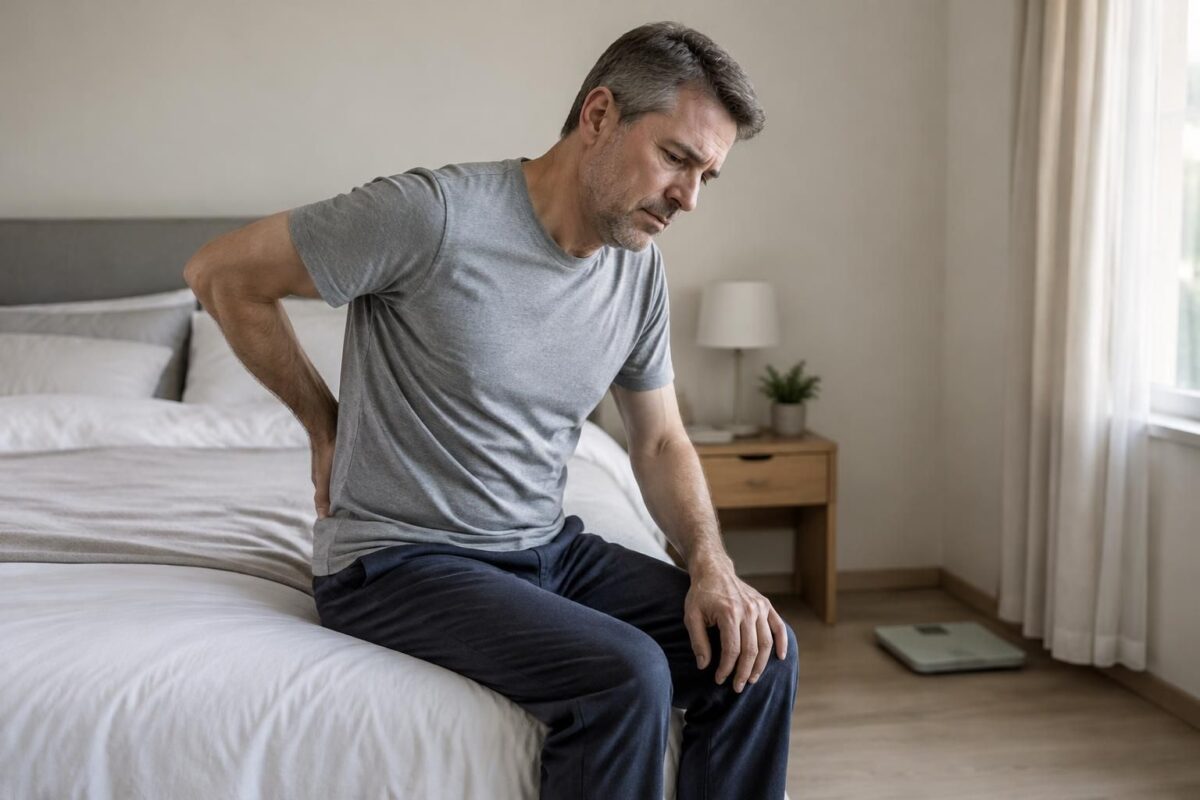
Sciatica and pain with unexplained weight loss
IN BRIEF Sciatica causes pain that can radiate from the lower back to the buttock and leg. Associated with unexplained weight loss, it requires medical evaluation to investigate the cause: this sign alone does not confirm a precise diagnosis. Consult…
Medical disclaimer
The information and advice provided on this site do not replace the advice, diagnosis, or treatment of a healthcare professional. Please note that Sylvain Desforges, B.Sc., D.O., N.D., doctor of osteopathy, is neither a medical doctor nor a physician, and is not a specialist in a medical specialty as defined by the Collège des médecins du Québec. Manual medicine, functional medicine, and sports medicine as described on this site exclude any treatment or medical diagnosis done by a medical doctor or specialist. Always consult your doctor for any medical questions. For more details, please read our full legal notice.
Consult urgently
- Sudden or significant weakness in the leg or foot.
- Difficulty urinating, loss of bladder or bowel control.
- Numbness in the perineum or buttock area.
- Extreme pain that rapidly worsens or cannot be relieved.
Make an appointment quickly
- Pain limits walking, sleeping, or your activities.
- It persists, intensifies, or returns frequently.
- Tingling or numbness appears or worsens.
- Pain is accompanied by fever or occurs after trauma.

An intense sciatic pain that radiates down the leg deserves special attention, especially if it prevents you from walking, sleeping, or performing your usual activities. Consult quickly if it worsens or does not improve; in the presence of significant weakness, urinary or bowel disturbances, or numbness in the perineum, seek urgent medical help.
Recognizing pain compatible with sciatica
Sciatica refers to symptoms that may occur when a lumbar nerve root or the sciatic nerve is irritated. The pain often starts in the lower back or buttock and radiates down one leg, sometimes to the calf, foot, or toes. Tingling, numbness, or a burning sensation may also be present.
A herniated disc may be involved, but it is not the only possible explanation. Other lumbar problems or irritation of surrounding tissues can cause similar symptoms. Therefore, pain in the leg alone is not sufficient to confirm sciatica; an evaluation is necessary to clarify the origin and determine the appropriate course of action.
When to consult quickly?
It is advisable to make an appointment if the pain is extreme, limits your mobility, disrupts your sleep, or prevents you from working. Also consult if it increases, recurs regularly, or does not begin to improve after a few days. Early evaluation can help determine which activities to adjust and how to safely resume your movements.
Severe pain does not necessarily indicate a surgical emergency, but you should not minimize it if it is accompanied by a loss of strength or rapid deterioration. A healthcare professional can check your walking, strength, sensitivity, and reflexes, then refer you to a doctor or another service if necessary. An X-ray or MRI is not systematic: its usefulness depends on the symptoms and the results of the examination.
Signs that require urgent help
Seek urgent care or contact a medical service if you notice a sudden or progressive weakness in one leg or foot, for example, if your foot is dragging on the ground or if you have difficulty standing on your tiptoes. A loss of bladder or bowel control, new difficulty urinating, or numbness around the perineum or genital organs are also warning signs.
Also seek medical advice quickly if the pain is accompanied by fever, significant trauma, a recent infection, unexplained weight loss, or a marked deterioration in your overall condition. These signs do not provide a diagnosis, but they justify an evaluation without delay.
What to do while waiting for an evaluation?
If no signs of urgency are present, avoid both prolonged immobility and efforts that trigger severe pain. Try to stay gently active according to your tolerance: short walks and regular changes of position may be preferable to spending several hours sitting or in bed. Temporarily reduce tasks that worsen symptoms, such as lifting heavy loads or repeated bending.
Heat or cold can provide temporary relief. For medications, consult a pharmacist or healthcare professional, especially if you have other health issues or are already taking treatment. Seek urgent help if a warning sign appears or if your condition deteriorates rapidly.
| Situation | When to consult? |
|---|---|
| Extreme pain or rapidly worsening pain | Request a medical evaluation quickly. |
| Significant or sudden weakness in the leg or foot | Consult urgently. |
| Difficulty urinating, urinary leaks, or loss of bowel control | Go immediately to the emergency department. |
| Numbness of the perineum or saddle area | Go immediately to the emergency department. |
| Fever, recent trauma, or deteriorating overall condition | Obtain medical advice quickly. |
| Pain that limits walking, sleeping, or working | Make an appointment for an evaluation. |
| Persistent, recurrent, or unrelieved pain | Consult a healthcare professional. |
The testimonials below are fictitious and serve to illustrate different situations. They do not correspond to identifiable patients and do not allow for a diagnosis. Pain that radiates down the leg can have multiple causes: a suitable evaluation helps determine the appropriate course of action.
“The pain started in my lower back and radiated through my buttock to my calf. I could still walk, but driving and sitting for long periods became very difficult. As my daily activities were affected, I made an appointment. The evaluation helped me understand which movements to adjust and how to gradually resume my habits.”
Pain that limits sleep, walking, work, or everyday activities deserves special attention. Without signs of urgency, you can make an appointment with a healthcare professional to assess the situation, especially if symptoms persist, intensify, or recur regularly.
“At first, I thought it was enough to stay in bed. After several days, my back was stiffer and the pain was still present. A professional advised me to move gently and temporarily modify certain tasks rather than forcing myself to stay still all day.”
While waiting for an evaluation, it is generally best to avoid efforts that significantly worsen symptoms, without imposing prolonged rest on yourself. Short walks and regular changes of position may be better tolerated. If a movement greatly increases pain or causes it to radiate further down the leg, stop it and seek advice.
“The pain was intense, but what worried me most was that my foot seemed weaker and sometimes dragged on the ground. I sought medical advice quickly instead of waiting for it to pass.”
A new, significant, or progressive weakness in the leg or foot requires quick medical evaluation. The same applies if you have difficulty walking or notice a worsening loss of sensitivity.
“I noticed numbness around the perineum and new difficulties urinating. I went to the emergency department instead of waiting for my scheduled appointment a few days later.”
A loss of bladder or bowel control, new difficulty urinating, or numbness in the saddle area — between the legs and around the genital organs — requires urgent care. Go to the emergency department or contact a medical service immediately.
Also consult quickly if the pain is accompanied by fever, occurs after significant trauma, worsens rapidly, or is associated with a deterioration of your overall condition. If in doubt about the severity of the symptoms, seek medical advice without delay.
Sciatica refers to symptoms that may be related to irritation or compression of a lumbar nerve root. However, pain in the buttock or leg is not always sciatica, and a herniated disc is not the only possible cause. The evaluation takes into account the location of the pain, its evolution, strength, sensitivity, and other symptoms.
An X-ray or MRI is not necessarily indicated in the first few days. The healthcare professional determines whether an examination is relevant based on the observed signs, the evolution of the pain, and the history. Imaging results must be interpreted in their clinical context.
About the author
Sylvain Desforges, B.Sc., D.O., N.D., Doctor of Osteopathy and Naturopath, is the founding president of TAGMED and the ACMA association. His practice particularly focuses on chronic spinal pain, low back pain, and pain compatible with sciatica.
Medical disclaimer
This content is provided for educational purposes and does not replace a consultation, diagnosis, or treatment performed by a physician or other licensed healthcare professional. The author is neither a doctor nor a specialist in a medical specialty recognized by the Collège des médecins du Québec. Osteopathy, manual medicine, or functional support approaches do not replace medical follow-up.
Sciatica and extreme leg pain: when to see a doctor?
Pain that starts from the lower back or the buttock and descends into the leg can become very difficult to bear. Sitting, walking, driving, or sleeping can then require considerable effort. When the pain is intense, persistent, or limits your activities, an evaluation is warranted: it helps to better understand the symptoms, identify signs that require prompt care, and choose an approach suitable for your situation.
Recognizing potential symptoms of sciatica
The term sciatica generally refers to pain associated with irritation of a lumbar nerve root or the sciatic nerve. It often affects one side and can radiate from the buttock to the back or side of the thigh, the calf, and sometimes the foot. Symptoms such as tingling, numbness, a burning sensation, or electric shocks may also manifest.
Coughing, sneezing, certain movements of the back, or prolonged sitting can exacerbate symptoms. A herniated disc is a possible cause, but it does not explain all cases. Osteoarthritis, narrowing of the space around a nerve, joint irritation, or other issues can also contribute to pain radiating in the leg. An evaluation helps to avoid concluding too quickly that it’s sciatica.
When to make an appointment?
A recent and moderate pain, without alarming signs, can sometimes improve with temporary adjustments to activities and gentle movements. It is generally not useful to stay in bed for several days: prolonged immobility can increase stiffness. Instead, try to change positions regularly and walk short distances, as long as it remains tolerable.
Make an appointment if the pain prevents you from walking normally, working, sleeping, or carrying out your daily tasks. It is also relevant to consult if it worsens, returns regularly, or does not start to improve after a few days. The evaluation can assess your mobility, strength, sensitivity, and gait, then determine if further medical advice is necessary. An X-ray or MRI is not systematic: it depends on the signs observed and the evolution.
Signs that require urgent help
Some symptoms warrant urgent medical evaluation. Go to the emergency room or quickly contact a medical service in case of loss of control over the bladder or bowels, new difficulty urinating, or numbness in the perineal area. Significant or progressive weakness in the leg, a foot dragging on the ground, or sudden difficulty standing on tiptoes should also be taken seriously.
Pain accompanied by fever, significant trauma, a rapid deterioration of general condition, or severe and constant pain also requires prompt medical advice. These situations should not be addressed solely through exercises or manual therapies.
While waiting for the evaluation
Avoid both forcing through sharp pain and ceasing all movement. Temporarily reduce actions that significantly worsen symptoms, such as long periods of sitting or lifting heavy loads from the ground, then gradually resume your activities. Heat or cold can provide temporary relief. For medication, seek advice from a pharmacist or healthcare professional, especially if you have other health issues or are already taking medications. A stretch that causes more pain down the leg should be interrupted or adjusted.
Depending on the evaluation, a rehabilitation approach may aim to regain tolerable mobility, adjust activities, and gradually resume useful movements in daily life. Care should be tailored to the symptoms and goals of the individual; no technique is necessarily suitable for everyone.
About the author
Sylvain Desforges, B.Sc., D.O., N.D., Doctor of Osteopathy and Naturopath, is the founding president of TAGMED clinics and the ACMA association. His work focuses particularly on the management of chronic pain and the integration of technologies such as neurovertebral decompression, laser, and shockwave therapy. His approach aims to provide care based on available data tailored to the needs of each individual.
Medical warning: this information is provided for educational purposes and does not replace a consultation, diagnosis, or treatment by a licensed healthcare professional. The author is neither a doctor nor a specialist in a medical specialty recognized by the Collège des médecins du Québec. Osteopathy, manual medicine, or functional support approaches do not replace medical follow-up. In case of urgent signs, consult a doctor or emergency service without delay.
Extreme pain radiating into the leg deserves particular attention, especially if it worsens, limits walking, or is accompanied by weakness, unusual numbness, or urinary or bowel issues. Certain signs warrant urgent evaluation; in other cases, a healthcare professional can examine your symptoms and guide you towards appropriate care without immediately assuming it is sciatica.
Pain starting from the lower back or the buttock and extending into the thigh, calf, or foot may correspond to irritation of a lumbar nerve root. It may be accompanied by burning, electric shocks, tingling, or numbness. A herniated or protruding disc could be involved, but other factors are possible. Thus, the pain felt in the leg alone is not sufficient to establish a diagnosis. To learn more about the causes and symptoms, refer to the information from MédecinDirect on sciatica.
Quickly consult a medical service if you notice a sudden or marked weakness in the leg or foot, if your foot drags on the ground, or if you have difficulty standing on your toes. A loss of control of the bladder or bowels, a new difficulty in urinating, or numbness in the perineal area — between the genitals and the anus — also require urgent evaluation. These symptoms are rare but may signal significant nerve damage. The warning sign that requires urgent consultation is also addressed by Doctissimo.
A severe pain accompanied by fever, chills, or general malaise should also be promptly evaluated. The same goes if it occurs after significant trauma, is associated with unexplained weight loss, or occurs in a person with a history of cancer or a recent infection. With a history of cancer, caution is particularly important: see the precautions presented in this article on sciatic pain with a history of cancer. Pain associated with malaise also deserves appropriate advice, as explained in this resource on sciatica accompanied by general malaise.
In the absence of urgent signs, make an appointment if the pain prevents you from sleeping, walking normally, working, or carrying out your usual tasks. A consultation is indicated if symptoms persist without improvement, return frequently, or worsen despite adjustments to your activities. Pain below the knee may particularly be observed in certain patterns of nerve irritation; however, it does not allow for identifying the cause on its own. You can check the information on disc protrusion and pain below the knee.
During the evaluation, the professional will ask you about the onset and progression of the pain, the positions that modify it, and the associated symptoms. They may examine your gait, mobility, as well as the strength, sensitivity, and some reflexes of the legs. An X-ray or MRI is not necessary in all cases: the decision depends, in particular, on the examination, the present signs, and the course of the situation. To understand how a consultation may proceed, consult the resources from Physio Multiservices and Ostéothérapie Carcassonne.
While waiting for an appointment, avoid forcing through sharp pain, but do not necessarily remain immobile for several days. If tolerable, prioritize gentle movements and short walks, and change positions regularly. Temporarily reduce actions that significantly worsen symptoms, such as certain lifts or long periods of sitting. Avoid intense stretches found online if the pain spreads further down the leg. Guidance on movements to avoid at the beginning of a disc-related sciatica can help you think about which activities to adjust, without replacing a personalized evaluation.
The management depends on the suspected cause, the intensity of the symptoms, and your daily needs. It may include recommendations for managing activities and gradually resuming movements, as well as follow-up rehabilitation if suitable for your situation. Symptoms associated with disc degeneration and pain radiating down the leg are described on this page about sciatica, disc degeneration, and radiating pain in Terrebonne. Another resource presents general elements concerning sciatica and leg pain.
About the author
Sylvain Desforges, B.Sc., D.O., N.D., Doctor of Osteopathy and Naturopath, is the founding president of TAGMED and the ACMA association. He dedicates his practice to chronic spinal pain, lower back pain, and pain consistent with sciatica, particularly when the pain radiates towards the buttock, leg, calf, foot, or toes.
Through SOS Sciatique, he publishes educational content about the symptoms of sciatica, possible causes such as disc herniation, disc pinching, foraminal stenosis, or irritation of a lumbar nerve root, as well as non-surgical approaches that may be considered based on evaluation. At TAGMED Clinic, care may include, as appropriate, motorized neurovertebral decompression, specific osteopathy, or precision adjustment.
For an evaluation related to sciatica treatment in Montreal / Mont-Royal or sciatica treatment in Terrebonne, consult the services available at TAGMED Clinic.
Medical Disclaimer
The information published on SOS Sciatique is provided for educational purposes and does not replace a consultation, diagnosis, advice, or treatment carried out by a doctor or another licensed healthcare professional. The author of this article is neither a physician nor a specialist in a medical specialty recognized by the Collège des médecins du Québec. The approaches of osteopathy, manual medicine, or functional support described on this site are not medical acts and are not intended to replace medical follow-up.
Consult a doctor or emergency service in case of loss of bladder or bowel control, anesthesia in the anal region, significant or progressive weakness of the leg or foot, fever, recent trauma, severe pain, or rapid aggravation. For more details, please read our Legal notice.

Sylvain Desforges, B.Sc., D.O., N.D., docteur en ostéopathie
Dr Sylvain Desforges, B.Sc., D.O., N.D., osteopath, is the founding president of TAGMED and of the ACMA association. He dedicates his practice to chronic spinal pain, low back pain and symptoms compatible with sciatica, particularly when pain radiates toward the buttock, leg, calf, foot or toes.
Through SOS Sciatique, he publishes educational content on sciatica symptoms, possible causes such as disc herniation, disc narrowing, foraminal stenosis or irritation of a lumbar nerve root, as well as non-surgical approaches that may be considered according to the evaluation. At Clinique TAGMED, care may include, depending on the case, motorized neurovertebral decompression, specific osteopathic care or precision percussion.
For an evaluation related to sciatica treatment in Montreal / Mount Royal or sciatica treatment in Terrebonne, please consult the services available at Clinique TAGMED.
Medical disclaimer
The information published on SOS Sciatique is provided for educational purposes only and does not replace a consultation, diagnosis, opinion or treatment provided by a physician or another authorized healthcare professional. The author of this article is neither a medical doctor nor a specialist in a medical specialty recognized by the Collège des médecins du Québec. The osteopathic, manual medicine or functional support approaches described on this site do not constitute medical acts and are not intended to replace medical follow-up.
Consult a physician or emergency service in cases of loss of bladder or bowel control, anesthesia in the saddle area, significant or progressive weakness in the leg or foot, fever, recent trauma, severe pain or rapid worsening of symptoms. For more details, please read our Legal Notice.