



Sciatica: what a disco-radicular conflict means
02/08/2026
Sciatic pain in Montreal: what does pain down to the foot mean?
03/08/2026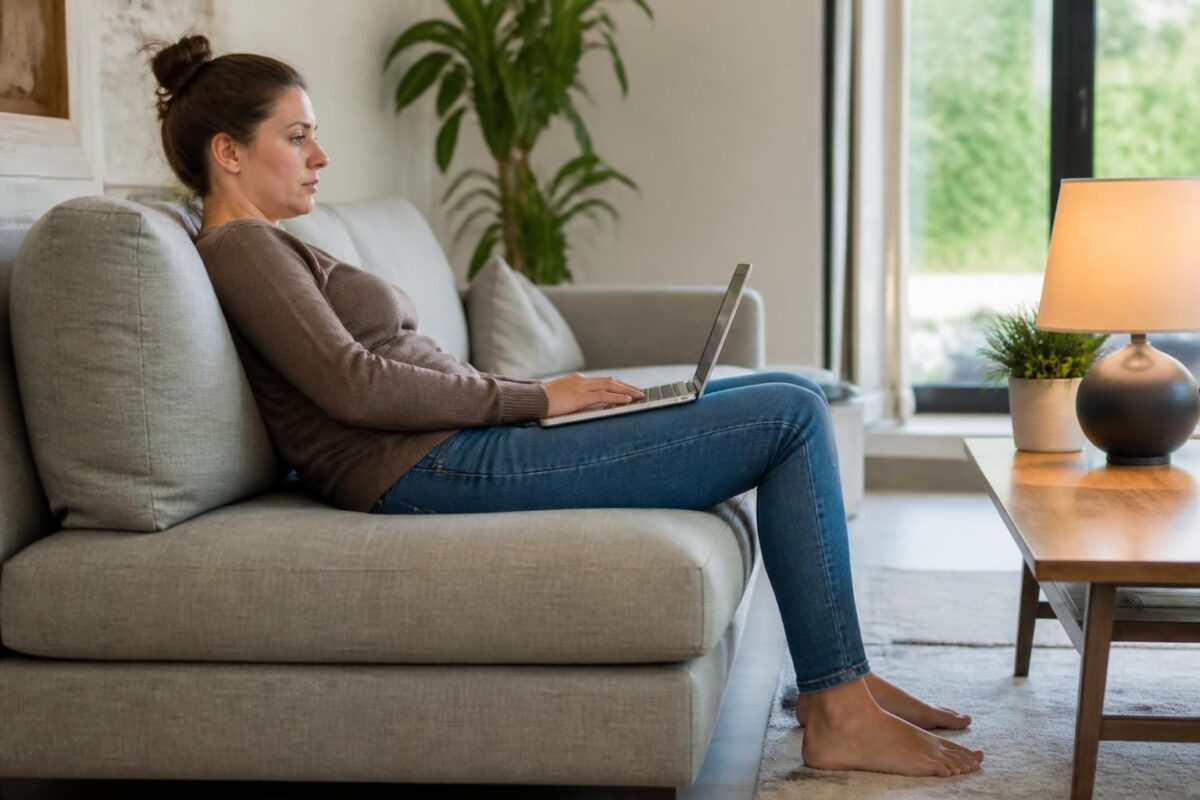
IN BRIEF
| In short, sciatica is pain caused by compression of the sciatic nerve, and working on the couch requires a position to monitor to avoid worsening the pain. This approach helps reduce painful episodes and crises by adjusting seating and daily gestures. How it works: prioritize seating with lumbar support, feet flat and back straight, take breaks every 30 to 45 minutes, use cushions under the knees or behind the back, and move regularly instead of staying still. By adapting these elements, you can work on the couch more comfortably and limit pressure on the sciatic nerve daily. |
Sciatica and Couch Work: Positions to Monitor
Working on a couch can amplify pain if certain positions keep the spine flexed and increase pressure on the sciatic nerve. A couch that is too soft or too deep can encourage a rounded back and a sinking pelvis.
- Too soft or deep couch: sinking pelvis and rounded back; solution: add a lumbar cushion, sit at the edge, and keep knees at 90°, feet flat.
- Prolonged sitting position: prioritize breaks every 30 to 45 minutes and walk for a few minutes.
- Work posture: screen at eye level and back well supported to avoid slouching; prefer a seat that supports the lumbar area.
As a health professional, I observe that working on the couch can influence sciatic pain. An improperly adapted position increases pressure on the sciatic nerve. This article describes postures to monitor when working on the couch and offers simple adjustments to reduce pain and limit crises.
Why the Couch Can Influence Sciatica
Sciatica occurs when the sciatic nerve is irritated or compressed. A prolonged sitting position can increase pressure on the lumbar discs and intensify pain. On a couch, the risk increases if the seat pushes the back into a curve or if the pelvis sinks too much. A couch that is too deep or too soft can promote a slouched posture and increased strain on the nerve.
For some patients, pain is more pronounced when sitting for long periods without lumbar support. For others, abrupt movements and trunk twisting during breaks can trigger or worsen an acute crisis. Staying attentive to these signals allows for quick adjustments to posture and limits the onset of nighttime or daytime pain.
The couch is not a unique factor. Other factors, such as the overall body position and the ergonomics of the workspace, play an important role. A comprehensive approach includes active breaks and appropriate back support.
Positions to Monitor on the Couch
Too soft or too deep couch can sink the pelvis and curve the back. This compresses the sciatic nerve over time. Adapt it with lumbar support and use a small leg riser when necessary. Prefer sitting at the edge and keeping the back straight. If possible, alternate with a firmer chair when pain is present.
Prolonged sitting with a rounded back increases pressure on the lumbar discs and nerve. Take regular breaks, ideally every 30 to 45 minutes, and keep the back supported against the backrest. Place a lumbar cushion in the hollow of your back to encourage a natural curve.
Crossing legs destabilizes the pelvis and can cause a slight twist in the lumbar spine. On the couch, prioritize feet flat on the floor and use a footrest if necessary. Change the supporting leg regularly instead of crossing.
Remaining seated without support can promote muscle tension and increased pain. Use a lumbar cushion and ensure that feet are flat on the floor. Raise feet and knees regularly when sustained work is necessary.
Simple Adjustments for Couch Work
Use a lumbar cushion to support the hollow of your back and sit at the edge of the couch. Slightly elevate the knees with a cushion under the feet to reduce lumbar pressure. Keep shoulders relaxed and gaze directed at the screen. If the couch is too deep, alternate with a firm chair when possible.
Avoid abrupt variations and trunk twists. Turn your whole body, not just your trunk, when sitting down or getting up. Take breaks to move and walk for a few minutes. Maintain a dynamic posture instead of staying still on the couch for long periods.
For more specific advice, you can consult resources dedicated to sciatic pain and couch sitting. For example, the following pages address the links between sitting position and pain, and the compelling results observed in clinical practice: sciatica and couch sitting, location and pain, and pain that increases in the car.
Emergencies and Signs That Require Quick Consultation
Watch for warning signs. If you experience urinary issues, loss of sensation in the groin, or sudden weakness in a leg, contact emergency services immediately. These symptoms may indicate a more serious syndrome requiring prompt care.
When to Consult and How to Prevent Recurrence
If the pain persists beyond 4 to 6 weeks, worsens, or wakes you at night, consult a healthcare professional. To prevent recurrences, stay active with suitable activities and integrate regular breaks while working on the couch. Adapting your workspace and daily life can reduce the risk of recurring pain and improve your comfort.
Resources and Useful Links
To complement this advice, discover relevant information on postures and the impacts of different positions through the following resources: pain radiating from the buttock to the foot, TAGMED Clinic, and treatment and return of pain. Other useful resources can be consulted on affiliate sites: neurovertebral decompression, herniated disc and pain, and disc pain.
Medical disclaimer: The information and advice provided on this site do not replace the opinion, diagnosis, or treatment of a healthcare professional. Please note that Dr. Sylvain Desforges, an osteopath, is neither a medical doctor nor a physician, and is not a specialist in a medical specialty as defined by the College of Physicians of Quebec. Manual medicine, functional medicine, and sports medicine as described on this site exclude any treatment or medical diagnosis made by a physician or medical specialist. Always consult your doctor for any medical question. For more details, please read our full Legal Notice.
Elements to watch on the sofa
- Sofas that are too soft — pelvis sinks, curved back
- Deep sofa — you slouch
- Curved back while sitting — increased lumbar pressure
- Crossed legs — twisting of the pelvis
- No lumbar support — strain on the sciatic nerve
- Staying still for too long — potential worsening
Quick tips
- Lumbar cushion + sitting at the edge
- Feet flat, knees at 90°, back well supported
- Knees elevated with a cushion
- Take a break every 30–45 minutes to walk
- In case of severe pain: prioritize a firm chair with armrests
- Turn your whole body during movements, avoid twisting

Quick summary: working on a sofa can encourage sciatica if improper postures are adopted. By monitoring certain positions and reorganizing your workspace with simple adjustments (lumbar cushion, sofa edge, feet flat), it is possible to limit pressure on the sciatic nerve and reduce daily pain.
Specific risks of working on a sofa
The sofa can promote a hunched posture and misaligned pelvis, which increases strain on the lumbar discs and puts additional stress on the sciatic nerve. Sitting for long periods without supporting the lower back multiplies tension and can cause tingling or pain that radiates down the leg. Thus, it is important to monitor the arrangement and duration of work sessions on the sofa.
Sofas that are too soft or too deep
When the sofa allows the pelvis to sink and creates excessive flexion in the back, lumbar pressure rises. To avoid this, use a lumbar cushion and slightly elevate your legs with a small cushion under your knees. Prefer a seating arrangement that allows you to remain partially at the edge and support your spine, rather than sinking completely.
Curved back and loss of stability
A slumped back on the sofa increases disc pressure and can amplify pain. Adopt a position with your back well supported and feet flat on the ground or on a footrest, to maintain a straight and stable spine while working.
Crossed legs and twists
Crossing your legs can imbalance the pelvis and encourage trunk twists that unnecessarily strain the sciatic nerve. Keep your feet flat and alternate your support positions; consider using a footrest to vary without compromising alignment.
Load positions and sudden movements
On the sofa, one may be tempted to carry or place objects without bending the knees. This puts stress on the back in flexion and increases the risk of injury. Bend your knees, keep your back straight, and bring the load close to your body. Avoid quick or twisting movements when handling objects.

Sciatica and popular stretches: why to stay cautious
IN BRIEF Sciatica causes pain that radiates from the lower back down the leg. Popular stretches, such as the pigeon pose or hamstring stretches, are not always suitable: pulling on an irritated nerve can worsen the symptoms. Favor gentle movements,…

Sciatica and Pilates: movements to adapt
IN SHORT Sciatica causes pain that can radiate from the lower back down to the leg. The Pilates Reformer can promote a gradual return to movement and strengthen core control, provided that the movements, range, and resistance are adapted. Favor…

Sciatica and core stability: variable tolerance depending on symptoms
IN BRIEF Core strengthening in case of sciatica consists of progressively strengthening the trunk muscles. Its tolerance varies depending on pain and symptoms: suitable without worsening the pain, it can support mobility and the resumption of activities, but does not,…

Sciatica and lunges: leg pain to watch out for
IN BRIEF Sciatica is pain that starts from the lower back or buttock and radiates down the leg. If a lunge triggers or worsens this pain, stop the movement and adjust your activity: this exercise does not address sciatica. Consult…
Practical tips to optimize work on a sofa
To preserve back health while remaining productive on the sofa, here are simple guidelines to follow. Place a lumbar cushion in the small of your back and ensure your feet remain flat on the ground or on a small support. Work in short sessions and plan breaks every 30 to 45 minutes to move around and lightly stretch the lower back.
Choose a sofa that is neither too deep nor too soft and prefer a position at the edge of the sofa to avoid sagging. When possible, alternate with an ergonomic chair or a suitable work seat between sessions on the sofa to vary support and relieve the back.
Finally, organize your workspace with the screen at eye level and maintain a healthy distance from the keyboard to limit cervical and lumbar tension. In case of persistent pain or concerning symptoms, consult a health professional to permanently adjust your workstation and routine.
| Position to watch out for on the couch | Concise tips |
|---|---|
| Prolonged sitting position with round back on the couch | Get up every 30–45 minutes and use a lumbar cushion; feet flat, back slightly supported. |
| Couch too soft or deep | Add a lumbar cushion, raise the knees, and sit at the edge. |
| Crossing legs on the couch | Keep your feet flat, use a footrest, and alternate supports. |
| Carrying a load with a round back on the couch | Bend the knees, carry close to the body, and keep your back straight. |
| Sudden movements and trunk twists | Rotate your whole body with your feet and warm up before any movement. |
| General non-ergonomic posture on the couch | Use a lumbar support and avoid sinking in; adjust the support. |
Testimonials: Sciatica and working on the couch — positions to watch
“I work daily on my couch and quickly realized that some placements worsen my sciatica. By avoiding slouching and setting up a lumbar cushion to support my back, then sitting on the edge with my knees at 90° and feet flat, the pain decreased. I also take breaks every 30 to 45 minutes to get up and move.”
“At first, sitting for a long time on the couch was my worst reflex. Now, I monitor my sitting posture and avoid crossing my legs. I prefer a chair and, when using the couch, I adjust with a lumbar cushion behind my back and a footrest to limit pelvic twisting.”
“I’ve noticed that sudden movements on the couch quickly trigger a crisis. I force myself to turn my whole body and place my feet correctly before moving. On the couch, I’m also careful not to slump and to keep my back straight, with my knees bent and a cushion under my knees when I need to sit for a long time.”
“For my telecommuting days on the couch, I set shorter slots with tasks close to my body: light load near the chest and no trunk twisting. I use a lumbar cushion and, when possible, switch to a semi-reclined position using cushions under my knees to relieve pressure on the sciatic nerve.”
“The key is to be proactive about posture and frequent breaks. On the couch, I avoid sitting deep and prefer to stay on the edge, feet flat and knees at 90°. With these simple adjustments — lumbar cushion, regular breaks, and back alignment — I can keep working without the pain taking over.”
Sciatica and working on the couch: position to watch — Biography of Dr. Sylvain Desforges
Dr. Sylvain Desforges is recognized as a multidisciplinary practitioner, combining osteopathy, naturopathy, and manual medicine. As the founding president of TAGMED clinics and the ACMA association, he focuses on innovation in healthcare. His career is dedicated to managing chronic pain and integrating advanced technologies such as spinal decompression, laser, and shock wave therapy. His mission is to provide evidence-based care to optimize the health and well-being of his patients, focusing on measurable results and a relationship of trust. His leadership is aimed at making multidisciplinary approaches accessible through the TAGMED network.
In his approach, Dr. Desforges is particularly interested in issues related to sciatica and working on the couch, a context where daily postures can amplify pain or, conversely, contribute to prevention. He insists that no posture is harmful in principle, but prolonged exposure to inappropriate movements can worsen symptoms and hinder healing. His vision relies on precise observation of lifestyle habits: office, home, rest periods, and on the development of personalized strategies that reduce pressure on the nerve and improve daily tolerance.
The practice of Dr. Desforges is based on a holistic assessment and a combination of therapies. After identifying triggering factors and pain mechanisms, he develops individualized plans that integrate manual techniques, rehabilitation exercises, and, when relevant, advanced technologies. His approach is clearly evidence-based and involves active collaboration with the patient. Concurrently, he promotes an active lifestyle, suitable activities, and regular follow-ups to limit recurrences. This focus aims to get the patient moving, restore mobility, and strengthen stabilizing muscles around the spine.
Regarding working on the couch, he shares concrete advice to preserve the integrity of the back. He favors ergonomic configurations that support the lumbar curve and avoid prolonged pressure on the sciatic nerve: use a lumbar cushion, preferred appropriate seating, sit at the edge, and keep feet flat, with knees at about 90 degrees. For prolonged sessions, he recommends micro-breaks and position adjustments, as well as elements to elevate the legs when necessary. The goal is to combine comfort and safety, limiting lumbar pressure and facilitating a smooth transition between sitting, movement, and rest.
In summary, Dr. Desforges emphasizes an integrated practice where treatment effectiveness is complemented by simple and reproducible daily habits. Through a multidisciplinary approach and the careful use of technology, he helps patients regain control over their pain and achieve a better quality of life, even in the presence of tension on the sciatic nerve. To discover his approach and the services offered, check out the resources from the TAGMED Clinic and the ACMA, which today embody a modern vision of care centered on the patient and prevention.
Working on a sofa can lead to positions that increase pressure on the sciatic nerve and prolong painful episodes. This article summarizes the postures to watch for and the simple adjustments to make when working from home on a sofa, in order to limit the risk of a crisis and improve your daily comfort.
Working on a sofa exposes one to poorly distributed back pressures and positions that overly strain the sciatic nerve, especially when the sofa is too soft, too deep, or when one remains still in a sitting position. The risk is to worsen the pain in the long term if these habits are not corrected and if regular breaks and adjustments are not planned. Specialized resources describe the mechanisms and movements to favor or avoid to limit these stresses, particularly in relation to workstations and seating conditions.
To limit the impact of the sofa while you work, favor a position that supports the lower back and avoids twisting or tilting of the pelvis. Use a lumbar cushion for specific support and keep your feet flat, ideally at hip height, to reduce pressure on the lumbar discs. Avoid crossing your legs for long periods and, when possible, alternate between sofa and sit-stand desk to break sedentary periods. Guides and practical advice available online detail the positions to avoid and the adjustments to make for a more back-friendly workstation, even when working from the sofa.
More broadly, prevention involves simple and regular habits: active breaks every 30 to 45 minutes, switching between sitting and standing positions, and gentle exercises guided by a professional when possible. Lumbar support can be useful in some cases and unnecessary in others; it is recommended to evaluate it with a specialist to adapt the device to your morphology and pain. To delve deeper into the mechanisms and strategies for workstation adjustments, you can consult various online resources that address mechanical causes, pain in sitting positions, and tips to avoid common mistakes at work (see the links below).
To deepen the advice and positions to watch for, visit dedicated resources such as:
work posture and frequent mistakes to avoid,
sciatica: positions to avoid,
or explanations about the causes and mechanisms of the phenomenon to better understand why certain postures worsen nerve inflammation:
mechanical causes and nerve inflammation. You can also refer to resources that address increased pain in sitting positions and adjustments to favor on the sofa:
pain that increases in sitting position.
If persistent doubts remain, or if the pain persists despite these adjustments, do not hesitate to consult a healthcare professional. Consulting a physiotherapist or an osteopath can help you customize your workstation and develop a suitable exercise program. For further perspectives and advice, also check out these resources:
positions to avoid according to Santopta,
positions to avoid according to La Lettre de Galilée,
or positions to avoid illustrated by Cahors Ostéo.

Sciatica and deadlifts: risk depending on the cause
IN BRIEF Sciatica and deadlifts are not always incompatible: the risk depends on the cause of the pain and its intensity. During acute episodes, it’s best to avoid heavy loads and seek medical or physiotherapy advice before resuming. A gradual…

Sciatica and squats: why caution is needed
IN BRIEF Sciatica does not always prohibit squats, but a deep or loaded squat can aggravate symptoms, especially during a flare-up. Gradually resume with a neutral back and a comfortable range of motion, and stop if the pain travels down…
Sciatica and stationary bike: useful or aggravating depending on the case
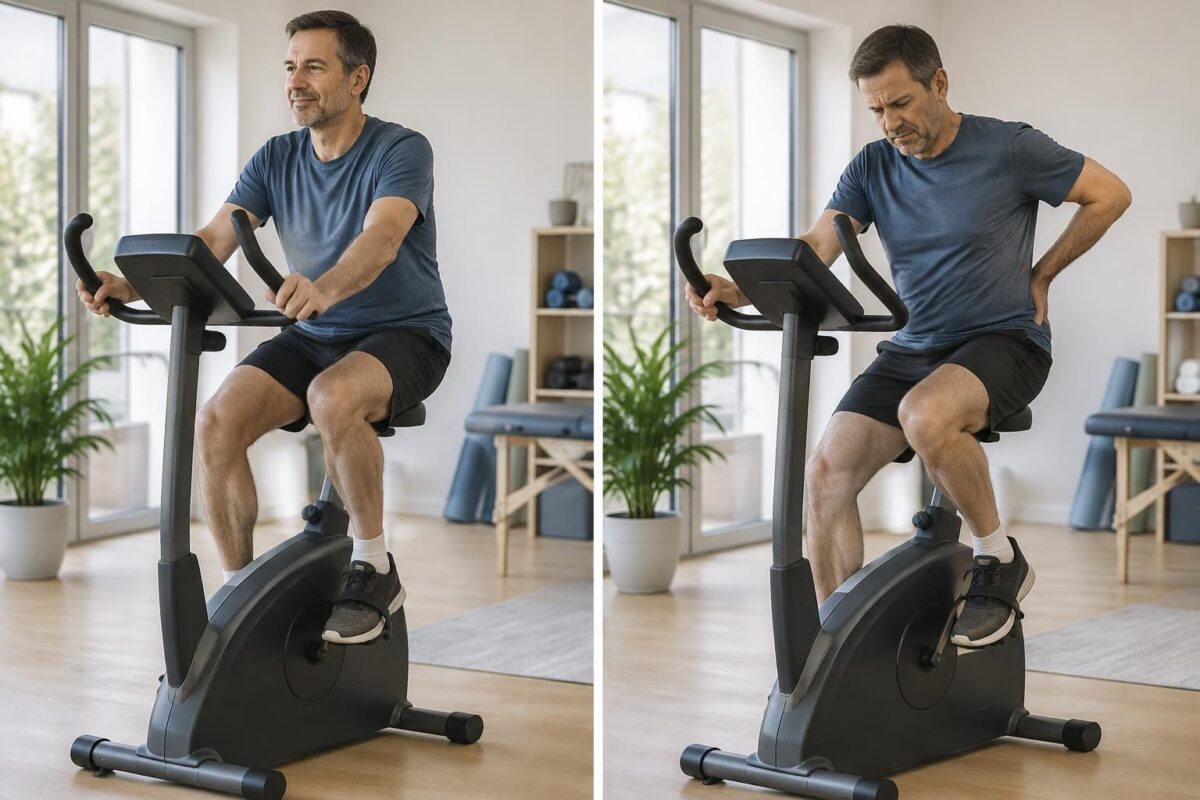
IN BRIEF The stationary bike with sciatica can help you stay active if the pain is mild and stable. Start with a short session, at low resistance and in a comfortable position. If the pain goes further down the leg,…

Sciatica and cycling: sitting, bending, and symptoms
IN BRIEF Sciatica is pain related to irritation of the sciatic nerve, which can extend from the buttock down to the leg. Cycling may sometimes be possible if symptoms are mild and stable: a comfortable seat, a less bent posture,…

Dr Sylvain Desforges, B.Sc., D.O., N.D., osteopath, is the founding president of TAGMED and of the ACMA association. He dedicates his practice to chronic spinal pain, low back pain and symptoms compatible with sciatica, particularly when pain radiates toward the buttock, leg, calf, foot or toes.
Through SOS Sciatique, he publishes educational content on sciatica symptoms, possible causes such as disc herniation, disc narrowing, foraminal stenosis or irritation of a lumbar nerve root, as well as non-surgical approaches that may be considered according to the evaluation. At Clinique TAGMED, care may include, depending on the case, motorized neurovertebral decompression, specific osteopathic care or precision percussion.
For an evaluation related to sciatica treatment in Montreal / Mount Royal or sciatica treatment in Terrebonne, please consult the services available at Clinique TAGMED.
Medical disclaimer
The information published on SOS Sciatique is provided for educational purposes only and does not replace a consultation, diagnosis, opinion or treatment provided by a physician or another authorized healthcare professional. The author of this article is neither a medical doctor nor a specialist in a medical specialty recognized by the Collège des médecins du Québec. The osteopathic, manual medicine or functional support approaches described on this site do not constitute medical acts and are not intended to replace medical follow-up.
Consult a physician or emergency service in cases of loss of bladder or bowel control, anesthesia in the saddle area, significant or progressive weakness in the leg or foot, fever, recent trauma, severe pain or rapid worsening of symptoms. For more details, please read our Legal Notice.


