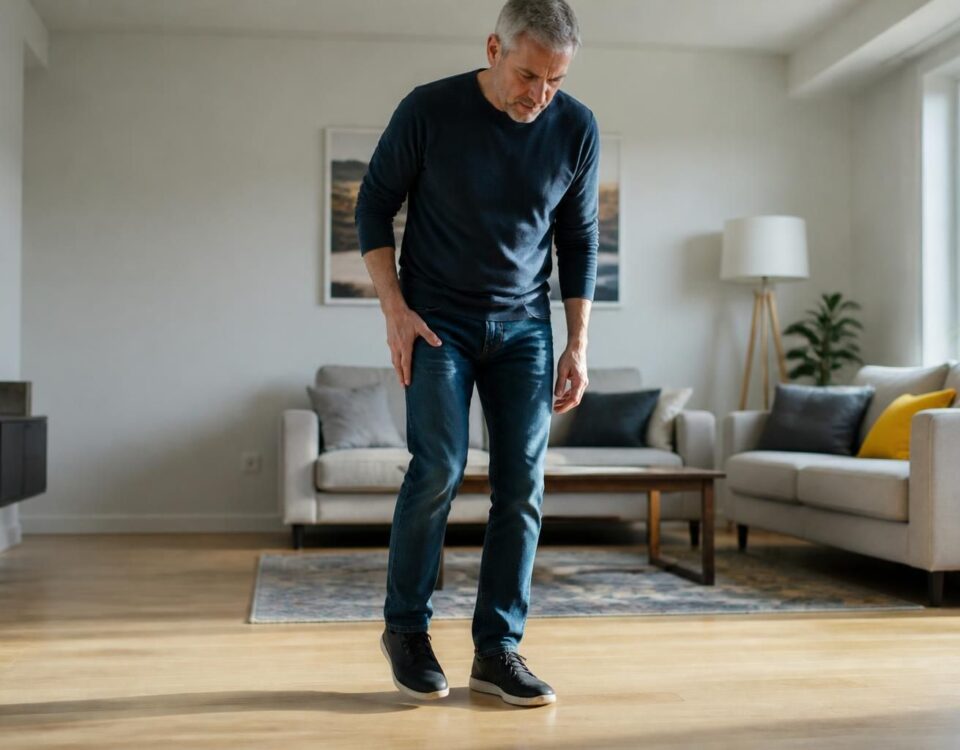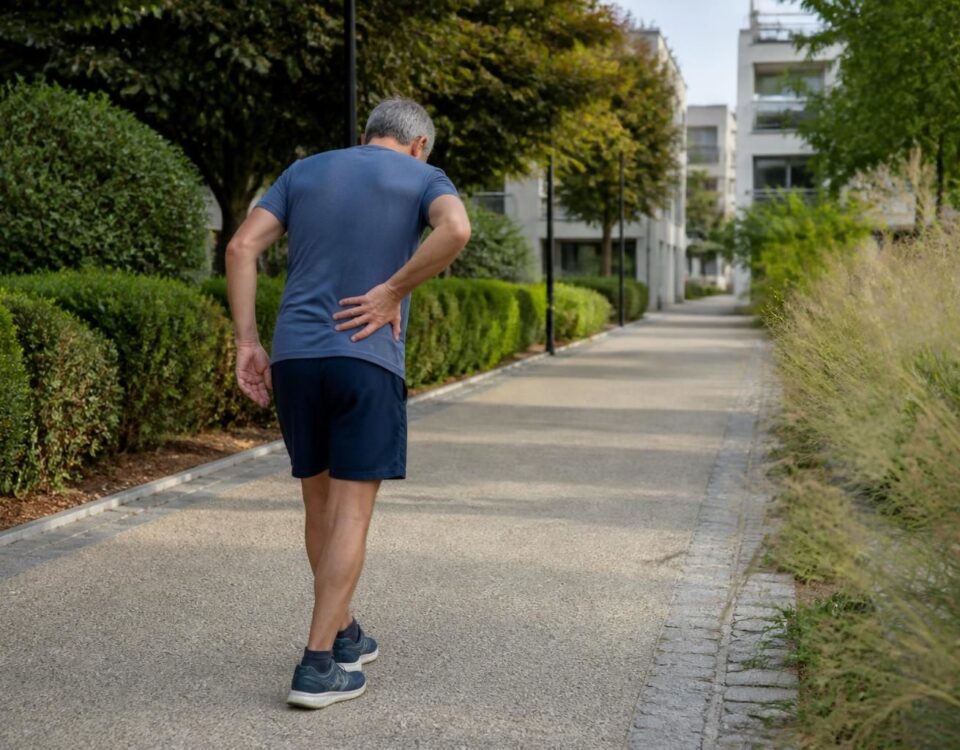
Sciatica in Terrebonne: signs that indicate targeted treatment is necessary
07/07/2026
Sciatica: pain in the buttock and possible lumbar cause
07/07/2026
IN BRIEF
| In brief, sciatic pain in one leg is pain that follows the path of the sciatic nerve, starting from the lower back to the foot, often described as burning or electric and accompanied by numbness. It is most often caused by lumbosciatica due to nerve compression, most commonly associated with a herniated disc or spinal canal narrowing. The benefits of an appropriate approach include non-surgical treatments, targeted exercises, and posture advice that relieve pain and improve mobility without invasive intervention. In Montreal, this service offers a quick and personalized evaluation to resume physical activity and prevent relapses. |
Sciatic pain in one leg is explained by a compression or inflammation of the sciatic nerve, often following low back pain.
The pain typically starts in the lower back and follows the nerve path: buttock, thigh, then leg to the foot.
Common causes: herniated disc and lumbar osteoarthritis, but also trauma, poor posture, or pregnancy.
Treatment: short rest followed by a gradual return to activity, use of NSAIDs and analgesics, physiotherapy or manual therapies, and, if necessary, local injections or other interventions; most people improve within a few weeks.
Advice: consult a professional for tailored evaluation if symptoms persist or worsen.
This article is written by Dr Sylvain Desforges, osteopath, and aims to explain why sciatic pain can manifest in one leg. It presents the mechanisms, typical signs, and non-surgical management options, with reliable resources and useful links for further information.
Sciatic pain is pain that follows the path of the sciatic nerve, the longest nerve in the body. When this nerve is irritated or compressed, pain can appear in one leg and extend from the lumbar area to the foot. This pain may be described as burning, electric, or sharp, and is often accompanied by sensations of tingling, numbness, or weakness in the leg or foot.
What is sciatica?
Sciatica is pain related to the irritation or compression of the sciatic nerve. The painful path may start at the lumbar level, pass through the buttock, and descend along the leg. The sciatic nerve consists of nerve roots that can generate two main paths: L5 and S1. The pain may follow either of these paths and, in severe cases, affect the entire length down to the foot. If the pain is associated with marked weakness or difficulty moving, it is referred to as motor deficit.
Why can the pain affect one leg?
Unilateral pain often reflects localized compression or irritation of one or more nerve roots of the sciatic nerve. Common causes include:
- A herniated disc pressing on a nerve root.
- Lumbar osteoarthritis that may narrow the spinal canal and compress the roots.
- Lumbar trauma or prolonged poor posture.
In some cases, pregnancy-related disorders may temporarily change posture and promote lumbosciatica, but these phenomena usually remain transient after childbirth.
Common causes and mechanisms
Lumbosciatica often arises from a pinching or inflammation of the sciatic nerve. Two major causes frequently arise in adults: a herniated disc and a foraminal or spinal stenosis, associated with a decrease in space around the nerve roots. The combination of sedentary lifestyle, overload, and poor posture can also promote the onset or worsening of symptoms.
Signs and symptoms to recognize
The main signs are pain that begins low in the back and spreads down one leg, often on one side. Observations may include:
- Pain that can be described as burning or sharp.
- Tingling, pins and needles, or numbness along the leg or foot.
- Weakness or difficulty supporting the foot.
- Pain is sometimes aggravated by coughing, stretching, or certain movements.
In the presence of alarm signs such as loss of urinary control or suspicion of “cauda equina,” urgent consultation is necessary.
When to consult and what to do right away
In case of acute pain, it is advised to rest briefly, then gradually resume appropriate activity to avoid sedentary behavior. A lumbar support belt may be useful in some cases to provide temporary relief. If symptoms recur frequently or persist beyond a few weeks, it is important to consult a healthcare professional for a more thorough evaluation and a personalized management plan.
Management options
Initial treatments typically include non-steroidal anti-inflammatory drugs (NSAIDs) and analgesics. In case of recurrent or persistent pain, a doctor may suggest stronger medications or local injections. For very intense and refractory pain, imaging examinations and specialized interventions may be discussed. As part of a non-surgical and tailored approach, TAGMED Clinic offers osteopathic care and associated approaches, prioritizing non-invasive solutions whenever possible. To learn more and make an appointment, visit TAGMED Clinic: TAGMED Clinic (Montreal and Terrebonne).
For additional information on symptoms and mechanisms, you can consult resources such as
pain in the buttock and leg,
or sciatica – causes and symptoms. Other useful references discuss recognizing signs and common pathways of compressed lumbar canal, for example
lumbar canal and nerve roots,
or recognition of symptoms.
For an additional medical perspective, you can consult:
Sciatalgia and
symptoms and duration. Additional resources explain the relationship between foot pain and sciatica, and distinguish sciatica from muscle pain:
foot or toe pain and sciatica,
sciatica vs muscle pain. For a general clinical reference, the science of low back pain and sciatica is also described in the MSD Manuals:
MSD Manuals – Sciatica.
Role of osteopathy and the TAGMED approach
In osteopathic practice and in the TAGMED approach, the goal is to assess mechanical mechanisms and provide suitable non-surgical care. Care may include, as appropriate, targeted osteopathic techniques and functional advice to support the overall treatment plan. For an assessment and care in Montreal or Terrebonne, consult TAGMED Clinic.
Prevention and information resources to better understand sciatica and its manifestations are also available through the links above.
Medical disclaimer: The information and advice provided on this site do not replace the opinion, diagnosis, or treatment of a healthcare professional. Please note that Dr. Sylvain Desforges, osteopath, is neither a medical doctor nor a physician, and is not specialized in a medical discipline as defined by the Collège des médecins du Québec. Manual medicine, functional medicine, and sports medicine as described on this site do not include any treatment or medical diagnosis made by a physician or specialist. Always consult your physician for any medical questions. For more details, please read our full Legal Notice.
- Origin: low back pain that radiates along the sciatic nerve.
- Path: follows the path of the nerve to the foot, passing through the buttock and thigh.
- Location: usually affects one side of the leg.
- Quality: electric shock or burning sensation, with possible tingling.
- Common causes: herniated disc, narrowing of the lumbar canal, osteoarthritis.
- Associated signs: numbness and possible weakness of the leg.
- Warning signs: motor deficit, loss of urinary/fecal control, very intense pain requiring emergency care.
- Rapid management: relative rest, adapted activity, and manual therapies based on assessment.

This article explains why sciatic pain can affect one leg and how to understand its origin, progression, and possible solutions for quick relief, with practical and easy-to-implement advice.
Understanding sciatic pain in one leg
Sciatica is an intense pain that follows the path of the sciatic nerve, the longest in the body. It often originates in the lower back and radiates down the leg, sometimes to the foot. The pain pattern can feel like an electric shock or burning sensation and may be accompanied by numbness or tingling.
Typical path of the sciatic nerve
Two main roots explain potential pains: SCIATICA L5 and SCIATICA S1. The L5 originates from the lumbar region and may travel down the thigh and along the outer edge of the leg to the big toe. The S1 starts in the lower back and spreads to the calf, heel, and foot. These paths guide the location of pain and help in understanding its origin.
Causes and risk factors
Main causes
Lumbosciatica results from compression and inflammation of the sciatic nerve. The most common causes are a herniated disc compressing a root and lumbar osteoarthritis that can narrow the lumbar canal. Other factors such as trauma or improper movement can trigger or worsen the pain.
Aggravating factors
A sedentary lifestyle, prolonged poor posture, and periods of overexertion or confinement can promote the onset or recurrence of lumbosciatic pain. Pregnancy may also influence posture and explain lumbar pain radiating to the leg, although this usually resolves after childbirth.
Warning signs and when to consult
Typical signs to watch for
If the pain is worsened by certain movements, or if it is accompanied by marked weakness in the leg, significant numbness, or difficulties walking, a medical evaluation should be considered. The pain may be constant or related to specific movements, and can worsen with coughing or intense stretching.
Emergencies to note
Some situations require prompt consultation: loss of urinary or fecal control, extremely severe pain without improvement, pronounced muscle weakness, or febrile condition. In these cases, immediate medical attention is essential.
Treatment Strategies and Practical Advice
Initial Approaches and Self-Care
Initial rest should not be prolonged: moving within comfort limits is essential to avoid stagnation and promote recovery. Applying heat can help relax the muscles and reduce tension around the nerve. Maintaining appropriate physical activity is crucial for strengthening the back and improving posture.
Treatments and Professional Options
In the first few days, non-steroidal anti-inflammatory drugs and a pain reliever can provide relief. If the pain persists, a doctor may suggest more targeted options, such as manual therapies, local injections, or a multimodal approach combining physiotherapy and muscle strengthening. In stubborn cases, imaging explorations and specialized interventions may be considered.
Exercises and Posture to Favor
Suitable stretches and strengthening exercises can help, but they should be performed under professional guidance. Generally, it is recommended to favor positions that relieve pain and avoid painful movements. Walking regularly and incorporating core stability exercises can speed up recovery and reduce the risk of recurrence.
Preventing Future Episodes
Engaging in regular physical activity, strengthening the back and abdominal muscles, maintaining proper posture at work, and learning appropriate lifting techniques are effective keys to preventing recurrence. Personalized follow-up allows adjustments to exercises and treatments according to your profile and response to treatment.
| Aspect | Concise Explanation |
|---|---|
| Origin and Unilateral Nature | Pain is caused by irritation or compression of one of the roots of the sciatic nerve, manifesting on a single limb. |
| Typical Pathway | It follows the path of the sciatic nerve from the lower back to the foot on the same side. |
| Common Causes | Many causes: herniated disc or spinal canal narrowing depending on age and context. |
| Associated Signs | Numbness, tingling, and sometimes weakness in the foot; pain that worsens with cough or sneeze. |
| Differences L5 vs S1 | L5: path to the big toe; S1: calf, heel, and sole of the foot. |
| Duration and Evolution | Often a few weeks to several months; follow-up is helpful if pain persists. |
| Non-surgical Approaches | Measured rest, adapted activity, physiotherapy, and medication treatments as per the doctor. |
| Signs of Emergency | Loss of urinary control, rapid weakness, extreme pain, or fever require urgent care. |
| Practical Advice | Gradual movement, neutral posture, and targeted exercises to strengthen and prevent recurrences. |
Understanding Why Sciatic Pain May Affect Only One Leg and What It Means
“Before, I thought it was just a cramp. Then I realized that sciatic pain is often pain that follows the path of the sciatic nerve and can manifest in only one leg. My doctor explained that the pain can start from the lower back and go down along a single nerve pathway, which is why it doesn’t affect the other leg.”
“I also felt pain that started in the lower back and traveled down to the foot, like an electric shock. I was told it could come from either a herniated disc or spinal canal narrowing that compresses one of the roots of the sciatic nerve. The fact that it stays in one leg often indicates that one of the roots is affected, not the entire nerve.”
“During my pregnancy, the pain predominantly appeared on one side, and my doctor mentioned the role of posture and hormonal changes that can influence the spinal canal. This phenomenon can trigger sciatica even in young women, and one should be attentive to pain in one leg and the evolution of symptoms.”
“After a poorly executed move during a sports activity, I felt pain that was rooted in one leg. The doctor explained that sometimes trauma or postural habits, associated with sedentariness, can cause irritation or compression of the roots of the sciatic nerve, resulting in pain that only concerns one leg.”
“I had sensations of numbness and tingling that followed the path of the nerve down to the foot. I was told that these symptoms reflect irritation or compression on one root of the sciatic nerve, and that it can be accompanied by specific pain on one leg rather than both. Everything can improve with targeted exercises and non-surgical treatments.”
Dr Sylvain Desforges is a recognized practitioner in the fields of osteopathy, naturopathy, and manual medicine. Founder and president of the TAGMED clinics and the ACMA association, he has dedicated his career to innovation in healthcare and improving the management of chronic pain. In his practice, he emphasizes a precise understanding of sciatic pain that can manifest unilaterally, meaning in one leg, and proposes an integrated and evidence-based approach to explain the mechanisms and guide treatment.
Sciatic pain, as his experience reminds us, is related to the sciatic nerve, the longest in the body, which runs from the lower back to the foot. When this nerve is irritated or compressed, the pain can project along its entire path, but it frequently manifests on one side. Dr Desforges emphasizes that the onset can be triggered by inflammation or compression of one or more lumbar nerve roots, giving rise to pain that can be described as an electric shock, a burning sensation, and associated with paresthesias or a decrease in sensitivity in the foot.
To explain why pain can be limited to one leg, it is necessary to understand the pathways of the L5 and S1 nerve roots. Pain can follow two routes depending on the affected root: L5 can project pain from the buttock to the outer edge of the leg and to the big toe, while S1 can descend towards the calf, heel, and sole of the foot. Dr. Desforges emphasizes that precise localization helps identify the affected root and, consequently, the most suitable treatment. In short, unilateral sciatica is often explained by localized compression or inflammation around a nerve root, rather than by a global impairment of the nerve in its segment.
Regarding causes, he notes that herniated discs and lumbar osteoarthritis remain the most common issues, but other factors such as trauma or poorly executed movements can also trigger or worsen the pain. Dr. Desforges’ approach is multidimensional: he emphasizes a clear assessment of the mechanisms, targeted rehabilitation, and the integration of advanced technologies when relevant.
The care he proposes goes beyond medication. It combines postural advice, suitable manual techniques, and strengthening and stretching programs to restore spinal dynamics and lower limb function. The goal is to reduce nerve irritation, improve spinal stability, and prevent recurrences. In this context, technologies such as motorized spinal decompression, laser, and shockwave therapies can complement traditional strategies when the indications are clear and supported by clinical evaluation.
Dr. Desforges stresses the importance of understanding risk factors and signs that require specialized consultation. While it is possible to observe improvement with conservative measures, a thorough evaluation remains essential when pain persists, is accompanied by motor deficits, or does not regress after a few weeks of treatment. For those wishing to delve deeper into the approach and access tailored services, the audience can inquire at the TAGMED Clinic, where personalized care is offered depending on the cases.
Quick summary: sciatic pain in one leg occurs when the sciatic nerve is compressed or irritated, creating pain that starts in the lower back and extends along the nerve pathway to the leg. It can be described as an electric shock or burning sensation, often accompanied by numbness or tingling. The most common causes are herniated discs and lumbar osteoarthritis. Diagnosis is based on clinical examination and, if necessary, imaging tests. Treatment combines therapeutic measures, manual approaches, and tailored exercises, with active prevention to limit recurrences. To learn more, explore the resources below.
Causes and Mechanisms of Unilateral Sciatica
Sciatica is most often due to compression or inflammation of the sciatic nerve, which can result from a conflict between a nerve root and a bony or disc structure. Typically, two pathways associated with the L5 and S1 roots are distinguished: L5 sciatica radiates from the lumbar region to the buttock, thigh, and extends along the outer edge of the leg to the big toe, while S1 sciatica follows a path from the lower back to the calf, heel, and foot. Major causes include herniated discs (the leading cause in those under 50) and lumbar osteoarthritis leading to narrowing of the lumbar canal. Trauma, a sedentary lifestyle, and prolonged poor posture also play a significant role, especially with recent changes related to remote work and lockdown. In pregnant women, postural disorders may promote sciatica, which generally resolves after childbirth. To enhance your knowledge, you can consult general resources on the subject, including Passeport Santé.
Signs, Diagnosis, and When to Consult
Unilateral pain radiating from the base of the spine to the buttock and leg, described as burning or stabbing, is characteristic of sciatica. Paresthesias, numbness, or muscle weakness may accompany it, and certain movements or gestures exacerbate the pain. A Lasègue test is frequently used during clinical examination to confirm suspicion of radiculopathy. If symptoms persist beyond six weeks, or if there is weakness, sensory deficits, or urinary issues, imaging tests (MRI or CT) and electrodiagnostic tests may be considered to clarify the origin and level of impairment. In case of emergency signs (loss of urinary control, severe pain, significant weakness in the leg), one should go to the emergency room. For an overview and practical advice, you can consult specialized resources mentioned below.
Treatment and Effective Approach
Treatment for sciatica depends on the cause and severity. Initial measures consist of limiting bed rest and promoting a gradual return to activities, with postural adjustments and, if necessary, a lumbar belt. First-line medication treatments include non-steroidal anti-inflammatory drugs and simple pain relievers. If pain frequently recurs or persists, a doctor may suggest stronger options, more potent pain relievers, or local injections (anesthesia, corticosteroids). In cases of stubborn pain or motor deficits, epidural injections or more invasive procedures may be considered. Osteopathy and manual approaches can provide relief and are part of comprehensive care depending on the evaluation. Additionally, targeted physiotherapy and muscle strengthening complement the treatment and reduce the risk of recurrence. In certain cases, surgical measures may be discussed if a herniated disc or canal narrowing is clearly responsible and deficits persist despite treatment. To explore non-surgical options and global strategies further, refer to the dedicated resources.
Exercises and Posture to Favor
To relieve the area and promote movement, several simple exercises can be considered under medical supervision. For example, gentle stretching when pain allows, with attention not to push too hard if the pain worsens. Lying down with legs slightly elevated can sometimes provide relief. It is crucial to avoid painful positions and to favor those that relieve, doing the exercises only if you have received the approval of a professional. A progressive and adapted practice, combined with strengthening the trunk and back muscles, can prevent recurrences and improve overall mobility. For exercise ideas and adaptation tips, consult the specialized resources provided below.
Prevention and Resources
To prevent and better understand sciatic pain, engage in regular physical activity, improve your posture, and combine stretching, strengthening, and ergonomic tips. Detailed information and practical advice are available from several recognized sources, including guides and expert advice from physiotherapy and osteopathy. To delve deeper, you can consult articles such as Sciatica: causes, symptoms, and treatments, or specialized resources on personalized assessment, and other helpful guides via the following links: sciatica and hip pain, osteopathy and comprehensive care, advice on sciatica, symptoms, sciatica or sacroiliac pain, fact sheet, calf pain and sciatica, Qare – sciatica information.

Sciatica and foot weakness: risk of drop foot
IN BRIEF In brief, sciatica and weakness of the foot can cause a drop foot, the inability to lift the front of the foot. This situation occurs when the peroneal nerve or the sciatic nerve is compressed or injured. The…

Sciatica and weakness in the thigh: possible lumbar cause
IN BRIEF Sciatica with thigh weakness is a possible manifestation of a lumbar cause irritating a nerve root (L4-L5, L5-S1). Advantages: a quick diagnosis and a targeted treatment plan with rehabilitation to regain strength and mobility and prevent recurrences. Operation:…
Sciatica and calf weakness: what should be monitored?
IN SHORT In short, sciatica and weakness in the calf describe a lumbar radiculopathy where pain follows the path of the sciatic nerve and may reach the calf. Benefits: a targeted non-surgical management, quick relief, and an improvement in mobility…

Sciatica and difficulty walking on tiptoes: possible S1 root
IN BRIEF In brief, sciatica with difficulty walking on tiptoes may reflect an involvement of the S1 lumbar root. What is it? a radicular pain that can limit foot elevation and walking on tiptoes. What are the benefits? an accurate…
Sciatica and difficulty walking on heels: possible L5 root
IN BRIEF The sciatica associated with a difficulty walking on the heels is generally due to an involvement of the L5 root of the sciatic nerve, with a pathway that starts from the lower back, crosses the buttock, and goes…

Sciatica and difficulty lifting the foot: emergency or quick consultation?
IN BRIEF The drop foot is a weakness of the foot dorsiflexors that causes a steppage gait and may reveal sciatica with compression of the nerve in the lumbar region. When it is associated with sciatic pain and loss of…

Sciatica and loss of strength: a sign not to be taken lightly
IN SHORT In short, sciatica is pain that follows the path of the sciatic nerve. A loss of strength in the leg is a sign that should not be taken lightly. It’s a warning indicating nerve damage that may require…

Sciatica and numb foot sensation: when to consult?
IN BRIEF In brief, sciatica and numbness in the foot refer to pain that follows the path of the sciatic nerve and may be accompanied by tingling or numbness in the foot. This summary specifies when to seek consultation, distinguishing…

Dr Sylvain Desforges, B.Sc., D.O., N.D., osteopath, is the founding president of TAGMED and of the ACMA association. He dedicates his practice to chronic spinal pain, low back pain and symptoms compatible with sciatica, particularly when pain radiates toward the buttock, leg, calf, foot or toes.
Through SOS Sciatique, he publishes educational content on sciatica symptoms, possible causes such as disc herniation, disc narrowing, foraminal stenosis or irritation of a lumbar nerve root, as well as non-surgical approaches that may be considered according to the evaluation. At Clinique TAGMED, care may include, depending on the case, motorized neurovertebral decompression, specific osteopathic care or precision percussion.
For an evaluation related to sciatica treatment in Montreal / Mount Royal or sciatica treatment in Terrebonne, please consult the services available at Clinique TAGMED.
Medical disclaimer
The information published on SOS Sciatique is provided for educational purposes only and does not replace a consultation, diagnosis, opinion or treatment provided by a physician or another authorized healthcare professional. The author of this article is neither a medical doctor nor a specialist in a medical specialty recognized by the Collège des médecins du Québec. The osteopathic, manual medicine or functional support approaches described on this site do not constitute medical acts and are not intended to replace medical follow-up.
Consult a physician or emergency service in cases of loss of bladder or bowel control, anesthesia in the saddle area, significant or progressive weakness in the leg or foot, fever, recent trauma, severe pain or rapid worsening of symptoms. For more details, please read our Legal Notice.