Sciatica and airplane: prolonged sitting and leg pain
03/09/2026
Sciatica in Terrebonne: pain towards the top of the foot and L5 root
04/09/2026
IN BRIEF
| Sciatica in Montreal with pain in the top of the foot and a possible involvement of the L5 root is a lumbar radiculopathy where the pain follows the path of the sciatic nerve to the dorsum of the foot and the big toe. This location is often related to a disc herniation or a foraminal stenosis compressing L5. The benefits of appropriate management include pain reduction, return to activity, and restored function and mobility, thanks to a predominantly conservative approach (tailored activity, physiotherapy, NSAIDs) and, if necessary, injections or other options. How does it work? An evaluation of the painful pathway, strength, and sensitivity is performed; imaging may confirm the location; non-surgical treatment is prioritized with monitoring and rehabilitation; surgery is only considered if neurological signs progress or after conservative treatment fails. In Montreal, this service aims to quickly relieve pain and promote return to activity while protecting the nerve. |
Sciatica in Montreal associated with pain in the top of the foot is typically linked to an involvement of the L5 root of the sciatic nerve.
This professional guide explains why sciatica in Montreal can manifest as pain in the top of the foot, associated with involvement of the L5 root. You will understand the nerve pathway, key signs, diagnostic options, and the management choices offered by the TAGMED Clinic, focused on non-surgical solutions when appropriate.
Sciatica and L5 root are central concepts when pain follows the path of the sciatic nerve to the dorsum of the foot. The top of the foot and the big toe are areas often involved by L5. Pain may be accompanied by paresthesias, lack of sensitivity, or weakness in dorsiflexion of the foot. The first sign to watch for is difficulty in lifting the foot or toe when walking.
Signs and L5 Territory
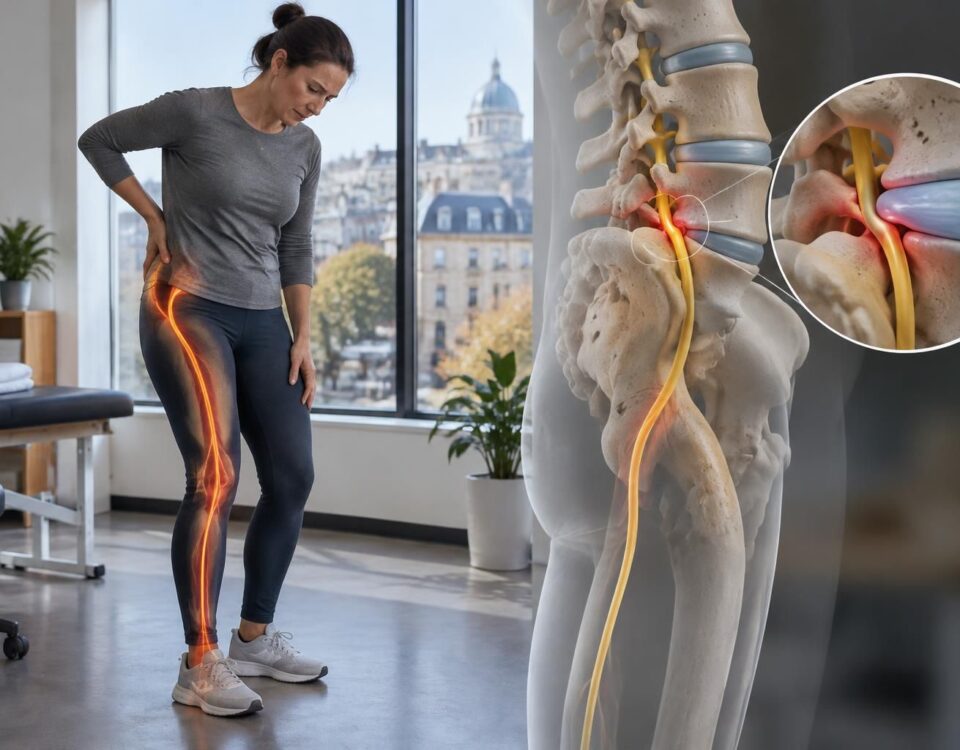
The L5 territory is primarily characterized by pain radiating from the buttock to the outer part of the leg, reaching the top of the foot and the big toe. Weakness in dorsiflexion or toe extension can support an L5 involvement. The painful pathway and motor and sensory signs must be evaluated together to obtain a reliable diagnosis.
Clinical Evaluation and Diagnosis
The evaluation relies on identifying the painful pathway, the presence of paresthesias, and motor, sensory, and reflex signs. The Lasègue test and assessment of muscle strength complete the examination. Imaging, particularly lumbar MRI, can confirm compression or irritation of L5 and guide management. However, a normal MRI does not necessarily exclude L5 involvement if the clinical assessment is consistent.
To delve into the pain in the top of the foot and the L5 root, consult the following resources: Sciatica in the top of the foot – L5, Sciatica and pain in the top of the foot – Possible L5 root.
Diagnosis and Imaging
The diagnosis is established from the history, neurological examination, and, if necessary, imaging to confirm the root location and cause (disc herniation, foraminal stenosis, etc.). In some patients, imaging can be correlated with clinical findings to guide management.
Therapeutic Approaches at TAGMED
At TAGMED Clinic, the approach prioritizes non-surgical treatments when relevant. Targeted osteopathy and neurovertebral decompression are part of the therapeutic arsenal. Medication options and targeted procedures can be discussed based on clinical evaluation and the severity of symptoms. For cases that remain painful despite treatment, complementary options can be considered in a progressive and safe manner.
| Therapy | Brief description | Relative effectiveness |
|---|---|---|
| Osteopathy | Manual approach aimed at restoring mobility and reducing constraints on the nerve root, without invasiveness. | High in applicable cases |
| Motorized neurovertebral decompression | Non-invasive technique that can be discussed in certain patients when clinical criteria match. | Appropriate based on the profile |
| Injections | Local option to reduce inflammation around the nerve root when conservative treatment is insufficient. | Often effective for relieving inflammation |
| Physiotherapy | Rehabilitation program and strengthening of the trunk and associated structures. To be prioritized when it can complement osteopathic care. | Variable evidence; less prioritized in this approach |
To explore public resources on the topic and better understand the mechanisms, you can consult specialized pages and information dedicated to Montreal and non-surgical treatment of sciatica: pain in the foot when sitting, possible L5 root, pain that radiates down the leg when coughing, Sciatica L5.
When to consult quickly or urgently?
Consult quickly in case of new or progressive weakness, recent foot drop, urinary or intestinal disturbances, numbness of the saddle or perineum, or significant bilateral symptoms. These signs may require urgent management.
A lasting improvement in function is more beneficial than temporary pain relief.
Resources and context Montreal
Pain affecting the top of the foot and following the path of the sciatic nerve may reflect an involvement of the L5 root. The diagnosis relies on a rigorous clinical examination and, if necessary, imaging and neurological tests. Management is mostly conservative, with options available at TAGMED Clinic in Montreal and Terrebonne when that is more convenient for the patient. For more information on non-surgical treatments and local options, see the following pages: Sciatica and the sensation of a numb foot – when to consult, foot pain while sitting in Montreal, Sciatica affecting the top of the foot L5.
For more clinical and practical information, consult the related pages: leg pain after several hours, leg pain when coughing. These resources remain complementary to a personalized medical evaluation.
To deepen the technical aspects surrounding the L5 territory and clinical signs, reference sites and resources on the sciatic nerve and pain affecting mobility can be consulted in the pages below, while remaining aligned with TAGMED practices.
Useful links and resources :
Sciatica on the top of the foot – L5,
Sciatica L5,
Possible root L5,
Foot pain in Montreal while sitting,
Numb foot – when to consult,
Pain that goes down the leg when coughing,
Leg pain after several hours,
Neuro-sciatic pathology of the foot,
Heat and nerve pain in the leg.
Medical disclaimer: The information and advice provided on this site do not replace the opinion, diagnosis, or treatment of a healthcare professional. Please note that Dr. Sylvain Desforges, osteopath, is neither a medical doctor nor a specialist in a medical specialty as defined by the Collège des médecins du Québec. Manual medicine, functional medicine, and sports medicine as described on this site exclude any medical treatment or diagnosis made by a physician or medical specialist. Always consult your doctor for any medical questions. For more details, please read our full Legal Notice.
- L5 territory: Pain radiating from the buttock to the top of the foot and the big toe, following the path of the sciatic nerve.
- Motor signs: weakness in the dorsiflexion of the foot and extension of the big toe, potentially affecting walking.
- Sensory signs: paresthesias on the dorsum of the foot, sometimes hypoaesthesia of the forefoot.
- Diagnosis: The L5 root may cross other roots; lumbar MRI helps confirm radicular compression.
- Clinical evaluation: concordance between pain pathway, strength, sensitivity, and reflexes; useful tests like the Lasègue.
- Emergencies: loss of urinary or bowel control, progressive weakness, rapid neurological pain (cauda equina).
- Initial approach: adapted activity, gradual progression and physiotherapy with symptomatic management.
- Imaging: lumbar MRI to confirm L5 and guide management, in correlation with the clinical picture.
- Non-surgical options: targeted rehabilitation and specific osteopathy; anti-inflammatory treatments according to the profile.
- Targeted interventions: epidural infiltration when necessary; neurovertebral decompression discussed as needed.
- Therapeutic decision: prioritize conservative treatment; surgery considered as a last resort in case of failure or motor deficit.
- When to consult quickly?: new or worsening weakness, altered walking, urinary/perineum issues, progression of symptoms.

This article summarizes the mechanisms of sciatica in Montreal when the pain radiates towards the top of the foot and may reflect a possible involvement of the L5 root. You will find clinical markers, evaluation tools, non-surgical management options, and criteria for considering an intervention, all within an approach focused on returning to activity and symptom control.
Understanding the territory and associated signs
The L5 territory often covers the top of the foot and the big toe, sometimes with paresthesias on the dorsum of the foot and weakness in dorsiflexion. This observation may be associated with pain that follows the path of the sciatic nerve from the buttock to the foot, and it may be accompanied by a slowing of walking or compartmentalization during big toe extension.
In practice, it is important to distinguish an L5 root injury from a peripheral fibular nerve injury, which can produce similar symptoms. Analyzing the painful pathway, muscle strength, and sensitivity helps clarify the territory and guide management.
Territory and motor signs
The characteristic weakness is in foot dorsiflexion and big toe extension. Walking on heels can reveal L5 weakness and help differentiate from other radiculopathies or peripheral neuropathies.
Differential Diagnosis
The L5 pathway can overlap with other roots or peripheral nerves; the examination must compare several signs to avoid hasty conclusions.
Examination Elements
The ideal examination seeks concordance between symptoms, strength, sensitivity, and reflexes, without relying on a single test. Lumbar MRI can confirm a disc herniation or foraminal compression that may involve L5, but imaging must be interpreted in correlation with clinical assessment.
Evaluation and Imaging
When is Imaging Indicated?
Imaging is indicated when clinical signs suggest significant root involvement, when symptoms persist despite initial treatment, or when motor deficits progress. Lumbar MRI remains the reference examination for visualizing discs and nerves and specifying the level affected by a possible herniation or foraminal narrowing.
Role of Functional Assessment
In addition to motor and sensory tests, assessing walking and daily activities guides rehabilitation and helps plan recovery goals.
Approach in Montreal: Conservative Management and Options
Initial Evaluation and Non-Surgical Treatment
Most L5-related lumboradiculalgia progresses favorably with appropriate non-surgical management. The program prioritizes adapted activity, a gradual increase in effort, and targeted rehabilitation, supported by anti-inflammatories and analgesics when necessary. Physiotherapy sessions and specialized osteopathic techniques can clarify and relieve pain, improve mobility, and protect the nerve.
Decompression and Targeted Interventions
In certain selected cases, motorized neuro-spinal decompression or targeted approaches may be discussed to reduce pressure on the root and speed up the return to activity. In cases of persistent pain despite treatment, epidural injections or specialized consultations may be considered depending on the profile and progression.
When to Consult Quickly and What Signs to Monitor
Consult promptly in the presence of new and rapid weakness, recent foot drop or progressive motor deficit, urinary or bowel disturbances, or rapidly worsening pain. Signs of cauda equina syndrome require urgent medical attention.
Practical Tips for Daily Life
Adopt regular, adapted walking, wear comfortable shoes, and avoid excessive trunk twisting. Favor activities that do not unnecessarily stress painful dorsiflexion and work with your clinician on trunk and foot muscle strengthening exercises to support the nerve and improve stability.
In Montreal: Directing Your Care Plan
In Montreal and Mont-Royal, a specialized consultation allows for an accurate diagnosis of L5 involvement and the construction of a personalized management plan that prioritizes non-surgical approaches when relevant. The goal is to achieve sustainable improvement in function and symptom control, with as little reliance on surgery as possible.
| Aspect | Concise Finding |
|---|---|
| Territory | Pain on the top of the foot and big toe associated with root L5. |
| Motor Signs | Possible weakness in dorsiflexion and lifting the foot. |
| Sensory Signs | Paresthesias and burning sensation on the dorsum of the foot and big toe. |
| Painful Pathway | Pathway of the sciatic nerve: buttock → dorsum of the foot → big toe. |
| Examination and Diagnosis | Clinical examination + lumbar MRI; EMG as needed. |
| Therapeutic Approach | Conservative treatment (adapted activity, physiotherapy); injections possible. |
| Emergencies | Cauda equina syndrome, progressive weakness, urinary or perineal disturbances. |
| Local Management | Montreal and Mont-Royal, non-surgical management focused on rehabilitation (TAGMED Clinic). |
Testimonials of Sciatica in Montreal: Pain Toward the Top of the Foot and L5 Root
Marie, 42 years old, recounts that she felt pain starting from her lower back and radiating along the nerve to the top of the foot and big toe. The painful pathway was accompanied by weakness in dorsiflexion, making it difficult to lift her foot. After a complete evaluation in Montreal, she began a non-surgical program including targeted osteopathy and physiotherapy with progressive exercises. Within a few weeks, her mobility returned and she gradually resumed her daily activities.
Antoine, 54 years old, describes an onset that occurred after a professional effort, with pain radiating to the top of the foot and difficulties walking on heels. The team prioritized a conservative approach in Montreal, combining osteopathy, physiotherapy, and progressive rehabilitation. He reports notable improvement in about 6 to 8 weeks and a gradual return to walking and work without marked pain.
Sophie, 33 years old, mentions paresthesias and pain along the sciatic pathway reaching the top of the foot, with possible involvement of the L5 root. After a precise assessment in Montreal, she benefited from a personalized plan combining osteopathy and trunk and foot strengthening exercises. She notes a gradual reduction in symptoms and a return to walking and usual activities after a few weeks.
Julien, 48 years old, describes a radicular pain triggered by a sudden movement that reached the top of the foot. Thanks to a multimodal treatment offered in Montreal, including osteopathy sessions and targeted rehabilitation, he regained the muscle strength necessary for dorsiflexion and achieved normal gait without persistent pain.
Claire, 60 years old, shares her experience of a low back pain evolving towards the top of the foot, with episodes of paresthesia. After a treatment in Montreal focused on core strengthening, mobility, and postural advice, her walking became smoother and her daily pain significantly lessened, allowing her to resume her usual activities.
Sciatica in Montreal: pain to the top of the foot and the L5 root
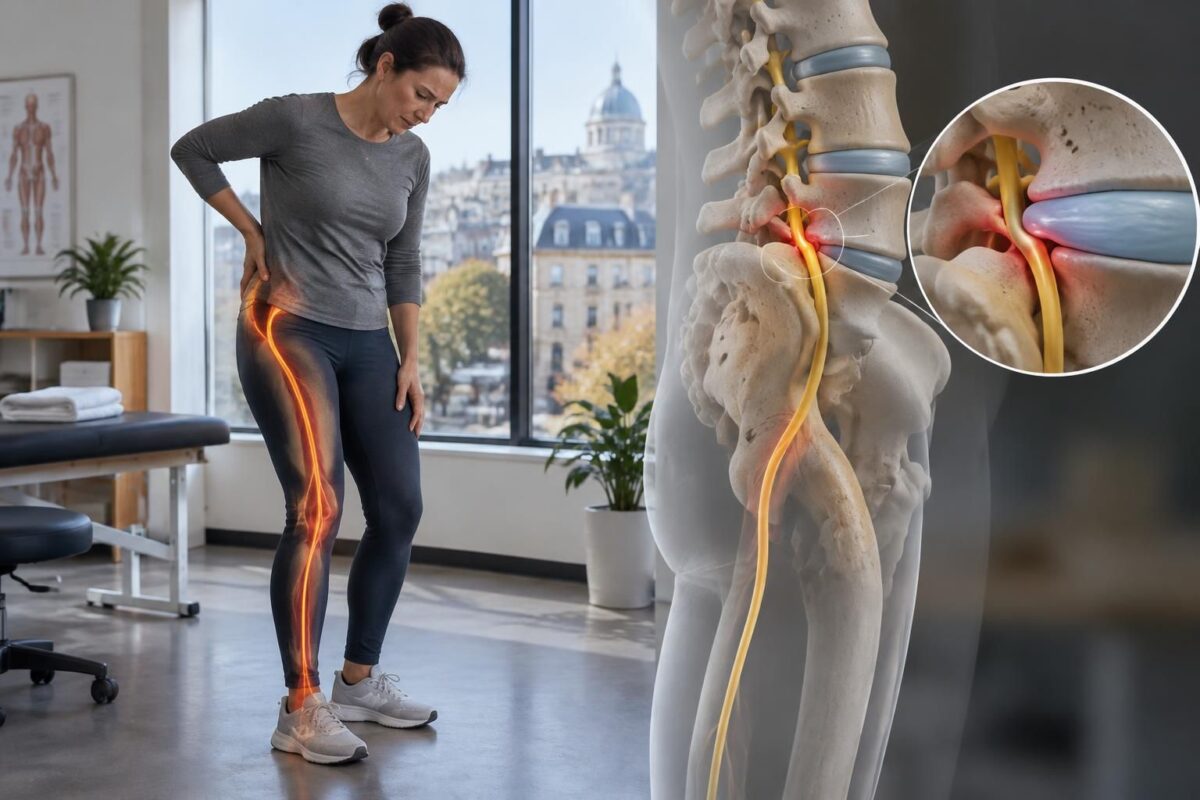
Lumbar radiculopathy associated with the L5 root can present prominently in the territory of the sciatic nerve, with pain radiating up to the top of the foot and the big toe. In Montreal, patients often describe pain that starts in the lower back, travels through the buttock and the outer thigh, and then localizes on the dorsum of the foot and the first toe. This pattern is typically linked to irritation or compression of the L5 root, most often due to a lumbar disc herniation or foraminal stenosis. A precise evaluation allows distinguishing L5 from other roots and guiding treatment.
The L5 territory is characterized by specific motor and sensory signs. The most common phenomenon is weakness in foot dorsiflexion and big toe extension, which can manifest as a “foot drop” or difficulty lifting the toe during walking. The top of the foot and the big toe are sensitive areas for screening, but the distribution can vary from person to person. Therefore, the doctor must compare strength, sensitivity, and reflexes bilaterally and test heel walking to reveal any possible L5 involvement, keeping in mind that other peripheral nerves may share portions of this pathway.
The diagnosis relies on a holistic approach: the interview clarifies the painful pathway and the intensity of paresthesias, while the neurological exam evaluates the concordance between motor, sensory signs, and function. Evaluating the relevant myotomes measures the strength of the muscles involved in dorsiflexion and toe extension, and tests such as the Lasègue help determine the radicular location. Imaging, especially lumbar MRI, is useful for confirming a disc herniation or foraminal stenosis and guiding therapeutic options, while being interpreted in relation to the overall clinical picture.
In practice, initial management is conservative. An adapted and progressive activity, combined with targeted rehabilitation, often leads to significant improvement over a few weeks to months. Painkillers or anti-inflammatories may be used based on contraindications, and physiotherapy aims to strengthen the back and leg muscles, improve mobility, and correct daily movements. When pain persists despite treatment, options such as epidural injections may be discussed to relieve inflammation around the nerve root and facilitate recovery.
Specific situations require complementary guidance. Motorized neurovertebral decompression may be considered for certain patients with a concordant disc or foraminal component and stable neurological deficit. In severe cases or those refractory to conservative treatment, specialized advice and advanced investigations—including electromyographic tests or targeted procedures—can guide an appropriate approach. The goal remains to restore function and return to normal activity without debilitating pain.
Emergencies and signs to watch for: a new or rapidly progressive weakness, recent foot drop, urinary or bowel issues, or a feeling of perineal numbness require prompt management. Bilateral involvement with rapid neurological deterioration may necessitate more urgent intervention. The key message is that most L5-related lumbosacral pain evolves favorably with appropriate and progressive management, but careful monitoring is essential to prevent more serious complications.
If you experience pain consistent with L5, a specialized consultation can help clarify the neurological territory, the probable cause, and the most suitable management options for your case while promoting sustainable improvement in function and walking.
About the author
Dr. Sylvain Desforges, osteopath, is the founding president of TAGMED clinics and the ACMA association. His approach combines osteopathy, naturopathy, and manual medicine, integrating advanced technologies such as motorized neurovertebral decompression, specific osteopathic approaches, and precision therapies. His mission is to provide evidence-based care to optimize the health and well-being of his patients. To learn more about his approach and the services available at TAGMED clinics, contact the TAGMED teams.
Quick summary: This synthesis concerns sciatica in Montreal with pain that may radiate to the top of the foot and involve the L5 root. It describes typical mechanisms, clinical markers, the role of examinations, and management choices, favoring non-surgical approaches when appropriate, while highlighting urgent situations. Resources and useful links provide further insights into signs and options available in Montreal and Mont-Royal.
When pain follows the path of the sciatic nerve and reaches the dorsum of the foot, the most common involvement is L5 root. The L5 territory typically presents as pain on the top of the foot and the big toe, sometimes accompanied by paresthesias or weakness in lifting the foot. In this context, foot dorsiflexion may be decreased, and walking may be impaired, especially when walking on heels.
The evaluation is based on the concordance between the painful pathway, strength, sensitivity, and reflexes. No approach should be limited to a single sign; multiple motor and sensory signs must be tested to confirm or exclude an L5 involvement and to distinguish possible peripheral injuries, such as the fibular nerve. Lumbar MRI is the key examination to visualize any possible disc herniation or radicular compression, while the electromyogram can clarify the age and exact level of the injury when doubts persist.
In practice, the conservative approach is favored initially. This combines a tailored activity, targeted rehabilitation (physiotherapy), and symptomatic measures (analgesics, NSAIDs). If pain persists beyond conservative measures, options such as epidural infiltration may be discussed to reduce inflammation around the nerve root. In specific cases and after evaluation, motorized neurovertebral decompression may be considered for certain patients, but it remains a targeted option tailored to the clinical profile.
Signs of urgency must be monitored and require prompt management: new or progressive weakness, recent foot drop, urinary or bowel disorders, perineal numbness or rapid bilateral neuropathic pain. In the presence of these elements, urgent medical attention is essential and cannot wait for a routine appointment.
To delve deeper into the manifestations and mechanisms surrounding the L5 pathway and the sciatica associated with the foot, several complementary resources are available, for example on Sciatica and tingling upon waking, or Sciatica in Montreal – foot pain, numbness and tingling. To enrich your understanding, you can consult the following resources: Sciatica L4-L5/L5-S1 Montreal, L5 – tingling in the big toe, and Sciatic pain and foot. These references complement clinical evaluation and therapeutic guidance appropriate to Montreal and Mont-Royal.
Additionally, you can consult specific resources on the signs and expected outcomes when the L5 root is involved, especially those addressing non-surgical relief and clinical scenarios in Montreal. Dedicated pages and practical guides help you understand motor and sensory tests, imaging indications, and non-invasive treatment options. For a more general and practical perspective, refer to the resources listed in the above links and explore content dedicated to sciatica and non-surgical care pathways.
Sciatica in Montreal: radicular pain versus referred pain
IN BRIEF Radicular sciatica corresponds to irritation of a nerve root, while referred pain can spread to the buttock or leg without direct nerve involvement. In Montreal, distinguishing these pains helps guide the evaluation by linking the symptom route to…
Sciatica in Montreal: nerve root, disc, and foramen explained simply
IN BRIEF Sciatica corresponds to pain linked to the irritation of a nerve root, sometimes near a lumbar disc or a narrowed foramen. In Montreal, distinguishing an L4-L5 issue that may affect the L5 root from an L5-S1 problem that…

Sciatica in Montreal: understanding L5-S1 foraminal compression
IN BRIEF L5-S1 foraminal compression is a narrowing of the opening where a nerve root exits, which can cause sciatica with pain, tingling, or weakness in the buttock and leg. In Montreal, an assessment allows for correlating symptoms, clinical examination,…

Sciatica in Montreal: why L5-S1 is often involved
IN BRIEF The sciatica L5-S1 often corresponds to irritation of the S1 root, sometimes related to a herniated disc. The pain may start in the buttock and descend behind the thigh to the calf or the foot. In Montreal, understanding…
Sciatica in Montreal: L5 and difficulty lifting the foot
IN BRIEF The difficulty in lifting the foot with sciatica can indicate weakness related to the involvement of the L5 root, sometimes caused by a herniated disc. This foot drop increases the risk of falling and requires prompt medical evaluation;…

Sciatica in Montreal: S1 and difficulty rising up on the toes
IN BRIEF S1 sciatica can cause pain from the buttock to the calf and foot, as well as difficulty getting on tiptoe. This weakness may suggest irritation of the S1 nerve root, but is not sufficient to establish a diagnosis.…

Sciatica in Montreal: L4-L5 and pain towards the top of the foot
IN BRIEF The sciatica related to L4-L5 can radiate from the lower back to the buttock and the leg; pain on the top of the foot may suggest involvement of the L5 root, but the pathways vary and symptoms overlap.…

Sciatica in Montreal: pain in the big toe, L5 root or another cause?
IN BRIEF Pain that radiates toward the big toe may indicate irritation of the L5 root, sometimes related to a herniated disc, but other causes are possible. In Montreal, evaluating the pain pathway, strength, sensitivity, and walking helps guide management…

Dr Sylvain Desforges, B.Sc., D.O., N.D., osteopath, is the founding president of TAGMED and of the ACMA association. He dedicates his practice to chronic spinal pain, low back pain and symptoms compatible with sciatica, particularly when pain radiates toward the buttock, leg, calf, foot or toes.
Through SOS Sciatique, he publishes educational content on sciatica symptoms, possible causes such as disc herniation, disc narrowing, foraminal stenosis or irritation of a lumbar nerve root, as well as non-surgical approaches that may be considered according to the evaluation. At Clinique TAGMED, care may include, depending on the case, motorized neurovertebral decompression, specific osteopathic care or precision percussion.
For an evaluation related to sciatica treatment in Montreal / Mount Royal or sciatica treatment in Terrebonne, please consult the services available at Clinique TAGMED.
Medical disclaimer
The information published on SOS Sciatique is provided for educational purposes only and does not replace a consultation, diagnosis, opinion or treatment provided by a physician or another authorized healthcare professional. The author of this article is neither a medical doctor nor a specialist in a medical specialty recognized by the Collège des médecins du Québec. The osteopathic, manual medicine or functional support approaches described on this site do not constitute medical acts and are not intended to replace medical follow-up.
Consult a physician or emergency service in cases of loss of bladder or bowel control, anesthesia in the saddle area, significant or progressive weakness in the leg or foot, fever, recent trauma, severe pain or rapid worsening of symptoms. For more details, please read our Legal Notice.