Sciatica and floor washing: prolonged bending and pain
24/11/2026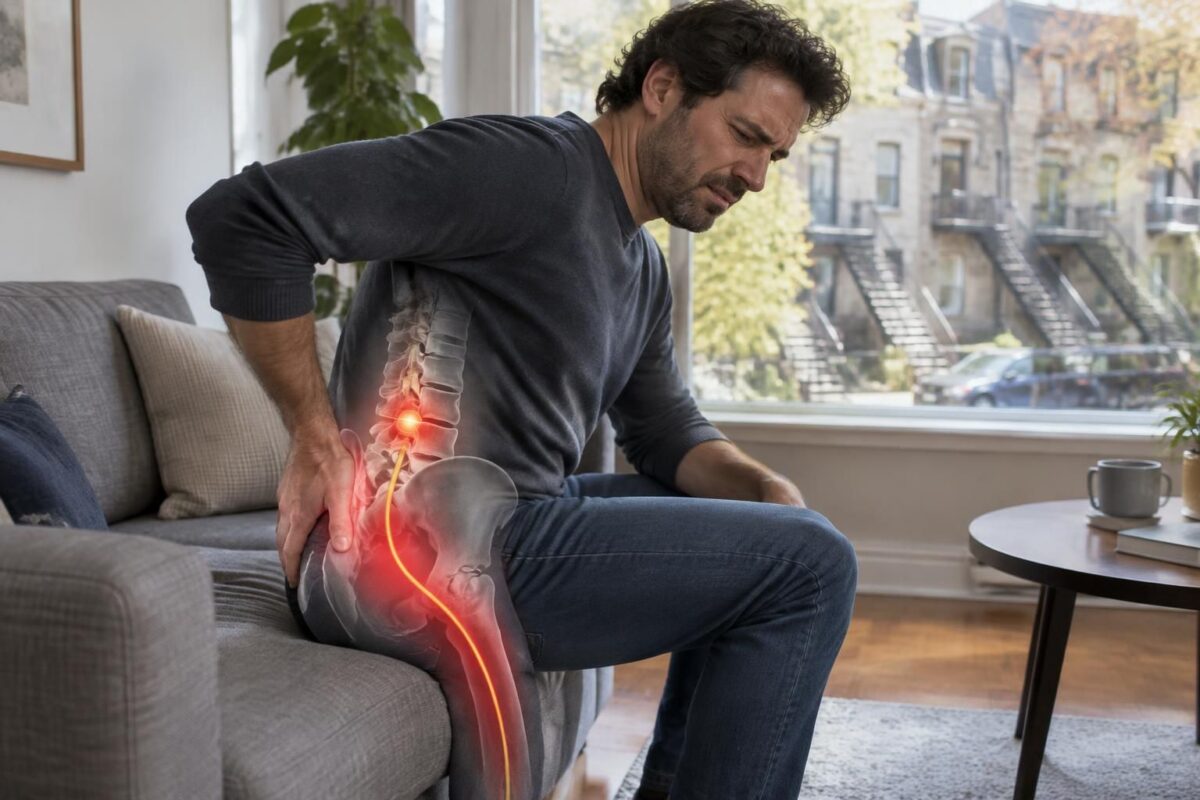
IN BRIEF
| A disc bulge can irritate a nerve root and cause buttock pain, sometimes accompanied by pain that travels down the leg: this is referred to as symptoms compatible with sciatica. In Montreal, an evaluation helps specify the cause and guide non-surgical management options as needed. Consult quickly if weakness appears or worsens. |
A disc bulge can sometimes contribute to the irritation of a nerve root and cause pain in the buttock, occasionally accompanied by symptoms that radiate down the leg. However, buttock pain does not necessarily mean it is sciatica: an evaluation can clarify the causes and appropriate options. In Montreal, non-surgical management may be considered depending on your situation and the evaluation results.
A disc bulge can sometimes irritate a nerve root and contribute to pain in the buttock or leg. However, an MRI image alone is not sufficient to establish the cause of the symptoms: the location of the pain, its evolution, and the clinical examination also matter. In Montreal, an evaluation can help better understand the situation and determine suitable non-surgical options.
What is a disc bulge?
The discs are located between the vertebrae and help distribute loads on the spine. A disc bulge refers to a protrusion of the disc beyond its usual limits. This finding can appear on imaging, sometimes without causing pain. Therefore, it does not automatically mean that a nerve is compressed.
The symptoms depend particularly on the affected area and the proximity of a nerve root. A healthcare professional considers the imaging results along with the symptoms and the examination, rather than interpreting the report in isolation.
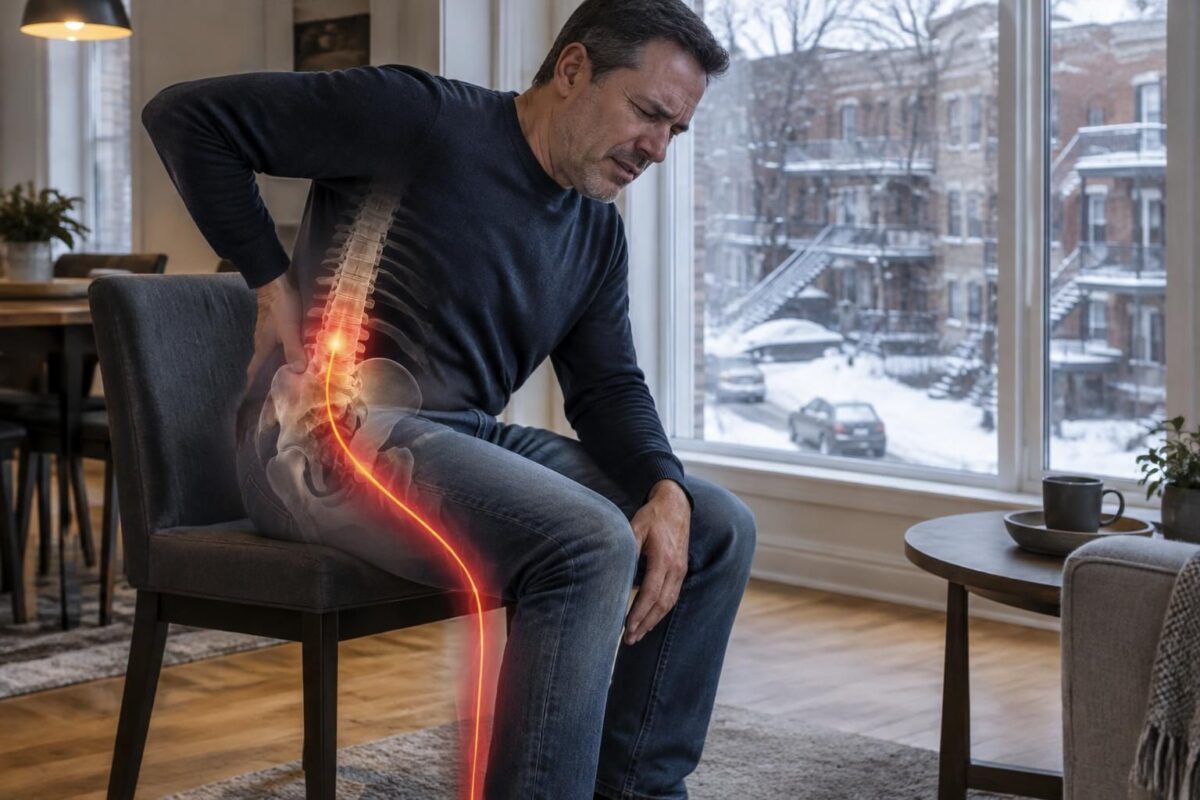
Sciatica in Montreal: disc protrusion and pain under the knee
IN BRIEF A disc protrusion can irritate a nerve root and contribute to sciatica with pain below the knee, sometimes down to the calf or foot. In Montreal, an evaluation helps clarify the cause of symptoms and consider suitable non-surgical…
Why can pain manifest in the buttock?
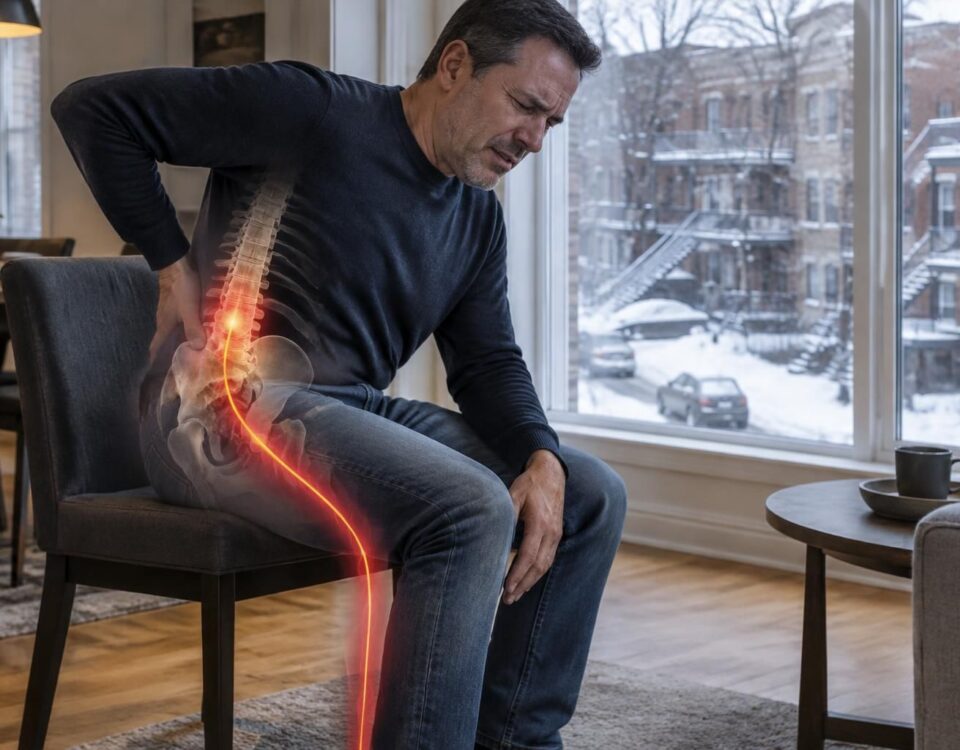
Buttock pain can have several origins. Irritation of a lumbar nerve root can cause pain that starts in the lower back or buttock and travels down the leg. However, pain limited to the buttock does not confirm, by itself, a sciatica. Other structures in the back, hip, or surrounding tissues may also be involved.
Sciatica generally refers to symptoms associated with irritation of a nerve or nerve root. Some people experience sharp pain, tingling, numbness, or a burning sensation. To learn more, read the article on irritation of the S1 root.

Sciatica in Montreal: herniated disc and painful cough
IN BRIEF Sciatica is a pain that extends from the lower back to the buttock and leg; a herniated disc can irritate a nerve root. Coughing can exacerbate the pain by increasing pressure in the back. In Montreal, an evaluation…
What symptoms can accompany a disc bulge?
Symptoms vary according to the affected area and the response of the nerves. The pain may remain in the buttock or extend into the thigh, calf, and foot. Tingling or numbness may also occur. Pain that radiates below the knee may be compatible with nerve irritation, but alone does not determine the cause. Also read the information on disc protrusion and pain below the knee.
The affected lumbar region can influence the path of the pain, without determining it with certainty. An L4-L5 protrusion may be associated with symptoms in the leg; an L5-S1 lesion may sometimes be accompanied by pain toward the foot. These connections explain these possibilities, but they do not replace an evaluation: L4-L5 protrusion and pain in the leg and L5-S1 herniation and pain toward the foot.

Sciatica in Montreal: pain worsened when sitting and lumbar disc
IN BRIEF Worsening sciatica in a sitting position may be related to lower back irritation, sometimes associated with a disc, without this sign being sufficient to establish the cause. In Montreal, an evaluation that considers symptoms, strength, sensitivity, and function…
How to evaluate buttock pain in Montreal?
An evaluation starts with the symptoms: their location, duration, factors that worsen or relieve them, and their evolution. The professional may also inquire about tests already performed and the impact of the pain on daily activities. The signs present during the examination contribute to guiding the next steps.
Imaging must be interpreted in context. A disc bulge visible on an X-ray or MRI does not necessarily explain the pain. Symptoms and examination results should be compared before discussing possible options.

Sciatica in Montreal: pain worsened by flexion and disc-related cause
IN BRIEF Flexion-Aggravated Sciatica is pain that starts in the lower back and may radiate into the buttock or leg; irritation related to a lumbar disc can be a possible cause. In Montreal, an assessment helps clarify the origin of…
What non-surgical options can be considered?
Options depend on the evaluation and the individual’s health status. At TAGMED Clinic, approaches can be discussed on a case-by-case basis, including specific osteopathy or motorized neurovertebral decompression. Their relevance must be established after evaluation; no results can be guaranteed.
To learn more about the services offered, visit the page on sciatica treatment in Montreal. An evaluation is also offered in Terrebonne. Choosing an approach should not delay a medical consultation when symptoms warrant it.

Discogenic sciatica in Montreal: why some stretches worsen
IN BRIEF Disc-related sciatica refers to pain related to the irritation of a nerve root, often near a herniated disc. Certain stretches, especially those that emphasize bending or pull on the leg, can worsen symptoms rather than relieve them. In…
When to seek medical advice quickly?
Consult a doctor or an emergency service quickly in case of loss of urinary or intestinal control, numbness in the saddle area, or significant or progressive weakness in the leg or foot. A fever, recent trauma, severe pain, or rapid worsening also require medical attention.
Some nerve-related symptoms should not be taken lightly. Check the indications for nerve symptoms not to be taken lightly and seek professional advice if you are concerned about your condition.

Sciatica disc in Montreal: movements to avoid at the start
IN BRIEF Disc-related sciatica refers to pain related to the irritation of a nerve, sometimes associated with a lumbar disk. Initially, avoid movements that worsen your symptoms, such as lifting a load by bending over or performing repeated twists. Adjusting…
About the author
Sylvain Desforges, B.Sc., D.O., N.D., Doctor of Osteopathy and naturopath, is the founding president of TAGMED and the ACMA association. He dedicates his practice to chronic pain of the spine, lower back pain, and pain associated with sciatica, especially when the pain radiates down to the buttock, leg, calf, foot, or toes.
Through SOS Sciatique, he publishes educational content on the symptoms of sciatica, possible causes such as disc herniation, disc bulging, foraminal stenosis, or irritation of a lumbar nerve root, as well as non-surgical approaches that may be considered based on the assessment. At TAGMED Clinic, treatments may include, depending on the case, motorized neurovertebral decompression, specific osteopathy, or precision impact therapy.
For an evaluation related to sciatica treatment in Montreal / Mont-Royal or sciatica treatment in Terrebonne, check the services available at the TAGMED Clinic.

Sciatica in Montreal: disc herniation with leg weakness
IN BRIEF Sciatica related to a herniated disc can irritate a nerve root and cause pain that travels down the leg, sometimes accompanied by weakness. In Montreal, an evaluation helps clarify the cause and guide appropriate care; nonsurgical approaches can…
Medical Disclaimer
Medical Disclaimer: The information and advice provided on this site do not replace the opinion, diagnosis, or treatment of a health professional. Please note that Sylvain Desforges, B.Sc., D.O., N.D., doctor of osteopathy, is neither a medical doctor nor a physician and is not a specialist in a medical specialty as defined by the College of Physicians of Quebec. Manual therapy, functional medicine, and sports medicine as described on this site exclude any medical treatment or diagnosis made by a doctor or specialist. Always consult your physician for any medical questions. For more details, please read our Complete Legal Notice.
The information published on SOS Sciatique is provided for educational purposes and does not replace a consultation, diagnosis, advice, or treatment performed by a physician or another licensed health professional. The author of this article is neither a doctor nor a specialist in a medical specialty recognized by the College of Physicians of Quebec. The approaches of osteopathy, manual therapy, or functional support described on this site do not constitute medical acts and are not intended to replace medical follow-up.
Signs to Watch For
- Buttock pain, sometimes radiating down the leg.
- Tingling or possible numbness.
- A visible disc bulge on imaging does not always explain the symptoms.
Evaluation in Montreal
- Relate symptoms, clinical examination, and imaging results.
- Assess for possible nerve irritation before choosing an approach.
- Consult promptly if the leg becomes very weak or if symptoms worsen.

In Montreal, pain in the buttock associated with a disc bulge may indicate irritation of a lumbar nerve, but imaging alone is not sufficient to confirm the cause of symptoms. An appropriate evaluation helps distinguish sciatica from other sources of pain and choose prudent measures: stay active within tolerance, temporarily adjust activities, and consult if pain persists, intensifies, or radiates down the leg.

Sciatica in Montreal: herniated disc with foot numbness
IN BRIEF Sciatica related to a herniated disc can cause pain that radiates down the leg and numbness in the foot. In Montreal, an assessment helps to investigate the cause of the symptoms and consider appropriate management without assuming the…
Disc Bulge and Buttock Pain: Understanding the Link
A disc bulge corresponds to a protrusion of the contour of a disc between the vertebrae. It can sometimes contribute to irritation or compression of a nerve root, but it is also possible to observe one on imaging without it causing pain. The result of an X-ray or MRI must therefore be interpreted alongside symptoms and clinical examination.
Pain related to sciatica often begins in the lower back or buttock and can extend to the back or side of the thigh, sometimes down to the calf or foot. Tingling, numbness, or a burning sensation may also occur. However, pain limited to the buttock may have other origins, including muscular or joint issues. Avoid concluding on your own that you have a disc herniation or sciatica based solely on the location of the pain.
Recommendations for the First Days
Stay Active Without Overexerting
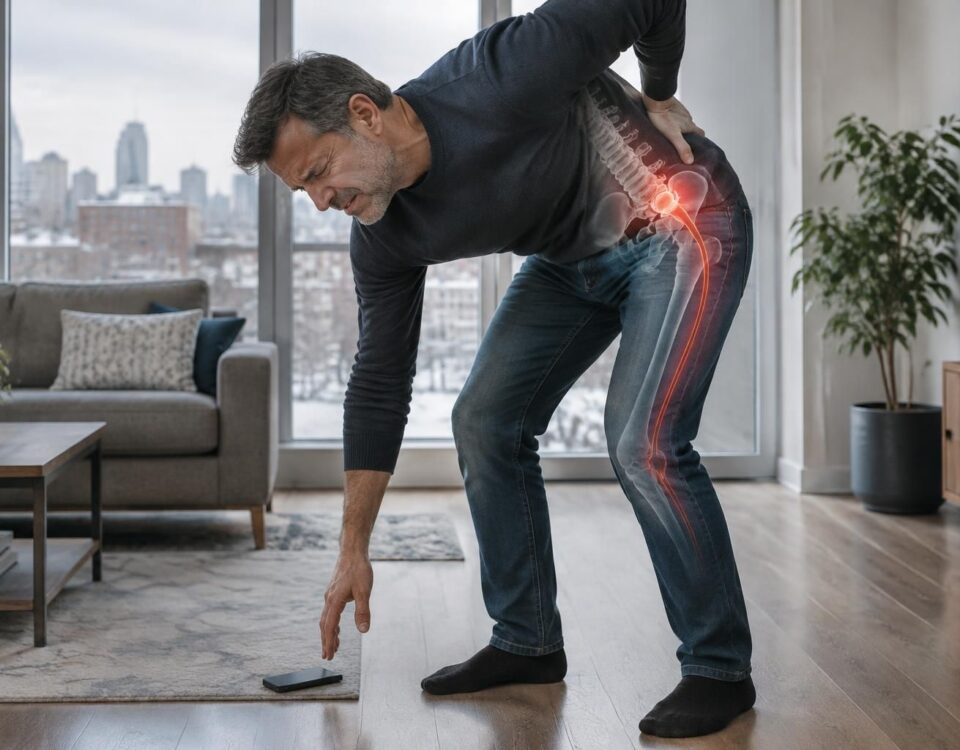
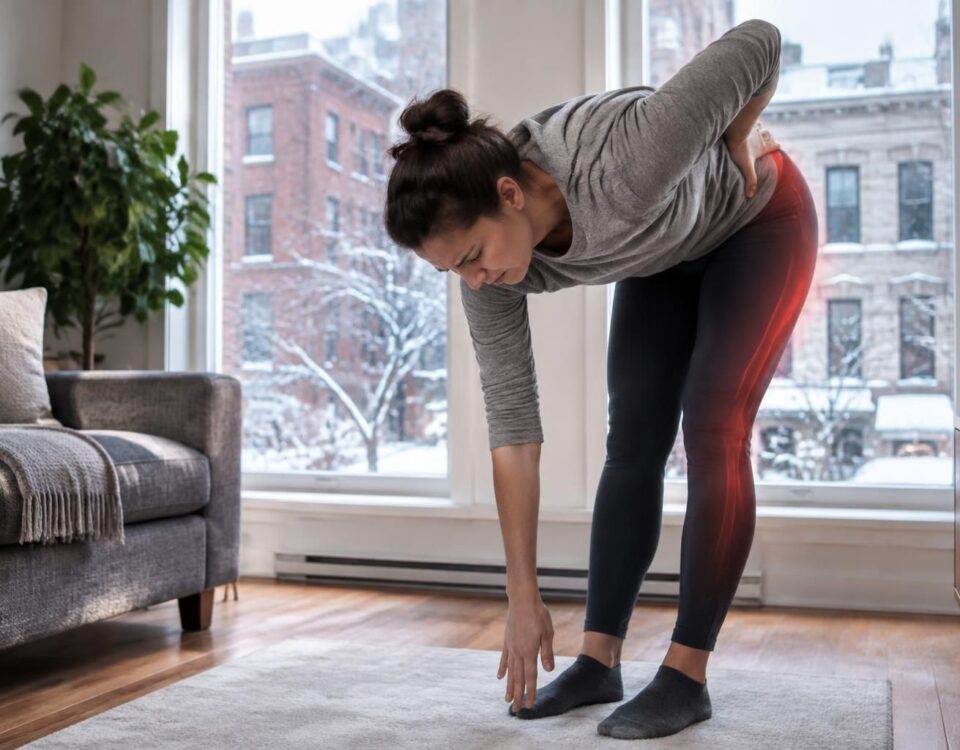
As much as possible, continue movements and daily activities that do not significantly aggravate your symptoms. Short walks and frequent position changes are often preferable to prolonged bed rest. Temporarily reduce movements that trigger sharp pain, such as lifting heavy objects or repeated bending, and then gradually resume them based on your tolerance.
Adjust Positions and Monitor Symptoms
Alternate sitting, standing, and lying positions, favoring those that soothe the pain. There is no ideal posture for everyone: instead, observe how your symptoms respond. Note their evolution, trajectory, and the activities that modify them. This information can help the consulted professional guide their assessment.
When to Consult in Montreal
If buttock pain persists, recurs frequently, or radiates down the leg, seek an evaluation from a licensed health professional. The examination will check strength, sensitivity, and mobility, and determine if medical consultation or further tests are indicated. In Montreal, an individualized approach may include movement advice, gradual exercises, and, depending on the evaluation, manual care. Motorized neurovertebral decompression may also be discussed in some cases, without guarantee of results and only if it suits your situation.
Quickly consult a medical service in case of significant or progressive weakness of the leg or foot, loss of bladder or bowel control, numbness in the saddle area, fever, recent trauma, or rapid worsening. These signs require immediate evaluation.
| Marker | What it may suggest |
|---|---|
| Disc bulge | May irritate a nerve root, but does not always explain the symptoms. |
| Pain in the buttock | May be related to the back or other structures; it does not confirm sciatica. |
| Pain that radiates down the leg | Nerve irritation is possible, especially if the pain follows a path to the foot. |
| Numbness or tingling | To be evaluated if they persist or worsen. |
| Evaluation in Montreal | A professional can provide context for the symptoms and imaging results. |
| Progressive weakness | Quickly consult a doctor or an emergency service. |
Note: The testimonials below are fictional examples written for illustrative purposes. They do not correspond to identifiable patients and do not guarantee any results. Buttock pain can have various causes; a disc bulge seen on imaging does not, by itself, determine the origin of the symptoms.
Fictional testimonial — pain after prolonged sitting: “My pain started in the lower back and was mainly concentrated in the buttock. The imaging report mentioned a disc bulge, which worried me. During my evaluation in Montreal, I was able to discuss my symptoms and the accompanying options suited to my situation.”
Fictional testimonial — discomfort while walking: “I felt pain in the buttock that appeared after a few minutes of walking. I also sometimes had sensations that radiated down the thigh. The evaluation helped me better understand the limitations of an imaging result and the importance of reviewing all my symptoms.”
Fictional testimonial — concern related to the disc bulge: “Seeing the words ‘disc bulge’ on my report made me think it necessarily explained all my pain. I learned that imaging must be interpreted alongside the clinical examination, the evolution of pain, and the signs present in the leg.”
In Montreal, an evaluation can help examine buttock pain, its presence or absence in the leg, the factors that worsen it, and its evolution. Depending on the situation, a healthcare professional may discuss appropriate options without assuming that a disc bulge is necessarily the cause of the symptoms.
Quickly consult a doctor or an emergency service in case of significant or progressive weakness of the leg or foot, loss of bladder or bowel control, or numbness in the saddle area.
Sylvain Desforges, B.Sc., D.O., N.D., Doctor of Osteopathy and Naturopath, is the founding president of TAGMED clinics and the ACMA association. His background focuses on innovation in health and supporting individuals living with chronic pain, particularly lower back pain and symptoms compatible with sciatica. In Montreal, his work particularly addresses situations where pain in the lower back extends towards the buttock, thigh, or leg.
A disc bulge corresponds to a protrusion of the contour of an intervertebral disc. This finding may appear during imaging, but does not alone explain pain. Some people have a bulge without symptoms; in others, irritation of a neighboring structure or a nerve root may contribute to lower back pain or pain radiating to the buttock. Therefore, it is important to contextualize imaging results with symptoms and the evaluation conducted by a licensed healthcare professional.
The buttock pain can be felt as a burning, tension, jolt, or dull ache. It may remain localized or extend toward the thigh, calf, or foot. Its intensity and trajectory vary from person to person. For Sylvain Desforges, explaining these differences helps to better understand the accompanying possibilities, without presuming that a disc bulge is necessarily the cause of the symptoms or making a diagnosis based on a single sign.
At TAGMED Clinic, the approach proposed is based on individualized evaluation and takes into account the history of pain, daily activities, and the person’s goals. Depending on the context and after verifying relevance, accompanying options may include specific osteopathy, manual therapy treatments, or motorized neurovertebral decompression. Services may also incorporate technologies such as laser or shockwave therapy, when deemed appropriate. These methods are not suitable for everyone and do not replace medical evaluation when necessary.
Its goal is to offer structured care, tailored to the situation and informed by the available knowledge, in order to support function and well-being. Care can also include advice on tolerated movements, gradual resumption of activities, and factors that may influence symptoms. Results cannot be guaranteed: they depend, among other things, on the cause of the pain, its evolution, and the individual’s response to care.
Medical warning: this information is educational and does not replace a consultation, diagnosis, or treatment by a physician or other licensed healthcare professional. Sylvain Desforges is neither a doctor nor a specialist in a medical specialty recognized by the Collège des médecins du Québec. In case of loss of bladder or bowel control, numbness in the saddle area, significant or progressive weakness, fever, recent trauma, or rapid worsening, consult a doctor or an emergency service without delay.
In Montreal, buttock pain associated with a disc bulge may raise questions, but imaging of a disc is not sufficient to establish the cause of the symptoms. Their location, progression, and clinical examination help determine if a nerve root is irritated and what cautious options might be considered.
Practical markers
A disc bulge is an overflow of the lumbar disc; it does not necessarily correspond to a disc herniation and does not always cause pain. To understand these differences, consult our page on disc protrusion and disc herniation. Pain felt in the buttock can have various origins: context and associated signs are as important as imaging results.
When pain descends into the thigh, calf, or foot, or is accompanied by tingling or weakness, nerve irritation can be considered among the possibilities. The manifestations may vary depending on the affected root; see the guidelines on muscle weakness by irritated root and on lumbar roots and the choice of cautious treatment.
If the symptoms began after exertion, note what triggers them, their path, and their intensity, without concluding yourself about a specific injury. Pain in the buttock or leg after exertion deserves an appropriate evaluation; additional information is provided on radiation in the leg after physical exertion. The lumbar disc and inflammation of a nerve root can also be addressed with a professional depending on your situation.
At the TAGMED Clinic, an evaluation allows for discussing potential non-surgical options depending on the case, including specific osteopathy or motorized neurovertebral decompression. For more information on the services offered, see the pages on sciatica treatment in Montreal and Mont-Royal or sciatica treatment in Terrebonne.
Medical warning: this information is educational and does not replace a consultation, diagnosis, or treatment by a licensed healthcare professional. The author is neither a doctor nor a specialist of a medical specialty recognized by the Collège des médecins du Québec. Consult a doctor or emergency service quickly in case of loss of bladder or bowel control, anesthesia in the saddle region, significant or progressive weakness, fever, recent trauma, or rapid deterioration. See the Legal Notice for more details.

Sylvain Desforges, B.Sc., D.O., N.D., docteur en ostéopathie
Dr Sylvain Desforges, B.Sc., D.O., N.D., osteopath, is the founding president of TAGMED and of the ACMA association. He dedicates his practice to chronic spinal pain, low back pain and symptoms compatible with sciatica, particularly when pain radiates toward the buttock, leg, calf, foot or toes.
Through SOS Sciatique, he publishes educational content on sciatica symptoms, possible causes such as disc herniation, disc narrowing, foraminal stenosis or irritation of a lumbar nerve root, as well as non-surgical approaches that may be considered according to the evaluation. At Clinique TAGMED, care may include, depending on the case, motorized neurovertebral decompression, specific osteopathic care or precision percussion.
For an evaluation related to sciatica treatment in Montreal / Mount Royal or sciatica treatment in Terrebonne, please consult the services available at Clinique TAGMED.
Medical disclaimer
The information published on SOS Sciatique is provided for educational purposes only and does not replace a consultation, diagnosis, opinion or treatment provided by a physician or another authorized healthcare professional. The author of this article is neither a medical doctor nor a specialist in a medical specialty recognized by the Collège des médecins du Québec. The osteopathic, manual medicine or functional support approaches described on this site do not constitute medical acts and are not intended to replace medical follow-up.
Consult a physician or emergency service in cases of loss of bladder or bowel control, anesthesia in the saddle area, significant or progressive weakness in the leg or foot, fever, recent trauma, severe pain or rapid worsening of symptoms. For more details, please read our Legal Notice.