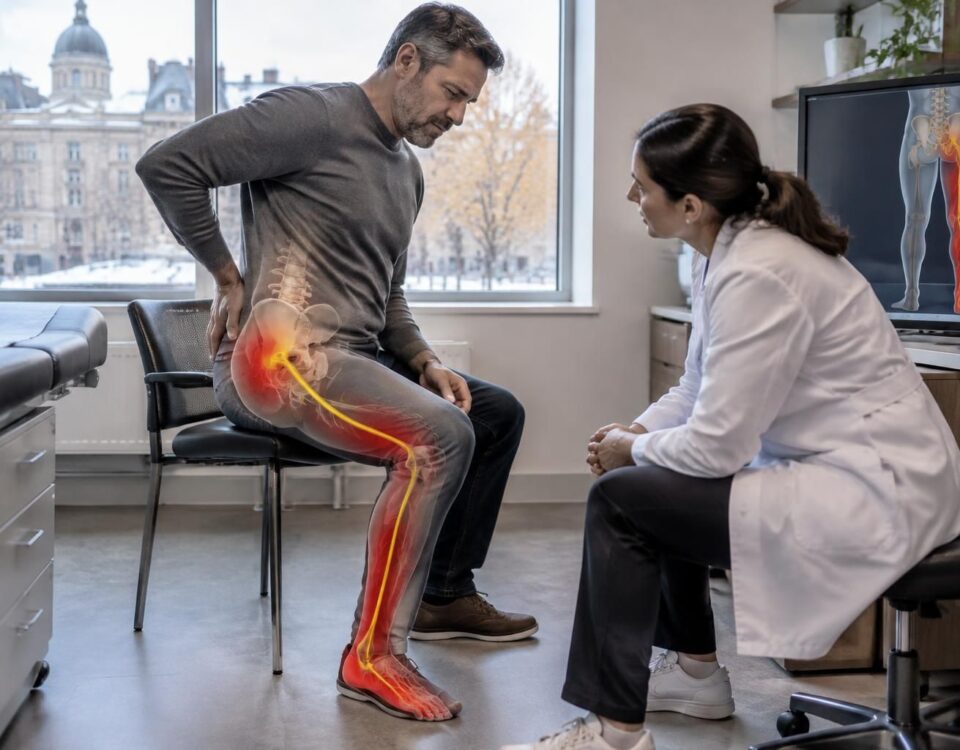



Sciatica and complete rest: helpful or counterproductive?
07/11/2026
Sciatica in Terrebonne: lumbar roots and the choice of a cautious treatment
08/11/2026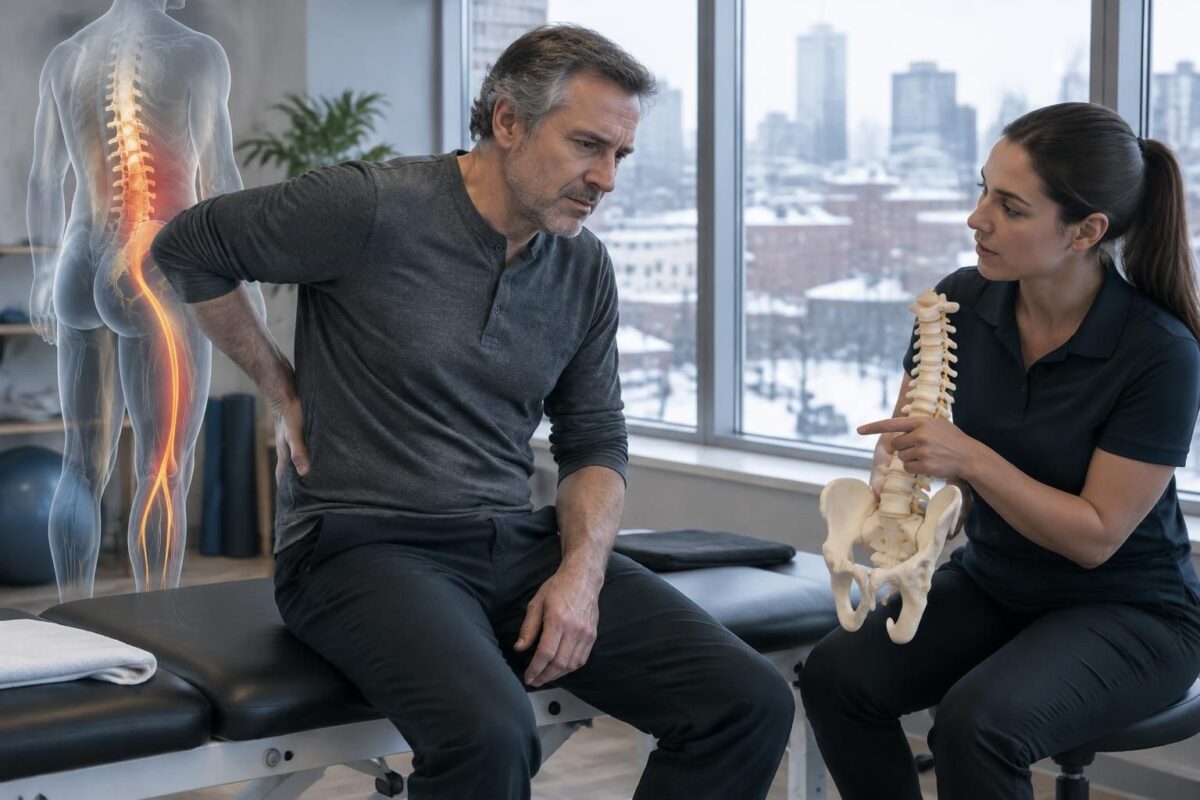
IN BRIEF Sciatica is pain radiating from the buttock down the leg, often related to irritation of a lumbar root. In Montreal, a careful assessment helps to connect symptoms to function and to choose appropriate management: modified activity, rehabilitation, or medical referral as needed. Progressive weakness or urinary or bowel disturbances require urgent consultation. |
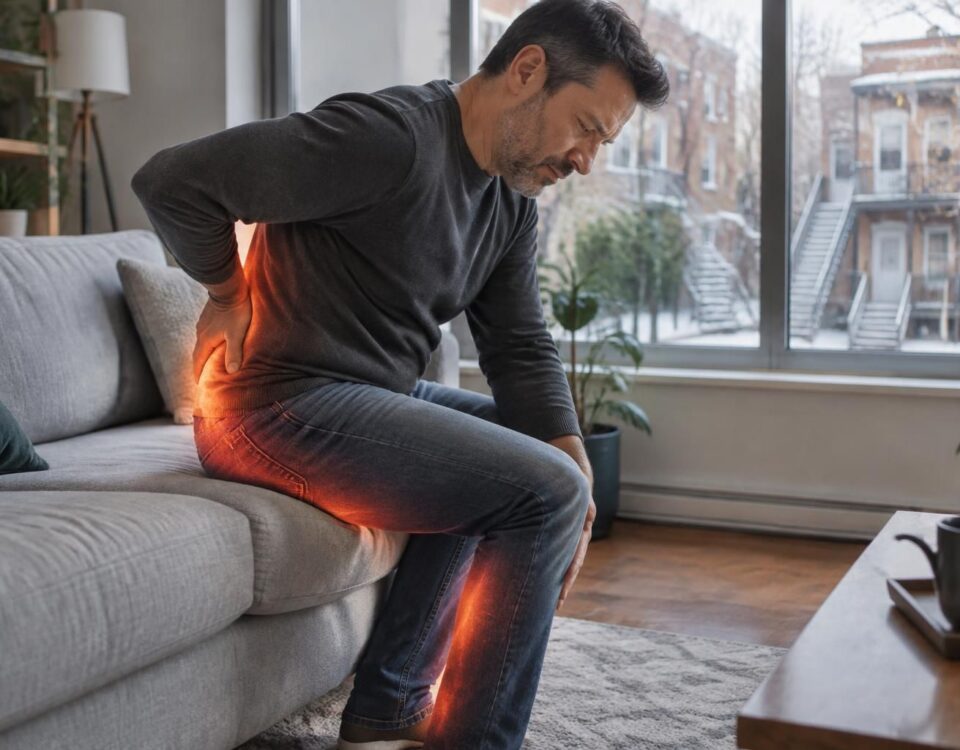
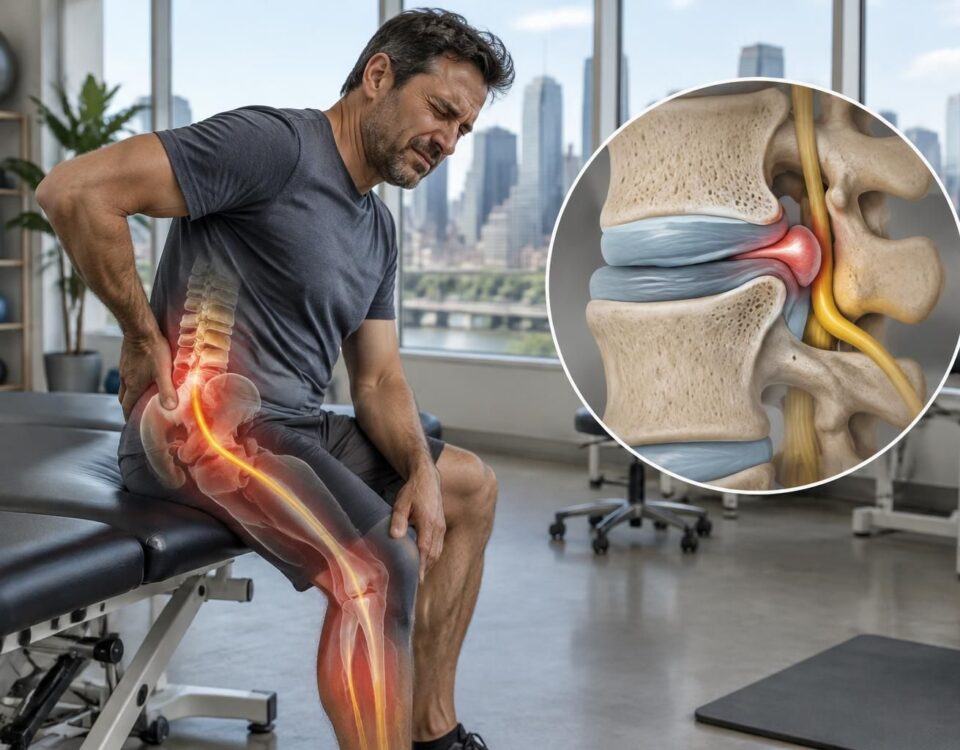
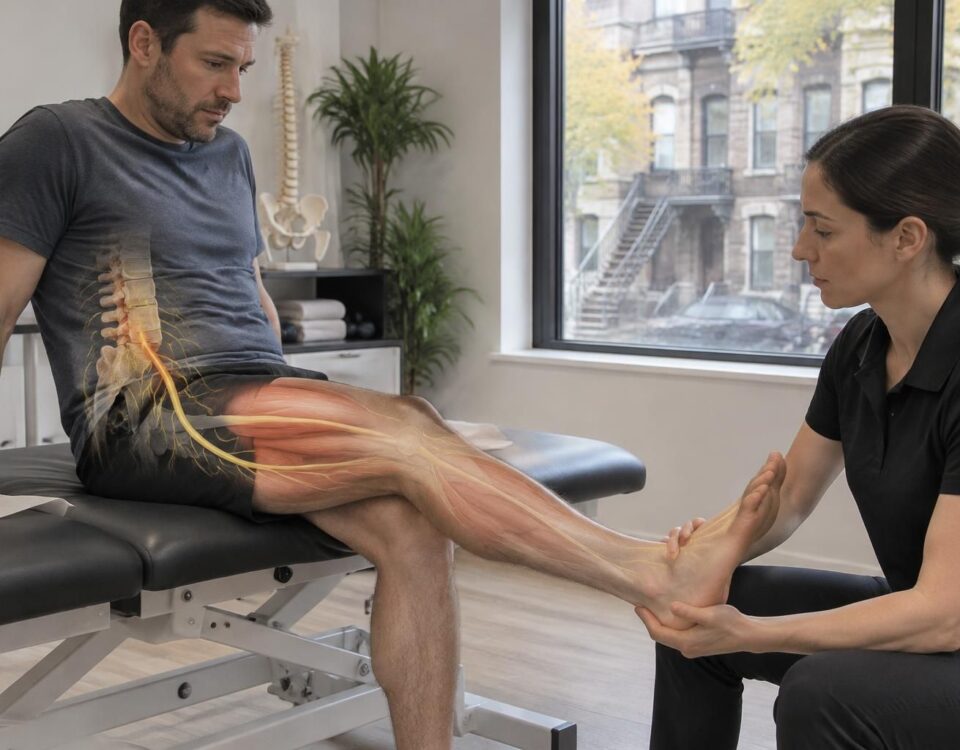
Sciatica often corresponds to irritation of a lumbar nerve root, particularly L5 or S1. Pain may start in the lower back or buttock and descend the leg down to the foot, sometimes accompanied by tingling or weakness. The trajectory of the symptoms helps guide the assessment, but is not sufficient alone to establish the cause.
The choice of treatment takes into account pain, mobility, and neurological examination. In the absence of red flags, a cautious approach may include maintaining tolerated activities, temporary adjustments to exertion, and, as needed, rehabilitation or manual therapy. Imaging is not routinely performed at the start of a typical presentation; a medical assessment is indicated if symptoms persist or worsen. Progressive weakness, numbness in the saddle area, or new urinary or bowel issues require urgent consultation.
Sciatica can cause pain in the buttock and leg, sometimes extending down to the foot or toes. The affected nerve root, neurological signs, and symptom progression guide the evaluation. In Montreal, a cautious choice begins by checking for emergency signs, then comparing care options based on the clinical picture, without relying on a single image or isolated symptom. Sciatica refers to pain related to irritation of a lumbar nerve root, most often L5 or S1. It can present with lower back pain or without marked back pain. Tingling, burning sensation, or numbness may accompany the pain. A herniated disc or other changes to a lumbar disc can irritate a nerve root. Arthritis and narrowing of a nerve passage can also contribute to symptoms. An examination is important, as pain in the leg does not alone confirm the cause. Irritation of L5 can cause pain on the side of the thigh or leg, then on the top of the foot. Symptoms may also reach the big toe. Weakness in lifting the foot or toes warrants clinical evaluation. To better understand this trajectory, refer to our page on pain towards the top of the foot related to L4-L5 and our guide on pain in the big toe and the L5 root. Irritation of S1 can cause pain at the back of the thigh and calf, sometimes down to the heel, the sole, or the outer edge of the foot. An examination can check sensitivity, certain reflexes, and calf strength. Symptoms vary from person to person and do not always allow for identifying the affected root without examination. The L4-L5 and L5-S1 discs are often examined when symptoms follow a trajectory consistent with nerve irritation. However, a visible anomaly on imaging does not automatically prove it causes pain. Our article on L4-L5 and L5-S1 discs and pain in the leg explains why it is important to compare imaging with symptoms and examination. The evaluation takes into account the onset of pain, its trajectory, factors that worsen it, and its effects on walking and daily activities. The professional also checks strength, sensitivity, reflexes, and gait. A history of cancer, trauma, infection, or neurological disorders may alter the steps to follow. In the presence of a typical picture without alarming signs, imaging is often not requested immediately. A physician may consider an MRI if symptoms persist, if the examination reveals a deficit, or if a secondary cause is possible. The MRI must be interpreted alongside clinical signs: an image alone does not determine treatment. For more information on symptoms that require special attention, refer to our guide on nerve symptoms not to be minimized. When no severe signs are present, management may include information, temporary adjustments to activities, and pain treatment recommended by an authorized professional. Medications, including anti-inflammatories, are not suitable for everyone. Risks, interactions, and contraindications should be checked with a doctor or pharmacist. Prolonged bed rest is generally not the goal. It is often preferable to temporarily reduce tasks that significantly worsen symptoms while maintaining tolerated activities. Progress is also tracked by walking, sleeping, and the ability to perform usual tasks, not just by pain intensity. A manual approach can be discussed after an evaluation and based on symptoms, history, and contraindications. It does not replace a medical diagnosis and is not suitable for all situations. Motorized neurovertebral decompression can be considered as an option for some people, but it is not indicated for all profiles and does not guarantee a result. At TAGMED Clinic, options may include assessment, specific osteopathy, or neurovertebral decompression, depending on the case and available services. A consultation allows for discussion of goals, limitations, and reevaluation criteria. For details, visit the page on sciatica treatment at TAGMED Clinic. A doctor may discuss an injection in certain cases, depending on the duration, severity, and results of the evaluation. A specialized consultation may also be indicated if symptoms persist despite medical management or if a neurological deficit appears. Surgical intervention is only considered in selected situations, following specialized evaluation. For an overview of care related to the sciatic nerve, you can also visit our page on sciatica treatment in Montreal. Certain symptoms require urgent medical evaluation. Consult immediately in cases of new significant or progressive weakness in the leg, foot drop, loss of control of the bladder or bowels, or numbness in the saddle area or perineum. Severe pain, fever, recent trauma, or rapid deterioration also warrant prompt evaluation. A weakness in walking or a leg that gives way should not be automatically attributed to simple pain. Consult our page on leg weakness and walking confidence to better recognize the elements to report to the professional. Before the appointment, note the path of the pain, its onset date, recent changes, and activities that are becoming difficult. Mention any numbness, weakness, your medical history, and treatments already tried. This information helps the professional choose the next steps and establish appropriate follow-up. Care must respect the scope of practice of each professional. A manual or functional approach does not replace a medical evaluation or emergency care. Availability and services vary by professional and establishment. Medical disclaimer: The information and advice provided on this site do not replace the opinion, diagnosis, or treatment of a healthcare professional. Please note that Sylvain Desforges, B.Sc., D.O., N.D., doctor of osteopathy, is neither a medical doctor nor a physician and is not a specialist in a medical specialty as defined by the Collège des médecins du Québec. Manual medicine, functional medicine, and sports medicine as described on this site exclude any treatment or medical diagnosis made by a physician or medical specialist. Always consult your doctor for any medical questions. For more details, please read our full legal notice.The L5 and S1 roots can produce different symptoms
Pain associated with the L5 root
Pain associated with the S1 root
How does a cautious evaluation proceed?
Choosing a treatment option according to the situation
Conservative care and medical follow-up
Manual approaches and neurovertebral decompression
Injection or specialized review
When should one seek prompt care?
Preparing for a consultation in Montreal
Medical disclaimer
Concerned lumbar roots
- L5: pain or tingling towards the side of the leg, the top of the foot, or the big toe.
- S1: symptoms towards the back of the leg, the heel, or the outer edge of the foot.
- The path of the symptoms helps guide the assessment, though it is not sufficient to establish a diagnosis.
- Strength, sensitivity, reflexes, and walking also count.
Choosing a cautious approach in Montreal
- In the absence of warning signs, prioritize adapted activity and progression according to tolerance.
- Choose care based on examination, function, and evolution, not solely based on imaging.
- Imaging or intervention is discussed based on symptoms and clinical indications.
- Emergency: progressive weakness, urinary or intestinal issues, or numbness in the saddle region.

Sciatica corresponds to pain that follows the path of a lumbar nerve root, often from the lower back or buttock down to the leg. In Montreal, choosing a cautious treatment begins by checking symptoms, strength, and walking, and then adapting care to their evolution. In the absence of emergency signs, adjusted activity and conservative management are often prioritized; imaging or intervention is discussed based on context.
Understanding the concerned lumbar roots
Sciatica is a radicular pain typically associated with irritation of a nerve root, most often L5 or S1. It can cause pain, tingling, or numbness in the buttock and leg, sometimes down to the foot or toes. The affected area varies depending on the concerned root; however, a painful path alone does not confirm the cause.
A herniated disc is a possible cause, especially in younger adults. With age, arthritic changes can also contribute to symptoms. Other causes should be considered when the presentation is unusual, progressively worsens, or is accompanied by general signs. This is why the assessment takes into account history, the onset of pain, affected activities, and symptom evolution.

Sciatica in Montreal: how to interpret pain according to the leg path
IN BRIEF Sciatica refers to pain that can follow a nerve root from the lower back to the buttock and the leg. Its path, along with tingling, numbness, or weakness, helps guide the evaluation but is not sufficient to make…
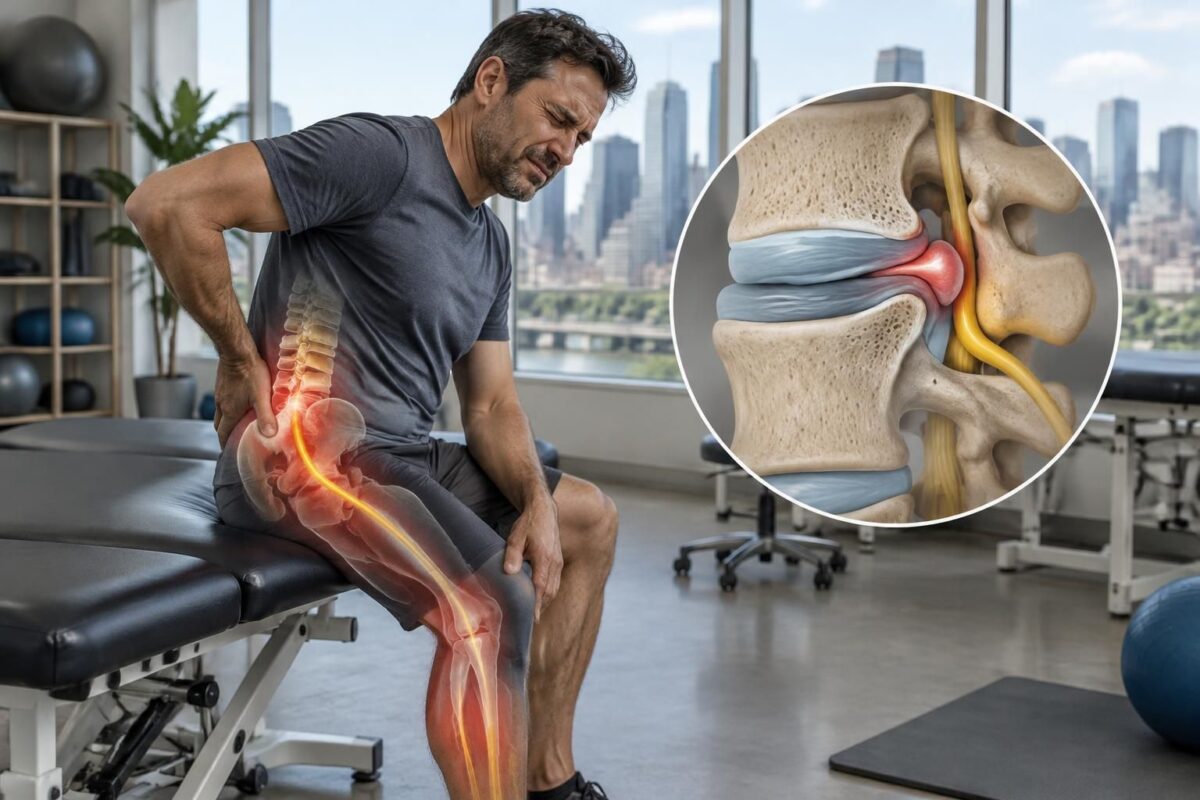
Sciatica in Montreal: L5-S1, canal, foramen, and nerve compression
IN BRIEF Sciatica related to L5-S1 can occur when a nerve root is irritated or compressed, particularly due to narrowing of the spinal canal or the foramen, the opening through which the nerve exits the spine. It can cause pain,…
Choosing a cautious approach in Montreal
Starting with assessment and self-management
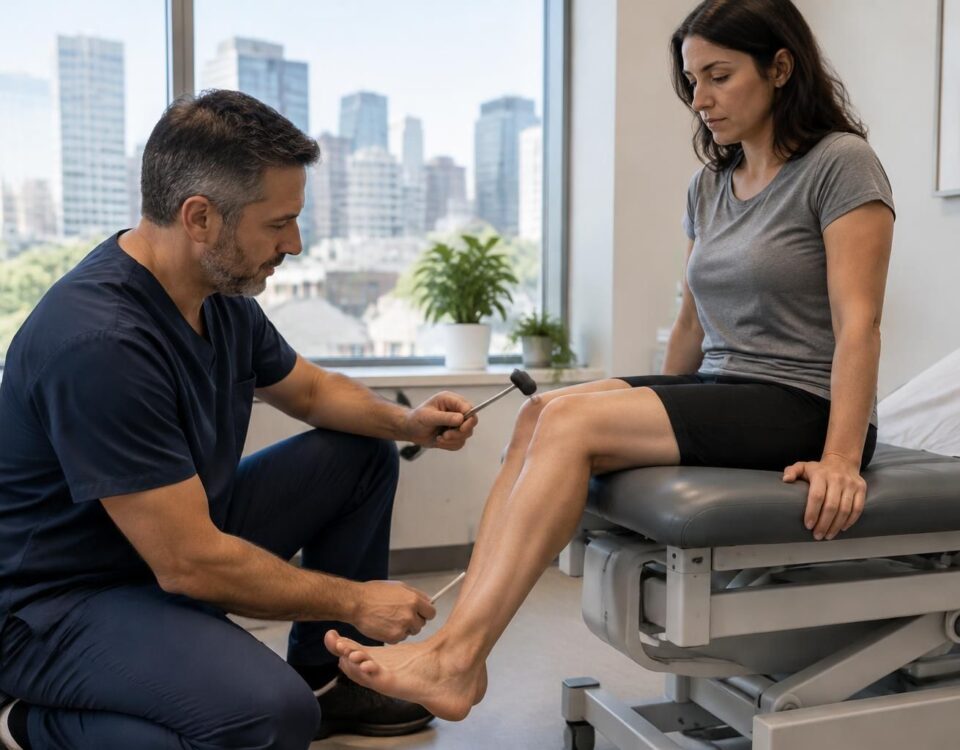
A clinical evaluation focuses on strength, sensitivity, reflexes, and walking. It helps determine if the symptoms correspond to a radicular impairment and whether further examination is relevant. For typical sciatica without alarming signs, imaging is not usually performed within the first few days. A lumbar MRI may be considered if symptoms persist, a neurological deficit appears, or another cause is suspected.
In the meantime, it is often better to maintain tolerated activities rather than staying in bed. Brief walking, position changes, and a temporary reduction of loads that worsen the pain can help maintain function. Heat can provide comfort to some individuals. Medications, including anti-inflammatories, should be discussed with a healthcare professional and used taking contraindications into account.
Adapting care to function and evolution
If the pain persists, a progressive exercise or rehabilitation program can be discussed. Manual therapies may also be considered as support, after verifying their relevance and safety. Motorized neurovertebral decompression offered in some contexts is not suitable for everyone and does not replace a medical diagnosis or urgent treatment. An injection or surgical opinion falls under medical evaluation when symptoms, their duration, and the examination justify it.
At the TAGMED Clinic, care options may include, based on assessment and available services, specific osteopathy or motorized neurovertebral decompression. The goal is to discuss an individualized approach, especially following the capability to walk, sleep, and resume important activities.
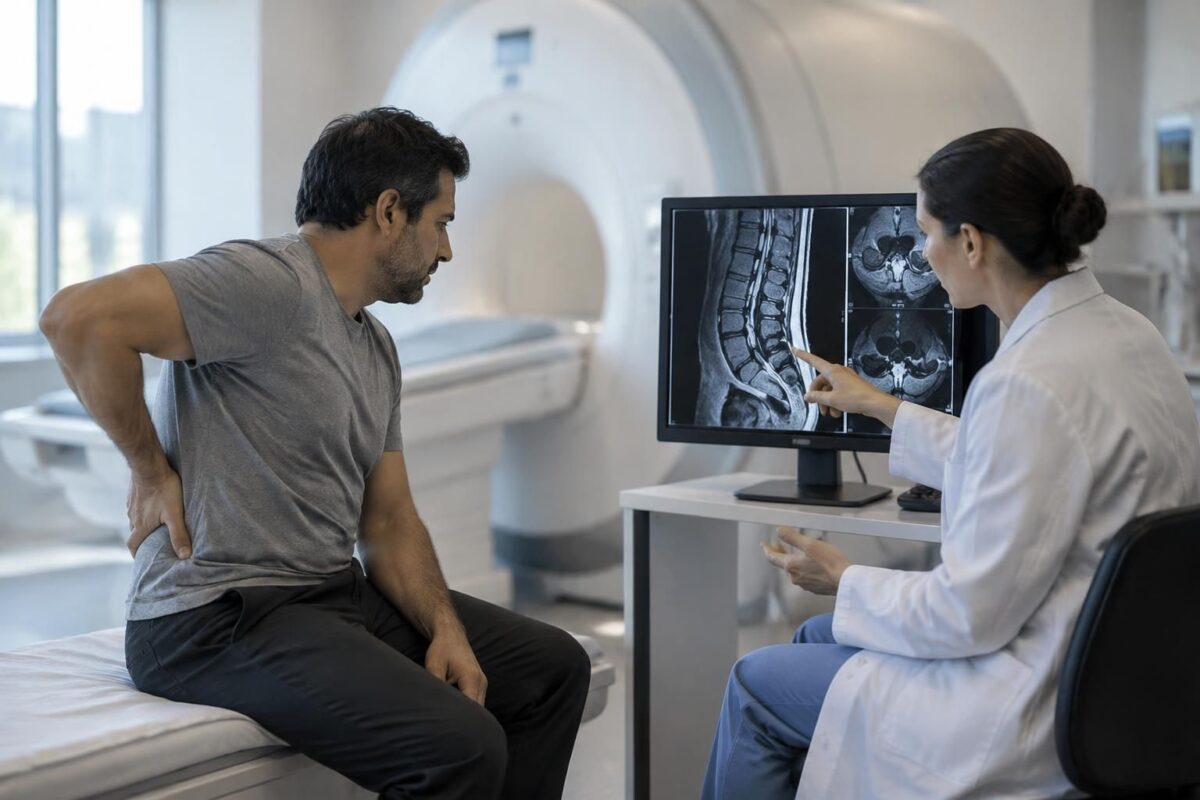
Sciatica in Montreal: why an MRI must be correlated with symptoms
IN BRIEF An MRI for sciatica shows structures in the lower back, but an anomaly alone does not prove the cause of the pain. It must be compared with the symptom pathway, the affected side, and the neurological examination. This…
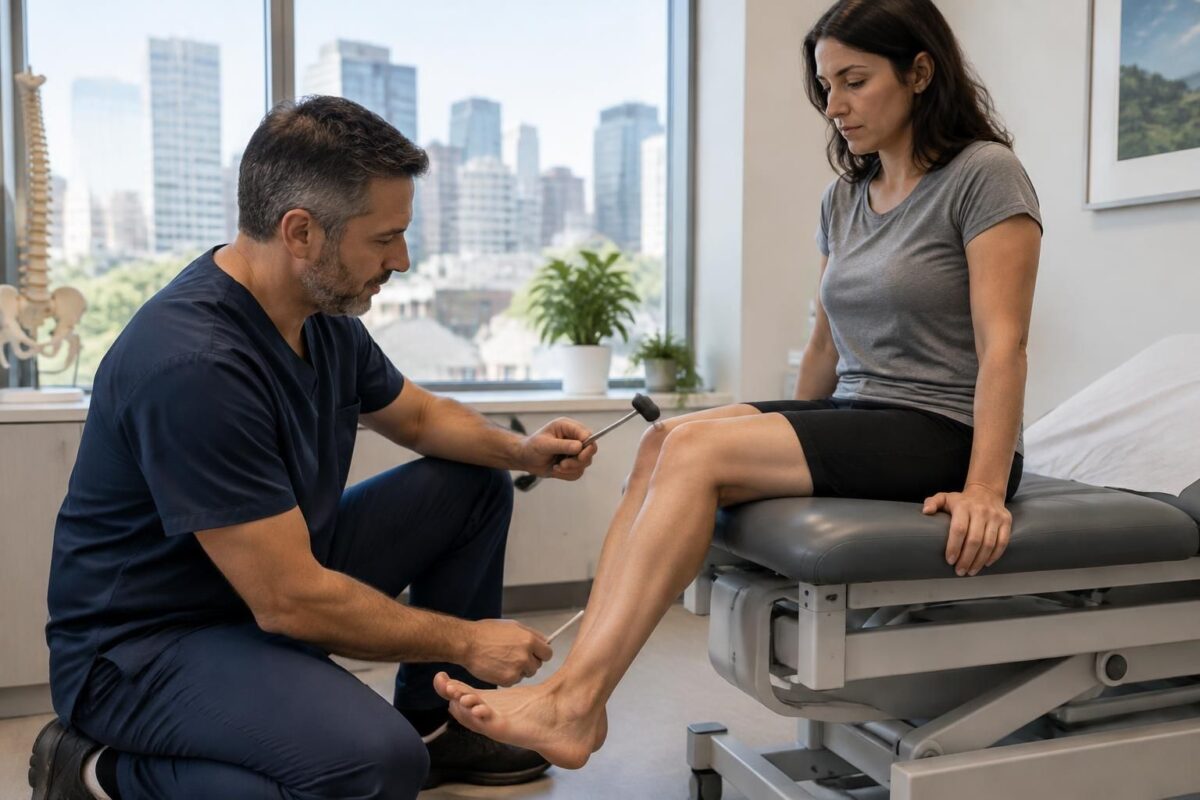
Sciatica in Montreal: reflexes, strength, and sensitivity in evaluation
IN BRIEF The evaluation of sciatica involves examining reflexes, muscle strength, and sensitivity, in addition to the pathway and evolution of pain. In Montreal, these observations help the healthcare professional identify potential neurological signs and guide the next steps. No…
When to seek urgent help
Quickly consult a medical service in the case of new or progressive weakness, a dropped foot, urinary or intestinal problems, or numbness around the perineum. Severe pain that worsens rapidly, fever, recent trauma, or a deteriorated general state also requires evaluation without waiting for a routine appointment.
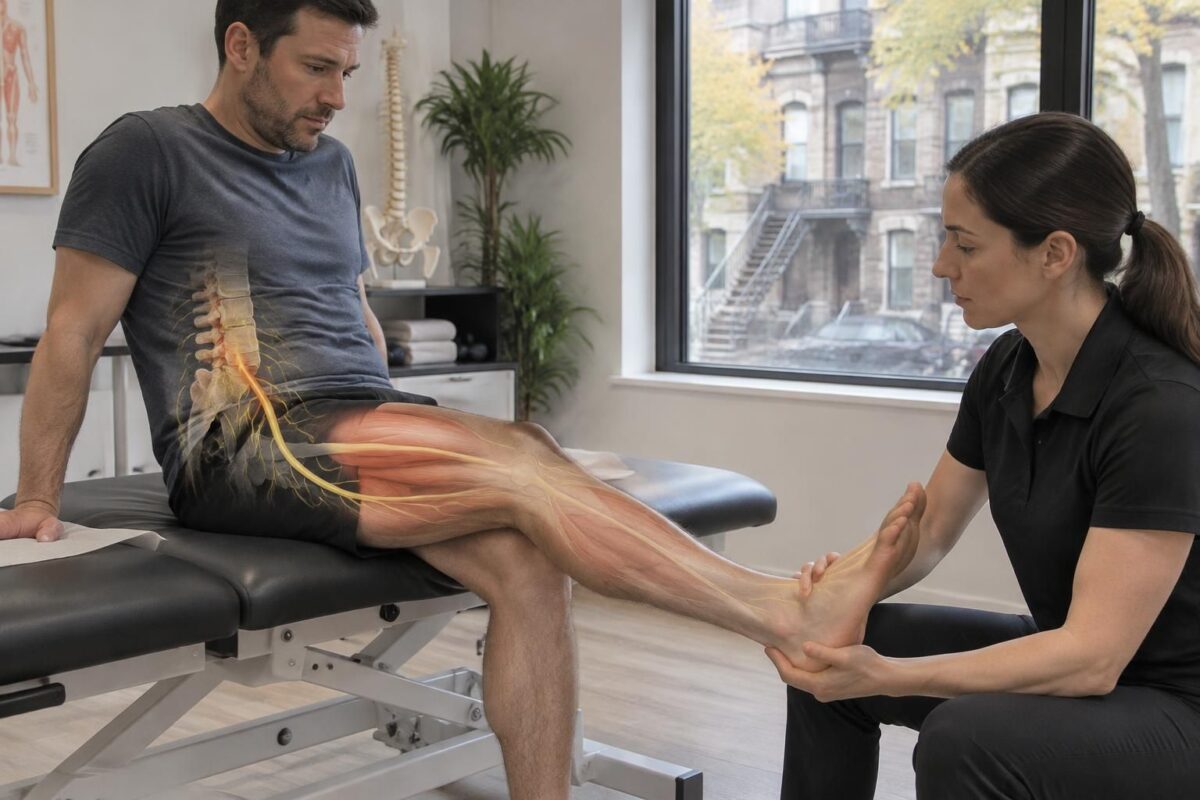
Sciatica in Montreal: Muscle Weakness Based on the Irritated Root
IN BRIEF Sciatica can cause muscle weakness when lumbar nerve roots are irritated. Depending on the affected root, it may become difficult to lift the foot or stand on tiptoes. In Montreal, an assessment of strength, sensation, and pain pathway…
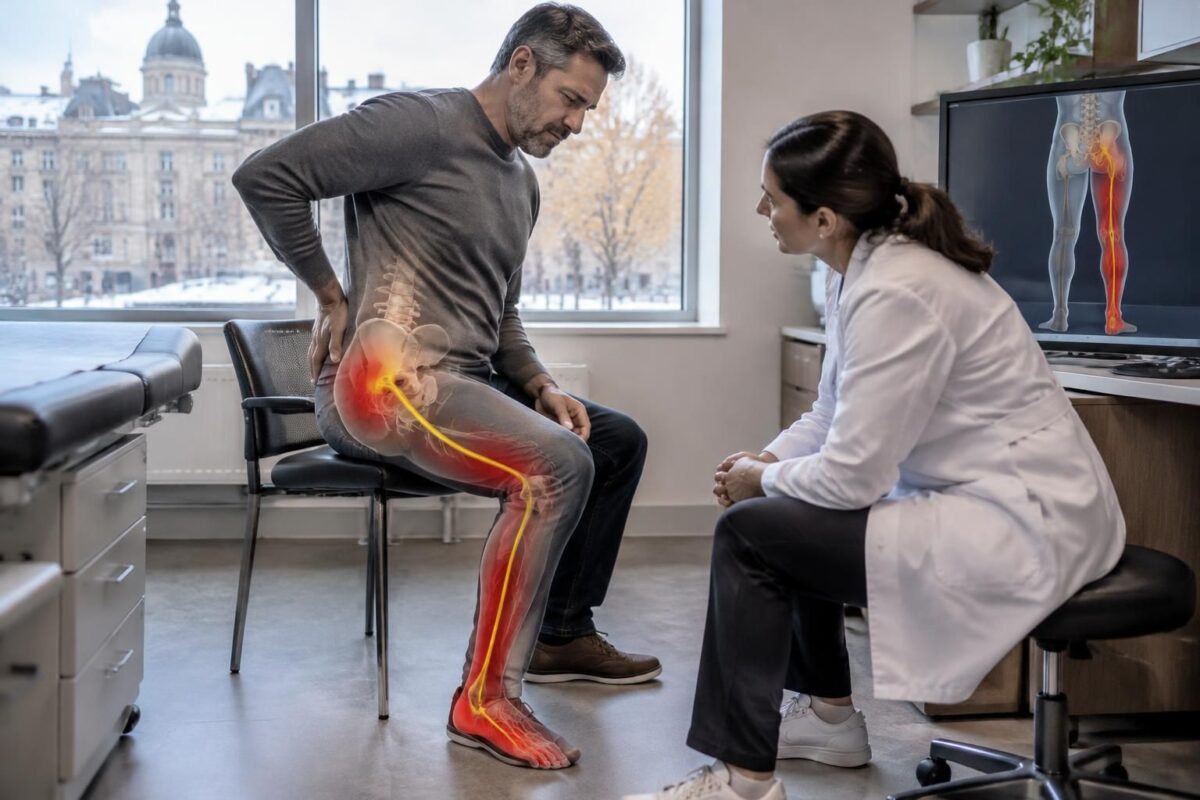
Sciatica in Montreal: nerve pain and sensory territory
IN BRIEF Sciatica is a nerve pain that radiates from the lower back or buttock down the leg. Its sensitive territory varies depending on the affected root and may include burning, tingling, or numbness down to the foot. In Montreal,…
About the author
Sylvain Desforges, B.Sc., D.O., N.D., Doctor of Osteopathy and naturopath, is the founding president of TAGMED and the ACMA association. His practice focuses in particular on chronic pain of the spine, lower back pain, and pain associated with sciatica. He publishes educational content on symptoms, their possible causes, and non-surgical approaches that can be discussed based on the assessment.
Sciatica in Montreal: irritation L5 or S1, why the clinical examination matters
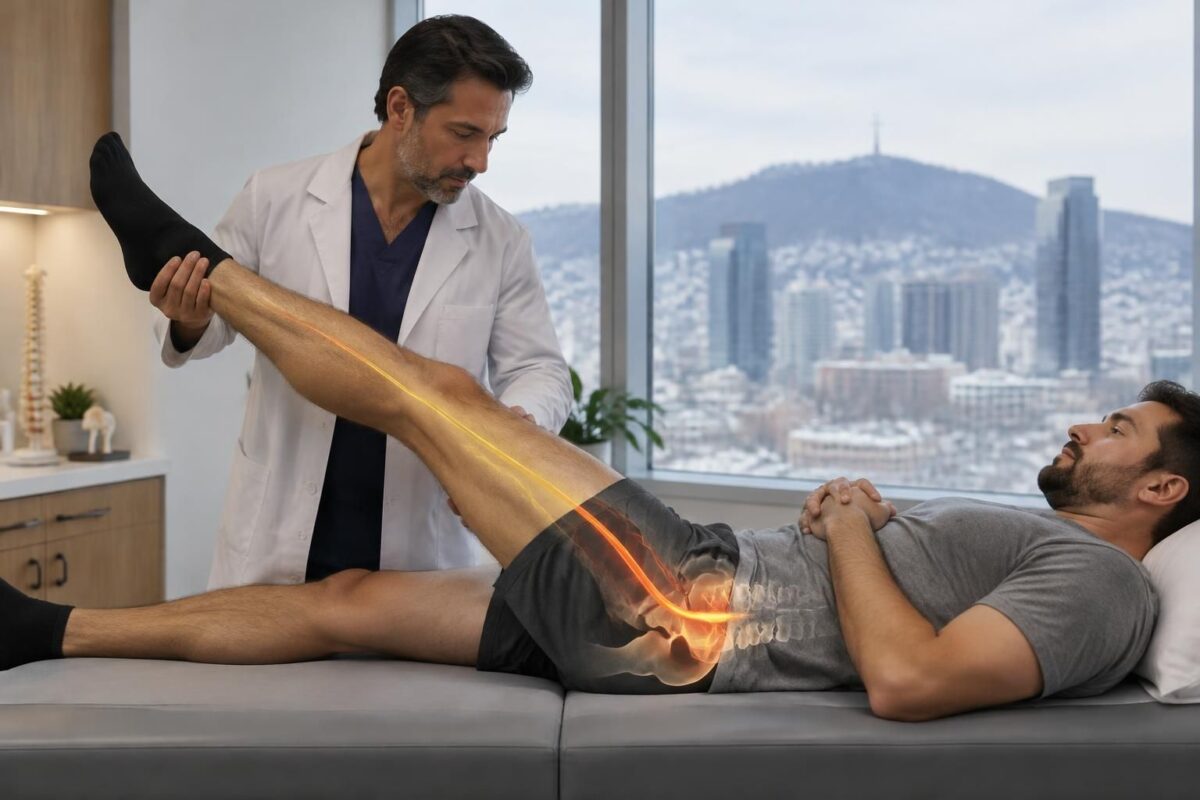
IN BRIEF The sciatica related to irritation of the L5 or S1 root can cause pain, numbness, or weakness in the leg and foot. In Montreal, the clinical examination compares the course of symptoms, sensitivity, strength, and reflexes to guide…
Sciatica in Montreal: L5-S1 Herniation and Pain Towards the Foot
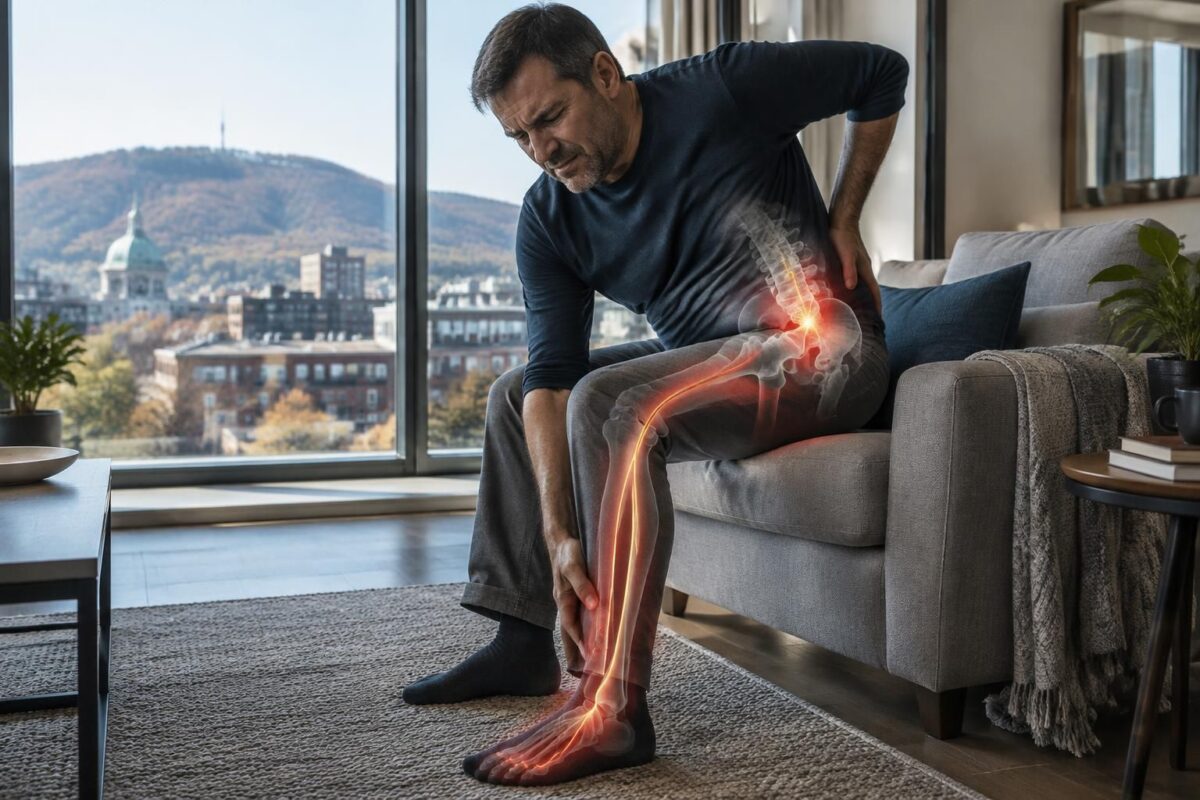
IN BRIEF A L5-S1 disc herniation can irritate the S1 nerve root and cause sciatica in Montreal, with pain or numbness radiating down to the calf, heel, or foot. The assessment correlates symptoms, strength, and sensitivity with imaging, if relevant;…
Medical Warning
This text is provided for educational purposes and does not replace a consultation, diagnosis, or treatment by a licensed healthcare professional. The author is neither a doctor nor a specialist in a medical specialty recognized by the Collège des médecins du Québec. The osteopathy and functional support approaches described do not constitute medical acts and do not replace medical follow-up.
| Clinical Indicator | Cautious Guidance |
|---|---|
| L5 Root | Pain radiating to the back of the foot or big toe; check the strength of the foot and toes. |
| S1 Root | Pain radiating to the heel or outer edge of the foot; check push on the toes. |
| Recent symptoms, without alarming signs | Stay active as tolerated and prioritize gradual progression. |
| Persistent pain or numbness | Have the evolution assessed; imaging depends on the context and duration. |
| Conservative Care | Advice, adapted activity, and rehabilitation based on clinical assessment. |
| Complementary Options | Manual therapy or decompression to be discussed based on symptoms and contraindications. |
| New or progressive weakness | Rapid medical evaluation, especially if walking or foot control deteriorates. |
| Urinary or bowel issues, saddle anesthesia | Consult emergency services without delay. |
Sciatica in Montreal: Illustrative Testimonials on Lumbar Roots and Choosing Cautious Treatment
The testimonials below are fictional and composite examples, written for educational purposes. They do not describe identifiable patients or guaranteed results. Pain radiating down to the buttock and leg may be compatible with irritation of a lumbar nerve root, especially L5 or S1, but only a healthcare professional can evaluate the situation.
“The pain was radiating down to my foot, and I wanted to understand before choosing treatment.” In Montreal, a 38-year-old describes pain that arose after lifting a load, accompanied by tingling on the side of the leg. Rather than immediately concluding to a disc herniation, they consult to clarify the trajectory of the symptoms, their evolution, and their effect on walking. The assessment also examines strength, sensitivity, and reflexes. In the absence of emergency signs, a gradual approach can be discussed with a professional: adapted activities, advice, and monitoring of evolution.
“I thought I needed an MRI right away.” In this fictional scenario, a person has been suffering from low back pain with sciatica for a few days without progressive weakness or urinary issues. They learn that imaging is not systematic from the beginning when it comes to a typical presentation without concerning signs. If symptoms persist, worsen, or present atypical elements, a doctor may deem it necessary to request an MRI or other tests. An image should always be related to the symptoms and clinical examination.
“I chose to stay active, while temporarily reducing some loads.” In this example, pain increases with prolonged sitting and during certain movements. The plan prioritizes maintaining tolerated activities and a gradual return, rather than prolonged bed rest. Pain medications or anti-inflammatories should be discussed with a healthcare professional or pharmacist, especially based on history and other treatments. The goal is to support function without promising rapid healing.
“I wanted to know if manual care was appropriate in my case.” Another composite testimony features a person considering osteopathy after a medical evaluation. Manual approaches may sometimes be regarded as support, depending on symptoms and contraindications; they do not replace a medical diagnosis or urgent care when needed. At TAGMED Clinic, options that can be discussed based on the evaluation include specific osteopathy and, for certain selected people, motorized neurovertebral decompression. Their relevance and limitations should be examined on a case-by-case basis.
“When the pain persisted, I requested a reevaluation.” In this fictional situation, symptoms persist for several weeks and interfere with work. The person checks in with their doctor regarding neurological evolution, potentially useful examinations, and rehabilitation options, such as physiotherapy and adapted exercises. An injection or a specialized opinion may be considered in certain contexts; surgical intervention concerns selected situations and requires specialized assessment. The choice depends notably on the consistency between the painful trajectory, examination, and imaging results.
Caution begins with monitoring warning signs. New or progressive weakness, a foot drop, a leg giving way, loss of sensation in the saddle region, or recent bladder or bowel issues require urgent medical evaluation. The same applies in cases of fever, significant trauma, general deterioration, or severe pain that is rapidly worsening. These manifestations should not wait for a routine appointment.
For an evaluation related to sciatica in Montreal or Mont-Royal, TAGMED Clinic can present the available services based on the individual’s profile and needs. The availability of care does not imply it is suitable for everyone. The approach should take into account the possible cause, duration of symptoms, function, neurological signs, and previous care received.
About the Author
Sylvain Desforges, B.Sc., D.O., N.D., Doctor of Osteopathy and naturopath, is the founding president of TAGMED and the ACMA association. His practice is dedicated to chronic pain of the spine, lower back pain, and symptoms compatible with sciatica, especially when pain extends to the buttock, leg, calf, foot, or toes.
Through SOS Sciatique, he publishes educational content on the symptoms of sciatica, its possible causes — such as a herniated disc, a disc pinching, foraminal stenosis, or irritation of a lumbar nerve root — and the non-surgical approaches that may be considered after assessment. The care available at TAGMED Clinic may include, depending on the case and the concerned professional, motorized neurovertebral decompression, specific osteopathy, or a precision impactor.
Medical warning
The information presented is for educational purposes and does not replace a consultation, diagnosis, opinion or treatment from a doctor or another authorized health professional. The author is neither a physician nor a specialist in a medical specialty recognized by the Collège des médecins du Québec. The approaches of osteopathy, manual medicine, or functional support do not constitute medical acts and do not replace medical follow-up.
Consult a doctor or emergency service in case of loss of bladder or bowel control, numbness in the saddle area, significant or progressive weakness of the leg or foot, fever, recent trauma, severe pain, or rapid deterioration.
Sciatica in Montreal: understanding lumbar roots and choosing a cautious treatment
A pain that starts from the lower back or buttock and goes down the leg may suggest sciatica. This term generally refers to pain related to irritation of a lumbar nerve root, often L5 or S1. Sensations vary: jolts, burning, numbness or tingling that can reach the calf, foot, or toes. The pain may be accompanied by low back pain and can intensify when coughing, changing positions, or during certain efforts.
Possible causes include a herniated disc, changes related to osteoarthritis, or narrowing of the spaces where the nerves pass. However, the location of the pain alone is not sufficient to determine its origin. Age, history, onset of symptoms, their progression, and signs observed during examination must all be considered. A visible abnormality on imaging does not alone prove that it explains the symptoms.
In Montreal, the assessment should begin with a discussion about the course of the pain, its duration, the activities that have become difficult, and the presence of sensory disturbances or weakness. A qualified professional can examine gait, strength, sensitivity, and reflexes, then refer the person if medical advice is necessary. In a typical sciatica without concerning signs, imaging is not systematic at the beginning; an MRI may be considered depending on the evolution, examination, and decisions of the medical team.
Caution first involves distinguishing between common situations and emergencies. New or progressive weakness, a dropped foot, loss of bowel or bladder control, or numbness in the perineal area require urgent medical evaluation. Very intense pain, fever, recent trauma, or rapid deterioration also justify consulting without waiting for a routine appointment.
In the absence of alarming signs, management usually aims to reduce symptoms and gradually preserve function. Appropriate activity and tolerated movements are often preferable to prolonged immobility. Heat can provide comfort to some people. Medications, including anti-inflammatory drugs or analgesics, should be discussed with a doctor or pharmacist, as they may not suit everyone. If symptoms persist, rehabilitation exercises and adaptations of daily or work tasks may be proposed.
Manual therapies or motorized neurovertebral decompression may be discussed as complementary options for some individuals, after assessing their relevance and contraindications. They do not replace a medical examination when necessary nor urgent intervention in the presence of concerning neurological signs. The choice of treatment should consider functional goals, the response over sessions, and the consistency between symptoms and examination.
Sylvain Desforges, B.Sc., D.O., N.D., Doctor of Osteopathy and Naturopath, is the founding president of TAGMED clinics and the ACMA association. His practice focuses on chronic spinal pain, low back pain, and symptoms compatible with sciatica. The care offered at TAGMED Clinic may include, depending on the evaluation and available services, specific osteopathy, motorized neurovertebral decompression, or other approaches. Each situation requires an individualized assessment; no treatment guarantees a specific outcome.
Medical warning: this content is provided for educational purposes and does not replace a consultation, diagnosis, or treatment by a doctor or another authorized health professional. The author is neither a physician nor a specialist in a medical specialty recognized by the Collège des médecins du Québec. The approaches described do not constitute medical acts and do not replace medical follow-up.
In Montreal, pain that starts from the lower back or buttock and goes down the leg may suggest sciatica, but its course, evolution, and associated neurological signs must be evaluated together. Understanding the possibly involved lumbar roots helps to guide the next steps: favoring cautious management when the situation allows while quickly recognizing symptoms requiring urgent medical evaluation.
Evaluate the course of the pain and associated signs
Sciatica generally corresponds to pain related to irritation of a lumbar nerve root, often L5 or S1. It may be accompanied by burning, shocks, tingling, or a decrease in sensitivity in the leg and foot. The course of symptoms provides useful markers, but is not sufficient to establish a diagnosis: consult this guide on interpreting pain based on its course in the leg and the one on numbness in the toes.
Pain can be intermittent or persistent, and vary with movements and positions. The fact that it increases when moving from a sitting to a standing position, or that it prevents staying seated, should be described during the assessment. To better document these changes, see the references on intermittent or constant pain, pain during sitting-standing transitions, and difficulty staying seated. General resources are also provided by the Merck Manual on sciatica, Omnicure Physio, the Omicron Clinic, and The Spine Page.
Choose a gradual and tailored approach
When no signs of severity are present, management often relies on information, activity adaptation, and progression towards tolerated movements. Avoiding prolonged bed rest and temporarily adjusting efforts can help maintain activity compatible with symptoms. Medications, rehabilitation, manual therapies, injections, or other options should be discussed based on the assessment, history, and progression—there is no one-size-fits-all treatment appropriate for every situation.
A finding observed on imaging does not solely determine treatment: it must be related to symptoms, examination, and function. In the absence of red flags, imaging is not systematic at the beginning of a typical presentation; a healthcare professional may consider it if symptoms persist, if the diagnosis is uncertain, or if an intervention is being contemplated. To compare options and their goals, consult the guide on sciatica treatment options. A neurovertebral decompression approach, when available, is not suitable for everyone and should be evaluated for its indications and contraindications.
Recognize situations that should not wait
New or worsening weakness, a foot drop, a leg giving way, urinary or bowel disturbances, or numbness in the saddle region require urgent medical assessment. Severe pain, fever, recent trauma, or general deterioration also warrant prompt attention. These signs do not fall under a routine appointment or manual management before medical assessment.
About the author
Sylvain Desforges, B.Sc., D.O., N.D., Doctor of Osteopathy and Naturopath, is the founding president of TAGMED and the ACMA association. His practice focuses particularly on chronic spinal pain, lower back pain, and symptoms compatible with sciatica. Through SOS Sciatique, he publishes educational content on symptoms, possible causes, and non-surgical approaches to consider based on the assessment.
To learn more about services related to sciatica treatment in Montreal and Mont-Royal or sciatica treatment in Terrebonne, consult the Clinique TAGMED. Available care depends on the professionals present, their qualifications, and the assessment of each situation.
Medical disclaimer
This information is provided for educational purposes and does not replace a consultation, diagnosis, or treatment by a physician or other licensed healthcare professional. The author is neither a physician nor a specialist in a medical specialty recognized by the Collège des médecins du Québec. Osteopathy, manual medicine, or functional support approaches do not constitute medical acts and do not replace medical follow-up. In the presence of emergency signs, consult a physician or an emergency service. For more details, read the legal notice from SOS Sciatique.

Sylvain Desforges, B.Sc., D.O., N.D., docteur en ostéopathie
Dr Sylvain Desforges, B.Sc., D.O., N.D., osteopath, is the founding president of TAGMED and of the ACMA association. He dedicates his practice to chronic spinal pain, low back pain and symptoms compatible with sciatica, particularly when pain radiates toward the buttock, leg, calf, foot or toes.
Through SOS Sciatique, he publishes educational content on sciatica symptoms, possible causes such as disc herniation, disc narrowing, foraminal stenosis or irritation of a lumbar nerve root, as well as non-surgical approaches that may be considered according to the evaluation. At Clinique TAGMED, care may include, depending on the case, motorized neurovertebral decompression, specific osteopathic care or precision percussion.
For an evaluation related to sciatica treatment in Montreal / Mount Royal or sciatica treatment in Terrebonne, please consult the services available at Clinique TAGMED.
Medical disclaimer
The information published on SOS Sciatique is provided for educational purposes only and does not replace a consultation, diagnosis, opinion or treatment provided by a physician or another authorized healthcare professional. The author of this article is neither a medical doctor nor a specialist in a medical specialty recognized by the Collège des médecins du Québec. The osteopathic, manual medicine or functional support approaches described on this site do not constitute medical acts and are not intended to replace medical follow-up.
Consult a physician or emergency service in cases of loss of bladder or bowel control, anesthesia in the saddle area, significant or progressive weakness in the leg or foot, fever, recent trauma, severe pain or rapid worsening of symptoms. For more details, please read our Legal Notice.