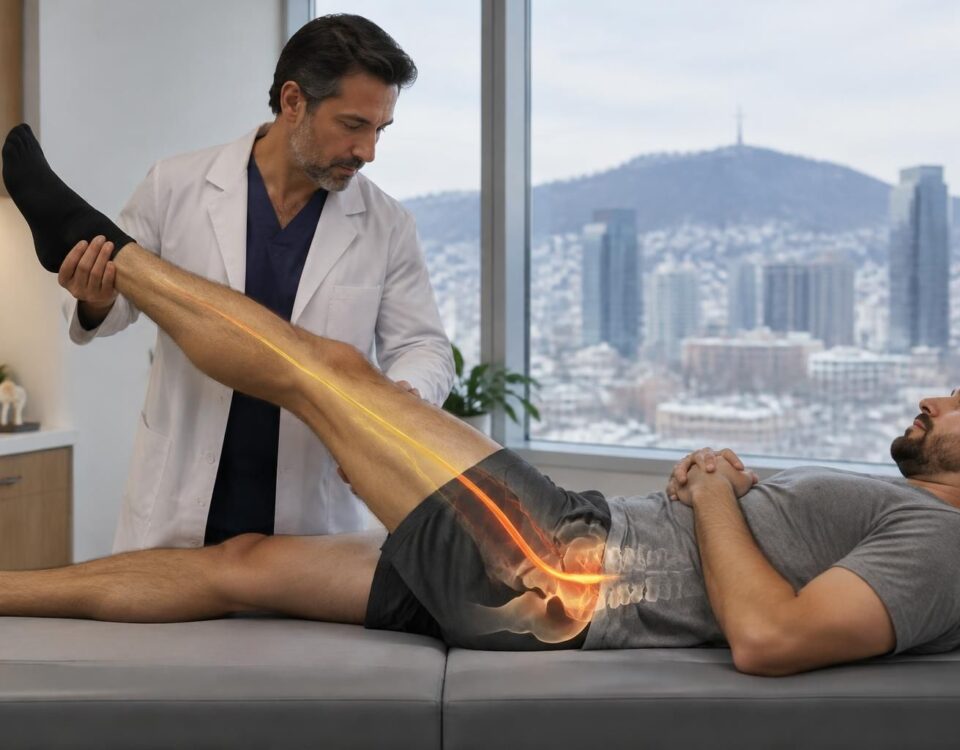



Sciatica and too quick a return: why the pain comes back
06/11/2026
Sciatica in Terrebonne: how to interpret pain according to the leg path
07/11/2026
IN BRIEF Sciatica refers to pain that can follow a nerve root from the lower back to the buttock and the leg. Its path, along with tingling, numbness, or weakness, helps guide the evaluation but is not sufficient to make a diagnosis. In Montreal, an evaluation can help distinguish radicular pain from other causes and determine the appropriate next steps. |
Sciatica in Montreal: Interpreting Pain Based on Its Path
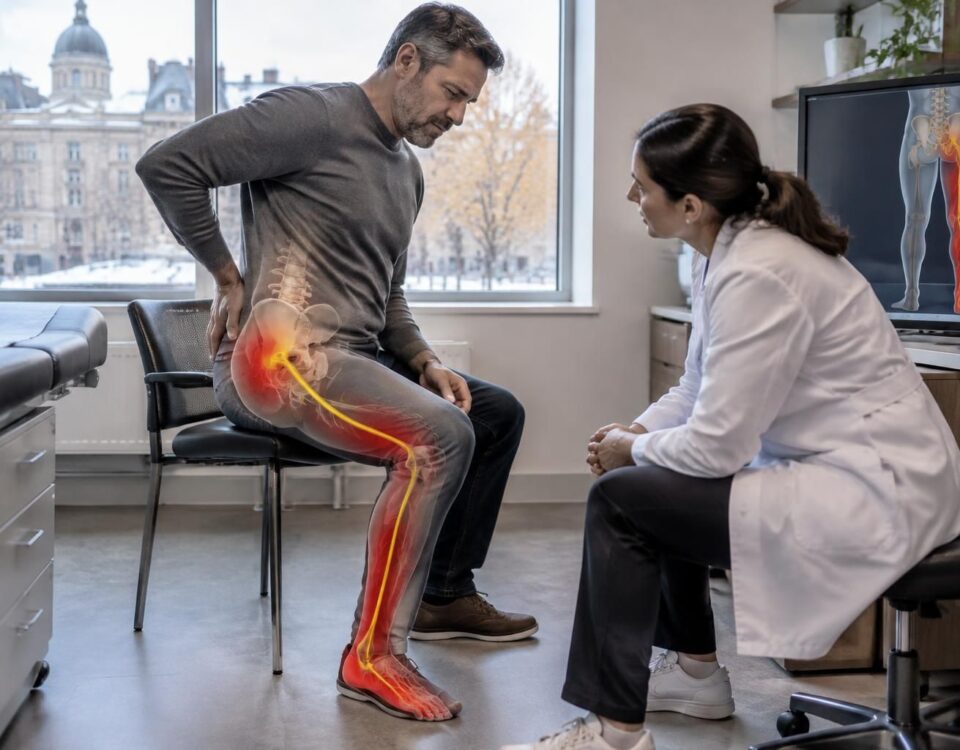
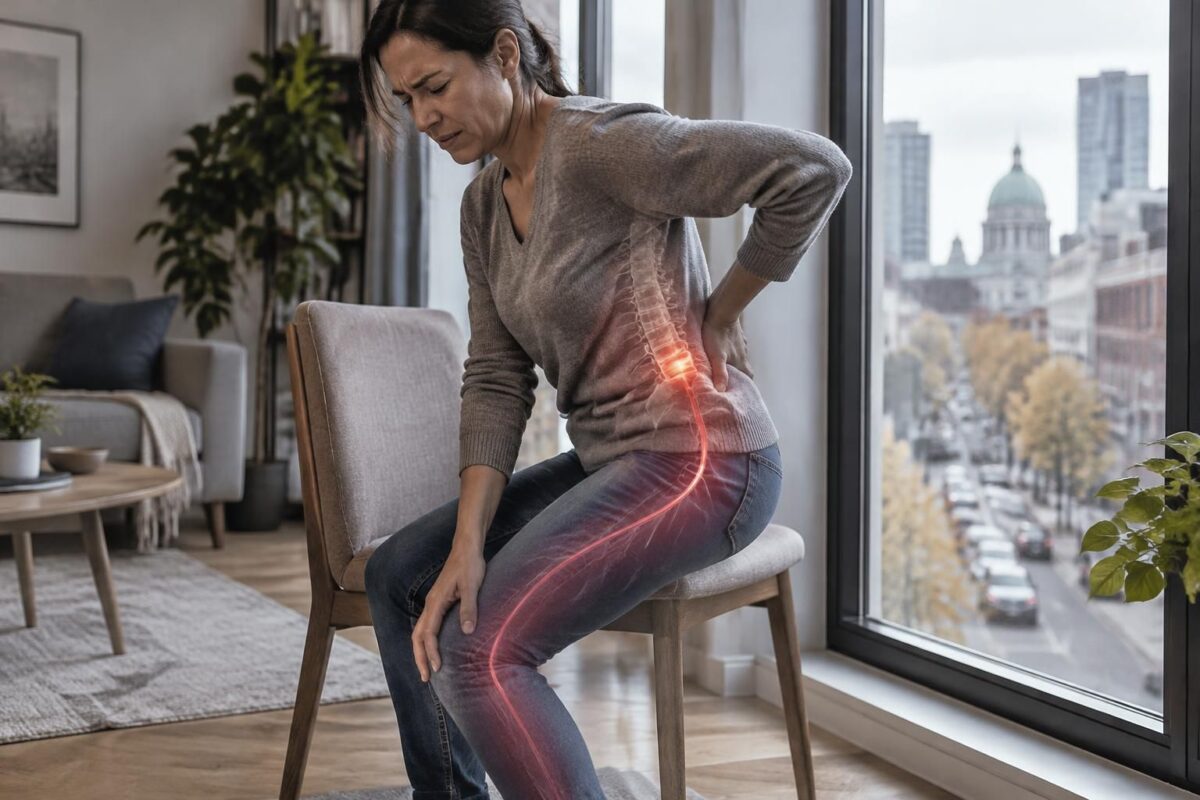
Pain that starts in the lower back or buttock and travels down the leg may suggest nerve irritation. When it goes below the knee to the calf or foot, a radicular component is more likely, but the path alone cannot make a diagnosis.
- Toward the top of the foot or the big toe: the path may correspond to irritation of the L5 root.
- Toward the heel, sole, or outer edge of the foot: involvement of the S1 root is sometimes considered.
- Tingling, numbness, or weakness: these signs should be described and evaluated, especially if they worsen.
Pain in the hip, muscular or joint pain can also resemble sciatica. In Montreal, an evaluation helps relate the painful path, strength, sensitivity, and function to guide the next steps. Consult quickly in case of new or progressive weakness; urinary or bowel disorders and numbness in the saddle area require urgent evaluation.
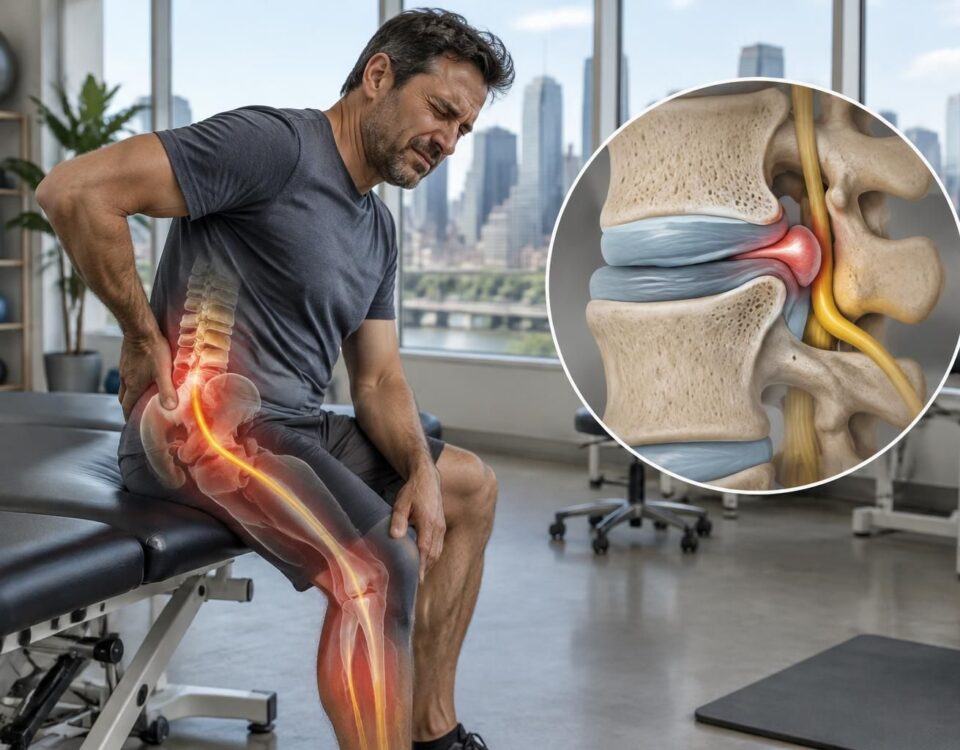
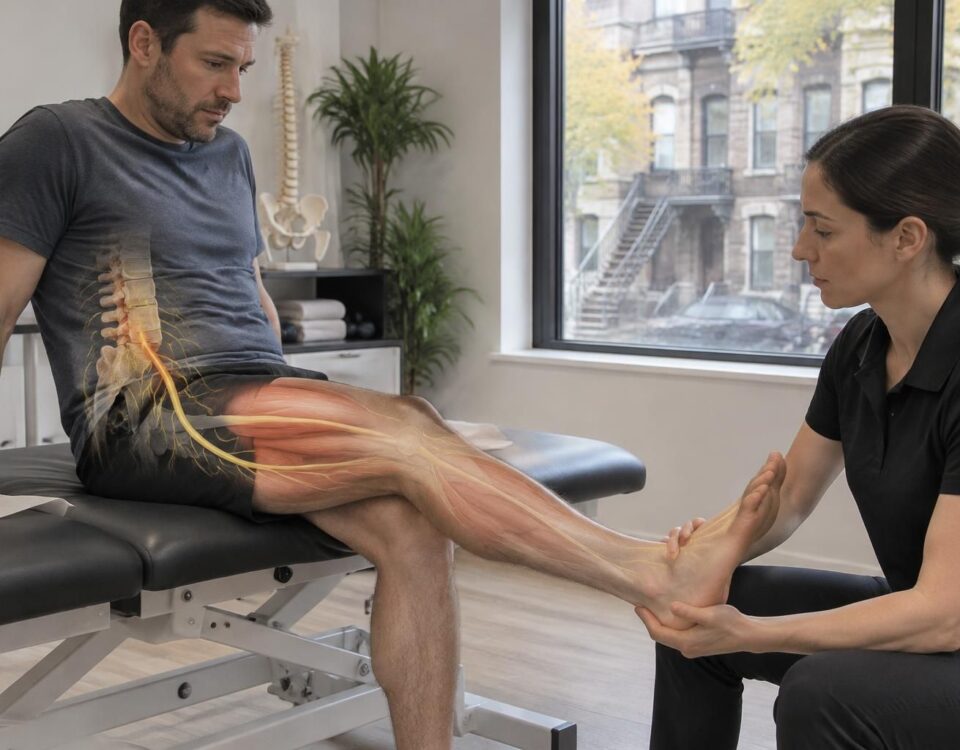
Pain that originates from the lower back or buttock and descends into the thigh, calf, or foot may be linked to irritation of a nerve root. Its path, associated sensations, and their evolution provide clues but are not sufficient to confirm sciatica. In Montreal, careful evaluation helps distinguish radicular pain from other causes and determine the next steps. The sciatic nerve is formed from nerve roots located in the lower back and sacrum. It traverses the buttock region, then descends along the back of the thigh. Lower down, it divides into nerves that serve different parts of the leg and foot. Pain that descends below the knee, to the calf or foot, may suggest radicular pain. However, it may stop in the thigh or vary from person to person. Pain that remains in the buttock or thigh does not exclude nerve irritation. To better understand the affected areas, consult our page on disc-radicular conflict. Pain that goes through the buttock and the back of the thigh, then extends toward the calf or outer edge of the foot, may correspond to irritation of roots like S1. However, the path varies according to the person. It does not alone allow for certain identification of the affected root. Pain affecting the outer side of the leg and the top of the foot, sometimes extending to the big toe, may be compatible with involvement of the L5 root. Tingling, loss of sensation, or weakness may accompany the pain. The distribution of symptoms helps guide the examination, without replacing it. To learn more, read our article on irritation of the L5 or S1 roots. A burning sensation, electrical shocks, tingling, or numbness may accompany nerve irritation. Their location and evolution are important. A burning sensation in the foot does not automatically confirm nerve compression: other causes can produce similar sensations. During an evaluation, specify the starting point of the pain, its path, and the affected areas. Indicate if it descends below the knee, if it reaches the foot, and if it affects one leg or both. Also describe numbness, tingling, weakness, and changes in your ability to walk or sit. The duration of symptoms, their progression, positions that modify them, and their effect on sleep provide other useful information. A pain that wakes you at night or a heavy leg sensation should be precisely described to the professional assessing you. Pain in the leg can also originate from the hip, pelvis, muscles, or lumbar joints. Some vascular causes may also produce pain or a feeling of heaviness. Pain at the front of the thigh may particularly indicate another nerve root than those associated with sciatica. The presence of a herniated disc in imaging does not prove that it causes the symptoms. The professional compares the examination results with the affected side, the painful path, sensitivity, and strength. The evaluation of sciatica in Montreal can help clarify the observed signs and options for discussion. The evaluation begins with questions about the symptoms, their duration, their evolution, and their effect on daily activities. Depending on the situation, the examination may include observing gait, strength and sensitivity tests, and movements or maneuvers suited to the symptoms. An X-ray, MRI, or other imaging tests are not necessary in all cases. A physician may determine that a follow-up exam is relevant based on the symptoms and clinical findings. Imaging should be interpreted alongside the examination, not in isolation. The options depend on the probable cause, the duration of symptoms, function, and neurological signs. Cautious management may aim to maintain tolerated activities and appropriate progression. If a motorized neurovertebral decompression is considered, it should be discussed after an evaluation: this approach is not suitable for everyone and does not guarantee a result. At the TAGMED Clinic in Montreal, an evaluation can help determine if a conservative approach, such as neurovertebral decompression or specific osteopathy, is appropriate. Goals and progress should be re-evaluated. A consultation does not replace a medical examination when it is required. To learn about the services offered, visit the pages on sciatica treatment in Montreal and sciatica treatment in Terrebonne. Some signs require urgent medical evaluation. Do not wait for a routine appointment in case of new urinary or intestinal issues, numbness in the saddle area, significant or rapidly progressive weakness, or recent foot drop. Consult as soon as possible if symptoms significantly affect both legs, follow a major trauma, or are accompanied by fever or a general deterioration. These signs may require urgent medical attention. Sylvain Desforges, B.Sc., D.O., N.D., Doctor of Osteopathy and naturopath, is the founding president of TAGMED and the ACMA association. His practice focuses on chronic pain in the spine, lower back pain, and pain compatible with sciatica, especially when it radiates down into the buttock, leg, calf, foot, or toes. Through SOS Sciatique, he publishes educational content on the symptoms of sciatica, its possible causes, and non-surgical approaches that can be considered based on the evaluation. At the TAGMED Clinic, care may include, depending on the case, motorized neuro-vertebral decompression, specific osteopathy, or precision percussion. Medical disclaimer: The information and advice provided on this site do not replace the opinion, diagnosis, or treatment of a healthcare professional. Please note that Sylvain Desforges, B.Sc., D.O., N.D., doctor of osteopathy, is neither a medical doctor nor a physician, and is not a specialist in a medical specialty as defined by the Collège des médecins du Québec. Manual medicine, functional medicine, and sports medicine as described on this site exclude any treatment or medical diagnosis made by a physician or medical specialist. Always consult your physician for any medical questions. For more details, please read our Complete Legal Disclaimer.The Path of Pain: A Clue, Not a Diagnosis
Pain at the Back or Side of the Leg
Pain on the Outer Side of the Leg or on Top of the Foot
Burning, Shocks, or Numbness in the Foot
What Symptoms Should Be Described?
Sciatica Is Not the Only Possible Explanation
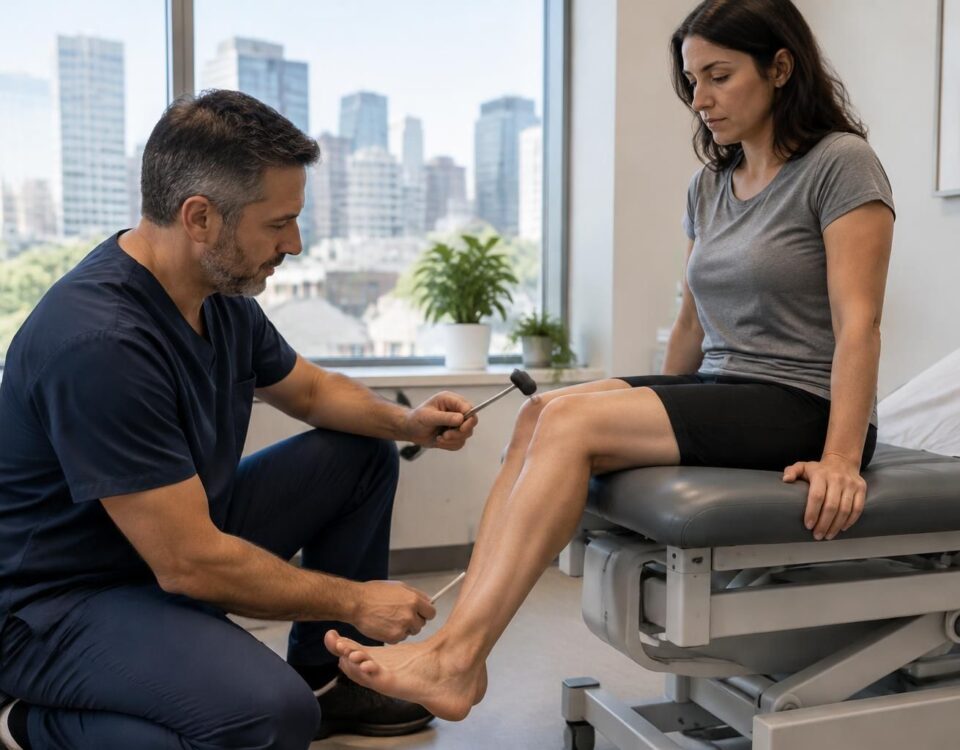
How Does an Evaluation Proceed?
What Options Can Be Discussed in Montreal?
When Should You Consult Quickly?
CONTENT ENDAbout the author
Medical Disclaimer
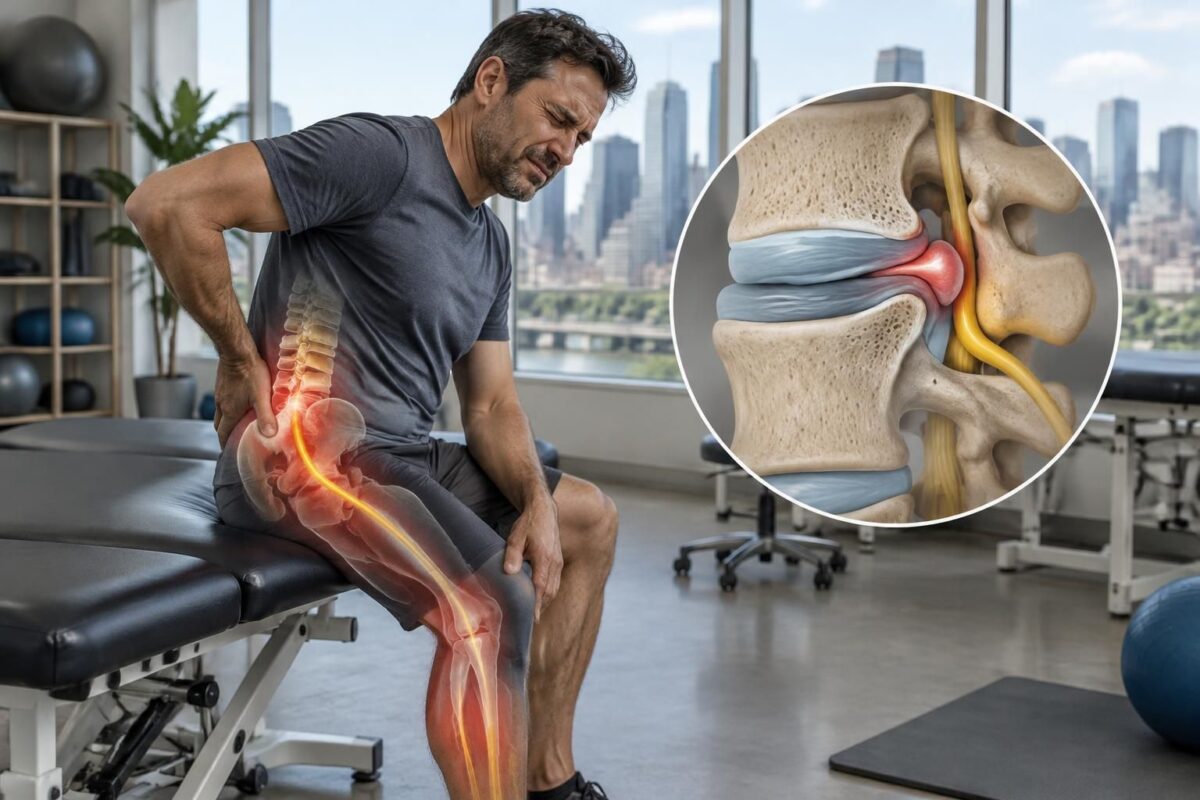
Sciatica in Montreal: L5-S1, canal, foramen, and nerve compression
IN BRIEF Sciatica related to L5-S1 can occur when a nerve root is irritated or compressed, particularly due to narrowing of the spinal canal or the foramen, the opening through which the nerve exits the spine. It can cause pain,…
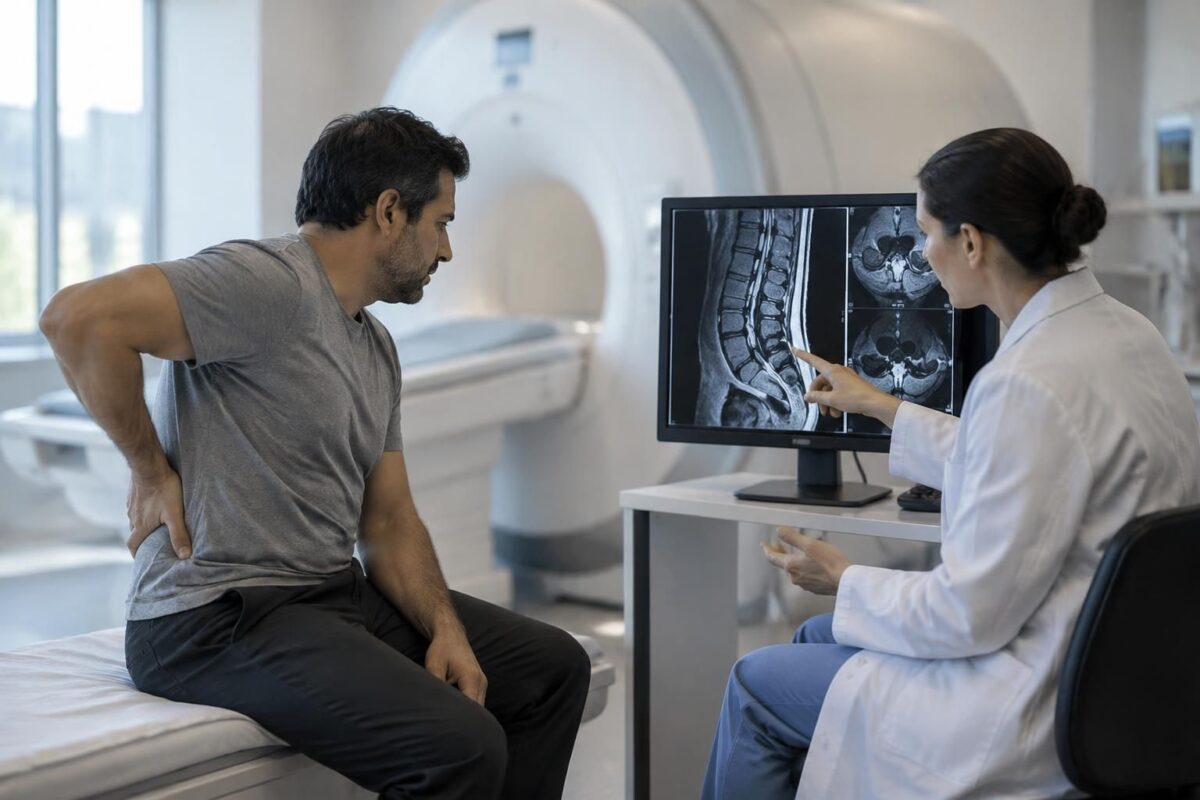
Sciatica in Montreal: why an MRI must be correlated with symptoms
IN BRIEF An MRI for sciatica shows structures in the lower back, but an anomaly alone does not prove the cause of the pain. It must be compared with the symptom pathway, the affected side, and the neurological examination. This…
Sciatica in Montreal: reading the pain pathway in the leg
The pain pathway can guide the evaluation, but it is not sufficient to confirm a diagnosis. Also note any numbness, tingling, and any weakness.
- Buttock and back of the thigh: a radicular pain is possible, even if it does not radiate down to the foot.
- Back of the leg, calf, or outer edge of the foot: this pathway may be consistent with irritation of the S1 root.
- Calf or foot: precisely note the side, the affected area, and the effect on walking.
- Outer side of the leg, top of the foot, or big toe: involvement of the L5 root may be considered.
- Tingling or numbness: these sensory signs should be described during the evaluation.
- New or progressive weakness: seek medical advice promptly, especially in cases of dropped foot.
Key points: pain that radiates below the knee may indicate a nerve component, but the hip, muscles, back, or a vascular cause can produce similar symptoms. A clinical evaluation helps to clarify the cause.

In Montreal, pain radiating down the leg may be consistent with sciatica, but its pathway alone is not sufficient to confirm the cause. The painful area, tingling, numbness, and muscle strength help guide the evaluation. Here’s how to observe these signs and know when to seek help.
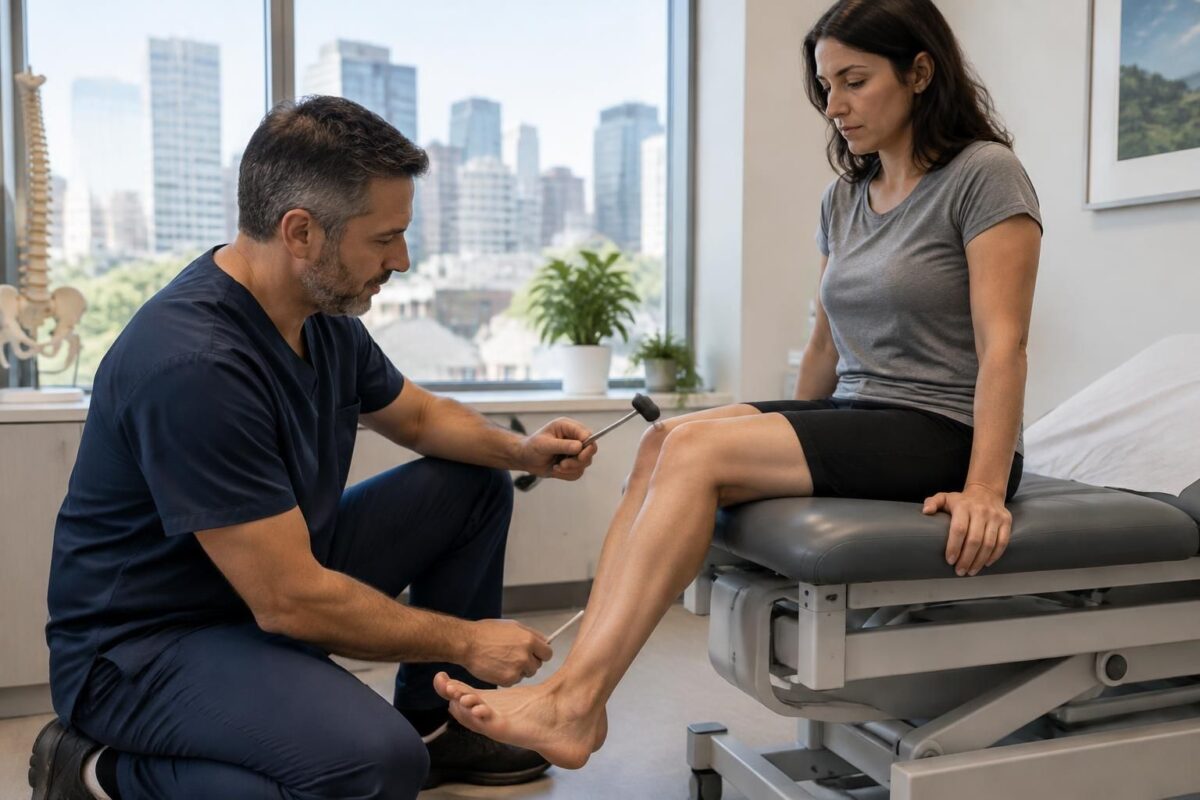
Sciatica in Montreal: reflexes, strength, and sensitivity in evaluation
IN BRIEF The evaluation of sciatica involves examining reflexes, muscle strength, and sensitivity, in addition to the pathway and evolution of pain. In Montreal, these observations help the healthcare professional identify potential neurological signs and guide the next steps. No…
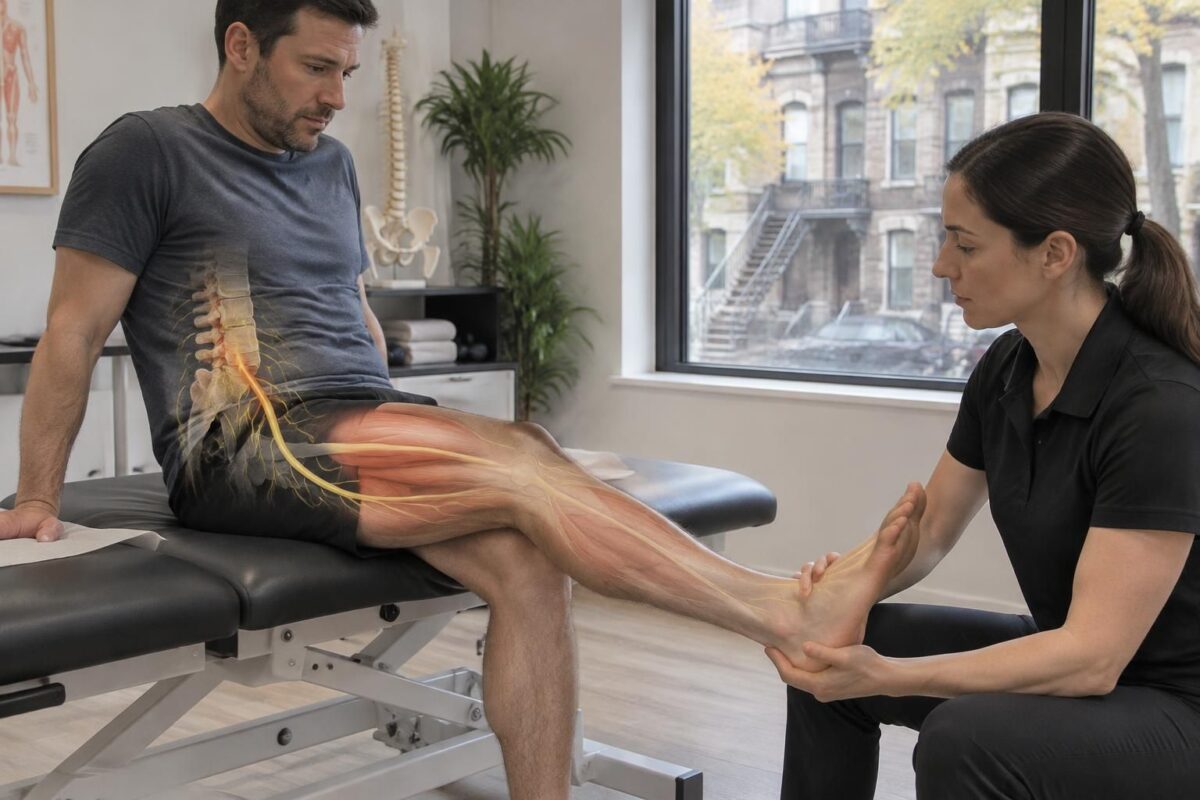
Sciatica in Montreal: Muscle Weakness Based on the Irritated Root
IN BRIEF Sciatica can cause muscle weakness when lumbar nerve roots are irritated. Depending on the affected root, it may become difficult to lift the foot or stand on tiptoes. In Montreal, an assessment of strength, sensation, and pain pathway…
Understanding what the pain pathway may indicate
The term “sciatica” commonly refers to pain related to irritation of a nerve root in the lower back or, less commonly, along its path. It can start from the lumbar area or buttock and extend into the thigh, calf, or foot. Pain that radiates below the knee may suggest a nerve component, but it does not establish a diagnosis.
Note which side the pain appears, how far it radiates, and whether it changes with walking, sitting, or certain movements. Also specify its duration, intensity, its effect on sleep, and daily activities. These details are often more useful than a general description like “I have pain in my leg.”
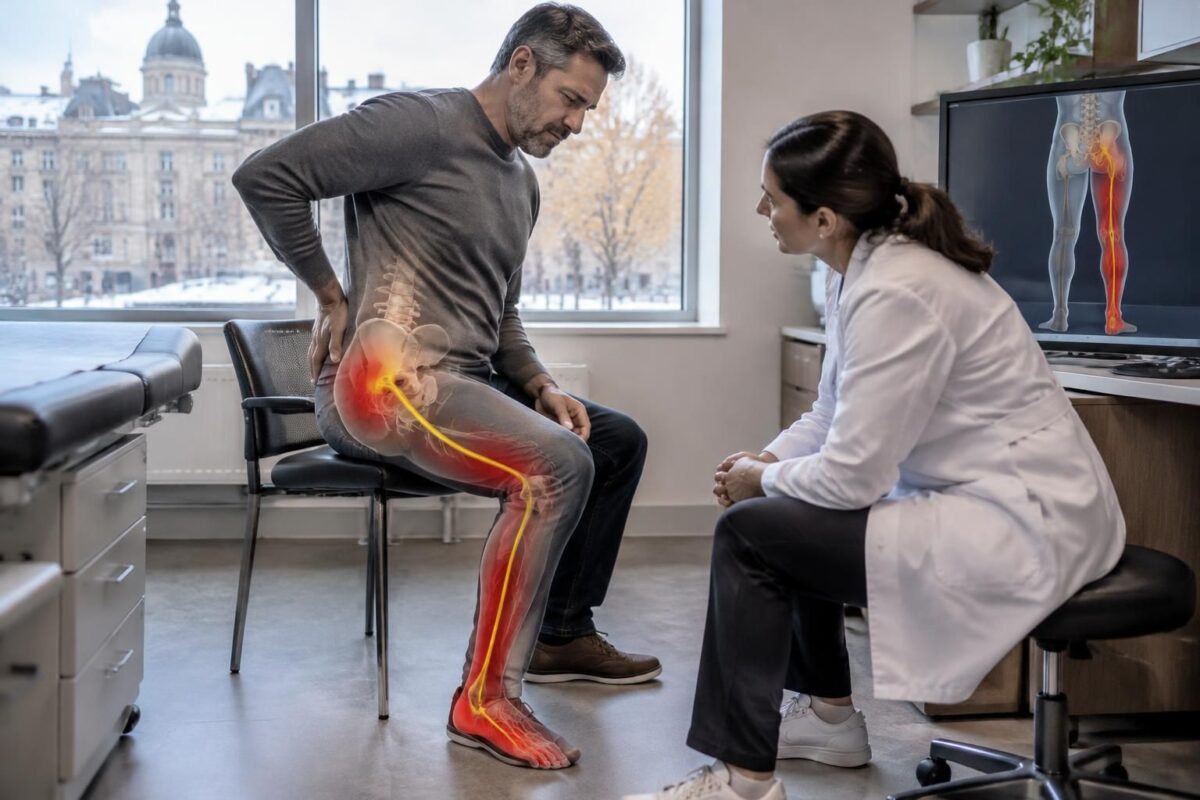
Sciatica in Montreal: nerve pain and sensory territory
IN BRIEF Sciatica is a nerve pain that radiates from the lower back or buttock down the leg. Its sensitive territory varies depending on the affected root and may include burning, tingling, or numbness down to the foot. In Montreal,…
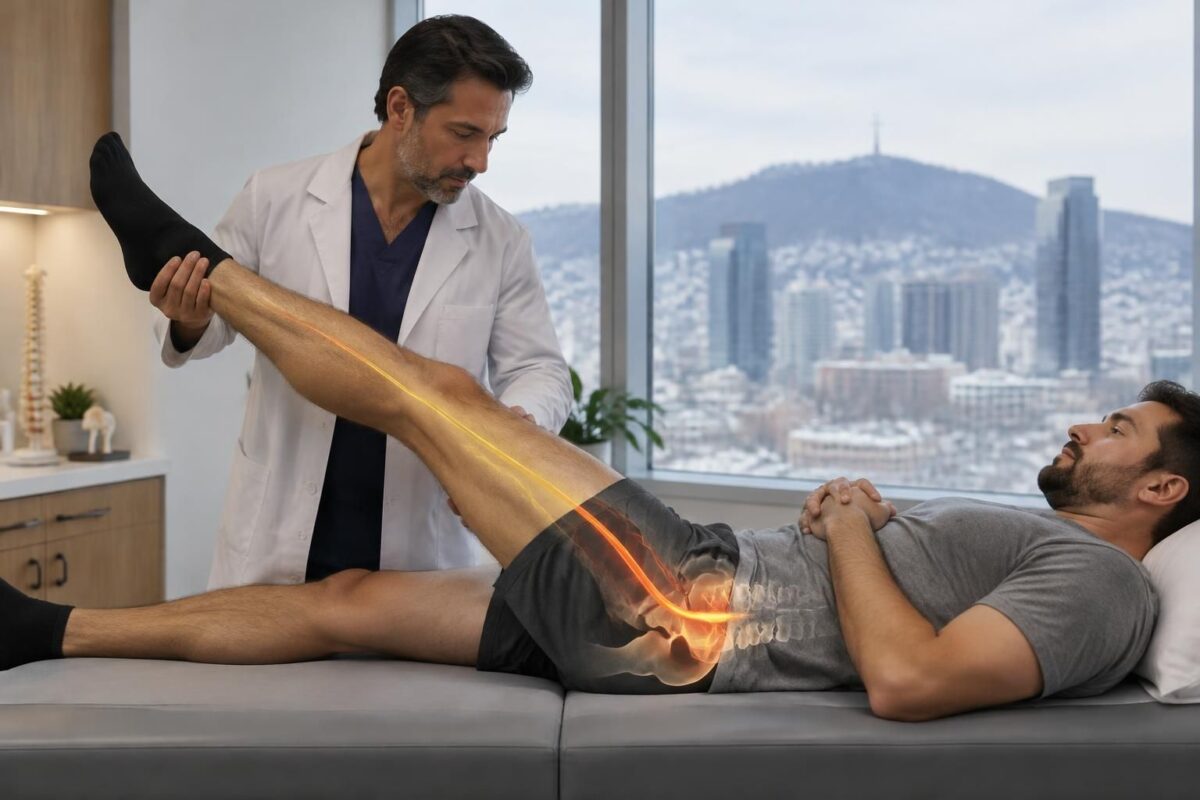
Sciatica in Montreal: irritation L5 or S1, why the clinical examination matters
IN BRIEF The sciatica related to irritation of the L5 or S1 root can cause pain, numbness, or weakness in the leg and foot. In Montreal, the clinical examination compares the course of symptoms, sensitivity, strength, and reflexes to guide…
Spotting associated signs along the pathway
Pain towards the top of the foot or big toe
Irritation of the L5 root may be accompanied by pain at the back or side of the thigh, then on the outer side of the leg up to the top of the foot or big toe. Tingling sensations or difficulty lifting the foot may also be reported. These indicators vary from person to person and do not precisely locate an issue.
Pain towards the calf, heel, or edge of the foot
Involvement of the S1 root may cause pain at the back of the thigh and calf, sometimes extending to the heel, sole, or outer edge of the foot. Numbness or weakness may accompany this pain. Describe these changes precisely, their onset, and progression to the professional evaluating you.
Pain that remains in the buttock or thigh
Radicular pain does not always radiate down to the foot. Conversely, hip, muscle, joint pain in the back, or a vascular cause may mimic sciatica. Thus, localization alone does not distinguish between these possibilities. Weakness, alteration of sensitivity, and assessment of gait may provide additional insights.
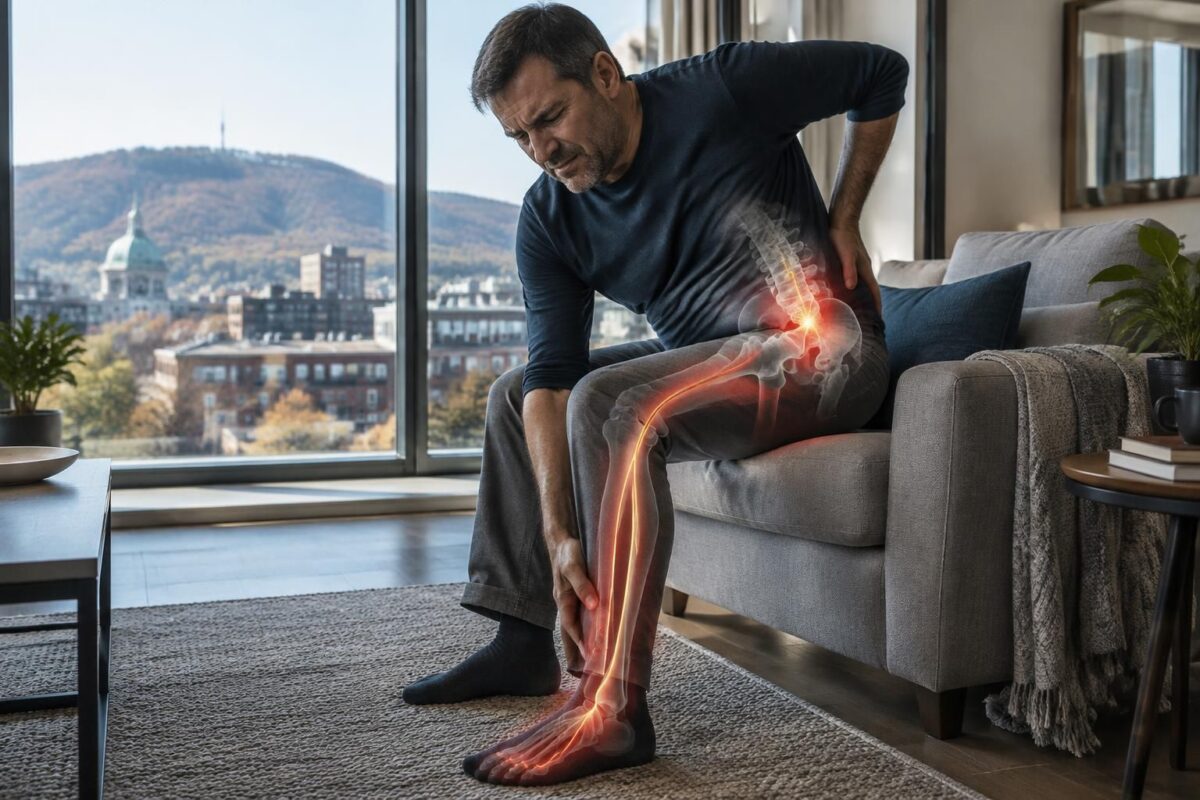
Sciatica in Montreal: L5-S1 Herniation and Pain Towards the Foot
IN BRIEF A L5-S1 disc herniation can irritate the S1 nerve root and cause sciatica in Montreal, with pain or numbness radiating down to the calf, heel, or foot. The assessment correlates symptoms, strength, and sensitivity with imaging, if relevant;…
Sciatica in Montreal: L4-L5 protrusion and leg pain
IN BRIEF An L4-L5 disc protrusion is a bulging of the disc that can irritate a nerve root and cause sciatica, with pain in the buttock and leg. However, it does not always cause symptoms. In Montreal, an assessment can…
How does an evaluation proceed in Montreal?
The evaluation starts with the history of symptoms and their impact on function. Depending on the presentation, the examination may include observation of gait, checking strength and sensitivity, and suitable clinical tests. An MRI or another imaging test is not automatically necessary: its relevance depends notably on the observed signs, their evolution, and the care already attempted.
According to the assessment, a plan may prioritize the maintenance of tolerated activities, a gradual progression of mobility, or appropriate rehabilitation. Motorized neuro-vertebral decompression can be discussed for certain individuals, but it is not suitable for everyone, and its effectiveness is not guaranteed. Symptoms and function must be re-evaluated to adjust the approach.
When to get medical help quickly?
Consult immediately in case of new urinary or intestinal problems, numbness in the saddle area, significant or rapidly worsening weakness, or the onset of a foot drop. Significant symptoms in both legs, a fever, recent trauma, or rapid deterioration also justify urgent medical evaluation. These signs should not wait for a routine appointment.
| Pain Pathway | Possible Interpretation |
|---|---|
| Buttock and back of thigh | May correspond to radicular pain, even if it does not go below the knee. |
| Pain that goes below the knee | A nerve component is possible, but the pathway alone is not sufficient to confirm sciatica. |
| Outer side of the leg, top of the foot, big toe | Distribution sometimes compatible with irritation of the L5 root. |
| Back of the calf, heel, or outer edge of the foot | Distribution sometimes compatible with irritation of the S1 root. |
| Front of the thigh | May suggest a femoral neuralgia or another cause rather than classic sciatica. |
| Numbness or associated tingling | Describe their location and evolution during an assessment. |
| Weakness of the foot or leg | Have this sign evaluated quickly, especially if it appears or worsens. |
| Pain limited to the hip or buttock | Joint or muscle causes can mimic sciatica pain. |
Illustrative Testimonials in Montreal: What Can the Path of Pain in the Leg Indicate?
The narratives below are fictional examples, designed to illustrate different ways a pain compatible with sciatica can manifest. They do not correspond to verified patient testimonials and cannot, on their own, lead to a diagnosis. The pathway of pain is a clue to be interpreted alongside other symptoms, clinical examination, and, when necessary, imaging.
Pain from the buttock to the calf
Fictional Testimony: “My pain starts in the buttock and goes down the back of the thigh. It often stops at the calf, especially after sitting for a long time.”
Pain that descends from the buttock down the back of the thigh and into the calf may be compatible with irritation of a lumbar nerve root. However, it should not be automatically attributed to the sciatic nerve: muscles, the hip, or certain structures in the lower back can produce similar symptoms. Note the positions that aggravate or relieve the pain and their effect on walking and sleeping.
Pain on the side of the leg to the top of the foot
Fictional Testimony: “I feel an electric pain on the side of my leg. Sometimes, I also have tingling on the top of my foot and in my big toe.”
Pain that follows the side of the leg to the top of the foot or the big toe may suggest radicular involvement, particularly in an area sometimes associated with the L5 root. Tingling, numbness, or new difficulty in lifting the foot are important elements to report. The pathway alone does not confirm which root is affected.
Pain behind the thigh, the calf, and the edge of the foot
Fictional Testimony: “The pain goes behind the thigh and the calf, then reaches the heel and the outer edge of the foot. Sometimes I have a burning or shooting sensation.”
This pathway may be compatible with irritation affecting the territory of the S1 root, but several causes of leg pain can resemble each other. The presence of weakness, loss of sensitivity, or alteration of gait warrants appropriate evaluation, especially if these signs appear or worsen.
Pain that does not go down to the foot
Fictional Testimony: “I have pain in the lower back and the buttock, with pain in the thigh, but it does not go down to the foot.”
A radicular pain does not necessarily descend to the toes. It may stay in the buttock, thigh, or calf. Conversely, pain that does not exceed the thigh does not rule out nerve irritation but may also be related to the hip, pelvis, or muscle tissues. It is the combination of symptom distribution, their evolution, and examination that helps guide the assessment.
Tingling or weakness associated with pain
Fictional Testimony: “In addition to the pain, my foot seems less sensitive, and I have difficulty walking on my heels.”
A change in strength or sensitivity may suggest a neurological component and must be described accurately: how long, in what situations, and if it worsens. New or progressive weakness, a foot dragging on the ground, or a leg giving way requires rapid medical evaluation.
How to Prepare for an Assessment in Montreal?
To help the professional understand your situation, indicate the starting point of the pain, its exact pathway, and how far it descends. Also specify the presence of tingling, numbness, or weakness, the duration of the symptoms, the activities that modify them, and the treatments already tried. The examination may particularly focus on walking, strength, sensitivity, and chosen tests depending on the presentation. An MRI or another imaging test is not systematic: its relevance depends on the clinical context.
The management plan should be tailored to the symptoms and function. Based on the assessment, it may involve maintaining tolerated activities, gradually resuming gentle mobility, or seeking additional medical advice. Motorized neuro-vertebral decompression may be discussed for certain individuals after evaluation; it is not suitable for everyone and does not guarantee a result. Progress should be re-evaluated in a measurable way.
For an evaluation of pain compatible with sciatica in Montreal or Mont-Royal, the TAGMED Clinic can examine symptoms, function, and signs to monitor in order to determine whether a conservative approach or referral to another professional seems appropriate.
Consult without delay a medical emergency service in case of new urinary or bowel control issues, numbness in the saddle area, major or rapidly progressive weakness, or significant symptoms in both legs. A fever, recent trauma, severe pain, or rapid deterioration also justifies medical attention.
About the author
Sylvain Desforges, B.Sc., D.O., N.D., Doctor of Osteopathy and naturopath, is the founding president of TAGMED and the ACMA association. His practice focuses particularly on chronic spinal pain, lower back pain, and pain compatible with sciatica.
Through SOS Sciatique, he publishes educational content on symptoms, possible causes, and non-surgical approaches that may be considered based on evaluation. The care offered at TAGMED Clinic may include, depending on the case, motorized neurovertebral decompression, specific osteopathy, or precision impactor.
Medical warning
This content is provided for educational purposes and does not replace a consultation, diagnosis, advice, or treatment by a doctor or another licensed health professional. The author is neither a doctor nor a specialist in a medical specialty recognized by the Collège des médecins du Québec. Osteopathy, manual medicine, or functional support approaches do not constitute medical acts and do not replace medical follow-up.
Sciatica in Montreal: understanding the path of pain with Sylvain Desforges
Sylvain Desforges, B.Sc., D.O., N.D., doctor of osteopathy and naturopath, is the founding president of TAGMED clinics and the ACMA association. His career is dedicated to supporting those living with chronic pain, particularly those affecting the spine and lower back. In Montreal, he is particularly interested in pain that extends into the buttock, thigh, calf, or foot, and which may be compatible with irritation of a lumbar nerve root.
For Dr. Desforges, the term “sciatic pain” does not refer to a single cause. It generally describes a range of symptoms related to irritation or compression of a nerve or its roots. The sciatic nerve forms from nerve roots located in the lower back and pelvis, then descends into the buttock and the back of the leg. The path felt can therefore provide useful clues, but does not suffice to establish a diagnosis.
Pain that starts from the lower back or buttock and descends below the knee towards the calf or foot may suggest a nerve component. Some people describe a burning sensation, electric shocks, tingling, or numbness. Others feel weakness or difficulty walking normally. The pain may also stop in the thigh: it does not need to reach the foot to warrant evaluation.
Specific location matters. Pain accompanied by symptoms on the top of the foot or toward the big toe may correspond to a different distribution than that affecting the back of the calf, the heel, or the outer edge of the foot. These markers help guide the examination, but paths vary from person to person and sometimes overlap. Hip pain, muscle pain, lumbar joint pain, or pelvic pain can also resemble sciatica. Some vascular causes or other conditions must also be considered depending on the context.
A herniated disc is a possible cause: a part of the disc may irritate a nerve root, but a visible anomaly on imaging does not automatically explain the symptoms. The examination must correlate the pain narrative, its duration, and its evolution with walking, strength, sensitivity, and daily limitations. An MRI or other imaging is not systematic; the decision lies with the health professional based on observed signs.
At TAGMED Clinic, in Montreal–Mont-Royal and Terrebonne, the evaluation aims to clarify symptoms, identify necessary precautions, and determine if a conservative approach can be considered. Depending on the situation, support may include specific osteopathy, mobility advice, or a discussion about motorized neurovertebral decompression. This latter is not suitable for everyone and does not guarantee a result. The plan must be tailored and reassessed based on functional response.
A new or progressive weakness, a dropped foot, a significant loss of sensation, or symptoms affecting both legs require prompt medical attention. New urinary or bowel issues, loss of sensitivity in the saddle area, fever, recent trauma, or rapid worsening justify urgent evaluation.
About the author: Sylvain Desforges dedicates his practice to chronic spinal pain, lower back pain, and symptoms compatible with sciatica. His content has an educational purpose and does not replace a consultation or medical diagnosis.
Medical warning: Sylvain Desforges is neither a doctor nor a specialist in a medical specialty recognized by the Collège des médecins du Québec. The information presented does not substitute for the advice of a doctor or another authorized health professional. Osteopathy, manual medicine, and functional support approaches do not constitute medical acts.
In Montreal, the path of pain in the leg may provide clues about possible nerve irritation, but it is not sufficient to establish a diagnosis. The painful area, tingling, numbness, weakness, and their evolution must be considered together, then correlated with the clinical examination and, when indicated, imaging.
Interpreting the path of pain
The sciatic nerve comes from nerve roots located in the lower back and traverses the pelvis and buttock before descending into the leg. Pain compatible with sciatica can therefore start from the lower back or buttock, then extend into the thigh, calf, or foot. To better visualize this path, consult these explanations on the path of the sciatic nerve, its course and possible causes of pain, or the path of the nerve and its branches.
Pain that descends below the knee to the calf or foot may increase the likelihood of a nerve component, without proving it alone. Some pain felt in the leg is rather referred from a joint, muscle, or another structure. The distinction between radicular pain and referred pain particularly relies on the distribution of symptoms, their behavior, and examination results.
The affected area can guide the evaluation. For example, pain or altered sensitivity towards the top of the foot or the big toe may sometimes be compatible with an L5 root lesion. However, this sign is not specific: intensity, side, other symptoms, and muscle strength also matter. To delve deeper, refer to the pages on big toe pain and the L5 root and on big toe numbness associated with lumbar pain.
The symptoms to describe during an evaluation
To help clarify the situation, note where the pain begins, how far it radiates down, whether it affects one or both legs, and if it is accompanied by tingling, numbness, or weakness. Also indicate how long the symptoms have been present, what aggravates or alleviates them, their effect on walking and sleeping, as well as any treatments or examinations already performed. Pain limited to the thigh does not exclude nerve irritation, and pain that reaches the foot does not automatically confirm sciatica.
Prolonged sitting can exacerbate certain symptoms, but this observation alone cannot identify their cause. If the pain hinders driving or prevents long periods of driving, describe the positions and duration that trigger discomfort; additional information is provided on this page about pain that prevents long-distance driving.
Evaluation, imaging, and next steps
An evaluation may focus on gait, strength, sensitivity, and selected clinical tests based on symptoms. An MRI or CT scan is not systematic: the need for imaging depends on the context, evolution, and noted signs. When an image already exists, it should be correlated with the affected side and level rather than interpreted in isolation. To better understand the lumbar levels visible on an MRI, you can consult this guide on lumbar levels and their interpretation.
Based on the results, the next steps may include maintaining tolerated activities, a gradual return to mobility, rehabilitation, or referral to a healthcare professional. Motorized neurovertebral decompression may be considered for some individuals after evaluation, but it is not suitable for everyone and does not guarantee a result. A cautious approach involves monitoring the evolution of pain and function, then adjusting the plan if symptoms change. For additional information on leg pain associated with sciatica and sciatica symptoms, consult the corresponding pages.
A new significant or progressive weakness, a foot that begins to drop, loss of bowel or bladder control, numbness in the saddle region, significant symptoms on both sides, fever, or rapid deterioration requires urgent medical evaluation. Such signs should not wait for a routine appointment.
About the author
Sylvain Desforges, B.Sc., D.O., N.D., Doctor of Osteopathy and Naturopath, is the founding president of TAGMED and the ACMA association. His practice is dedicated to chronic spinal pain, lower back pain, and pain compatible with sciatica, especially when it radiates down to the buttock, leg, calf, foot, or toes.
Through SOS Sciatique, he publishes educational content on symptoms, possible causes—such as herniated disks, disc pinching, foraminal stenosis, or irritation of a lumbar nerve root—as well as non-surgical approaches that may be considered according to the evaluation. At TAGMED Clinic, care may include, as appropriate, motorized neurovertebral decompression, specific osteopathy, or precision percussion therapy.
For an evaluation related to sciatica treatment in Montreal or Mont-Royal, or to sciatica treatment in Terrebonne, consult the services available at TAGMED Clinic.
Medical disclaimer
The information published on SOS Sciatique is provided for educational purposes and does not replace a consultation, diagnosis, opinion, or treatment performed by a physician or another licensed healthcare professional. The author of this article is neither a physician nor a specialist in a medical specialty recognized by the Collège des médecins du Québec. The osteopathy, manual medicine, or functional support approaches presented do not constitute medical acts and are not intended to replace medical follow-up.
Consult a physician or emergency service in case of loss of bowel or bladder control, numbness in the saddle region, significant or progressive weakness in the leg or foot, fever, recent trauma, severe pain, or rapid deterioration. For more details, please read our Legal Notice.

Sylvain Desforges, B.Sc., D.O., N.D., docteur en ostéopathie
Dr Sylvain Desforges, B.Sc., D.O., N.D., osteopath, is the founding president of TAGMED and of the ACMA association. He dedicates his practice to chronic spinal pain, low back pain and symptoms compatible with sciatica, particularly when pain radiates toward the buttock, leg, calf, foot or toes.
Through SOS Sciatique, he publishes educational content on sciatica symptoms, possible causes such as disc herniation, disc narrowing, foraminal stenosis or irritation of a lumbar nerve root, as well as non-surgical approaches that may be considered according to the evaluation. At Clinique TAGMED, care may include, depending on the case, motorized neurovertebral decompression, specific osteopathic care or precision percussion.
For an evaluation related to sciatica treatment in Montreal / Mount Royal or sciatica treatment in Terrebonne, please consult the services available at Clinique TAGMED.
Medical disclaimer
The information published on SOS Sciatique is provided for educational purposes only and does not replace a consultation, diagnosis, opinion or treatment provided by a physician or another authorized healthcare professional. The author of this article is neither a medical doctor nor a specialist in a medical specialty recognized by the Collège des médecins du Québec. The osteopathic, manual medicine or functional support approaches described on this site do not constitute medical acts and are not intended to replace medical follow-up.
Consult a physician or emergency service in cases of loss of bladder or bowel control, anesthesia in the saddle area, significant or progressive weakness in the leg or foot, fever, recent trauma, severe pain or rapid worsening of symptoms. For more details, please read our Legal Notice.