Disc herniation L4-L5 and irritation of the L5 root
26/11/2026
Sciatica in Montreal: disc desiccation and radiating pain
27/11/2026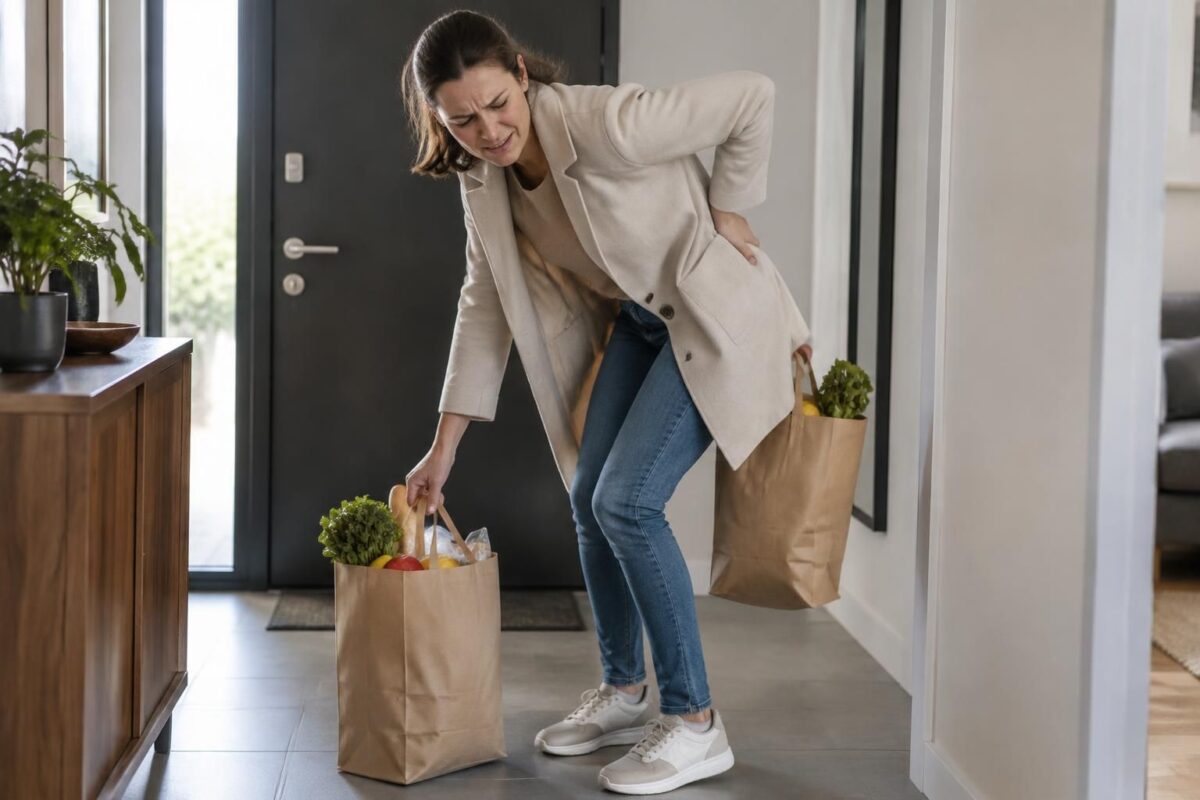
IN BRIEF
| Sciatica is pain related to irritation of the sciatic nerve; carrying heavy grocery bags while twisting the torso can exacerbate it. To limit strain, distribute the load among several bags, keep them close to your body, and turn with your feet rather than twisting. These actions can make carrying easier and reduce sudden movements, without replacing medical advice if the pain persists or worsens. |
In case of sciatica, carrying heavy grocery bags while twisting the torso can increase tension in the lower back and worsen pain. Distribute the groceries into several lighter bags, keep them close to your body, and turn with your feet instead of twisting. If the pain intensifies, ask for help in carrying them.
Taking out grocery bags can trigger sciatica pain, especially if the load is heavy or if the back twists during the movement. To reduce strain, keep the bags close to your body, distribute their weight, and pivot with your feet rather than twisting the torso. If the pain radiates down the leg, worsens, or is accompanied by other symptoms, seek advice from a healthcare professional.
Sciatica refers to pain that follows the path of the sciatic nerve, often from the buttock down the leg. Carrying a bag does not always cause this pain, but a heavy load, a sudden movement, or twisting can exacerbate it in some individuals.
The reaction varies depending on the cause of the pain and individual health conditions. Pain that appears after carrying bags does not alone determine whether there is a disc injury or another issue. A healthcare professional can assess the symptoms and guide further action.
Why Load and Twisting Can Trigger Pain
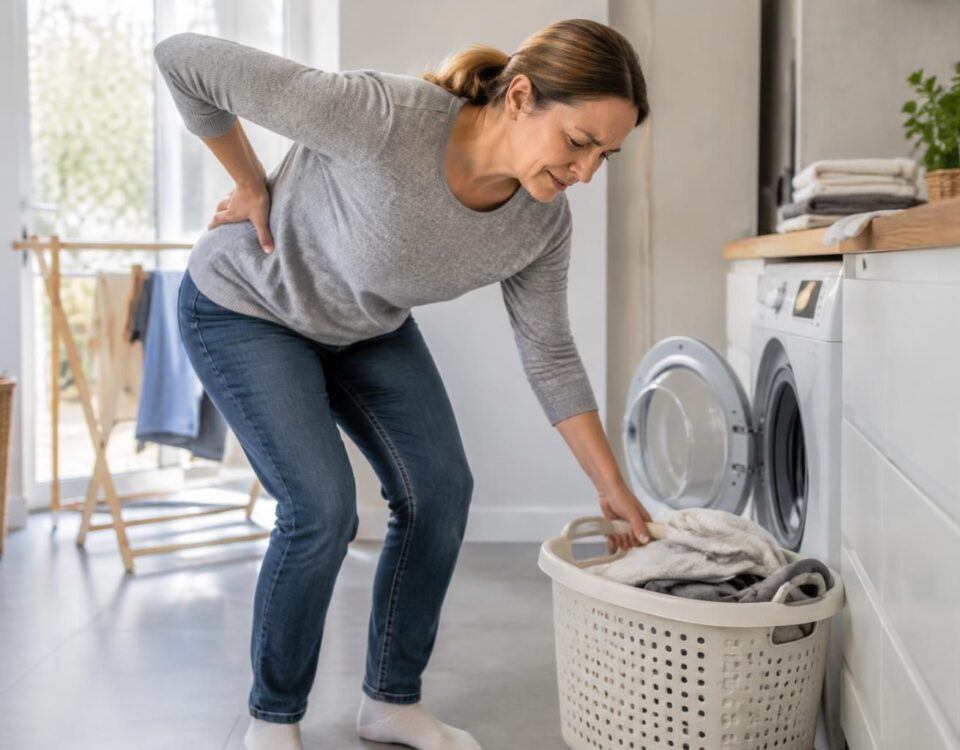
A heavy bag increases the effort required from the back and hips. If you lift it away from your body, the lower back must exert more effort. If you twist the torso while your feet remain fixed, the movement can also increase tension in the lumbar region.
Pain may manifest in the lower back, buttock, or leg. Some individuals may also experience tingling or numbness. If your foot becomes numb, you can consult this information on sciatica with foot numbness.
Simple Tips for Carrying Bags
Before lifting the bags, approach them and ensure you can pick them up without bending too far forward. Bend your hips and knees according to your comfort, then keep your back in a stable position. Hold the bags close to your body and avoid holding your breath during exertion.
Distribute items into several bags rather than carrying a single very heavy load. If you carry two bags, choose a similar weight on each side, as much as possible. You can also make several trips or ask for help in moving heavier bags.
To change direction, move your feet and turn your whole body. Avoid pivoting only at the torso while carrying a load. If a bag causes sharp pain or a significant increase in symptoms, place it down in a safe spot and do not force it.
Adapting Movements to Pain
Pain can also arise from other everyday actions. If you notice a connection between your symptoms and bending over, these explanations about prolonged bending and pain while mopping may help you identify movements that worsen your discomfort.
Getting dressed may also require bending movements or putting weight on one leg. Check these tips on everyday gestures to adapt for dressing.
Pain below the knee can have various causes. To learn more, read this page on disc protrusion and pain below the knee. This content does not replace an individual assessment.
When to Seek an Evaluation
Consult a healthcare professional if the pain persists, recurs frequently, intensifies, or limits your activities. New weakness in the leg or a progressive loss of sensation also requires prompt evaluation.
Seek emergency services immediately if you experience loss of control over the bladder or bowels, sudden difficulty urinating, or numbness around the genitals or anus. Unexplained weight loss accompanied by pain also warrants a medical evaluation. For more information, consult the page on sciatica and unexplained weight loss.
The TAGMED clinic in Montreal and Terrebonne offers assessment and management options for certain spinal-related pains. A professional can inform you if these services are suitable for your situation and whether a medical consultation is necessary.
Medical disclaimer: The information and advice provided on this site do not replace the advice, diagnosis, or treatment of a healthcare professional. Please note that Sylvain Desforges, B.Sc., D.O., N.D., doctor of osteopathy, is neither a doctor of medicine nor a physician, and is not specialized in a medical specialty as defined by the Collège des médecins du Québec. Manual therapy, functional medicine, and sports medicine as described on this site exclude any treatment or medical diagnosis made by a physician or medical specialist. Always consult your physician for any medical questions. For more details, please read our full Legal Notice.
Reduce the Load
- Make several small trips instead of one heavy one.
- Distribute the weight between both hands.
- Keep bags close to the body; ask for help if needed.
Avoid Twisting
- Bend your knees to lift or place the bags.
- Turn with your feet, without twisting the loaded torso.
- Stop if the pain increases or travels further down the leg.

Sciatica can make taking out grocery bags uncomfortable, especially if you lift a heavy load while twisting your back. To limit strain, bring the bags closer to your body, distribute their weight, and pivot with your feet instead of twisting. A cart, bags with comfortable handles, and a few adjustments in how you load the car can also make it easier.
Reduce the load before lifting
Avoid carrying all the bags in one trip. Make multiple trips if necessary and distribute heavy items, like bottles, between several bags. Lighter bags are generally easier to keep close to the body and move without sudden movements.
Choose an appropriate solution
A rolling cart can save you from carrying groceries over long distances. If you use a backpack, prefer two straps and adjust them so the bag stays close to your back. For handled bags, choose those that are wide and strong enough to be comfortable in hand. The goal is to distribute the load and avoid pulling to one side.
Also organize your purchases by weight: place heavy items at the bottom of the cart or bag, without overloading it. If you need to carry two bags, choose balanced loads only if it remains comfortable; don’t force maintaining symmetry that increases your pain.
Sciatica and lifting a load: why technique isn’t always enough
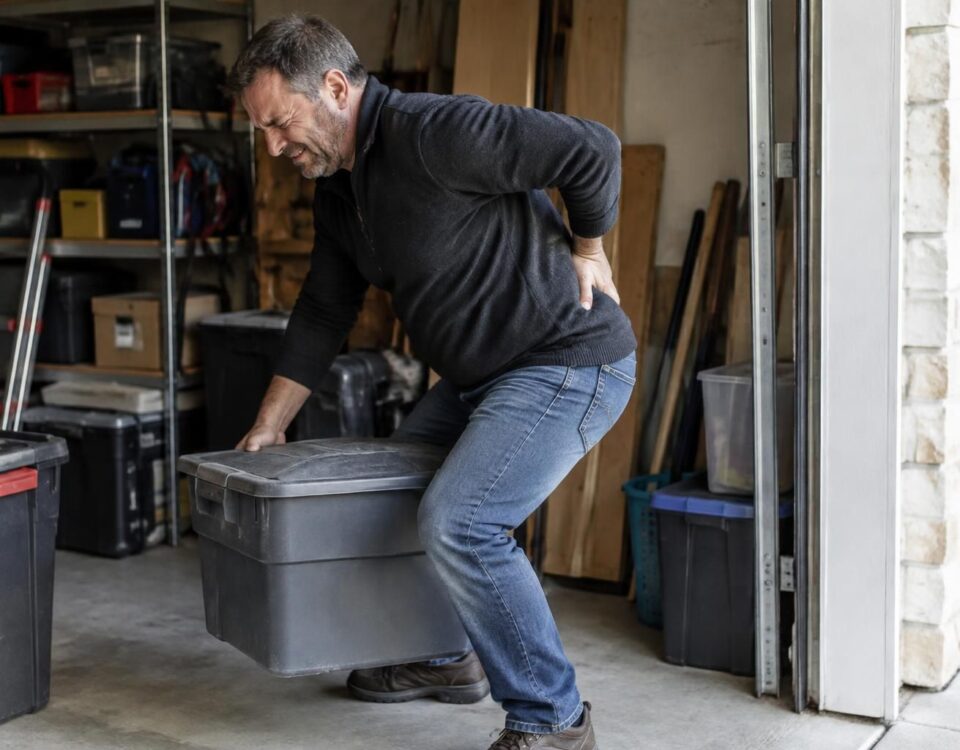
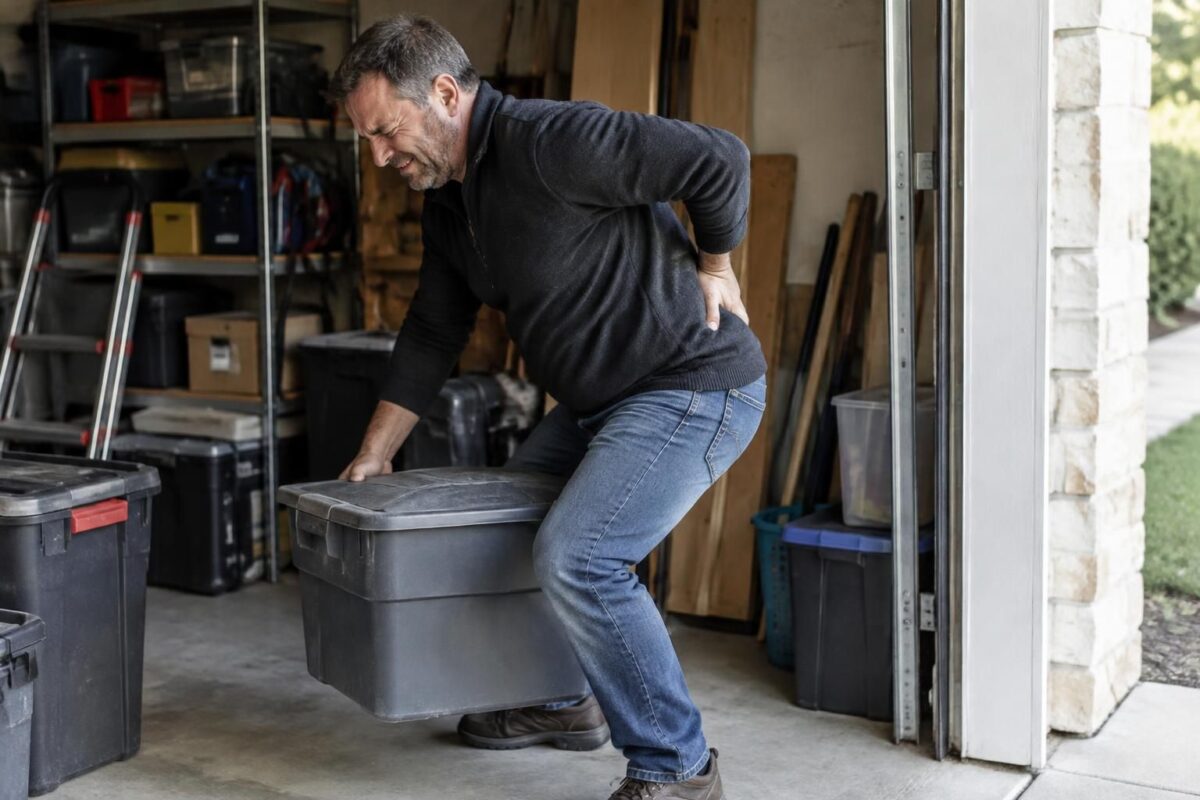
IN BRIEF Sciatica can make the nerve more sensitive: a good lifting technique is therefore not always enough to avoid pain. The risk also depends on the weight carried, the repetition, the duration of the effort, and your momentary tolerance.…
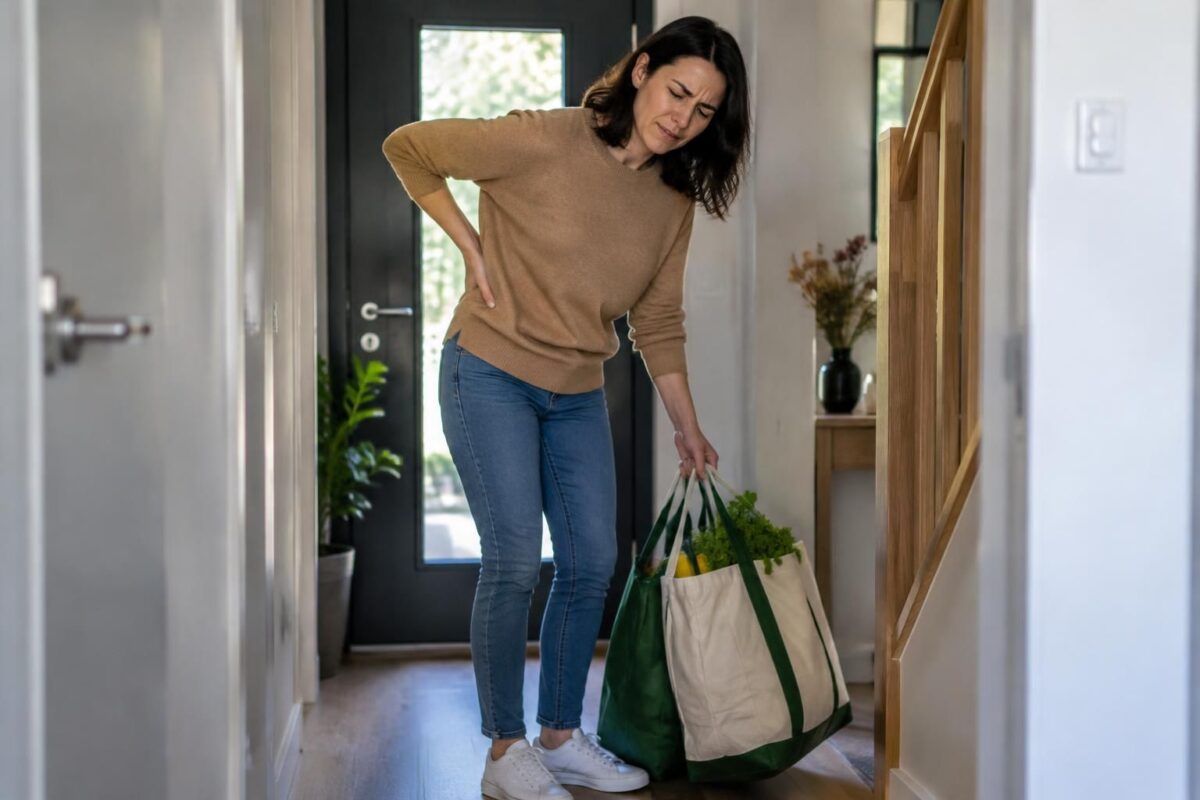
Sciatica and carrying groceries: pain in the leg
IN BRIEF Sciatica is pain related to the irritation of a nerve, which can extend from the lower back or buttock down into the leg. Carrying heavy grocery bags may exacerbate symptoms: distribute the loads, keep them close to your…
Remove the bags from the car without twisting
Before lifting a bag, get close to it and clear the space around the door or trunk. Avoid reaching your arms far in front of you: the further the load is from your body, the more effort is required from your back. If possible, place the bags on the edge of the trunk or on a stable surface before moving them.
Adopt a controlled movement
Stand with your feet stable, slightly bend your knees, and lean by flexing at the hips, rather than rounding your back. Keep the bag close to your body and rise slowly. To change direction, move your feet in small steps instead of twisting your torso with your legs stationary. Avoid quick gestures, large twisting movements, and loads held at arm’s length.
If a bag is too heavy, don’t try to lift it all at once. Distribute its contents, ask for help, or use the cart. Also, take the time to get settled before carrying the groceries: a stable position and a clear path reduce rushed movements.
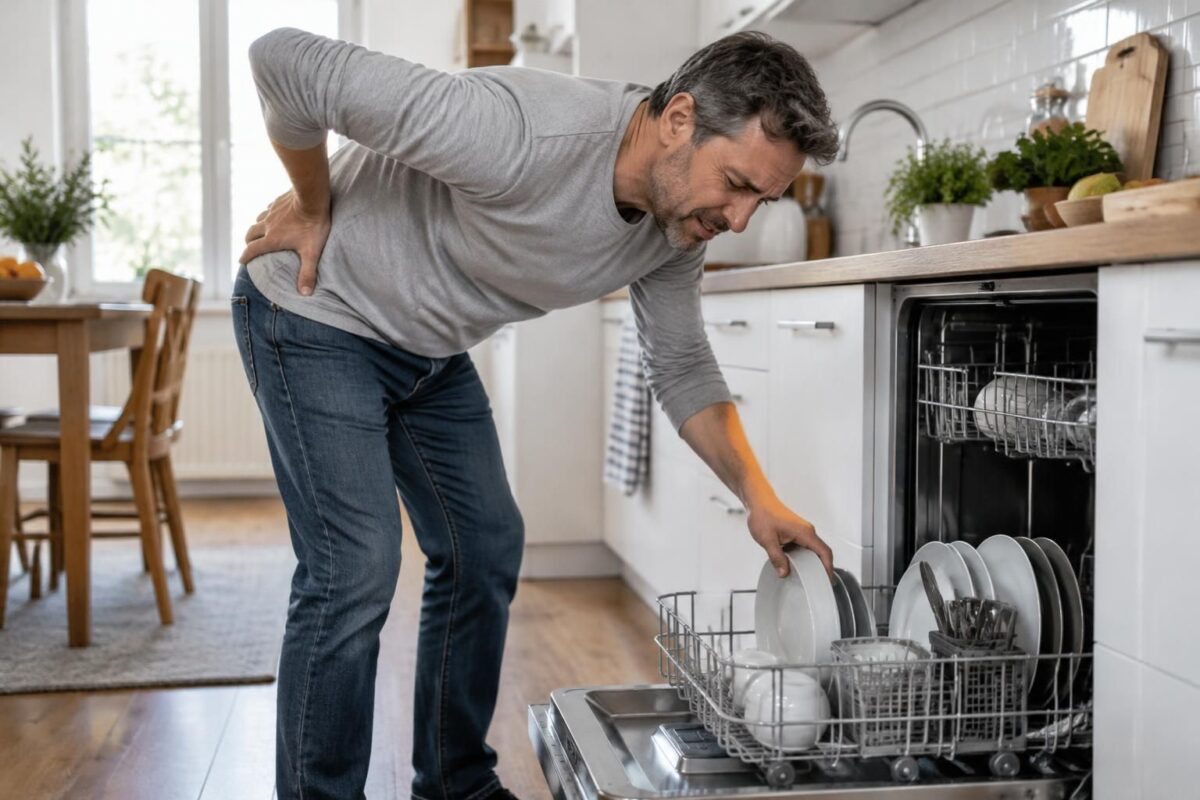
Sciatica and emptying the dishwasher: bending can worsen
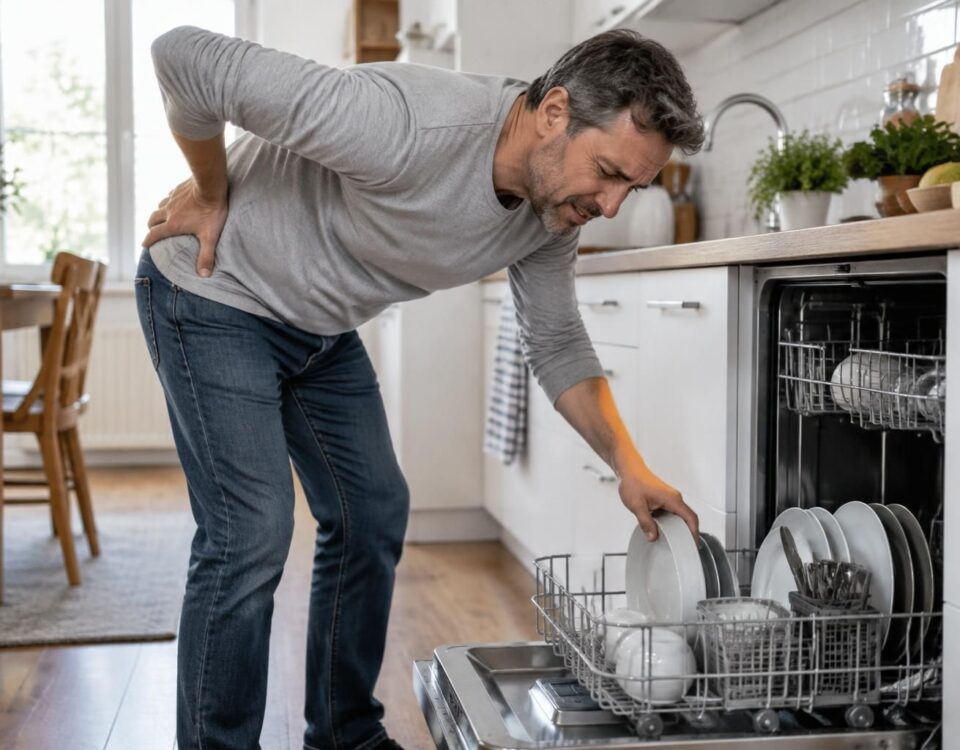
IN BRIEF Sciatica is pain that radiates along the sciatic nerve. Bending to empty the dishwasher can worsen symptoms, especially when turning or lifting a load. To limit discomfort, keep your back straight, bring items closer, and bend your knees.…
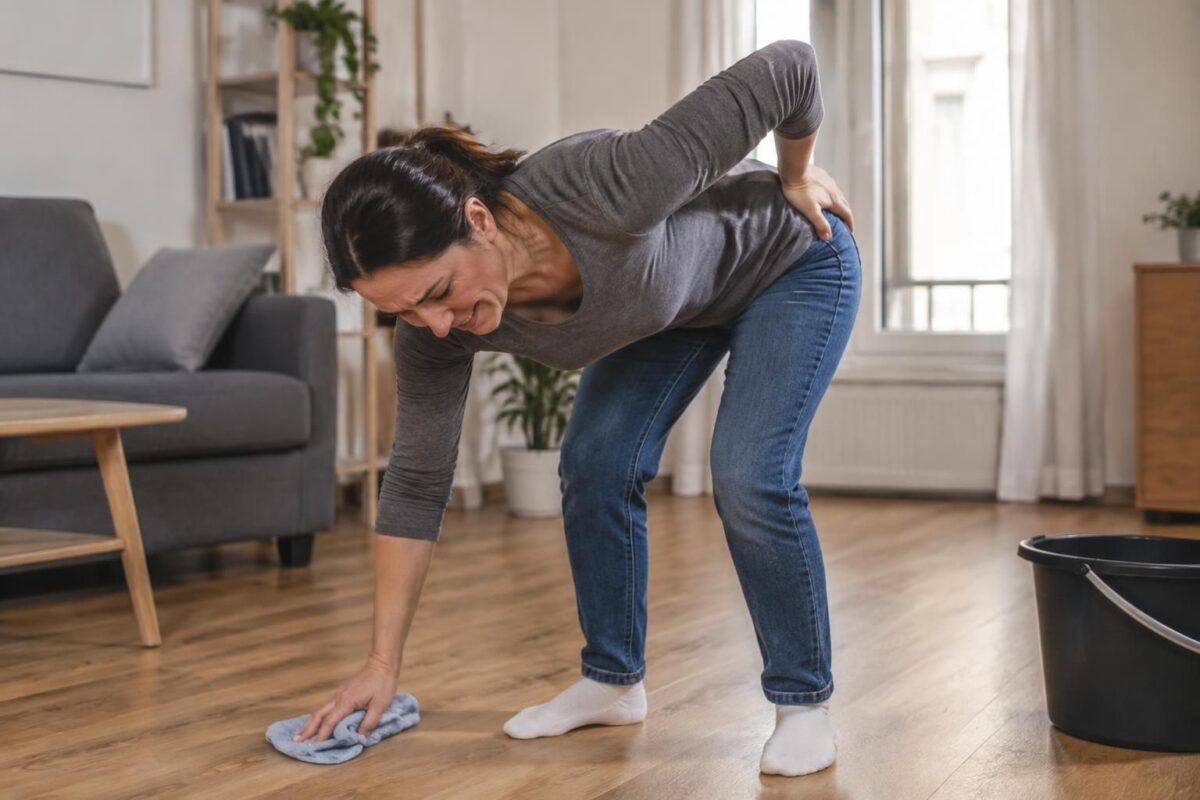
Sciatica and floor washing: prolonged bending and pain
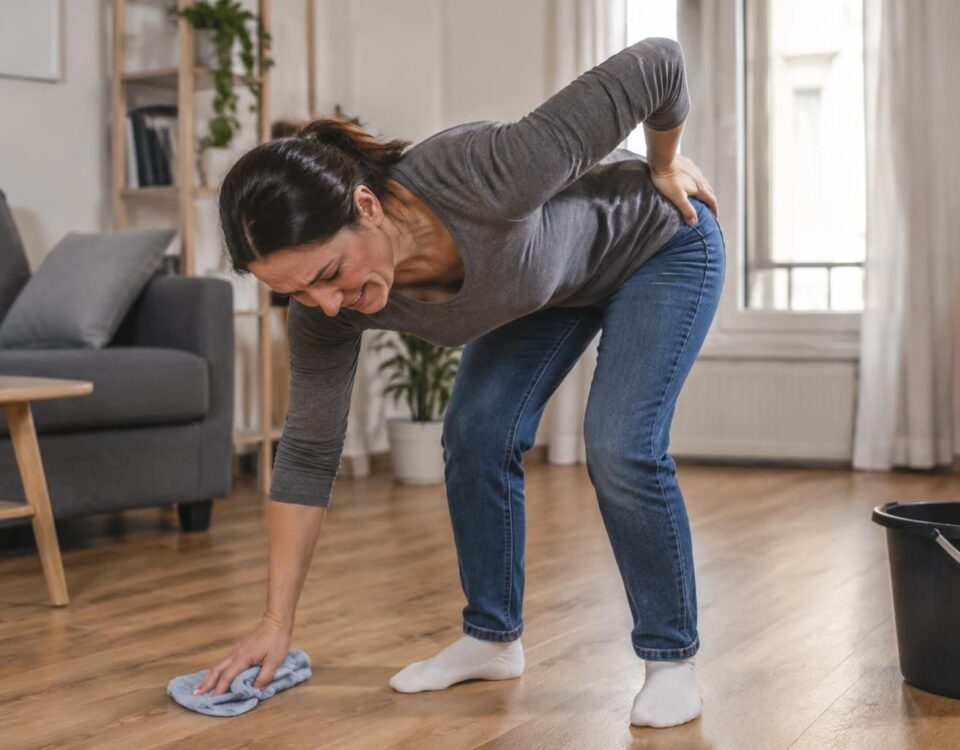
IN BRIEF Sciatica is a pain related to irritation of the sciatic nerve; mopping the floor while remaining bent for a long time can worsen it. To limit discomfort, use a long handle, keep your back as neutral as possible,…
Adapt the effort to your symptoms
Pain related to sciatica varies from person to person. If a movement significantly increases the pain in the leg, causes numbness, or reduces strength, stop and choose a less demanding solution. A healthcare professional can help you determine the movements and limits suitable for your situation, especially if the pain persists or worsens.
Consult quickly in cases of significant or progressive weakness in one leg. Loss of control of the bladder or bowels, or numbness around the genitals or anus, requires urgent medical evaluation.
| Situation | Recommended action |
|---|---|
| Heavy load | Distribute the bags between both hands. |
| Bag on one side | Alternate sides to limit strain. |
| Lifting bags | Bend your knees, keep your back straight, and the bag close to your body. |
| Turning while carrying | Avoid twisting: pivot with your feet. |
| Pain that increases | Set the bags down and break the load. |
| Bulky purchases | Prefer several small trips or a cart. |
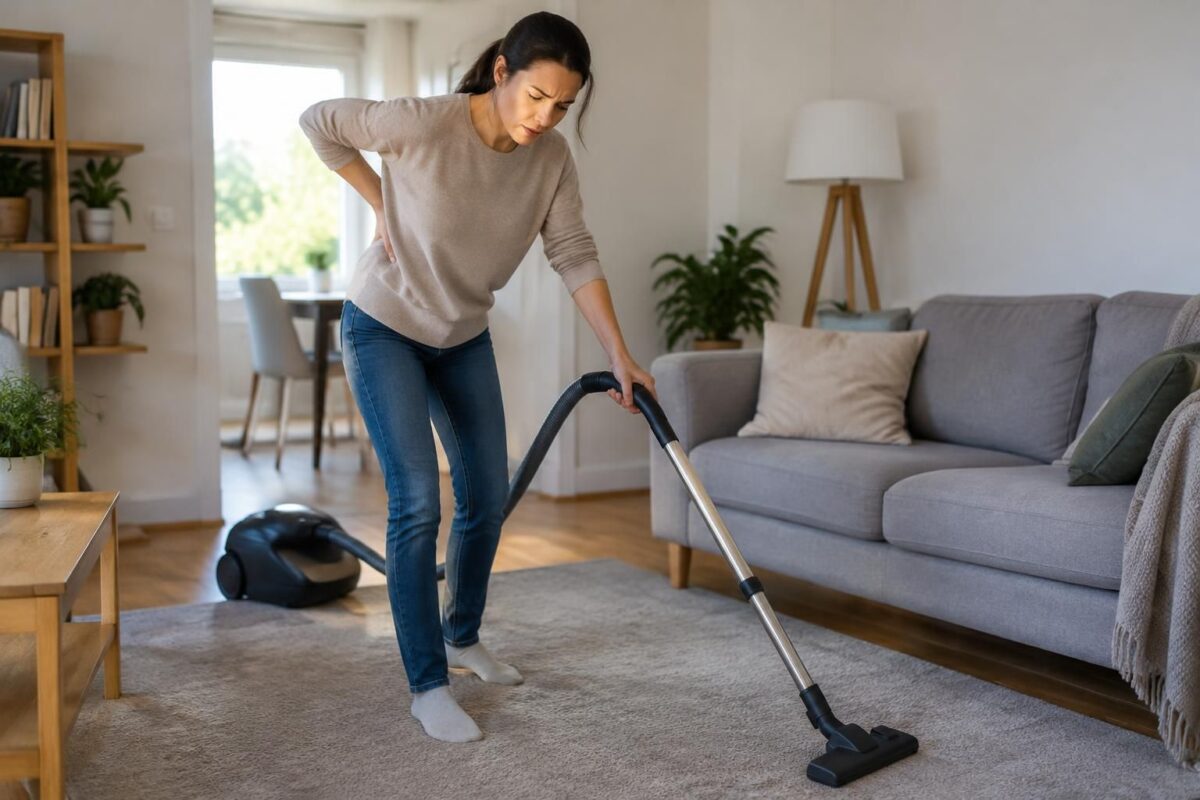
Sciatica and vacuuming: repetitive movement to watch out for
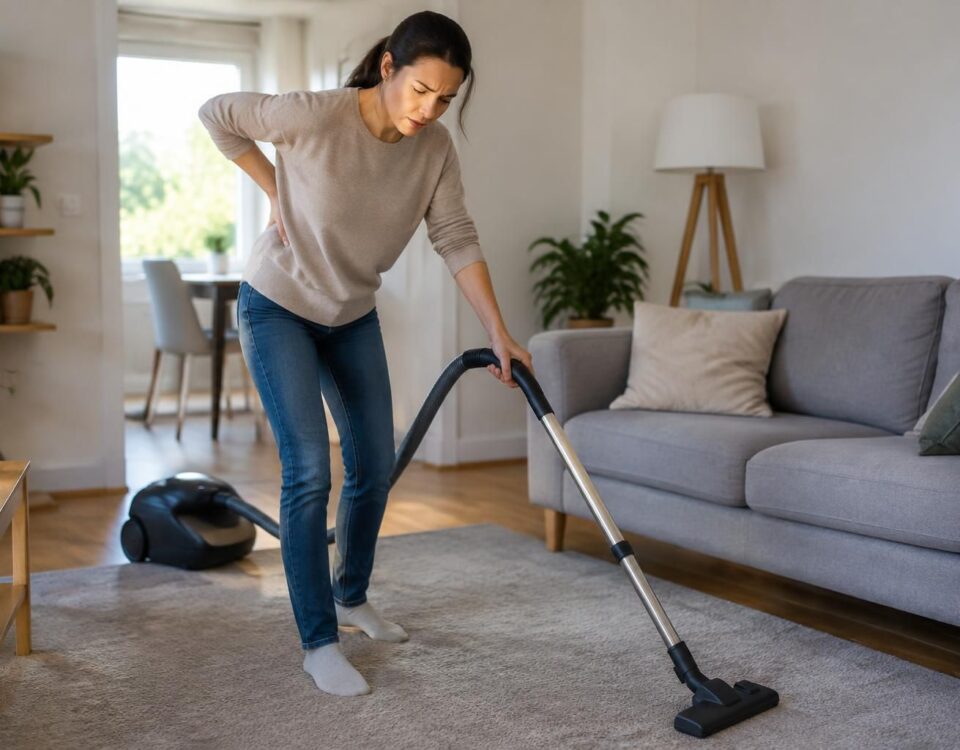
IN BRIEF Vacuuming with a sciatica can trigger pain because repeated bending and twisting strain the back. Break up the cleaning, keep the device close to you, and turn with your feet rather than twisting. Take a break if the…
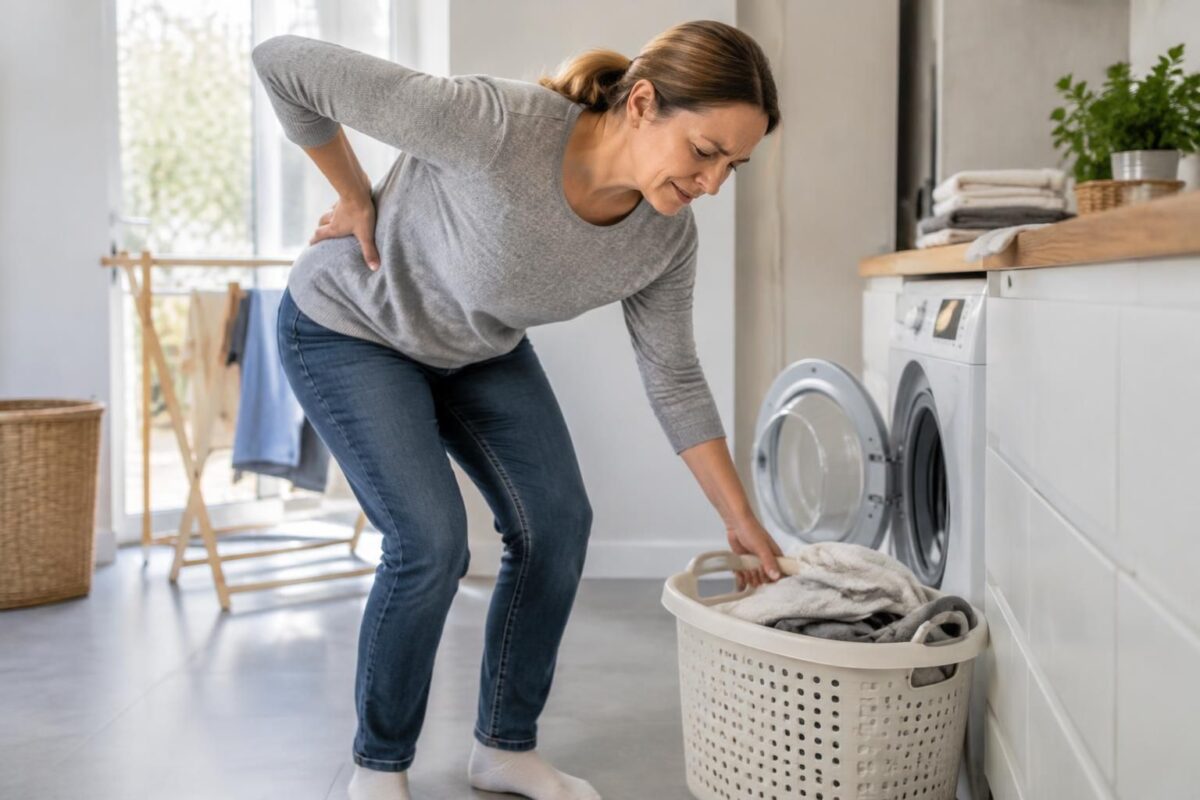
Sciatica and household chores: twists, bends, and loads
IN BRIEF Sciatica can be aggravated by bending, twisting, and carrying loads while doing housework. Breaking tasks into smaller parts, taking breaks, and adjusting movements help manage effort without necessarily stopping everything. In Montreal, an assessment can help tailor activity…
Testimonials: sciatica and grocery bags
“When I take the bags out of the trunk, the combination of weight and a twisting motion can trigger my sciatica. I now try to bring the bags closer to me before lifting them and turn with my feet instead of twisting my back.” — Claire
“Carrying several bags on one side sometimes caused discomfort that traveled down my leg. I distribute the load between both hands and make several trips back and forth. It’s easier to manage when I don’t force it in one go.” — Marc
“The action that was most difficult for me was pulling a heavy bag out of the trunk while turning. I now take the time to face the bag, bring it closer, and ask for help if needed. This prevents me from straining during a full twist.” — Nadia
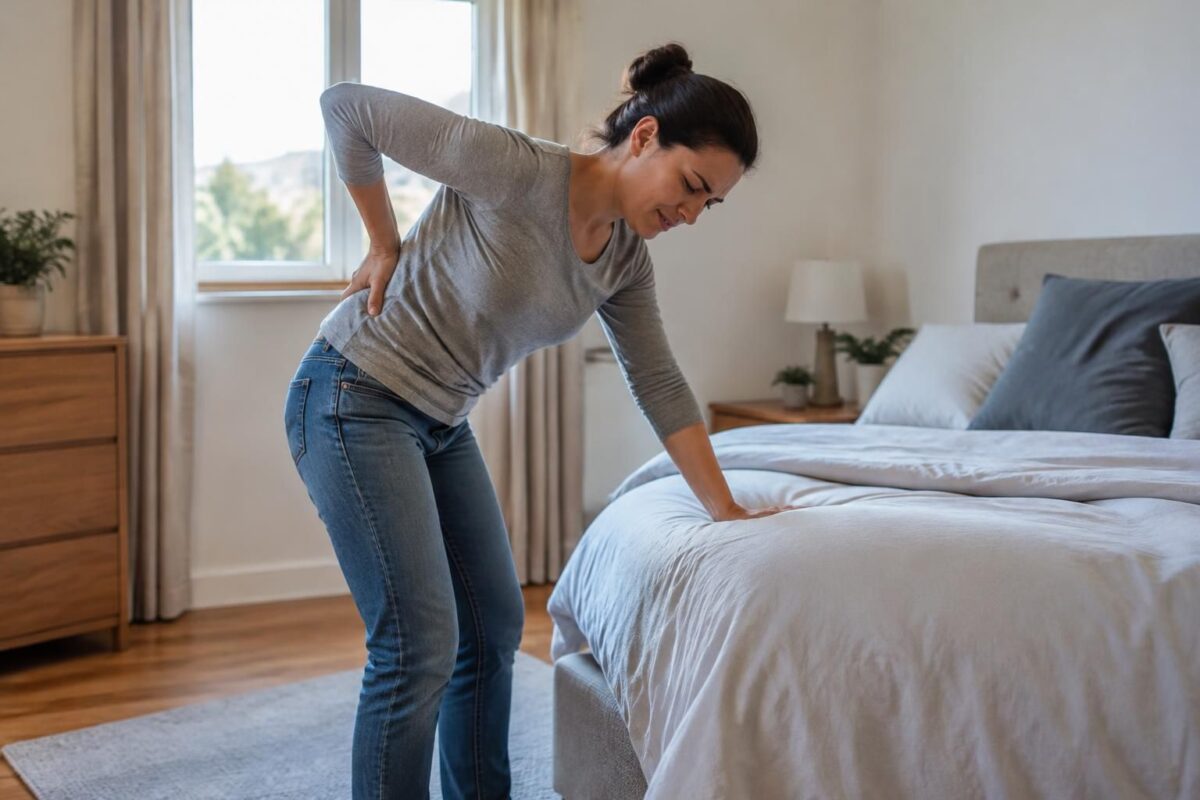
Sciatica and Making the Bed: Repeated Flexion and Lumbar Irritation
IN SHORT Sciatica is pain related to irritation or compression of the sciatic nerve. Making your bed can strain the lower back if bending is repeated, especially when rounding the back or twisting the torso. To limit lumbar irritation, bend…
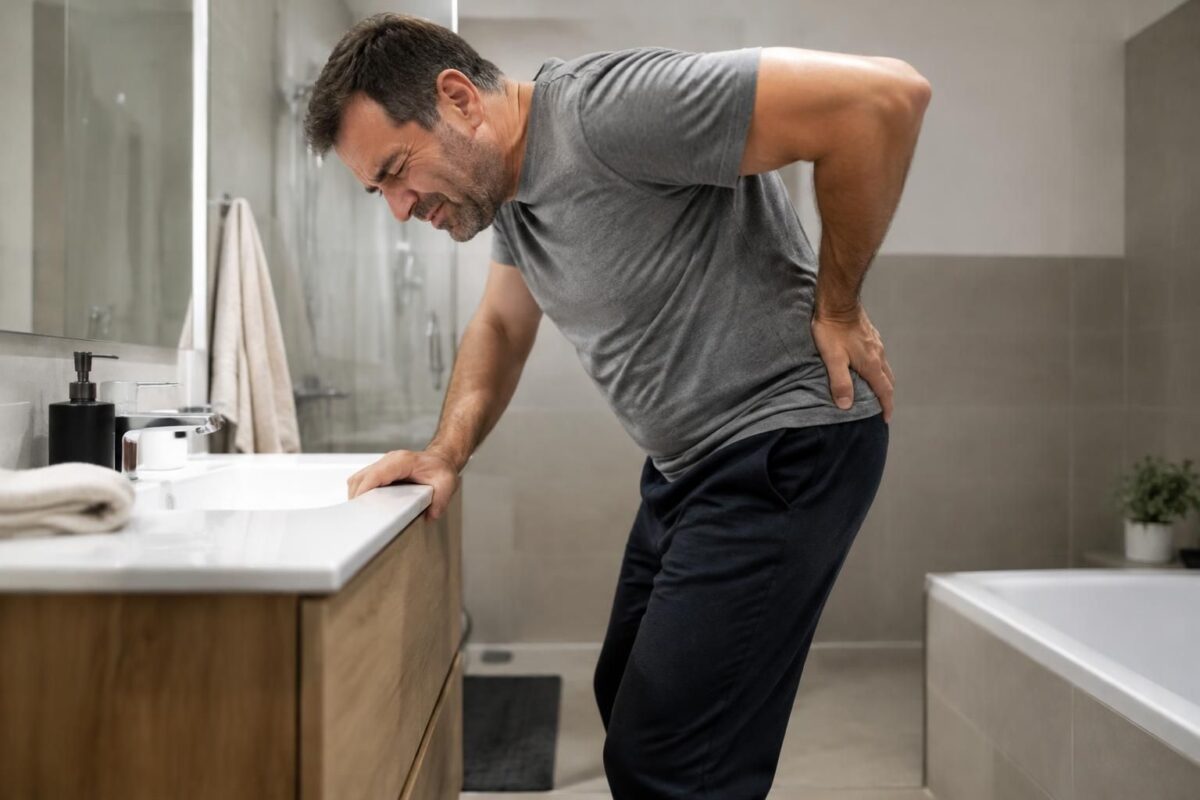
Sciatica and bending over the sink: pain in the leg
IN BRIEF Sciatica is pain related to irritation or compression of the sciatic nerve, which can extend from the lower back down to the leg. Bending over the sink can exacerbate the pain, especially if this position increases pressure on…
Sylvain Desforges: supporting sciatica and everyday movements
Expert in osteopathy, naturopathy, and manual medicine, Sylvain Desforges dedicates his career to health innovation and supporting people living with persistent pain. Founder and president of TAGMED clinics and the ACMA association, he focuses notably on managing chronic pain and its concrete impacts on everyday life. Among the situations that concern some people suffering from sciatica is an apparently mundane action: retrieving grocery bags and carrying them.
Sciatica refers to pain related to irritation or compression of a nerve root in the lower back. It can manifest in the buttock and then radiate down the leg, sometimes to the foot. Burning sensations, tingling, or weakness may also accompany the pain. The experience varies from person to person: the same task, such as carrying bags, may be well tolerated one day and become uncomfortable the next. The weight carried, the distance, fatigue, and the method of movement can all play a role.
Taking grocery bags out stresses the back, hips, and legs. The risk of discomfort can increase when a person lifts a load away from their body, bends abruptly, or twists their torso while carrying a bag. Twisting under load is particularly demanding: instead of turning only the upper body, it’s often better to move the feet to orient the whole body towards the destination. Keeping bags close and distributing weight between both hands, when possible, can also make carrying more balanced.
In his work focused on pain management, Dr. Desforges emphasizes an evidence-based approach tailored to each patient’s situation. The goal is to understand the factors influencing symptoms, rather than viewing movement as identical for everyone. An assessment can help identify the movements that trigger or worsen pain and determine how to gradually resume daily activities, including lifting burdens.
His expertise also includes the integration of advanced technologies, such as spinal decompression, laser, and shockwave therapy, as assessed by needs. These options are part of a personalized care approach; they do not automatically replace practical advice, adapted activity, or the opinion of a healthcare professional. For grocery bags, simple adjustments—breaking up shopping trips, using a cart, or asking for help with heavy loads—can reduce the effort required from the back during a painful period.
Dr. Desforges’ mission is to provide evidence-based care to optimize his patients’ health and well-being. In the context of sciatica, this approach takes into account pain, functional capacities, and individual goals, whether it’s to regain greater ease in movement or resume certain household tasks with more confidence.
Worsening pain, significant or new weakness in the leg, marked loss of sensitivity, or changes in bladder or bowel control require timely medical evaluation. These signs should not simply be attributed to carrying bags. Dr. Desforges’ professional journey combines clinical expertise and interest in innovative pain management solutions, with particular attention to the needs and activities that matter for each person.
Taking out grocery bags can trigger sciatica when weight, twisting motion, and back position stress the lumbar region. By better distributing loads and adjusting your movements, you can reduce strain on your back and make this task more comfortable.
Sciatica and Grocery Bags: Managing Load and Twist
The problem doesn’t always stem solely from the weight of the bags. Lifting a load away from the body, twisting abruptly, or bending at the same time can increase tension in the lower back and cause pain radiating down the buttock or leg. If you notice your symptoms intensifying during these movements, take the time to understand the possible factors, including disc pinching and loss of disc height.
To lift a bag, get close to it, bend your knees, and keep your back as comfortable and stable as possible. Hold the load close to your body, then stand up without twisting your torso. To change direction, move your feet instead. This small adjustment avoids combining a heavy load with sudden twisting.
When bags are heavy, distribute items among several bags and carry one on each side if it remains comfortable. You can also make multiple trips or use a cart. The goal isn’t to force through pain but to decrease the load carried with each trip and avoid quick movements that trigger your symptoms.
Coughing, sneezing, and certain efforts can also exacerbate pain related to a herniated disc. To better recognize situations that deserve special attention, consult this resource on sciatica associated with a herniated disc and painful cough.
If your pain mainly occurs when you bend to pick up or set down a bag, observe your back position and the height of the load. A seemingly trivial movement, like bending over a sink, can also trigger pain in the leg; find out why in this article on sciatica and pain when bending at the sink.
A pinching or stiffness sensation can have various causes and does not allow for a diagnosis on its own. To explore the possible connection between decreased disc space and symptoms, also check out this explanation on sciatica and disc pinching when space decreases.
If your symptoms started after a slip or other incident, mention it to a healthcare professional rather than assuming that carrying bags is the sole cause. You can read this information on sciatic pain that appeared after a fall to better prepare your questions.
Adapt your movements to your tolerance: choose lighter bags, avoid carrying them on one side if it increases the pain, and take a break as soon as symptoms escalate. If the pain persists, worsens, or is accompanied by marked weakness or numbness, seek advice from a healthcare professional for appropriate evaluation.

Sylvain Desforges, B.Sc., D.O., N.D., docteur en ostéopathie
Dr Sylvain Desforges, B.Sc., D.O., N.D., osteopath, is the founding president of TAGMED and of the ACMA association. He dedicates his practice to chronic spinal pain, low back pain and symptoms compatible with sciatica, particularly when pain radiates toward the buttock, leg, calf, foot or toes.
Through SOS Sciatique, he publishes educational content on sciatica symptoms, possible causes such as disc herniation, disc narrowing, foraminal stenosis or irritation of a lumbar nerve root, as well as non-surgical approaches that may be considered according to the evaluation. At Clinique TAGMED, care may include, depending on the case, motorized neurovertebral decompression, specific osteopathic care or precision percussion.
For an evaluation related to sciatica treatment in Montreal / Mount Royal or sciatica treatment in Terrebonne, please consult the services available at Clinique TAGMED.
Medical disclaimer
The information published on SOS Sciatique is provided for educational purposes only and does not replace a consultation, diagnosis, opinion or treatment provided by a physician or another authorized healthcare professional. The author of this article is neither a medical doctor nor a specialist in a medical specialty recognized by the Collège des médecins du Québec. The osteopathic, manual medicine or functional support approaches described on this site do not constitute medical acts and are not intended to replace medical follow-up.
Consult a physician or emergency service in cases of loss of bladder or bowel control, anesthesia in the saddle area, significant or progressive weakness in the leg or foot, fever, recent trauma, severe pain or rapid worsening of symptoms. For more details, please read our Legal Notice.