Sciatica in Terrebonne: foraminal or central herniated disc?
29/11/2026
Disc Herniation and Foraminal Stenosis
29/11/2026
IN BRIEF
| Sciatica causes pain that radiates from the lower back to the buttock and leg. If it worsens rapidly, a medical evaluation is important to identify the cause and determine the appropriate management. Consult immediately if there is progressive weakness, loss of sensation around the saddle area, or urinary or bowel issues. |
A sudden worsening of sciatica pain, spreading or accompanied by leg weakness, warrants quick evaluation by a healthcare professional. Consult emergency services immediately if you have difficulty urinating, loss of bladder or bowel control, numbness between the legs, or significant or progressive weakness. These signs require urgent care.
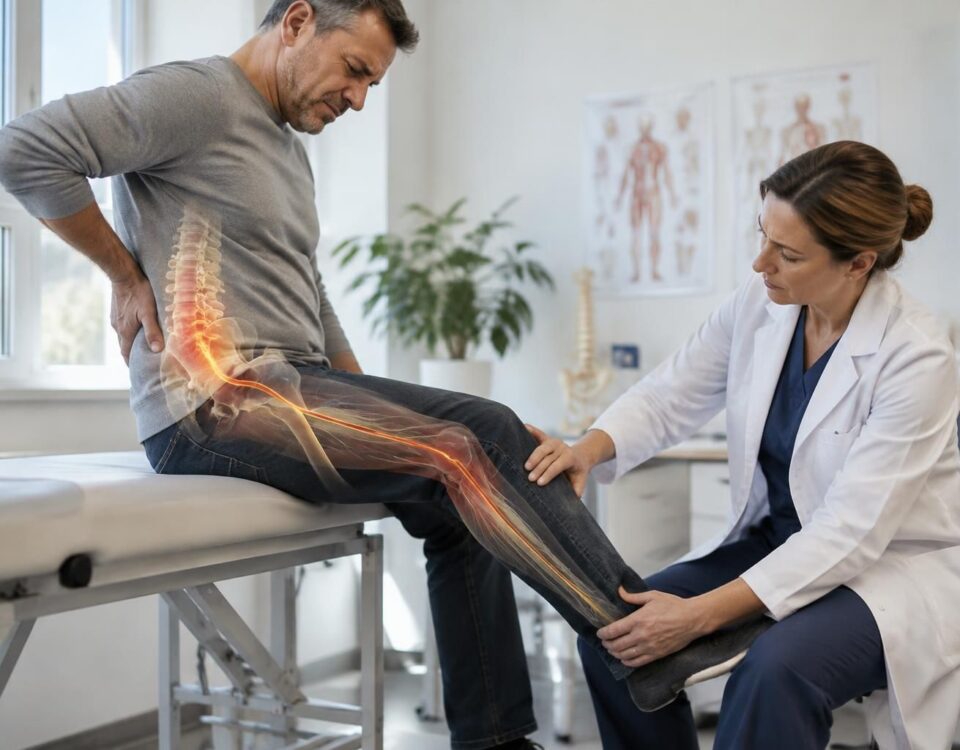
A rapidly intensifying pain resembling sciatica deserves special attention. It may be related to irritation of a nerve root, for example, in the presence of a herniated disc or narrowing around the nerve. Progressive weakness, loss of sensation in the saddle area, or urinary or bowel disorders require urgent medical evaluation. This article explains the signs to watch for, useful steps, and management options to discuss with a professional. Sciatica refers to pain that follows the path of an irritated nerve, often from the lower back or buttock to the thigh, calf, or foot. It can be accompanied by burning, electric shocks, tingling, or numbness. A back pain that remains localized does not always have the same causes as pain that radiates down the leg. Greater pain does not automatically mean that serious damage is occurring. However, a rapid worsening, pain that becomes intolerable, or the emergence of new symptoms justifies prompt evaluation. The evolution of the signs is as important as their intensity. You can find information on sciatica pain accompanied by progressive weakness. Pain may increase while sitting, bending the trunk, coughing, or sneezing. Some people also have difficulty walking, bending, or performing simple tasks like putting on their socks. These signs alone do not identify the cause, but they are useful to describe during a consultation. To better understand these situations, check out the pages on bending and pain in the leg and on everyday actions to adapt when dressing. Some symptoms may signal significant nerve damage or another issue that requires prompt attention. Go to the emergency room or contact emergency services if you have any of the following signs: Do not delay evaluation to try home treatment if any of these signs appear. Progressive weakness should be taken seriously, even if the pain remains manageable. A herniated or protruding disc may irritate a lumbar nerve root. Narrowing of the canal or an exit for the nerve may also contribute to the symptoms. Other causes include arthritis or, in some cases, irritation of tissues around the nerve. The pain felt is not sufficient to establish a diagnosis: a professional must consider the history of symptoms and examination results. Pain that increases when you bend may give an indication of the movements that provoke your symptoms, but it does not confirm a disc-related cause by itself. You can read the information presented on pain aggravated by bending and possible disc causes as well as disc desiccation and radiating pain. The professional will ask you about the onset of the pain, its path, intensity, and evolution. They may check sensitivity, strength, walking, and certain reflexes. They will also ask which movements or positions worsen or lessen the symptoms and if you have noticed weakness or urinary or bowel issues. An X-ray or MRI is not necessary in all cases. The professional determines if imaging is relevant based on symptoms, clinical examination, and warning signs. Before your appointment, note how long the pain has been worsening, the affected areas, changes in strength or sensitivity, and treatments already tried. To review symptoms and consultation reasons, check the guide on sciatic pain and when to consult. If you have no signs of emergency, avoid actions that trigger significant worsening and do not strain through painful activity. Prolonged complete rest is not necessarily helpful, but the level of activity should remain suitable for your symptoms. Do not start stretching or targeted exercises without professional advice, especially if the pain increases rapidly or if weakness appears. Seek advice from a doctor or pharmacist before taking medication, especially if you have other health issues or are already on treatments. A teleconsultation can help organize the next steps but does not replace an in-person examination when weakness, loss of sensation, or another concerning sign manifests. Management depends on the possible cause, the examination, and the evolution of symptoms. A doctor may suggest relief measures or request further examinations. For some individuals, non-surgical treatments may also be considered after evaluation. Motorized neurovertebral decompression, specific osteopathy, or a precision impactor may be discussed depending on the situation and contraindications. These approaches do not replace a medical diagnosis and are not suitable for everyone. At TAGMED Clinic, an assessment can help determine if the services offered are suitable for your situation. Consult the pages on sciatica treatment in Montreal / Mont-Royal and sciatica treatment in Terrebonne. If your symptoms worsen quickly, or if you have progressive weakness, consult a doctor or emergency service first, depending on the severity. A sciatica that worsens in a short period requires prompt attention, especially if new neurological signs appear. Loss of bladder or bowel control, saddle anesthesia, or significant or progressive weakness warrants an emergency consultation. In the absence of these signs, make an appointment to have the pain evaluated and receive appropriate advice. To complete your reading, consult the guide on symptoms and management of sciatica. About the author Sylvain Desforges, B.Sc., D.O., N.D., Doctor of Osteopathy and naturopath, is the founding president of TAGMED and the ACMA association. His practice focuses on chronic pain of the spine, lower back pain, and pain compatible with sciatica. Through SOS Sciatica, he offers educational content on the symptoms of sciatica, their possible causes, and the non-surgical options that may be considered based on evaluation. The care available at TAGMED Clinic may include, as appropriate, motorized neuro-vertebral decompression, specific osteopathy, or precision percussion. Medical disclaimer: The information and advice provided on this site do not replace the opinion, diagnosis, or treatment of a healthcare professional. Please note that Sylvain Desforges, B.Sc., D.O., N.D., doctor of osteopathy, is neither a medical doctor nor a physician and is not specialized in a medical specialty as defined by the Collège des médecins du Québec. Manual therapy, functional medicine, and sports medicine as described on this site exclude any medical treatment or diagnosis made by a physician or specialist. Always consult your doctor for any medical questions. For more details, please read our Complete Legal Notice.Sciatica and rapidly worsening pain: what does this evolution mean?
Signs that may accompany pain
When should you seek emergency care?
Possible causes of worsening sciatica
How does the evaluation proceed?
What to do while waiting for an evaluation?
What management options should be discussed?
What to remember about rapid worsening of sciatica
Sciatica: signs to watch for
- Pain that starts from the lower back or buttock and travels down the leg.
- Burning, electric shocks, tingling, or numbness.
- Pain that quickly becomes more intense or spreads.
What to do if the pain worsens quickly
- Quickly consult a healthcare professional if the pain increases significantly.
- Emergency: significant or progressive weakness, difficulty walking, loss of sensation in the groin.
- Emergency: loss of bladder or bowel control, fever, or severe pain.

A rapidly worsening sciatica deserves prompt evaluation: pain that descends into the leg may accompany nerve irritation, but new weakness, loss of sensation, or urinary or bowel issues may indicate an emergency. Track the evolution of symptoms, avoid actions that exacerbate them, and seek medical advice appropriate to their intensity.
What to do if the pain increases rapidly?
If the pain becomes significantly stronger within a few hours or days, spreads further down the leg, or prevents you from walking normally, contact a healthcare professional promptly. A same-day consultation is indicated if the worsening is significant, even in the absence of other signs. An examination will assess strength, sensitivity, and reflexes, and determine if further tests are necessary.
In the meantime, do not stay immobile in bed all day. Try to maintain gentle movements, such as short distances, only if they remain tolerable. Alternate positions and temporarily avoid lifting heavy objects, sudden twists, and activities that trigger strong radiating pain. Do not impose stretches or manipulations: if a movement intensifies the pain or causes additional tingling, stop it.

Sciatica and extreme leg pain: when to consult?
IN BRIEF Sciatica causes pain that starts from the lower back or buttock and radiates down the leg. If the pain is extreme, persistent, or limits your activities, consult quickly to evaluate the cause and determine the appropriate management. A…
Sciatica and Cauda Equina Syndrome: Signs to Know
IN BRIEF The cauda equina syndrome is a severe compression of nerves in the lower back, sometimes associated with sciatica. Loss of control of the bladder or bowels, numbness in the saddle area, or significant weakness in the legs are…
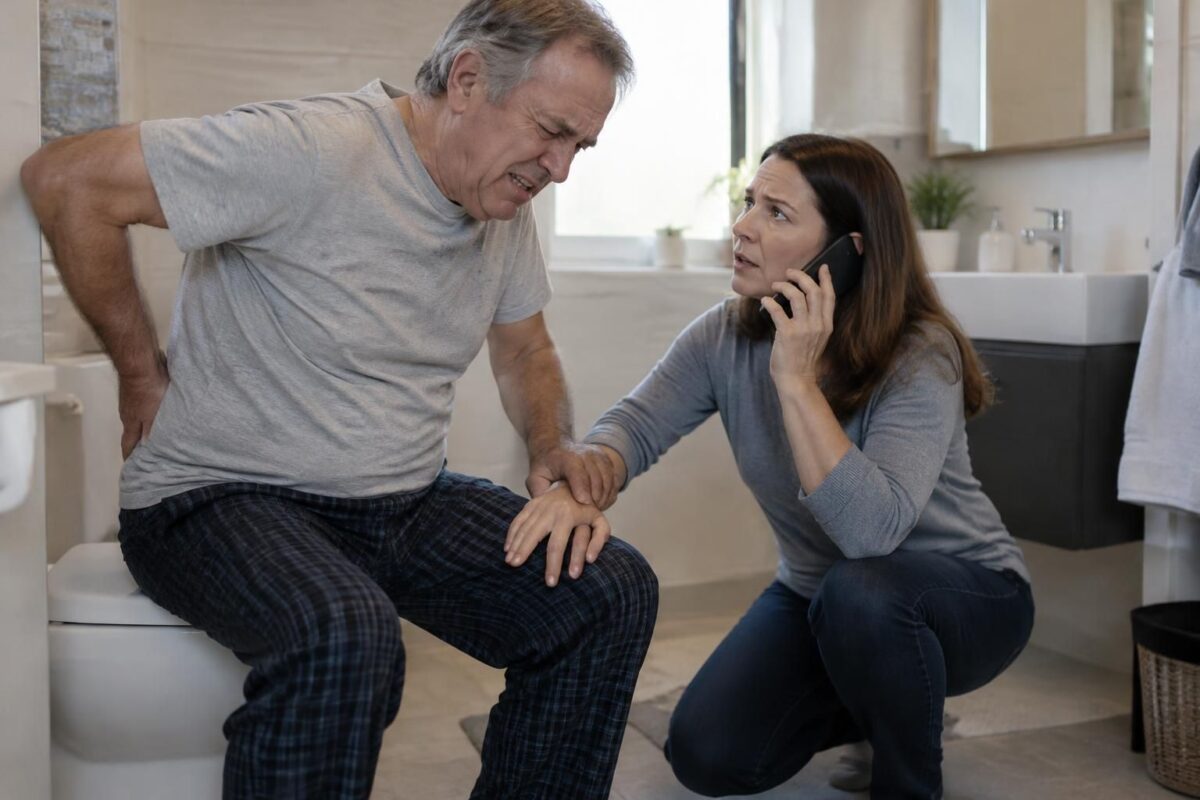
Sciatica and loss of bowel control: medical emergency
IN BRIEF Bowel control loss with sciatica is an alarming sign that may indicate severe nerve compression. This is not a symptom to treat at home: go to the emergency room immediately or call emergency services, especially if there is…

Sciatica and loss of urinary control: medical emergency
IN BRIEF Sciatica with loss of urinary control can indicate serious nerve compression, notably cauda equina syndrome. Sudden difficulty urinating, incontinence, loss of sensation in the perineum, or weakness in the leg require immediate evaluation in the emergency department. Prompt…
Recognizing emergency signs
Go immediately to the emergency room or contact emergency services if the sciatica is accompanied by any of the following signs:
- sudden difficulty urinating, loss of control of the bladder or bowels;
- numbness around the genitals, anus, or inner thighs, sometimes referred to as saddle anesthesia;
- significant or progressive weakness of one leg or foot, foot drop, or difficulty walking;
- fever with lower back pain, or pain that appeared after a significant trauma.
These symptoms require urgent evaluation. Do not wait for them to resolve on their own, and do not attempt to treat them only at home.
Preparing for a useful consultation
Note when the pain started and how it evolves. Specify its path — lower back, buttock, thigh, calf, or foot — as well as the presence of burning, shocks, tingling, or numbness. Indicate the movements that exacerbate the symptoms, difficulties walking, and treatments already tried. Bring, if you have them, the results of previous tests and a list of your medications.
Do not take any additional medication or change any prescribed treatment without consulting a doctor or pharmacist, especially in the case of chronic illness, pregnancy, or taking other medications.
Choosing appropriate management
Sciatica describes a set of symptoms; it does not allow for the identification of their cause on its own. A herniated disc, foraminal narrowing, or other problems can irritate a nerve root. Treatment depends on the assessment, the severity of the symptoms, and their progression. A conservative approach may be considered if appropriate, with follow-up to ensure that pain and neurological signs do not worsen. Neurovertebral decompression or manual care do not replace a medical evaluation or urgent care.
About the Author
Sylvain Desforges, B.Sc., D.O., N.D., Doctor of Osteopathy and Naturopath, is the founding president of TAGMED and the ACMA association. His practice focuses primarily on chronic spinal pain, lower back pain, and pain associated with sciatica. Care offered at the TAGMED Clinic may include, depending on the evaluation, motorized neurovertebral decompression, specific osteopathy, or precision percussion therapy.
Medical Disclaimer
This information is educational and does not replace a consultation, diagnosis, or treatment by a licensed health professional. The author is neither a physician nor a specialist in a medical specialty recognized by the Collège des médecins du Québec. The manual approaches described do not constitute medical acts. In case of rapid worsening, progressive weakness, urinary or bowel disturbances, loss of sensation in the saddle area, fever, or recent trauma, consult a physician or emergency service without delay.
| Element to Monitor | Concise Reference |
|---|---|
| Sciatic Pain | Radiates from the lower back or buttock down one leg. |
| Sensation | Burning, electric shock, shooting pain, or possible tingling. |
| Aggravating Factors | Coughing, sneezing, or prolonged sitting can intensify the pain. |
| Rapid Worsening | A pain that sharply increases or becomes difficult to tolerate requires prompt medical evaluation. |
| Leg or Foot Weakness | A new, significant, or progressive weakness warrants urgent consultation. |
| Urinary or Bowel Control | A loss of control or sudden difficulty urinating is a medical emergency. |
| Saddle Area Sensitivity | Numbness around the genitals or anus requires immediate evaluation. |
| Fever or Recent Trauma | Together with lower back pain, these signs require prompt consultation. |
Illustrative Testimonials: When Sciatica-like Pain Worsens Rapidly
Important Note: The testimonials below are fictional examples created for educational purposes. They do not originate from identifiable patients and do not allow for a diagnosis.
“The pain was going further down my leg”
At first, this person mainly felt pain in the lower back and buttock. Within a few days, shooting pains and tingling extended to the calf. As the pain intensified and disturbed sleep, they quickly sought medical evaluation rather than trying to do more exercises alone.
“My foot felt weaker”
In this example, pain radiating to the leg was accompanied by a new difficulty in lifting the foot. This change was taken seriously: any appearance or progression of muscle weakness requires prompt evaluation by a health professional. One should not wait for it to worsen before seeking advice.
“The pain changed suddenly”
This person described a pain that was bearable but became very intense in a short time and more limiting to walking. Rapid worsening deserves consultation to check the cause and determine appropriate care. The pain radiating down the leg can have several origins; only a professional can evaluate the situation.
When to Seek Immediate Help: Consult an emergency service if the pain is accompanied by loss of bladder or bowel control, difficulty urinating, numbness in the saddle area, significant or progressive weakness of the leg or foot, fever, or recent trauma. Severe pain or pain that worsens rapidly should also be evaluated quickly.
While waiting for professional advice, avoid movements or exercises that significantly worsen symptoms. Note when the pain started, its path, what exacerbates it, and any changes in sensitivity or strength; this information can assist during the evaluation.
Medical Disclaimer: This information is educational and does not replace a consultation, diagnosis, or treatment by a licensed health professional. The author is neither a physician nor a specialist in a medical specialty recognized by the Collège des médecins du Québec. Osteopathy, manual medicine, or functional support approaches do not replace medical follow-up.
Sciatica and Rapidly Worsening Pain: Understanding the Signs and Acting Promptly
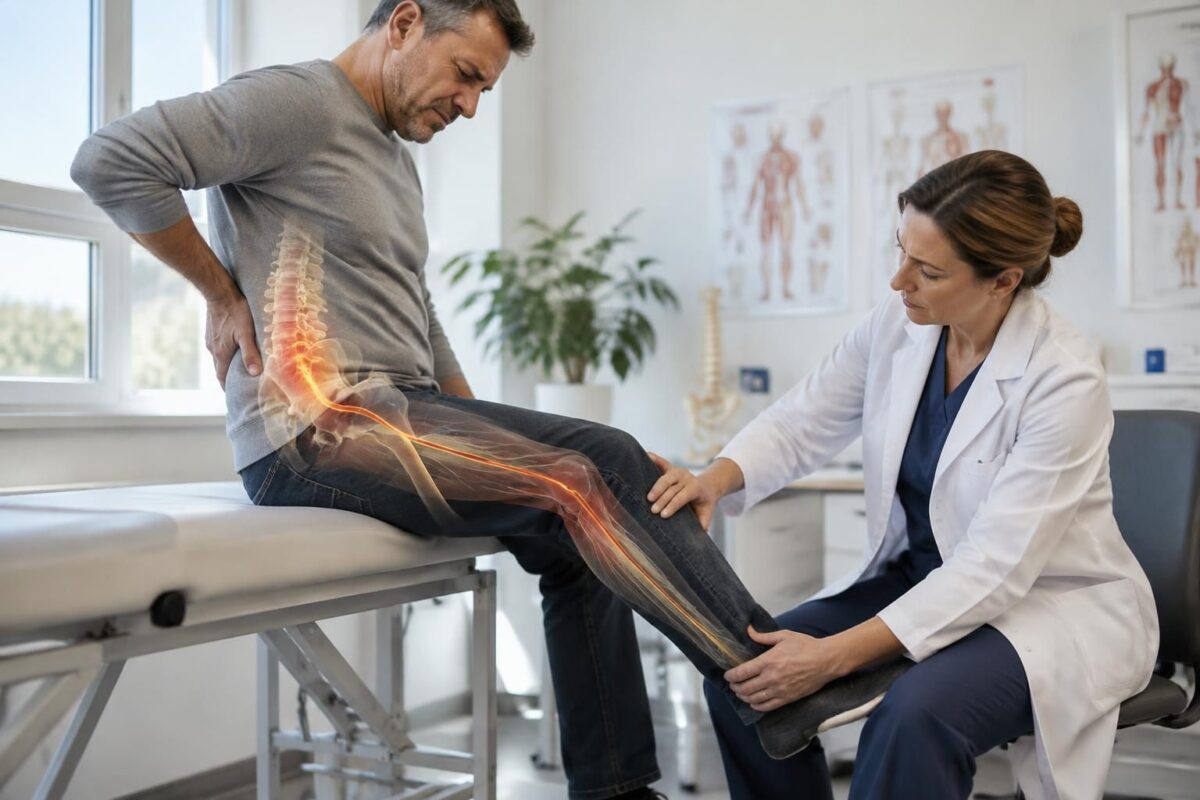
Pain starting from the lower back or buttock and descending into the leg may suggest sciatica. This term generally describes irritation of a lumbar nerve root and not a singular disease. The pain can be sharp, burning, or similar to an electric shock. Tingling, numbness, or weakness may also appear in the leg or foot.
When symptoms intensify rapidly, change in pattern, or become difficult to tolerate, it is important not to trivialize the situation. Worsening can have various explanations, including increased irritation of a nerve root, a herniated disc, or narrowing of the spaces where nerves pass. Only a healthcare professional can assess the situation and determine whether a clinical examination or further investigations are needed.
Sciatic pain often differs from simple lower back pain by its radiation below the knee, sometimes to the foot or toes. It may be more pronounced when sitting, coughing, or sneezing, but these characteristics alone are not enough to establish a diagnosis. The presence of leg pain does not automatically mean that surgery or specific treatment is necessary: management depends on the severity of the symptoms, their progression, and associated neurological signs.
In case of worsening, quickly contact a doctor or an authorized professional, especially if the pain significantly disrupts walking, sleeping, or daily activities. Describe precisely the onset of the symptoms, their course, intensity, and observed changes. Also mention any treatments already tried and any relevant history. A remote evaluation can help guide the process, but it does not replace a physical examination when required.
Some signs require urgent evaluation: difficulty urinating or loss of control over the bladder or intestines, numbness around the genitals or anal region, significant or progressive weakness in a leg or foot, fever, recent trauma, severe pain, or rapid deterioration. If you experience these symptoms, consult an emergency medical service without delay. They may indicate a problem requiring immediate management.
In the absence of urgent signs, complete and prolonged rest is generally not a strategy to undertake without professional advice. Gentle activity, adapted to tolerance, may sometimes be preferable, but movements that significantly increase symptoms should be avoided. Medications, exercises, physiotherapy, injections, or surgery require evaluation and individualized recommendations. Neurovertebral decompression, manual approaches, laser, or shock waves may not be suitable for every situation and do not replace a medical evaluation.
Sylvain Desforges, B.Sc., D.O., N.D., is the founding president of TAGMED clinics and the ACMA association. His practice focuses in particular on chronic spinal pain and low back pain compatible with sciatica. He is interested in integrating non-surgical approaches and technologies, including motorized neurovertebral decompression, based on the person’s evaluation and needs.
Medical warning: this information is educational and does not replace a consultation, diagnosis, or treatment by an authorized healthcare professional. The author is not a doctor and is not a specialist in a medical field recognized by the Collège des médecins du Québec. Osteopathy and manual medicine approaches do not replace medical follow-up.
A sciatic pain that worsens rapidly deserves special attention: pain that spreads, becomes very intense, or is accompanied by new weakness requires evaluation by a healthcare professional. Some signs—specifically loss of control over the bladder or intestines, numbness around the genitals, or significant weakness—justify an urgent consultation.
Rapidly worsening sciatica: why to take action
Sciatica generally refers to pain related to irritation of a nerve root in the lower back. It can start in the lumbar region or buttock and extend down the thigh, calf, sometimes all the way to the foot. Burning sensations, electric shocks, tingling, or numbness may also occur. To better recognize these manifestations, consult these resources on sciatica symptoms and when to consult and on its possible causes and symptoms.
A rapid worsening alone does not determine the cause. A herniated disc, narrowing around a nerve root, or other lumbar issues may be involved. The evolution of symptoms, their path, and the presence of neurological signs aid the professional in guiding the evaluation. You can also consult an overview on the duration and treatments generally considered.
Signs that require urgent help
Quickly go to the emergency room if you have a loss of urinary or bowel control, difficulty urinating, loss of sensation in the anal region, or significant or progressive weakness in a leg or foot. Intense pain accompanied by fever, or occurring after trauma, also requires rapid medical evaluation. These signs should not be managed solely through exercises or manual therapy.
A weakness in the leg that appears or worsens deserves particular attention, even if it is not accompanied by other symptoms. To learn more about this situation, consult the article dedicated to sciatica associated with leg weakness. If the pain becomes extreme, this resource also details when to seek evaluation without delay.
What to do while waiting for an evaluation
If no urgent signs are present, avoid staying completely still for long periods. Light activity, such as short walks based on your tolerance, may be preferable to prolonged rest. Temporarily reduce movements that clearly trigger pain and avoid forcing stretches or exercises that aggravate symptoms in the leg. Preventive and relief advice offered by Doctolib and Le Bon Nutriment can complement these guidelines, without replacing a personalized evaluation.
In daily life, be careful with repetitive movements, trunk twisting, and lifting loads. When cleaning, break tasks down and bring objects closer to your body rather than bending or twisting with weight. These articles address more specifically sciatica and household tasks, the repetitive motion associated with vacuuming, and movements to limit at the onset of disc-related sciatica.
A doctor or authorized healthcare professional can assess strength, sensitivity, reflexes, and the evolution of symptoms, and then determine if further examinations are indicated. Management options vary according to the cause, intensity, and duration of pain. A non-surgical approach or supportive care may be considered in some cases, but they are not suitable for all situations and should not delay medical evaluation if signs worsen.
About the author
Sylvain Desforges, B.Sc., D.O., N.D., Doctor of Osteopathy and naturopath, is the founding president of TAGMED and the ACMA association. He dedicates his practice to chronic pain of the spine, lower back pain, and pain compatible with sciatica, especially when the pain radiates down to the buttock, leg, calf, foot, or toes.
Through SOS Sciatique, he publishes educational content on the symptoms of sciatica, possible causes such as herniated discs, disc pinching, foraminal stenosis, or irritation of a lumbar nerve root, as well as non-surgical approaches that can be considered based on the assessment. At TAGMED Clinic, treatments may include, depending on the case, motorized neurovertebral decompression, specific osteopathy, or precision tapping.
For an assessment related to sciatica treatment in Montreal / Mont-Royal or sciatica treatment in Terrebonne, consult the services available at TAGMED Clinic.
Medical Warning
The information published on SOS Sciatique is provided for educational purposes and does not replace a consultation, diagnosis, opinion, or treatment performed by a physician or another authorized healthcare professional. The author of this article is neither a doctor nor a specialist in a medical specialty recognized by the Collège des médecins du Québec. The osteopathy, manual therapy, or functional support approaches described on this site do not constitute medical acts and are not intended to replace medical follow-up.
Consult a physician or an emergency service in case of loss of urinary or bowel control, anesthesia in the saddle area, significant or progressive weakness of the leg or foot, fever, recent trauma, severe pain, or rapid deterioration. For more details, please read our Legal Notice.
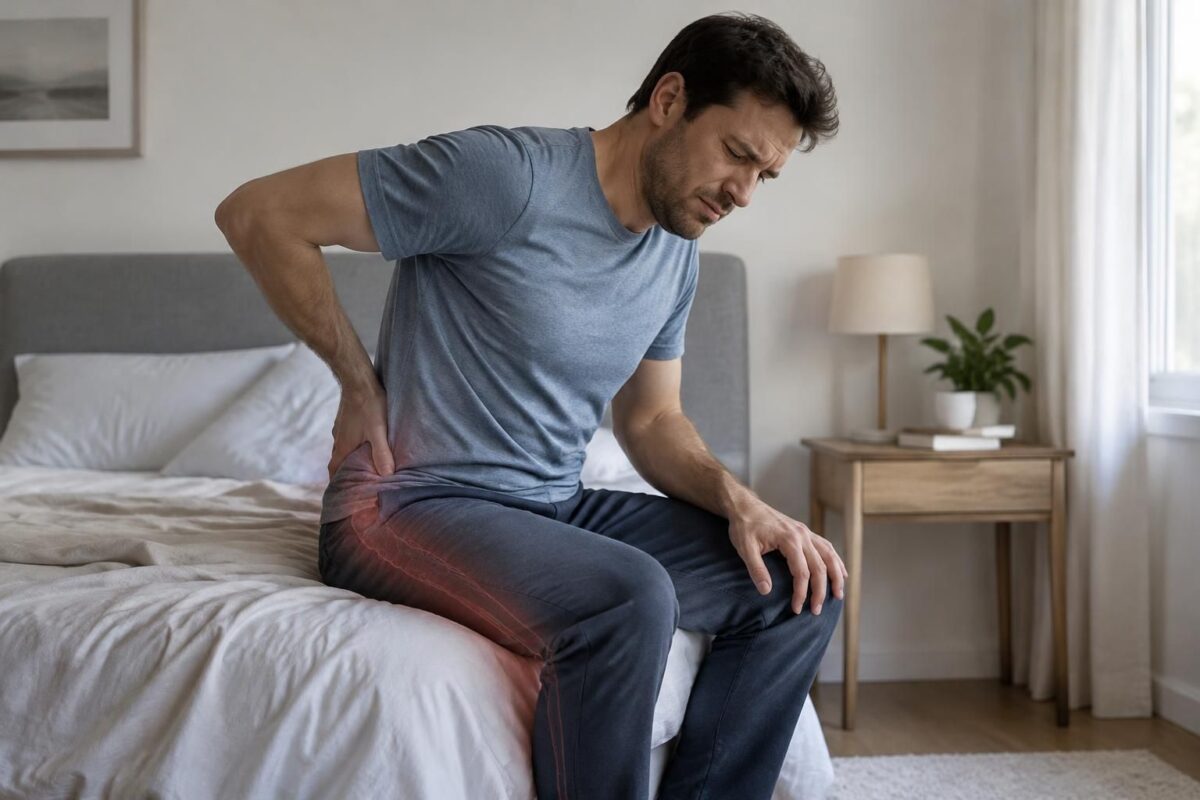
Sciatica and pain with saddle numbness
IN BRIEF Cauda Equina Syndrome refers to pain radiating down the leg accompanied by a loss of sensation around the genitals, anus, or inner thighs. This symptom may indicate severe nerve compression: it is not discomfort to treat at home.…

Sciatica and pain with progressive weakness
IN BRIEF Sciatica causes pain that radiates from the lower back down the leg; however, progressive muscle weakness is not a symptom to be taken lightly. It requires quick medical evaluation to search for the cause and determine the appropriate…

Sciatica and pain with general discomfort
IN BRIEF A sciatica causes pain that starts in the lower back or buttock and radiates down the leg. A general discomfort, especially if accompanied by fever or rapid worsening, should not be automatically attributed to sciatica: consult a healthcare…

Sciatica and pain with a history of cancer: caution
IN BRIEF Sciatica causes pain that can radiate from the lower back down to the leg. With a history of cancer, new, persistent, or worsening pain should be quickly evaluated by a healthcare professional: its cause must be identified before…

Sylvain Desforges, B.Sc., D.O., N.D., docteur en ostéopathie
Dr Sylvain Desforges, B.Sc., D.O., N.D., osteopath, is the founding president of TAGMED and of the ACMA association. He dedicates his practice to chronic spinal pain, low back pain and symptoms compatible with sciatica, particularly when pain radiates toward the buttock, leg, calf, foot or toes.
Through SOS Sciatique, he publishes educational content on sciatica symptoms, possible causes such as disc herniation, disc narrowing, foraminal stenosis or irritation of a lumbar nerve root, as well as non-surgical approaches that may be considered according to the evaluation. At Clinique TAGMED, care may include, depending on the case, motorized neurovertebral decompression, specific osteopathic care or precision percussion.
For an evaluation related to sciatica treatment in Montreal / Mount Royal or sciatica treatment in Terrebonne, please consult the services available at Clinique TAGMED.
Medical disclaimer
The information published on SOS Sciatique is provided for educational purposes only and does not replace a consultation, diagnosis, opinion or treatment provided by a physician or another authorized healthcare professional. The author of this article is neither a medical doctor nor a specialist in a medical specialty recognized by the Collège des médecins du Québec. The osteopathic, manual medicine or functional support approaches described on this site do not constitute medical acts and are not intended to replace medical follow-up.
Consult a physician or emergency service in cases of loss of bladder or bowel control, anesthesia in the saddle area, significant or progressive weakness in the leg or foot, fever, recent trauma, severe pain or rapid worsening of symptoms. For more details, please read our Legal Notice.