How osteopathy treats pain related to bad postures
27/06/2026
Technological advances applied to osteopathy
27/06/2026
In short
| In short, theosteopathy for Preventing injuries related to repetitive activities is an approach manual which acts on theMusculoskeletal balance and the Joint mobility to limit overuse. she offers prevention, performance and recovery improved by correcting imbalances and strengthening the Neuromuscular coordination. The program is personalized, including simple exercises and ergonomic advice. Accessible locally, it is aimed at both professional athletes and active amateurs and favors an approach non-invasive and without pharmaceuticals. |
As part of Repetitive activities, theosteopathy is positioned as an effective preventive approach. By evaluating the posture, movement patterns and muscle tension, the osteopath identifies areas at risk and offers adjustments, targeted exercises and ergonomic advice to optimize the mobility and the stability of the body.
Thanks to soft but precise techniques, it improves the flexibility, reduces loads on tendons and joints, and promotes faster recovery. Result: risk reduction of tendinopathies, lower back pain and recurrent sprains, with better performance and increased longevity in the activity.
In the demanding field of sport and repetitive activities, osteopathy serves as an active prevention to limit injury. This article, written by an experienced professional, explains how a global osteopathic approach can preserve mobility, correct imbalances and strengthen neuromuscular coordination. You will discover the mechanisms, techniques and practical advice for integrating osteopathy into a work or training routine to prevent lesions related to repetition of gestures.
Repeated gestures, sustained loads and maintained postures require the musculoskeletal system continuously. Without intervention, these constraints can generate tension, microtrauma and chronic muscle fatigue. Osteopathy aims to prevent these effects by adopting a global vision of the body. The work focuses on joint mobility, postural balance and coordination between muscles and nerves, to reduce the risk of pain and injury.
The role of osteopathy is to help the body regain its functional balance. This requires postural evaluation, identification of tension zones and the implementation of appropriate preventive measures. This approach is part of a global health approach, where the objective is to improve resilience and the ability to bear repeated loads without compromising performance.
For athletes and professionals exposed to repetitive gestures, the integration of osteopathy into a prevention program makes it possible to treat the root causes of pain before they turn into injury. It acts as a proactive watch, completing the warm-up, recovery and reinforcement routines. Resources dedicated to osteopathy and prevention can enlighten you, in particular via content offered by ACMA and other professional organizations.
Movement-oriented prevention
Effective prevention is based on reducing excessive stress and improving the way the body absorbs and transmits loads. The osteopath evaluates movement patterns, neuromuscular synchronization and asymmetries, then offers progressive corrections to balance muscle chains and limit local overloads.
Key Osteopathic Techniques for Injury Prevention
Several osteopathic approaches are relevant for the prevention of injuries related to repetitive activities. They aim to restore structural balance, improve circulation and promote better recovery after exercise.
Joint mobility and coordination
Gentle, targeted techniques improve the range of motion and fluidity of technical gestures. Better joint mobility makes it possible to perform repetitive gestures with a lower energy expenditure and a reduction in tension. This contributes to better neuromuscular coordination and a reduction in the risk of injury during repeated loads.
Postural correction and balance
By adopting a global perspective of the body, the osteopath identifies the imbalances and compensates them with appropriate manual approaches. The objective is to reduce abnormal loads and improve alignment, in order to limit tensions on tendons, ligaments and joints solicited by repetitive gestures.
Release and recovery
Muscle relaxation and lower tension promote better circulation and more effective recovery after exercise. Optimal recovery helps maintain performance and prevent pain related to movement repetition.
To deepen the practical aspects and the concrete benefits, you can consult specialized resources on sossciatica.com and clinicagmed.com, which present approaches to osteopathy and prevention adapted to sports and professional practice.
Practical integration into the routine of the athlete and the asset
To maximize benefits, osteopathy is part of a preventive approach combining regular evaluation, movement education and personalized follow-up. The objective is to anticipate tensions and adjust gestures and habits before the appearance of pain or signs of overuse.
Here are some practical integration areas:
periodic evaluation and Personalized follow-up: Plan regular visits with an osteopath to monitor mobility, posture and muscle balances. An accurate initial assessment allows you to identify the risk areas and establish a suitable program.
Overheating and preparation: Adopt overheating protocols that prepare muscles and joints for repeated gestures, while improving circulation and neurological preparation. The osteopath can offer simple and effective protocols to carry out before the activity.
Posterior management and recovery: Integrate gentle relaxation and drainage techniques when necessary to facilitate recovery between sessions and training units. This can help limit aches and painful episodes that interrupt the practice.
To learn more, consult the resources on sossciatica.com and sosherniateddisc.com for additional perspectives on the prevention and rehabilitation of musculoskeletal disorders related to repetitive effort.
Training and professional executives influence practice. Osteopaths are trained in particular at NUMSS and NAO (National University of Medical Sciences, National Academy of osteopathy) and evolve under the auspices of professional associations such as ACMA, College of Canadian Osteopaths and College of Canadian Osteopaths. This approach guarantees an approach based on respect for safety and effectiveness for prevention and performance.
Resources and practical advice can also be viewed on Cliniquetagmed.com and other specialized sources in osteopathy sport while remaining aligned with professional recommendations.
For additional information on preventive aspects and performance optimization through osteopathy, see the resources dedicated to sports osteopathy and injury prevention on sossciatica.com and decompressionneurovertebrale.com.
Key benefits often seen in athletes and professionals exposed to repetitive actions:
Improved mobility, Prevention of imbalances, Improved balance and Reduction of muscle tension, which results in a better ability to maintain performance over the long term.
For additional insights, you can consult the resources dedicated to osteopathy and injury prevention on sossciatica.com and on clinicagmed.com.
Medical Disclaimer: The information and advice provided on this site does not replace the health professional’s diagnosis or treatment. Please note that Dr. Sylvain Desforges osteopath is neither a doctor of medicine nor a doctor, and is not a specialist in a medical specialty as defined by the Collège des Médecins du Québec. Manual medicine, functional medicine and sports medicine as described on this site exclude any medical treatment or diagnosis made by a doctor or specialist doctor. Always consult your doctor for any medical questions. For more details, please read our full legal notice.
- Biomechanical and postural assessment of Repetitive gestures
- detection of Muscle imbalances and asymmetries
- Identification of areas of tension and reduced mobility
- Analysis of muscle chains and joint loads
- Simple Ergonomic Recommendations
- gentle mobilizations and Improving mobility and from the proprioception
- Relaxation myofascial To reduce tension and microtrauma
- Warm-up and recovery protocols suitable
- Regular follow-up and advice custom
- Expected results: pain reduction, better performance and sustainability

Introduction and general framework
In the professional and sports world, Repetitive gestures expose the body to accumulated tensions. thePreventive osteopathy Proposes a global and individualized approach to limit risks, optimize mobility and promote effective recovery after exercise. This article presents practical recommendations for integrating these principles into the daily life of people exposed to repeated gestures, in order to preserve health and performance.

How osteopathy improves the quality of life of active people
In short In short, theosteopathy is a global approach that Optimizes mobility and the function of the body of ACTIVE PEOPLE, for a better quality of life. It helps prevent injury and reduce Musculoskeletal pain While promoting the Sports recovery.…
Biomechanical assessment and personalized prevention
A Osteopathic evaluation Initial makes it possible to identify areas of tension, imbalances and muscle chains that support repetitive gestures. This human and precise step serves as the basis for a personalized prevention plan.
Planning: Schedule regular follow-ups and adjustments according to the activity schedule, the type of repeated gestures and workloads. The objective is to anticipate fragility points and to make proactive rather than reactive corrections.

Osteopathy and sports recovery: prepare the body for lasting performance
In short In short, Osteopathy and Sports recovery is one Global manual approach that sustainably prepares the body for the effort by restoring mobility and circulation After the effort. It is a discipline that acts on the sinews, the joints,…
Mobility and joint balance
Targeted mobility and release of tensions
IMPROVE THE Joint mobility And freeing muscle tension helps to avoid blockages and preserve an amplitude of movement adapted to professional or sporting gestures. Soft and appropriate techniques promote better fluidity of repetitive gestures.
Balance of muscle chains
Osteopathic work aims to correct the Postural imbalances and functional that cause localized overloads. By working on muscle chains and local tensions, we obtain a more harmonious load distribution and a reduction in the risk of tendinopathies, low back pain and associated inflammation.
Why Osteopathy Is Essential For Recovery People
In short In short, Osteopathy in convalescence is an approach manual and holistic which helps to accelerate the recovery by restoring The balance, the mobility and a good circulation fabrics. it contributes to Reduce the pain, support the Back to…
Proprioception, coordination and injury prevention
Proprioception and engine control
The strengthening of the proprioception and neuromuscular coordination improves the accuracy of gestures and reduces the risk of false movements. Targeted exercises complement osteopathic interventions to promote better stability during repetitive activities.

Osteopathic manipulations to strengthen post-traumatic muscles
In short In short, Osteopathic manipulations for Strengthen post-traumatic muscles constitute a gentle manual approach aimed at restoring the mobility, reduce the pain and facilitate the Functional rehabilitation After a injury. What is Is it? A series of precise gestures…
Practical prevention program
For effective prevention of repetitive gestures, focus on a four-part approach:
- Warming up and muscular preparation adapted to the type of effort, in order to increase flexibility and reduce the risk of contractures.
- Mobilization and relaxation Soft tissues and fascias to reduce tension and improve circulation.
- Reinforcement and stability Stabilizing muscle groups and muscles solicited by repeated gestures.
- Recovery and ergonomics: Plan rest periods, adjust postures and optimize the work environment to limit constraints.

Osteopathy and prevention of work-related musculoskeletal disorders
In short theosteopathy is one Manual approach that restores body balance and prevents MSD related to work. Its advantages: reduction of tension, improvement of mobility and prevention of chronic pain. She is preventive and healing, suitable for office and trades…
Warm up, recovery and feeding
One Structured overheating Prepares tissues and increases load tolerance. Active recovery, gentle movements and targeted stretches facilitate tissue repair and circulation of essential nutrients.
A lifestyle Adapted (hydration, diet rich in lean protein, fruits and vegetables, and omega-3) supports muscle repair and inflammatory management after repeated effort.

The benefits of osteopathy to treat muscle imbalances
In short theosteopathy is a manual approach to restore themuscle harmony and postural considering the body as a whole. Its main benefits include the reduction of aches and tensions, the improvement of the mobility and from the posture, and prevention…
Essential elements to remember
Osteopathy, integrated into a sustainable approach, acts on mobility, balance and prevention injuries related to repetitive activities. Its effectiveness is based on a personalized evaluation, postural hygiene and a reinforcement and recovery program adapted to each profile.
| Element | Concise description |
|---|---|
| Detection and preventive evaluation | overall assessment of postures and movements to identify risks and adapt the program. |
| Targeted joint mobility | Improvement of the mobility Joints solicited to reduce repetitive stresses. |
| Correction of imbalances | recovery of a balance muscle chains and load on the joints. |
| Proprioception and balance | Strengthening of the proprioception and thebalance to prevent faulty actions. |
| Preparation for exercise and warming up | education and Warm-up exercises suitable for preparing the body and limiting tension. |
| Recovery and management of tensions | Techniques of relaxation and of Light drainage to promote recovery. |
| Frequency and tracking | plan of monitoring regular to adjust protocols and prevent new tensions. |
| osteopathic techniques used | Use of Gentle manipulations, Myofascial relaxation and Appropriate mobilization to restore movement. |
| Measurable impact and benefits | reduction of Recurrent pain, better recovery and decreased risk of long-term injury. |
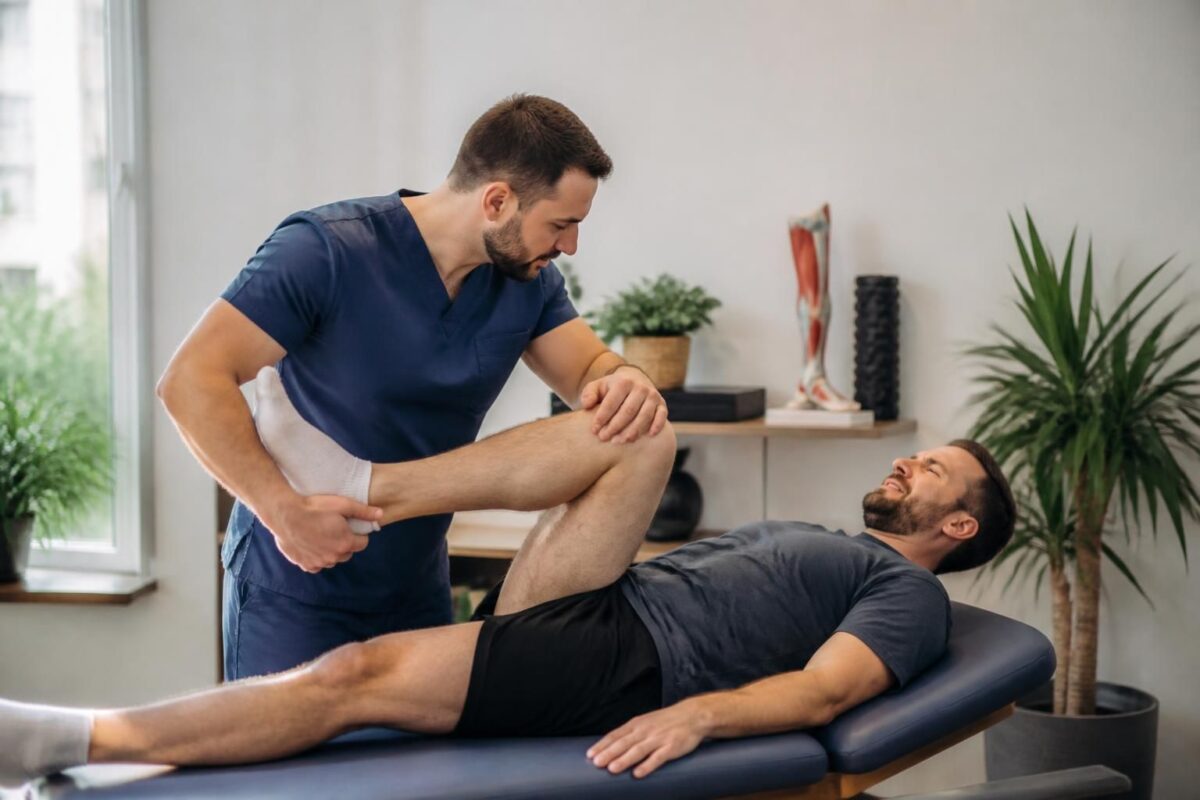
Osteopathy and chronic leg pain: regaining an optimal quality of life
In short In short, Osteopathy is one Global manual approach aimed at reducing Chronic leg pain and improve the quality of life. What is it? Non-drug therapy using the hands to identify restrictions and treat lesional chains. How does it…
Testimonials: Osteopathy to prevent injuries related to repetitive activities
“Since I joined theosteopathy In my routine, my mobility improved and my repetitions are smoother. This targeted approach allows me to Prevent injury related to my daily training sessions and continue to progress without interruption. »
“As a professional dancer, repeated gestures on stage are a huge strain on the body. With theosteopathy, I felt a better flexibility and a reduction in muscle tension, which drastically reduces the risk of injury and improves my recovery after each performance. »
“On the court, the exchanges and the repeated gestures putting a strain on the shoulder and the torso, theosteopathy helped me rebalance my muscle chains. Since then, my movements are cleaner and I feel a real reduction in pain related to the effort, a real victory in terms of prevention. »
“As a developer, I spend hours in front of the computer and neck pain tends to accumulate. theosteopathy allowed me to improve my posture, to release tensions and maintain a prevention Effective against pain caused by repetitive gestures. »
“My job as a cabinetmaker imposes repetitive gestures and heavy loads on me. thanks to theosteopathy, I found a correlation direct between a better mobility and less lower back pain. It has become an essential step for Prevent injury and extend my career. »
“As a pianist, repetitive micro-movements caused me diffuse muscle fatigue. The regular intervention of an osteopath helped me to release tension and to Prevent pain post-performance, while maintaining excellent recovery between concerts. »
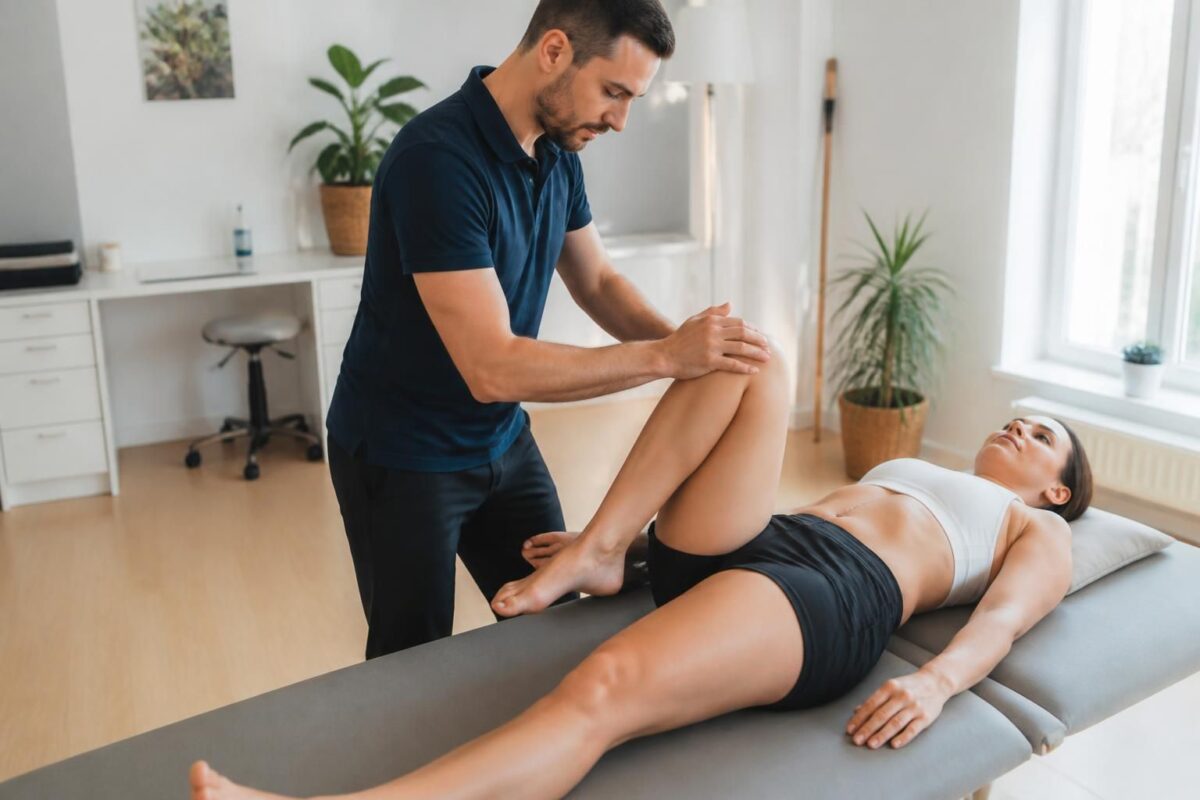
How osteopathy supports recovery after complex surgery
In short In short, Post-operative osteopathy is an approach fresh which supports the recovery After a Complex surgery. It helps to reduce the pain and the fatigue, improves the mobility and accelerates the healing thanks to a better vascularization and…
Preventive osteopathy and repetitive activities: preserve health to last
Dr. Sylvain Desforges, Expert in osteopathy, Naturopathy and manual medicine, holds the position of founding president of TagMed and the ACMA association. His career is guided by innovation in health and a clear priority: to prevent injuries related to repetitive gestures at work and in sport. Through its approach, osteopathy becomes a concrete lever of prevention and of performance, intended for all those who undergo the cumulative constraints of repetitive activities.
His approach is based on a global vision of the body: a careful evaluation of muscle chains, postural patterns and interactions between mobility and load. By scrutinizing the mechanisms that repeat and accumulate, it identifies the sensitive areas and anticipates tensions before they turn into pain or injury. This approach places the prevention At the heart of the sporting and professional course, in order to optimize the mobility, balance and Neuromuscular coordination.
The osteopathic techniques used in this context favor the Joint mobility and the fluidity of technical gestures. Soft mobilizations, myofascial relaxation and balancing of muscle chains aim to restore a natural amplitude of movements and correct imbalances. Result: less tension, better distribution of loads and a reduction in superfluous muscle work during repetitive acts, which protects the joints and tendons in the long term.
In trades and disciplines where gestures are repeated daily, preventive osteopathy results in tangible gains: reduction in pain related to wear, improvement in mobility and accelerated recovery between periods of effort. By working on alignment and the kinetic chain, the osteopath helps to avoid compensation that inevitably ends up causing injury and chronic fatigue.
This approach is designed to fit into a global and personalized program. It begins with an in-depth initial evaluation, followed by a tailor-made plan and exercises to be carried out at home or at the workplace. Osteopathy, coupled with appropriate warm-up routines, ergonomic advice and thoughtful reinforcement, provides a sustainable basis for preserving health and supporting performance over time.
Dr. Desforges focuses on evidence-based practice: interventions are aimed at both prevention and proactive tension management. By integrating complementary technologies and osteopathic principles, it proposes an approach preventive which helps to lengthen the duration of sports or professional practice without pain, while promoting better circulation and effective recovery.
For those looking for expertise focused on Prevention of injuries related to repetitive activities, its approach offers a concrete path to sustainability: a body that optimizes with respect for natural mechanisms, improved stability and sustained performance. Services and associated consultations can be explored within TagMed, where osteopathy is positioned as a pillar of maintaining active and sustainable health.
This article highlights how theosteopathy can be used as an effective lever for Prevent injury related to Repetitive activities, by acting on the mobility, balance and neuromuscular coordination. It offers a proactive approach that fits into a training and recovery schedule, in order to preserve health and optimize performance over the long term.
In the context of repetitive activities, theosteopathy acts on the fundamental mechanisms of the movement. By promoting a Joint mobility found and an Reduction of muscle tension, it makes it possible to limit loads on musculoskeletal structures and to reduce the risk of chronic microtraumas.
Prevention requires a Biomechanical assessment personalized and the implementation of a Warm-up program and targeted stretching. Ergonomic advice and postural adjustments help distribute loads in a more balanced way, reducing the risk of long-term injury.
key osteopathic techniques such as Myofascial relaxation, the gentle mobilization and gentle joint manipulations restore the range of motion and improve the proprioception. This improvement in the perception of the body in space translates into a better precision of technical gestures and a reduction of postural errors.
Beyond injury prevention, osteopathy promotes more effective recovery and can improve performance allowing a smoother resumption of efforts after repetitive fatigue. This approach combines naturally with a Food hygiene adapted and to a hydration Sufficient to optimize healing and energy mechanisms.
To deepen the benefits and practical approaches, several specialized resources describe how osteopathy can be integrated into a global strategy for the prevention of sports injuries and repetitive professional activities. For example, you can view articles explaining the preventive role of osteopathy and the approaches associated with recovery and performance on sites like Informative link on the global approach and the resources dedicated to the prevention of sports injuries on These specialized publications.
For those who want a practical perspective and concrete advice, theosteopathy Can be based on warm-up protocols, mobility exercises and recovery strategies adapted to each discipline. Additional studies and guides underline the importance of regular monitoring and personalized support to maximize preventive effectiveness and maintain healthy progress over the long term. To enrich your knowledge, you can also explore resources dedicated to sports injury prevention and optimized recovery via articles such as those published on Osteopathy Guide and other specialized sources.
To go further, discover additional resources on the prevention of injuries linked to repetitive gestures and the mechanisms by which osteopathy can intervene in your sports or professional routine, in particular through analyzes and practical recommendations available on various online media.

Dr Sylvain Desforges, B.Sc., D.O., N.D., osteopath, is the founding president of TAGMED and of the ACMA association. He dedicates his practice to chronic spinal pain, low back pain and symptoms compatible with sciatica, particularly when pain radiates toward the buttock, leg, calf, foot or toes.
Through SOS Sciatique, he publishes educational content on sciatica symptoms, possible causes such as disc herniation, disc narrowing, foraminal stenosis or irritation of a lumbar nerve root, as well as non-surgical approaches that may be considered according to the evaluation. At Clinique TAGMED, care may include, depending on the case, motorized neurovertebral decompression, specific osteopathic care or precision percussion.
For an evaluation related to sciatica treatment in Montreal / Mount Royal or sciatica treatment in Terrebonne, please consult the services available at Clinique TAGMED.
Medical disclaimer
The information published on SOS Sciatique is provided for educational purposes only and does not replace a consultation, diagnosis, opinion or treatment provided by a physician or another authorized healthcare professional. The author of this article is neither a medical doctor nor a specialist in a medical specialty recognized by the Collège des médecins du Québec. The osteopathic, manual medicine or functional support approaches described on this site do not constitute medical acts and are not intended to replace medical follow-up.
Consult a physician or emergency service in cases of loss of bladder or bowel control, anesthesia in the saddle area, significant or progressive weakness in the leg or foot, fever, recent trauma, severe pain or rapid worsening of symptoms. For more details, please read our Legal Notice.