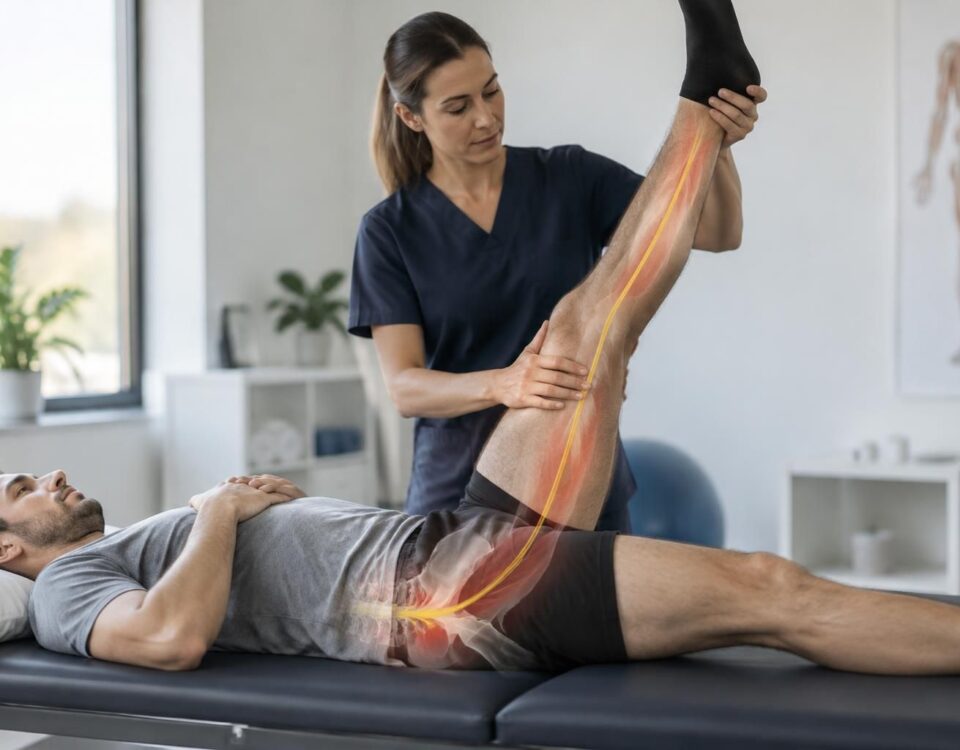
Sciatica: why the pain pathway helps to identify the cause
06/07/2026
Sciatique à Montréal: signes qui indiquent qu’un traitement ciblé est nécessaire
07/07/2026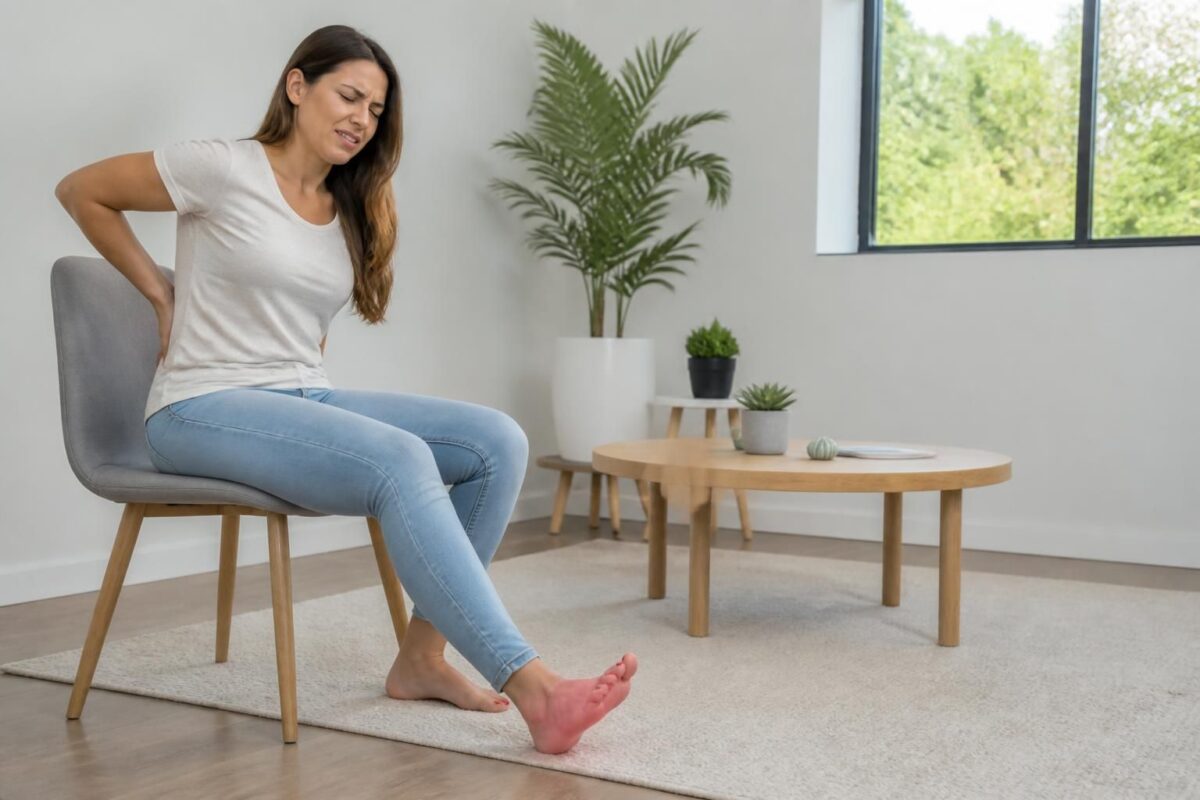
IN BRIEF
| In brief, sciatica and foot numbness in a sitting position refer to pain and tingling sensations traveling along the sciatic nerve when sitting for extended periods. The main benefits or applications consist of achieving quick relief, prevention of flare-ups, and improved posture and circulation in the back and legs. How does it work? By combining a proper posture, regular active breaks, and targeted stretches, pressure on the lumbar discs and inflammation of the sciatic nerve is reduced, thus decreasing numbness and pain. In Paris, this content is particularly aimed at professionals working in an office and anyone seeking simple and effective solutions to regain comfort while sitting. |
Quick summary on Sciatica and foot numbness in the sitting position. Sitting too long increases pressure on the lumbar discs and can irritate the sciatic nerve, causing pain and sometimes foot numbness.
- Posture and ergonomics: prioritize an ergonomic chair with lumbar support, feet flat on the ground, and knees at a 90-degree angle to limit compression.
- Breaks and stretches: plan regular active breaks (about every 30 minutes) and practice gentle stretches, especially for the piriformis.
- Posture variations: alternate positions rather than remaining fixed in a single posture to reduce strain on the nerve.
- Targeted exercises: strengthening stabilizing muscles and performing back stretches can decrease inflammation around the sciatic nerve.
- When to consult: if numbness is accompanied by weakness, loss of sensation, urinary issues, or if severe pain persists, consult a healthcare professional.
This article, written by a healthcare professional and expert, addresses the link between sciatica and foot numbness in a sitting position. It explains the mechanisms, signals to watch for, and practical measures to prevent and relieve these symptoms. The goal is to provide clear and usable information while guiding towards a professional assessment when necessary.
Understanding the Link Between Sitting and Numbness
The sciatic nerve runs from the lower back down to the leg. When sitting for long periods, the spine can experience increased pressure and tension around the nerve. This pressure can cause pain and numbness that starts in the back and sometimes descends to the foot. Elements such as posture, leg position, and lack of position variation throughout the day play an important role in the onset and intensity of symptoms.
In some cases, foot numbness may be accompanied by sensations of heat, tingling, or temporary weakness. Pain can be exacerbated by poorly adjusted workstations, such as a seat without lumbar support, a misaligned screen, or a desk that is too high or too low.
Warning Signs and When to Consult
Consult promptly if you observe:
- Progressive weakness in one leg or foot,
- Loss of sensation or tingling that extends to the perineum, or severe pain that does not diminish with rest,
- Difficulties urinating, loss of bowel control, or extreme pain that does not respond to usual measures.
In these situations, a medical evaluation is essential to confirm the diagnosis and guide treatment.
Prevention and Action in Daily Life
To limit the onset and intensity of symptoms, adopt simple and regular gestures throughout the day.
- Ensure that your feet are flat on the ground and that your knees form approximately a 90-degree angle.
- Keep the lower back in contact with the backrest and use lumbar support if necessary.
- Avoid crossing your legs for extended periods and alternate positions every 20 to 30 minutes.
- Incorporate active breaks and gentle movements, such as standing up, walking a few steps, and lightly stretching without forcing.
- Use workstations that encourage position variation, including ergonomic solutions or dynamic seating devices whenever possible.
For further exploration, you can check the following resources that address the topic and symptom management:
- Signs to watch for when the foot shows weakness related to sciatica
- General information on neurovertebral decompression
- Resources on herniated discs and their implications
- Other resources related to herniated discs
- General resources on sciatica
Note that some situations require clinical evaluation. Consulting healthcare professionals is recommended if symptoms persist despite general measures or worsen.
Management and Choosing Care Locations
A comprehensive evaluation can help determine the exact origin of numbness and guide treatment appropriately. When necessary, a consultation with a specialized team can be helpful to determine the most relevant options based on your context.
The TAGMED center in Montreal or Terrebonne offers evaluations and tailored clinical approaches. For more information, visit TAGMED Clinic.
For additional information and resources directly related to the reference areas, you can consult the following resources:
sossciatique.com,
decompressionneurovertebrale.com,
sosherniediscale.com,
sosherniateddisc.com,
sostunnelcarpien.com.
Medical disclaimer: The information and advice provided on this site do not replace the opinion, diagnosis, or treatment of a health professional. Please note that Dr Sylvain Desforges, osteopath, is neither a medical doctor nor a physician, and is not a specialist in a medical specialty as defined by the Collège des médecins du Québec. Manual medicine, functional medicine, and sports medicine as described on this site exclude any medical treatment or diagnosis made by a physician or specialist physician. Always consult your doctor for any medical questions. For more details, please read our complete Legal Notice.
- Causes and triggers: Prolonged sitting increases pressure on the lumbar discs and the sciatic nerve.
- Signs and symptoms: numbness of the foot and pain radiating down the leg.
- Equipment and conditions: suitable chair and lumbar support to maintain the natural curve.
- Quick actions: regular breaks (every 30 minutes) and gentle stretches.
- Posture and movements: feet flat, back supported, and varying positions to avoid overload.
- Helpful exercises: plank, bridge, and stretches targeting the piriformis and hamstrings.
- Sustainable prevention: adjustable desk, lumbar accessories, and equipment that facilitates mobility (e.g., walking mat).
- When to consult: weakness, loss of perineal sensation, urinary difficulties, or pain not relieved by basic measures.

This guide presents the mechanisms linking sciatica and foot numbness while sitting, followed by practical recommendations to reduce symptoms through adapted ergonomics, active breaks, and simple exercises that can be integrated into daily life.
Understanding the link between Sciatica and foot numbness while sitting
Sciatica may present as pain that descends down the leg and, sometimes, as numbness of the foot when the sciatic nerve is irritated or compressed. Prolonged sitting increases pressure on the lumbar discs and can maintain inflammation around the nerve, promoting the onset and persistence of symptoms. Poor posture or misaligned pelvis amplify these tensions and can worsen foot numbness during long office days.
Improving sitting posture and ergonomics
Suitable chair and lumbar support
Choose an ergonomic chair with adjustable lumbar support and appropriate seat depth. Adjust the height so that the feet are flat and the knees form about 90 degrees. A pelvis in a neutral position and a back supported by the backrest promote smooth nerve circulation and reduce strain on spinal structures.
Useful accessories
Enhance your workspace with a lumbar cushion and, if necessary, a footrest to stabilize posture. Consider also an adjustable height desk to alternate between sitting and standing, and an anti-fatigue mat to limit pressure on the legs and feet during prolonged sessions.
Breaks and micro-stretches to prevent numbness
Regular breaks
Schedule active breaks every 30 to 60 minutes. Even a few steps or a torso rotation are enough to release tension and promote circulation, which can reduce the sensation of numbness in the foot.
Targeted stretches
Perform gentle stretches targeting areas that may compress the nerve: piriformis, hamstrings, and hips. Avoid any intense pain and favor gradual movements that release tension without forcing.
Postures and variations to favor
Varying positions
Avoid staying fixed in one position. Alternate between ergonomic sitting, dynamically sitting (ball or balance cushion), and knee sitting, then briefly switch to standing or light walking to redistribute loads on the muscles and discs.
Exercises and strengthening to prevent numbness
Incorporate trunk strengthening and postural stability exercises. Simple movements like planks, bridges, and back stretches improve tolerance to sitting position and can reduce episodes of foot numbness when practiced regularly in an adapted and progressive manner.
When to consult
Consult in case of marked weakness, loss of sensation, urinary issues, or intense pain that persists despite conservative measures. Quick medical advice is recommended if these warning signs are present.
| Element | Impact and advice |
|---|---|
| Quick definition | Sciatica and numbness of the foot refer to pain and/or loss of sensation along the path of the sciatic nerve, often exacerbated in sitting position. |
| Common causes | Compression or irritation of the sciatic nerve related to prolonged sitting posture and muscle imbalances. |
| Typical symptoms | Pain radiating in the leg, sometimes with numbness of the foot and a burning sensation. |
| Differential diagnosis | Clinical evaluation to distinguish sciatica from other lower back or radicular pain. |
| Aggravating factors in sitting position | Long periods without breaks, inadequate chair, and limited movements that maintain tension on the nerve. |
| Warning signs requiring consultation | Increasing weakness, loss of sensation, urinary issues, or pain unresponsive to treatment. |
| Immediate measures | Change position, take active breaks, and apply heat or cold according to intensity. |
| Prevention and posture | Alternate sitting and standing, adjust the seat, and support the lower back to preserve lordosis. |
| Recommended exercises | Gentle stretches and light core strengthening to reduce tension around the nerve. |
Testimonials on Sciatica and Foot Numbness in Sitting Position
“Before, due to sitting all day, my sciatica would pull in my lower back and my foot would go numb after a few hours. It was as if my whole leg refused to cooperate.”
“I work in an office and every afternoon, numbness in my right foot appeared as soon as I sat down. It wasn’t just a fleeting pain; it was a heaviness that limited my movements. Since I improved my posture and take active breaks, the episodes have become rarer and less intense.”
“While working from home, I noticed that the problem returned even faster when my workstation was not set up properly. My foot numbness would flare up as soon as I neglected ergonomics and stayed in one position for too long. With an appropriate chair and stretches, the sensations have significantly decreased.”
“I am a developer and spend hours in front of the screen. The biggest change has been adding a height-adjustable desk and taking breaks every 30 minutes. My foot numbness has reduced, and my sciatica is less painful when I stand up straight or move slightly between work periods.”
“I started varying my positions: sitting on an ergonomic chair, then on a small stool or exercise ball to release tension. The risk of numbness has decreased, and the sciatic pain has become more manageable due to these simple and regular changes.”
“Ultimately, it’s not a miracle posture that is sufficient, but an approach that consists of alternating positions and moving regularly. Today, episodes of sciatica in the sitting position are less frequent, and I feel freer to move and work without constant pain.”
Detailed Biography of Dr. Sylvain Desforges on Sciatica and Foot Numbness in Sitting Position
Dr. Sylvain Desforges is recognized as a multidisciplinary expert in osteopathy, naturopathy, and manual medicine. He serves as the founding president of TAGMED clinics and the ACMA association, demonstrating a deep commitment to innovation in healthcare. Throughout his career, he has dedicated himself to improving the management of chronic pain and integrating advanced technologies to optimize the quality of life of his patients, particularly when sciatica and/or foot numbness manifest or worsen in a sitting position.
This physician-researcher envisions a practice based on evidence and patient-centered care. His vision rests on the harmonious association of traditional practices and clinical innovations, to offer personalized treatment plans that take into account lifestyle, postural habits, and individual goals. Through his approach, he demonstrates that foundational work can transform sometimes disabling symptoms into manageable and preventable symptoms, emphasizing safety, transparency, and patient autonomy.
Regarding the duo of sciatica and foot numbness in a sitting position, Dr. Desforges advocates a multimodal approach that goes well beyond mere temporary relief. He organizes thorough evaluations to identify mechanical and neurological factors involved, then proposes a balance between manual therapy, ergonomic advice, and targeted exercises. The goal is not only to reduce pain but also to improve circulation, relieve compressed nerves, and restore stable and sustainable function at work and at home.
To complement this approach, he integrates advanced technologies such as vertebral decompression, laser therapy, and shockwave therapy. These modalities, used judiciously and according to evidence-based protocols, aim to decrease inflammation, speed up tissue repair, and enhance the resilience of structures surrounding the sciatic nerve. Each of his interventions is adapted to the patient’s progression and fits into a path that prioritizes relapse prevention and self-management.
As the head of TAGMED clinics and a key player in ACMA, Dr. Desforges promotes an integrated approach to care, where professionals work together to provide coordinated and coherent pathways. His leadership has helped to build multidisciplinary teams and care networks that support patients from assessment through rehabilitation phases. He is committed to providing educational resources and training aimed at disseminating effective and safe practices in the field of chronic pain and issues related to sitting position.
His philosophy is based on the sustainable improvement of physical condition and overall well-being. He emphasizes realistic goals, regular follow-ups, and active patient education to prevent recurrences and strengthen self-management. For individuals suffering from sciatica or foot numbness that manifest or worsen during long sitting sessions, his approach offers structured solutions and measurable results tailored to each professional and personal context.
To discover his approach and the available services, contact TAGMED clinics or make an appointment to discuss a personalized plan that meets your specific needs and mobility goals.
This quick summary illustrates how sciatica and foot numbness can appear or intensify in sitting position, and what practical measures can help prevent and relieve pain: workstation ergonomics, active breaks, stretching, and targeted exercises.
Impact and Mechanisms
Sciatica results from compression or irritation of the sciatic nerve, which can cause pain to radiate down the leg and sometimes foot numbness. Prolonged sitting increases pressure on the lumbar discs, natural lordosis may be altered, and inflammation around the nerve can persist. These mechanisms explain why pain and numbness arise or worsen in an extended sitting position. To better understand the role of the nerve roots, you can consult specialized resources that explain the role of the lumbar nerve roots.
To delve into the mechanisms, check out this guide explaining the role of lumbar nerve roots in sciatic pain: understanding lumbar nerve roots.
Ergonomic Adjustments and Posture
The choice of an adjustable ergonomic chair with lumbar support is essential: it helps maintain the lower back in an appropriate curve and the feet flat on the ground. If the device is insufficient, a small lumbar cushion or a rolled towel can improve support without straining the lumbar region.
Good balance also involves practical advice on posture and workstation setup. For concrete advice on sitting posture and optimizing your workstation, you can consult dedicated resources like this article on ergonomics and posture: Sciatica and Sitting Position – Ergonomic Tips, and specialized guides on pain management in sitting position.
Active Breaks and Simple Exercises
Regular breaks, ideally every 30 to 60 minutes, help relieve tension and limit pain associated with sitting position. Integrate targeted stretches for the back and hips, and prioritize movements that engage the sciatic nerve without triggering acute pain. Additional resources provide suitable exercises for the lumbar region and the sciatic nerve, particularly relating to foot numbness and associated issues.
To enhance your practice, discover illustrated exercises and tips in specialized resources on the subject: differentiation between sciatica and peripheral neuropathy, exercises and pathologies associated with foot numbness, and practical guides on solutions to prioritize in sitting position.
When to Consult
If foot numbness is accompanied by alarming signs such as marked weakness, loss of perineal sensation, urinary issues, or very intense pain that does not subside, medical advice is necessary quickly. Dedicated resources describe warning signs and the appropriate steps for safe and effective care.
For additional information on the indications and steps to consider, you can consult resources on the diagnosis and management of sciatica: consultation and management in Montreal and other specialized guides on management at work and home.
Note: in accordance with guidelines, this section does not include a final summary. To continue managing your foot numbness in sitting position, keep applying the principles of ergonomics, active breaks, and targeted exercises, and do not hesitate to consult the resources below if necessary for additional and tailored advice for your situation.
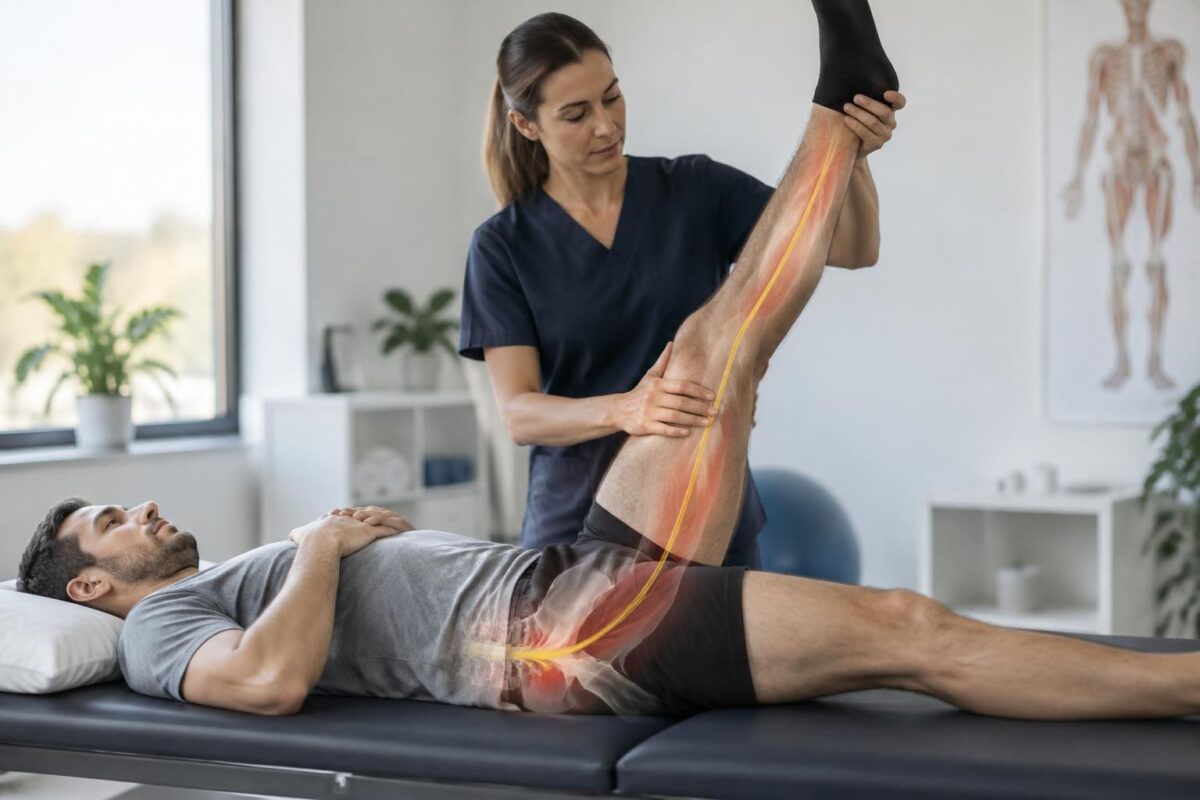
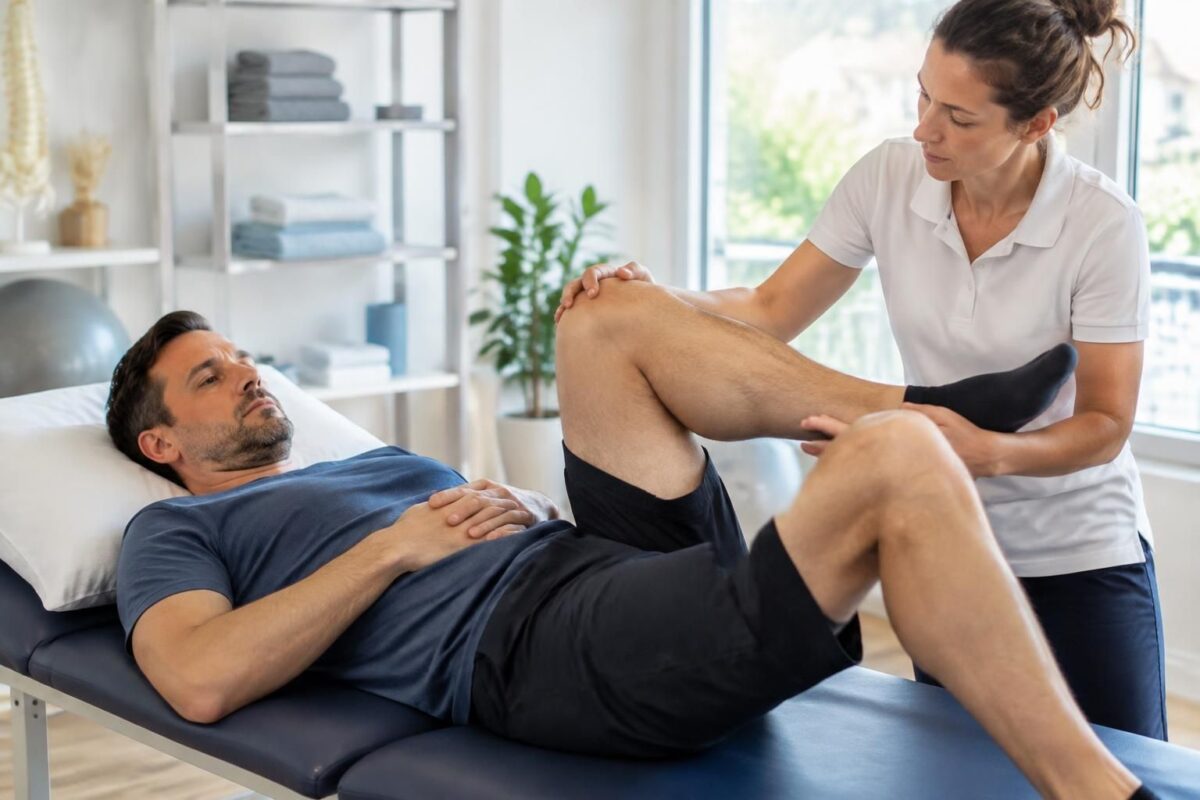
Sciatica and hamstring stretching: possible nerve tension
IN BRIEF Sciatica can make stretching the hamstrings uncomfortable, as the tension felt may come from the nerve rather than the muscle. A gentle stretch, with a straight back and without seeking maximum range, can help loosen the back of…
Sciatica and piriformis stretching: useful or worsening depending on the case
IN BRIEF Piriformis-related sciatica can cause deep pain in the buttock, sometimes radiating down the back of the thigh. A gentle stretch can loosen the hip and relieve discomfort if the muscle is involved, but it can worsen symptoms if…

Sciatica and popular stretches: why to stay cautious
IN BRIEF Sciatica causes pain that radiates from the lower back down the leg. Popular stretches, such as the pigeon pose or hamstring stretches, are not always suitable: pulling on an irritated nerve can worsen the symptoms. Favor gentle movements,…

Sciatica and Pilates: movements to adapt
IN SHORT Sciatica causes pain that can radiate from the lower back down to the leg. The Pilates Reformer can promote a gradual return to movement and strengthen core control, provided that the movements, range, and resistance are adapted. Favor…

Sciatica and core stability: variable tolerance depending on symptoms
IN BRIEF Core strengthening in case of sciatica consists of progressively strengthening the trunk muscles. Its tolerance varies depending on pain and symptoms: suitable without worsening the pain, it can support mobility and the resumption of activities, but does not,…

Sciatica and lunges: leg pain to watch out for
IN BRIEF Sciatica is pain that starts from the lower back or buttock and radiates down the leg. If a lunge triggers or worsens this pain, stop the movement and adjust your activity: this exercise does not address sciatica. Consult…

Sciatica and deadlifts: risk depending on the cause
IN BRIEF Sciatica and deadlifts are not always incompatible: the risk depends on the cause of the pain and its intensity. During acute episodes, it’s best to avoid heavy loads and seek medical or physiotherapy advice before resuming. A gradual…

Sciatica and squats: why caution is needed
IN BRIEF Sciatica does not always prohibit squats, but a deep or loaded squat can aggravate symptoms, especially during a flare-up. Gradually resume with a neutral back and a comfortable range of motion, and stop if the pain travels down…

Dr Sylvain Desforges, B.Sc., D.O., N.D., osteopath, is the founding president of TAGMED and of the ACMA association. He dedicates his practice to chronic spinal pain, low back pain and symptoms compatible with sciatica, particularly when pain radiates toward the buttock, leg, calf, foot or toes.
Through SOS Sciatique, he publishes educational content on sciatica symptoms, possible causes such as disc herniation, disc narrowing, foraminal stenosis or irritation of a lumbar nerve root, as well as non-surgical approaches that may be considered according to the evaluation. At Clinique TAGMED, care may include, depending on the case, motorized neurovertebral decompression, specific osteopathic care or precision percussion.
For an evaluation related to sciatica treatment in Montreal / Mount Royal or sciatica treatment in Terrebonne, please consult the services available at Clinique TAGMED.
Medical disclaimer
The information published on SOS Sciatique is provided for educational purposes only and does not replace a consultation, diagnosis, opinion or treatment provided by a physician or another authorized healthcare professional. The author of this article is neither a medical doctor nor a specialist in a medical specialty recognized by the Collège des médecins du Québec. The osteopathic, manual medicine or functional support approaches described on this site do not constitute medical acts and are not intended to replace medical follow-up.
Consult a physician or emergency service in cases of loss of bladder or bowel control, anesthesia in the saddle area, significant or progressive weakness in the leg or foot, fever, recent trauma, severe pain or rapid worsening of symptoms. For more details, please read our Legal Notice.