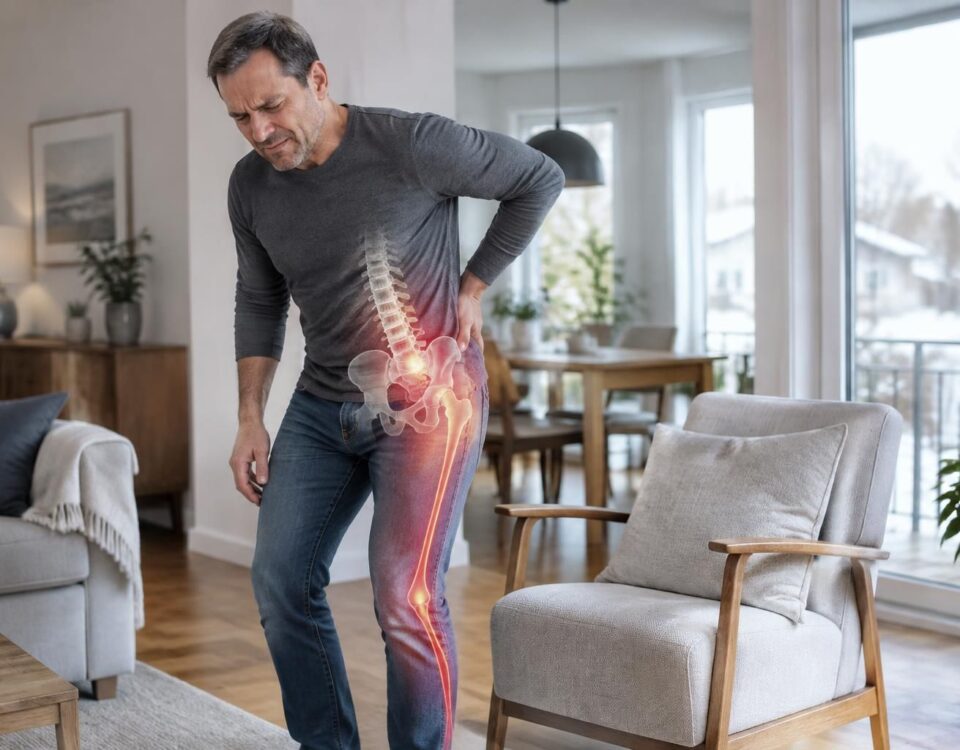
Sciatica pain in Montreal: tingling, burning, or numbness?
28/08/2026
Sciatica and warm sensation in the leg: nerve pain?
28/08/2026
IN BRIEF
| In brief, sciatic pain in Terrebonne is a symptom resulting from irritation or compression of the roots of the sciatic nerve that comes from the lower back and can radiate to the buttock, thigh, calf, and foot. It manifests as tingling, a burning sensation, or numbness, and can be managed without surgery through a evaluation and a personalized plan focusing on conservative options such as exercises, neural mobilization, and manual therapy. Available in Terrebonne, the TAGMED Clinic offers an approach tailored to the pathway and function, aiming to reduce nerve irritation, improve mobility, and promote a gradual return to activities. Warning signs requiring quick consultation include loss of urinary or bowel control, marked weakness, or rapid progression of symptoms. |
In Terrebonne, sciatic pain may manifest as tingling, a burning sensation, or numbness that follows the path of the sciatic nerve. These sensations often reflect a nerve root irritation or compression. A quick assessment can confirm the cause and propose appropriate conservative options (targeted exercises, manual therapy, postural advice) before any surgery. Warning signs to watch for include significant weakness, loss of urinary control, or rapidly progressing pain; consult quickly if necessary.
Sciatic pain may present as tingling, a burning sensation, or numbness that travels along a nerve pathway. In Terrebonne, expert evaluation helps determine if symptoms follow the course of the sciatic nerve and identify possible causes. This article presents typical signs, the evaluation approach, and the non-surgical management options offered by the TAGMED Clinic.
In Terrebonne, pain radiating down the leg can originate from various lumbar structures. The goal of the first consultation is to accurately trace the path of symptoms, identify signs that indicate a need for medical intervention, and discuss conservative options suited to your situation.
Understanding the Pathway and Neurological Signs
The pathway of pain can specify the involved root. Neurological signs such as numbness, tingling, loss of sensitivity, weakness, or altered reflexes indicate the need for targeted assessment.
Assessment and Correlation with Imaging
The consultation examines walking, sleeping, and daily activities. When relevant, symptoms are correlated with available imaging (MRI, X-rays) to better guide the diagnosis.
Lumbar Causes and Possible Diagnosis
Symptoms may be compatible with a herniated disc, protrusion, foraminal stenosis, or other lumbar processes. Clinical reasoning associates the pathway, function, and examination results to propose a tailored plan.
Management Plan at TAGMED Clinic
The TAGMED Clinic, located in Terrebonne at 1150 Lévis Street, Suite 200, prioritizes a patient-centered approach. The plan may include conservative measures and postural advice aimed at a gradual and safe return to your daily activities.
When Signs Become an Emergency
Call quickly if you experience loss of urinary or bowel control, significant or progressive weakness, severe pain that evolves rapidly, or signs such as fever or recent trauma.
Structured Assessment and Shared Decision-Making
The assessment combines history, symptom pathway, neurological signs, and available examinations. Clear objectives and re-evaluation criteria are established with you before starting the treatment plan.
Non-Surgical Options and Prevention
Non-surgical options exist and can be discussed during your visit. Maintaining tolerated activities and a holistic approach are prioritized to reduce nerve irritation and improve mobility. In some cases, approaches such as neurovertebral decompression may be considered after evaluation, without imposing specific exercises without a personalized plan.
Resources and Useful Reads
To enrich your understanding, check out these local and reliable resources: Sciatica in Terrebonne – acute or persistent pain, Pain in one leg possible in Terrebonne, Sciatic pain and loss of sensitivity – why consult, Sciatica in Montreal – calf, heel, or outer edge of the foot pain, Sciatica in Terrebonne – pain that changes path. For a practical evaluation in Terrebonne, you may also contact the TAGMED Clinic.
About the author
Dr. Sylvain Desforges, B.Sc., D.O., N.D., osteopath is the founding president of TAGMED and the ACMA association. He is dedicated to chronic spinal pain and pain associated with sciatica, focusing on non-surgical approaches whenever possible. Through SOS Sciatica, he shares educational content on etiology and symptoms, as well as non-invasive approaches tailored to assessment. At the TAGMED Clinic, care may include, as appropriate, motorized neurovertebral decompression, specific osteopathy, or precision percussion.
For an evaluation related to the treatment of sciatica in Terrebonne or nearby, check the available services at the TAGMED Clinic.
Everything in this article is intended to inform and is not meant to replace a consultation. For any medical questions, consult your treating physician or an authorized health professional.
Medical disclaimer: The information and advice provided on this site do not replace the opinion, diagnosis, or treatment of a healthcare professional. Please note that Dr. Sylvain Desforges, osteopath, is neither a medical doctor nor a physician, and is not a specialist in a medical specialty as defined by the Collège des médecins du Québec. Manual therapy, functional medicine, and sports medicine as described on this site exclude any medical treatment or diagnosis made by a physician or specialist. Always consult your doctor for any medical questions. For more details, please read our full Legal Notice.
- Tingling, electric shocks, or prickling along the path of the sciatic nerve
- Burning or sensation of heat in the buttock, thigh, calf, or foot
- Numbness in the leg or foot
- Possible location in buttock, thigh, calf, or foot
- Often unilateral, sometimes bilateral
- Quick assessment in Terrebonne to clarify nerve origin
- Conservative plan with targeted exercises and neural mobility
- Adaptation of activities and gradual return
- Warning signs: loss of bladder control, significant weakness, rapid pain, or fever
- Imaging or further tests if persistence or neurological signs

Sciatic pain in Terrebonne may present as tingling, burning, or numbness that travels up or down the sciatic nerve. This article provides clear markers to identify symptoms, understand possible causes, and prioritize a conservative and personalized management approach tailored to Terrebonne and offered by the TAGMED Clinic.
Understanding the signs: tingling, burning or numbness
Interpreting sensations
Paresthesias (tingling) indicate nerve irritation, while burning sensations suggest typical neuropathic pain from an irritated nerve. Numbness reflects a partial loss of sensitivity. When these symptoms follow the path of the sciatic nerve, they suggest a radicular involvement rather than local muscle pain.
Pathway and location
The sciatic nerve originates from the lumbar and sacral segments and travels to the buttock, back of the thigh, then the calf and foot. The location of sensations can help identify affected roots (e.g., L4, L5, or S1) and guide assessment, although no single dermatome is sufficient to establish the diagnosis.
When to seek rapid evaluation
Warning signs
Seek prompt evaluation if you observe a loss of bladder or bowel control, saddle anesthesia (numbness in the perineal area), significant or progressive weakness in a leg, severe pain after trauma, fever, or general signs. These elements may indicate a neurological emergency or a condition requiring fast assessment.
How the evaluation proceeds in Terrebonne
Process and objectives
During the first consultation, the professional connects the history of symptoms, the trajectory of pain, functional elements, and neurological signs. Muscle strength, reflexes, sensitivity, and lumbar mobility are assessed. If necessary, already available imaging can be correlated to the painful side to refine the diagnosis without routinely initiating surgery.
Imaging and decisions
An MRI or other tests may be requested only if it impacts the treatment plan or if symptoms evolve or worsen. The goal is to offer conservative options tailored to your profile and set clear reevaluation criteria.
Non-surgical management options
Activity, exercises, and posture
A conservative approach favors maintaining tolerated activities, targeted exercises, and improving posture. Sciatic nerve mobility programs, trunk strength training, and postural advice help reduce irritation and facilitate a gradual return to your daily activities.
Manual therapy and neural mobilization
Depending on the profile, manual techniques and neural mobilization may be incorporated in conjunction with exercises to improve tolerance and mobility without resorting to surgery. In some cases, options such as localized treatments or targeted non-surgical interventions may be discussed with the practitioner.
Practical advice for Terrebonne
Daily adaptations
Avoid prolonged periods of immobility and vary postures. Schedule active breaks at work, prioritize light walking, and adapt your environment (seating position, desk height, ergonomic chair). A personalized plan developed with a professional in Terrebonne may include simple exercises and a safe progression to increased activity.
Monitoring and safety
Regular follow-up allows for adjusting exercises, evaluating functional progress, and quickly redirecting if symptoms evolve or warning signs occur. The goal is to reduce nerve irritation, improve mobility, and prevent recurrences while maintaining a patient-centered approach and clinical evidence.
| Criteria | Concise Elements |
|---|---|
| Nature of the symptom | Tingling, burning, and numbness describe nerve irritation and can coexist. |
| Location and pathway | Pathway: buttock → back of the leg → calf → foot; location indicates the involved root. |
| Neurological signs | Weakness, loss of sensation, paresthesias, and altered reflexes. |
| Functional impact | Limitations in walking, standing, and sleeping; repercussions on daily activities. |
| Triggers and aggravating factors | Prolonged sitting, coughing, sneezing, and efforts that strain the back. |
| Emergencies and red flags | Loss of bladder/bowel control, rapid weakness, or pain that progresses quickly. |
| Imaging and diagnosis | MRI can help locate a root but does not confirm the diagnosis alone; correlated with examination. |
| Conservative approaches | Adapted activity, targeted exercises, neural mobilization, and manual therapy; gradual progression. |
| Plan and appointment | Evaluation in Terrebonne with a personalized plan and follow-up; appointment scheduling available locally. |
Marie, a resident of Terrebonne, shares: “I felt tingling and a burning sensation that started from my lower back, moved into my buttock, and then traveled down my leg to my foot. The assessment at the TAGMED Clinic allowed me to trace the exact pathway of the symptoms and understand that these sensations were part of a real sciatic pain. The proposed personalized plan then targeted my daily activities and exercises, and I began to regain mobility that seemed impossible at first.”
Antoine, 44, Terrebonne: “When the pain flared up, I primarily felt a burning sensation and numbness behind my thigh, with episodes that prevented me from walking normally. After the assessment at the TAGMED Clinic, I was informed that my symptoms might correspond to lumbar radiculopathy and that a conservative plan could suffice. I followed targeted exercises and postural advice; within weeks, the pain decreased, and I was able to resume my work activities without fear of triggering a flare-up.”
Sophie, 37, Terrebonne: “My numbness in the ankle and foot was concerning and especially worsened with prolonged sitting. The TAGMED team conducted a thorough evaluation and proposed a program integrating neural mobility and manual therapy. Today, my tingling has decreased, my walking is smoother, and I am sleeping again without persistent nighttime pain.”
Claire, 51, Terrebonne: “After several weeks of experiencing sciatic pain that traveled down to my foot, I was guided toward a progressive and personalized approach. The team took the time to explain possible causes—mild disc herniation, protrusion, and foraminal stenosis—and correlate the results with my previous examinations. Thanks to this tailored plan, I have regained pain-free days and a better tolerance for walking and working.”
Louis, 62, Terrebonne: “My journey began with sensations of burning and tingling that traveled up my leg, especially after standing or after exertion. The assessment at the TAGMED Clinic highlighted the pathway of the sciatic nerve and built a rehabilitation plan tailored to my profile. With simple exercises, mobility, and practical advice, the pain decreased, and I was able to safely return to my daily activities without resorting to surgery.”
Dr. Sylvain Desforges, an expert in osteopathy, naturopathy, and manual medicine, is the founding president of the TAGMED clinics and the ACMA association. His career is guided by innovation in healthcare and a strong vocation for chronic pain management. Specializing in the assessment and treatment of lower back and radicular pain, he integrates advanced technologies such as neurovertebral decompression, laser, and shockwave therapy to optimize outcomes. His mission remains to provide evidence-based care to sustainably improve the health and well-being of his patients, particularly in relation to sciatic pain in Terrebonne.
In Terrebonne, at his TAGMED Clinic, the assessment of sciatic pain aims to trace the pathway of symptoms, identify signs that require medical referral, and clarify conservative options to discuss. The practitioner focuses on understanding whether the tingling, burning, or numbness follows the pathway of the sciatic nerve and whether they are accompanied by neurological signs or functional impact. This approach aims for appropriate management, without presuming a surgical intervention when the underlying mechanisms allow.
His diagnostic process is based on a structured evaluation of the pathway of symptoms, a neurological assessment, and a measure of function. When relevant, he correlates clinical data with available imaging (MRI or X-rays) to distinguish a disc herniation, a protrusion, a foraminal stenosis, or other lumbar causes. Each patient benefits from a personalized plan designed to target critical areas and facilitate a gradual return to activities, while prioritizing non-surgical approaches when the situation allows.
Dr. Desforges’ philosophy emphasizes a conservative and movement-focused approach. Interventions may include osteopathic techniques, targeted mobilizations, manual therapy, and adapted exercise programs to reduce nerve irritation and improve mobility of the back and lower limbs. The patient is at the center of the process, with personalized postural advice and a gradual resumption of daily activities to minimize relapses and restore functional autonomy.
To complement this approach, TAGMED offers a range of complementary options when necessary, including additional explorations and gradual support. Dr. Desforges emphasizes the integration of technologies within a secure and supervised framework to support the rehabilitation process and optimize the effectiveness of care. At the same time, he widely shares his knowledge through educational content dedicated to sciatic pain to help the residents of Terrebonne better understand the causes and trajectories of their symptoms.
To learn more about his approach and the services offered, contact TAGMED. This initiative aims to provide clear information, a precise assessment, and a personalized care plan focused on the reduction of tingling, burning, and numbness, as well as a quick and safe return to an active and professional life.
This detailed conclusion reminds us that sciatic pain reaching the foot may originate from irritation or compression of the lumbar roots and that an appropriate evaluation in Terrebonne allows for distinguishing the mechanisms at play and guiding towards effective non-surgical options, while facilitating a gradual return to daily activities.
Summary
Sciatic pain can follow the path of the eponymous nerve, starting from the lower back or buttock and descending to the thigh, calf, ankle, or foot. The character of the radiation, the paresthesias, and neurological signs (weakness, loss of sensitivity, altered reflexes) help determine whether lumbosacral radiculopathy is involved and at what level (for example, L4, L5, S1). These factors, combined with functional impact (walking, sleeping, posture, and work), guide towards possible causes such as a herniated disc, protrusion, or foraminal stenosis.
In Terrebonne, the evaluation begins with a precise mapping of symptoms, a neurological examination, and a functional assessment, then it can connect with existing imaging when relevant. The care plan is personalized and may integrate conservative approaches such as targeted manual therapy, motorized neurovertebral decompression, and adapted exercises, with a measured progression aimed at limiting nerve irritation and improving mobility.
The first visit aims to clarify the probable origin of the symptoms and discuss functional goals, while specifying limits and criteria for re-evaluation. The reference framework includes a correlation between history, symptom trajectory, neurological signs, and results of available examinations to identify the most appropriate and safest options for each patient.
Alert signs require rapid medical evaluation: loss of urinary or bowel control, significant numbness in the saddle area, marked weakness or rapid progression of pain, significant bilateral pain or fever after trauma. In the presence of these red flags, an urgent consultation is recommended.
For those living in Terrebonne, the TAGMED framework offers a local multidisciplinary approach: a comprehensive evaluation at the TAGMED Clinic, located at 1150 Lévis Street, Suite 200, and an adapted care plan that can combine postural advice, safe exercises, and neural mobilizations, with an option for regular follow-up to prevent recurrences. External resources and guides can complement the information provided during the consultation, including materials dedicated to sciatica and the foot.
To deepen your understanding and consider your action plan, you can consult online resources such as those dedicated to sciatic pain and the foot, notably those that describe the nerve pathway and associated pain mechanisms. Additional information on non-surgical treatment options and possible outcomes of neurovertebral decompression is available in specialized guides and reference pages from partner clinics.
Useful links to complement your reflection within the framework of an evaluation in Terrebonne: Sciatic pain in Terrebonne: what does pain down to the foot mean, Sciatic nerve: understanding and alleviating pain, When to request a personalized evaluation, Sciatica in Montreal: deep buttock pain and radiation in the thigh. For specific options in Terrebonne, you can also explore Sciatic treatment in Terrebonne and TAGMED SCIATIC Solution.
Additionally, public and professional resources provide advice on evaluation criteria, measures to prioritize, and signs that require rapid intervention, in order to tailor the therapeutic approach to your condition and goals.
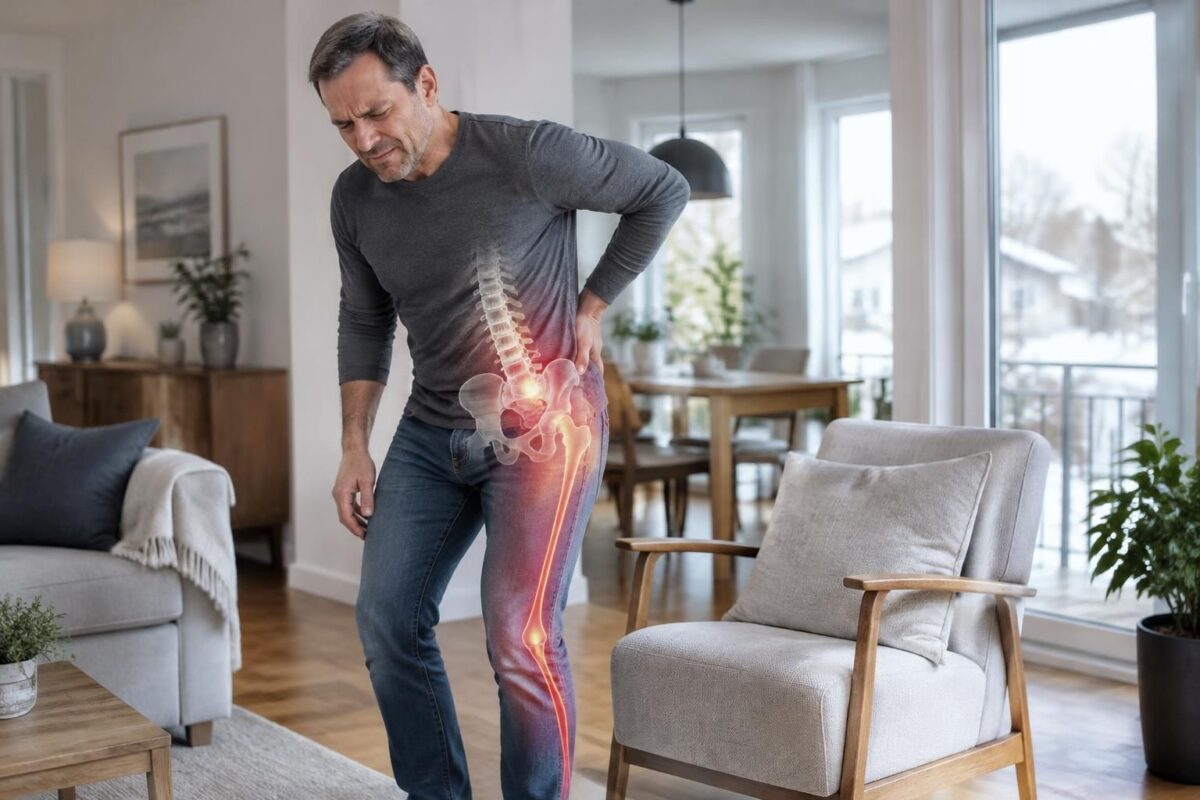
Sciatica in Terrebonne: why L5-S1 is often involved
IN BRIEF Sciatica corresponds to pain related to the irritation of a nerve root, which can extend from the buttock down to the leg. The L5-S1 level is often involved, as a disc herniation or irritation at this location can…

Sciatica in Terrebonne: L5 and difficulty lifting the foot
IN SHORT The L5 sciatica can cause pain or numbness on the side of the leg, the top of the foot, and the big toe, sometimes with difficulty lifting the foot. In Terrebonne, an evaluation compares strength, sensitivity, reflexes, and…
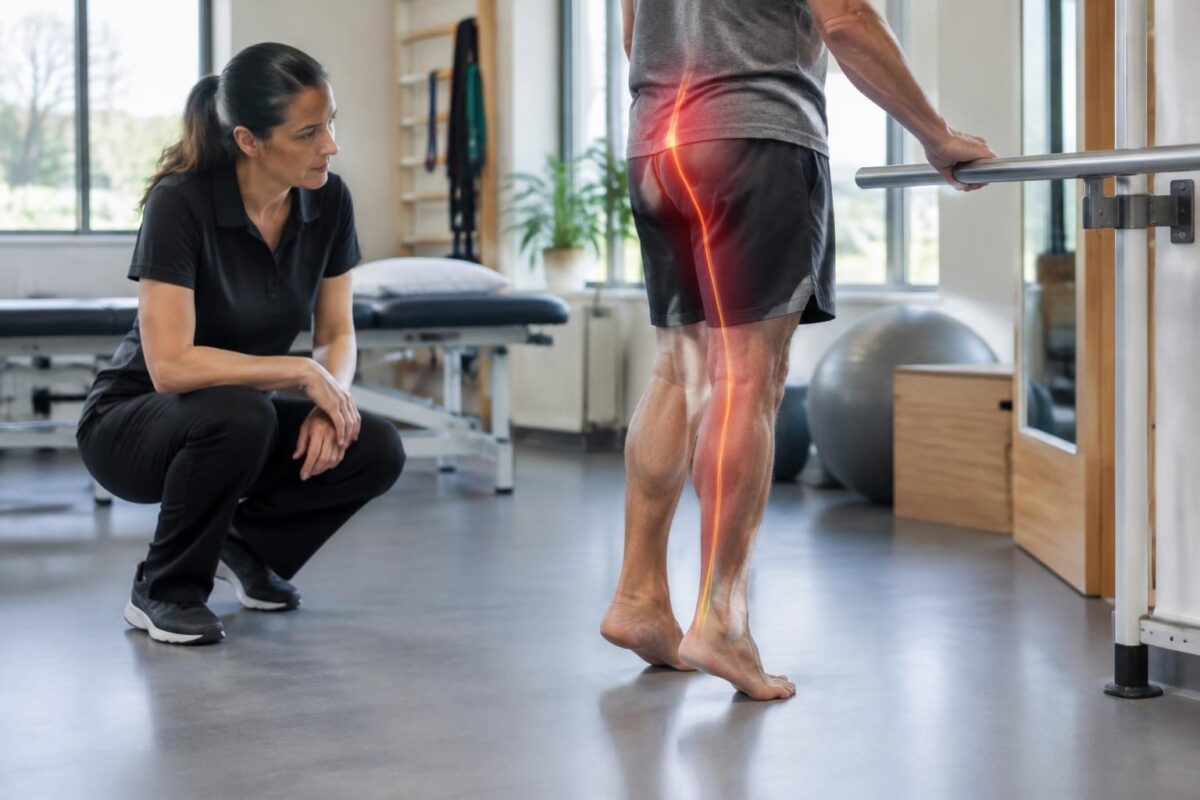
Sciatica in Terrebonne: S1 and difficulty standing on tiptoe
IN SHORT An S1 sciatica can irritate the nerve root associated with the calf and make it difficult to rise onto the balls of the feet. This sign should be evaluated with strength, sensitivity, reflexes, and walking: the pathway of…

Sciatica in Terrebonne: L4-L5 and pain towards the top of the foot
IN BRIEF A L4-L5 sciatica can radiate to the outer side of the leg and the top of the foot, sometimes reaching the big toe. This pathway can guide the assessment, though it does not suffice to confirm the cause:…

Sciatica in Terrebonne: L5-S1 and symptoms in the calf
IN BRIEF A L5-S1 sciatica can cause pain that radiates down the calf, sometimes accompanied by tingling, numbness, or weakness. At Terrebonne, an assessment at the TAGMED Clinic helps to examine the symptom pathways, strength, and sensitivity, and then discuss…

Sciatica in Terrebonne: pain in the big toe, L5 root or another cause?
IN BRIEF Pain in the big toe accompanied by pain in the buttock or leg may be compatible with irritation of the L5 root, but other causes are possible. In Terrebonne, the evaluation notably compares strength, sensitivity, and gait to…

Sciatica in Terrebonne: why the affected root changes the pain path
IN BRIEF Sciatica is a pain related to the irritation of a lumbar nerve root, the path of which varies depending on the affected root. Damage to L5 can radiate to the top of the foot, while damage to S1…

Sciatica in Terrebonne: L4-L5 disc, L5-S1 disc, and leg pain
IN BRIEF Sciatica is pain that travels down the leg when a nerve root is irritated. An injury to the L4-L5 disc often affects the L5 root; an L5-S1 injury affects the S1 root. The path of the pain and…

Dr Sylvain Desforges, B.Sc., D.O., N.D., osteopath, is the founding president of TAGMED and of the ACMA association. He dedicates his practice to chronic spinal pain, low back pain and symptoms compatible with sciatica, particularly when pain radiates toward the buttock, leg, calf, foot or toes.
Through SOS Sciatique, he publishes educational content on sciatica symptoms, possible causes such as disc herniation, disc narrowing, foraminal stenosis or irritation of a lumbar nerve root, as well as non-surgical approaches that may be considered according to the evaluation. At Clinique TAGMED, care may include, depending on the case, motorized neurovertebral decompression, specific osteopathic care or precision percussion.
For an evaluation related to sciatica treatment in Montreal / Mount Royal or sciatica treatment in Terrebonne, please consult the services available at Clinique TAGMED.
Medical disclaimer
The information published on SOS Sciatique is provided for educational purposes only and does not replace a consultation, diagnosis, opinion or treatment provided by a physician or another authorized healthcare professional. The author of this article is neither a medical doctor nor a specialist in a medical specialty recognized by the Collège des médecins du Québec. The osteopathic, manual medicine or functional support approaches described on this site do not constitute medical acts and are not intended to replace medical follow-up.
Consult a physician or emergency service in cases of loss of bladder or bowel control, anesthesia in the saddle area, significant or progressive weakness in the leg or foot, fever, recent trauma, severe pain or rapid worsening of symptoms. For more details, please read our Legal Notice.