

Sciatica and burning sensation behind the thigh
29/08/2026
Sciatica and drivers: leg pain after several hours
29/08/2026
IN BRIEF The lumbar herniated disc and driving refer to the risk of worsening symptoms due to immobility, vibrations, and pressure on the discs. What helps: an ideal seat adjustment (backrest at about 100–110 degrees), lumbar support, regular breaks every 1.5 to 2 hours, and some stretches after the trip to improve circulation. These measures aim to reduce pressure on the intervertebral discs, prevent painful flare-ups, and maintain alertness while driving. Accessible to anyone concerned, this guide facilitates more comfortable and safer journeys. |
While driving, a herniated disc can quickly worsen due to prolonged sitting, which increases pressure on the lumbar intervertebral discs. The back is often poorly supported, the pelvis can misalign, and the legs may remain bent, which intensifies tensions and can trigger lumbar pain or sciatica. The vibrations and micro-jolts from the vehicle, combined with a poor movement, can cause a painful flare-up. To limit worsening, prioritize a seat adjustment with a backrest at about 100–110 degrees, lumbar support, and regular breaks every 1.5 to 2 hours. Hydration and gentle stretches upon arrival aid in recovery and the resumption of journeys.
Quick summary: This article, written by a health professional and expert, explains why a herniated disc can worsen symptoms during driving. It describes the mechanisms, risks for severity, and simple measures to limit pain and protect the back during travel.
In the case of a lumbar herniated disc, sitting posture and immobility increase the pressure on the intervertebral discs. The vibrations and micro-movements of the road exacerbate the stresses and can irritate the nerve roots. Lack of mobility promotes muscle tension around the lumbar segments and can trigger or worsen pain radiating towards the buttock or leg.
Factors that Worsen Pain While Driving
The posture in the car may be poorly adapted. The back may be poorly supported, the pelvis may misalign, and the legs remain bent. Extended periods without movement increase lumbar pressure. Vibrations, braking, and speed bumps reinforce these stresses.
Impact on Safety and Driving
Driving is not prohibited, but pain can limit concentration and the necessary actions to steer. A sudden movement can trigger a sharp flare-up. Worsening pain can reduce torso rotation and visibility of the mirrors.
Practical Measures to Limit Pain and Protect the Back
Adjust the seat correctly. The backrest should be slightly inclined, and the lumbar support should support the natural lordosis. The legs should be slightly bent and the feet flat.
Use a lumbar cushion or suitable roll to maintain the natural curve and distribute pressure.
Plan regular breaks every 1.5 to 2 hours. Get out of the car, walk for a few minutes, and do small movements to promote circulation.
Stay hydrated and avoid postures that worsen stiffness. Avoid crossing the legs and reduce sudden movements while driving. Listening to soft music or podcasts can help distract from the pain.
After the Trip and Recovery
Upon arrival, slowly resume your activities. Light walking and gentle movements approved by your healthcare professional can help release tensions and promote recovery. In case of persistent pain, apply cold or heat according to your tolerance and consult if necessary.
When to Consult and Resources
Consult a doctor if the pain persists despite adjustments. Warning signs: pain radiating into the leg, loss of sensation, weakness, urinary issues.
For additional information on available treatments, consult Clinique TAGMED.
References and Training
Training in osteopathy: NUMSS, NAO, National University of Medical Sciences, National Academy of Osteopathy.
General resources on back and driving: SOS Sciatique.
For information intended for the prevention and understanding of associated pathologies, additional resources are available on the areas dedicated to SOS Sciatique and TAGMED.
Medical disclaimer: The information and advice provided on this site do not replace the opinion, diagnosis, or treatment of a healthcare professional. Please note that the author is neither a medical doctor nor a physician and is not specialized in a medical specialty as defined by the College of Physicians of Quebec. Manual therapy, functional medicine, and sports medicine as described on this site do not include any treatment or medical diagnosis made by a doctor or medical specialist. Always consult your physician for any medical questions. For more details, please read our complete Legal Notice.
Herniated Disc and Driving: Why Symptoms May Worsen
- Prolonged sitting posture increases pressure on the lumbar discs.
- Immobility and lack of movement promote muscle stiffness and pain.
- Vibrations and road movements irritate the nerve roots.
- Pelvis and lordosis misaligned when the seat is not properly adjusted.
- Pain that affects concentration and reactions while driving.
- Radicular pain or sciatica that can worsen during travel.

This article provides clear recommendations on why a herniated disc may worsen while driving and how to limit pain and associated risks. You will find simple gestures, adjustments, and habits to adopt for safe driving and to protect your back, even on longer trips.
Why symptoms may worsen during driving
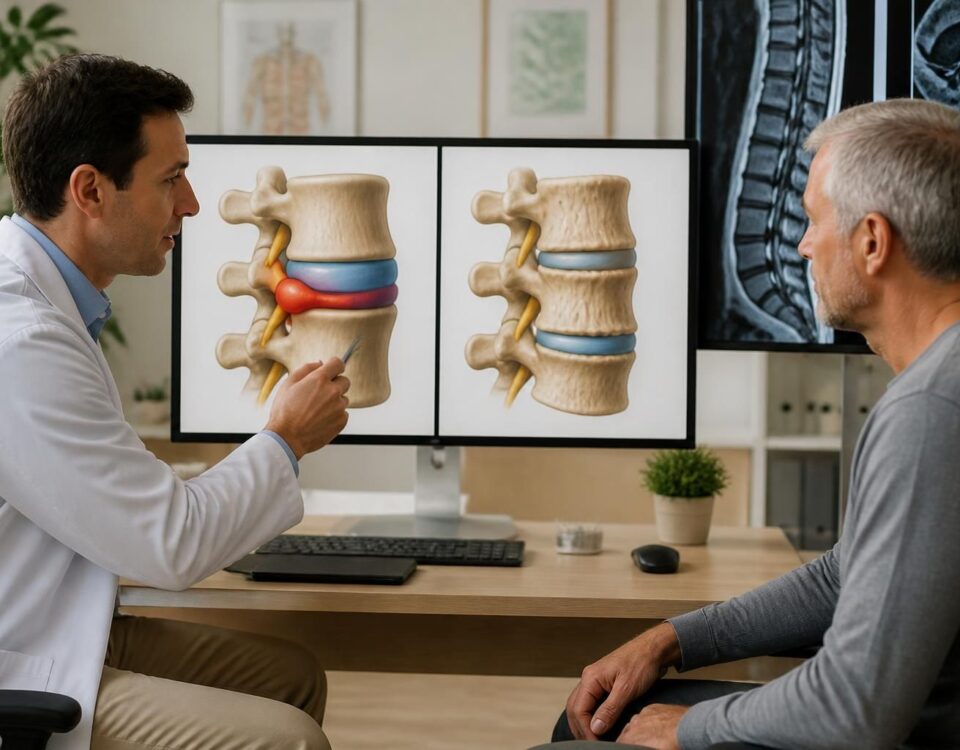
In a prolonged sitting position, the back bears increased pressure on the intervertebral discs, especially in the lumbar region. Driving involves relative immobility and micro-movements vibrations, which can exacerbate tensions and promote irritation of the nerve roots. A herniated disc can respond to these stresses with pain that radiates into the buttock or leg, numbness, or burning sensations.
The movements required for driving, such as checking mirrors, turning the torso, or repositioning the foot on the pedals, can also trigger painful jolts in cases of nerve compression. In summary, immobility, vibrations, and constant adjustments during the trip create a trio that can quickly worsen symptoms in affected individuals.
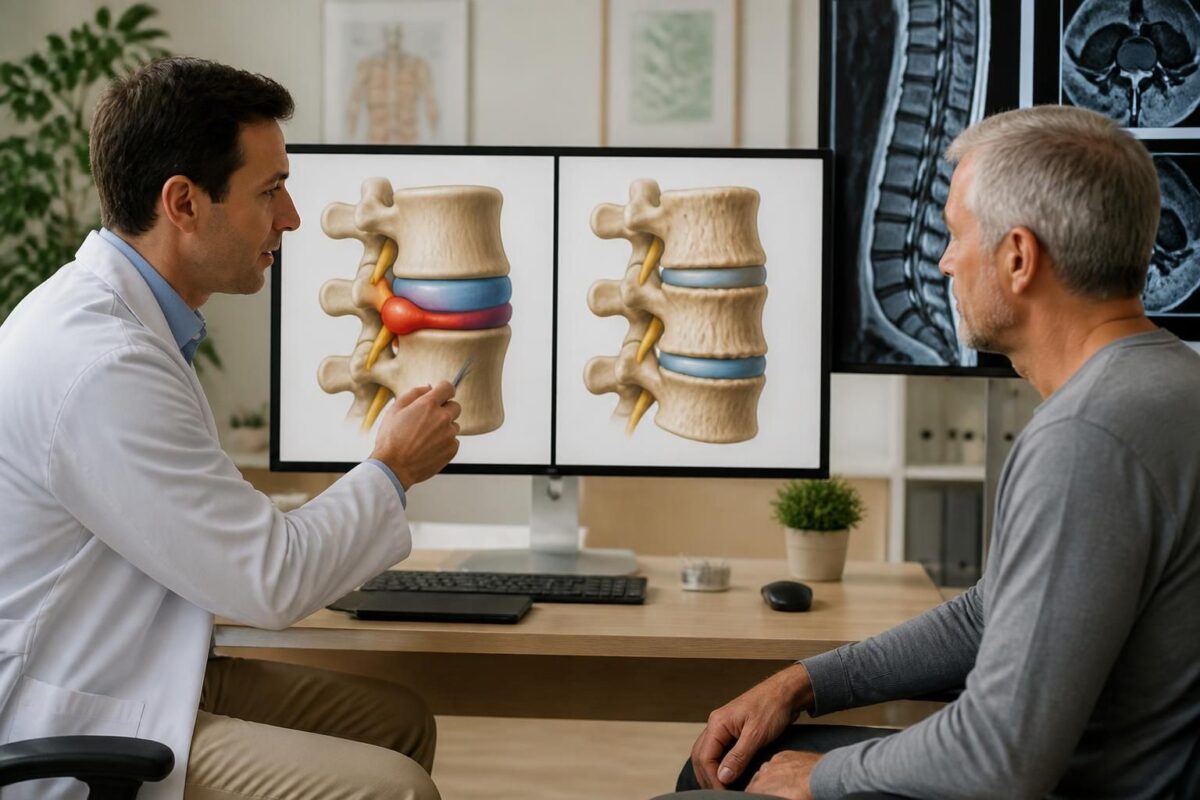
Herniated disc and disc disease: understanding the differences
IN BRIEF In brief, a herniated disc and discopathy are two distinct causes of spinal pain: wear of the intervertebral disc (discopathy) and the protrusion of the gelatinous nucleus that can compress a nerve (herniated disc). Understanding these differences helps…
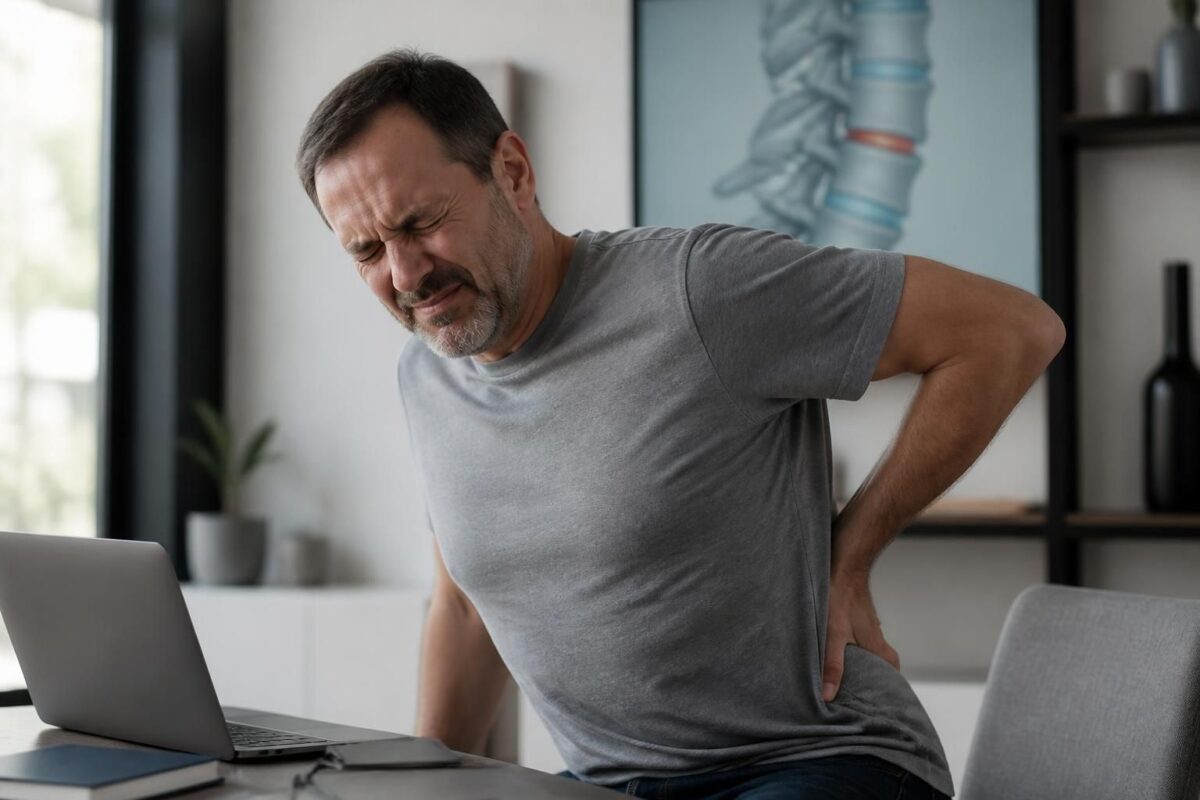
Herniated disc and annular tear: possible pain
IN BRIEF In short, Herniated disc and annular tear refer to issues with the intervertebral disc that can cause lower back pain and, at times, pain radiating down the leg. Symptoms vary and can mimic sciatic pain. Treatment favors conservative…
Factors that exacerbate pain while driving
The position of the pelvis and back plays a crucial role. If the backrest is too reclined or if the hips are misaligned, the natural curvature of the lower back is deviated and the pressures on the lumbar disc increase. Poor lumbar support can amplify tender points and promote muscle spasms. In addition, the jolts and repeated braking disrupt the spine’s stability and can trigger or amplify pain.
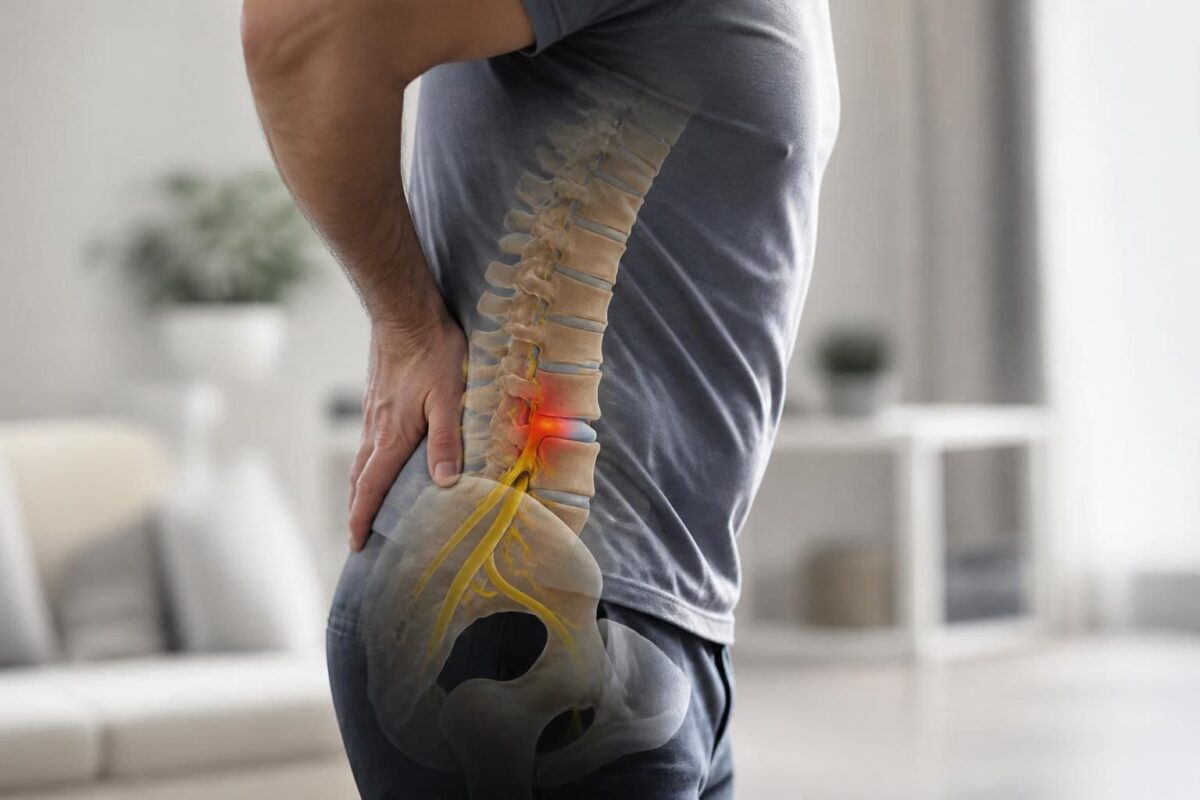
Herniated disc and chemical irritation of the nerve root
IN BRIEF In brief, Herniated disc and chemical irritation of the nerve root describe pain and dysfunction due to compression and inflammatory chemical exchanges affecting a spinal nerve root. This association explains radiating pain, abnormal sensations, and sometimes muscle weakness…
Herniated disc and mechanical compression of the nerve
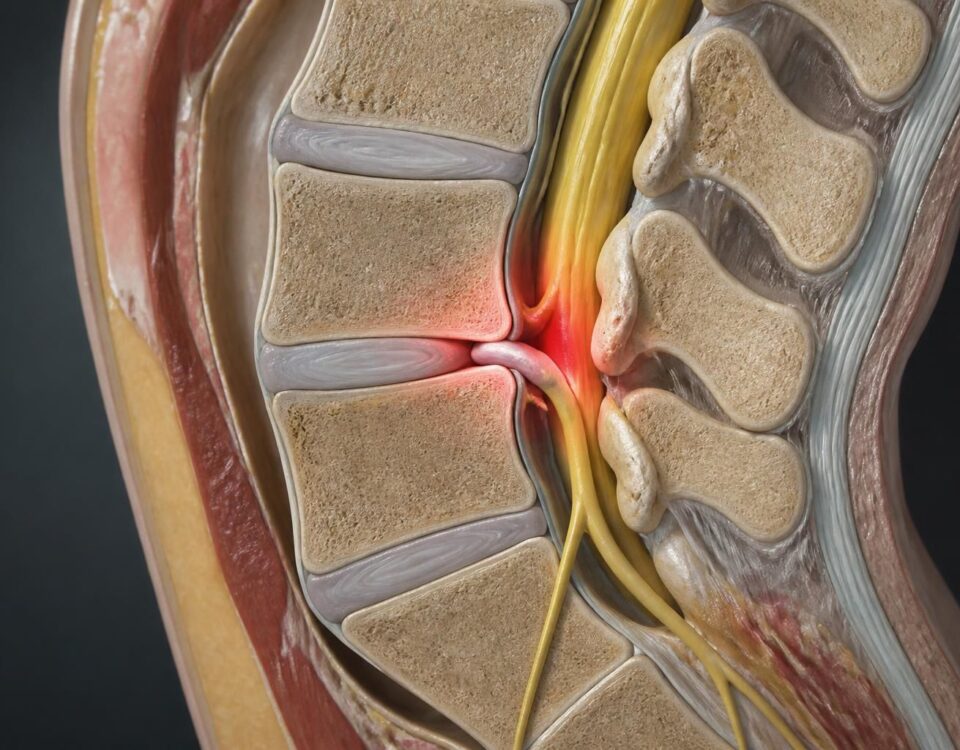
IN BRIEF In brief, a herniated disc is a prolapse of the intervertebral disc that can lead to mechanical compression of the nerve root, causing pain and numbness that often radiate down the leg. This compression explains radiculopathy and sensations…
Practical recommendations for safe driving
Seat adjustment and posture
Adopt a posture with the backrest slightly inclined at around 100 to 110 degrees, shoulders relaxed and arms slightly bent. The pelvis should remain in contact with the seat, and knees slightly lower than hips to promote a natural lordosis. Using lumbar support can greatly help maintain the physiological curvature and distribute pressures.
Accessories and support
A lumbar cushion or a roll placed in the lower back can improve support and reduce tension, especially on long trips. If available, armrests can help relieve shoulder and upper back tension.
Breaks and movement
Plan for regular breaks, ideally every 60 to 90 minutes, to get out of the car, walk, and stretch slightly. Active walking helps release the paravertebral muscles, stimulates circulation, and temporarily reduces pressure on the discs.
Hydration and pain management
Drinking water and avoiding long periods of dehydration can help maintain tissue flexibility. If pain appears, focus on simple gestures and, if necessary, consider appropriate pain management as advised by a healthcare professional. A lumbar support belt may also be useful for some individuals.
Signs that require increased vigilance
If pain is accompanied by severe radiating pain down the leg, loss of sensitivity, significant tingling, muscle weakness, or urinary issues, it is important to consult quickly, as these symptoms may indicate more severe nerve compression.
| Item | Impact on symptoms |
|---|---|
| Prolonged sitting position | Pressure on the lumbar discs increases when sitting without movement. |
| Insufficient lumbar support | Good support limits tensions and may reduce pain aggravation. |
| Vibrations and jolts | Vibrations transmit repeated loads to the spine, worsening inflammation. |
| Seat angles and mobility | A poorly adjusted seat limits movement and stresses the back. |
| Body rotation and bending | Twists and sudden bends increase the risk of nerve irritation. |
| Breaks and movement | Regular breaks reduce stiffness and disc pressure. |
| Hydration and circulation | Drinking and walking briefly helps maintain circulation and muscle relaxation. |
| Long driving without adaptation | Long trips can trigger radiations and limit critical movements. |
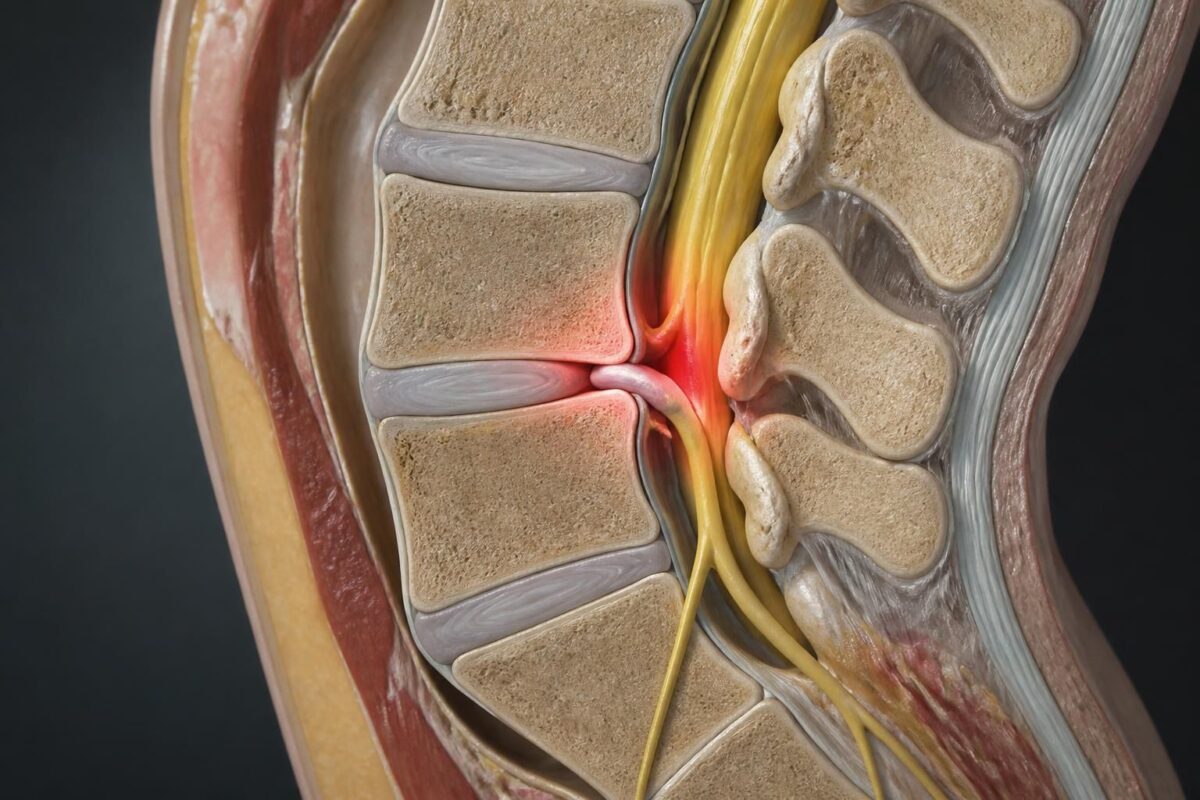
Herniated disc and nerve root inflammation
IN BRIEF In brief, lumbar disc herniation and nerve root inflammation refer to compression and irritation of a spinal root causing radiating pain, paresthesias, and sometimes muscle weakness. The mechanism combines disc protrusion and radicular inflammation, hence the importance of…
Herniated disc and peripheral pain: sign to watch out for
IN BRIEF In brief, Herniated disc is the partial protrusion of the gelatinous nucleus of an intervertebral disc through the fibrous ring, which can compress a nerve root and trigger radiating pain in the limb. The key benefits of rapid…
Testimonials: Herniated disc and driving — why symptoms may worsen
“I suffer from a herniated disc in my lower back, and every car trip triggers pain that goes up along my lower back. Immobility and prolonged sitting increase pressure on the discs, and my symptoms worsen as I drive.”
“The vibrations and sudden braking pierce my lower back when I’m driving. A herniated disc can be activated by these micro-movements, and the pain becomes more intense if I stay seated without moving.”
“The seat was not well adjusted and my posture was not natural. The pelvis slid, the lower back tensed, and symptoms worsened at the end of the trip.”
“Driving can remain possible, but pain can limit essential movements: turning the head, checking mirrors, or getting out of the vehicle quickly. This can provoke an acute episode of sciatica.”
“By using appropriate lumbar support and planning regular breaks, I have noticed a decrease in pain and improved safety on the road. Knowing my body better and adjusting my driving reduces the risk of worsening nerve irritations.”
Dr. Sylvain Desforges, osteopath and naturopath, is known for his integrative approach to pain and movement. As the founder of TAGMED, he is dedicated to managing lower back pain and spinal pathologies, combining osteopathy, manual techniques, and advanced therapeutic tools. His practice is based on personalized assessments and care aimed at optimizing the health and well-being of patients. In this context, he is particularly interested in the effect of driving on the symptoms of disc herniation and concrete strategies to limit discomfort.
During a car journey, pain can quickly evolve. The prolonged sitting position generates increased pressure on the lumbar discs and can exacerbate inflammation around the nerve root. The vibrations and micro-jolts of the vehicle, combined with lack of movement, cause tense paravertebral muscles and contractions that affect the lumbar region. This context can make the pain more intense in the buttock, thigh, or calf and, in some individuals, trigger characteristic painful radiations of disc herniation.
Physiologically, a lumbar disc herniation can be exacerbated by repeated pressure and stabilized only by static postures. The absence of controlled rotation and bending, combined with vibrations, can worsen inflammation and promote muscle spasms. In these conditions, driving does not necessarily pose an immediate danger, but it can become a factor for worsening and limiting movements useful for driving, such as torso rotation and getting in and out of the vehicle.
To limit these effects, several practical adjustments are necessary before and during the journey. Adjusting the seat is crucial: a backrest slightly inclined at about 100 to 110 degrees, arms slightly bent, and relaxed shoulders facilitate the maintenance of a physiological lordosis. Lumbar support, or even a lower back cushion or ergonomic roll, helps distribute pressure and preserve the natural alignment of the spine. Planning breaks every 45 minutes to 1 hour allows for walking, mobilizing the trunk, and reinvigorating blood circulation, thereby reducing stiffness and pressure on the discs.
During the journey, certain simple habits protect the back: avoid returning to a too-arched backrest position, use armrests to relax the shoulders, avoid crossing legs, and drink regularly to prevent dehydration that can worsen joint pain. Soft music or podcasts can help distract from the pain and promote effective mental management of symptoms during the journey.
Upon arrival, prioritize gentle movements and targeted stretches to reactivate circulation and relieve tension. A short walk, light lumbar stretches, and, if necessary, alternating between hot and cold according to personal tolerance, offer a useful transition towards quick recovery. If the pain persists or is accompanied by unusual signs, it is advisable to consult in order to adjust the care protocol and ergonomic advice.
This article summarizes why a disc herniation can worsen symptoms while driving and describes practical measures to limit discomfort, improve safety, and protect the back on journeys, even long ones. You will discover the mechanisms at play, aggravating factors, and concrete advice for driving without increasing pain.
Factors that Worsen Symptoms While Driving
In the car, the prolonged sitting position increases pressure on the intervertebral discs and continuously stresses the lumbar muscles. An improperly adjusted seat, misaligned pelvis, and constantly bent legs create a burden that can worsen a disc herniation and trigger episodes of pain or sciatica. The vibrations and micro-jolts from the road, braking, and speed bumps add to these constraints, creating a real cocktail for affected individuals.
To delve deeper into the pain-position association mechanisms, see resources on Disc Herniation and Sitting Position and Sciatica Pain that Increases While Sitting.
How Driving Can Worsen Pain and Associated Risks
Driving can become problematic when symptoms exist, with pain radiating into the buttock or leg, loss of sensation, or muscle weakness. The movements required for driving, particularly torso rotations and repetitive gestures, can trigger an acute episode and complicate driving, especially in the case of a disc herniation.
Ergonomic guides emphasize that tensions increase with repeated and prolonged trips. For additional advice, consult resources such as Disc Herniation and Car Journey and Disc Herniation and Car Trips.
Practical Measures to Limit Discomfort in the Car
Before departure, ensure your seat is well adjusted: backrest slightly inclined at around 100 to 110 degrees, pelvis well supported, arms and shoulders relaxed, and knees slightly lower than the hips. A lumbar cushion or roll can help maintain the natural curvature of the spine and distribute pressures on the pelvis.
Plan regular breaks every 45 minutes to 1 hour for walking and stretching. During the journey, avoid fully reclining the backrest and favor a stable posture with feet flat and relaxed shoulders. Staying hydrated and listening to soothing music can also help manage pain during the trip.
For practical resources and exercises, consult Disc Herniation and Car Journey and Sciatica and Professional Driving: Signs Not to Overlook.
Elements to Monitor and When to Consult
If pain persists despite postural adjustments, or if it is accompanied by pain radiating into the leg, loss of sensation, tingling, muscle weakness, or urinary problems, it is crucial to consult quickly to assess a more severe nerve compression and adapt treatment.
For further information, see Santé Magazine – back pain in the car and sciatica pain that increases when sitting.

Herniated disc and centralizing pain: sign to interpret
IN BRIEF In brief, a herniated disc is a protrusion of the intervertebral disc that can compress a nerve root, causing centralized pain and signs such as radiating pain, numbness, and weakness. The treatment is mostly conservative: guided activity, physical…
Herniated disc and pain that travels lower after movement
IN BRIEF The Herniated Disc is a protrusion of the intervertebral disc that can compress a nerve root, leading to a pain that radiates down after a movement. The benefits include better guidance for non-surgical treatment and a gradual reduction…

Dr Sylvain Desforges, B.Sc., D.O., N.D., osteopath, is the founding president of TAGMED and of the ACMA association. He dedicates his practice to chronic spinal pain, low back pain and symptoms compatible with sciatica, particularly when pain radiates toward the buttock, leg, calf, foot or toes.
Through SOS Sciatique, he publishes educational content on sciatica symptoms, possible causes such as disc herniation, disc narrowing, foraminal stenosis or irritation of a lumbar nerve root, as well as non-surgical approaches that may be considered according to the evaluation. At Clinique TAGMED, care may include, depending on the case, motorized neurovertebral decompression, specific osteopathic care or precision percussion.
For an evaluation related to sciatica treatment in Montreal / Mount Royal or sciatica treatment in Terrebonne, please consult the services available at Clinique TAGMED.
Medical disclaimer
The information published on SOS Sciatique is provided for educational purposes only and does not replace a consultation, diagnosis, opinion or treatment provided by a physician or another authorized healthcare professional. The author of this article is neither a medical doctor nor a specialist in a medical specialty recognized by the Collège des médecins du Québec. The osteopathic, manual medicine or functional support approaches described on this site do not constitute medical acts and are not intended to replace medical follow-up.
Consult a physician or emergency service in cases of loss of bladder or bowel control, anesthesia in the saddle area, significant or progressive weakness in the leg or foot, fever, recent trauma, severe pain or rapid worsening of symptoms. For more details, please read our Legal Notice.