


Disc herniation and pain after lifting
16/10/2026
Sciatica in Montreal: why the affected root changes the pain pathway
17/10/2026
IN BRIEF Sciatica and deadlifts are not always incompatible: the risk depends on the cause of the pain and its intensity. During acute episodes, it’s best to avoid heavy loads and seek medical or physiotherapy advice before resuming. A gradual return, tailored to the symptoms, can help regain mobility and confidence. The SSEQUOIA physiotherapy practice in Vandœuvre-lès-Nancy can support you in your rehabilitation. |
The risk of deadlifts in cases of sciatica depends on its cause and the intensity of symptoms. During the acute phase, especially if a herniated disc is suspected, heavy loads and movements that worsen pain can increase nerve irritation: it’s better to suspend the exercise and seek advice from a healthcare professional. If the pain is linked to another cause and has subsided, a gradual return with a light load and an adapted technique may be considered with the advice of a physiotherapist or doctor.
Deadlifts do not carry the same risk for everyone in cases of sciatica. The approach mainly depends on the cause, the intensity of symptoms, and the presence of nerve signs. Pain related to a herniated disc, a narrowed spinal canal, or muscle irritation does not require the same assessment. If pain radiates down the leg, avoid straining and seek advice from a healthcare professional before resuming the load.
The term “sciatica” describes pain related to the irritation of a nerve root or the sciatic nerve. It does not specify, on its own, the cause of the pain. The deadlift imposes a load on the back, hips, and legs. It can therefore increase symptoms, but it does not allow for the identification of the cause or the establishment of a diagnosis.
Pain that starts in the lower back and radiates into the buttock or leg can take the form of burning sensations, electrical shocks, tingling, or numbness. The location and sensations can help the doctor in guiding the assessment. To better understand the different causes, consult this guide on the causes, symptoms, and treatments of sciatica.
Can deadlifts worsen sciatica?
Yes, a deadlift can exacerbate existing pain, especially if the movement triggers radiation into the leg or worsens nerve symptoms. The load, fatigue, repetition of movements, and individual tolerance also play a role. However, pain during an exercise does not prove that an injury has worsened.
Discomfort limited to the lower back does not hold the same significance as muscle weakness or loss of sensation in the leg. If pain increases during movement, radiates further down the leg, or persists after exertion, stop the session and seek medical advice. The starting point is to determine the cause, not to test your tolerance with a heavier load.

Sciatica and popular stretches: why to stay cautious
IN BRIEF Sciatica causes pain that radiates from the lower back down the leg. Popular stretches, such as the pigeon pose or hamstring stretches, are not always suitable: pulling on an irritated nerve can worsen the symptoms. Favor gentle movements,…
The risk varies depending on the cause of sciatica
Herniated disc or irritation of a nerve root
A herniated disc can irritate or compress a nerve root. In this context, deadlifts can increase symptoms, particularly if the pain radiates down the leg or is accompanied by tingling and numbness. The response varies depending on the individual and the phase of the pain. Do not base your decision to resume lifting solely on the name of the cause or a medical image.
When a herniated disc, protrusion, or other disc injury is suspected, a healthcare professional must evaluate the symptoms and determine appropriate precautions. Do not attempt to address the problem on your own with exercises or stretches. You can consult the information from Sequoia Kiné on the causes of sciatica and this guide on symptoms and relief.
Narrowed lumbar canal or other causes
A narrowed lumbar canal can irritate the nerves and cause pain or weakness, sometimes more pronounced when standing or walking. The risk related to deadlifts thus depends on the clinical picture and medical assessment. Other causes can produce pain resembling sciatica without nerve root compression. An accurate diagnosis prevents the treatment of all radiating pains in the same way.
Pain may also manifest in the buttock or foot without exhibiting the classic pattern of low back pain. These situations deserve evaluation rather than interpretation based on a single symptom. To delve deeper, read this article on foot pain without low back pain and one on pain in the buttock that radiates down the leg.
Pain after prolonged travel or modified gait
Prolonged sitting can trigger or exacerbate symptoms in some individuals. Long journeys can also reduce comfort and make movements more difficult upon exiting the vehicle. Discover the elements to watch for in this article on sciatica after prolonged travel.
A modified gait may arise to prevent pain. It can then perpetuate uneven stress on muscles and joints. If you are limping or your way of walking changes, do not attempt to compensate by lifting loads. This article explains why a modified gait can maintain discomfort.

Sciatica and Pilates: movements to adapt
IN SHORT Sciatica causes pain that can radiate from the lower back down to the leg. The Pilates Reformer can promote a gradual return to movement and strengthen core control, provided that the movements, range, and resistance are adapted. Favor…
When to avoid deadlifts and seek advice
Temporarily suspending deadlifts is prudent if the movement triggers sharp pain, stronger radiation into the leg, tingling, or numbness. Also avoid resuming a heavy load if you have lost strength or if your symptoms worsen from one session to the next. A healthcare professional can help clarify the cause and the next steps.
The resumption is not solely decided by the number of days that have passed. It depends on the evolution of symptoms, strength, sensitivity, and your ability to perform your usual activities. General recommendations on sciatica are presented in these resources: recommendations on sciatica, clinical information on sciatica, and tips to avoid mistakes when resuming activity.

Sciatica and core stability: variable tolerance depending on symptoms
IN BRIEF Core strengthening in case of sciatica consists of progressively strengthening the trunk muscles. Its tolerance varies depending on pain and symptoms: suitable without worsening the pain, it can support mobility and the resumption of activities, but does not,…
Warning signs: consult without delay
Some symptoms require urgent medical evaluation: loss of bladder or bowel control, numbness in the perineum, progressive muscle weakness, severe pain that does not ease, or fever associated with lower back pain. Do not perform deadlifts and contact a medical service quickly if any of these signs appear.

Sciatica and lunges: leg pain to watch out for
IN BRIEF Sciatica is pain that starts from the lower back or buttock and radiates down the leg. If a lunge triggers or worsens this pain, stop the movement and adjust your activity: this exercise does not address sciatica. Consult…
An appropriate opinion before resuming load
To choose the right time to resume, you must consider the probable cause, symptoms, and their progression. The Sequoia Kiné office in Vandœuvre-lès-Nancy welcomes patients in a conventioned setting, with third-party payment and accessibility for persons with reduced mobility. A healthcare professional can guide you according to your situation and indicate whether additional medical evaluation is necessary.
For a summary of symptoms, causes, and management options, also consult the guide on sciatica and physical activity.
Medical disclaimer: The information and advice provided on this site do not replace the opinion, diagnosis, or treatment of a healthcare professional. Please note that Dr. Sylvain Desforges, osteopath, is neither a medical doctor nor a physician and is not a specialist in a medical specialty as defined by the Collège des médecins du Québec. Manual therapy, functional medicine, and sports medicine as described on this site exclude any treatment or medical diagnosis made by a physician or medical specialist. Always consult your doctor for any medical questions. For more details, please read our full Legal Notice.
Risk with deadlifts
Herniated disc
Increased risk of worsening pain if the load or technique strains the lower back.
Stenosis or other nerve compression
The movement can awaken symptoms; effort must be adapted to the advice of a professional.
Pain without a clearly identified cause
Avoid heavy loads if they trigger radiation into the leg.
Progressive weakness or loss of sensitivity
Do not lift a load and consult quickly.

The deadlift is not systematically forbidden in cases of sciatica, but its tolerance depends on the cause of the pain, its intensity, and your technique. In the acute phase, avoid straining and seek advice from a healthcare professional. Resumption should be gradual, without increasing pain or radiation down the leg.

Sciatica and squats: why caution is needed
IN BRIEF Sciatica does not always prohibit squats, but a deep or loaded squat can aggravate symptoms, especially during a flare-up. Gradually resume with a neutral back and a comfortable range of motion, and stop if the pain travels down…
Sciatica and deadlifts: the risk depends on the cause
Sciatica corresponds to irritation of a nerve root, often linked to a herniated disc, but other problems can cause similar symptoms. The deadlift movement engages the lower back, hips, and legs. An excessively heavy load, significant fatigue, or poorly mastered technique can increase stress on these areas. This does not mean that the exercise necessarily causes injury: the risk varies according to your situation.
In case of herniated disc
When pain is related to a hernia, lifting a load while rounding the back or combining bending and rotation can aggravate symptoms in some individuals. During a painful episode, suspend deadlifts that trigger or intensify the pain. A physiotherapist can assess your movements and determine if a lighter variant is feasible.
In case of lumbar canal stenosis
Stenosis of the lumbar canal can irritate the nerves, particularly during certain postures or prolonged efforts. Tolerance to deadlifts then depends on the position adopted and the symptoms experienced. Do not try to replicate a movement that increases numbness, tingling, or weakness in the leg. Have your abilities evaluated before resuming with a heavy load.
In case of muscle-origin pain
Pain in the buttock or lower back can sometimes mimic sciatica, for example when linked to muscle tension. If no neurological signs are present, the deadlift may potentially be reintroduced with a moderate load and comfortable range of motion. A professional diagnosis remains useful to distinguish these pains from true nerve damage.
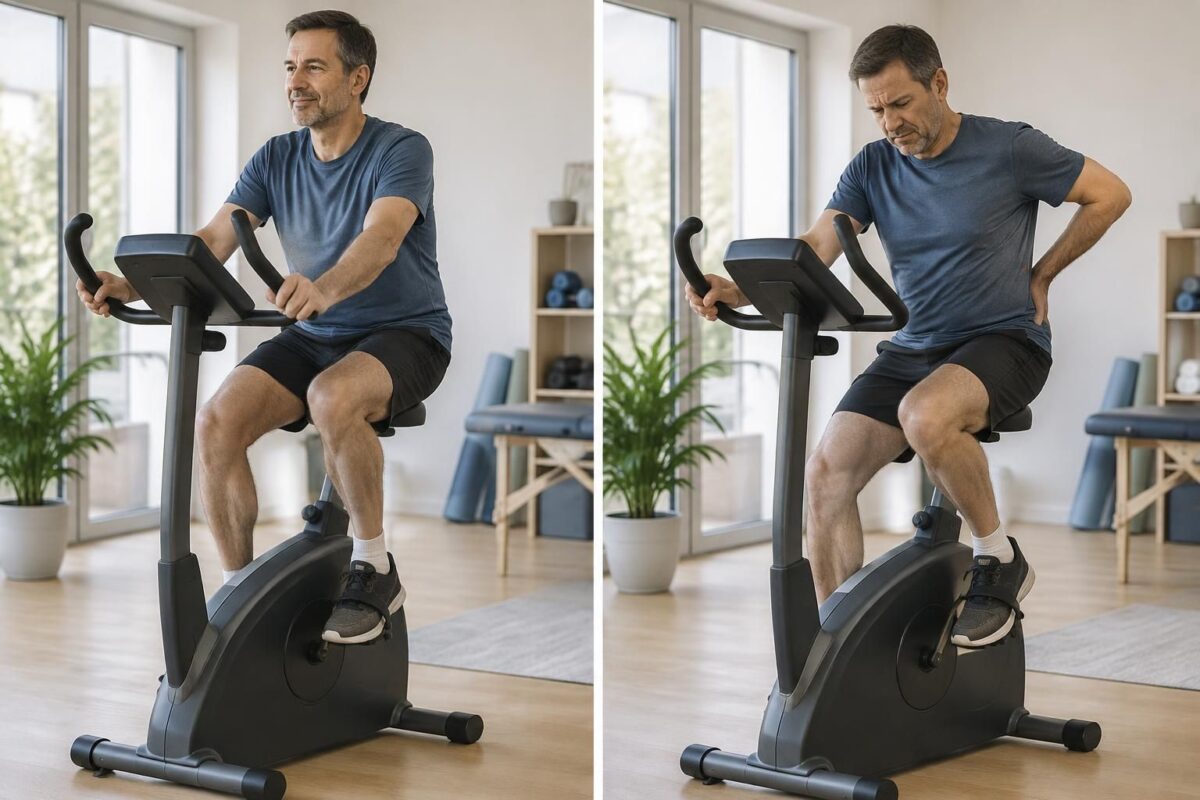
Sciatica and stationary bike: useful or aggravating depending on the case
IN BRIEF The stationary bike with sciatica can help you stay active if the pain is mild and stable. Start with a short session, at low resistance and in a comfortable position. If the pain goes further down the leg,…
When to stop exercise and seek advice?
Stop the session if the pain becomes sharp, radiates further down the leg, or is accompanied by new tingling, numbness, or loss of strength. Avoid “testing” your back by increasing the load despite these signs. During periods of acute pain, prioritize gentle activities that remain well tolerated, according to the recommendations of your doctor or physiotherapist.
A progressive muscle weakness, loss of sensitivity in the perineum, or difficulty controlling the bladder or bowels requires urgent medical attention. Do not wait for these symptoms to resolve on their own.

Sciatica and cycling: sitting, bending, and symptoms
IN BRIEF Sciatica is pain related to irritation of the sciatic nerve, which can extend from the buttock down to the leg. Cycling may sometimes be possible if symptoms are mild and stable: a comfortable seat, a less bent posture,…
Gradually resume deadlifts
Adjust the load and movement
Resumption should occur when symptoms are stable and daily movements are better tolerated. Start with a very light load, or no load, and reduce the range of motion if necessary. Keep the load close to the body, prepare your movement, and avoid jerks. The technique should be adapted to your mobility and body shape: there is no single ideal posture for everyone.
Monitor the reaction after effort
Assess not only the pain during exercise, but also its evolution in the hours that follow and the next day. If symptoms increase or spread in the leg, reduce the effort and seek advice. Support in physiotherapy in Vandœuvre-lès-Nancy can help adjust exercises, progressively strengthen the core, and organize a return tailored to the cause of your sciatica.
| Possible cause of sciatica | Risk with deadlift |
|---|---|
| Herniated disc | The load and rounding of the back can worsen radiating pain. |
| Lumbar stenosis | Nerve compression may increase depending on posture and load. |
| Piriformis-related irritation | Hip tension can trigger pain in the buttock or leg. |
| Acute sciatica | Movement can accentuate symptoms: it is better to suspend it if it hurts. |
| Unidentified cause | The risk depends on the origin: seek professional advice before returning. |

Sciatica and jogging: pain in the leg after effort
IN BRIEF Jogging-related sciatica is pain that often starts from the lower back or buttock and travels down the leg. Running may be possible if the discomfort is mild and stable, but if the pain intensifies, or if there are…
Sciatica and deadlift: risks vary by cause
Note: the testimonials below are examples of typical situations, not patient testimonials from the office. The deadlift does not carry the same level of risk for everyone: it all depends on the origin of the sciatica, the intensity of the symptoms, and the recovery phase.
“My pain radiated down to my foot” — sciatica related to a herniated disc. “After a sharp pain in my lower back, I felt electric shocks in my leg. The deadlift exacerbated my symptoms, especially when I bent over. I paused the exercise and sought medical advice before considering a return.” In case of suspected nerve compression, lifting a load during the painful phase can worsen symptoms. The return must be evaluated on a case-by-case basis.
“I mainly had tension in the buttock” — possible muscle-related radiating pain. “I thought I had sciatica, but my pain seemed primarily related to tension in the buttock. Hip hinge movements were sometimes better tolerated than back flexions, but some sessions aggravated the pain.” Pain that resembles sciatica does not always originate from a compressed nerve root. A healthcare professional can help identify the cause and adapt movements.
“I gradually resumed, without trying to lift heavy” — return after improvement. “Once the acute pain subsided, my physiotherapist helped me gradually resume movements. I started without weights, monitoring sensations in the back and leg, then increased effort only when the exercises were well tolerated.” After sciatica, return to deadlift depends particularly on the evolution of symptoms, mobility, and movement control.
“The pain returned as soon as I exerted myself” — persistent or recurring symptoms. “I wanted to resume my usual weights, but the radiating pain reappeared after training. I realized I needed to have my situation reassessed rather than continue to push through.” If the deadlift triggers or increases pain that descends into the leg, stop the exercise and seek advice from a doctor or physiotherapist.
The essential guideline: the deadlift is not systematically prohibited in cases of sciatica, but it may be unsuitable during a painful flare-up, especially if a herniated disc or nerve irritation is involved. Do not attempt to test your tolerance with a heavy load. Progressive muscle weakness, loss of sensation in the perineum, or urinary or anal disturbances require urgent medical attention.
Dr. Sylvain Desforges: expertise, sciatica, and deadlift
Dr. Sylvain Desforges is a healthcare professional specialized in osteopathy, naturopathy, and manual medicine. Founder and president of TAGMED clinics as well as the ACMA association, he has dedicated his career to innovation in care and the support of people suffering from persistent pain. His approach is based on evidence-based care and the integration of advanced technologies, including spinal decompression, laser, and shockwave therapy.
In the management of sciatica, the question of resuming physical activity, particularly the deadlift, primarily depends on the cause of the symptoms. Sciatica corresponds to pain related to the irritation or compression of a nerve root. It can manifest as lower back pain radiating into the buttock and leg, sometimes accompanied by tingling, numbness, or muscle weakness. The movement that suits one person may not necessarily be appropriate for another.
When a herniated disc is involved, the disc may irritate or compress a nerve root. A deadlift performed with a heavy load, marked lumbar flexion, or poorly executed technique can then accentuate symptoms. This does not mean that this exercise is always prohibited: during a painful phase, it is generally advisable to reduce or suspend loads that reproduce pain. The return is made gradually, according to tolerance, and if necessary, with the support of a healthcare professional.
The situation may differ when symptoms are associated with lumbar canal stenosis or sensitivity to back extension. Some people feel more discomfort when they stand up straight or arch the lumbar region. In this context, a deadlift requiring excessive extension may be poorly tolerated. Conversely, pain related to muscle overload or poor management of effort does not necessarily present the same mechanism as nerve compression. Identifying the cause helps choose relevant movements and adaptations.
Dr. Desforges emphasizes individualized assessment rather than applying a one-size-fits-all rule. Before resuming the deadlift, it is useful to observe the evolution of pain, its spread in the leg, and the possible presence of neurological signs. Technique, range, load, and number of repetitions can be adjusted. A cautious progression, without trying to “push through” worsening pain, helps limit unnecessary strain.
A quick medical consultation is necessary in cases of progressive weakness, significant loss of sensation, numbness in the perineum, or difficulty in controlling the bladder or bowels. These symptoms should not be managed by a simple modification of training. Dr. Sylvain Desforges’ expertise in managing chronic pain and care technologies is part of an approach aimed at adapting support to the needs of each patient, while considering possible causes of sciatica and activity resumption goals.
The deadlift is not systematically incompatible with sciatica: the risk mainly depends on the cause of the pain, its intensity, and how the exercise is performed. A weight that is too heavy or an inappropriate technique can exacerbate symptoms, while a gradual and supervised return can sometimes be part of returning to activity.
Sciatica related to a disc herniation
When a disc herniation irritates a nerve root, the deadlift can worsen the pain, especially if the movement involves significant bending of the back, rotation under load, or a sudden increase in lifted weight. Pain that radiates down the leg, accompanied by tingling or numbness, justifies stopping the exercise and seeking medical advice or consulting a physiotherapist.
The resumption does not rely on a universal duration: it depends on the evolution of symptoms and the assessment by the healthcare professional. To understand the principles of prevention during strength movements, consult this guide on back pain and prevention during squats and deadlifts.
Sciatica related to stenosis or other compression
If the symptoms are associated with lumbar canal narrowing or another cause of nerve compression, tolerance to the deadlift varies from person to person. Certain positions may reduce discomfort, while others may intensify it. Therefore, it is better not to choose a variant or load based on a presumed diagnosis alone. A doctor or physiotherapist can adapt the movements to the identified cause.
Pain that resembles sciatica may also correspond to a femoral nerve irritation or another nerve injury. Information on these radiating pains is available in this file dedicated to sciatica and femoral nerve irritation.
Muscle pain or irritation after training
Pain that occurs during or after a session may arise from muscle strain, without necessarily being sciatica. However, radiating pain in the leg, sensations of electric discharge, or loss of sensation require special attention. If symptoms arise after a weight training session, you can consult the information on sciatica and pain after weight training, as well as that on sciatica after sports.
If a professional approves the resumption, it can start with a significantly reduced load, a comfortable range of motion, and controlled execution, with no increasing pain or pain radiating into the leg. It is preferable to stop the set if symptoms worsen, rather than trying to “push through.”
Adapting exercise and recognizing warning signs
The choice of movement should take into account the cause of sciatica, the recovery phase, and the body’s response to exertion. A physiotherapist can assess mobility, strength, and load tolerance, then propose an appropriate progression. General recommendations on recognition and management of sciatica do not replace an individual examination.
Seek emergency care in case of loss of control of the bladder or bowels, numbness in the perineum, progressive muscle weakness, or unusual intense pain. These signs require rapid assessment and should not be attributed to simple weight training effort.

Dr Sylvain Desforges, B.Sc., D.O., N.D., osteopath, is the founding president of TAGMED and of the ACMA association. He dedicates his practice to chronic spinal pain, low back pain and symptoms compatible with sciatica, particularly when pain radiates toward the buttock, leg, calf, foot or toes.
Through SOS Sciatique, he publishes educational content on sciatica symptoms, possible causes such as disc herniation, disc narrowing, foraminal stenosis or irritation of a lumbar nerve root, as well as non-surgical approaches that may be considered according to the evaluation. At Clinique TAGMED, care may include, depending on the case, motorized neurovertebral decompression, specific osteopathic care or precision percussion.
For an evaluation related to sciatica treatment in Montreal / Mount Royal or sciatica treatment in Terrebonne, please consult the services available at Clinique TAGMED.
Medical disclaimer
The information published on SOS Sciatique is provided for educational purposes only and does not replace a consultation, diagnosis, opinion or treatment provided by a physician or another authorized healthcare professional. The author of this article is neither a medical doctor nor a specialist in a medical specialty recognized by the Collège des médecins du Québec. The osteopathic, manual medicine or functional support approaches described on this site do not constitute medical acts and are not intended to replace medical follow-up.
Consult a physician or emergency service in cases of loss of bladder or bowel control, anesthesia in the saddle area, significant or progressive weakness in the leg or foot, fever, recent trauma, severe pain or rapid worsening of symptoms. For more details, please read our Legal Notice.


