Spinal disc protrusion and nerve inflammation
21/10/2026
Sciatica in Montreal: S1 and difficulty rising up on the toes
22/10/2026
IN SHORT Sciatica causes pain that can radiate from the lower back down to the leg. The Pilates Reformer can promote a gradual return to movement and strengthen core control, provided that the movements, range, and resistance are adapted. Favor a gentle practice and stop if the pain increases or radiates further down the leg. In case of severe or persistent symptoms, seek medical advice. |
The Pilates Reformer can promote a gradual return to movement in cases of sciatica, provided the session is adapted. Favor gentle movements, a comfortable range, and light resistance. Reduce or stop any exercise that intensifies the pain or radiation down the leg. In case of significant or persistent symptoms, consult a healthcare professional.
The Pilates Reformer can help some people return to gentle activity when they have sciatica, but the movements must remain comfortable and progressive. This article explains which gestures to adapt, which to stop if symptoms increase, and when to seek medical advice.
Sciatica corresponds to pain that follows the path of the sciatic nerve. It can start from the lower back or buttock and descend into the thigh or leg. Tingling, numbness, or weakness may also appear. However, pain at the back of the thigh is not always sciatica: it may also come from a muscle. To better distinguish these symptoms, consult this guide on pain at the back of the thigh.
The Pilates Reformer does not directly treat the cause of sciatica. However, it can provide a framework to return to movement with adjustable resistance and controlled gestures. The goal is to move without increasing the pain that radiates down the leg. Practice should be adapted to the symptoms of the day, and it does not replace a diagnosis or medical follow-up.
Why adapt movements on the Reformer
An adapted session can help regain confidence in movement and control effort. The Reformer allows for modifying resistance, range, and position. These adjustments can make some exercises easier to tolerate. They do not guarantee relief and are not suitable for everyone.
The advice presented in this article on Pilates Reformer and sciatica can complement a discussion with a healthcare professional. Other resources also outline precautions for practicing Pilates with sciatica, Pilates to relieve sciatica, and Pilates with sciatica. These readings do not replace an individual assessment.

Sciatica and household chores: twists, bends, and loads
IN BRIEF Sciatica can be aggravated by bending, twisting, and carrying loads while doing housework. Breaking tasks into smaller parts, taking breaks, and adjusting movements help manage effort without necessarily stopping everything. In Montreal, an assessment can help tailor activity…
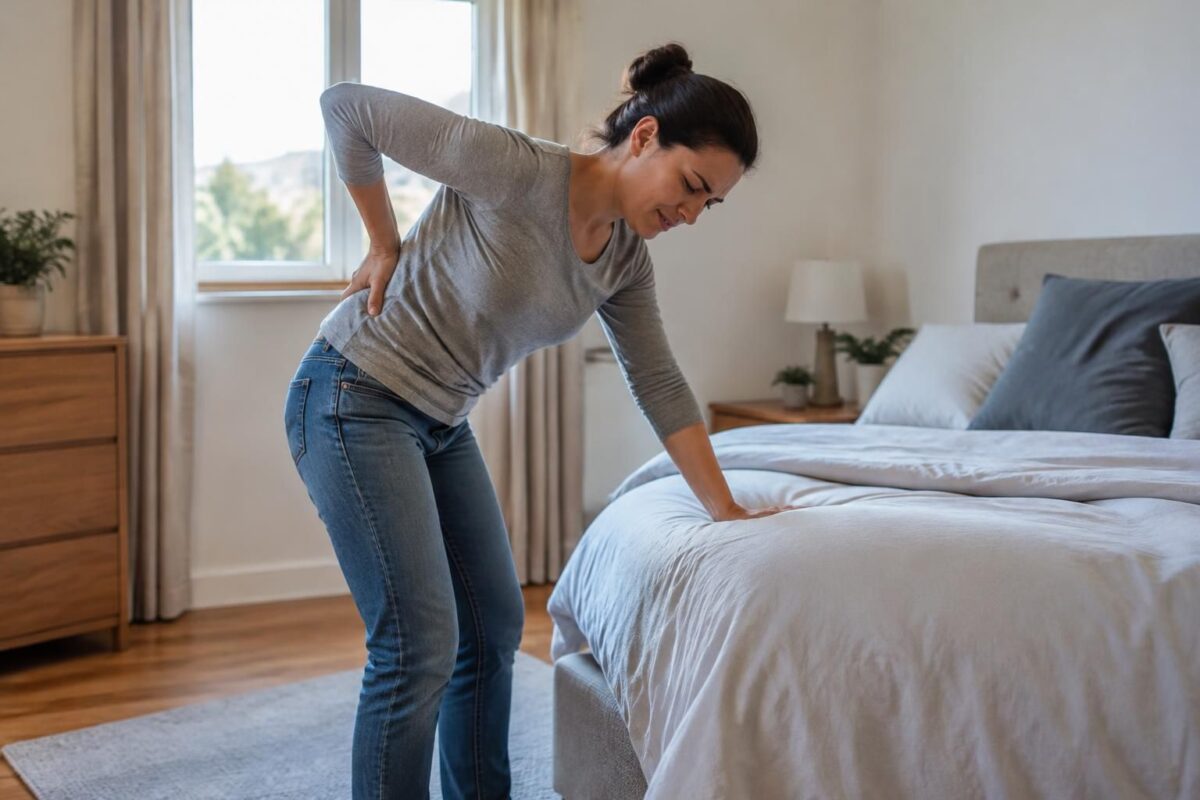
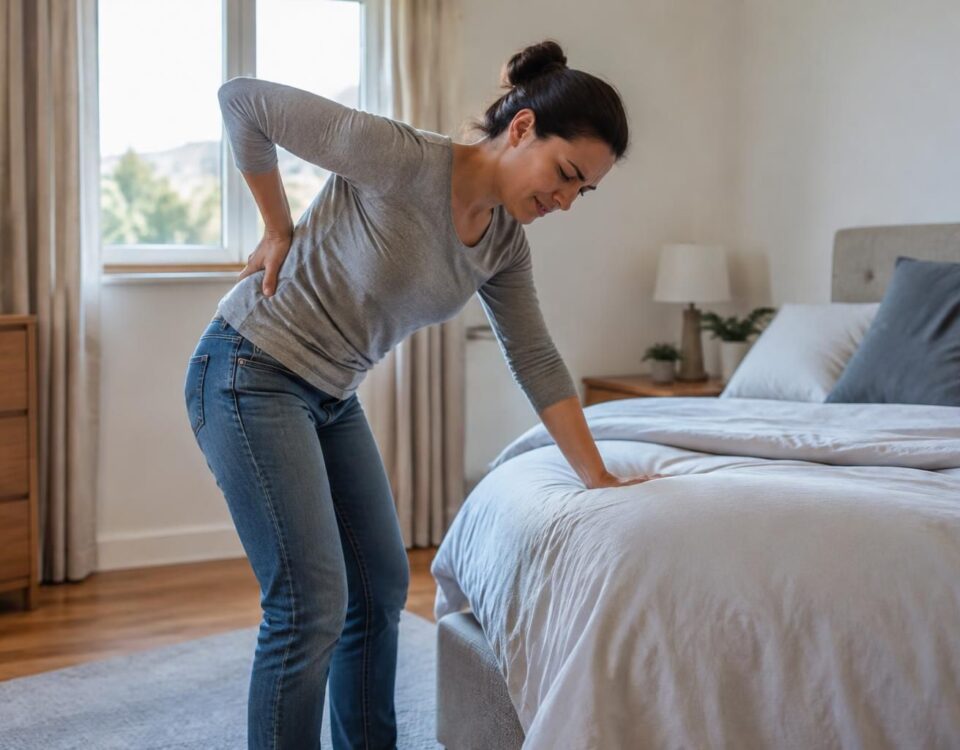
Sciatica and Making the Bed: Repeated Flexion and Lumbar Irritation
IN SHORT Sciatica is pain related to irritation or compression of the sciatic nerve. Making your bed can strain the lower back if bending is repeated, especially when rounding the back or twisting the torso. To limit lumbar irritation, bend…
Movements to adapt as a priority
Reduce the range
If the leg pulls or the lower back tightens, reduce the range of motion. A smaller gesture may be better tolerated than a full movement. Do not try to force a position to achieve an intense stretch.
Lighten the resistance
Start with low or moderate resistance, depending on the equipment settings and the advice of the person guiding you. Too high a load can increase effort and cause tension. Adjust the resistance as soon as the movement becomes difficult to control.
Slow down the pace
Perform each movement slowly and smoothly. Quick transitions can make control more difficult. Take the time to settle and breathe between exercises.
Choose a comfortable position
Some people tolerate lying exercises better than movements performed standing or supported. The position should remain comfortable. If it triggers pain that radiates further down the leg, change position or stop the exercise.
Avoid forced stretches
Do not force a stretch that causes sharp pain, an electric sensation, or more pronounced radiation. The goal is not to pull on the nerve but to maintain a controlled and tolerable movement.
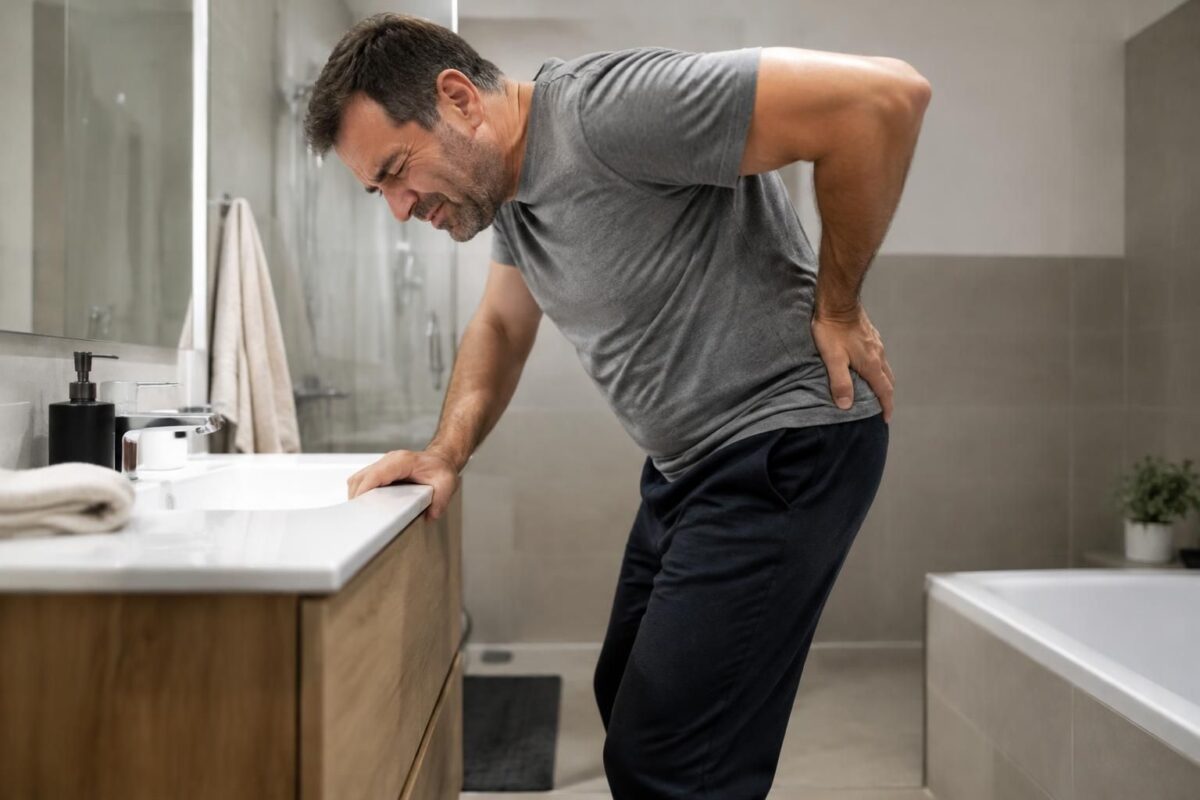
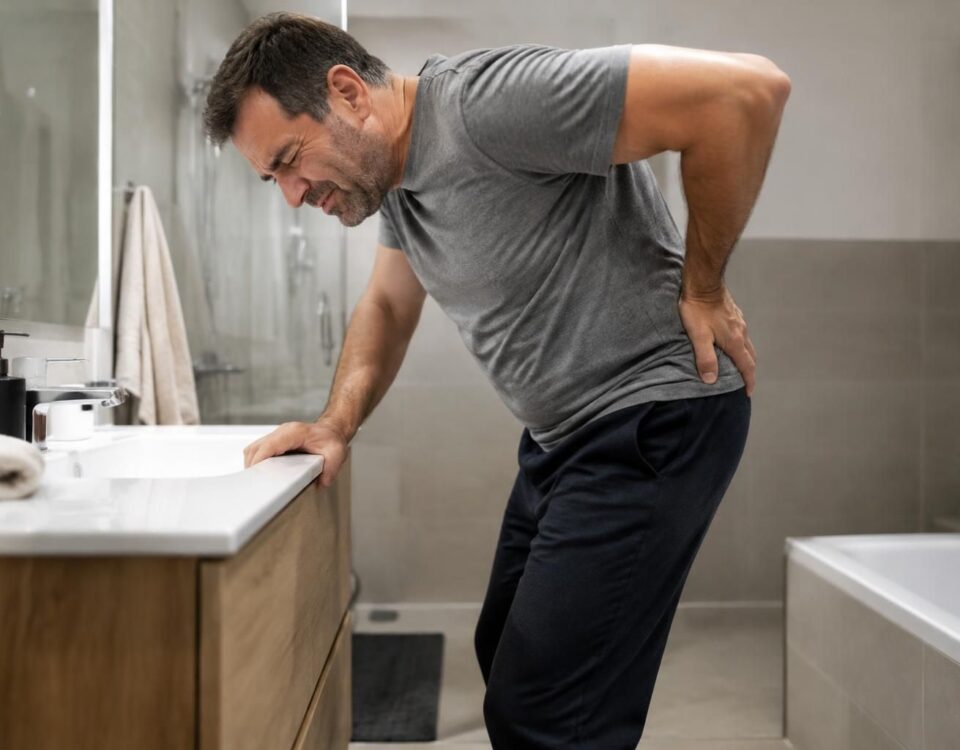
Sciatica and bending over the sink: pain in the leg
IN BRIEF Sciatica is pain related to irritation or compression of the sciatic nerve, which can extend from the lower back down to the leg. Bending over the sink can exacerbate the pain, especially if this position increases pressure on…
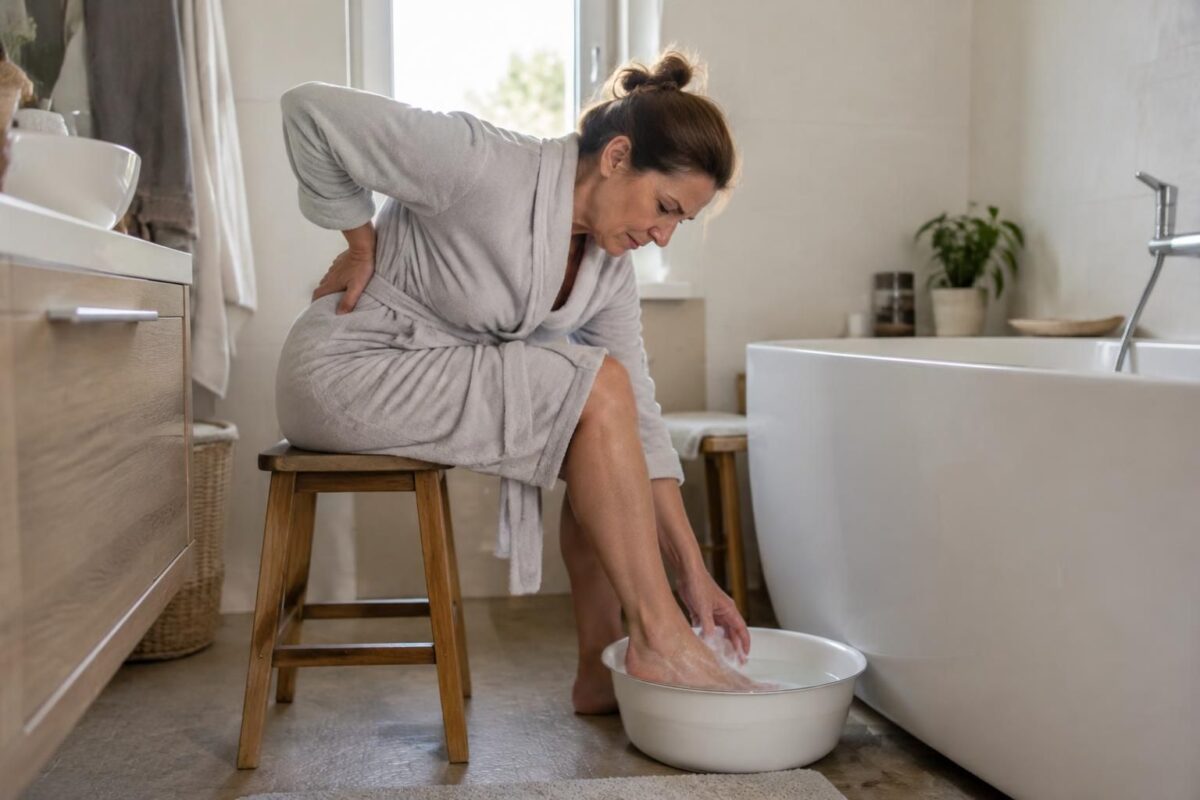
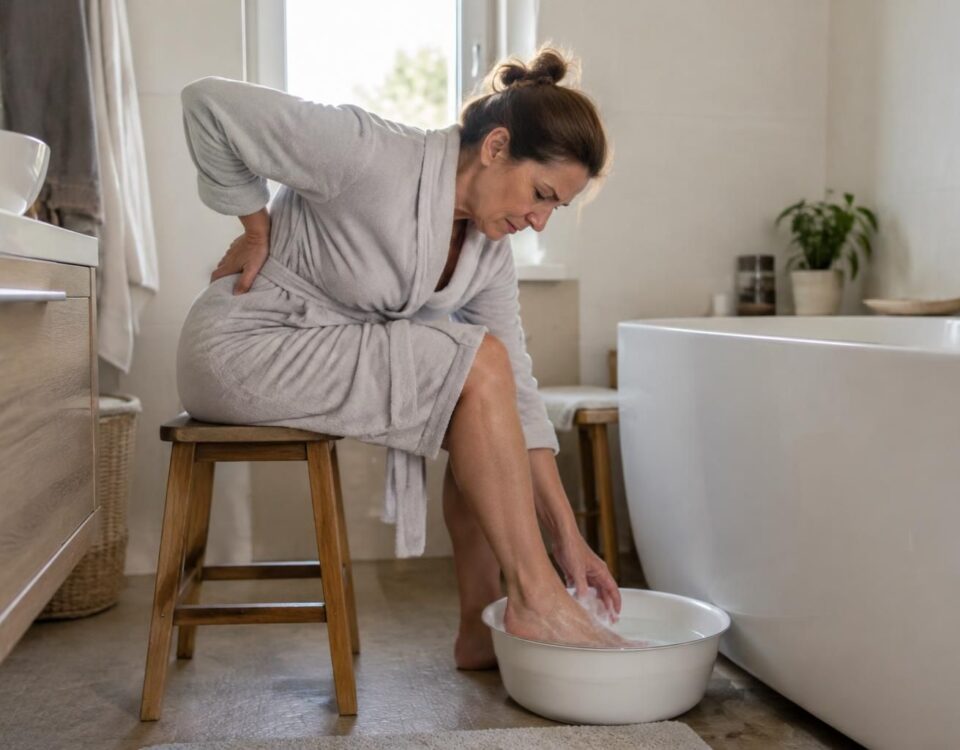
Sciatica and washing feet: lumbar flexion to monitor
IN BRIEF Sciatica can make washing your feet uncomfortable, as bending forward accentuates lumbar flexion and may trigger pain. To limit strain, sit down, bring your foot closer to you, or use a long-handled aid. These adjustments make personal hygiene…
Adapt the session according to symptoms
The symptoms and their evolution matter more than the name of an exercise. The same session may be well tolerated one day and uncomfortable another day. Use these guidelines to guide caution, without considering them as a personalized treatment program.
| Situation | Practice Reference | Avoid |
|---|---|---|
| Recent or severe pain | Consult a professional before resuming the Reformer. If a session is authorized, keep the movements very gentle and comfortable. | Forcing, rapidly increasing effort, or continuing despite sharp pain. |
| More stable symptoms | Resume with a reduced range, light resistance, and a slow pace. | Jarring movements, abrupt changes in load, and positions that increase radiation. |
| Pain during exercise | Stop the movement and see if the symptom decreases. | Continuing to “push through” sharp pain or new numbness. |
| Increased pain after the session | Reduce or suspend sessions and seek advice if the worsening persists. | Repeating the same session without adjustment. |

Sciatica and dressing: daily gestures to adapt
IN BRIEF Sciatica can make dressing uncomfortable, but a few simple gestures help limit tension. Sit down to put on pants, socks, and shoes, choose easy-to-wear clothing, and avoid bending or twisting suddenly. These adjustments make daily dressing easier without…
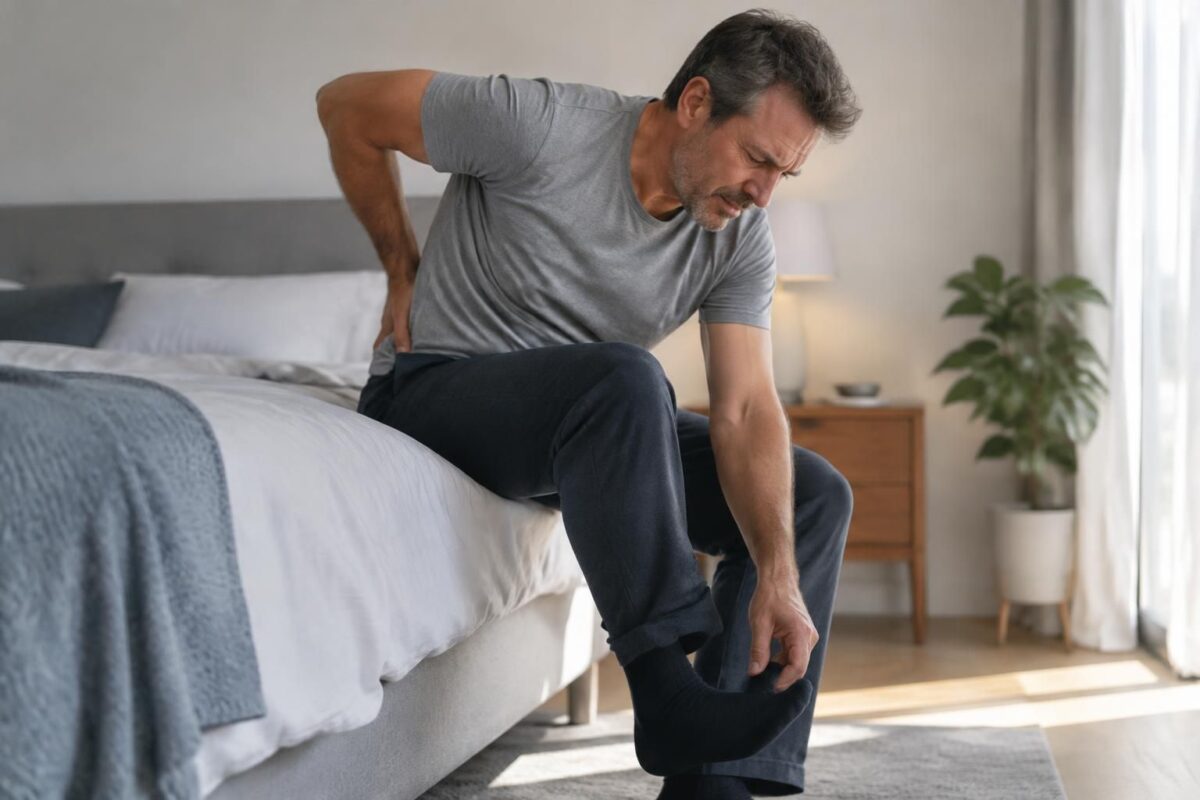
Sciatica and putting on socks: bending and pain in the leg
IN BRIEF Sciatica can make it difficult to put on your socks: bending over can increase the pain that radiates down the leg. Sitting down, using a sock aid, or avoiding painful bends can make this daily task easier. If…
Which exercises to choose with caution
A session can include simple movements, controlled breathing, and gentle core work, if these gestures do not trigger symptoms. The position, range, and resistance should be adjusted carefully. Pilates exercises for back pain provide general examples, but they are not automatically suitable for sciatica.
Ask the person accompanying you to modify or remove any exercise that increases pain in the leg. A general guideline cannot determine the cause of your symptoms or confirm that a movement is suitable for you.

Sciatica and tying your shoes: why the pain can radiate down
IN BRIEF Sciatica is pain related to the irritation of a nerve in the lower back, which can radiate into the buttock and leg. Leaning down to tie your shoes may accentuate the pain or cause it to descend further.…

Sciatica and picking up an object from the ground: movement to watch out for
IN BRIEF Sciatica is pain that follows the path of the sciatic nerve. To pick up an object from the ground, avoid bending abruptly while rounding your back or twisting: bend your knees, tilt your hips, and keep the object…
When to stop the session and consult
Stop the exercise if the pain becomes sharp, if it radiates further down the leg, if new numbness appears, or if weakness increases. Do not resume the movement that triggered these symptoms without professional advice.
Quickly consult a healthcare professional in case of sudden or increasing weakness, significant loss of sensitivity, or difficulty controlling the bladder or intestines. Pain after a significant trauma or a clear and persistent worsening also warrants an evaluation. To avoid mistakes during the return to activity, you can read these guidelines on sciatica and physical activity.
Is Pilates suitable during an acute episode?
Not always. During an acute episode, certain movements may exacerbate symptoms. It may be better to suspend the Reformer until a healthcare professional advises on resuming. Don’t do a session just because pain seems tolerable at first: also monitor symptoms during and after the activity.
Information on manual approaches can also help prepare for a discussion with a professional. They do not allow concluding that a method suits your situation. You can consult these pages on osteopathy and chronic pain, muscle tension, or lower back pain.
Frequently Asked Questions about Sciatica and Pilates
Can the Pilates Reformer reduce sciatic pain?
It can help some people resume gentle activity, provided that the movements are well tolerated. Results vary from person to person and depend on the cause of the symptoms. The Reformer does not replace a diagnosis or medical treatment.
What signs indicate that a movement should be stopped?
Stop if the pain increases, radiates further down the leg, or feels electric. Also stop in case of new numbness, weakness, or loss of movement control.
Should you continue if the pain is mild?
Not necessarily. Mild pain can evolve during or after exercise. Reduce the amplitude or stop the movement if symptoms worsen. If in doubt, seek advice from a healthcare professional.
Can one practice alone during a crisis?
An acute episode can make certain movements difficult to assess. Seek professional advice before resuming a session, especially if the pain is strong, worsening, or accompanied by weakness or numbness.
Medical Disclaimer: The information and advice provided on this site do not substitute for the opinion, diagnosis, or treatment of a healthcare professional. Please note that Sylvain Desforges, B.Sc., D.O., N.D., Doctor of Osteopathy, is neither a medical doctor nor a physician, and is not specialized in a medical specialty as defined by the Collège des médecins du Québec. Manual medicine, functional medicine, and sports medicine as described on this site exclude any medical treatment or diagnosis made by a doctor or specialist. Always consult your doctor for any medical questions. For more details, please read our complete Legal Notice.
Movements to Adjust
- Deep bends
- Fast rotations
- High resistance
- Forced stretches
- Sudden transitions
Recommended Adjustments
- Reduce the amplitude
- Slow down the tempo
- Lighten the springs
- Stay in a comfortable position
- Stop if the pain radiates further

In case of sciatica, Pilates can help gradually resume movement, provided that the exercises are adapted to your symptoms. On the Reformer, favor slow and comfortable gestures, reduce amplitude or resistance if the leg pulls, and stop any movement that intensifies pain. This practice does not replace a diagnosis or medical follow-up.
Understanding Sciatica Before Practicing
Sciatica refers to pain that follows the path of the sciatic nerve, often from the lower back down to the buttock and back of the leg. It can also cause tingling, numbness, or a feeling of weakness. Symptoms and their intensity vary from person to person: a movement comfortable for one may be painful for another.
The Pilates Reformer does not directly treat the cause of sciatica. However, it can provide a flexible framework to maintain mobility, work on core control, and regain confidence in movement. Exercises should remain adapted to your current condition and not force you to “hold” despite sharp pain.
Adapting Movements on the Reformer
Reduce Amplitude and Resistance
Start with small amplitude movements and light or moderate resistance. If your leg pulls, if your back tightens, or if the pain spreads further, reduce the amplitude or adjust the position. A short session conducted at a slow pace may be easier to tolerate than a long and intense sequence.
Favor Controlled Movements
Breathing, pelvis placement, and gentle core work can be good starting points. Lying positions are sometimes better tolerated than weight-bearing exercises, but it depends on your symptoms. Keep transitions smooth and avoid jerks, fast rotations, and deep bends if they provoke pain.
Avoid Forced Stretches
An intense stretch is not necessary to “release” the nerve. Do not try to gain amplitude by pulling on the back of the leg. If an exercise increases radiation, causes electric pain, or results in new numbness, stop it and seek advice from a healthcare professional or qualified instructor.
Adjusting the Session According to the Evolution of Symptoms
During an acute episode, the goal is to remain in a comfortable zone. The Reformer may be too stimulating: it is better to suspend the session if simple movements are difficult or if pain worsens. During the resumption phase, gradually resume with light springs, reduced amplitudes, and a slow tempo. If sciatica is chronic, gradually increase the duration or intensity, observing your response during and after the session.
Mild muscle discomfort may occur, but pain that radiates further down the leg, intensifies, or is accompanied by weakness should be taken seriously. Do not try to “push through” these sensations: adapt the exercise or end the session.
When to seek medical advice
Consult promptly if you experience sudden weakness, loss of bladder or bowel control, or significant worsening of symptoms. Medical advice is also recommended if the pain is severe, persists, or worsens. Before resuming the Reformer after a marked episode, have the resumption validated by a healthcare professional, especially if you have a known injury or medical issue.
| Movement on Reformer | Adaptation in case of sciatica |
|---|---|
| Deep back flexion | Reduce range or avoid if pain radiates. |
| Trunk rotation | Prefer slow and low-amplitude movements. |
| Intense leg stretch | Do not force; stay in a comfortable position. |
| High resistance exercise | Choose light springs and progress gradually. |
| Quick transitions | Slow down position changes and control movement. |
| Movement causing sharp pain | Stop the exercise and seek advice if symptoms persist. |
Sciatica and Pilates Reformer: movements to adapt
Illustrative testimonials: each sciatica is different. These accounts serve to present possible situations and do not replace the advice of a healthcare professional.
Claire, in recovery phase: “When the pain radiated down my leg, large ranges didn’t suit me. The instructor suggested shorter movements, a slow pace, and light resistance. This way, I could move without trying to force it.”
Marc, after a period of acute pain: “I preferred to wait until the symptoms stabilized before resuming the Reformer. At first, I focused on breathing and simple movements, in a comfortable position. If an electric pain appeared, I stopped the exercise.”
Sophie, with recurrent sciatica: “I’ve learned to adapt the session based on how I feel each day. I reduce the range if my leg pulls and avoid sudden transitions. The goal is not to push through the pain but to gradually regain confidence in movement.”
Éric, accompanied by a professional: “Some flexion or rotation exercises triggered my symptoms. We modified them instead of repeating them at all costs. Core work and gentle mobility stayed within a tolerable range, without increasing radiation.”
In case of sciatica, intensity, positions, and range should be adapted to your symptoms. Stop a movement if the pain intensifies, radiates further down the leg, or is accompanied by new numbness. Increasing weakness or urinary or bowel issues require prompt medical advice.
Sciatica and Pilates: movements to adapt according to Sylvain Desforges’ approach
Dr. Sylvain Desforges specializes in osteopathy, naturopathy, and manual medicine. Founder and president of TAGMED clinics and the ACMA association, he dedicates his career to health innovation and managing chronic pain. His approach is based on data-driven care and assessing the specific needs of each individual.
In the context of sciatica, this individualized approach is particularly important. Sciatica typically corresponds to pain that follows the nerve path, from the lower back to the buttock and the back of the leg. It may also be accompanied by tingling, numbness, or weakness. Symptoms and their causes vary: a comfortable exercise for one person may be irritating for another.
Pilates, especially working on the Reformer, can provide a framework for gradually resuming movement. It allows adjustments to resistance, range, and position while working on core control and mobility. However, this is not about “putting the nerve back in place” or replacing a diagnosis or medical treatment. Exercises should remain adapted to the symptoms of the day and should not cause sharp pain or increased radiation.
During sensitive periods, movements can be simplified. A lying or stable position may be better tolerated than a standing exercise, and light or moderate resistance is often easier to adjust than strong tension. Breathing, comfortable alignment, and controlled movements of the pelvis or hips can serve as starting points, provided they do not exacerbate symptoms. Short sequences also allow observing the body’s reaction without imposing prolonged effort.
Some movements require more caution: deep flexions, rapid rotations, sudden position changes, and forced stretches can be hard to tolerate when they trigger discomfort in the lower back or leg. It is better to reduce the range, slow down the tempo, or choose a more stable variant. A slight feeling of muscle effort is not the same as an electric pain radiating further down the leg.
The essential principle is not to try to “hold on at all costs”. If the pain increases during an exercise, if radiation extends, or if numbness appears, the movement should be stopped and the session reevaluated. A persistent worsening after activity also warrants seeking advice from a healthcare professional. In an acute episode, resuming the Reformer may require prior validation and specific adaptations.
Dr. Desforges’ expertise in managing chronic pain and manual medicine fits within a holistic vision: understanding symptoms, choosing appropriate interventions, and monitoring their effects. Advanced technologies, such as spinal decompression, laser, or shock waves, are part of the fields associated with his practice; however, this does not mean that the same solution is suitable for all cases of sciatica. Any resumption of Pilates should take into account the evolution of symptoms, medical history, and the recommendations of the professional supporting the individual.
A sudden or progressive weakness, significant loss of sensitivity, a disturbance in bladder or bowel control, or pain occurring after a significant trauma require rapid medical evaluation. These signs should not be managed solely by Pilates exercises.
The Pilates Reformer can assist certain individuals suffering from sciatica by promoting a gradual return to movement and better core control. However, the exercises should be adapted to the symptoms: comfortable range, moderate resistance, and stopping if the pain intensifies or radiates further down the leg. Pilates does not replace a diagnosis or medical follow-up.
Sciatica and Pilates: adapting movements
Sciatica can cause pain that starts in the lower back or buttock and radiates into the leg, sometimes accompanied by tingling, numbness, or weakness. Pilates does not directly “decompress” the nerve and does not necessarily treat the cause of the symptoms. Instead, it can help regain tolerable mobility and restore confidence in movement. For a general overview, refer to the tips on Pilates and sciatica or those from the TAGMED Clinic.
On the Reformer, start with simple, slow, and controlled movements. A lying position may be better tolerated than a standing exercise, but the response varies from person to person. Reduce the range if the leg pulls, choose light resistance, and favor short sequences. A selection of Pilates exercises for sciatica may provide ideas, as long as they are not applied mechanically: a movement suitable for one person may be uncomfortable for another.
Movements to reduce or avoid
During sensitive periods, adapt deep bends, quick rotations, jolts, and abrupt transitions. Do not force a stretch that increases pain in the leg and do not attempt to “push through” an electrical sensation. If an exercise causes stronger radiation, new numbness, or weakness, stop it and seek advice from a healthcare professional. A Pilates routine for sciatica should remain indicative and be adjusted to your symptoms.
Posture and supports can also influence comfort during exercise. Uneven weight distribution on the feet may alter balance and the way the body compensates; discover the elements discussed in this article on foot supports and posture. This does not mean that the supports are the sole cause of sciatica, but they may deserve special attention during standing exercises.
Evolving practice according to symptoms
During a recent or intense episode, the goal is to remain in a tolerable activity without triggering sharp pain. A Reformer session may need to be suspended if simple movements become difficult or if symptoms worsen. When pain stabilizes, resume gradually: low amplitude movements, slow tempo, sufficient breaks, and gradual increase in effort. Pilates adapted for sciatica can serve as a pathway to resumption, provided the exercises remain comfortable and supervised if necessary.
In case of persistent pain, a professional can evaluate appropriate movements and consider the possible cause of the symptoms. Depending on the situation, they may also discuss other approaches, such as gentle management of a herniated disc or information on circulation in painful areas. These resources do not replace a medical evaluation and do not guarantee individual benefit.
Neurovertebral decompression and prevention of severe lower back pain are also topics to discuss with a professional, who can explain the indications and limitations of each option. Avoid multiplying treatments or exercises without ensuring they are suitable for your situation.
When to stop the session and seek medical advice
Stop exercising if the pain markedly increases, radiates lower into the leg, or is accompanied by new numbness. A sudden weakness, loss of bladder or bowel control, or symptoms occurring after trauma require rapid medical evaluation. If pain persists, becomes severe, or worsens, also seek advice before resuming the Reformer.

Sylvain Desforges, B.Sc., D.O., N.D., docteur en ostéopathie
Dr Sylvain Desforges, B.Sc., D.O., N.D., osteopath, is the founding president of TAGMED and of the ACMA association. He dedicates his practice to chronic spinal pain, low back pain and symptoms compatible with sciatica, particularly when pain radiates toward the buttock, leg, calf, foot or toes.
Through SOS Sciatique, he publishes educational content on sciatica symptoms, possible causes such as disc herniation, disc narrowing, foraminal stenosis or irritation of a lumbar nerve root, as well as non-surgical approaches that may be considered according to the evaluation. At Clinique TAGMED, care may include, depending on the case, motorized neurovertebral decompression, specific osteopathic care or precision percussion.
For an evaluation related to sciatica treatment in Montreal / Mount Royal or sciatica treatment in Terrebonne, please consult the services available at Clinique TAGMED.
Medical disclaimer
The information published on SOS Sciatique is provided for educational purposes only and does not replace a consultation, diagnosis, opinion or treatment provided by a physician or another authorized healthcare professional. The author of this article is neither a medical doctor nor a specialist in a medical specialty recognized by the Collège des médecins du Québec. The osteopathic, manual medicine or functional support approaches described on this site do not constitute medical acts and are not intended to replace medical follow-up.
Consult a physician or emergency service in cases of loss of bladder or bowel control, anesthesia in the saddle area, significant or progressive weakness in the leg or foot, fever, recent trauma, severe pain or rapid worsening of symptoms. For more details, please read our Legal Notice.