Sciatica in Montreal: foraminal or central disc herniation?
29/11/2026
Sciatica and rapidly worsening pain
29/11/2026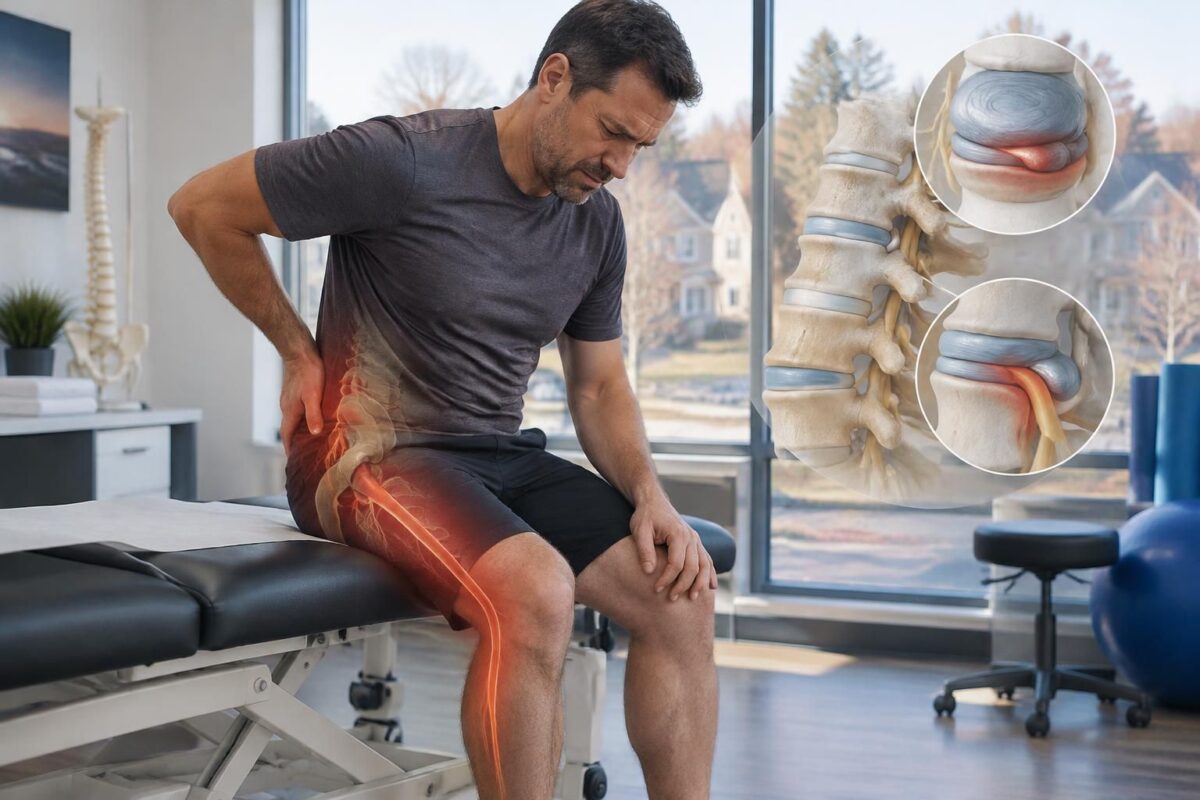
IN BRIEF
| A foraminal disc herniation is located near the opening where a nerve root exits, while a central herniation is found in the middle of the disc. Both can contribute to sciatica, but their location on imaging alone is not enough to explain the symptoms or determine the treatment. In Terrebonne, an evaluation helps correlate the pain, clinical examination, and imaging results to guide management. |
Sciatica in Terrebonne: foraminal or central disc herniation?
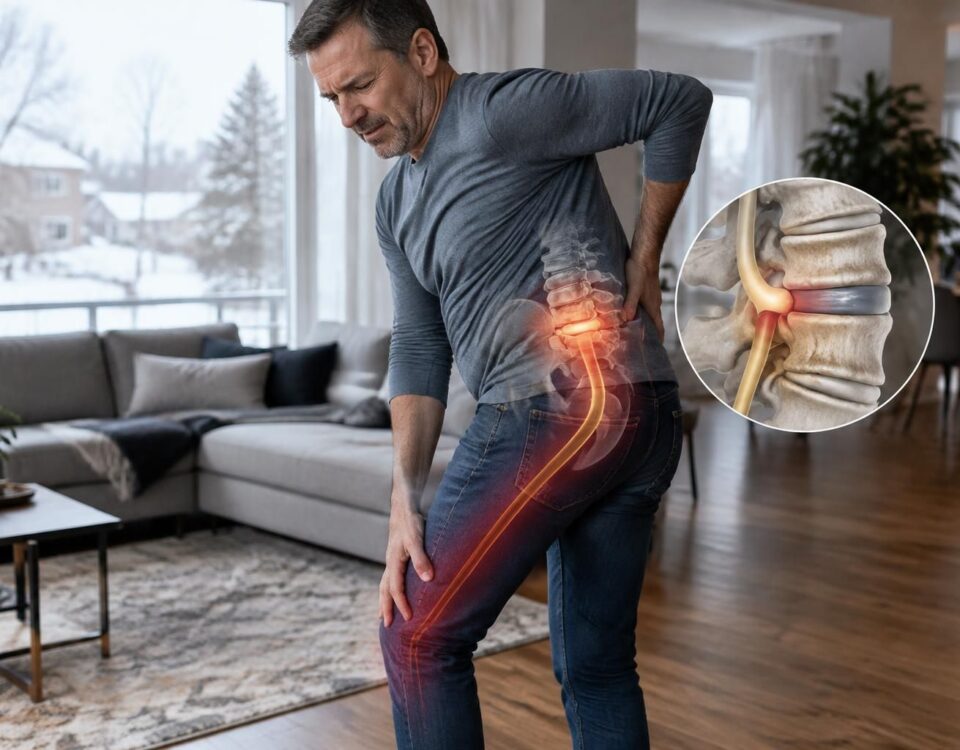
A foraminal disc herniation is near the opening where a nerve root leaves the spine and can irritate a nerve on one side. A central herniation projects more towards the spinal canal and may sometimes affect one or more roots. Both can cause low back pain radiating into the buttock and leg, but symptoms alone do not determine the type of herniation: clinical evaluation and, if necessary, imaging help interpret the situation.
Significant or progressive weakness, loss of sensation in the saddle area, or urinary or bowel issues require urgent medical evaluation.
A disc herniation can occur at the center of the spinal canal or near the passage where a nerve root exits the spine. Both positions can irritate nerves and cause sciatica-like pain, but they do not always present the same signs. In Terrebonne, the evaluation is based on symptoms, clinical examination, and, if necessary, imaging. An image of herniation alone is not sufficient to establish the cause of pain.
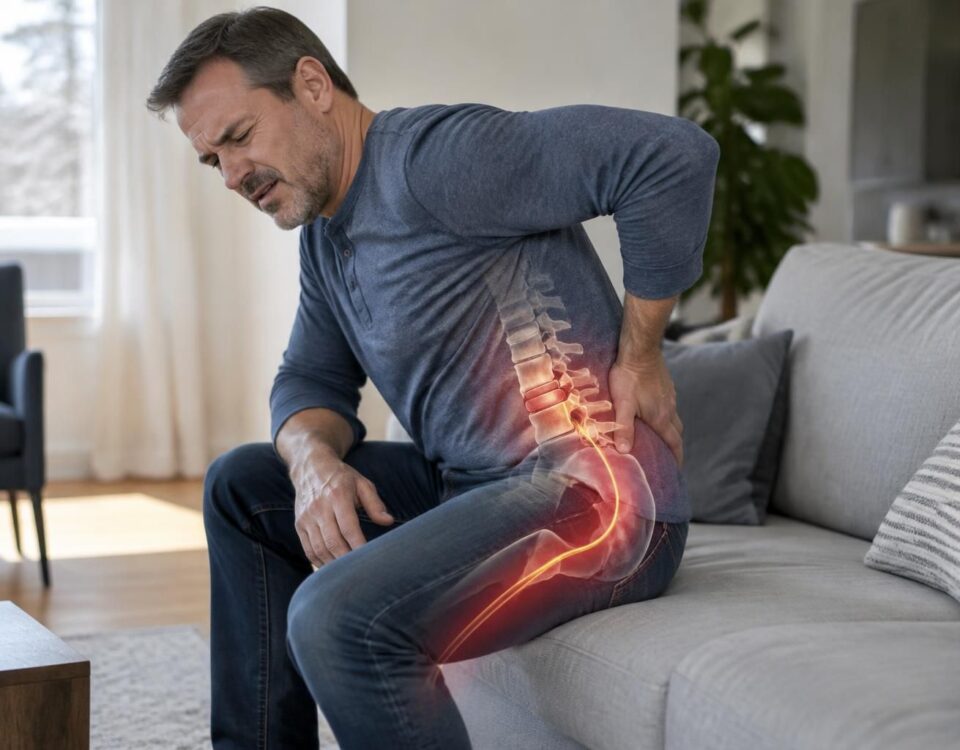
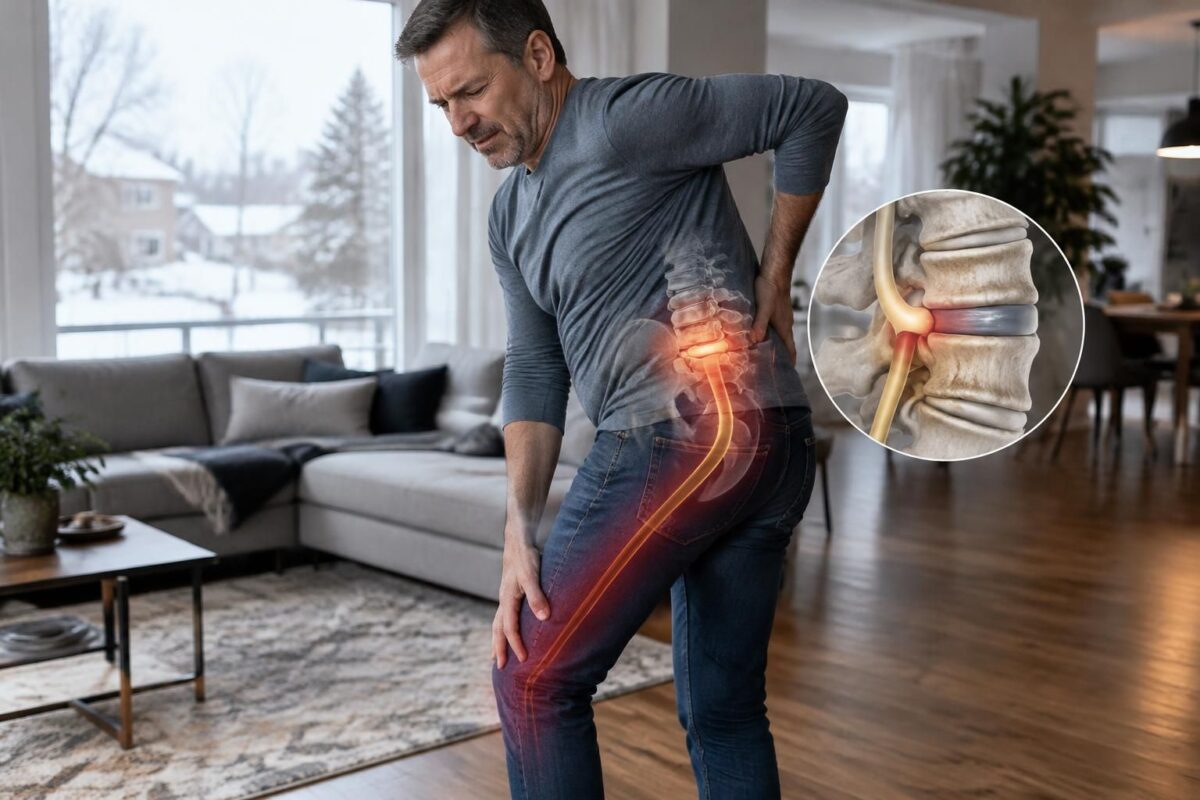
Sciatica refers to pain that follows part of the pathway of the sciatic nerve, often from the lower back or buttock down to the thigh and leg. Irritation of a lumbar nerve root can also lead to tingling, numbness, or weakness. The pain may extend to the foot, but it can also stop in the buttock or thigh.
A disc herniation occurs when part of the intervertebral disc protrudes. Depending on its location, it may be closer to the center of the spinal canal or a foramen, the opening through which a nerve root exits the spine. The location helps in understanding possible symptoms, but alone it cannot determine their cause.
Sciatica in Terrebonne: disc degeneration and symptoms in the leg
IN BRIEF Disc degeneration-related sciatica refers to pain that radiates from the lower back to the buttock and down the leg when a nerve root is irritated. It may be accompanied by tingling, numbness, or weakness. In Terrebonne, an evaluation…
Sciatica in Terrebonne: disc desiccation and radiating pain
IN SHORT Disk dehydration corresponds to a loss of hydration of a disk and can contribute to lower back pain, sometimes accompanied by sciatica radiating to the buttock or leg. In Terrebonne, an assessment allows for the exploration of possible…
What is the difference between a central herniation and a foraminal herniation?
The central disc herniation
A so-called central herniation is located near the middle of the spinal canal. Depending on its size and direction, it can irritate a nerve root or reduce the space available for several nerve structures. Symptoms vary depending on the level of the spine, the volume of the herniation, and the tissue response.
A central herniation does not necessarily cause pain in both legs. It can lead to pain on one side, low back pain without sciatica, or no symptoms at all. In cases of significant compression, serious neurological signs may appear. Loss of control of the bladder or bowel and numbness in the saddle area require urgent medical evaluation.
The foraminal disc herniation
A foraminal herniation is located near the foramen, the lateral passage where a nerve root exits the spine. If the herniation irritates this root, pain may follow the territory associated with the affected nerve. It may be accompanied by tingling, decreased sensitivity, or muscle weakness.
The term foraminal stenosis describes a narrowing of this opening. A herniation, wear-related changes, or other factors can contribute to reducing space. The page dedicated to foraminal stenosis and sciatica in Terrebonne presents this connection in more detail.
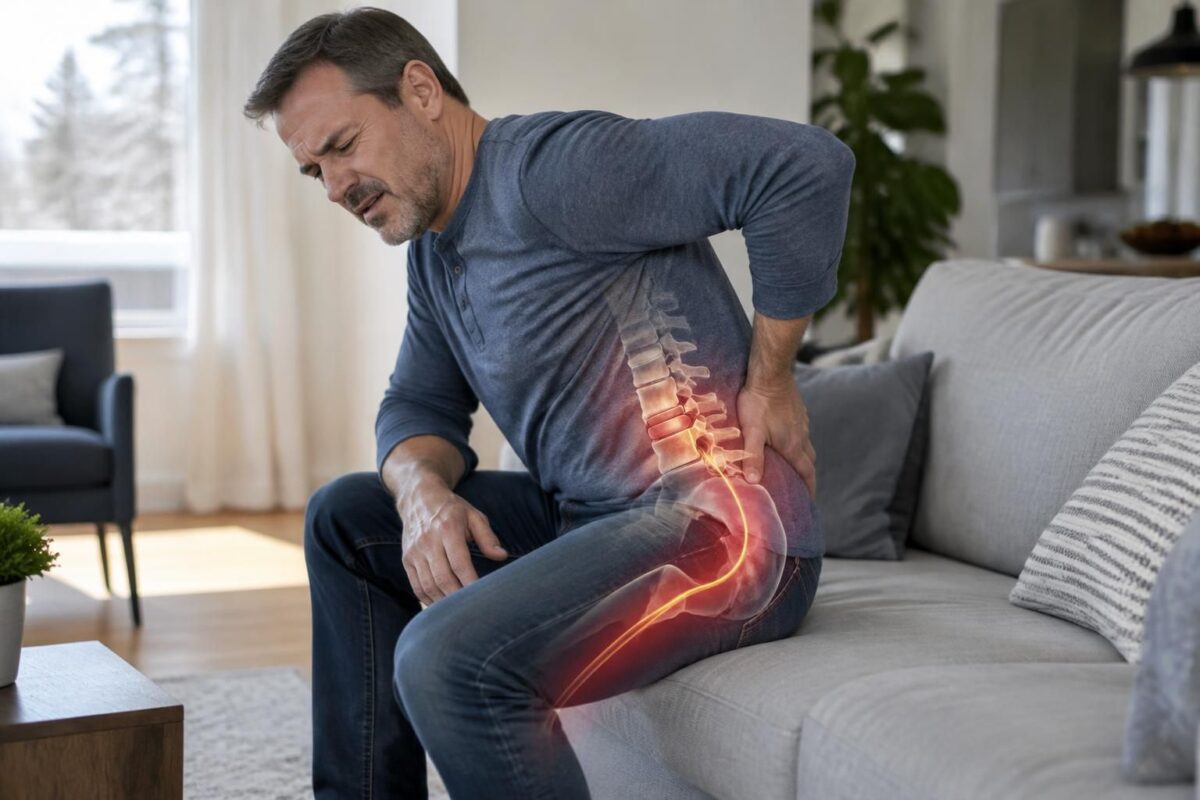
Sciatica in Terrebonne: possible annular tear and nerve irritation
IN BRIEF A disc tear is a small lesion of the disc that can sometimes irritate a nerve root and contribute to sciatica, with pain radiating to the buttock or leg. However, it is not always the cause: an assessment…
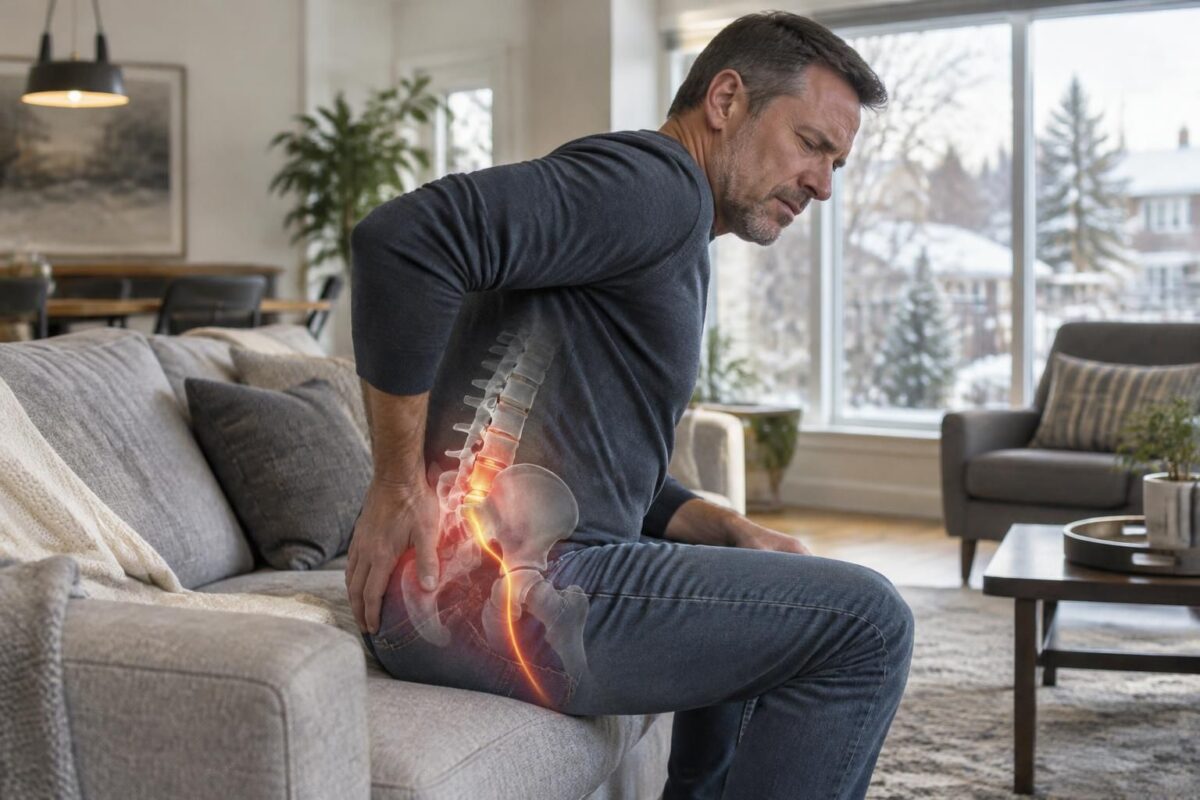
Sciatica in Terrebonne: disc bulge and buttock pain
IN BRIEF Sciatica related to a disc bulge can cause buttock pain, sometimes accompanied by pain that radiates down the leg. An assessment in Terrebonne helps clarify the cause of the symptoms and determine suitable non-surgical options, without guaranteeing a…
What symptoms may indicate a nerve root issue?
The L5 and S1 roots are often involved in sciatica related to the lumbar region. Pain associated with L5 may radiate down the side of the thigh and leg, leading to the top of the foot or the big toe. An S1 involvement may radiate through the buttock and back of the leg to the outer edge of the foot or to the little toe. These pathways can vary from person to person.
Pain felt in the calf can have several origins. It alone does not confirm a herniation at the L5-S1 level. To better understand the symptoms associated with this area, consult this article on L5-S1 and calf pain. Numbness of the foot associated with a disc herniation also requires appropriate evaluation, especially if accompanied by weakness.
Pain felt in the buttock does not always mean a sciatic root is pinched. Muscles or joints can also cause local or referred pain. The article on the difference between radicular pain and referred pain explains possible distinctions. A disc bulge associated with buttock pain does not automatically prove that the disc is the source of the symptoms.
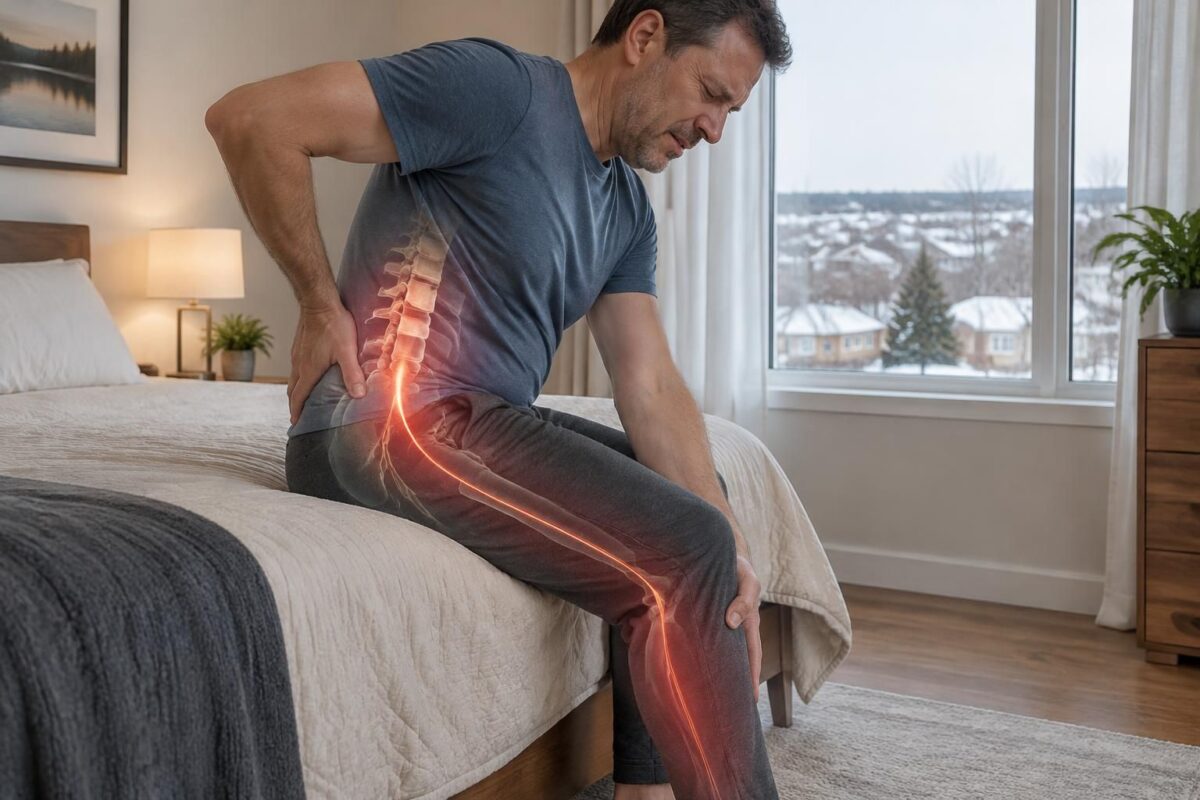
Sciatica in Terrebonne: disc protrusion and pain under the knee
IN BRIEF A sciatic pain related to a disc protrusion can cause lower back or buttock pain that radiates below the knee, sometimes accompanied by tingling or numbness. In Terrebonne, an assessment helps distinguish nerve-related pain from a knee problem…
Sciatica in Terrebonne: disc herniation and painful cough
IN BRIEF In Terrebonne, sciatica related to a herniated disc may be accompanied by pain that increases when coughing, as the pressure exerted can further irritate a nerve root. An evaluation helps to understand the origin of the symptoms and…
How is the diagnosis established?
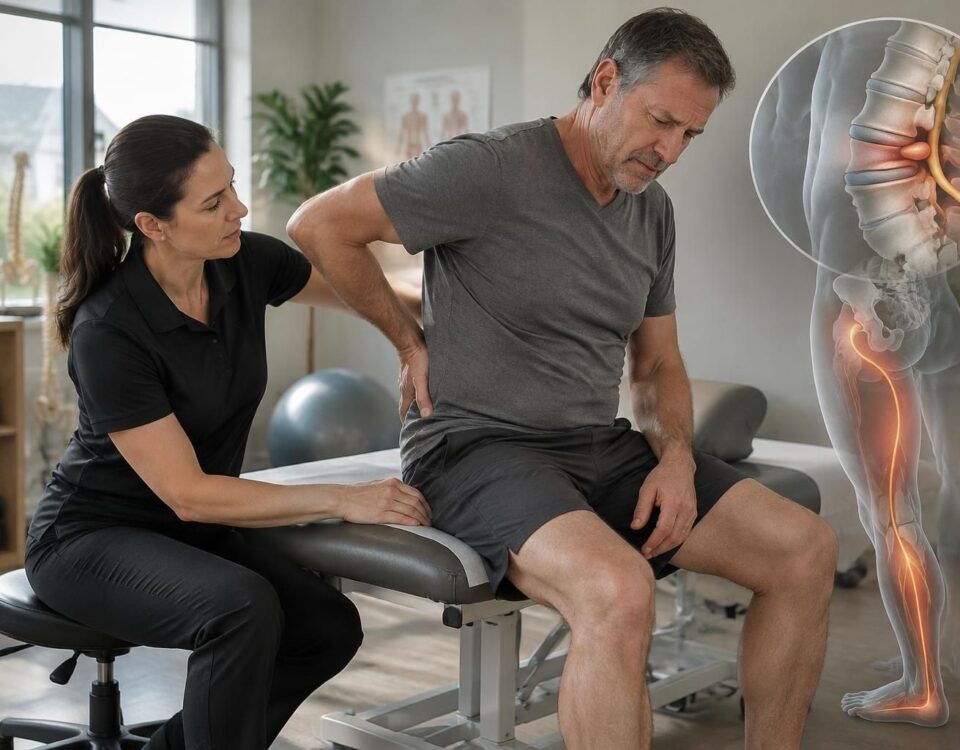
The healthcare professional first gathers information about the pain: its onset, its path, its duration, and the factors that worsen or alleviate it. They also check sensitivity, strength, and certain reflexes. The examination helps identify signs compatible with nerve irritation and evaluate the presence of signs that require rapid attention.
An MRI may be considered when symptoms, their evolution, or observed signs warrant it. It shows the discs and the structures around the nerve roots. The results must be compared with the symptoms: disc changes may be present without explaining the pain. To better understand the interpretation of images and warning signs, consult this article on disc herniation, MRI, and warning signs.
A disc herniation and a foraminal herniation do not always refer to two distinct diseases. The first term describes a protrusion of the disc; the second specifies a possible location. To delve deeper into this difference, this article presents the distinction between disc herniation and foraminal herniation. The difference between disc herniation, low back pain, and sciatica also helps to situate these terms.
Is a disc herniation always the cause of sciatica?
No. Sciatica can be associated with a herniation, foraminal narrowing, or another cause of nerve irritation. Low back pain can also project into the buttock or leg without direct compression of a root. The history of symptoms and clinical examination help to distinguish these situations.
Disc dried out corresponds to a decrease in the water content of a disc. It is part of the changes that can occur over time, but it does not necessarily cause pain. To learn more about this imaging finding, consult the page on disc drying and radiating pain.
A general resource on the different types of sciatica is also available in this presentation of sciatica. This information does not replace an individual evaluation.
When should you consult quickly?
Back pain deserves evaluation if it persists, worsens, or limits daily activities. Consult a doctor or emergency service quickly in the case of loss of urinary or bowel control, numbness in the saddle area, significant or progressive weakness in the leg or foot, fever, recent trauma, or rapid worsening.
New weakness, such as difficulty lifting the foot or walking normally, should also be reported without delay. Only a qualified professional can determine the necessary examinations and decide if urgent medical care is required.
What management options can be considered in Terrebonne?
The management depends on the evaluation and the goals of the person. It may include medical follow-up and, as appropriate, non-surgical approaches. At the TAGMED Clinic, services can include a functional assessment, specific osteopathy, or motorized neurovertebral decompression. Their relevance depends on the situation; these approaches do not replace a medical diagnosis or emergency care.
To learn about the available services, consult the page on sciatica treatment in Terrebonne or the website of the TAGMED Clinic. An assessment helps determine if these services meet the needs and if additional medical consultation is necessary.
About the author
Sylvain Desforges, B.Sc., D.O., N.D., Doctor of Osteopathy and Naturopath, is the founding president of TAGMED and the ACMA association. His practice focuses on chronic pain of the spine, low back pain, and pain compatible with sciatica.
Through SOS Sciatique, he publishes educational content on the symptoms of sciatica, their possible causes, and non-surgical approaches that can be contemplated based on the evaluation. At the TAGMED Clinic, care may include, as appropriate, motorized neurovertebral decompression, specific osteopathy, or precision impact therapy.
For an evaluation related to sciatica treatment in Montreal or Mont-Royal, or sciatica treatment in Terrebonne, consult the available services at the TAGMED Clinic.
Medical disclaimer
Medical disclaimer: The information and advice provided on this site do not replace the opinion, diagnosis, or treatment of a healthcare professional. Please note that Sylvain Desforges, B.Sc., D.O., N.D., Doctor of osteopathy, is neither a medical doctor nor a physician and is not a specialist in a medical specialty as defined by the Collège des médecins du Québec. Manual medicine, functional medicine, and sports medicine as described on this site exclude any treatment or medical diagnosis made by a doctor or a specialist. Always consult your physician for any medical questions. For more details, please read our Complete Legal Notice.
The information published on SOS Sciatique is provided for educational purposes and does not replace a consultation, diagnosis, opinion, or treatment performed by a physician or another authorized healthcare professional. The author of this article is neither a doctor nor a specialist in a medical specialty recognized by the Collège des médecins du Québec. The osteopathy, manual therapy, or functional support approaches described on this site do not constitute medical acts and are not intended to replace medical follow-up. Consult a physician or emergency service in the event of loss of urinary or bowel control, anesthesia in the saddle area, significant or progressive weakness in the leg or foot, fever, recent trauma, severe pain, or rapid worsening.
Important: imaging alone is not sufficient to determine the cause of symptoms; a clinical assessment can guide management.Foraminal herniation
Centrall herniation

In Terrebonne, a pain that starts in the lower back and radiates into the buttock or leg may be related to irritation of a nerve root. A central disc herniation and a foraminal disc herniation refer to two possible locations of the displaced disc, but symptoms alone cannot confirm which one is involved. Clinical assessment, and sometimes imaging, helps direct management and ensure that no signs of severity are present.
Understanding the difference between the two types of herniation
Central disc herniation
The central herniation is located towards the back of the disc, near the spinal canal where the nerve structures run. Depending on its size and precise location, it can irritate one or more nerve roots. The pain may affect the lower back, buttock, and part of the leg, sometimes on one side only. However, a herniation visible on imaging does not necessarily explain the symptoms; it must be interpreted in the context of the examination and your history.
Foraminal disc herniation
The foramen is the opening between two vertebrae through which a nerve root exits the spinal canal. A foraminal herniation is located in this area or nearby and can reduce the available space for the nerve. It is likely to cause pain radiating down the leg, tingling, or decreased sensitivity. The location of the painful path can provide clues, but it is not sufficient to definitively distinguish a foraminal herniation from a central herniation.
What symptoms to watch for?
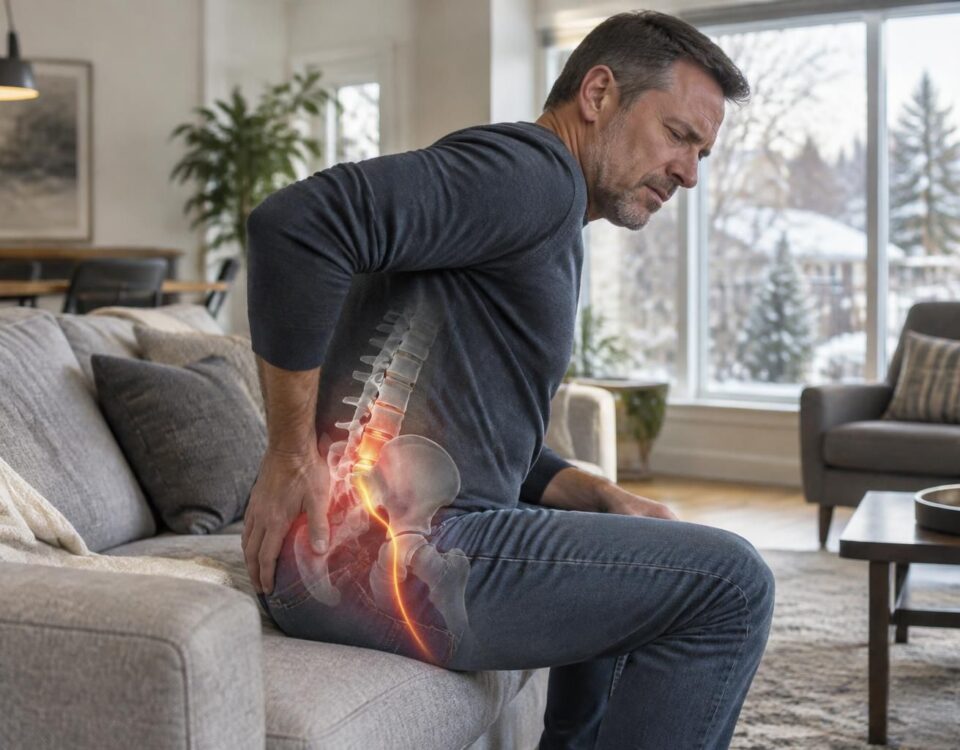
Sciatica can manifest as sharp pain, a burning sensation, or shooting pains that descend from the lumbar region to the leg. Depending on the irritated root, symptoms may extend to the foot or toes. Coughing, sneezing, certain efforts, or prolonged positions can exacerbate the pain. Numbness or weakness may also occur. Note when the symptoms occur, their pathway, and the activities that aggravate them: this information will be useful during the evaluation.
Assessment and management options in Terrebonne
The first step is to have the symptoms evaluated by a licensed healthcare professional. The examination may include an analysis of mobility, sensitivity, and strength. An MRI or other imaging examination is not necessary in all cases; the healthcare professional will determine if it is indicated. Management depends on the cause, the intensity of the symptoms, and their progression.
When the situation allows, the plan may prioritize maintaining tolerated activities, temporarily adapting tasks that exacerbate pain, and gradually progressing to suitable exercises. Avoid prolonged rest and movements that trigger a significant worsening. At the TAGMED Clinic, an evaluation in Terrebonne can allow for discussion of non-surgical approaches such as specific osteopathy or motorized neurovertebral decompression, if appropriate for your situation. These approaches do not replace a medical diagnosis or necessary care.
When to seek urgent help?
Consult a doctor or emergency service immediately in case of loss of bladder or bowel control, numbness around the saddle area, significant or progressive weakness in the leg or foot, or rapid worsening. Fever, recent trauma, or severe pain also warrant prompt evaluation.
About the author
Sylvain Desforges, B.Sc., D.O., N.D., Doctor of Osteopathy and naturopath, is the founding president of TAGMED and the ACMA association. His practice focuses particularly on chronic spinal pain and pain associated with sciatica.
Medical disclaimer
This content is provided for educational purposes and does not replace a consultation, diagnosis, or treatment by a licensed healthcare professional. Osteopathic, manual medicine, or functional support approaches do not constitute medical acts and cannot replace medical follow-up.
| Foraminal herniation | Central herniation |
|---|---|
| Located in the opening where a nerve root exits. | Located in the center of the spinal canal. |
| Can irritate the nerve root at its exit. | Can involve one or more nerve roots. |
| Pain is often felt on one side only. | Pain varies, sometimes on both sides. |
| Can cause tingling or weakness in the affected leg. | The symptoms depend on the severity and location of the herniation. |
| The painful path alone does not confirm the diagnosis. | A clinical examination and, if necessary, imaging can clarify the diagnosis. |
| Urgent: consult quickly in case of loss of bladder or bowel control, numbness in the saddle area, or progressive weakness. | |
Sciatica in Terrebonne: testimonials on a foraminal or central disc herniation
Transparency note: the stories below are composite and fictional examples created for educational purposes. They do not correspond to verified patient testimonials and do not allow for diagnosis.
“My pain mainly radiated down one leg” — composite account: In Terrebonne, a person describes lower back pain radiating into the buttock and then down the side of the leg to the foot. An imaging study performed after a medical evaluation mentions a foraminal disc herniation. This type of herniation is located near the opening through which a nerve root exits and can irritate it. However, the location observed on imaging alone is not sufficient to establish the cause of the symptoms: it must be interpreted along with the clinical exam.
“I had pain on both sides and tingling” — composite account: Another person reports lower back pain accompanied by unusual sensations in the legs. Their report describes a central disc protrusion. A herniation located centrally can, depending on its size and position, affect one or more nerve structures. Symptoms vary from person to person; bilateral pain thus does not, by itself, lead to a conclusion of central herniation.
“The report seemed concerning, but it needed to be related to my symptoms” — composite account: A person discovers the terms “foraminal” and “central” in their imaging report and fears surgery. During the assessment, the healthcare professional relates these observations to the location of the pain, sensitivity, muscle strength, and reflexes. An image does not automatically determine severity or treatment: decisions depend on the complete clinical picture.
What is the difference between a foraminal herniation and a central herniation? A foraminal herniation is found near the passage of a nerve root as it exits the spine. A central herniation is located more toward the middle of the spinal canal. In both situations, nerve irritation can cause sciatica, with pain radiating from the lower back to the buttock, leg, or foot. Tingling, numbness, or weakness may also be present.
The path of the symptoms can guide the assessment, but it does not allow for certain differentiation between foraminal and central involvement. A physician or another authorized healthcare professional can determine if a clinical exam or imaging is indicated and interpret the results based on the symptoms.
Management varies based on the situation. It may include tailored advice, cautious maintenance of tolerated activities, and structured rehabilitation. Non-surgical approaches may be considered after an evaluation; they do not replace a medical diagnosis or urgent care when needed. Worsening, persistent pain, or weakness deserves assessment by a healthcare professional.
Seek emergency care promptly in cases of loss of bladder or bowel control, numbness in the saddle area, significant or progressive weakness in a leg or foot, fever, recent trauma, or rapid worsening of symptoms.
Pain that starts from the lower back and radiates to the buttock, thigh, or down to the foot may suggest sciatica. In Terrebonne, concerned individuals often seek to understand if their symptoms are related to a foraminal disc herniation or a central disc herniation. These terms describe the location of the disc bulge but do not, by themselves, determine the cause of the pain or the appropriate treatment.
Intervertebral discs separate the vertebrae and help distribute stress. When a disc deforms, a part of its content can irritate a nerve root. Pain may then be accompanied by burning sensations, electric shocks, tingling, or numbness. It may be more pronounced during certain movements, while sitting, or when the person coughs or sneezes. However, symptoms vary from individual to individual.
A foraminal herniation is located near the foramen, the lateral passage through which a nerve root exits the spinal column. Depending on its location and size, it can reduce the available space and irritate the affected root. A central herniation, on the other hand, is located more toward the center of the spinal canal. Its clinical significance depends, in particular, on its size, proximity to nerve structures, and the presence of other changes in the spine.
The path of the symptoms can provide clues without establishing the diagnosis on its own. Irritation of the L5 root may manifest on the side of the leg and toward the top of the foot or the big toe. In contrast, S1 involvement may radiate along the back of the thigh and calf, to the outer edge of the foot. Pain that stops at the buttock or thigh remains possible. Clinical examination and, when indicated, medical imaging help contextualize these signs.
A herniation visible on MRI does not necessarily explain all symptoms: some individuals present disc changes without pain. The healthcare professional takes into account the history of symptoms, muscle strength, sensitivity, and mobility. A medical evaluation may be recommended when pain persists, worsens, or is accompanied by neurological signs. Care must be tailored to the situation; it may include movement advice and, depending on the assessment, non-surgical approaches such as specific osteopathy or motorized neurovertebral decompression.
In most cases, conservative management is considered first, with measures determined by a qualified professional. Prolonged rest is generally not a strategy to be applied without advice: maintaining appropriate activity may be preferable, depending on capacities and symptoms. Surgery may be discussed by the medical team in certain situations, particularly when significant motor deficit or persistent pain exists despite appropriate care.
Sylvain Desforges, B.Sc., D.O., N.D., Doctor of Osteopathy and naturopath, is the founding president of TAGMED and the ACMA association. His practice focuses on chronic spinal pain and pain compatible with sciatica. At the TAGMED Clinic, options may include, based on the evaluation, motorized neurovertebral decompression, specific osteopathy, or precision impactor.
Medical disclaimer: this information is educational and does not replace a consultation, diagnosis, or treatment by an authorized healthcare professional. The author is neither a physician nor a specialist in a medical specialty recognized by the Collège des médecins du Québec. Seek prompt medical attention or emergency services in cases of loss of bladder or bowel control, numbness in the saddle area, significant or progressive weakness, fever, recent trauma, or rapid worsening.
In Terrebonne, pain that starts from the lower back or buttock and radiates down the leg may be compatible with sciatica, sometimes associated with a disc herniation. The position of this herniation — foraminal or central — may influence the symptoms, but only a clinical evaluation, supplemented if necessary by imaging, allows for the interpretation of their cause. The path of pain alone is not sufficient to confirm a diagnosis.
Foraminal or central disc herniation: what is the difference?
A foraminal disc herniation is located near the foramen, the opening through which a nerve root exits the column. If it irritates or compresses this root, the pain may spread down a leg and be accompanied by tingling, numbness, or sometimes weakness. A central herniation protrudes more into the spinal canal. Its effects depend on its size, exact location, and the affected nerve structures: the term “central” does not, by itself, predict the severity of the symptoms.
Pain can also be related to a disc protrusion, an annular tear, or another cause of nerve irritation; these terms are not interchangeable, and their presence on imaging does not necessarily prove that they explain the symptoms. To better understand the possible link between herniated discs and sciatica, consult this overview of the relationship between herniated discs and sciatica and this presentation on sciatica related to a herniated disc. A disc protrusion and a herniated disc can also be distinguished by their morphology, but their clinical significance should be assessed in the context of the symptoms.
The pain pathway helps guide the evaluation
Irritation of the L5 or S1 roots can cause pain that radiates down the leg and foot, depending on the affected root. Pain that extends below the knee may be indicative of nerve involvement without being proof of a herniation. See the markers on the pain pathway according to L4, L5, and S1 roots and on L5-S1 herniation with pain towards the foot. Discomfort below the knee can also be addressed in this article on disc protrusion and pain below the knee.
However, the location of the symptoms cannot definitively determine whether the herniation is foraminal or central. An annular tear and possible nerve irritation may be among the factors examined. For further exploration of the nerve pathway and possible mechanisms, also consult this article on herniated discs and the nerve pathway. Foraminal stenosis, meaning a narrowing of the space where the root passes, is another possibility to consider; more information is available on foraminal stenosis and radiculopathy.
Evaluation and management options
The healthcare professional considers the history of symptoms, their progression, muscle strength, sensitivity, and mobility. An MRI or other imaging examination may be considered when the clinical picture justifies it; the results should be interpreted alongside the symptoms, as some disc anomalies are present without causing pain. Therefore, the choice of management depends on the evaluation, the intensity of the pain, and the presence or absence of neurological deficits. Non-surgical approaches may be considered as appropriate, while a medical consultation is indicated to determine whether specific examinations or treatments are necessary.
Seek immediate medical attention or go to an emergency service in cases of loss of bladder or bowel control, numbness in the saddle area, significant or progressive weakness in the leg or foot, fever, recent trauma, severe pain, or rapid worsening. These signs require urgent assessment and should not be managed solely by manual therapy.
Medical warning: this information is educational and does not replace a consultation, diagnosis, or treatment by an authorized healthcare professional. The author is neither a physician nor a specialist in a medical specialty recognized by the Collège des médecins du Québec. Osteopathy, manual therapy, or functional support approaches are not considered medical acts. Consult the legal notice of SOS Sciatique for more details.

Sciatica in Terrebonne: pain worsened in sitting position and lumbar disc
IN SHORT Aggravated sciatica in a sitting position may be related to the irritation of a lumbar nerve root, sometimes associated with a lumbar disc. In Terrebonne, varying positions, taking short active breaks, and getting an evaluation can help better…

Sciatica in Terrebonne: pain worsened by flexion and disc-related cause
IN BRIEF Aggravated sciatica by flexion is pain that starts in the lower back and radiates into the buttock or leg; a lumbar disc herniation can irritate a nerve root, although it may not be the only possible cause. In…

Sylvain Desforges, B.Sc., D.O., N.D., docteur en ostéopathie
Dr Sylvain Desforges, B.Sc., D.O., N.D., osteopath, is the founding president of TAGMED and of the ACMA association. He dedicates his practice to chronic spinal pain, low back pain and symptoms compatible with sciatica, particularly when pain radiates toward the buttock, leg, calf, foot or toes.
Through SOS Sciatique, he publishes educational content on sciatica symptoms, possible causes such as disc herniation, disc narrowing, foraminal stenosis or irritation of a lumbar nerve root, as well as non-surgical approaches that may be considered according to the evaluation. At Clinique TAGMED, care may include, depending on the case, motorized neurovertebral decompression, specific osteopathic care or precision percussion.
For an evaluation related to sciatica treatment in Montreal / Mount Royal or sciatica treatment in Terrebonne, please consult the services available at Clinique TAGMED.
Medical disclaimer
The information published on SOS Sciatique is provided for educational purposes only and does not replace a consultation, diagnosis, opinion or treatment provided by a physician or another authorized healthcare professional. The author of this article is neither a medical doctor nor a specialist in a medical specialty recognized by the Collège des médecins du Québec. The osteopathic, manual medicine or functional support approaches described on this site do not constitute medical acts and are not intended to replace medical follow-up.
Consult a physician or emergency service in cases of loss of bladder or bowel control, anesthesia in the saddle area, significant or progressive weakness in the leg or foot, fever, recent trauma, severe pain or rapid worsening of symptoms. For more details, please read our Legal Notice.