Disc Herniation and Foraminal Stenosis
29/11/2026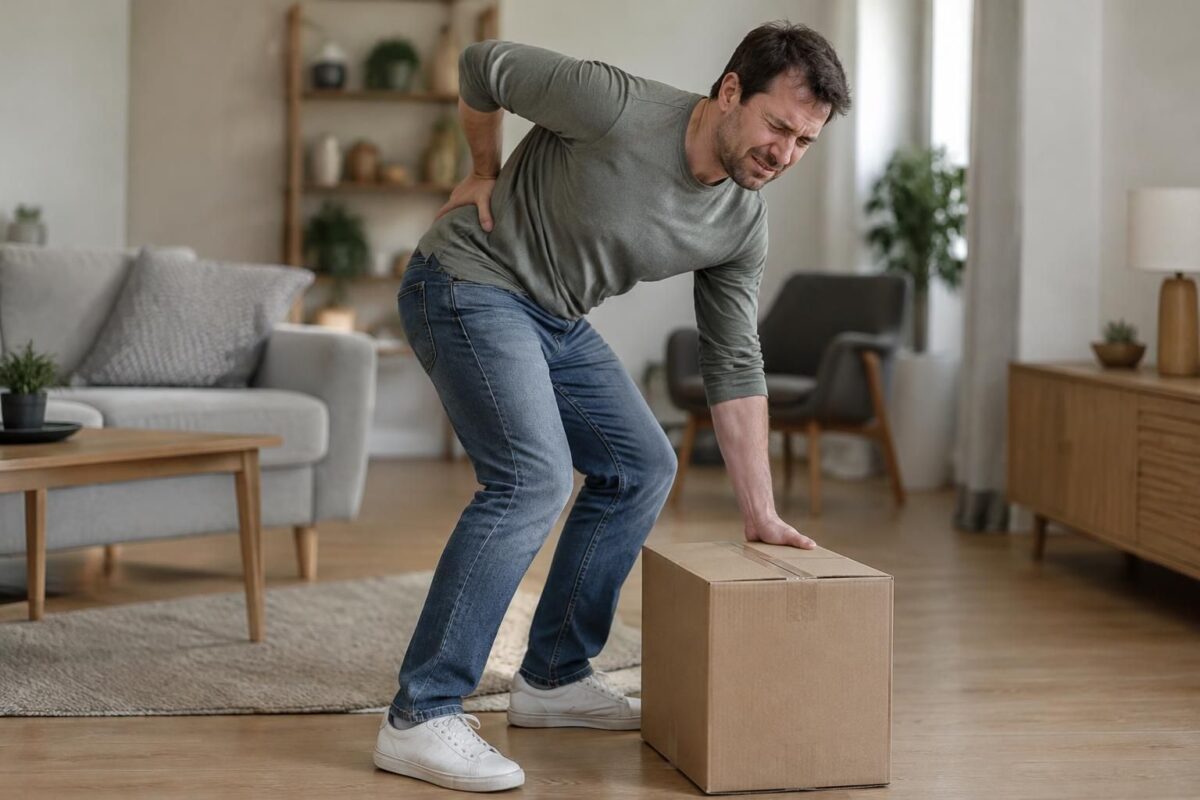
IN BRIEF
| Sciatica is pain that follows the path of the nerve and can be exacerbated by <strong/lifting heavy loads, especially if the back is rounded or if the effort is sudden. Temporarily reduce movements that worsen the symptoms, without remaining still, and monitor their evolution. A progressive weakness, a dragging foot, urinary issues, or numbness in the groin require urgent medical evaluation. |
During a sciatica, temporary pain that is more intense after lifting a load does not always mean an aggravation. Instead, monitor its evolution: pain that travels further down the leg, increasingly slow recovery, or growing difficulty walking, working, or sleeping. Temporarily reduce loads and gradually resume according to your symptoms.
A new or progressive weakness, a dragging foot, urinary or intestinal issues, or numbness in the groin require urgent medical evaluation.
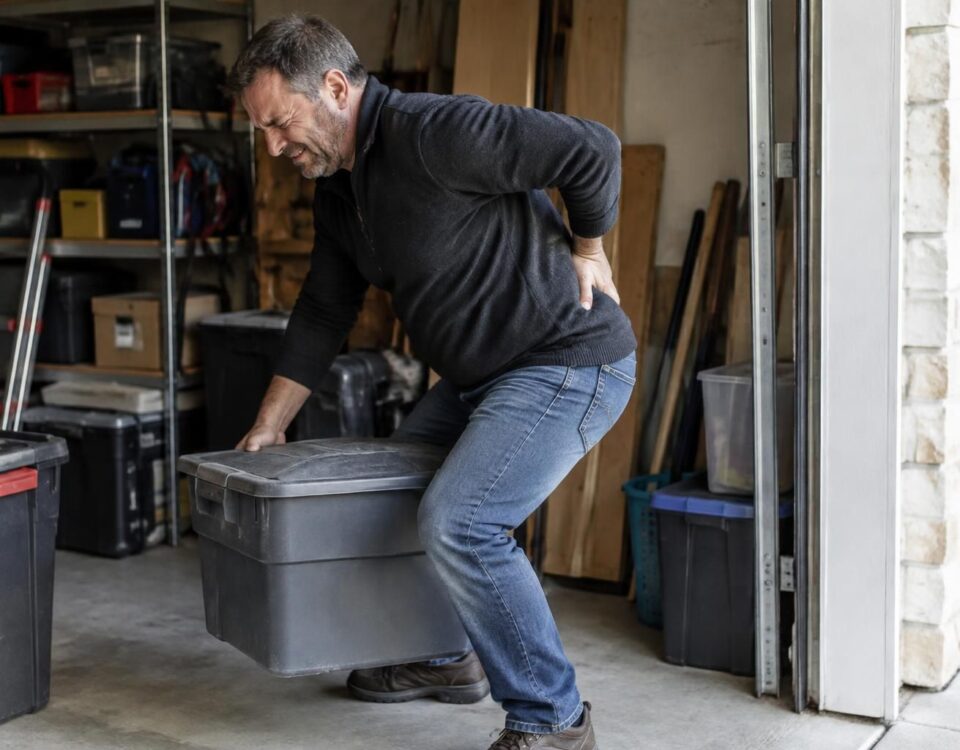
Lifting an object can temporarily increase sciatic pain, but a painful episode does not always mean the nerve is further affected. Instead, observe the evolution over several days, your ability to walk and perform your activities, as well as the onset of neurological signs such as weakness. Some symptoms, including urinary issues or a progressive loss of strength, require urgent evaluation. Sciatica corresponds to pain following the path of an irritated nerve root in the lower back. It can start from the buttock and radiate down the leg, sometimes to the foot. A heavy load, a sudden movement, or a sustained position can trigger symptoms. This alone does not allow you to know if the cause has worsened. A herniated disc may be involved, but other factors can also cause pain radiating down the leg. The location of a hernia, for example in the central canal or in a foramen, does not necessarily predict the intensity of symptoms. To understand these concepts, consult this article on foraminal or central herniated discs. Disc dehydration and radiating pain should also be interpreted in conjunction with symptoms and a professional examination. Pain may increase for a few hours after exertion, then return to its usual level. Such fluctuation does not necessarily indicate a new injury. Note when the pain appears, how far it travels down, and how long it takes to return to your baseline state. An aggravation warrants more attention if symptoms remain stronger or extend over several days, if recovery becomes slower, or if your activities become increasingly difficult. Pain that travels further down the leg should be reported to the professional evaluating you, especially if accompanied by numbness or weakness. Pain is not the only useful indicator. Observe if you are walking for shorter periods, if you have more difficulty sitting, sleeping, working, or performing your usual tasks. Compare your capacity over several days rather than drawing a conclusion after a single difficult effort. Signs of improvement can also concern function: you walk more easily, recover more quickly after an activity, or resume certain tasks. To better track these indicators, you can consult possible signs of improvement for sciatica. During painful periods, temporarily reduce the loads that clearly trigger your symptoms. Bring the object close to your body, avoid lifting while twisting your trunk, and break loads down when possible. Ask for help with a heavy or cumbersome object. These adjustments aim to limit unnecessary provocation without requiring a complete halt to all activity. Avoid remaining in a position that increases your symptoms for long periods. Alternate tasks and postures according to your tolerance. For dressing and daily movement related gestures, consult these tips on dressing with sciatica. For household chores, this article discusses twisting, bending, and loads at home. Stress and lack of sleep can also influence the perception of pain and recovery. They do not mean that symptoms are imaginary. The article on sciatica and stress presents this connection from a daily perspective. Consult a healthcare professional quickly if you notice a new or growing weakness in the leg or foot, difficulty lifting the front of the foot, or a leg that gives way. Numbness that spreads or a significant loss of ability to walk also justifies prompt evaluation. Recent difficulties with urination or controlling bowel movements, or loss of sensitivity around the groin, require urgent medical care. A fever associated with pain, a significant trauma, or a general deterioration in health also demand quick medical advice. For other indicators, consult information on intense pain in the leg and when to consult. The intensity of the pain alone does not measure severity. Very strong pain can occur without neurological deficit, while progressive weakness can be concerning even if the pain remains moderate. The medical guide on sciatica outlines common symptoms and situations that require medical attention. A healthcare professional can examine strength, sensitivity, movements, and the path of pain. They consider your activities, how symptoms evolve, and your medical history. This examination helps determine if a medical consultation or further tests are necessary. Imaging is not automatically required: it is considered based on clinical signs and how its result could change management. To learn more about assessment and support in physiotherapy, read the page dedicated to sciatica signs and the role of the physiotherapist. Appropriate care depends on the situation and the professional’s practice setting. General recommendations on sciatica are summarized in this article from sciatica recommendations. If pain after lifting persists, returns regularly, or limits your activities, an assessment may help clarify the next steps. The TAGMED clinic, in Montreal and Terrebonne, can provide information about available services and the evaluation suited to your situation. The choice of care depends on the examination, your symptoms, and the skills of the consulted professional. No recovery time or outcome can be guaranteed. Not necessarily. A pain that briefly increases may reflect a temporary irritation. Instead, monitor its trend over several days, its path, and its effects on your strength and activities. Not necessarily. It may be helpful to temporarily reduce the loads that strongly trigger symptoms and modify certain tasks. A professional can help you determine what is suitable for your situation. Progressive weakness, a dragging foot, urinary or bowel issues, or numbness in the groin require urgent medical evaluation. Do not delay the consultation waiting for a routine appointment. Compare your ability to walk, sleep, work, and perform your tasks over several days. A more painful day is not enough to conclude a worsening if the general trend and your function remain stable or improve. Medical Disclaimer: The information and advice provided on this site do not replace the opinion, diagnosis, or treatment of a healthcare professional. Please note that Sylvain Desforges, B.Sc., D.O., N.D., Doctor of osteopathy, is neither a medical doctor nor a physician, and is not a specialist in a medical specialty as defined by the Collège des médecins du Québec. Manual medicine, functional medicine, and sports medicine as described on this site exclude any treatment or medical diagnosis made by a physician or specialist. Always consult your doctor for any medical questions. For more details, please read our full Legal Notice.A stronger pain after lifting an object
Functional changes to monitor
How to lift a load when you have sciatica
Signs of aggravation that require medical evaluation
The role of professional evaluation
When to request a consultation from TAGMED
Frequently Asked Questions about Sciatica and Lifting
Does a flare-up after lifting a load mean that sciatica is worsening?
Should I avoid all lifting until the pain disappears?
When does leg pain become urgent?
How can I tell if I’m recovering despite variable days?
Signs of Worsening
- Pain that travels further down the leg and persists after exertion.
- Tingling or numbness spreading.
- Walking, sleeping, or daily activities becoming increasingly difficult.
- New or increasing weakness in the leg or foot.
React
- Temporarily reduce the load and effort that trigger symptoms.
- Monitor their progression during activity and the following day.
- Seek medical advice if worsening persists or if strength decreases.
- Emergency in case of urinary or bowel issues, or numbness in the groin.

Lifting a load can awaken sciatic pain without automatically meaning a serious worsening. To differentiate, especially observe the evolution of symptoms over several days, their effect on your activities, and the potential appearance of new weakness or numbness. Adjust the effort, avoid pushing through increasing pain, and consult quickly if concerning neurological signs appear.
Why Can Lifting Aggravate Sciatica?
Lifting, carrying, or moving an object puts strain on the lower back, especially if the load is heavy, far from the body, or manipulated with twisting. When nerve tissues are already irritated, these actions can temporarily increase pain in the back, buttocks, or leg. Coughing, bending, or staying in an uncomfortable position for too long can also modify symptoms.
A stronger pain just after exertion does not alone indicate additional injury. It is useful to examine the duration of the reaction, the ability to walk, sleep, or perform usual tasks, as well as a potential return to your previous symptom level.
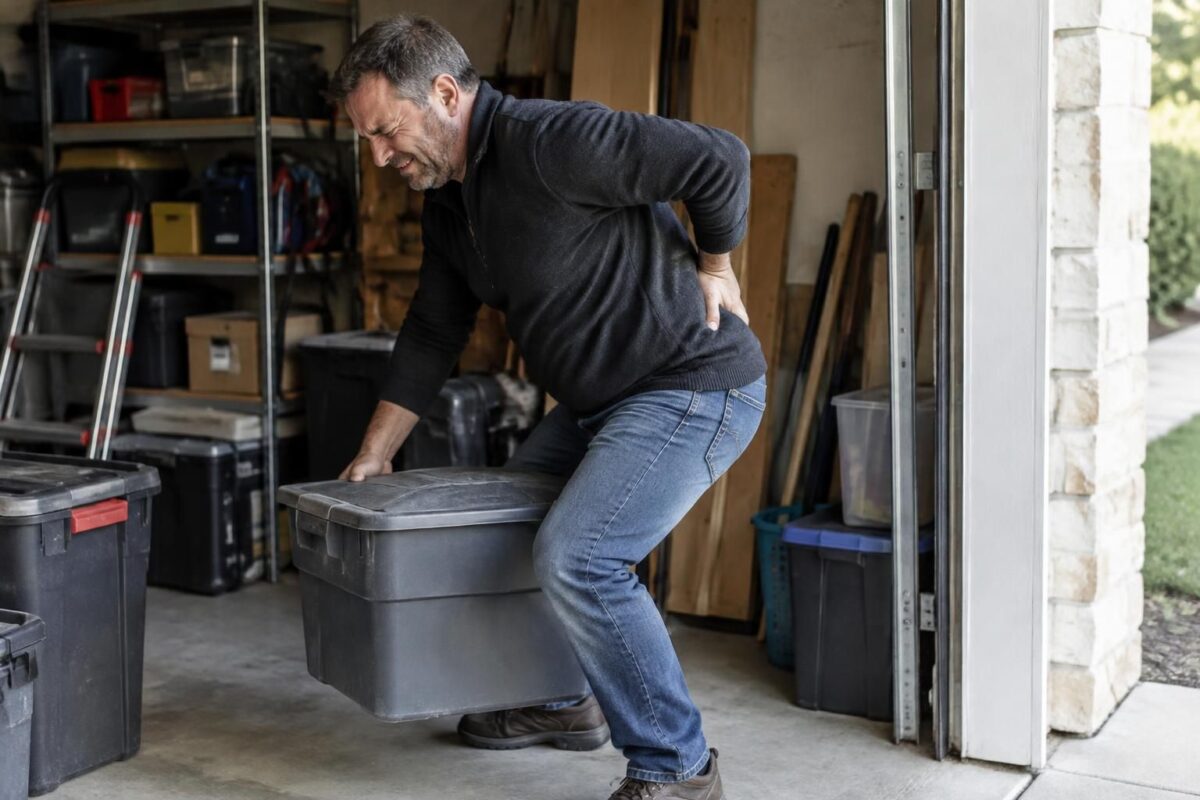
Sciatica and lifting a load: why technique isn’t always enough
IN BRIEF Sciatica can make the nerve more sensitive: a good lifting technique is therefore not always enough to avoid pain. The risk also depends on the weight carried, the repetition, the duration of the effort, and your momentary tolerance.…

Sciatica and carrying groceries: pain in the leg
IN BRIEF Sciatica is pain related to the irritation of a nerve, which can extend from the lower back or buttock down into the leg. Carrying heavy grocery bags may exacerbate symptoms: distribute the loads, keep them close to your…
What Signs Can Indicate Worsening?
A Pain That Persists or Extends
Monitor for pain that becomes progressively more frequent or intense after activities, that travels further down the leg, or that takes increasingly longer to subside. An isolated difficult day can happen. Conversely, a deterioration that persists for several days or significantly reduces your activities deserves reevaluation by a healthcare professional.
Changes in Sensitivity or Strength
Tingling or numbness may accompany sciatica. However, take seriously their extension, persistent worsening, or the appearance of new weakness. For example, if the foot drags on the ground, if the leg gives way, or if you suddenly struggle to walk on your heels or toes, seek medical advice quickly.
A More Difficult Functional Recovery
Note if you walk less long, tolerate sitting worse, sleep more poorly, or have more difficulty with daily tasks. These concrete indicators help distinguish a temporary fluctuation from a lasting decrease in your capacity. Progress is judged both by the recovered function and the intensity of the pain.

Sciatica and carrying grocery bags: load and twist
IN BRIEF Sciatica is pain related to irritation of the sciatic nerve; carrying heavy grocery bags while twisting the torso can exacerbate it. To limit strain, distribute the load among several bags, keep them close to your body, and turn…

Sciatica and emptying the dishwasher: bending can worsen
IN BRIEF Sciatica is pain that radiates along the sciatic nerve. Bending to empty the dishwasher can worsen symptoms, especially when turning or lifting a load. To limit discomfort, keep your back straight, bring items closer, and bend your knees.…
How to Resume Lifting Cautiously?
Temporarily reduce the weight, number of repetitions, or duration of the task if it triggers marked symptoms. Keep the object close to your body, bend your knees as needed, and avoid suddenly twisting while carrying a load. Break down heavy objects and ask for help when possible. Do not stay in bed for extended periods: maintain movements and well-tolerated activities, then gradually increase them.
Observe your reaction during exertion, after it, and the following day. If symptoms return quickly to their usual level, adjusting the activity dosage may suffice. If they intensify or persist, suspend tasks that aggravate them and have the situation assessed. A physiotherapist can evaluate your mobility, strength, and sensitivity, then help you adapt the resumption of activities.

Sciatica and floor washing: prolonged bending and pain
IN BRIEF Sciatica is a pain related to irritation of the sciatic nerve; mopping the floor while remaining bent for a long time can worsen it. To limit discomfort, use a long handle, keep your back as neutral as possible,…

Sciatica and vacuuming: repetitive movement to watch out for
IN BRIEF Vacuuming with a sciatica can trigger pain because repeated bending and twisting strain the back. Break up the cleaning, keep the device close to you, and turn with your feet rather than twisting. Take a break if the…
When to Consult Without Delay?
Consult urgently in the case of significant or rapidly progressive loss of strength, foot drop, new difficulty urinating or controlling bowel movements, or numbness in the groin. A fever, significant trauma, or a general deterioration associated with pain also justifies a quick medical opinion. The intensity of the pain alone does not determine the severity.
If lifting loads leads to persistent worsening or limits your activities despite adjusting your efforts, make an appointment for an evaluation. An assessment will help put the symptoms into context and determine the next appropriate steps for your situation.
| After lifting a load | Key point to remember |
|---|---|
| Briefly stronger pain | Monitor its evolution and your recovery. |
| Pain that goes further down the leg | Check if this evolution persists. |
| Tingling or numbness that spreads | Seek medical advice if this progresses. |
| Walking, sleeping, or daily actions becoming more difficult | A lasting decline in function deserves re-evaluation. |
| New or progressive weakness of the foot or leg | Consult urgently. |
| Urinary problems or numbness in the groin | Consult immediately in the emergency department. |

Sciatica and household chores: twists, bends, and loads
IN BRIEF Sciatica can be aggravated by bending, twisting, and carrying loads while doing housework. Breaking tasks into smaller parts, taking breaks, and adjusting movements help manage effort without necessarily stopping everything. In Montreal, an assessment can help tailor activity…

Sciatica and Making the Bed: Repeated Flexion and Lumbar Irritation
IN SHORT Sciatica is pain related to irritation or compression of the sciatic nerve. Making your bed can strain the lower back if bending is repeated, especially when rounding the back or twisting the torso. To limit lumbar irritation, bend…
Sciatica and Lifting Loads: Testimonies on Signs of Worsening
The testimonies below are fictional examples for informational purposes. They do not allow for a diagnosis: the evolution of symptoms must be evaluated according to each situation.
“The pain radiated further down my leg after carrying boxes.” After several trips with loads, a person notices that the lower back pain radiates more towards the calf and foot. A pain that spreads or becomes persistently more intense should be reported to a healthcare professional, especially if daily activities become more difficult.
“My foot felt less responsive after lifting a heavy object.” Another person describes a new sensation of weakness and difficulty lifting the front of the foot. A new or progressive loss of strength, a dragging foot, or a leg that gives way justifies a rapid medical evaluation. Do not continue efforts that significantly worsen these symptoms.
“Tingling did not go away after resting.” After moving furniture, previously intermittent tingling becomes persistent, and the numb area seems to spread. A lasting change in sensitivity deserves to be discussed with a doctor or physiotherapist, who can assess the situation and guide you if necessary.
“I stopped lifting loads and gradually resumed walking.” When lifting or carrying an object increases symptoms, temporarily reducing the load and avoiding sudden movements can help better tolerate activities. The goal is not to remain immobilized: adjust efforts, alternate positions, and gradually resume what remains comfortable.
“I consulted without delay when new issues arose.” Recent difficulties urinating or controlling bowel movements, numbness in the groin, or significant worsening weakness require urgent medical evaluation. Do not wait for a routine appointment in these situations.
Daily, note what triggers or worsens the pain, its trajectory, associated sensations, and the time needed to recover after effort. These markers will help the professional evaluate the evolution and adjust your activities. A single painful flare-up does not necessarily indicate worsening, but a persistent decline in function or the appearance of neurological signs should be re-evaluated.
Sciatica and Carrying Loads: Recognizing Signs of Worsening
Carring loads can awaken or accentuate sciatica pain, especially when effort is made by bending, twisting the torso, or lifting an object that is too heavy. Sciatica corresponds to pain related to the irritation of a nerve root in the lower back. It can extend into the buttock, thigh, leg, sometimes down to the foot. A painful episode after exertion does not necessarily mean that the situation has worsened permanently: it is important to consider the evolution of symptoms and their effect on daily activities.
Sylvain Desforges, specialized in osteopathy, naturopathy, and manual medicine, is the founding president of TAGMED clinics and the ACMA association. His career is dedicated to innovation in health and the management of chronic pain. He is particularly interested in integrating technologies such as spinal decompression, laser, and shock waves, in a care approach based on available data. The proposed interventions, however, depend on the evaluation, the professional’s expertise, and the needs of each person.
After lifting a load, a temporary surge of pain may manifest in the back or along the leg. To assess its significance, observe the trend over several days: does the pain gradually return to its usual level, or does it become more persistent? Does it extend further down the leg? Is your walking, sleeping, work, or usual actions becoming increasingly limited? These functional markers are often more useful than a single measure of pain intensity.
Feelings of tingling, prickling, or numbness may accompany sciatica. Their presence alone does not necessarily demonstrate worsening, but a spreading area of numbness or new weakness deserves evaluation. Be attentive to difficulty lifting the front of the foot, a leg that gives way, or progressing loss of strength. These signs may indicate neurological involvement requiring prompt attention.
Certain symptoms necessitate urgent consultation: recent difficulty urinating, loss of control over the bladder or bowels, numbness in the groin or perineum, or significant and rapidly progressive weakness. A fever associated with pain, significant trauma, or a general deterioration in health also justifies immediate evaluation. In case of severe signs, contact emergency services rather than continuing your activities or exercises.
In the absence of these signals, it is generally advisable to avoid prolonged immobility. After an irritating effort, temporarily reduce the load or duration of tasks that increase symptoms, while maintaining tolerated movements, such as short walks. To pick up an object, get close to it, bend your knees, and avoid combining bending with sudden rotation. Gradually resume efforts, monitoring the response during the activity, after it, and the following day.
In his approach to chronic pain, Dr. Desforges emphasizes the assessment and adaptation of care to the person’s situation. A professional can examine strength, sensitivity, the pain pathway, and functional abilities to determine if a medical reevaluation is necessary. No technology or method is automatically suitable for everyone: the plan must take into account the examination, medical history, and symptom evolution.
If carrying a load leads to persistent deterioration, pain that extends further, or an increasing limitation of activities, make an appointment with a healthcare professional. A consultation can clarify the course of action and adapt the resumption of efforts to your condition. This general information does not replace a personalized medical diagnosis.
After lifting loads, sciatica may become more painful without it necessarily indicating a serious aggravation. The most useful approach is to observe the trend over several days, the ability to walk, sleep, and perform usual tasks, as well as the potential emergence of new neurological signs.
Carrying a heavy object, lifting it with a rounded back, or moving it by pivoting abruptly can further irritate the lower back and temporarily increase pain. However, an isolated painful episode is not enough to conclude that the situation is worsening. On the other hand, be attentive to pain that travels further down the leg, increasingly frequent episodes, or slower recovery after effort. To better understand the precautions related to loads, consult these tips on sciatica and carrying loads.
Compare your condition over several days rather than relying on a single difficult day. Note the trajectory of symptoms, the activities that trigger them, the time needed to return to your usual level, and the effect on walking, sleeping, work, or daily tasks. A persistent decline in these abilities warrants reevaluation. You can also consult these guidelines on signs of sciatica aggravation.
Repetitive movements can also strain the back: vacuuming, for example, can become irritating if the movement forces you to bend or twist your torso repeatedly. Temporarily adjust the duration of the task, take breaks, and avoid pushing through significantly increasing pain. Tips on sciatica and vacuuming as well as on forced walking can help consider the activity dosage, without replacing professional advice. For basics on causes and symptoms, also check the resources from MédecinDirect and Doctissimo.
Pain in the buttock or involvement around L5-S1 alone does not precisely determine the origin of the symptoms. A disc herniation or bulging may be suggested, but only a healthcare professional can contextualize the signs with an examination. To learn more, read about L5-S1 disc herniation and bulging disc associated with buttock pain. An educational resource on sciatica is also available in this course dedicated to sciatica.
Some signs require rapid medical evaluation: new or progressive weakness in the leg, dragging foot, increasing difficulty walking on heels or toes, or numbness that extends. Recent urinary or intestinal issues, or loss of sensation in the groin, require emergency consultation. These symptoms may necessitate immediate attention; see dedicated information on urinary incontinence associated with sciatica.
If symptoms persist or intensify, have the situation reevaluated by a healthcare professional before resuming heavy loads. In the meantime, favor controlled movements, keep the load close to the body, bend your knees if tolerated, and break tasks into smaller parts. The goal is not to remain immobile but to maintain manageable activities and adjust the effort according to your body’s response.

Sylvain Desforges, B.Sc., D.O., N.D., docteur en ostéopathie
Dr Sylvain Desforges, B.Sc., D.O., N.D., osteopath, is the founding president of TAGMED and of the ACMA association. He dedicates his practice to chronic spinal pain, low back pain and symptoms compatible with sciatica, particularly when pain radiates toward the buttock, leg, calf, foot or toes.
Through SOS Sciatique, he publishes educational content on sciatica symptoms, possible causes such as disc herniation, disc narrowing, foraminal stenosis or irritation of a lumbar nerve root, as well as non-surgical approaches that may be considered according to the evaluation. At Clinique TAGMED, care may include, depending on the case, motorized neurovertebral decompression, specific osteopathic care or precision percussion.
For an evaluation related to sciatica treatment in Montreal / Mount Royal or sciatica treatment in Terrebonne, please consult the services available at Clinique TAGMED.
Medical disclaimer
The information published on SOS Sciatique is provided for educational purposes only and does not replace a consultation, diagnosis, opinion or treatment provided by a physician or another authorized healthcare professional. The author of this article is neither a medical doctor nor a specialist in a medical specialty recognized by the Collège des médecins du Québec. The osteopathic, manual medicine or functional support approaches described on this site do not constitute medical acts and are not intended to replace medical follow-up.
Consult a physician or emergency service in cases of loss of bladder or bowel control, anesthesia in the saddle area, significant or progressive weakness in the leg or foot, fever, recent trauma, severe pain or rapid worsening of symptoms. For more details, please read our Legal Notice.