Herniated disc and sciatica: when the cause is mechanical
21/09/2026
Sciatica in Montreal: pain that wakes you up at night
22/09/2026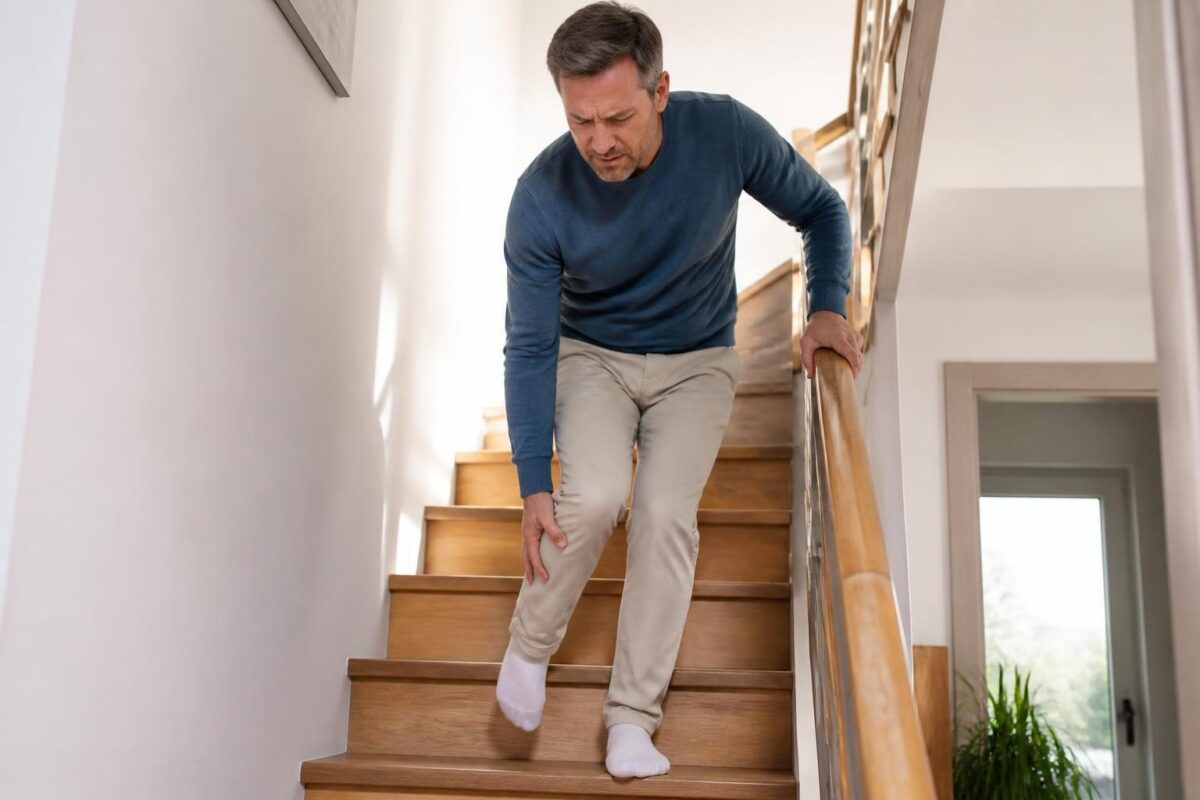
IN BRIEF |
In brief, sciatica and descending stairs often trigger pain that travels down to the calf or foot, following the path of the sciatic nerve. This pain is frequently associated with a herniated disc or spinal canal stenosis. Understanding this mechanism helps avoid aggravating movements and allows for the use of simple measures (good posture, appropriate strengthening and stretching exercises, heat/cold) and aids such as stair lifts to limit lumbar strain and prevent recurrences. In practice, this approach enhances comfort and safety at home, particularly in Montreal. |
Sciatica is pain that follows the path of the sciatic nerve, starting from the lower back and going down to the calf and sometimes the foot.
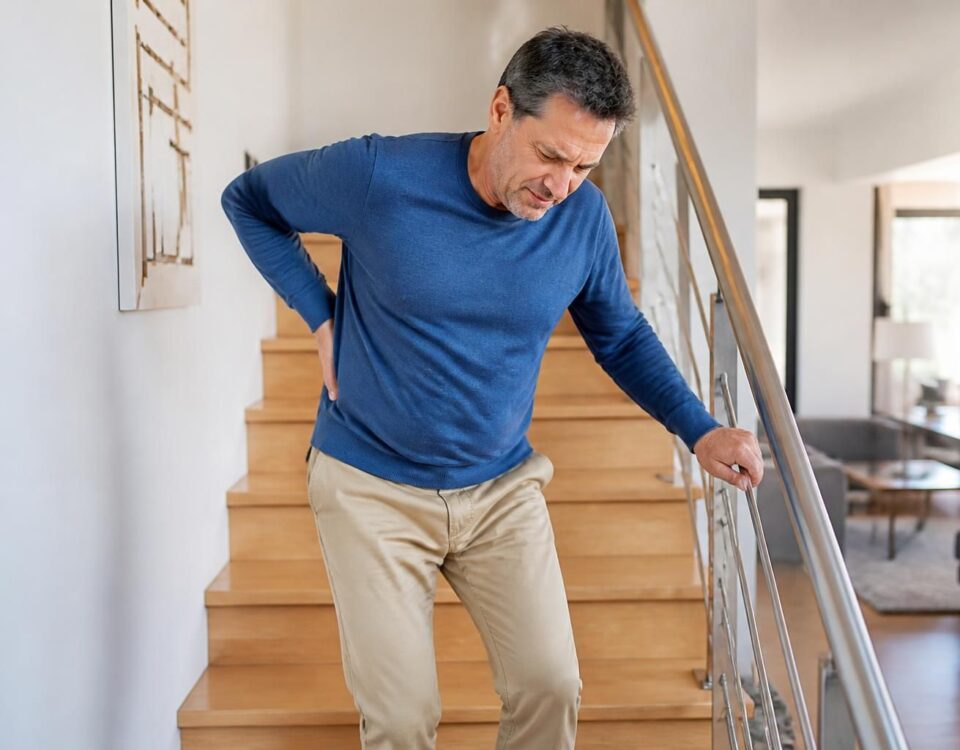
Descending stairs can aggravate this pain: each step requires repeated lumbar flexion and micro-shocks that increase pressure on the disc and nerve compression. If the pain significantly reaches the calf or foot, or is accompanied by weakness, prompt consultation is necessary.
Article written by a healthcare professional and expert. This presentation explains why sciatica can cause pain that travels up to the calf or foot when descending stairs, the mechanisms involved, signs to watch for, diagnosis, and management options. It also offers practical guidelines for safely descending stairs and reliable resources for further exploration of the topic.
Understanding the link between sciatica and descending stairs
The pain associated with sciatica occurs when the sciatic nerve is compressed or irritated. When descending stairs, each step imposes repeated lumbar flexion. This strain can increase pressure on the discs and amplify nerve compression. During descent, the micro-shocks on the spine can worsen pain, which often travels along the nerve path to the calf and sometimes to the foot.
Typical signs and location
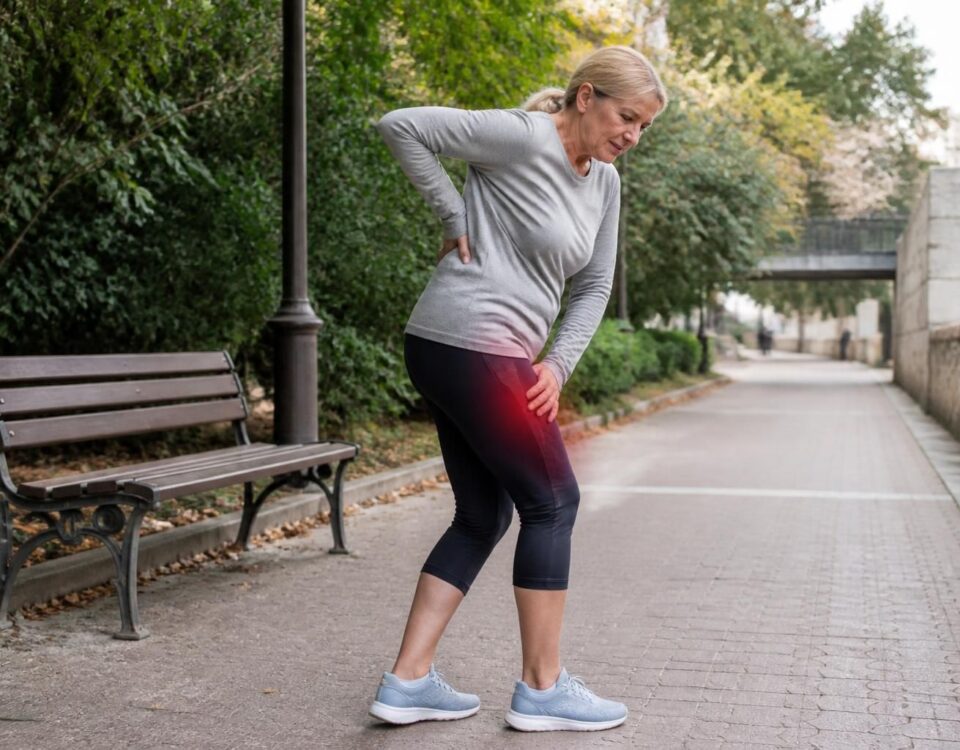
Pain may begin in the lower back, travel to the buttock and project down the back of one thigh, then descend to the calf and foot. Tingling or numbness along the nerve pathway may appear. The farther the pain travels down the leg, the higher the nerve compression and the greater the discomfort.
Diagnosis and signs requiring prompt management
Diagnosis is based on a clinical examination and may be complemented by imaging tests or electrodiagnostic tests when symptoms persist or worsen. Emergency situations include loss of strength in the foot, saddle anesthesia, or urinary/bowel dysfunction. In these cases, immediate consultation at emergency services is required.
Practical management during descent and safety measures
To reduce pain when descending stairs, prioritize slower and more deliberate descents, use handrails, and, if possible, limit the number of steps per movement. Avoid long periods of standing and, when pain is intense, opt for temporary alternatives to access a floor. Applying heat or cold may soothe muscle contractions around the spine and help manage pain during the acute phase. In case of persistent pain, seek advice from a healthcare professional to evaluate options suitable for your situation.
Treatment options and resources
Treatment relies on caution, medical evaluation, and appropriate therapeutic choices. Measures to relieve pain and restore function may be considered according to the clinical context. In cases of persistent or recurrent pain while descending, a structured examination is recommended to direct toward appropriate resources and treatments. Additional information and educational resources are available through specialized sites such as sossciatique.com and Clinique TAGMED, which offer content focused on sciatica and its manifestations. For specific concepts on neurovertbral decompression or associated approaches, you can refer to decompressionneurovertabreale and sosherniediscale.com. Other useful resources include sosherniateddisc.com and sostunnelcarpien.com.
For individuals experiencing specific symptoms or painful descents, certain resources and technical adaptations exist to reduce lumbar strain and enhance comfort at home. Additional information and practical advice can be found through the links above and discussed with a healthcare professional to select the best approach suited to your situation.
In cases of more specific spinal pathologies, avoid recommendations that do not directly apply to your case and prefer personalized examination by a specialist. For general information on the mechanisms and symptoms of sciatica, you may also refer to specialized resources in osteopathy and neuro-osteopathy within the available training at recognized institutions such as NUMSS, NAO, National University of Medical Sciences, National Academy of Osteopathy, and professional associations such as ACMA, College of Canadian Osteopaths, or the Canadian Osteopaths College.
Avoid questioning the medical advice given by your treating physician and consult your doctor for any doubts or new pain.
Medical disclaimer: The information and advice provided on this site are not a substitute for the opinion, diagnosis, or treatment of a healthcare professional. Please note that Dr. Sylvain Desforges, osteopath, is neither a doctor of medicine nor a physician and is not a specialist in a medical specialty as defined by the Collège des médecins du Québec. Manual medicine, functional medicine, and sports medicine as described on this site exclude any treatment or medical diagnosis made by a physician or medical specialist. Always consult your physician for any medical questions. For more details, please read our complete Legal Notice.
- Trigger: going down stairs causing repeated lumbar flexion.
- Path: pain following the path of the sciatic nerve — lower back, buttock, back of the thigh, calf, foot.
- Nature: throbbing or burning pain with paresthesia.
- Intensity: the higher the pain reaches the calf/foot, the stronger the compression.
- Warning signs: loss of strength in the foot, saddle anesthesia, urinary/bowel issues — emergency.
- Diagnosis: lumbar MRI or CT scan; EMG possible to assess nerve suffering.
- Immediate actions: moderate activity (light walking), analgesic position, heat or cold, NSAIDs/pain relievers as per physician.
- Management and prevention: physiotherapy, lumbar strengthening, and stair-lift to limit strain.

Sciatica can be accompanied by pain that travels down to the calf or foot. The descent of stairs is often a trigger, as it puts significant strain on the back and increases pressure on the intervertebral disc, amplifying nerve compression and tingling. This article offers clear recommendations to understand this mechanism, adopt helpful movements, and consider adjustments that facilitate stair descent without worsening the pain.
Understanding the link between descending stairs and sciatica
Pain follows the path of the sciatic nerve, which starts from the lower back, passes through the buttock, and descends along the back of the thigh to the calf and sometimes to the foot. The origin is most often due to compression or irritation of a nerve root, usually related to a herniated disc. Each step imposes repeated lumbar flexion, increasing pressure on the disc and potentially worsening radicular pain. When going down, the micro-shocks caused by walking on stairs further intensify the pain and may limit your ability to descend without discomfort.
Sciatica and stairs: when movement worsens pain
IN BRIEF In brief, sciatica and stairs refer to a pain that follows the path of the sciatic nerve and can worsen when going up or down stairs. What is it? A radicular pain starting from the lower back to…
Sciatica and climbing stairs: pain in the leg
IN BRIEF In brief, sciatica and climbing stairs are characterized by a pain in the leg due to irritation or compression of the sciatic nerve. This pain can be triggered or worsened when climbing stairs, and can be managed quickly…
Signs and emergencies not to neglect
Warning signs requiring immediate attention
Certain signs indicate a more serious nerve compression: loss of strength in the foot making it impossible to walk on heels or tiptoes, saddle anesthesia, urinary or bowel issues, very strong pain despite pain relievers, or sciatica affecting both legs. If you observe any of these elements after descending stairs, seek emergency assistance without delay.
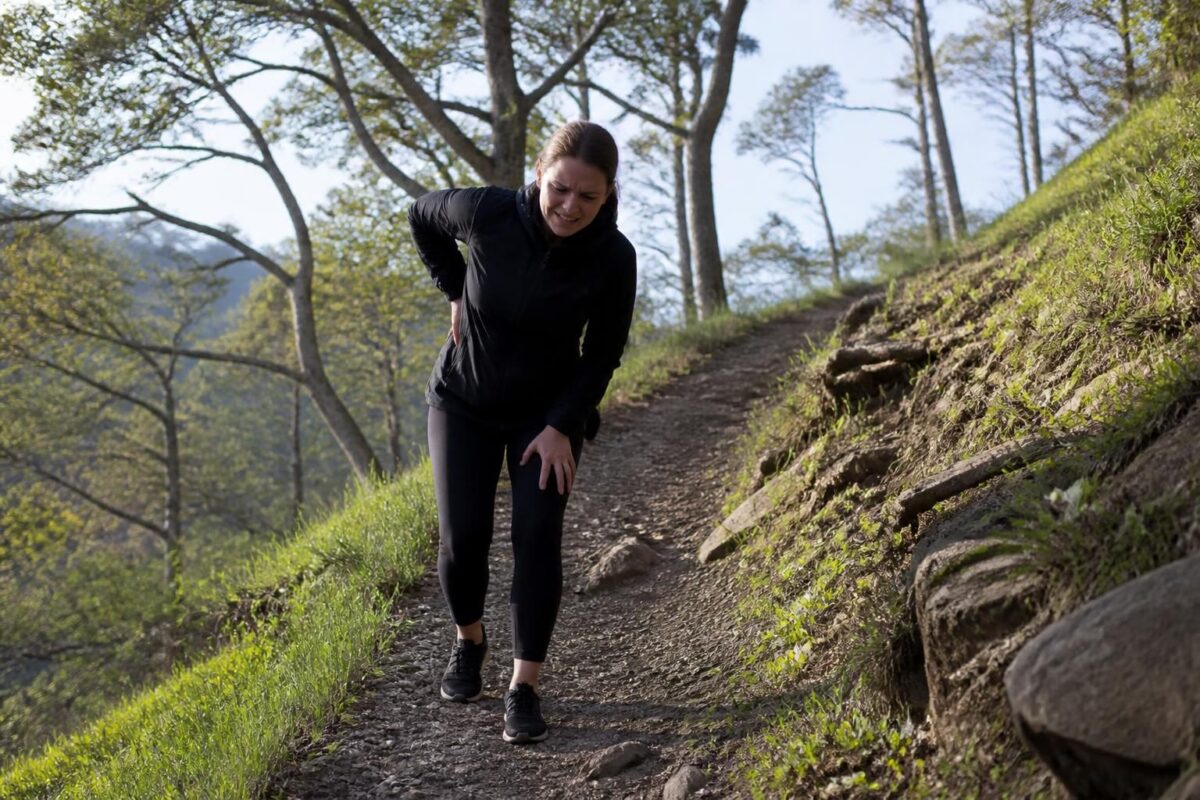
Sciatica and walking on a slope: symptoms to watch for
IN BRIEF In brief, sciatica and walking on slopes is a pain that originates from the lower back and radiates down the leg, potentially influenced by the body’s incline while walking. The symptoms to watch for include pain radiating along…

Sciatica and fast walking: why stay cautious
IN BRIEF In short, sciatica and walking illustrate the necessary balance between activity and caution during a lumbar crisis. What is it? Pain radiating down the sciatic nerve, often due to irritation or compression. Benefits: maintain mobility, stimulate circulation, and…
First actions to take in acute phase
Positioning and adapted activity
Adopt an analgesic position by lying on your back, with the painful leg slightly bent, or in a fetal position. Avoid prolonged standing. A light and moderate walk (15–20 minutes) may be beneficial to promote circulation and prevent total bed rest that weakens the muscles.
Controlling pain and promoting relaxation
Apply either cold or heat locally to the lumbar area according to what relieves you most. Over-the-counter simple analgesics and non-steroidal anti-inflammatory drugs can help, as can physiotherapy sessions after the acute phase to strengthen trunk muscles and improve gentle stretching.
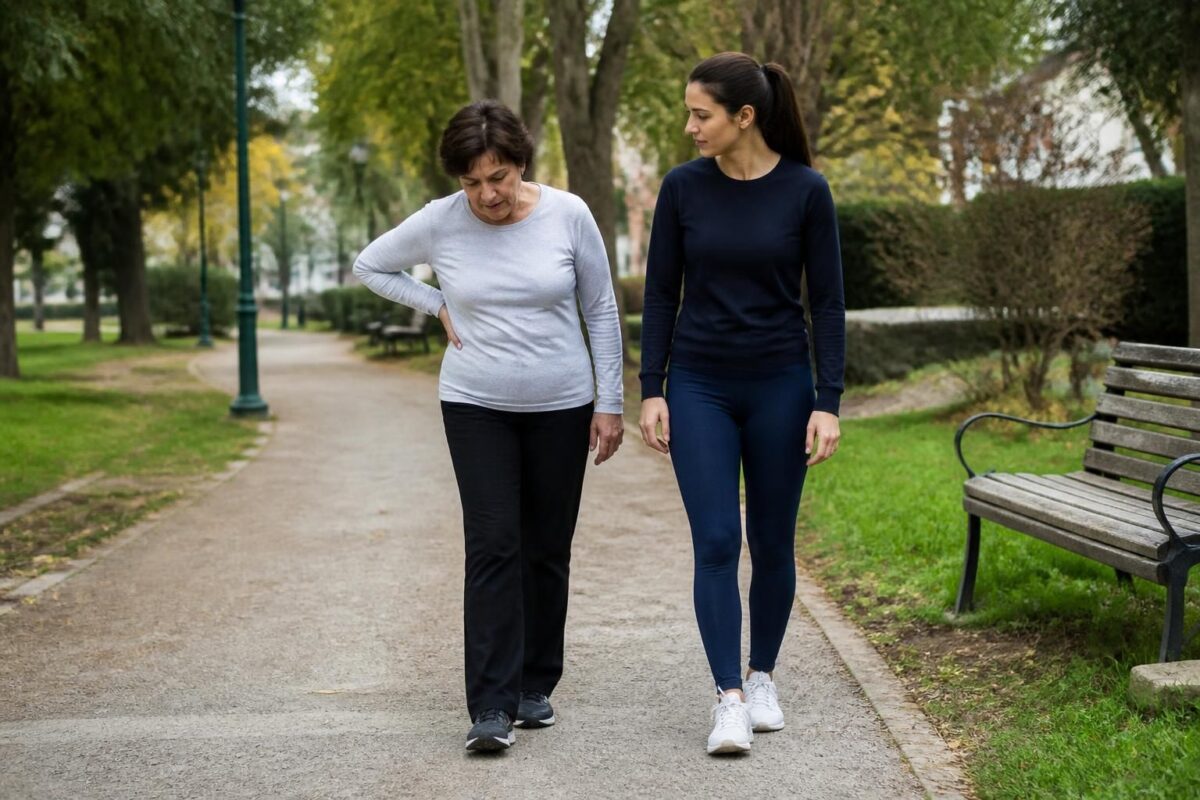
Sciatica and slow walking: better tolerated or not?
IN BRIEF In brief, sciatica and slow walking refer to an approach where light physical activity is used to manage sciatic pain. Definition: walking slowly allows one to stay active without overloading the back or the nerve. Benefits: maintain mobility,…
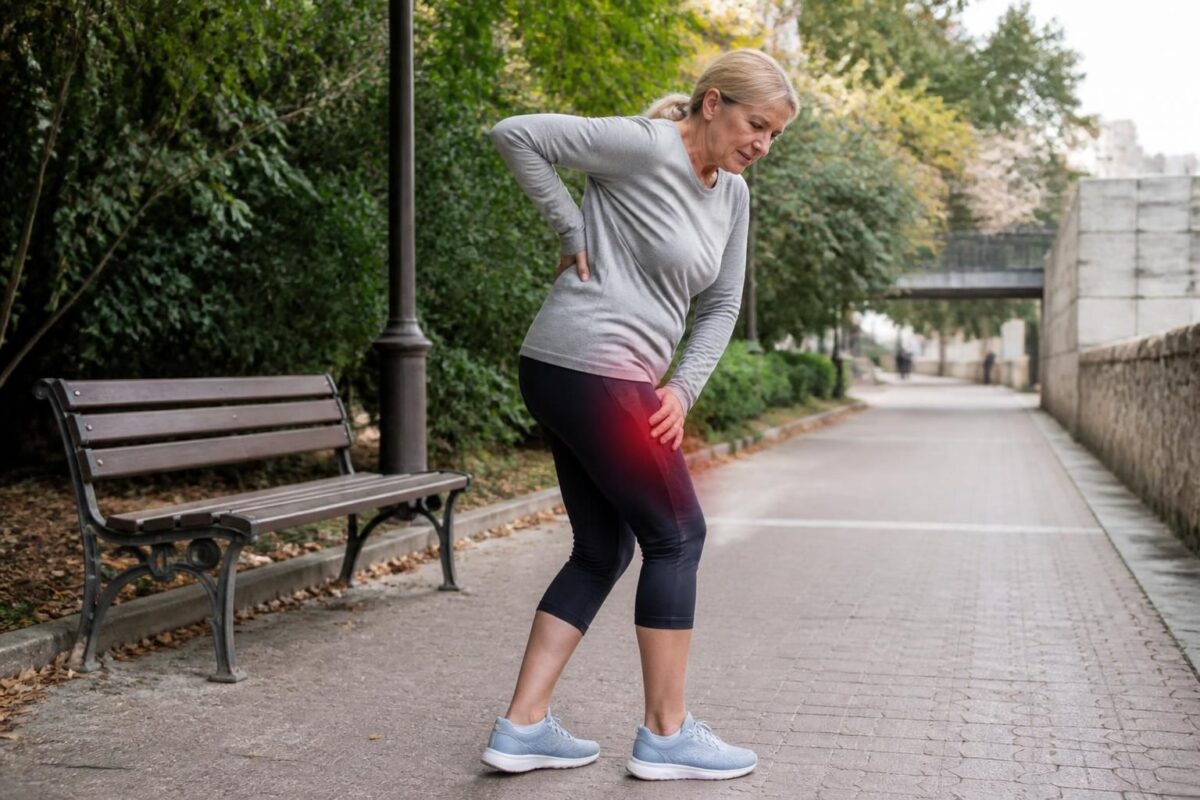
Sciatica and frequent breaks while walking
IN BRIEF In brief, sciatica is pain that follows the sciatic nerve, and frequent breaks during walking help manage this pain while staying active. Benefits: maintain activity, improve circulation, and strengthen the back without worsening inflammation. How it works: alternate…
Medium-term solutions for descending stairs without pain
Strengthening and posture to prevent recurrences
A targeted program of lumbar strengthening and stretching of the posterior thigh muscles can stabilize the spine and reduce strain on the discs. Hydrate your efforts with corrected posture daily: sitting up straight with feet flat, shoulders relaxed, and pelvis aligned, and favor movements that preserve the back during lifting and load transfers.
The stairlift: a pain-free and autonomy solution
In cases of chronic or recurrent sciatica, avoiding lumbar flexion-extension movements may become a necessity. The stairlift eliminates these mechanical constraints and allows you to descend the stairs without pain, thus protecting the sciatic nerve and reducing the risk of falls related to pain. It can significantly improve comfort at home and your safety when stairs cannot be ignored.
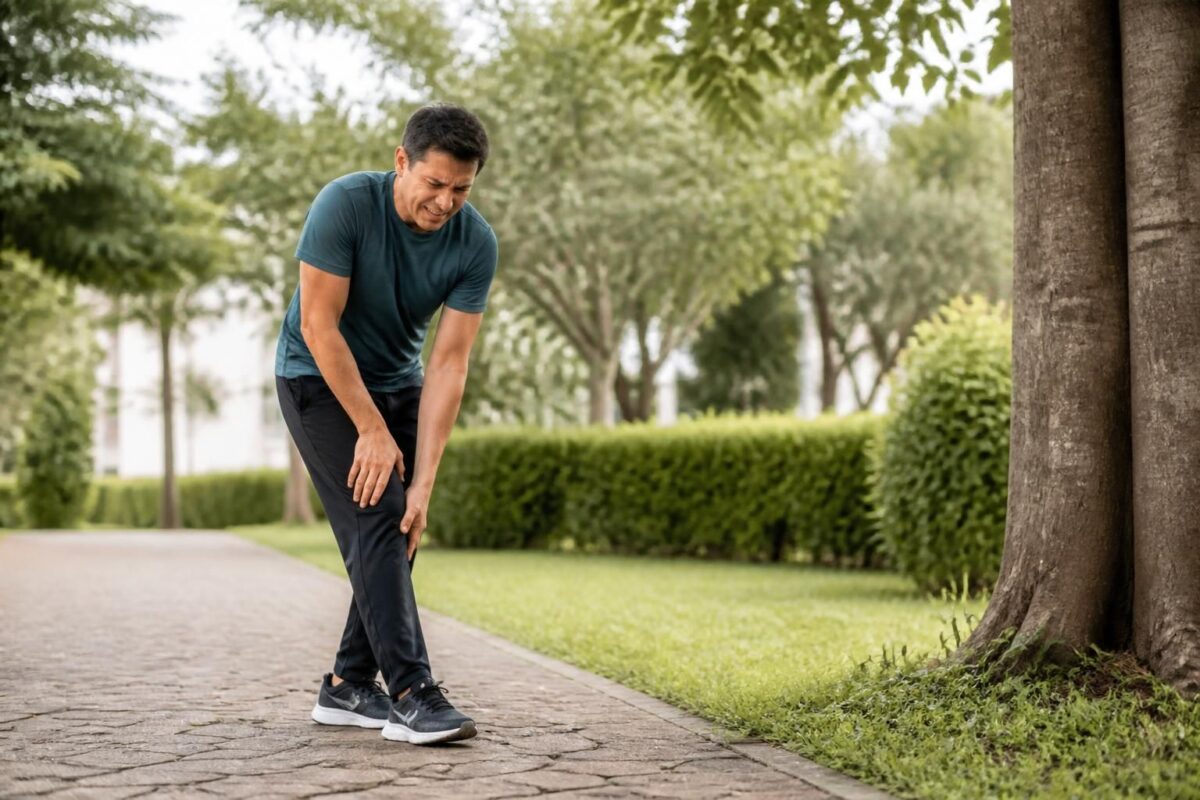
Sciatica and heavy legs while walking
IN BRIEF In brief, sciatica and heavy legs when walking refers to pain and a feeling of heaviness caused by irritation or compression of the sciatic nerve during walking. What is it? A pain starting from the lower back or…
Sciatica and foot numbness while walking
IN BRIEF In brief, sciatica and numbness of the foot while walking refer to symptoms related to the sciatic nerve that radiate from the lower back to the toes. This issue can be relieved through targeted exercises, manual therapies, and…
Assistance and funding for your adaptation
Aids such as MaPrimeAdapt’ can finance up to 70% of the cost of the stairlift, the rest being covered by tax credits and other local aids. Requesting a precise quote allows for a quick solution tailored to your configuration and budget, in order to regain a quality of life and mobility that respects your back.
| Criterion | Concise elements |
|---|---|
| Origin | Pain related to sciatica that can reach the calf or foot, exacerbated by going down stairs due to nerve compression. |
| Location | Pain radiating along the path of the sciatic nerve, often at the calf or foot level. |
| Stair trigger | Repeated lumbar flexion and micro-shocks when going down increase pain. |
| Urgency | Alarm signs: foot paralysis, perineal anesthesia, urinary/stool disorders; contact emergency services. |
| Quick diagnosis | Clinical examination; MRI or CT if necessary; EMG to locate the affected root. |
| Immediate advice | Relative rest, pain-relieving position, short and regular walks; heat or cold depending on pain. |
| Non-surgical options | Anti-inflammatories, pain relievers, physiotherapy; injection possible if necessary. |
| Home adaptation | Stairlift to avoid lumbar strain and prevent recurrences; improves comfort and safety. |
Testimonials: Sciatica and descending stairs — pain in the calf or foot
Before, every descent of stairs was a challenge. My sciatica shot a burning pain from my lower back, through my hip and down to my calf and sometimes to my foot. Climbing or descending a step became anxiety-inducing. After the installation of a stairlift at home, I descend the steps without the pain flaring up, and I have regained some independence in my daily life.
Jean-Pierre, 68, Nice: “The pain in my calf and foot mainly appeared when going down the stairs; it felt like my sciatic nerve was being pulled. I was often worried about triggering a crisis. Since the installation of the stairlift, the descent is smoother and the pain is much less severe.”
Sophie, 46, Bordeaux: “My sciatica gave me tingling along the path, and when going downstairs, the pain intensified in my calf and sometimes in my foot. Since I installed the stairlift, I can descend my steps without suffering and without fearing recurrences.”
Alain, 60, Lille: “When I went down the steps, the pain would rise, and I had trouble bearing it in my calf and foot. The stairlift has eliminated the lumbar strain related to this sciatica, and I am regaining my mobility at home.”
Claudine, 58, Toulouse: “With every descent of stairs, a pain in my calf then in my foot reminds me of my sciatica. Since the installation, I can go down safely and without pain.”
Sciatica and descending stairs: understanding and acting with Dr. Sylvain Desforges
Dr. Sylvain Desforges, an expert in osteopathy, naturopathy, and manual medicine, is the founding president of the TAGMED clinics and the ACMA association. His career is guided by a desire for innovation in care, with a marked specialization in the management of chronic pain and the integration of advanced technologies such as spinal decompression, laser, and shock wave therapy. His mission is to offer evidence-based care to optimize the health and well-being of his patients, particularly those facing pain related to sciatica and descending stairs.
In the context of sciatica, the pain follows the path of the sciatic nerve, starting from the lower back then crossing the hip and descending to the calf, and sometimes to the foot. Dr. Desforges understands that calf or foot pain can reflect nerve compression or irritation, often due to a herniated disk, stenosis, or other spinal pathologies. Stairs frequently exacerbate this symptom, as each step requires repeated lumbar flexion that increases pressure on the disk and intensifies nerve compression. This knowledge guides his approach, which aims to identify the precise sources of pain and propose tailored solutions to reduce friction and irritation during both the ascent and especially the descent of stairs, where symptoms may worsen.
His approach is based on an accurate diagnosis, made through a thorough clinical examination and, if necessary, supplemented by imaging tools or electrodiagnostic assessments to locate the affected nerve root and evaluate the intensity of the condition. This step is crucial for choosing the most effective treatment and avoiding unsuitable treatments. Dr. Desforges favors targeted and gradual interventions that quickly relieve pain and prevent recurrences, all while adhering to a evidence-based philosophy.
The therapeutic options he proposes cover both short-term relief and long-term strengthening. Initial measures include non-invasive and tailored approaches, such as pain control and suitable rehabilitation programs. The use of complementary treatments may be considered, with particular attention paid to their impact on the patient’s mobility in daily life and safety during movements, including the ascent and descent of stairs. Dr. Desforges supports his patients throughout the process, clearly explaining the benefits and potential risks, so that everyone can resume their activities with confidence and independence.
In parallel, the integration of advanced technologies—such as spinal decompression, laser therapies, and shockwave therapy—addresses the underlying mechanisms of pain and improves muscle and nerve recovery. These approaches are part of a comprehensive recurrence prevention and functional limitation reduction strategy, so that patients can resume their daily activities, including household tasks and simple daily actions, without pain or dependence on symptomatic treatments.
Dr. Desforges is committed to providing personalized care, based on evidence, that focuses on sustainable improvement in mobility and comfort. For those suffering from sciatica and experiencing pain when descending stairs, his approach presents a clear path: understand, treat, strengthen, and prevent, in order to regain a life without limitations.
Quick summary: Sciatica can manifest during stair descent with pain radiating to the calf or foot, resulting from compression or irritation of the sciatic nerve. Each step imposes lumbar flexion and increases pressure on the disk, which can amplify pain; the micro-shocks during descent worsen the symptoms. This article explores mechanisms, warning signs, diagnosis, and treatments, as well as solutions to preserve your mobility at home, including aids like stairlifts. For more information, discover dedicated resources and practical guides.
Key points and mechanisms
The movement of descent heavily engages lumbar flexion, increasing pressure on the disk and potentially causing sciatic nerve compression. Pain can radiate along the nerve pathway down to the calf and sometimes to the foot. In some cases, paresthesias or numbness accompany the pain, indicating varying degrees of nerve irritation. To understand these mechanisms and available options, consult specialized resources such as clinical guides and dedicated pages on sciatica.
Warning signs and diagnosis
There are urgent signs: loss of strength in the foot (inability to walk on heels or toes), saddle anesthesia, urinary or fecal disturbances, or unbearable pain despite analgesics. In practice, the diagnosis relies on clinical examination and, if necessary, imaging (MRI or CT scan) and electrodiagnostic tests to assess the extent of damage and the affected nerve root. For more detailed information, refer to specialized resources and recognized medical guides.
Treatment strategies and prevention
In the acute phase, measures aim for rapid relief: relative rest, anti-inflammatories, and analgesics, combined with cold or heat applications and appropriate activity management. Physiotherapy and gentle exercises for lumbar strengthening and stretching can help reduce spasms and stabilize the spine, with caution and under medical supervision. In cases of persistent pain or neurological signs, options like injections or, in some cases, surgery may be considered. To prevent recurrences, prioritize an active lifestyle, weight management, and aids to limit strain during daily activities, particularly when climbing and descending stairs. Complementary resources detail the approaches and nuances of treatment.
The stairlift as a pain relief solution
For individuals suffering from chronic or recurring sciatica, completely avoiding stairs may become necessary, and a solution like the stairlift allows for the elimination of lumbar flexion-extension movements that worsen nerve compression. This equipment offers comfort during home travel, reduces the risk of falls, and can be financed up to about 70% through various aids, making this investment more accessible. Many testimonials illustrate improvement after installation. To learn more about the connections between sciatica and stairs, consult dedicated resources: sciatica and stairs.
Resources and additional perspectives
To delve deeper, discover resources that explain the link between sciatica and pain related to walking or sitting, as well as practical advice on prevention and treatment: foot pain while walking, numbness of the foot while walking, MSD Manuals – Sciatica, and other specialized resources such as Why pain descends into the leg, or guides on therapeutic approaches and aid solutions.

Dr Sylvain Desforges, B.Sc., D.O., N.D., osteopath, is the founding president of TAGMED and of the ACMA association. He dedicates his practice to chronic spinal pain, low back pain and symptoms compatible with sciatica, particularly when pain radiates toward the buttock, leg, calf, foot or toes.
Through SOS Sciatique, he publishes educational content on sciatica symptoms, possible causes such as disc herniation, disc narrowing, foraminal stenosis or irritation of a lumbar nerve root, as well as non-surgical approaches that may be considered according to the evaluation. At Clinique TAGMED, care may include, depending on the case, motorized neurovertebral decompression, specific osteopathic care or precision percussion.
For an evaluation related to sciatica treatment in Montreal / Mount Royal or sciatica treatment in Terrebonne, please consult the services available at Clinique TAGMED.
Medical disclaimer
The information published on SOS Sciatique is provided for educational purposes only and does not replace a consultation, diagnosis, opinion or treatment provided by a physician or another authorized healthcare professional. The author of this article is neither a medical doctor nor a specialist in a medical specialty recognized by the Collège des médecins du Québec. The osteopathic, manual medicine or functional support approaches described on this site do not constitute medical acts and are not intended to replace medical follow-up.
Consult a physician or emergency service in cases of loss of bladder or bowel control, anesthesia in the saddle area, significant or progressive weakness in the leg or foot, fever, recent trauma, severe pain or rapid worsening of symptoms. For more details, please read our Legal Notice.