Neurovertebral decompression and recovery after severe disc herniation
26/06/2026
Neurovertebral decompression and prevention of chronic cervical pain
26/06/2026
In short
| In short, neurovertebral decompression is an approach non-invasive which aims to Improve spinal alignment by freeing the spaces between the vertebrae and reducing the pressure on the Intervertebral discs and the gristle. This Controlled traction Restores the intervertebral space, allowing the vertebrae to realign and improve the posture and the mobility, while reducing dorsal or cervical pain. accessible in Montreal, this treatment can also promote better circulation and oxygenation of the spinal tissues, thus helping to prevent future pain and restore an active life. |
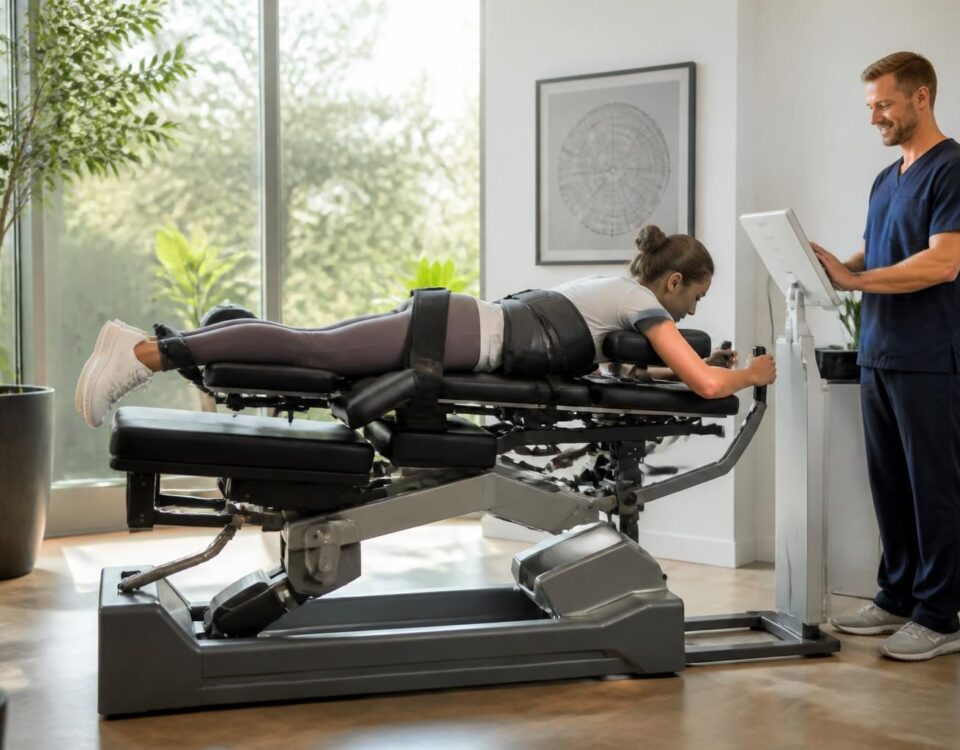
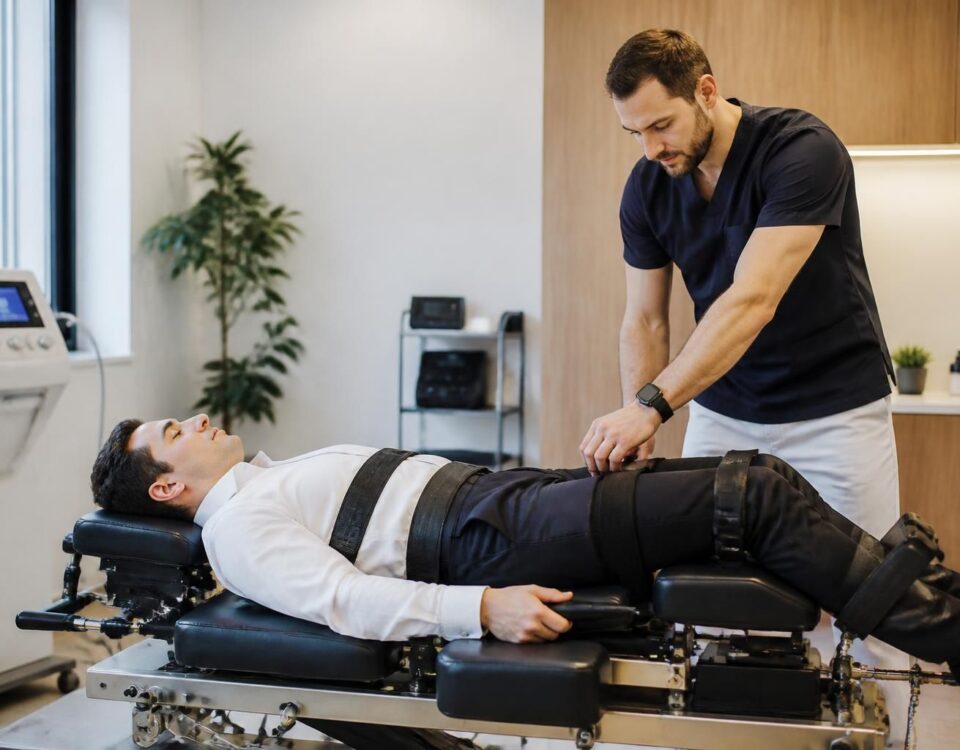
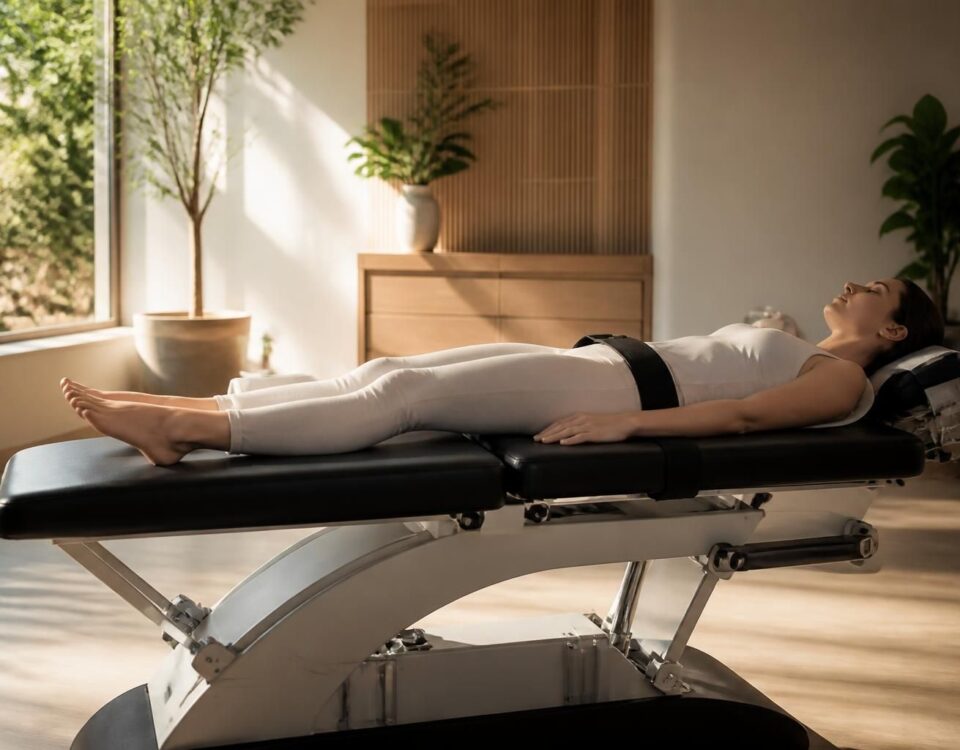
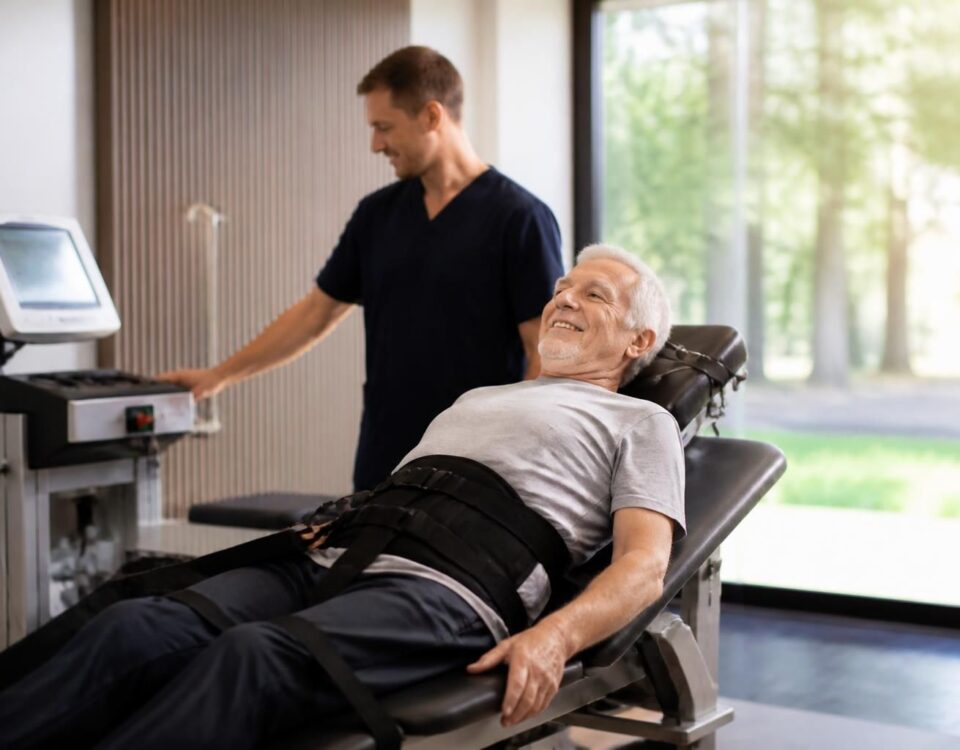
The neurovertebral decompression Improve thevertebral alignment by a Soft and controlled traction which creates spaces between vertebrae. This decompression reduces the Pressure on the intervertebral discs and on the gristle, facilitating the return of the vertebrae to their natural position.
- Restoration of intervertebral space Allowing the discs to rehydrate and resume their role as shock absorbers.
- Reduced nerve pressure and decreased associated pain.
- Improved blood circulation In the spinal area to nourish tissues and promote recovery.
- Relaxation of muscle tension around the column and better mobility.
- More stable posture and overall improvement of theSpinal alignment.
This article presents, with clarity, how neurovertebral decompression improves thevertebral alignment. It is based on a Controlled traction non-invasive that creates spaces between the vertebrae. This action reduces pressure on discs and nerves, promotes natural readjustment and improves posture. The process also improves local circulation and decreases muscle tension, contributing to a more stable and mobile column.
Mechanism of action
neurovertebral decompression applies a gentle traction on the column. This traction generates a space between the vertebrae, which decreases the pressure on the intervertebral discs and on the neighboring nerves. This space facilitates the return of the vertebrae to their natural position and improves thevertebral alignment.
Pressure reduction promotes rebalancing of vertical structures. It supports stability and posture, even during daily movements. To understand the foundations, see the resources dedicated to neurovertebral decompression like Understanding neurovertebral decompression.
Beyond simple readjustment, traction improves local blood circulation. The spinal tissues receive better nutrients and oxygen, which supports the healing process and maintains thevertebral alignment in time.
Effects on alignment and mobility
By promoting the intervertebral space, the technique reduces pressure on the nerves and discs. This allows for progressive realignment of the vertebrae and better distribution of loads on the column.
Improved circulation and decreased muscle tension around the spine contribute to a more balanced posture and smoother mobility. Clinical feedback indicates that patients find an amplitude of motion that was limited by vertebral compressions.
Additional resources that describe mechanisms and results can be viewed through specialized sources and pages associated with TagMed and Pulse Align that explain how the approach acts on advanced musculoskeletal imbalances. for example, How decompression affects advanced musculoskeletal imbalances.
Clinical integration and follow-up
Neurovertebral decompression is part of a global approach. It can be associated with clinical protocols in TagMed clinics to optimize realignment and posture. For some patients, regular monitoring assesses the sustainability of alignment and adjusts the care plan without the need for surgical interventions.
Useful resources help deepen the practical and technological aspects of decompression, including advances in neuromodulation technologies and traction systems. For a general presentation, see the technology and the writings on Prevention of chronic mechanical disorders.
Key points and resources
Controlled traction Creates spaces between the vertebrae to decrease the pressure on the discs and nerves.
Restoring alignment Helps the vertebrae to resume their natural position and improves posture.
traffic improvement Supports oxygenation and nutrition of the spinal tissues.
Reduction of muscle tension Around the column facilitates movement and increases fluidity.
Prevention of future pain by participating in a lasting alignment and a balanced posture.
For a practical overview and clinical evidence, you can check out the following resources: How decompression improves spinal alignment, Lower back pain in athletes, and Recurrent mechanical pain.
For a pedagogical approach to decompression, see Understanding neurovertebral decompression. Sheets and practical guides, including technological aspects, are found in the resources associated with TagMed and Pulse Align. Demonstrations and case studies can be viewed on the pages dedicated to these subjects, in particular via Advanced musculoskeletal imbalances and Post-traumatic pain.
For additional references, the following resources can be viewed: Prevention of chronic mechanical disorders and Lower back pain in athletes.
Clinical and academic reference: Training and practices are part of a tradition taught by recognized centers and professional associations such as ACMA and the College of Canadian Osteopaths.
For additional information on applications and results, see also the public and clinical resources available on Tagmed Clinic and Prevention of chronic mechanical disorders.
As part of osteopathic practice, this approach is part of a rigorous clinical setting and is accompanied by a selection protocol to avoid contraindications and ensure patient safety. For an overview and application cases, see the technology.
Institutional reference and training in osteopathy: NUMSS, NAO and National University of Medical Sciences are the reference frameworks for vocational training in osteopathy.
To deepen the therapeutic axis and the results in active patients, the testimonies and published results underline the positive effects on alignment and mobility after a series of decompression sessions, sometimes combined with treatments in the TagMed clinic in Montreal or Terrebonne.
“Medical disclaimer: The information and advice provided on this site does not replace the health professional’s benefit, diagnosis or treatment. Please note that Dr. Sylvain Desforges osteopath is neither a doctor of medicine nor a doctor, and is not a specialist in a medical specialty as defined by the Collège des Médecins du Québec. Manual medicine, functional medicine and sports medicine as described on this site exclude any medical treatment or diagnosis made by a doctor or specialist doctor. Always consult your doctor for any medical questions. For more details, please read our full legal notice. »
Medical Disclaimer: The information and advice provided on this site does not replace the health professional’s diagnosis or treatment. Please note that Dr. Sylvain Desforges osteopath is neither a doctor of medicine nor a doctor, and is not a specialist in a medical specialty as defined by the Collège des Médecins du Québec. Manual medicine, functional medicine and sports medicine as described on this site exclude any medical treatment or diagnosis made by a doctor or specialist doctor. Always consult your doctor for any medical questions. For more details, please read our full legal notice. »
- Controlled traction : creates Intervertebral spaces and decreases the Pressure on discs and the gristle.
- Progressive realignment : the vertebrae regain their natural position thanks to the created space.
- Favored traffic : improvement of the bloodstream Around the vertebrae, nourishing the tissues.
- Muscle relaxation : Reduction of tensions around the column to facilitate realignment.
- Postural stability : Restored alignment supports a natural posture and better distributes the loads.
- Prevention of recurrences : Proper alignment reduces the risk of future pain.
- Increased mobility : Increase inrange of motion vertebral.
- Custom Plan : Adaptation of the protocol (duration/intensity) to optimize theDurable alignment.

This article presents how neurovertebral decompression Acts to improve The vertebral alignment. By relying on a Controlled traction, it creates spaces between the vertebrae, decreases the pressure on the Intervertebral discs and on the gristle, and facilitates progressive column readjustment. this effect, reinforced by a better bloodstream And increased disc hydration, leads to more balanced posture and reduction of muscle tension.
Decompression mechanism and its impact on alignment
Neurovertebral decompression is based on a gentle traction applied along the column, targeting spaces between the vertebrae. This newly created space releases pressure on discs and nerves, allowing the vertebrae to return to their natural position. Progressive rebalancing promotes better vertebral alignment and supports the musculoskeletal structures surrounding the spine.
By releasing pressure, this approach facilitates traffic improvement in the vertebral region and promotes adequate nutrition of the intervertebral tissues. This improved hydration and blood flow supports flexibility and decreases muscle tension, contributing to a More stable posture and a decrease in dangerous postural compensation.
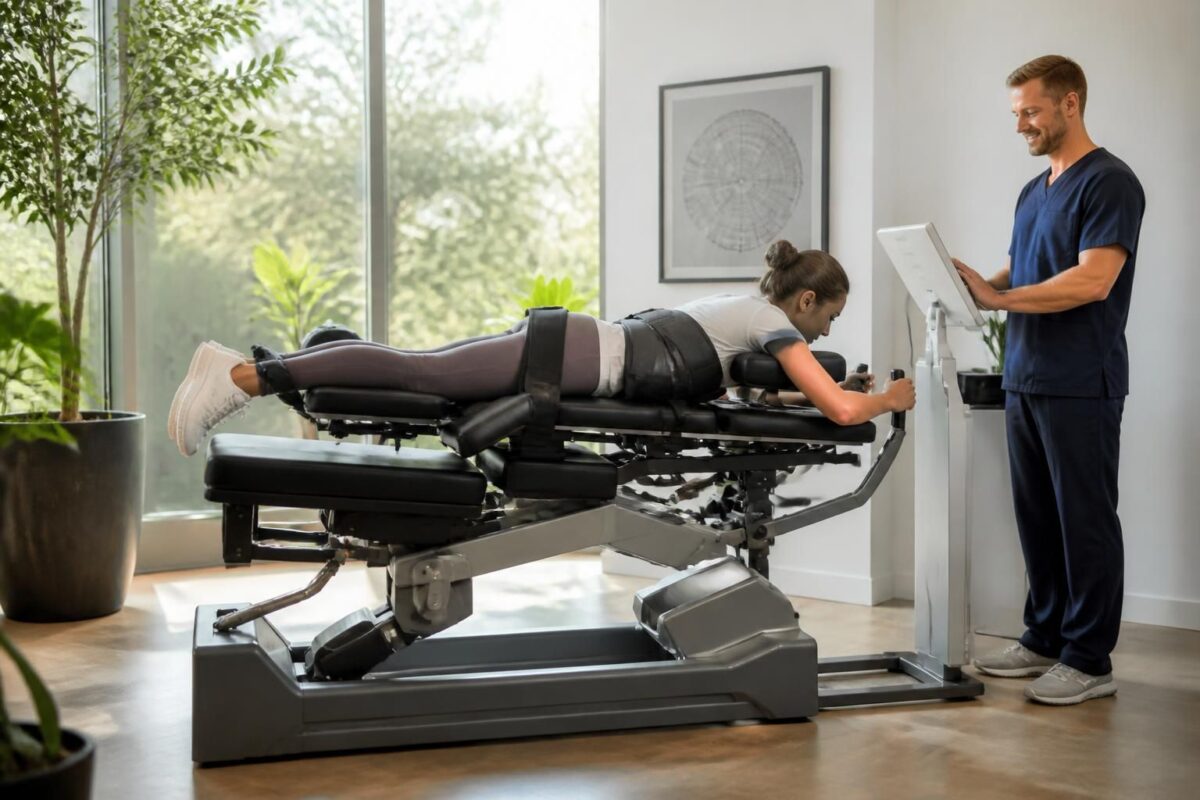
The long-term benefits of neurovertebral decompression for spinal health
In short In short, the neurovertebral decompression is a non-invasive approach that decreases the Pressure on intervertebral discs and nerves, favoring the Natural regeneration and tissue recovery. Its long-term benefits include Lasting pain reduction, Improving mobility and from the posture,…

Neurovertebral decompression and mobility: a return to an active life
In short In short, the neurovertebral decompression is therapy non-invasive who uses a gentle traction To create a space between the vertebrae and reduce the pressure on the Intervertebral discs and the nerves. It promotes a bloodstream improved, lowers tension…
Impact on posture and back balance
A found vertebral alignment allows a Balanced distribution of expenses over the entire column, reducing the risk of Locais overload and Chronic pain. Decompression acts as a mechanical reset that helps muscles function in a more neutral register, which Reduces tensions around the column and improves the fluidity of movements.
At the same time, the realignment of the vertebrae reduces the stresses on the ligament and muscular structures, which favors a posture improvement on a daily basis. This reharmonization supports professional and sporting activities, while limiting repetitive gestures that can aggravate postural imbalances.
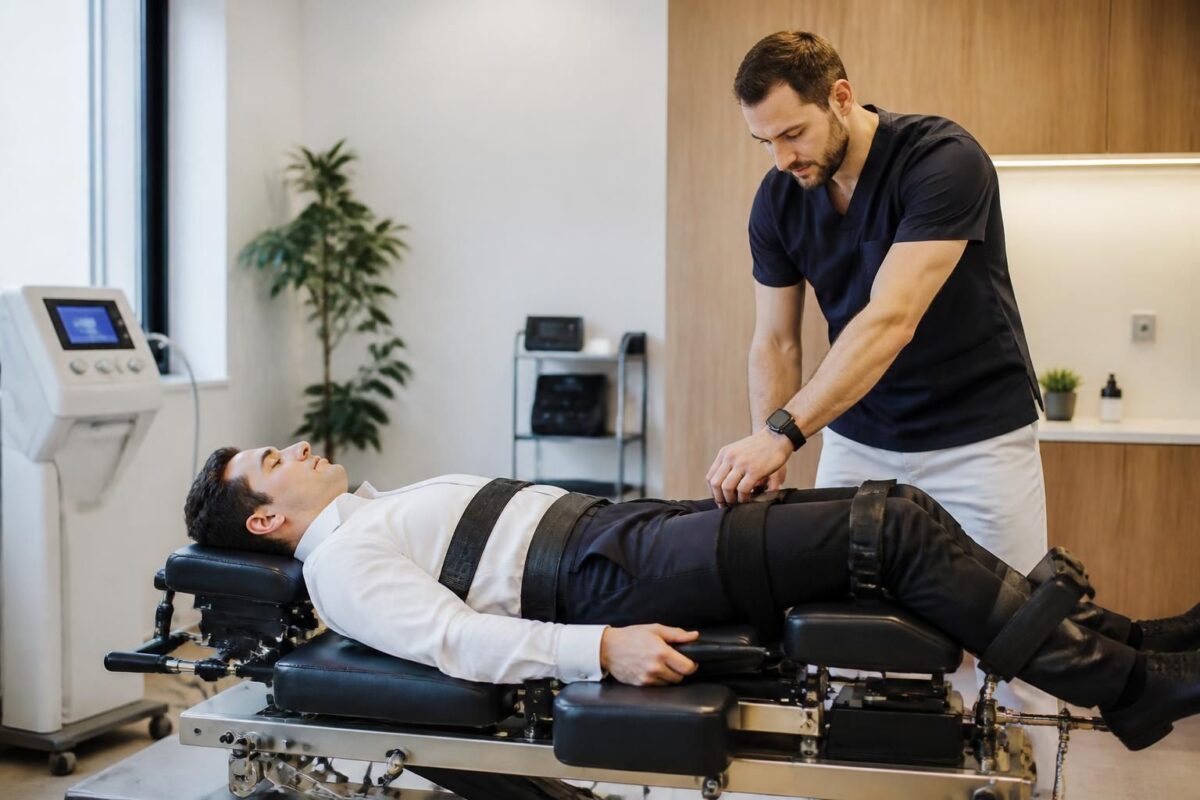
How Neurovertebral Decompression Prevents Diffuse Chronic Pain
In short decompression neurovertebral is one Non-invasive method aimed at reducing the Pressure on the intervertebral discs and the nerves, in order to prevent Diffuse chronic pain. It improves the circulation and thedisc hydration, decreases inflammation and promotes better mobility.…
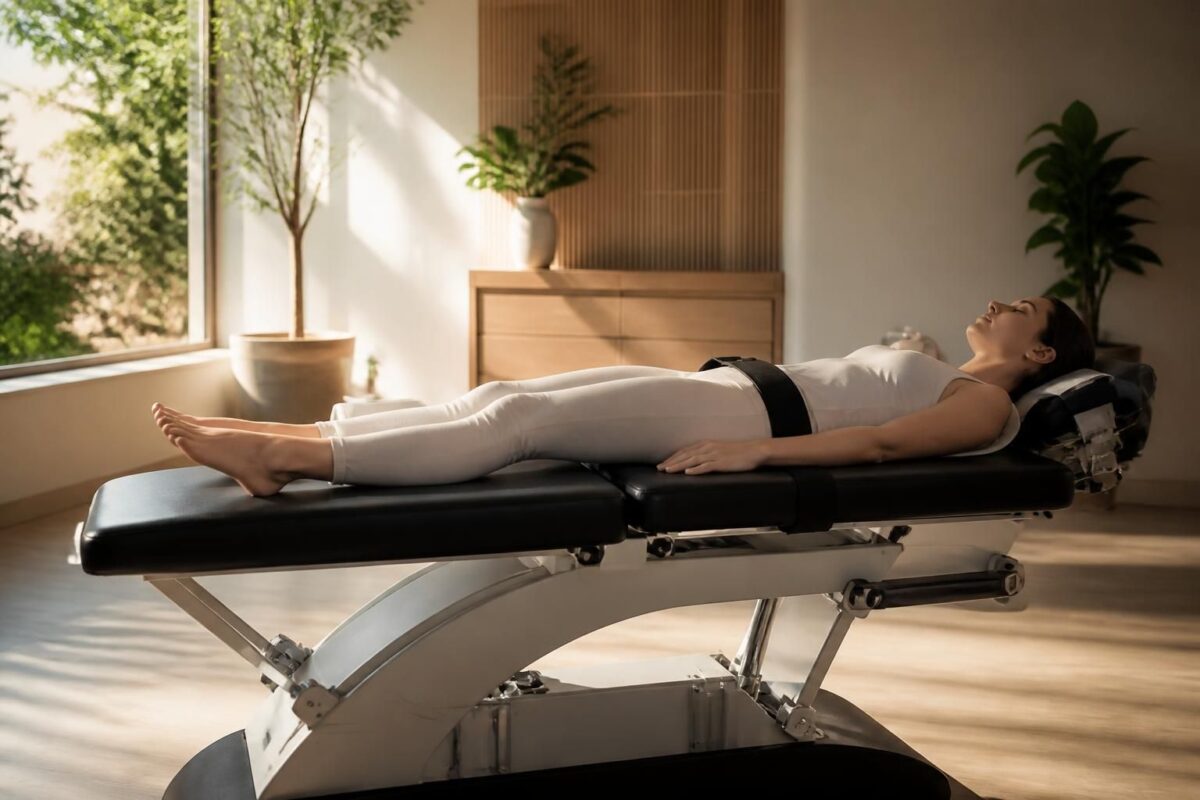
Neurovertebral Decompression and Body Alignment: Restoring Natural Balance
In short In short, neurovertebral decompression is one Non-invasive approach who restores theBody Alignment and thenatural balance back and neck. She acts by a Controlled traction of the spine to widen the intervertebral space and reduce the Pressure on discs…
Factors that optimize efficiency
Evaluation and customization of treatment
To get a Durable vertebral alignment, a preliminary assessment makes it possible to identify areas of misalignment, disc damage and any contraindications. The protocol is then personalized, adjusting the duration, angle and frequency of the traction. The objective is to obtain a progression adapted to each patient, without pain or aggravation.
Integration with exercises and therapies
Neurovertebral decompression is ideally part of a multimodal approach. It can be combined with exercises to strengthen the trunk muscles, mobility exercises and postural control techniques. This integration strengthens alignment maintenance and optimizes long-term stability.
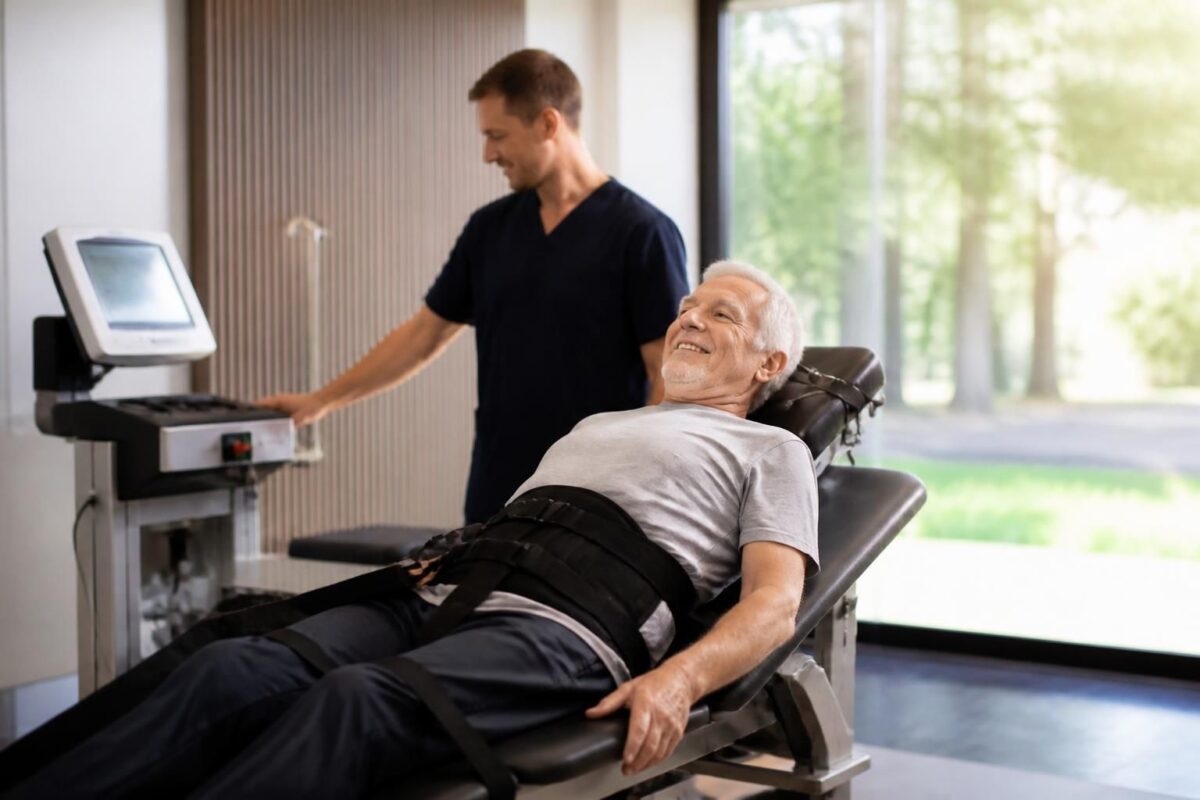
Why neurovertebral decompression is a lasting solution for active seniors
In short In short, the neurovertebral decompression is one Non-invasive therapy which sustainably relieves spinal pain in the spine active seniors By creating, by a Soft and controlled traction, a space between the vertebrae. At Montreal, it is recognized as…
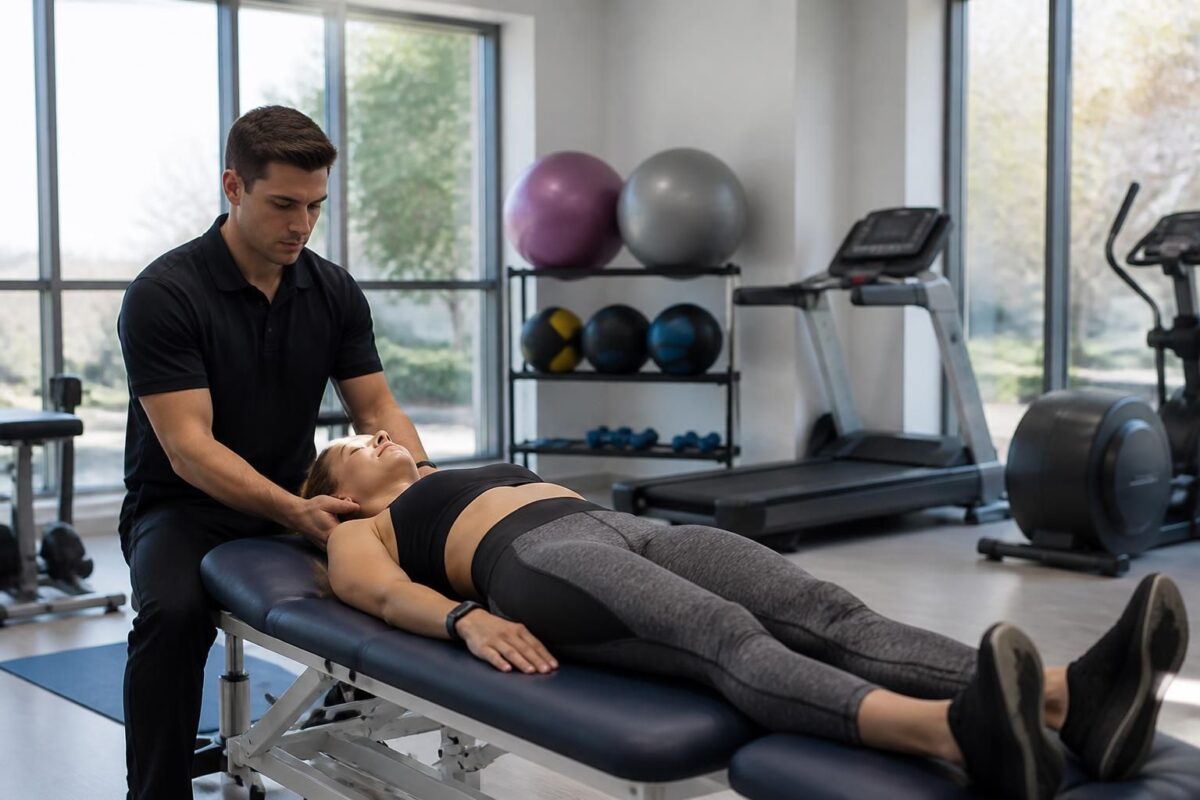
Neurovertebral decompression and recovery after severe sports injury
In short In short, the neurovertebral decompression is one Non-invasive method to Relieve the pressure on the Intervertebral discs and the gristle Via a Controlled traction, to facilitate the recovery After a severe sports injury. It improves the bloodstream towards…
To maximize benefits on alignment, it is recommended to maintain a light routine of stretching and mobility between sessions, while ensuring that your body signals are respected. If pain gets worse or persists, the protocol should be adjusted or the decompression indication is reassessed.
To get started, schedule an assessment with your practitioner to adapt the protocol to your condition and ensure safe progress towards a Optimal vertebral alignment.
| Element | Impact on alignment |
|---|---|
| gentle traction | Create a intervertebral space and Lowers the pressure on discs and nerves, facilitating readjustment |
| pressure reduction | release the gristle and allows a return of the vertebrae to their natural position, improving thealignment |
| local traffic | Improves the bloodstream and thehydration discs, contributing to lasting alignment |
| Muscle relaxation | decrease in Muscle tensions around the column, stabilizing the posture |
| Progressive readjustment | promotes a realignment vertebrae to their optimal position |
| Postural stability | Improve it position and thebalance body, supporting alignment |
| Increased mobility | Increase theamplitude movements and reduces restrictions, facilitating maintaining alignment |
| Non-invasive approach | Procedure non-invasive that preserves the musculoskeletal system and promotes the continuity of realignment |
| pain prevention | contributes to the prevention pain related to misalignment, via lasting maintenance |
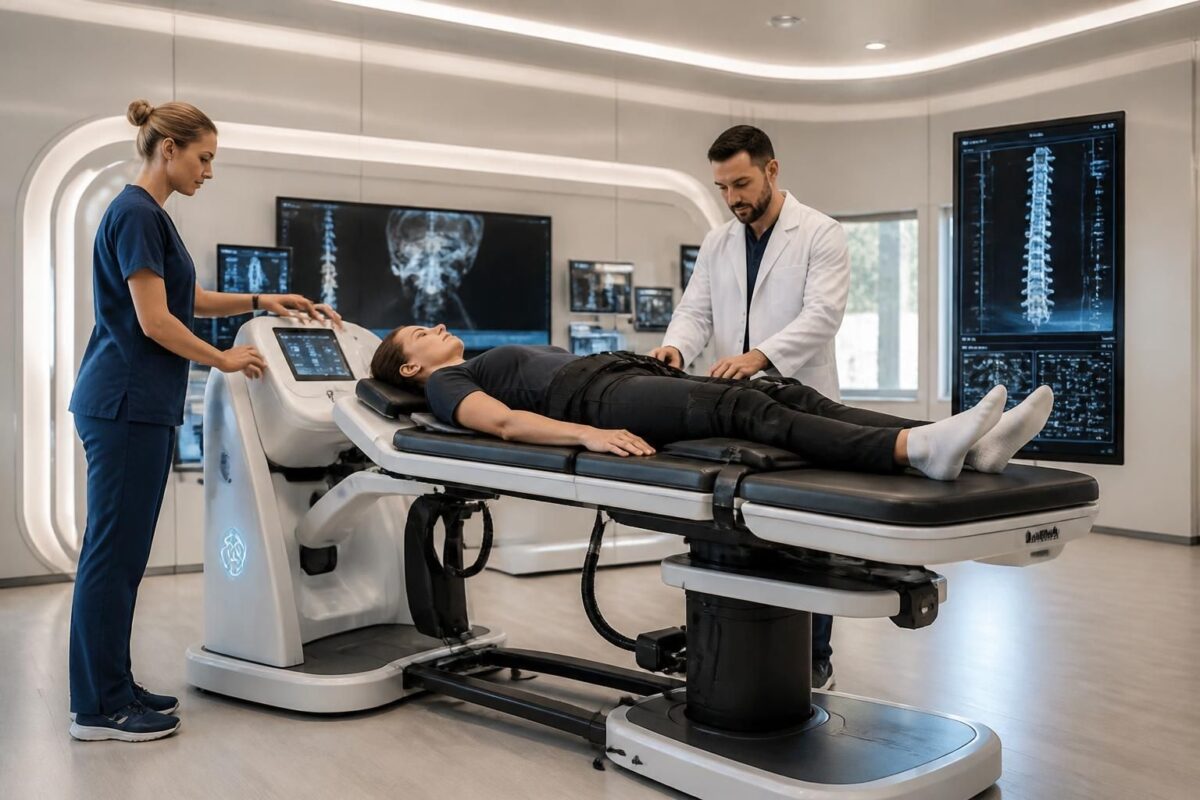
Recent innovations in neurovertebral decompression technologies
In short In short, the neurovertebral decompression is an approach non-invasive Aiming to reduce pressure on discs and nerves, and promote tissue regeneration. At Montreal, it is positioned as an effective option for lower back pain and herniated discs. The…
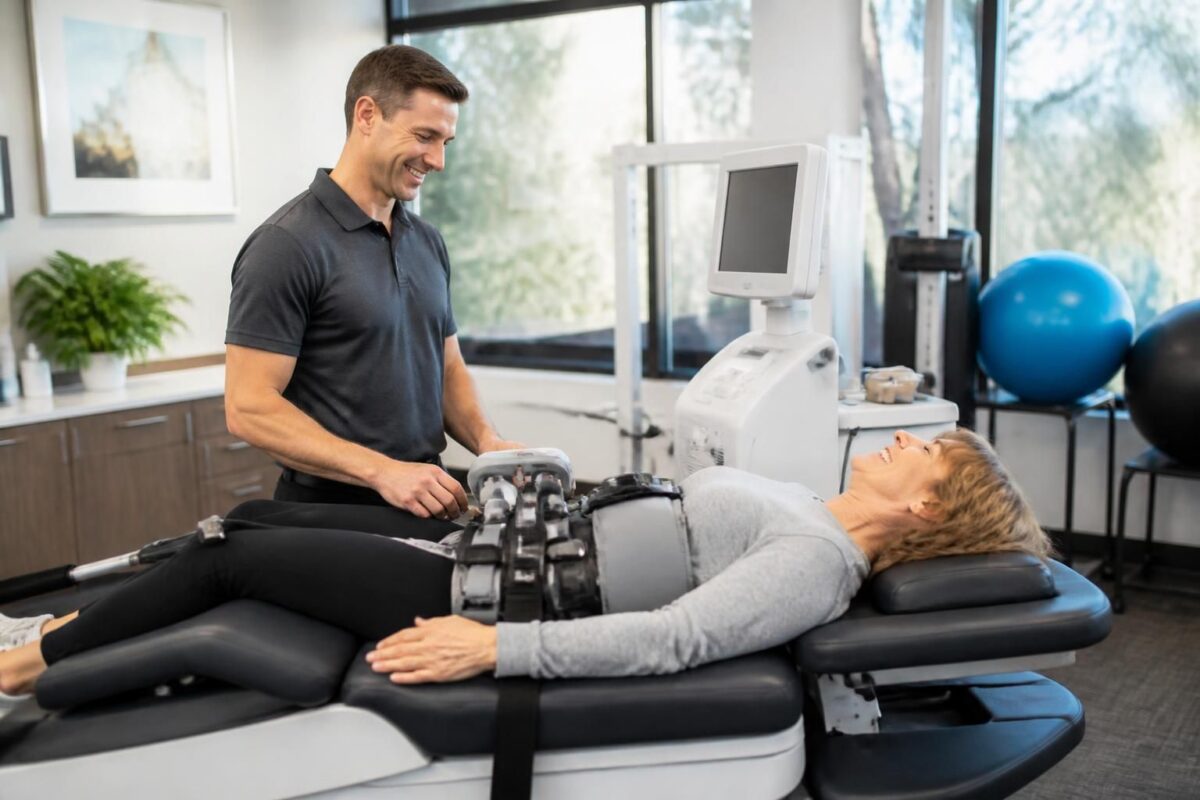
Neurovertebral decompression and diffuse pain: an appropriate solution
In short In short, the neurovertebral decompression is one Non-invasive solution For diffuse pain related to nerve irritation of the spine. She acts in Reducing pressure on intervertebral discs and nerves and improving the bloodstream, which promotes recovery and the…
Testimonials: How neurovertebral decompression improves spinal alignment
Here are authentic testimonials that illustrate how neurovertebral decompression acts on thevertebral alignment on a daily basis and contributes to better posture.
Alicia, 34, says: “Before the treatment, I felt constant tension in the back and a feeling of inking the column. After several sessions, my vertebrae seem to realign and my posture becomes more natural. the pain decreases and I find a feeling of lightness in the column thanks to the gentle traction and improving the space between the vertebrae. »
Jean-Pierre, 51, testifies: “From the first sessions, I felt my vertebrae return to their natural position. The space between them is growing, which has reduced the pressure on the nerves and helped me to adopt a body line more stable. My back aligns better while walking and I notice a better distribution of loads on my column. »
Célia, passionate about yoga, shares: “This approach has improved my mobility and my alignment during postures. By integrating the decompression, my movements are more fluid and my shoulders and my pelvis line up in a more balanced way. I feel more centered and confident in my daily exercises. »
Marc, amateur athlete, explains: “After a few sessions, my posture improved significantly and my vertebrae naturally realign themselves at each session. This allowed me to resume my training with less pain and better stability during the efforts. »
Isabelle, active mother, says: “With my busy schedule, my spine tended to shift. Decompression helped me find a stable alignment And a freer column, which makes my daily gestures easier and my family activities more comfortable. »
As part of a career dedicated to health innovation, this specialist in osteopathy and manual medicine places thevertebral alignment at the heart of its therapeutic approach. Its practice is based on a fine understanding of the mechanisms of the column and on a precise application of the forces that act on the vertebrae and discs. By favoring a global vision of the back, he proposes the neurovertebral decompression as an option non-invasive To restore alignment and promote natural posture.
The fundamental principle of neurovertebral decompression is based on a gentle traction applied along the column, designed to create Intervertebral spaces between the vertebrae. this separation reduces the pressure exerted on the Intervertebral discs and on the gristle, allowing a gradual readjustment of the segments and a rebalancing of the loads. Over the course of the sessions, this dynamic stimulates the bloodstream local and intake of essential nutrients, promoting the hydration and recovery of tissues from the spine.
This structural rebalancing is not limited to passenger gains. By aligning the vertebrae, the posture stabilizes, muscle tension around the column subsides and the amplitudes of motion widen. In patients with chronic pain, reducing nerve compression can result in lasting improvement in mobility and decreased migratory pain, which facilitates the practice of daily and sports activities.
The protocol is part of a process non-invasive and secure, designed to adapt to a large population, from active people to patients with degenerative pathologies. It is generally integrated into a multidisciplinary care plan, sometimes combining targeted exercises, physiotherapy and postural advice to optimize results and prevent recurrences.
Clinical returns indicate convincing results: faster recovery after injury, progressive column recovery aligned and general improvement of the Spinal stability. Each patient benefits from a personalized plan, with regular follow-up to adjust traction, monitor progression and strengthen mechanisms for maintainingvertebral alignment in the long term.
Driven by commitment to care based on evidence and integration of advanced technologies, this practitioner leads clinics focused on innovation and continuing education. Its approach focuses on safety, transparency of objectives and respect for physiological limits, while offering a convincing path to a vertebral alignment more stable and a better quality of life.
Quick summary: the neurovertebral decompression acts as a soft traction and non-invasive which creates spaces between the vertebrae, decreases the Pressure on the intervertebral discs and nerves, and promotes progressive spinal realignment. At the same time, it improves the bloodstream around the vertebral structures and reduces muscle tension, contributing to better mobility and to a posture more balanced.
The Controlled traction applied during neurovertebral decompression allows readjust the vertebrae by creating spaces between them, which significantly reduces the Pressure on the intervertebral discs and on the nerves. This pressure reduction facilitates vertebral realignment progressive and sustainable, favoring a more aligned vertebral structure and a more natural posture.
Beyond simple realignment, this approach improves the bloodstream in the spinal region, ensuring better irrigation of the surrounding discs and tissues. This optimized hydration and nutrition support the Disc Resilience and the flexibility segments, reducing the risk of recurrent pain associated with persistent nerve pressure.
On the muscular level, neurovertebral decompression contributes to release tension around the spine and to promote a fluidity of movements. Stabilizing muscles work more efficiently, which improvesPostural balance and reduces the imbalances that fuel pain and compensation.
In terms of prevention, a robust and long-lasting spinal alignment, obtained by decompression, can reduce The appearance of future pain and limit the risk of disc degeneration. This approach provides a way non-invasive To manage lower back and cervical pain, while preparing the ground for additional exercises and appropriate reinforcement programs.
Integration of complementary technologies and protocols can amplify results and accelerate recovery. Specialized resources and practical guides help to deepen the understanding and application of these techniques, in particular through sources such as Complete guide, neurovertebral decompression On Wikipedia, and examples of clinical applications and prevention of disc complications via specialized resources such as Prevention of disc complications.
For additional information and exchanges around mechanisms and results, you can consult detailed analyzes and feedback on resources such as How neurovertebral decompression improves vertebral alignment, Improves nerve function and reduces inflammation, and acting on complex vertebral imbalances.
To deepen the technical, clinical and indications, you can also refer to specialized resources on the neurovertebral decompression and its practical and preventive applications through pages like Benefits on muscle tension and Prevention of spinal complications.

Dr Sylvain Desforges, B.Sc., D.O., N.D., osteopath, is the founding president of TAGMED and of the ACMA association. He dedicates his practice to chronic spinal pain, low back pain and symptoms compatible with sciatica, particularly when pain radiates toward the buttock, leg, calf, foot or toes.
Through SOS Sciatique, he publishes educational content on sciatica symptoms, possible causes such as disc herniation, disc narrowing, foraminal stenosis or irritation of a lumbar nerve root, as well as non-surgical approaches that may be considered according to the evaluation. At Clinique TAGMED, care may include, depending on the case, motorized neurovertebral decompression, specific osteopathic care or precision percussion.
For an evaluation related to sciatica treatment in Montreal / Mount Royal or sciatica treatment in Terrebonne, please consult the services available at Clinique TAGMED.
Medical disclaimer
The information published on SOS Sciatique is provided for educational purposes only and does not replace a consultation, diagnosis, opinion or treatment provided by a physician or another authorized healthcare professional. The author of this article is neither a medical doctor nor a specialist in a medical specialty recognized by the Collège des médecins du Québec. The osteopathic, manual medicine or functional support approaches described on this site do not constitute medical acts and are not intended to replace medical follow-up.
Consult a physician or emergency service in cases of loss of bladder or bowel control, anesthesia in the saddle area, significant or progressive weakness in the leg or foot, fever, recent trauma, severe pain or rapid worsening of symptoms. For more details, please read our Legal Notice.