How neurovertebral decompression supports the recovery of injured athletes
26/06/2026
Neurovertebral decompression and prevention of chronic neuropathic pain
26/06/2026
In short
In short, the Advanced neurovertebral decompression is one Non-invasive technique to Restore spinal alignment By decreasing the Pressure on discs and nerves. It offers a Improved spinal alignment, a pain reduction and an Mobility found, while facilitating the re-education and the Prevention of recurrences. Operation is based on a Controlled traction and an Protocol Customization, with a Real-time tracking to adjust settings. In Montreal, this service is particularly useful for disc pathologies and chronic lower back pain. |
The Advanced Techniques in neurovertebral decompression aim to optimize thevertebral alignment without surgery. They are based on a Controlled traction and personalized which adjusts in real time the force exerted on the spinal segments, in order to release the pressure on the Intervertebral discs and the nerves.
thanks to Smart devices and to a Accurate evaluation, protocols target problem areas to promote realignment and tissue recovery. The integration of a Initial balance, imaging and Digital tracking Allows you to adjust the traction parameters and ensure measurable progress. Typical results include better Postural stability, a reduction in pain and regained mobility, contributing to a vertebral alignment more durable.
Advanced Techniques in Neurovertebral Decompression to Improve Vertebral Alignment
This text presents the most recent methods in neurovertebrate decompression, intended to improve the alignment of the spinal segments. It explains how advanced protocols, specialized technologies and the integration of complementary therapies make it possible to optimize traction on the spine and promote a more stable alignment. The content sheds light on the key elements for a safe and effective, patient-centric approach adapted to each individual’s specific needs.
Principles and objectives
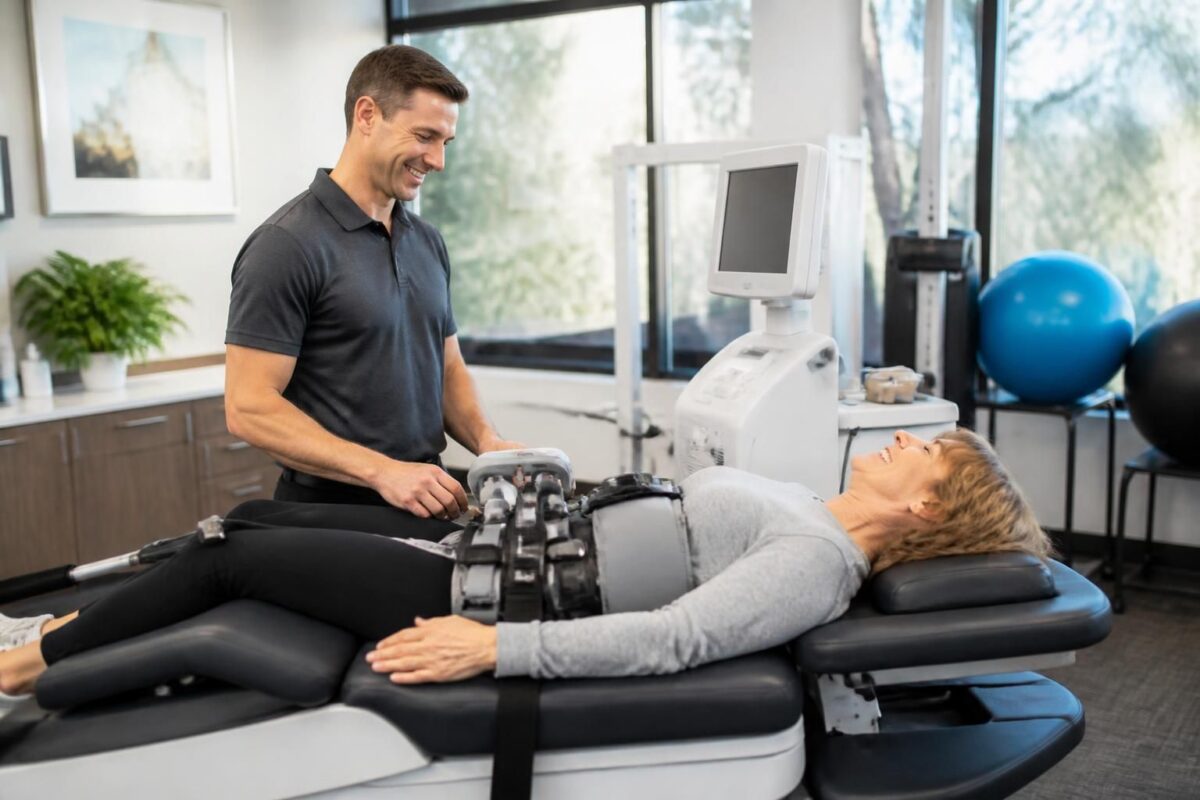
Neurovertebral decompression is based on a Controlled traction applied targeted to the spine. The objective is to reduce the pressure exerted on the discs and nerves, which promotes a vertebral alignment more harmonious and improved mobility. This approach aims to reduce tensions and restore buoyancy and space between segments, thus contributing to an improved nervous function.
Advanced protocols and customization
Modern protocols start with an accurate assessment of individual needs. This step allows you to adapt the traction, duration and intensity of the sessions to each patient. The real-time adjustment, guided by physiological reactions, guarantees progressive and measurable alignment of the spinal segments. Customizing protocols is essential, as symptoms and anatomical characteristics vary from patient to patient.
Technologies and devices
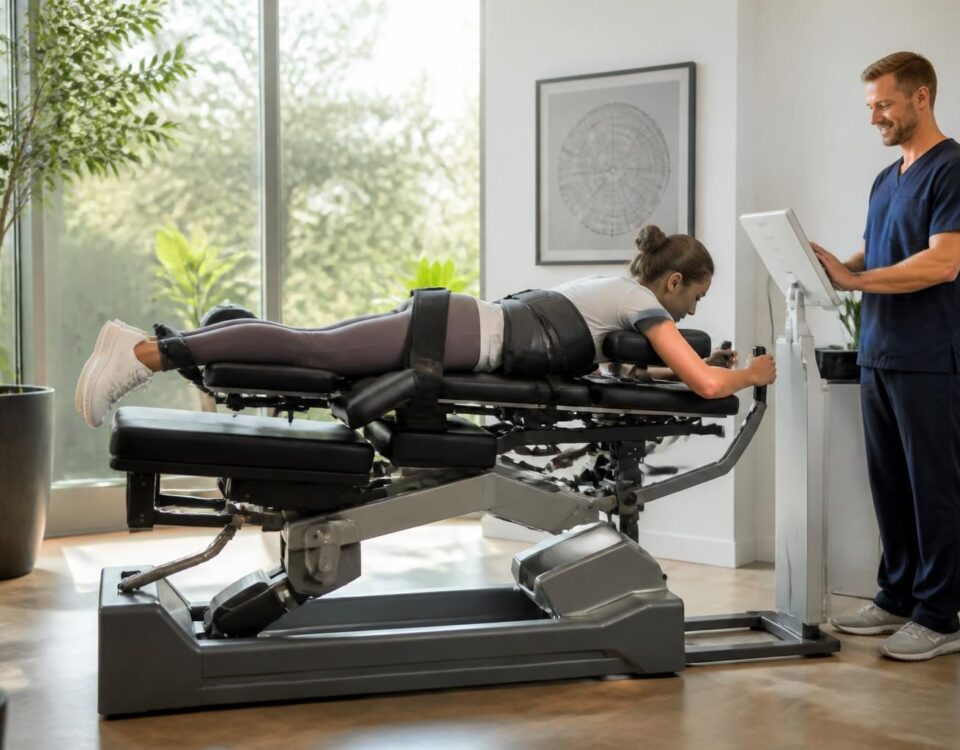
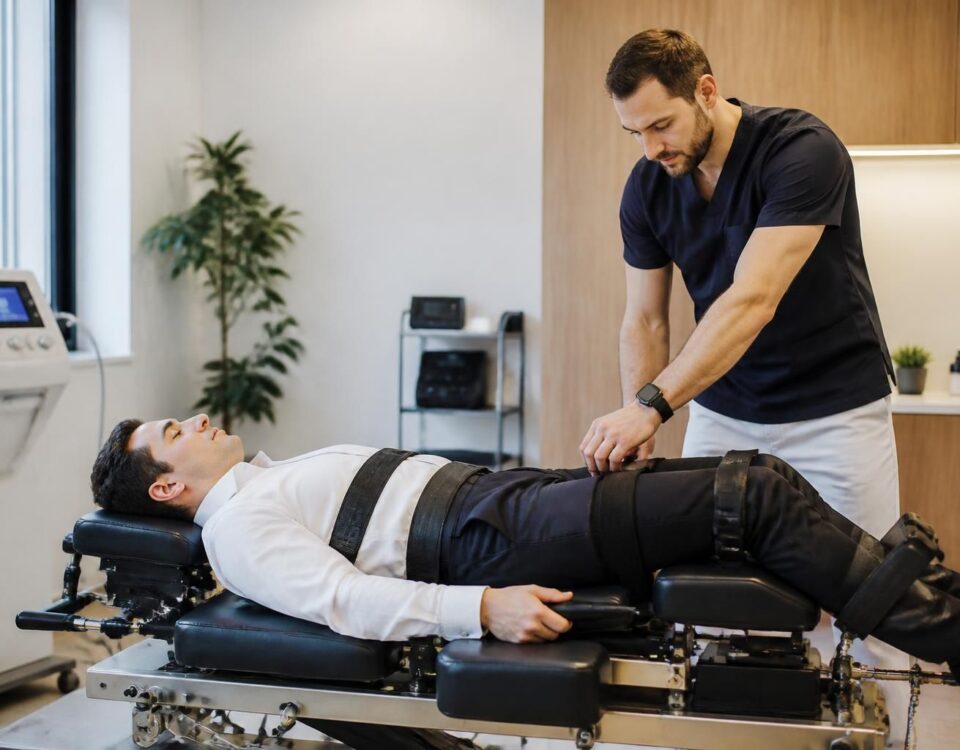
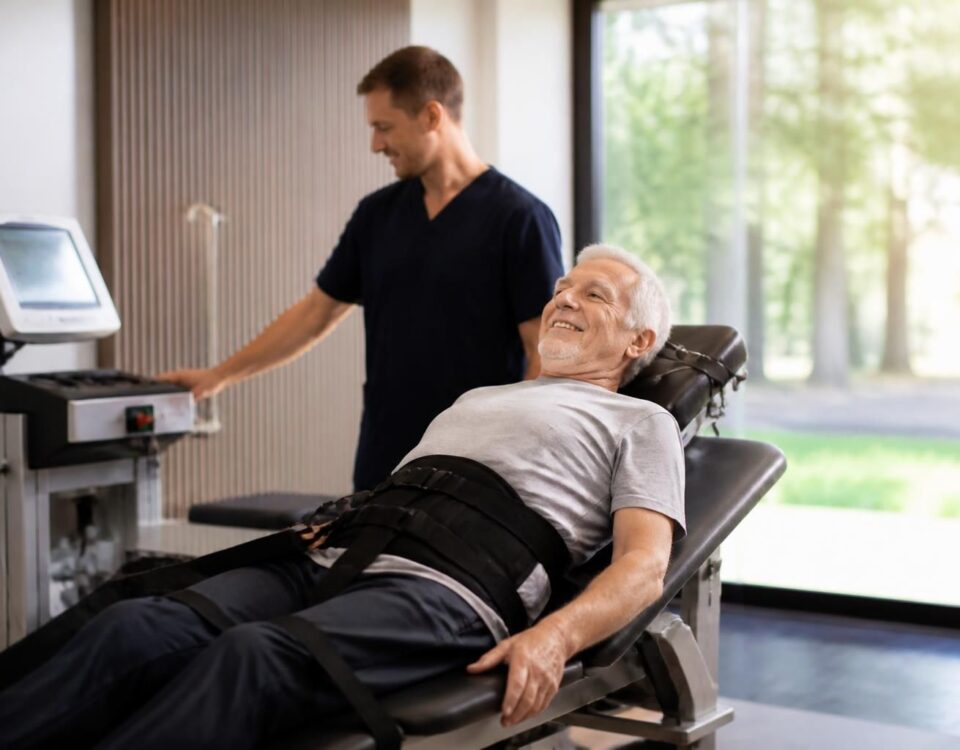
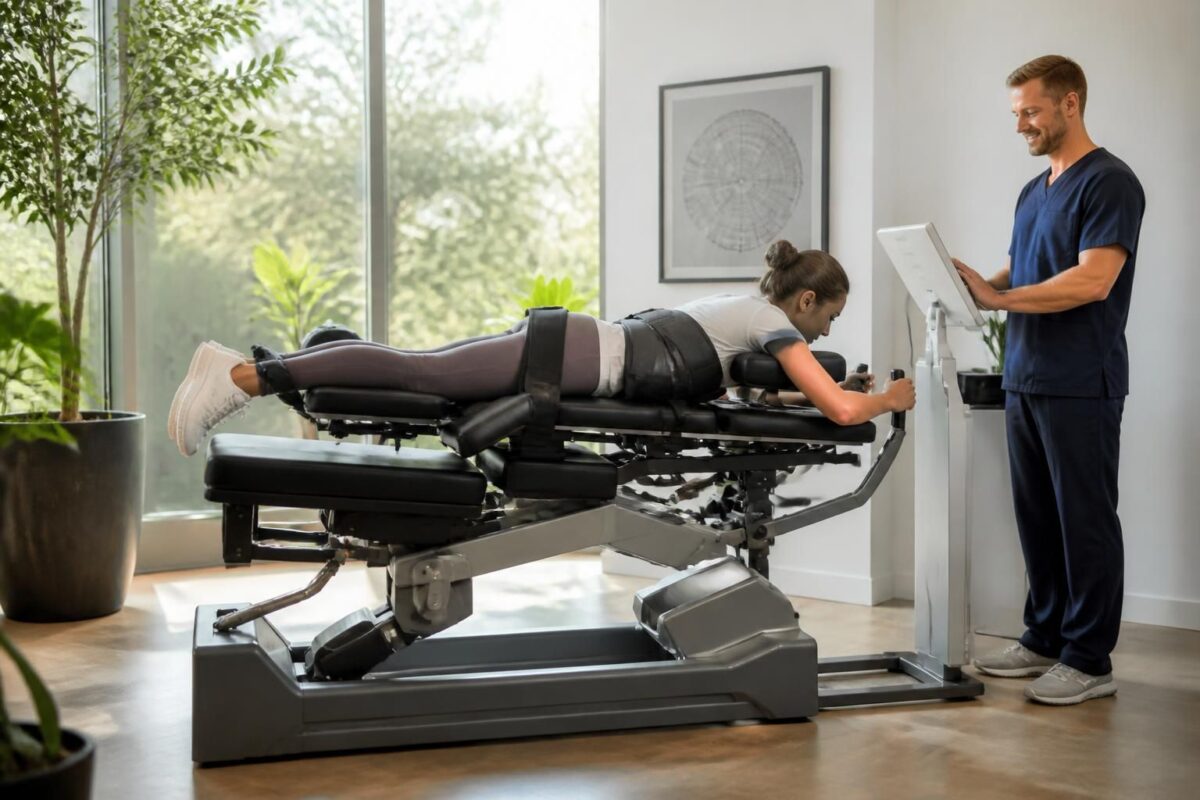
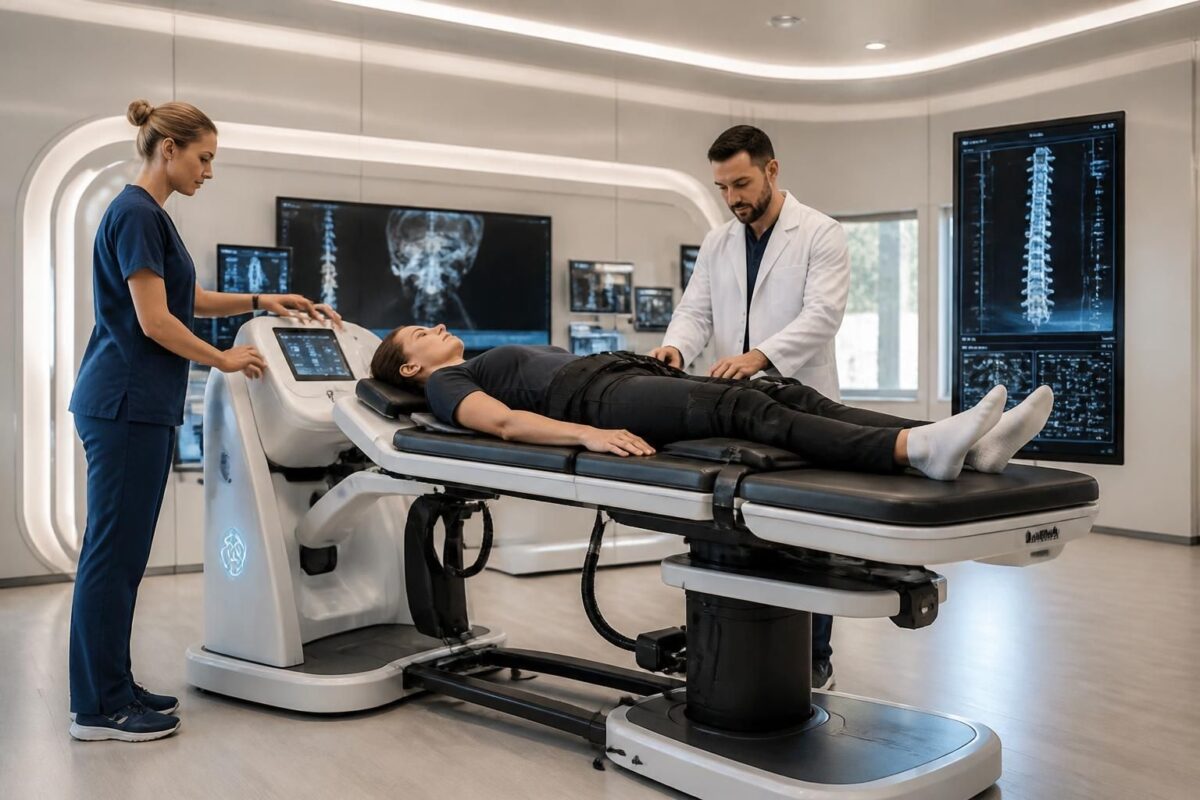
Modern decompression systems use computerized devices that control traction and allow for fine adjustments during the sessions. These technologies promote an approach non-invasive and precise, targeting painful areas and areas where alignment needs to be improved. They also make it possible to follow the evolution of the physiological parameters, in order to make the necessary corrections quickly. To deepen the technological aspects, consult the dedicated resources on Dr Desforges and other specialized analyses.
To the Tagmed Clinic, the approach combines decompression and advanced technologies to offer precise and personalized traction. Computerized devices allow to adjust the tension according to patient feedback and observed results, with continuous monitoring to optimize spinal alignment.
Additional resources help to deepen these technological and clinical aspects:
Postoperative recovery,
Current protocols,
and Modern techniques.
Integration of complementary therapies
To maximize results, it is common to associate decompression with other non-invasive approaches that support alignment and spinal stability. Among them, osteopathy and stress management techniques can help correct muscle and postural imbalances that affect alignment. The goal is to get a Therapeutic synergy which sustainably supports the improvement of spinal alignment. Studies and clinical feedback indicate that combining different approaches can accelerate pain reduction and mobility improvement, while preventing recurrences.
For more technical and clinical information on perspectives and protocols, see the following resources:
- The long-term benefits of neurovertebral decompression
- Decompression and chronic cervical pain management
- Effects on diffuse muscle tension
Vertebral alignment and clinical results
The work on the spinal alignment is based on a reduction in the disc pressure and a better distribution of the loads on the column. The results depend on factors such as morphology, age and activity level. Well-coordinated protocols and continuous evaluation allow you to adjust the sessions to optimize alignment and limit inappropriate stress on the vertebral structures.
Sources of information and clinical examples are accessible via specialized resources, including: Neurovertebral decompression and technology.
Monitoring, safety and ethics of care
Security is a priority. Before initiating a treatment, a clinical assessment is carried out to confirm the adequacy of the decompression and to identify any contraindications. Regular monitoring allows you to observe the evolution of the spinal alignment and to adjust the protocols. Patients benefit from clear and transparent support on the objectives and stages of treatment. For an educational and ethical framework, one can consult official training resources and recognized professional associations in the field.
For additional resources on the technologies used, see the pages dedicated to TagMed and DRX9000, as well as analyzes of recent innovations:
Technological innovations in neurovertebral decompression,
Recent innovations in neurovertebral decompression.
Useful links to understand the context and associated approaches:
- Why neurovertebral decompression is an ideal option
- Recovery after complex lumbar surgery
- modern techniques used during sessions
For more clinical and professional information, you can also consult the following resources: SOS SCIATIC and Tagmed Clinic.
Medical Disclaimer: The information and advice provided on this site does not replace the health professional’s diagnosis or treatment. Please note that Dr. Sylvain Desforges osteopath is neither a doctor of medicine nor a doctor, and is not a specialist in a medical specialty as defined by the Collège des Médecins du Québec. Manual medicine, functional medicine and sports medicine as described on this site exclude any medical treatment or diagnosis made by a doctor or specialist doctor. Always consult your doctor for any medical questions. For more details, please read our full legal notice.
Advanced Techniques
- Traction controlled and personalized
- devices computerized and adjustments in real time
- Multi-axis tractions: rotation, flexion, extension
- digital twin for simulation and planning
- Integration of osteopathy and of therapy laser For stabilization
Objectives and alignment indicators
- Improvement of theSagittal alignment and curvatures
- vertebral symmetry bilateral enhanced
- decrease in constraints on gristle and the facets
- postural stability and Prevention of recurrences
- Real-time tracking via Biometric sensors and posture analyzes

This article presents the Advanced techniques in neurovertebral decompression To improve thevertebral alignment. You will discover how modern protocols are based on precise evaluation, controlled traction and intelligent technologies to optimize posture and mobility, while ensuring safety and comfort.
The long-term benefits of neurovertebral decompression for spinal health
In short In short, the neurovertebral decompression is a non-invasive approach that decreases the Pressure on intervertebral discs and nerves, favoring the Natural regeneration and tissue recovery. Its long-term benefits include Lasting pain reduction, Improving mobility and from the posture,…

Neurovertebral decompression and mobility: a return to an active life
In short In short, the neurovertebral decompression is therapy non-invasive who uses a gentle traction To create a space between the vertebrae and reduce the pressure on the Intervertebral discs and the nerves. It promotes a bloodstream improved, lowers tension…
Foundations and initial evaluation
The key to a lasting spinal alignment lies in a Complete initial assessment curves, mobility and biomechanical factors affecting the column. This assessment makes it possible to identify the segments to be treated, areas of loss of stability and muscle imbalances. On this basis, a personalized decompression plan is developed, aimed at gradually restoring the alignment of the segments and preventing recurrences.
Each patient has a unique configuration, which requires an approach personalized and careful monitoring of physiological responses during the sessions. The initial assessment incorporates the observation of posture, movements and pain criteria to guide treatment orientation and protocol progression.
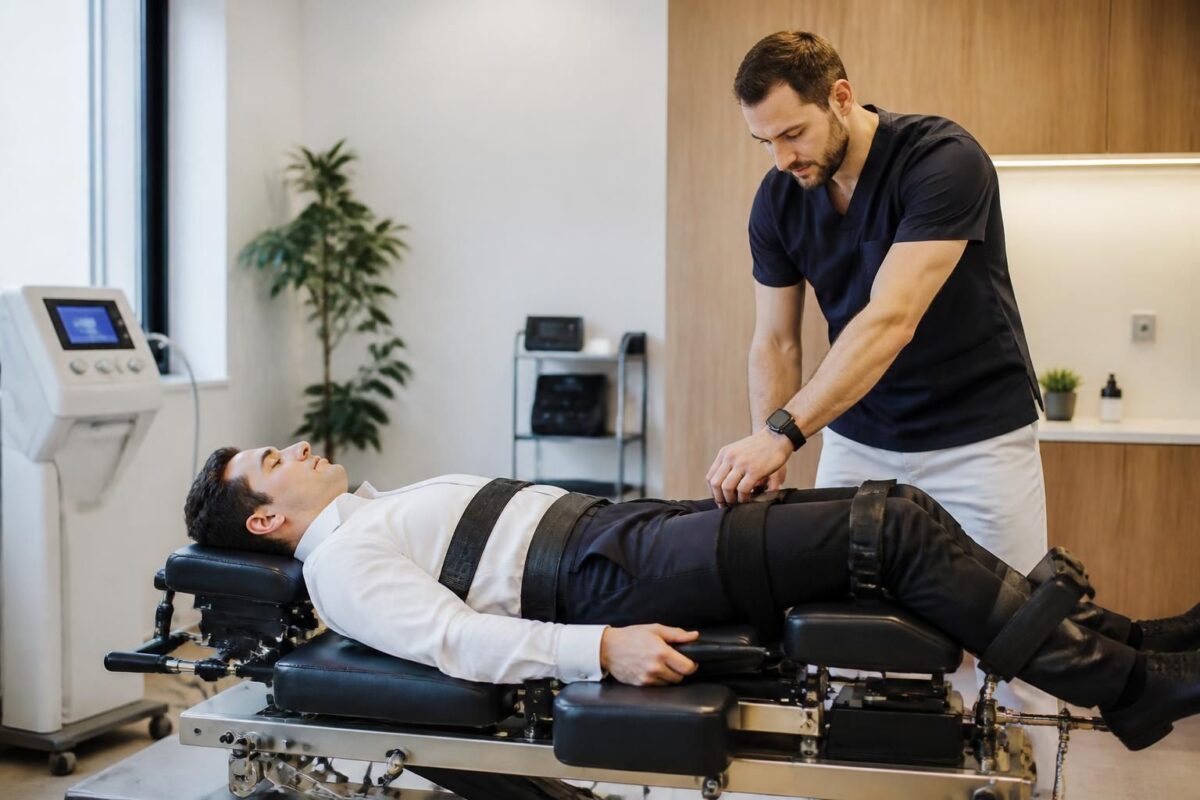
How Neurovertebral Decompression Prevents Diffuse Chronic Pain
In short decompression neurovertebral is one Non-invasive method aimed at reducing the Pressure on the intervertebral discs and the nerves, in order to prevent Diffuse chronic pain. It improves the circulation and thedisc hydration, decreases inflammation and promotes better mobility.…
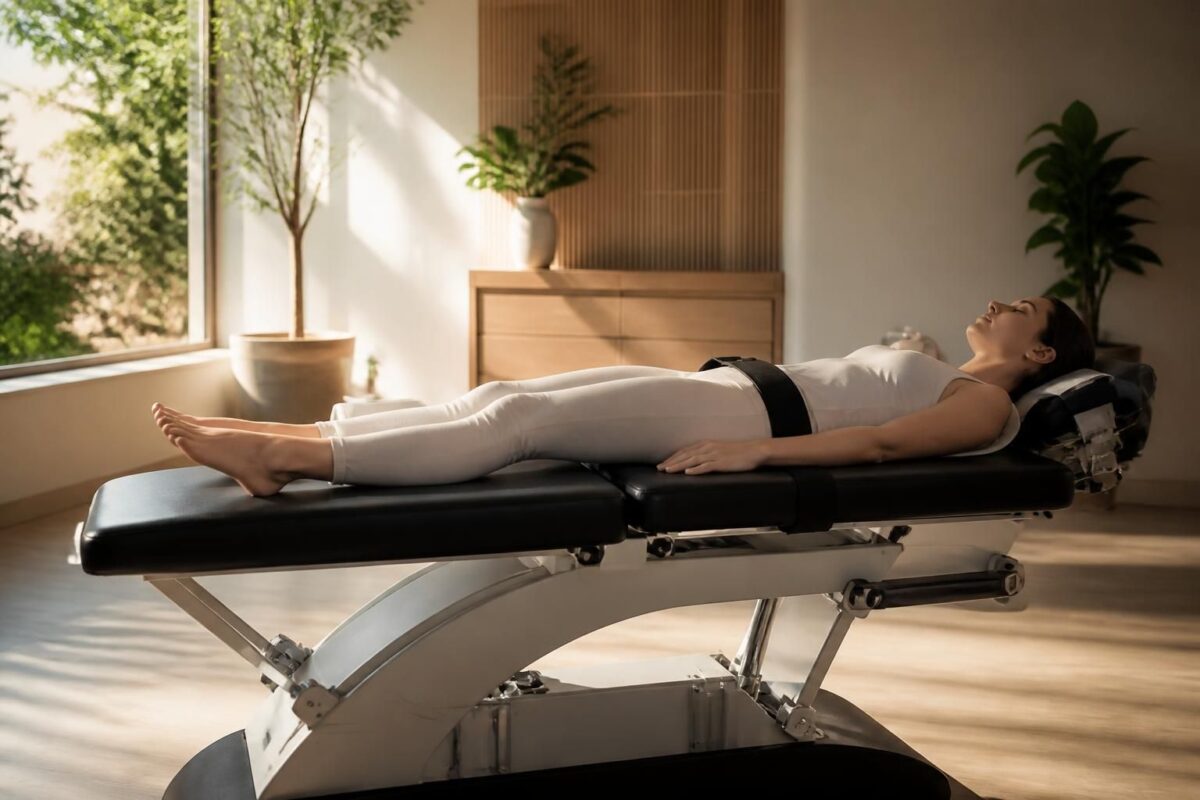
Neurovertebral Decompression and Body Alignment: Restoring Natural Balance
In short In short, neurovertebral decompression is one Non-invasive approach who restores theBody Alignment and thenatural balance back and neck. She acts by a Controlled traction of the spine to widen the intervertebral space and reduce the Pressure on discs…
Advanced protocols and technologies
Controlled traction and custom settings
Modern protocols use a Controlled traction and graduated, adjusted in real time according to the patient’s reactions. Parameters such as angle, speed and duration are flexible to correct postural deviations without excessively straining the tissues. This approach aims for a progressive alignment that favors safety and comfort while strengthening spinal stability.
The goal is to get a Reduced pressure on discs and joints, facilitating segment reorientation and better synchronization of posterior and anterior muscle chains, which results in lasting improvement in posture.
Real-time equipment and tracking
The Computerized equipment decompression provide real-time tracking of effects on mobility and posture. Sensors and algorithms analyze the responses during each session, allowing for quick and precise adjustments. This capability guarantees secure progress towards optimal and measurable alignment.
Real-time monitoring also promotes patient engagement, which feels immediate feedback on the evolution of its alignment and postural breathing. This feedback loop is essential for optimizing protocols and avoiding localized overloads.
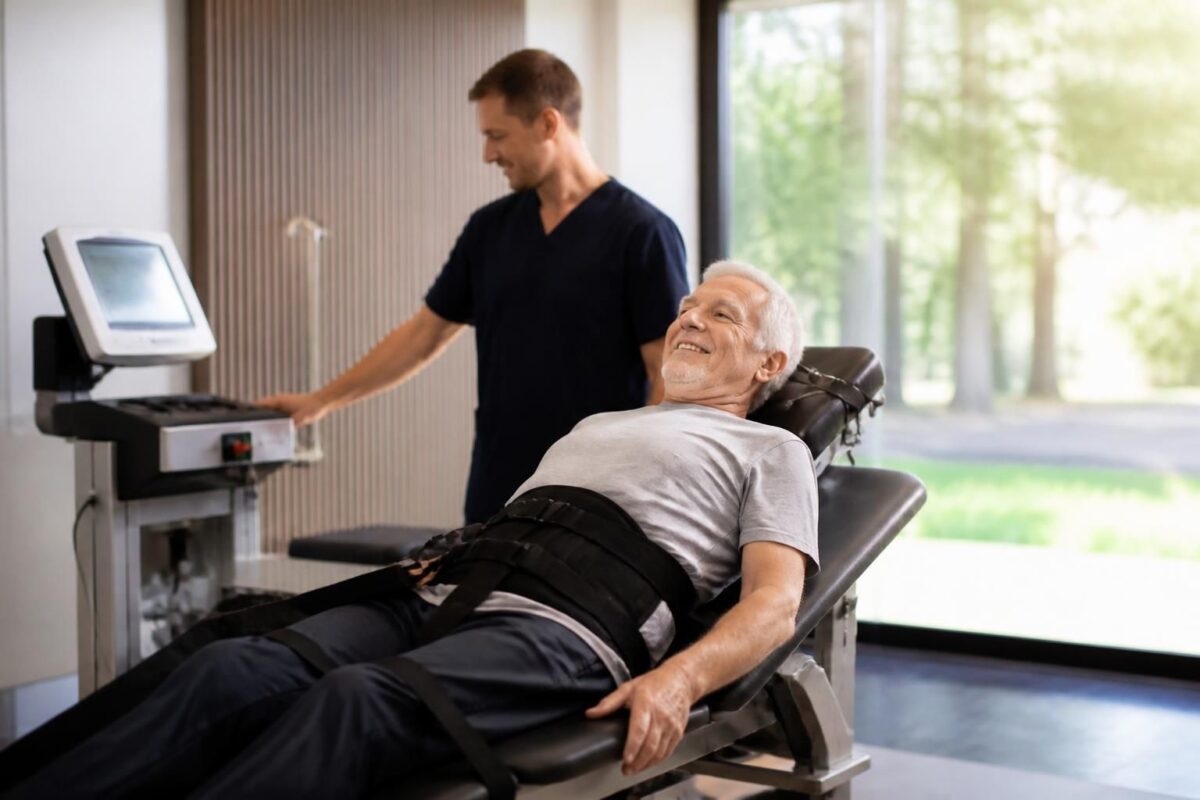
Why neurovertebral decompression is a lasting solution for active seniors
In short In short, the neurovertebral decompression is one Non-invasive therapy which sustainably relieves spinal pain in the spine active seniors By creating, by a Soft and controlled traction, a space between the vertebrae. At Montreal, it is recognized as…
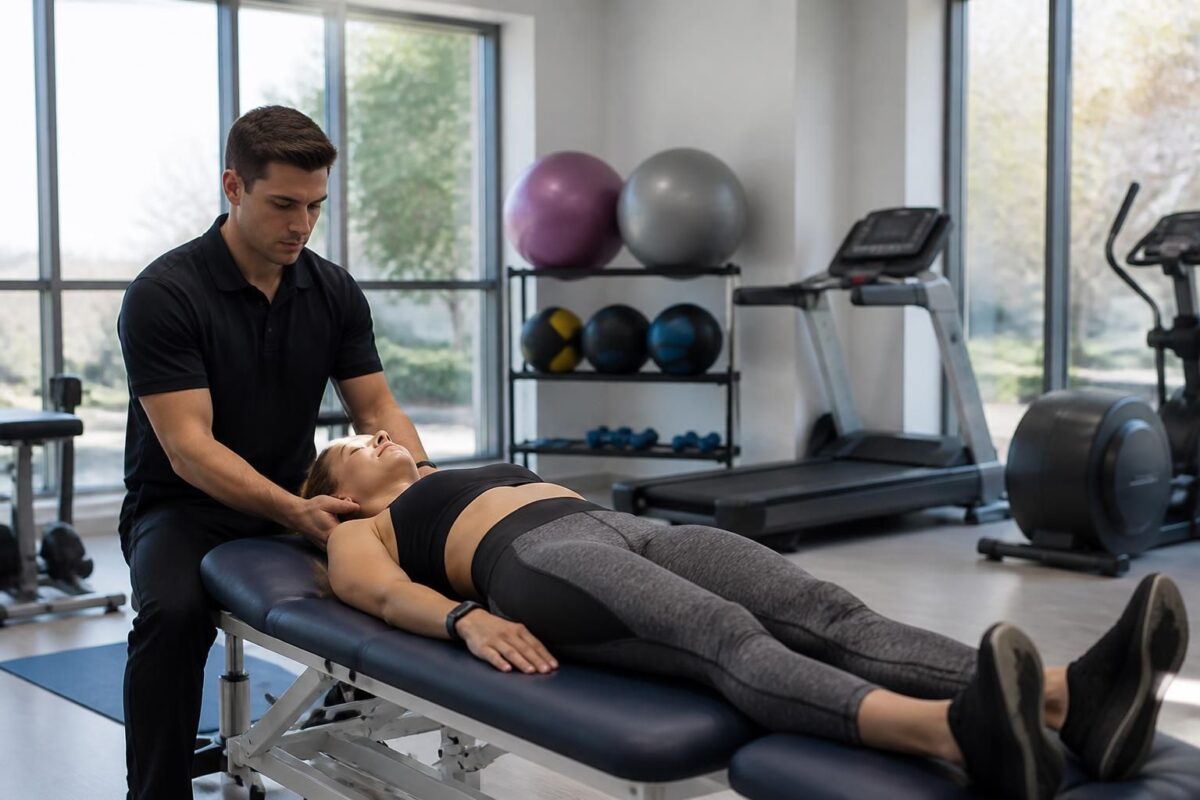
Neurovertebral decompression and recovery after severe sports injury
In short In short, the neurovertebral decompression is one Non-invasive method to Relieve the pressure on the Intervertebral discs and the gristle Via a Controlled traction, to facilitate the recovery After a severe sports injury. It improves the bloodstream towards…
Customization and tracking
Success is based on protocols custom which take into account morphology, activity level and functional objectives. Regular monitoring assesses progress in alignment, pain and mobility, and allows parameters to be adjusted to optimize results and reduce the risk of recurrence.
Integration of AI and Sensors
The use of theartificial intelligence and biometric sensors allow you to analyze individual trends and refine traction settings. This analytics system supports a personalized and dynamic progression, which maximizes efficiency while minimizing discomfort.
The data collected feeds a continuous improvement loop, helping practitioners to anticipate the necessary adjustments and to adapt the sessions according to the patient’s response, for lasting and preserved alignment.
Recent innovations in neurovertebral decompression technologies
In short In short, the neurovertebral decompression is an approach non-invasive Aiming to reduce pressure on discs and nerves, and promote tissue regeneration. At Montreal, it is positioned as an effective option for lower back pain and herniated discs. The…
Neurovertebral decompression and diffuse pain: an appropriate solution
In short In short, the neurovertebral decompression is one Non-invasive solution For diffuse pain related to nerve irritation of the spine. She acts in Reducing pressure on intervertebral discs and nerves and improving the bloodstream, which promotes recovery and the…
Integration with complementary therapies
To enhance efficiency, neurovertebral decompression often integrates with other approaches such asosteopathy, the physiotherapy and relaxation techniques. This synergy acts on soft imbalances, muscle tone and overall posture, amplifying the positive effects on lasting spinal alignment and stability.
Prevention and safety
clear security protocols and Continuous risk assessment prevent complications. The goal is to maintain reliable alignment without excessive overload, with clear signals indicating the limits to be met and the progress to be consolidated.
| Advanced Technique | Impact on spinal alignment |
|---|---|
| Controlled decompression traction | Restores disc space and decreases nerve pressure, promoting alignment sagittal more neutral. |
| Custom alignment protocols | Alignment target thanks to an evaluation and appropriate adjustments, for a Postural stability sustainable. |
| Computerized equipment and biometric sensors | Dynamic traction control via Biometric sensors and AI, ensuring precise alignment without pain. |
| Imaging tests and motion analysis | Accuracy of alignment targets thanks to imagery and Motion Analytics. |
| Osteo and Physio integration | Synergy for the Segment stability and thealignment Postural. |
| Neuromodulation and shock waves | muscle relaxation and improvement ofalignment Structural. |
| Therapeutic laser | Reduction of inflammation and tissue recovery around the vertebral joints, supporting thealignment. |
| Real-time tracking and AI | Quick adjustments and maintenance of thealignment sustainable thanks to Real-time tracking. |
| Education and post-treatment prevention | Prevent recurrences and preserve thealignment with postural advice and ergonomics. |
Testimonials on advanced techniques in neurovertebral decompression to improve vertebral alignment
Marie, a dynamic executive, tells how her journey with the Advanced Techniques of neurovertebral decompression transformed his daily life. After several months, she receives a vertebral alignment More harmonious and its lower back pain decreased, allowing it to resume its activities without constant recurrence.
Alexandre, amateur athlete, testifies to a significant improvement in his vertebral alignment Thanks to the neurovertebral decompression and custom protocols. He explains that targeted traction and real-time tracking facilitated better moving posture and more balanced weight distribution during his workouts.
Sophie, an active woman of fifty-four, shares her positive experience in the face of persistent pain. She insists on the impact of Advanced Techniques In getting a vertebral alignment more stable, which allowed regained mobility and a lasting reduction in stiffness and associated muscle tension.
Jean-Pierre, a retired sixty-three, says he found a more fluid gait and a straighter posture after several sessions. According to him, modern approaches to neurovertebral decompression Have rebalanced its spinal axis, improving its stability and comfort when walking and daily activities.
Claire, thirty-seven-year-old professional, describes a better body awareness and a noticeable improvement in her vertebral alignment. She points out that the Advanced Techniques Used have enabled effective rehabilitation and maintenance of progress through personalized follow-up adapted to his lifestyle.
This biography sheds light on the journey and achievements of a recognized expert in the field of osteopathy and manual medicine, whose action is centered on vertebral alignment and lasting relief from pain related to disc pathologies. With a practice focused on health innovation, this care operator offers an integrated approach that combines neurovertebral decompression, targeted technologies and complementary therapies to optimize spine function and patient posture.
A graduate and experienced in the fields of osteopathy, naturopathy and manual medicine, he holds leadership positions in clinics and flagship associations in the sector. Its vision is based on a fine articulation between science and clinical practice, in order to propose effective and measurable solutions. Its leadership is marked by the creation and supervision of structures dedicated to continuous improvement of care, training of professionals and the development of protocols based on evidence.
Clinically, his approach aims to restore the spinal alignment through gentle and appropriate decompression. The advanced techniques mobilized are based on controlled traction devices that precisely adjust the strength and duration of the sessions according to the patient’s reactions. This customization begins with a Complete initial assessment, which takes into account anatomy, antecedents and lifestyle, in order to design a custom decompression plan that targets problematic vertebral segments and associated muscle tension.
The heart of the practice is based on Computerized and real-time technologies which optimize traction and observe the evolution of symptoms. Beyond spinal traction, the approach incorporates complementary therapeutic options such as stimulation protocols, targeted osteopathic techniques and post-treatment rehabilitation measures. This multifactoriality promotes not only a rapid decrease in pain but also a lasting improvement in alignment and stability of the spine.
the results observed result in a Reduced pressure on intervertebral discs and on the nerve roots, a Better local traffic and an Improving mobility overall. By working on alignment, these treatments help prevent recurrences and support spinal rehabilitation, which is particularly beneficial for athletes and active people who must preserve significant movement amplitudes.
Its action is guided by an educational philosophy: to inform and empower patients so that they become actors in their health. In addition to decompression sessions, he emphasizes posture, ergonomic and prevention programs that promote a more stable and less relapse-prone column. This holistic approach strengthens the effectiveness of care and promotes faster and more sustainable recovery.
In summary, this expert works to advance thevertebral alignment by Advanced Techniques of Neurovertebral Decompression and a thoughtful integration of complementary technologies and therapies. His approach aims to provide personalized, evidence-based, and concrete results-based care that sustainably improves the quality of life of patients.
This conclusion summarizes the progress in neurovertebral decompression and their impact onvertebral alignment. It highlights how modern techniques, combined with precise evaluation and the integration of complementary approaches, make it possible to obtain a more lasting realignment and a significant functional improvement for patients suffering from pain related to disc pathologies.
The Advanced techniques in neurovertebral decompression Use controlled and personalized traction that targets painful spinal segments to decrease pressure on discs and nerves. This approach promotes rebalancing of mechanical forces along the column and actively participates in improving thevertebral alignment, reducing asymmetries that can cause pain and stiffness.
Success is based on initial assessment rigorous and on Custom protocols adapted to each patient. Antecedent analysis, precise pain location and movement assessment allow you to adjust the traction and rhythm of the sessions to optimize realignment without increasing risk. This customization is essential because each patient has a morphology and physiological responses that directly influence the results on thevertebral alignment.
The Advanced technologies and the Real-time tracking are a key lever for efficiency. Computerized devices adjust the traction according to the patient’s reactions, and the follow-up systems make it possible to assess the evolution of the alignment parameter and symptoms over the course of the sessions. This dynamic adjustment capability guarantees measurable progression and helps maintain realignment over time.
In addition, the integration of Complementary therapies Strengthens the impact on thevertebral alignment. Osteopathy, physiotherapy and other non-invasive approaches work in synergy to correct musculoskeletal imbalances that influence posture and spinal stability. Combined protocols demonstrated faster symptom improvement and postural stability than decompression steps alone.
Recurrence prevention and long-term monitoring are an essential component of any alignment strategy. Once alignment has been restored, educational measures and rehabilitation programs help maintain gains, favoring appropriate posture, targeted exercises and stress management. Maintenance of spinal alignment is based on continuous vigilance and on the adjustment of treatment plans according to clinical feedback and evolution of symptoms.
To deepen this field and access additional resources, you can consult specialized publications and analyzes such as work on the Research in neurovertebral decompression, the articles explaining the Relationship between decompression and deep muscle pain, and the guides who discuss why this approach is particularly appropriate in case of stenosis (Explanatory text). For a technical and practical perspective, resources like Advanced technologies at the heart of therapy and the work of Dr. Desforges on Improved spinal alignment offer additional lighting.
In a logic of continuous evaluation and improvement, personalized protocols and monitoring mechanisms make it possible to optimize results and ensure better sustainability of alignment. The latest research and summaries show that the association of decompression with targeted interventions can permanently stabilize the spine and facilitate post-traumatic or post-operative rehabilitation, while preventing recurrences and promoting the return to appropriate physical activity.
To access further analyzes and clinical studies demonstrating the efficacy of neurovertebral decompression and personalized protocols, refer also to the following resources, which address in detail clinical evidence, functional results and future prospects Clinical efficacy studies and Custom protocols. You will also find resources on recovery after a recurrent herniated disc and other complex cases Recovery and recurring cases and specialized analysis on practical implementation in clinics Advanced Techniques.
For those who wish to expand their understanding, an encyclopedic entry traces the foundations and evolutions of neuronvertebral decompression: neurovertebral decompression.

Dr Sylvain Desforges, B.Sc., D.O., N.D., osteopath, is the founding president of TAGMED and of the ACMA association. He dedicates his practice to chronic spinal pain, low back pain and symptoms compatible with sciatica, particularly when pain radiates toward the buttock, leg, calf, foot or toes.
Through SOS Sciatique, he publishes educational content on sciatica symptoms, possible causes such as disc herniation, disc narrowing, foraminal stenosis or irritation of a lumbar nerve root, as well as non-surgical approaches that may be considered according to the evaluation. At Clinique TAGMED, care may include, depending on the case, motorized neurovertebral decompression, specific osteopathic care or precision percussion.
For an evaluation related to sciatica treatment in Montreal / Mount Royal or sciatica treatment in Terrebonne, please consult the services available at Clinique TAGMED.
Medical disclaimer
The information published on SOS Sciatique is provided for educational purposes only and does not replace a consultation, diagnosis, opinion or treatment provided by a physician or another authorized healthcare professional. The author of this article is neither a medical doctor nor a specialist in a medical specialty recognized by the Collège des médecins du Québec. The osteopathic, manual medicine or functional support approaches described on this site do not constitute medical acts and are not intended to replace medical follow-up.
Consult a physician or emergency service in cases of loss of bladder or bowel control, anesthesia in the saddle area, significant or progressive weakness in the leg or foot, fever, recent trauma, severe pain or rapid worsening of symptoms. For more details, please read our Legal Notice.