Why osteopathy is essential in a global approach to health
27/06/2026
How osteopathy promotes blood circulation
27/06/2026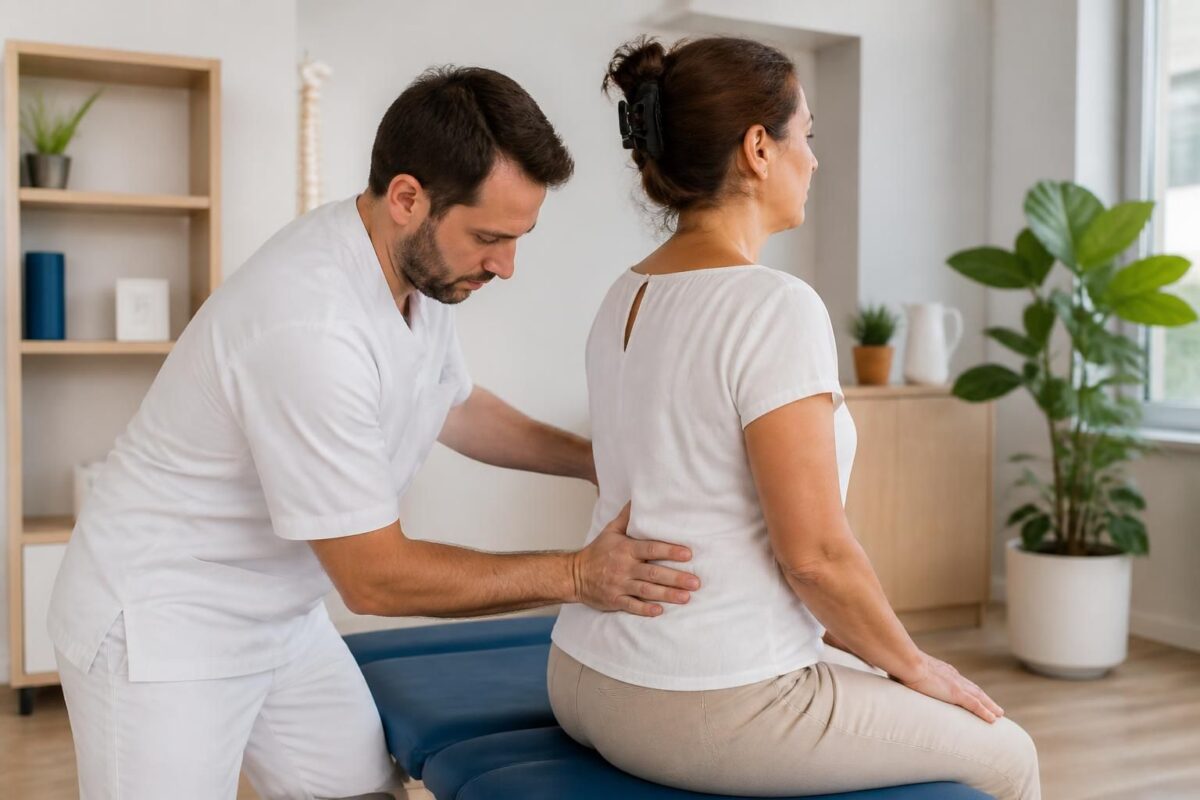
In short
| In short, theosteopathy To treat the sciatic pain is an approach natural and non-invasive which targets the underlying causes rather than just the symptoms. What is it? A holistic discipline that Release tensions, improves the circulation and restore the posture and the mobility. Advantages: Sustainable reduction of sciatic pain and lumbar, better mobility, less stress and better sleep, and overall well-being support. How does it work? Personalized evaluation, gentle techniques of mobilization tissues and joints, and tips to prevent recurrences. Accessible in Montreal and in the region, this treatment can help people with sciatic pain Linked to postural imbalances and muscle tension, while offering a comfort and recovery approach. |
Discover the Benefits of Osteopathy For the pains sciatica : an approach natural, fresh and non-invasive which aims to restore movement and balance in the back and pelvis.
By fluidizing the circulation and restoring the mobility of the structures concerned, osteopathy can reduce pain, improve the posture and the flexibility, and promote better nervous function.
It also helps to reduce stress and optimize recovery, helping to prevent recurrences and improve quality of life.
This article presents the benefits ofosteopathy to treat sciatica-related pain. It explains how manual techniques help release tension, improve back and hip mobility, and promote better quality of life. It also specifies when to consult and what to expect during a session.
What is Losteopathy and why it can help sciatica
losteopathy is a holistic therapeutic approach. It considers the body as a whole linked by constant exchanges between tissues, organs and systems. The practitioner uses gentle manual techniques to release tension and facilitate circulation, which can decrease the pressure on the sciatic nerve and improve the general function of the back and hips.
How osteopathy acts on sciatic pain
Sciatic pain can come from a set of dysfunctions. The osteopath identifies areas of tension that can irritate the nerve root and applies targeted techniques to restore movement and circulation. The goal is to reduce pain, improve mobility and promote a better quality of life. In cases of neurovertebral decompression or discopathy, the approach focuses on relief and optimization of functioning without prescribing effort or exercise in the context of treatment.
What you can expect from a session
A session begins with an assessment of symptoms, history and lifestyle. The professional observes the posture and the mobility of the joints. The treatment is based on soft manual techniques intended to release restrictions and improve circulation. The patient may experience deep relaxation and progressive relief. A slight feeling of aches may appear after the session and disappear quickly.
When to consult and what precautions
Check if you suffer from pain radiating in the buttocks or legs, associated with mechanical symptoms that limit mobility. Osteopathy is suitable for a wide range of ages and musculoskeletal conditions. Trained osteopaths work in recognized environments, including in establishments like Numss, NAO, National University of Medical Sciences and National Academy of osteopathy. Professional associations such as ACMA, College of Canadian Osteopaths and College of Canadian Osteopaths supervise the practice. In cases of neurovertebral decompression, herniated disc or stenosis, the approach focuses on relief and improvement of mobility without offering specific exercises as part of the treatment. For more information, you can consult dedicated resources on sites such as sossciatica.com or clinicagmed.com.
Osteopathy and global approach
by his character overall and non-invasive, osteopathy can help improve the posture, the flexibility and general well-being. It can also be combined with other natural health practices, while remaining focused on natural improvement in body function and lasting reduction of symptoms.
Useful links and resources
To learn more, you can consult online resources on issues related to osteopathy and sciatica, including pages dedicated to efficacy and adaptation in people working on sossciatica.com, or general information on the benefits of osteopathy on medoucine.com. Clinical information and practical cases are available via Tagmed Clinic. For details on neurovertebral decompression approaches, see decompressionneurovertibal.com. Other useful resources include SoshernieDiscale.com and sostunnelcarpien.com.
Medical Disclaimer: The information and advice provided on this site does not replace the health professional’s diagnosis or treatment. Please note that Dr. Sylvain Desforges osteopath is neither a doctor of medicine nor a doctor, and is not a specialist in a medical specialty as defined by the Collège des Médecins du Québec. Manual medicine, functional medicine and sports medicine as described on this site exclude any medical treatment or diagnosis made by a doctor or specialist doctor. Always consult your doctor for any medical questions. For more details, please read our full legal notice.
- pain reduction Through the release of tensions and decompression along the path of the sciatic nerve.
- Improved mobility pelvis, back and hips to reduce the pressure on the nerve.
- Posture and alignment found, less painful compensation.
- Optimized traffic blood and lymphatic, facilitating the healing of irritated tissues.
- irradiation reduction and pain in the leg thanks to the relaxation of the fascias and nerves.
- Sleep and stress reduction for more efficient recovery.
- Prevention of recurrences through muscle building and pelvic balance.
- Personalized approach and not invasive, suitable for each patient.
- complementarity With other care to optimize the results, without invasive remedies.
- Improved walking and everyday life thanks to regained mobility and reduced pain.

Osteopathy offers a natural, non-invasive approach to treating sciatica pain. By acting on alignment, mobility and circulation, it can help release compression on the nerve roots and reduce pain, while improving the overall function of the body. This article presents the benefits and mechanisms through which osteopathy can accompany your recovery.
Understanding sciatica and the role of osteopathy
The sciatica is manifested by pain that radiates along the path of the ischial nerve, often from the lower back to the buttock, leg and sometimes the foot. Its causes can be a herniated disc, foraminal pinching, lumbar nerve root irritation or pauper imbalances in the pelvis and spine. theosteopathy Addresses these symptoms with a global vision of the body, favoring gentle techniques to restore mobility and balance without surgery or drugs.

How osteopathy improves the quality of life of active people
In short In short, theosteopathy is a global approach that Optimizes mobility and the function of the body of ACTIVE PEOPLE, for a better quality of life. It helps prevent injury and reduce Musculoskeletal pain While promoting the Sports recovery.…
Why osteopathy is effective for sciatica
Through an approach centered on body unity and circulation, theosteopathy May:
– Reduce pain by releasing tensions that compress the nerve roots;
– Improve the mobility of the column, pelvis and peripheral structures;
– Promote better blood and lymph circulation, accelerating tissue healing;
– Act on the nervous system to reduce stress and painful reactions related to the pain mechanism.

Osteopathy and sports recovery: prepare the body for lasting performance
In short In short, Osteopathy and Sports recovery is one Global manual approach that sustainably prepares the body for the effort by restoring mobility and circulation After the effort. It is a discipline that acts on the sinews, the joints,…
Osteopathic techniques useful for sciathic
Joint manipulations and mobilizations
These gentle techniques aim to regain a normal amplitude of the joints and to release blockages that aggravate the irradiated pain. They can be applied to the lumbar spine, sacrum and pelvis to restore alignment and stability.
Myofascial relaxation and stretching
The relaxation of fascias and muscle tensions improves the circulation of tissues and reduces pressure on the nerves. Specific stretches, adapted to your pain, help restore flexibility without causing inflammation.
Work on breathing and diaphragm
Effective breathing and a relaxed diaphragm supports the mobility of the trunk and surrounding structures, reducing stress on the spine and nerve roots.
Why Osteopathy Is Essential For Recovery People
In short In short, Osteopathy in convalescence is an approach manual and holistic which helps to accelerate the recovery by restoring The balance, the mobility and a good circulation fabrics. it contributes to Reduce the pain, support the Back to…
What to expect in a session
During a first session, the osteopath carries out a complete assessment: questions about symptoms, history and lifestyle, then examination of posture and mobility. The treatment is personalized and can combine several techniques adapted to your case. Many patients experience improvement after the first session, sometimes with a slight temporary aches.

Osteopathic manipulations to strengthen post-traumatic muscles
In short In short, Osteopathic manipulations for Strengthen post-traumatic muscles constitute a gentle manual approach aimed at restoring the mobility, reduce the pain and facilitate the Functional rehabilitation After a injury. What is Is it? A series of precise gestures…
When to consult and precautions
Quickly check if the pain is associated with signs like significant leg loss or weakness, chest pain or unusual sensation. Osteopathy is generally safe, but it can be contraindicated in cases of unconsolidated fractures, acute infections or certain serious medical conditions. Inform your practitioner about your treatments and background.

Osteopathy and prevention of work-related musculoskeletal disorders
In short theosteopathy is one Manual approach that restores body balance and prevents MSD related to work. Its advantages: reduction of tension, improvement of mobility and prevention of chronic pain. She is preventive and healing, suitable for office and trades…
Integrate osteopathy into a global approach
To optimize the benefits, combine the sessions ofosteopathy With simple daily actions: adapted physical activity, targeted stretching exercises, stress management and sufficient hydration. Conscious posture, daytime micro-breaks and breathing techniques can prolong the effect of treatments and promote lasting recovery.
| Aspect | Impact on sciatic |
|---|---|
| Relief sciatic pain | quickly and durably relieves the sciatic pain thanks to gentle and targeted techniques. |
| Mobility and flexibility | Restore it mobility joints and improves the flexibility muscles around the spine. |
| Relaxation muscular | releases muscle tension and reduces nervous compression along the nerve path. |
| Circulation local | Improves the circulation blood and local lymphatic to promote tissue healing. |
| Prevention of relapses | contributes to preventing aggravations and relapses through a lasting structural balance. |
| Posture and alignment | Optimize thePostural alignment and the balance, decreasing the loads on the column. |
| Sleep and stress | Reduces the stress and can improve the sleep by acting on the nervous system. |
| Approach non-invasive | Approach non-invasive and natural, without necessary surgery or medication. |
| Personalization and holistic | personalized and holistic, it adapts to the individual cause of sciatica. |

The benefits of osteopathy to treat muscle imbalances
In short theosteopathy is a manual approach to restore themuscle harmony and postural considering the body as a whole. Its main benefits include the reduction of aches and tensions, the improvement of the mobility and from the posture, and prevention…
Testimonials on the benefits of osteopathy for sciatic pain
Testimony of Valérie: Before starting the sessions, the sciatic pain sometimes paralyed me for several days and prevented me from walking normally. After a few visits, my mobility improved, the pain decreased and I finally find a more restorative sleep.
Testimony of Marc, sportsman: I regularly practice running and cycling, and the episodes of sciatica made my training impossible. Thanks to osteopathy, my joints are unblocked, my flexibility Returns and my recovery is faster after exercise, with less pain at night.
Ahmad’s testimonial: Working all day standing, I had lumbar tensions that radiated the leg. Osteopathy sessions helped reduce these tensions, restore good posture And to reduce tingling, which allows me to remain productive without interruption.
Julie’s testimony: My symptoms included pain that stretched along the buttock and lower limb. After the osteopathic treatment, the pain is less intense and daily activities, such as climbing the stairs, have again become possible without throbbing pain.
Testimony of Anne, senior: with age, mobility can be reduced and the lumbar pain is accentuated. The osteopathic approach helped to rebalance my body, improve my balance and reduce morning pain, contributing to a better quality of life.
Testimony of Lucas: After several months of sciatic pain and fatigue, I noticed better circulation throughout the body and a significant reduction in pain. My movements are more fluid, and I feel more energetic throughout the day.
One expert in osteopathy, naturopathy and manual medicine is part of a holistic approach that places the sciatica pain at the heart of support. His work, focused on the mechanisms of the body as a whole, is based on a simple philosophy: to restore the movement and the function Tissues, nerves and joints to release natural breathing from the body. As the founder of TagMed and a key player in the ACMA association, he promotes a vision where each session aims to improve the quality of life of patients and help them resume their daily activities without excessive dependence on drug treatments.
In its practice, the integration of advanced technologies increases the efficiency of the manual approach. spinal decompression can help decrease nerve compression, laser and shockwave therapy are used as supplements to promote tissue repair and reduce local inflammation. This combination scaffolding evidence-based care and oriented towards measurable results. The goal is to reduce the symptoms, to optimize the mobility and to restore the structural balance that supports the entire nervous and circulatory system.
Physiologically, the benefits ofosteopathy for the sciatica multiply. By working on the origins of pain, the osteopath releases muscle tension, restores the mobility of the vertebrae and the pelvis, and improves the dynamics of the fascias around the sciatic nerve. This action can reduce nervous irritation, promote better circulation blood and lymphatic, and support tissue regeneration. The patient can thus observe a progressive decrease in pain, an improvement in posture and a smoother walk, often after a few sessions, without resorting to invasive surgical procedures.
Each consultation begins with a global and personalized evaluation. The osteopath listens to the antecedents, observes the patterns of movement and identifies areas where restrictions limit the integrity of the lumbar and pelvic system. Then he proposes a suitable treatment plan, combining gentle manipulation techniques, targeted stretching and posture and exercise tips to do at home. This non-invasive approach reassures patients and encourages them to actively engage in their recovery, thus strengthening long-term efficacy and recurrence prevention.
Beyond immediate relief, osteopathy offers a real way of prevention and sustainable improvement of well-being. By repositioning the structures of the body and soothing the nervous system, it can also help reduce stress and improve sleep, two factors that directly influence pain perception and recovery. For people suffering from sciatica, this discipline offers a natural and effective alternative, focused on restoring mobility, reducing pain and improving the quality of life on a daily basis, without drug dependence.
To find out more about the approaches and services offered at the TagMed Clinic, it is possible to contact a specialized practitioner who favors an approach Based on evidence and focused on concrete results for each patient.
This summary presents the main benefits of theosteopathy for the sciatic pain, showing how gentle manual techniques act on the movement of tissues, joints and nerves, in order to reduce pain, improve mobility and promote overall well-being without having to resort to surgery.
Osteopathy and chronic leg pain: regaining an optimal quality of life
In short In short, Osteopathy is one Global manual approach aimed at reducing Chronic leg pain and improve the quality of life. What is it? Non-drug therapy using the hands to identify restrictions and treat lesional chains. How does it…
How osteopathy acts on sciatic pain
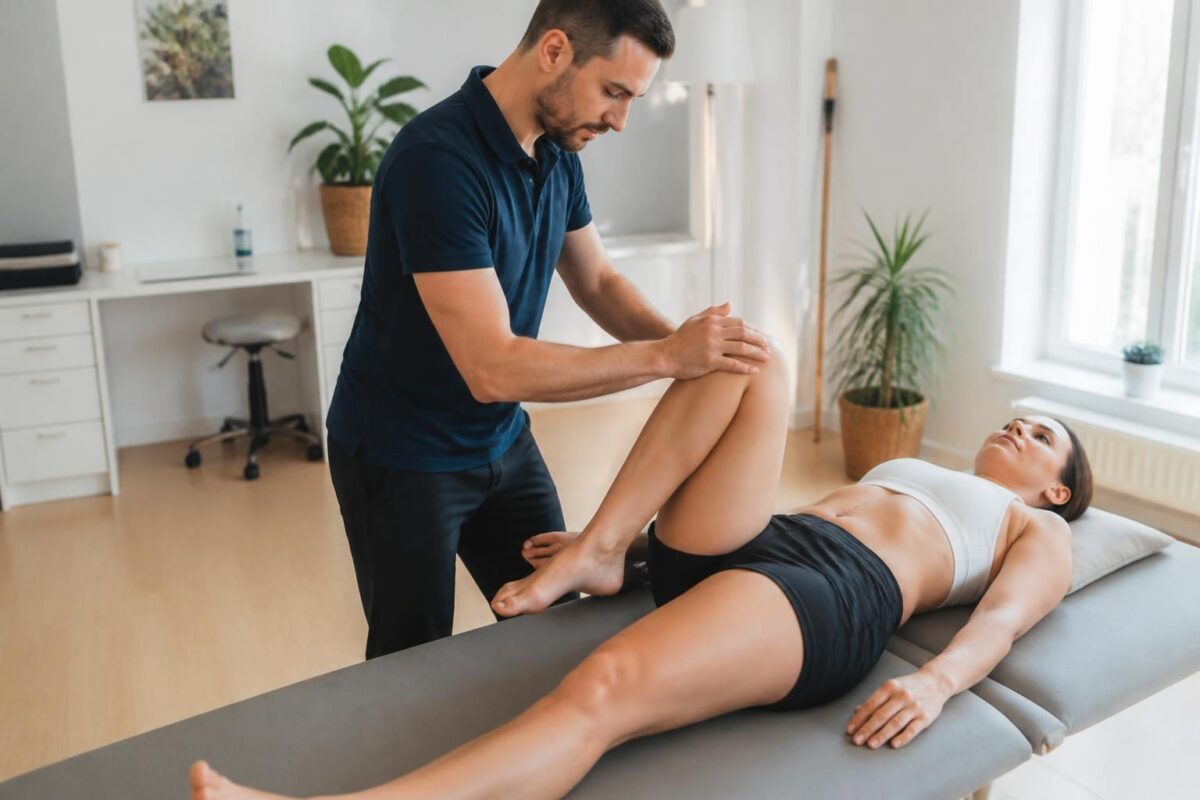
The sciatic nerve Can be compressed by muscle tension or joint imbalances in the lower back and hips. The osteopath identifies areas of dysfunction and uses Joint mobilizations, of Muscle stretching and techniques of Myofascial relaxation To release tension, restore mobility and restore better blood and nervous circulation.
By working on the mechanisms of entry and exit of the nerve, i.e. the structures located around the lumbar and piriformis, osteopathy can reduce the pain radiating towards the buttocks, leg, calf or foot and improves function.
How osteopathy supports recovery after complex surgery
In short In short, Post-operative osteopathy is an approach fresh which supports the recovery After a Complex surgery. It helps to reduce the pain and the fatigue, improves the mobility and accelerates the healing thanks to a better vascularization and…
Impact on pain and quality of life
By reducing tensions and improving circulation, osteopathy can decrease the intensity and frequency of painful attacks, favoring a gradual resumption of daily activities and a reduction in the use of analgesics, under medical supervision.
Regular practice can also help break the vitiated pain-stress circle, by acting on the autonomic nervous system and promoting better recovery after exercise.
Improved mobility, posture and sleep
The Joint mobility and the Muscle flexibility improves thanks to the loosening of tensions and the movement of the fabrics. a better one posture Reduces pressure on roots and joints, which reduces pain and stiffness and can promote more restful sleep.
When to consult and what to expect
If you suffer from persistent sciatic pain, irradiated in the leg, or a painful peak during certain movements, an osteopathic consultation may be considered after medical advice. The osteopath conducts a global assessment and proposes a personalized treatment plan, which can include regular sessions and exercises to do at home to maintain results.
Resources and Deepening
To deepen the concepts and benefits of osteopathy, you can consult these resources: Osteopathy – Practical sheet, Health Magazine – Osteopathy, How Osteopathy Improves Joint Mobility, Osteopathy: Understanding its Principles and Benefits.

Dr Sylvain Desforges, B.Sc., D.O., N.D., osteopath, is the founding president of TAGMED and of the ACMA association. He dedicates his practice to chronic spinal pain, low back pain and symptoms compatible with sciatica, particularly when pain radiates toward the buttock, leg, calf, foot or toes.
Through SOS Sciatique, he publishes educational content on sciatica symptoms, possible causes such as disc herniation, disc narrowing, foraminal stenosis or irritation of a lumbar nerve root, as well as non-surgical approaches that may be considered according to the evaluation. At Clinique TAGMED, care may include, depending on the case, motorized neurovertebral decompression, specific osteopathic care or precision percussion.
For an evaluation related to sciatica treatment in Montreal / Mount Royal or sciatica treatment in Terrebonne, please consult the services available at Clinique TAGMED.
Medical disclaimer
The information published on SOS Sciatique is provided for educational purposes only and does not replace a consultation, diagnosis, opinion or treatment provided by a physician or another authorized healthcare professional. The author of this article is neither a medical doctor nor a specialist in a medical specialty recognized by the Collège des médecins du Québec. The osteopathic, manual medicine or functional support approaches described on this site do not constitute medical acts and are not intended to replace medical follow-up.
Consult a physician or emergency service in cases of loss of bladder or bowel control, anesthesia in the saddle area, significant or progressive weakness in the leg or foot, fever, recent trauma, severe pain or rapid worsening of symptoms. For more details, please read our Legal Notice.