


Sciatica in Terrebonne: heel pain and possible S1 root
09/08/2026
Sciatica and pain after a long phone call sitting down
09/08/2026
IN BRIEF
| In brief, sciatica and pain radiating to the buttock refer to pains related to the sciatic nerve. What is it? Sciatica is an irritation or compression of the nerve at its lumbar origin, with pain following the pathway down to the foot. Sciatalgia, on the other hand, may be limited to a portion of the pathway without marked nerve damage. Benefits: understanding the origin allows for appropriate management, avoids misdiagnoses, and selects effective non-surgical options like osteopathy and rehabilitation. How does it work? A comprehensive evaluation helps identify lumbar, pelvic, muscular, or postural causes, relieve tensions, and improve mobility, while advising daily gestures to prevent recurrences. This approach facilitates faster and painless recovery when possible. |
Pain radiating to the buttock can take several forms and does not automatically mean full-blown sciatica. There are actually two important concepts to distinguish:
- Sciatica describes irritation or compression of the sciatic nerve at its lumbar origin, with a typically unilateral pain starting from the lower back or buttock and then descending along the thigh and leg down to the foot, sometimes accompanied by tingling or weakness.
- Sciatalgia corresponds to pain that follows part of the pathway of the sciatic nerve without traversing the entire route. It can remain localized in the buttock, thigh, or leg, and be less intense, without marked neurological impairment.
Several mechanisms can cause radiating buttock pain, including mechanical causes at the buttock level such as piriformis syndrome, obturator internus syndrome, or hamstring syndrome. A precise diagnosis guides appropriate management, including targeted exercises, manual techniques, and postural advice, with possible injections in certain cases.
An evaluation by a healthcare professional is recommended if the pain persists, worsens, is associated with significant tingling or loss of strength. Appropriate management can help alleviate quickly and prevent recurrences.
This guide, written by a healthcare professional expert in osteopathy, recalls the distinctions between sciatica and sciatalgia, and explains what can cause pain to radiate to the buttock. It presents frequent mechanisms, clinical signs to watch for, and non-surgical management options, particularly at TAGMED Clinic. The objective is to provide clear information for appropriate evaluation and effective relief without necessarily resorting to surgery.
What is Sciatica and Sciatalgia?
Sciatica refers to irritation or compression of the sciatic nerve from its lumbar origin. The pain follows a specific path: it starts from the lower back or buttock, moves up or down along the back of the thigh and leg, and may reach the foot. This pain is often unilateral and can be very intense, sometimes accompanied by tingling, numbness, or muscle weakness. Sciatalgia, on the other hand, describes pain that follows part of the sciatic nerve’s pathway without embracing its entire route. It is generally less pronounced, localized to the buttock, thigh, or leg, and does not necessarily lead to clear neurological disturbances.
Frequent Mechanisms When Pain Radiates to the Buttock
Several mechanisms can explain pain radiating to the buttock. Piriformis syndrome is a common cause of “false sciatica.” The sciatic nerve can be compressed beneath the piriformis muscle, causing localized pain in the buttock that can radiate to the back of the thigh. Obturator internus syndrome and hamstring syndrome present other compression pathways, located respectively lower down or in the ischium region, explaining buttock pain with varying radiation depending on activity or posture. In some cases, a lumbar impairment can also contribute to this pain, necessitating a comprehensive evaluation of the body.
Understanding the anatomy of the sciatic nerve and its compression points is essential. The sciatic nerve passes through the pelvis and can be subjected to muscular pressure in the buttock region. This knowledge allows for directing management towards the most probable causes and avoiding inappropriate treatments.
How to Recognize Signs and When to Consult
Buttock pain may be accompanied by burning sensations, tingling, and sometimes weakness in the leg. It may be aggravated by prolonged sitting, sporting activities, or certain movements. Warning signs should prompt a quick consultation with a professional: persistent or worsening pain, significant loss of strength in the leg, or walking difficulties. An osteopathic or clinical evaluation helps determine if the pain stems from a buttock, lumbar, or postural mechanism and adapt treatment accordingly.
In all cases, early management can prevent worsening and allow for the rapid implementation of an appropriate care plan. To access non-surgical and personalized care, you can turn to TAGMED Clinic in Montreal or Terrebonne.
Role of Osteopathy and Care at TAGMED Clinic
Osteopathy aims to identify the real origin of the pain and restore mobility, reduce tension, and prevent recurrences. Holistic evaluation checks the links between the lumbar region, pelvis, buttock muscles, and daily postures. Treatment may include targeted manual techniques and advice tailored to your professional and sporting life. For specialized and non-surgical management, TAGMED Clinic offers care in Montreal and Terrebonne.
To deepen your understanding of the differences between sciatalgia and sciatica and for relief advice, you can consult dedicated resources on recognized external websites.
Useful resources dedicated to understanding and relief:
Sciatica and sciatica pain — understanding the difference and sciatica pain explain the distinctions and relief pathways. Other general resources on causes and symptoms are available at sciatica – causes and treatments.
For information related to non-surgical approaches and care directions, also consult Treatment of sciatica in Montreal – role of non-surgical care and pain that increases with walking.
For specific information on Terrebonne or other scenarios, you can check sciatica pain in Terrebonne and sciatica and standing desk.
For additional information on causes and mechanisms, also consult Sciatica or pain in the buttock – osteopathy.
Medical Disclaimer
Medical disclaimer: The information and advice provided on this site do not replace the opinion, diagnosis, or treatment of a healthcare professional. Please note that Dr Sylvain Desforges, osteopath, is neither a medical doctor nor a physician, and is not specialized in a medical specialty as defined by the Collège des médecins du Québec. Manual medicine, functional medicine, and sports medicine as described on this site exclude any treatment or medical diagnosis made by a physician or medical specialist. Always consult your doctor for any medical questions. For more details, please read our full Legal Notice.
Notes on treatments at TAGMED: the therapies offered prioritize non-surgical approaches and prevention of recurrences. For more information on the services offered, visit TAGMED Clinic.
- Sciatica: lumbar origin; specific pathway buttock → thigh → leg → foot.
- Sciatica pain: pain on part of the pathway, located in the buttock or leg without systematic plantar involvement.
- Common mechanisms: lumbar compression, piriformis syndrome, compression by obturator internus, or by the hamstrings.
- Key difference: the extent of the pathway and potential neurological impact will guide the management.
- Associated signs: radiating pain, paresthesia, local weakness.
- When to consult: persistence/progression, loss of strength, difficulty walking.
- Quick approach: overall assessment, targeted exercises, postural advice.
- Goal: relieve, regain mobility, and prevent recurrences.

This summary explains what to understand when the pain radiates to the buttock: how to distinguish sciatica from sciatica pain, what mechanisms may underlie this radiation, and what indications allow one to know when to consult a health professional for appropriate treatment.
Understanding the difference between sciatica and sciatica pain
Sciatica corresponds to irritation or compression of the sciatic nerve at its origin, in the lower back. The pain typically follows a precise pathway: lower back or buttock, then back of the thigh, then leg and sometimes the foot. It is often unilateral and can be very intense, hindering walking and movement.
Sciatica pain, on the other hand, refers to pain located on part of the pathway of the sciatic nerve without necessarily following its entire course. It can remain localized in the buttock, thigh, or leg, without clear plantar involvement. It is usually less intense, more diffuse, and can vary depending on positions. This distinction is important for adapting management and avoiding inappropriate treatments.
Why the pain can radiate to the buttock
The pain that radiates to the buttock can originate from several mechanisms in the buttock region that compress or irritate the sciatic nerve, without necessarily stemming from a damaged lumbar spine. Three common mechanisms can explain this type of radiation.
Piriformis syndrome
The piriformis muscle, located in the pelvic region, can contract or spasm and exert pressure on the sciatic nerve that passes just below. This compression can cause buttock pain radiating sometimes into the back of the thigh. This phenomenon is common among athletes and people who remain seated for long periods or in dancer’s position and can exist even without lower back pain.
Compression by obturator internus
The obturator internus syndrome is another source of buttock pain. Compression of the sciatic nerve can occur when this muscle, which leads to the greater trochanter, compresses the nerve nearby. The symptoms are usually located lower than in piriformis syndrome and can be triggered by hip flexion and rotation movements.
Hamstring syndrome
The hamstring syndrome can also cause compression of the sciatic nerve, notably in athletes subjected to repetitive loads or scar tissue tears. The pain is then localized near the ischium and can radiate to the back of the thigh, causing discomfort while running, walking, or sitting.
How to assess and what practical recommendations
The assessment is based on a holistic approach: observation of movements, strengths, posture, and the development of pain throughout the lumbar–pelvic–gluteal pathway. The goal is to identify the root cause and avoid inappropriate treatments. Appropriate management can include targeted exercises, manual techniques, and postural advice to reduce pressure on irritated structures.
When to Consult
It is recommended to consult if the pain persists despite initial measures, worsens, or is accompanied by significant tingling, loss of strength in the leg, or difficulty walking. A consultation allows for the establishment of a treatment plan that can combine manual techniques, stretching, muscle strengthening, and, where appropriate, locally adapted modalities to the identified cause.
Practical Advice in the Meantime
While waiting for an evaluation, favor positions that reduce pressure on the nerve and avoid sudden efforts. Gentle and gradual stretching, proper hydration, and a regular postural routine can help decrease symptoms and prevent recurrences.
| Element | Concise Overview |
|---|---|
| Origin and Path of the Sciatic Nerve | The sciatic nerve originates from the L4 to S3 roots and follows a specific path: from the buttock down the leg to the foot. The pain is typically unilateral and can be electric. |
| Difference between sciatica and sciatalgia | Sciatica is a lumbar irritation/compression with a clear path; sciatalgia is pain along the path without complete nerve impairment. |
| Possible Causes of Pain Radiating to the Buttock | Sometimes caused by the piriformis, the obturator internus, or tension in the hamstrings; each mechanism guides the treatment. |
| Signs and Location | Sciatica: sharp pain, paresthesia, and possible weakness; sciatalgia: more diffuse pain, localized in the buttock or thigh, rarely with clear deficits. |
| Differential Diagnosis | Differentiate between sciatica/sciatalgia and false sciatica from the piriformis; clinical examination and imaging if necessary. |
| When to Consult | In case of persistence or worsening, weakness characteristics, or walking disturbances and urinary/bladder symptoms. |
| Initial Therapeutic Approaches | Targeted stretching, postural rehabilitation, and manual therapies, pain management, and activity adjustments to prevent recurrences. |
| Role of Osteopathy | Global assessment, release of tensions around the nerve path and correction of postural imbalances with personalized advice. |
| Impact on Daily Life | Reduction of prolonged sitting and adjustment of sports activities; ergonomic advice and progression of efforts. |
Testimonials: Understanding Sciatica and Pain Radiating to the Buttock
“I thought it was classic sciatica, but my doctor explained that it could be sciatalgia or a piriformis syndrome. Understanding this difference changed everything in my approach to treatment and daily life.”
“The pain started in my lower back and then radiated to my buttock without always reaching my foot. I was helped to identify that it was not a severe nerve impairment, but a mechanical irritation, sometimes called sciatalgia. Knowing this allowed me to choose appropriate exercises and postural adjustments.”
“As an athlete, I thought all buttock pain came from lumbar compression. I was shown that it could also come from a piriformis syndrome or tension in the hamstring muscles. The distinction between these causes informed my rehabilitation program and avoided unnecessary treatments.”
“My symptom was pain that sometimes radiated and settled in the buttock, but without pain reaching the foot. The assessment allowed for distinguishing a truncal sciatica from other origins and adapting the treatment. Today, my mobility has returned, and cramps have decreased.”
“After several months, the persistent pain led me to consult. I was explained why buttock pain radiating to the back of the thigh can be related to different mechanisms (piriformis, obturator internus, or other origins). Understanding these mechanisms made sense of the therapeutic plan and my adaptations to daily life.”
Dr. Sylvain Desforges, osteopath, specialist in osteopathy, naturopathy, and manual medicine, is the founding president of TAGMED clinics and the ACMA association. Throughout a career dedicated to innovation in care, he has established himself as a leader in the management of chronic pain and the integration of advanced technologies. Among these tools, he prioritizes non-surgical and proven approaches to optimize the health and well-being of his patients. His practice combines listening, precise diagnosis, and the implementation of personalized plans to improve the quality of life of those suffering from pain radiating to the buttock and leg.
In his daily action, he is particularly interested in what is commonly referred to as sciatica and its variants, such as sciatalgia. The goal is not only to relieve pain but to understand its path and origin in order to propose an appropriate and sustainable treatment. According to him, any pain following the course of the sciatic nerve can have varied physiological explanations, and distinguishing between true sciatica and sciatalgia helps avoid mismanagement and optimize results.
Sciatica is, in his approach, associated with an irritation or compression of the sciatic nerve from its lumbar origin. The path can be strictly defined, starting from the lower back and then descending towards the buttock, thigh, leg, and sometimes the sole of the foot. This pain is most often unilateral, can be sharp, and is accompanied by paresthesias or weakness. In contrast, sciatalgia describes pain that remains localized to a portion of the nerve pathway without necessarily following the entirety of the path. It is generally less intense, more diffuse, and can vary according to posture or local muscle tension. Understanding these nuances allows, according to him, for guiding towards precise and effective therapeutic axes.
To complement these distinctions, Dr. Desforges prioritizes a comprehensive and structured assessment of mobility, posture, and muscle tensions. His approach is based on evidence-based methods, combining osteopathy, targeted manual techniques, and functional advice to stabilize the spine and reduce nerve irritations. He may also resort to complementary technologies, such as motorized neurovertebral decompression, laser therapy, and shock waves, when these options fit into a patient-adapted non-surgical strategy. The goal is to relieve tensions, restore mobility, and prevent recurrences while respecting everyone’s rhythm and capabilities.
In practice, his approach aims to clarify the origin of buttock and radiating pain to propose a personalized pathway. He emphasizes the importance of an accurate diagnosis—whether it is a lumbar image or mechanical compression by buttock structures—and a proactive action plan focusing on prevention and self-management. The ultimate aim is to allow the patient to regain an active and serene life, with tailored daily advice, targeted exercises, and, if necessary, non-invasive complementary interventions. Dr. Desforges is thus committed to providing evidence-based and patient-centered care, so that everyone understands the mechanisms of their pain and regains confidence in their body.
This conclusion summarizes the key elements regarding sciatica and pain that radiates to the buttock, distinguishing true sciatica from sciatica-like pain and recalling possible mechanisms as well as treatment indications. It highlights why a precise assessment helps avoid treatment errors and guides appropriate solutions.
Sciatica corresponds to irritation or compression of the sciatic nerve at the lumbar level, with a typical pathway that often starts in the lower back or buttock and can descend behind the thigh to the foot. This pain is generally unilateral and may be accompanied by paresthesia, weakness, or difficulties walking. In contrast, sciatica-like pain describes pain that travels along a portion of the nerve’s pathway without necessarily following its entire course and may remain localized to the buttock or thigh without marked involvement of the foot. Understanding this distinction is essential to avoid inappropriate treatments and to guide the patient toward the most pertinent therapeutic strategies.
In the buttock, the pain may stem from non-central mechanisms of the spine. The piriformis syndrome is one of the most common and can cause “false sciatica” when the piriformis muscle compresses the sciatic nerve, particularly in athletes or cyclists. Other origins such as the internal obturator system or hamstring syndrome (compression by the hamstrings) also explain pain radiating towards the buttock and thigh. The location and pain profile help direct diagnosis and treatment.
The diagnosis relies on a comprehensive assessment that distinguishes lumbar, pelvic, and muscular sources. A holistic approach allows for highlighting tensions, postural imbalances, and potential movement limitations, while specifying whether specific movements or activities aggravate the pain. Manual techniques and targeted exercises can be effective in relieving pressure on the nerve and improving mobility, sometimes complemented by modalities such as infiltrations when necessary. To delve deeper into the mechanisms and approaches, you can consult detailed resources on the causes and pathways of the sciatic nerve, including the pages on causes of sciatica and the pathways and possible origins of pain. Other useful references address the concepts of irritated nerve root and safety criteria for choosing an appropriate approach based on symptoms. Additionally, general explanations about the course and causes of pain related to the sciatic nerve are available on online health guides.
Early intervention can prevent the worsening of symptoms and facilitate the implementation of an adapted therapeutic plan, including posture advice and lifestyle habits. In cases of persistence, progression, or significant weakness, it is recommended to seek a healthcare professional to obtain an accurate diagnosis and consider the treatment options best suited to the situation, whether conservative or interventional. For further reading on options and clinical profiles, you can consult specialized resources such as Sciatica in Montreal – buttock pain radiating down the leg and public guide series on mechanisms and treatments.
To broaden your understanding and see how approaches can be structured according to specific symptoms, here are some useful resources that address the mechanisms and therapeutic choices without relying exclusively on a single approach: selection of approach based on symptoms, Doctissimo article on sciatica-like pain, and Doctissimo guide on sciatica. For a comprehensive approach and case examples, you can also consult specialized resources that address different manifestations and possible evolutions of pain.
Sciatica and pain relieved while seated: consider stenosis?
IN BRIEF A sciatica relieved in a seated position may suggest a lumbar stenosis and neurogenic claudication, but this sign alone is not sufficient for a diagnosis. Observing walking, weakness, and symptom evolution helps guide the evaluation and compare signs…
Sciatica and pain that worsens when walking
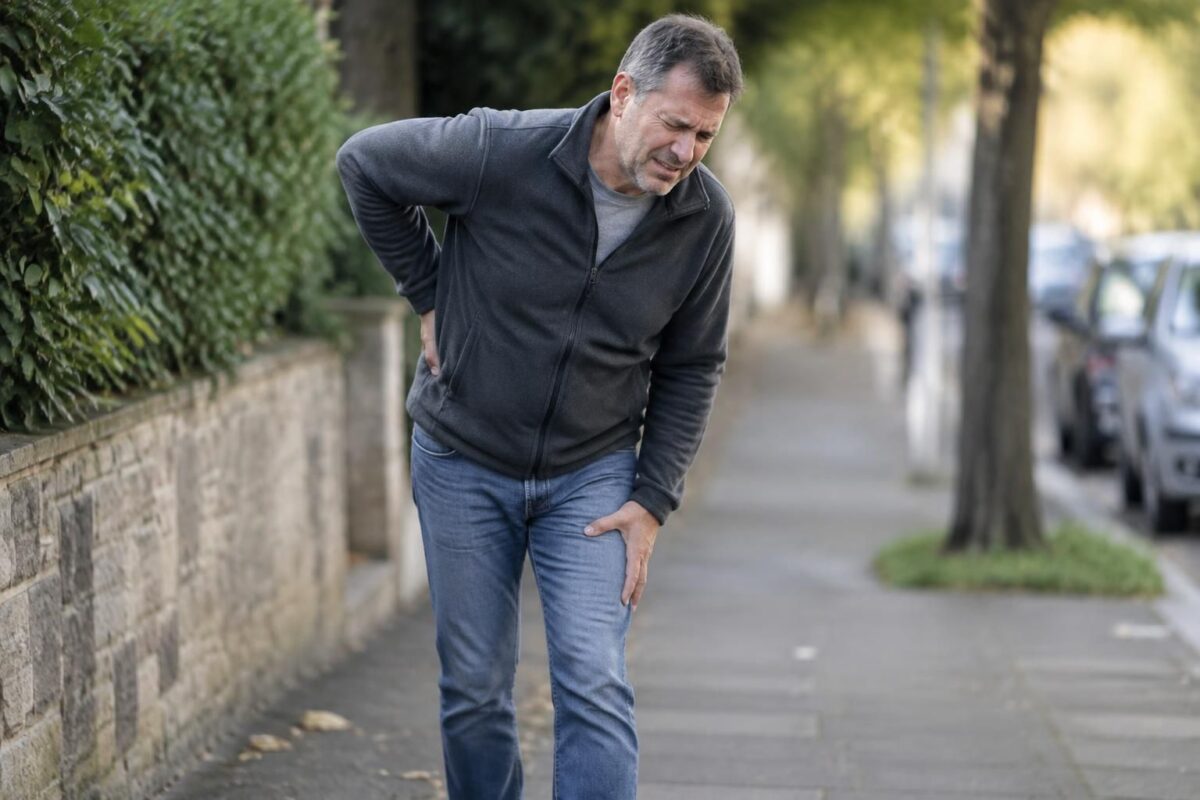
IN BRIEF A sciatica that worsens with walking is pain radiating from the buttock down the leg, exacerbated by walking. Several causes are possible: this symptom alone does not suffice for a diagnosis. Temporarily reduce walking duration, change positions, and…

Sciatica and pain that improves when walking
IN SUMMARY Sciatica is pain that radiates from the lower back or buttock down to the leg, sometimes all the way to the foot. If it decreases with walking, a gentle and regular walk can help limit stiffness and maintain…

IN BRIEF Sciatica is pain that often starts from the lower back or buttock and travels down the leg. Pain that worsens at the end of the day may be related to activities or prolonged positions, but it is not…

Sciatica and pain that worsens in the evening
IN BRIEF more painful sciatic pain in the evening is often related to inactivity, fatigue, and increased attention to sensations. This does not necessarily mean that the nerve is worsening. Gently changing positions, walking for a few minutes, and finding…

Sciatica and pain when turning in bed
IN BRIEF Sciatica can cause pain when turning in bed, as certain movements irritate the lower back or leg. Turn slowly, moving your shoulders and hips together; a cushion between the knees or under the knees can improve comfort. If…

Sciatica and pain when getting out of bed
IN BRIEF Sciatica upon getting out of bed is pain that radiates from the lower back to the buttock or leg and can be more pronounced after the night. Gradually rising, moving gently, and finding a comfortable sleeping position can…

Sciatica and difficulty finding a comfortable position
IN BRIEF Sciatica is a pain that often starts in the lower back or buttock and radiates down the leg, sometimes making it difficult to find a comfortable position. Alternating positions, avoiding postures that aggravate the pain, and trying a…

Dr Sylvain Desforges, B.Sc., D.O., N.D., osteopath, is the founding president of TAGMED and of the ACMA association. He dedicates his practice to chronic spinal pain, low back pain and symptoms compatible with sciatica, particularly when pain radiates toward the buttock, leg, calf, foot or toes.
Through SOS Sciatique, he publishes educational content on sciatica symptoms, possible causes such as disc herniation, disc narrowing, foraminal stenosis or irritation of a lumbar nerve root, as well as non-surgical approaches that may be considered according to the evaluation. At Clinique TAGMED, care may include, depending on the case, motorized neurovertebral decompression, specific osteopathic care or precision percussion.
For an evaluation related to sciatica treatment in Montreal / Mount Royal or sciatica treatment in Terrebonne, please consult the services available at Clinique TAGMED.
Medical disclaimer
The information published on SOS Sciatique is provided for educational purposes only and does not replace a consultation, diagnosis, opinion or treatment provided by a physician or another authorized healthcare professional. The author of this article is neither a medical doctor nor a specialist in a medical specialty recognized by the Collège des médecins du Québec. The osteopathic, manual medicine or functional support approaches described on this site do not constitute medical acts and are not intended to replace medical follow-up.
Consult a physician or emergency service in cases of loss of bladder or bowel control, anesthesia in the saddle area, significant or progressive weakness in the leg or foot, fever, recent trauma, severe pain or rapid worsening of symptoms. For more details, please read our Legal Notice.


