Sciatica: why the pain may be far from the spine
04/08/2026
Sciatica in Montreal: how to choose a safe approach based on your symptoms
05/08/2026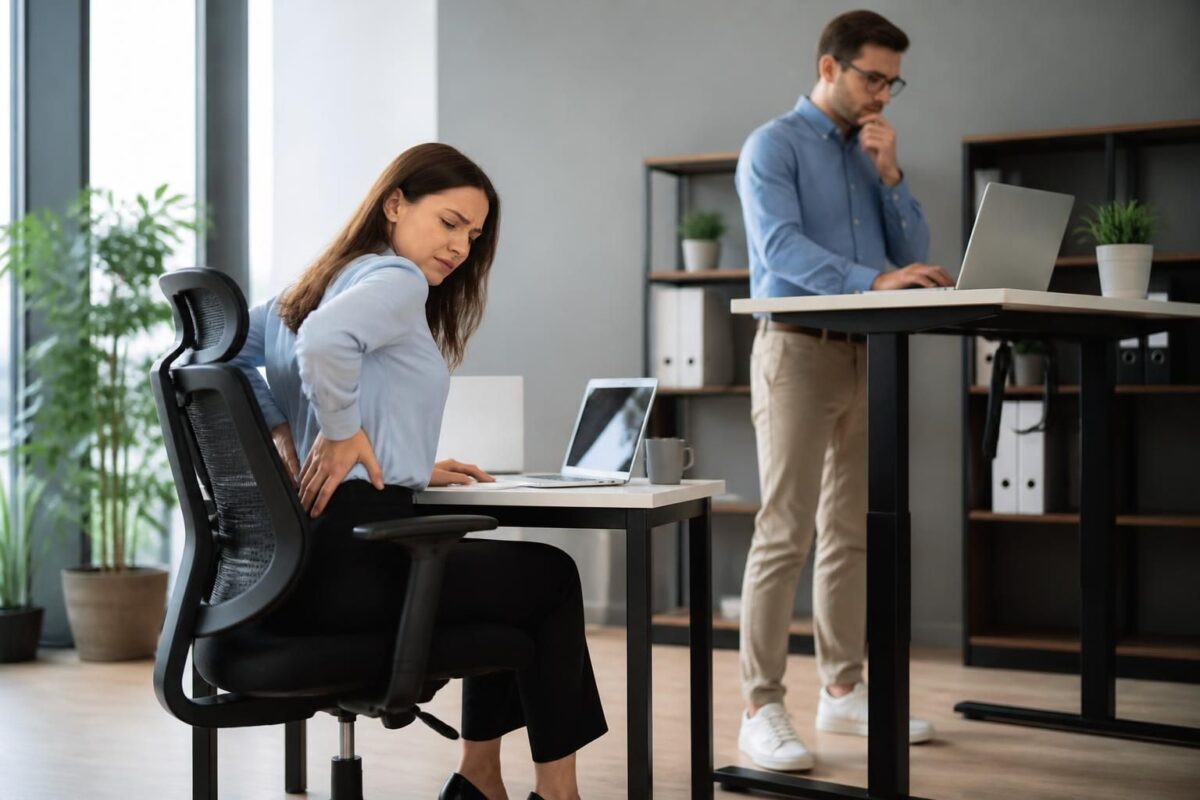
IN BRIEF
| The standing desk is a work configuration that allows alternating between standing and sitting positions. For sciatica, it can be useful when alternation and active breaks improve circulation and reduce pressure on the lumbar discs. Its benefits depend on the symptoms: it can limit pain when well-balanced, but may also exacerbate it if one stands too long without support. In practice, prioritize alternating, effective lumbar support, and comfortable shoes; take breaks every 30 to 45 minutes and adjust according to your feelings. If the pain increases while standing, temporarily return to sitting and gradually readjust the standing duration to stay within a comfort zone. |
For sciatica, the standing desk can be helpful in breaking up periods of prolonged sitting and promoting circulation, which may alleviate some pain. However, depending on your symptoms, standing too long can also worsen discomfort or lumbar pressure if radiating signs are pronounced. There is no universal rule: effectiveness depends on the individual. The ideal is to alternate between sitting and standing, take active breaks, and ensure appropriate lumbar support, all while listening to your body; in case of persistent pain, consult a professional.
Quick summary: The subject is the standing desk. We explore whether this configuration is helpful or can worsen sciatica, depending on symptoms. The goal is to help choose simple and safe adjustments at work. The approach emphasizes alternating positions, good ergonomics, and paying attention to body signals.
Sciatica is pain that can radiate from the lower back to the legs. Its intensity varies from person to person and depending on the situation. The standing desk can reduce time spent sitting and encourage movement, which can be beneficial for some people. However, it can also increase pain in others if the posture is not appropriate or if standing exposure is prolonged without rest. Evaluating symptoms is key to adjusting the workstation.
Understanding Sciatica and Ergonomics at Work
The pain follows the path of the sciatic nerve and can be amplified by positions that excessively stress the lumbar discs and joints. Maintaining a static position and lack of adequate support can worsen discomfort in some individuals. Ergonomics aims to limit strain on the back while still allowing sufficient blood circulation and regular micro-movements.
To delve into specific points related to pain, some online resources provide additional information on the effects of sitting and the pain mechanisms. For example, articles explore why pain may worsen when seated for too long and how some simple adjustments can enhance comfort. See this insight on the relationship between sitting and sciatic pain.
When the Standing Desk Can Help
The standing desk helps avoid prolonged sedentariness. It promotes micro-movements and can alleviate stress on the lumbar discs when sitting-stand alternation is regular. For some individuals, this alternation improves circulation and overall work tolerance. Standing Desk and frequent movement can also encourage better posture and a more balanced activation of trunk muscles.
Resources suggest that staying active is preferable to remaining still, even though no position completely eliminates pain or systematically shortens the duration of an episode. Testing dynamic configurations may help find what temporarily relieves pain, without promising a quick recovery. For advice on potentially beneficial mechanisms and positions, you can consult dedicated information on specialized websites.
For additional perspectives on the effects of positions and the workstation, consult specialized resources such as Positions to Avoid in Case of Sciatica and Pain Transfer from Lower Back to Leg.
When the Standing Desk Can Worsen Pain
Standing without breaks can increase fatigue and pain in some individuals. Risks include putting weight on one leg, lack of lumbar support, or an inappropriate desk height that causes excessive flexion or extension of the spine. Prolonged standing can also put stress on the hips, knees, and feet, which can undermine comfort if ergonomics are not suitable.
Symptoms suggesting a need to limit prolonged standing include pain that worsens while standing, discomfort radiating to the hip or leg, or a feeling of heaviness in the feet. In this case, it’s useful to quickly alternate with periods of rest in a seated position and check the alignment of the trunk and shoulders.
Ergonomic Elements to Implement
To optimize a workstation in a standing desk format, prioritize a setup that supports an aligned spine and free joints. Adjust the height of the desk so that the elbows form about 90 degrees and the screen is at eye level. Use comfortable shoes and, if possible, an anti-fatigue mat to limit plantar and lumbar pressure. Alternate standing and sitting periods every 20 to 45 minutes, depending on your comfort and symptoms.
Simple accompanying measures can help: keep the feet flat on the ground or on a support, maintain a straight back without excessive arching, and avoid locking the knees. Moving slightly and regularly changing position reduces stiffness and can decrease transient pain.
To nourish your practical reflection and obtain concrete benchmarks, you can consult specialized resources such as decompressionneurovertebrale.com and sosherniateddisc.com, which discuss the effects of postures on the spine and pain without prescribing specific stretches in certain contexts.
Simple Rules to Test at Work
– Alternate sitting and standing at regular intervals.
– Use an adjustable work surface and lumbar support.
– Keep wrists neutral and eyes straight ahead.
– Wear appropriate shoes and walk briefly during breaks.
For additional information on posture and pain issues, here are relevant resources: Common mistakes at the workstation and Sciatica pain and nerve irritation.
Resources and Useful Links
To dive deeper, check out these pages:
Sciatica and sitting on a couch
Positions to avoid in case of sciatica
For general information and practical advice, you can also consult guides on specialized pain and ergonomics websites.
Medical disclaimer: The information and advice provided on this site do not substitute for the opinion, diagnosis or treatment of a health professional. Please note that Dr. Sylvain Desforges, osteopath, is neither a medical doctor nor a physician, and is not a specialist in any medical specialty as defined by the Collège des médecins du Québec. Manual medicine, functional medicine, and sports medicine as described on this site exclude any treatment or medical diagnosis done by a doctor or specialist. Always consult your physician for any medical questions. For more details, please read our full Legal Notice.
Predominant Lumbar Symptoms
- Prolonged standing helpful with breaks, but avoid static standing (> 30–45 min).
- Ensure lumbar support and comfortable shoes to limit pressure.
- Adopt micro-breaks and regular short walking.
Radiating Symptoms in the Leg
- Prolonged standing can worsen the pain; favor alternating between standing/sitting.
- Maintain lumbar support and prefer cushioned shoes.
- Incorporate gentle stretches and varied movements to reduce pressure on the nerve.

Sciatica and standing desks: helpful or aggravating depending on the symptoms? This article guides you step by step on when to prioritize standing, when to prefer sitting, and how to balance both postures to limit pain and promote recovery.
Assess Your Symptoms Before Choosing the Position
Before switching to a standing position, analyze your signs. If the pain is mainly lumbar without marked irradiation, standing may be beneficial with controlled alternation. In cases of pain radiating to the leg or weakness, prolonged standing may sometimes increase temporary discomfort. The goal is to observe how your body reacts and gradually adjust the duration of each position.
The Standing Desk: When It Can Be Helpful
Potential Benefits
Partially adopting standing can promote circulation and reduce prolonged compression forces in a single position. Alternating between standing and sitting engages the trunk muscles and improves posture, which may decrease tension around the sciatic nerve when active breaks are frequent. For some, this approach improves comfort throughout the day and prevents stiffness related to continuous sitting.
Ideal Conditions
Use a standing position when you feel less sensitive to pain in the late morning or mid-day, and favor short periods (20–30 minutes) followed by a return to sitting. Ensure that the work surface is at a suitable height and that you can keep your back straight without leaning your shoulders forward.
When the Standing Desk Can Worsen Symptoms
Warning Signs
If you notice a marked increase in lumbar pain or more intense radiations while standing, immediately reduce the duration of standing. Some individuals experience worsening after long periods of standing, with discomfort that persists at rest.
Trigger Factors
Pain may be exacerbated by poor weight distribution, standing without lumbar support, or a hard floor without a mat. Individuals with already sensitive pain or peripheral radiculopathy may require a more nuanced approach and a gradual increase in standing durations.
To take advantage of standing without aggravating pain, here are simple and actionable guidelines. Balance standing and sitting periods, and listen to your body. Use a chair with lumbar support when seated and alternate every 20–45 minutes. Keep your feet flat and avoid leaning forward. Wear comfortable shoes and, if possible, use an anti-fatigue mat to limit pressure on the back and joints. Maintain a slight bend in the knees and engage your core muscles to stabilize the spine. Adjust the height of your desk so that your elbows are close to your body and your shoulders remain relaxed.
Complementary Exercises and Habits
Simple Exercises to Integrate
Incorporate micro-movements and targeted stretches: short walking between stations, hamstring and piriformis stretches, and diaphragmatic work to promote muscle relaxation. Strengthen the deep trunk muscles and maintain regular activity suited to your pain. A light and progressive routine can help prevent painful episodes and improve tolerance to standing.
In case of doubt or persistent pain, do not hesitate to consult a health professional to adapt the approach to your specific situation and symptom territory.
| Criterion | Impact of standing desk |
|---|---|
| Lumbar pressure | The standing desk can reduce lumbar pressure compared to prolonged sitting, provided that good posture and active breaks are ensured. |
| Lumbar pain when standing | If lumbar pain worsens when standing, prefer alternating between standing and sitting, along with lumbar support. |
| Sciatica / radiating pain | The impact varies among individuals; test the alternation and adjust according to symptoms. |
| Lumbar support | Use lumbar support and adjust the height to maintain the natural lordosis. |
| Foot comfort | Prolonged standing can cause foot fatigue; prefer comfortable shoes and a mat. |
| Breaks and movement | Alternate between standing and sitting with active breaks every 30–45 minutes. |
| Duration of the episode | No solid evidence that standing desk shortens the episode; movement is more important. |
| Individual adaptation | The effects vary: some feel relief, others do not; adjust based on your experience. |
Marie, 42 years old, an executive suffering from sciatica, tested the standing desk for several weeks. By alternating between standing and sitting every 20 to 30 minutes and adding some steps between posts, she notices a decrease in pain and improved mobility by the end of the day. For her, the secret is alternation and movement, rather than standing still.
Lucas, 29 years old, a developer, noticed the opposite effect: standing for a long time without breaks worsens his sciatica, with pain radiating down his leg and a pinching sensation. He opted for a standing desk with a schedule for alternation and light exercises, and favors regular seating after each standing episode.
Émilie, 37 years old, an administrative assistant, notes that ergonomics are key. Standing on a hard floor with misaligned hips causes her more discomfort. By adding a cushioning mat, an adjustable chair, and active breaks, she finds that the standing desk can be helpful when the posture is correctly adjusted and micro-breaks are taken.
Paul, 53 years old, a consultant, prefers a hybrid approach. The standing desk allows him to avoid fatigue from prolonged sitting, but he remains attentive to pain and regularly alternates with a seated position, providing lumbar support and light walking throughout the day.
Hélène, 46 years old, a marketing consultant, tests the standing desk during periods when the pain is localized in the lower back. Depending on the day, symptoms vary; she uses simple adjustments at her workstation and takes 40–45 minute breaks to prevent pain spikes, combining alternation and movement.
Dr. Sylvain Desforges is a recognized practitioner in the fields of osteopathy, naturopathy, and manual medicine. Founder and president of TAGMED clinics and the ACMA association, he dedicates his career to innovation in healthcare and pain management. His mission is to provide evidence-based care to optimize the health and well-being of his patients. In his practice, he emphasizes a personalized approach that adjusts diagnosis and treatment according to symptoms, lifestyle, and individual goals, to support sustainable recovery.
An expert in chronic pain, he integrates advanced technologies such as spinal decompression, laser, and shockwave therapy. This multidisciplinary approach allows for the treatment of the functional and neurological mechanisms underlying sciatica, while remaining attentive to inter-individual variations and periods of activation and inflammation. Dr. Desforges’s work is based on precise evaluation and tailored treatments that aim to reduce discomfort and improve mobility.
Regarding the standing desk, his opinion is nuanced and pragmatic. For him, standing can be useful as a therapeutic tool, but it is not a one-size-fits-all solution. He advocates for a dynamic evaluation of symptoms to determine whether prolonged standing aggravates or alleviates pain, depending on each patient’s unique characteristics. His approach suggests alternating positions and integrating active breaks to maintain a aligned spine, avoid static loads, and improve hip and back circulation and mobility.
His method is grounded in an evidence-based logic that combines functional assessment, ergonomic advice, and a personalized program of exercises and manual therapies. Among the simple principles he recommends are a gradual transition to standing, the use of lumbar support or a cushioning mat, and regular alternation between standing and sitting to prevent prolonged tension. The goal is to promote a neutral posture and sustained activity that supports recovery without overloading the nerve.
Alongside his therapeutic approach, Dr. Desforges emphasizes the importance of active breaks, targeted stretching work, and core strengthening to reduce pressure on the discs and nerve roots. His educational device highlights patient education and self-management, aiming to reduce recurrences and allow a return to activity with controlled and progressive pain. This integrated perspective combines practical advice and technologies to optimize healing in both professional and personal contexts.
To discover his approach and the services available, contact TAGMED clinics. Dr. Desforges is committed to providing personalized solutions that combine expertise and advanced technologies to enhance the well-being and mobility of individuals suffering from sciatica, while considering the specificities of each therapeutic journey and the symptoms experienced in the context of a standing desk.
Quick summary: the standing desk can be useful in case of sciatica, but its effect depends on the symptoms and the adopted ergonomics. The optimal approach is based on intelligent alternation between sitting and standing, active breaks, and listening to the body to avoid exacerbations. It’s not a miracle solution; it’s a personalized strategy that can reduce discomfort and promote recovery when adjusting height, lumbar support, and movements throughout the day.
Usefulness of the standing desk according to symptoms: regular switching between standing and sitting can offer benefits when the body tolerates the change in posture without increased pain. For some people, standing for too long may, however, amplify discomfort, especially if the pain is radiating or if the lumbar canal is tight. The goal is not to impose a single position, but to optimize the body’s dynamics according to each profile of sciatica, prioritizing periods of movement and micro-positions that promote circulation and reduce pressure on the lumbar discs.
How to use it correctly: ensure an appropriate height that keeps the torso neutral and the gaze at an ergonomic level. Wear comfortable shoes and use an anti-fatigue mat to limit leg fatigue during standing periods. Alternate standing and sitting blocks every 30 to 45 minutes, and incorporate micro-movements (hip swings, light marching in place) to avoid prolonged tension. Keep shoulders relaxed, abdomen slightly engaged, and pelvis in a neutral position to limit pressure on the lumbar discs. For screens and keyboards, prioritize a setup that maintains an aligned cervical and lumbar posture.
Cases where standing may worsen: if pain significantly increases in a standing position (or if you feel an aggravation in the buttock, thigh, or calf after a standing period), it may be necessary to reduce the time spent standing and shift effort to shorter sitting or movement periods. In individuals with specific symptoms such as stenosis or a herniated disc, a “constant standing” procedure may require finer adjustments, and the support of a professional can guide the ideal configuration.
Elements to test and practical tips: start with short standing blocks, then gradually increase the duration according to your tolerance. Systematically alternate between standing and sitting and adopt overall ergonomics: lumbar support, feet flat, buttocks in contact with the backrest, and monitor at eye level. If possible, vary the surfaces (chair with backrest, semi-chair, adjustable standing desk) and incorporate active breaks such as gentle stretches or light walking between positions. For a more personalized approach, do not hesitate to consult a healthcare professional and to test the advice in your work context, especially through specialized resources like those addressing the lumbar disc–sciatic nerve link, office breaks, and standing vs sitting strategies.
Resources and links for further exploration: sciatica and sustainable strategy, relationship between lumbar disc and sciatic nerve, adapted office breaks, pain that increases when standing, position to avoid, sciatica and office work, importance of pain localization, mechanical approach, position to avoid, standing desk and sciatica.
To go further, you can test these approaches in both professional and personal contexts, then adjust according to your individual response. If you wish to delve deeper, practical guides and specialized resources can assist you in developing an action plan tailored to your situation.
Sciatica and piriformis stretching: useful or worsening depending on the case
IN BRIEF Piriformis-related sciatica can cause deep pain in the buttock, sometimes radiating down the back of the thigh. A gentle stretch can loosen the hip and relieve discomfort if the muscle is involved, but it can worsen symptoms if…

Sciatica and popular stretches: why to stay cautious
IN BRIEF Sciatica causes pain that radiates from the lower back down the leg. Popular stretches, such as the pigeon pose or hamstring stretches, are not always suitable: pulling on an irritated nerve can worsen the symptoms. Favor gentle movements,…

Sciatica and Pilates: movements to adapt
IN SHORT Sciatica causes pain that can radiate from the lower back down to the leg. The Pilates Reformer can promote a gradual return to movement and strengthen core control, provided that the movements, range, and resistance are adapted. Favor…

Sciatica and core stability: variable tolerance depending on symptoms
IN BRIEF Core strengthening in case of sciatica consists of progressively strengthening the trunk muscles. Its tolerance varies depending on pain and symptoms: suitable without worsening the pain, it can support mobility and the resumption of activities, but does not,…

Sciatica and lunges: leg pain to watch out for
IN BRIEF Sciatica is pain that starts from the lower back or buttock and radiates down the leg. If a lunge triggers or worsens this pain, stop the movement and adjust your activity: this exercise does not address sciatica. Consult…

Sciatica and deadlifts: risk depending on the cause
IN BRIEF Sciatica and deadlifts are not always incompatible: the risk depends on the cause of the pain and its intensity. During acute episodes, it’s best to avoid heavy loads and seek medical or physiotherapy advice before resuming. A gradual…

Sciatica and squats: why caution is needed
IN BRIEF Sciatica does not always prohibit squats, but a deep or loaded squat can aggravate symptoms, especially during a flare-up. Gradually resume with a neutral back and a comfortable range of motion, and stop if the pain travels down…
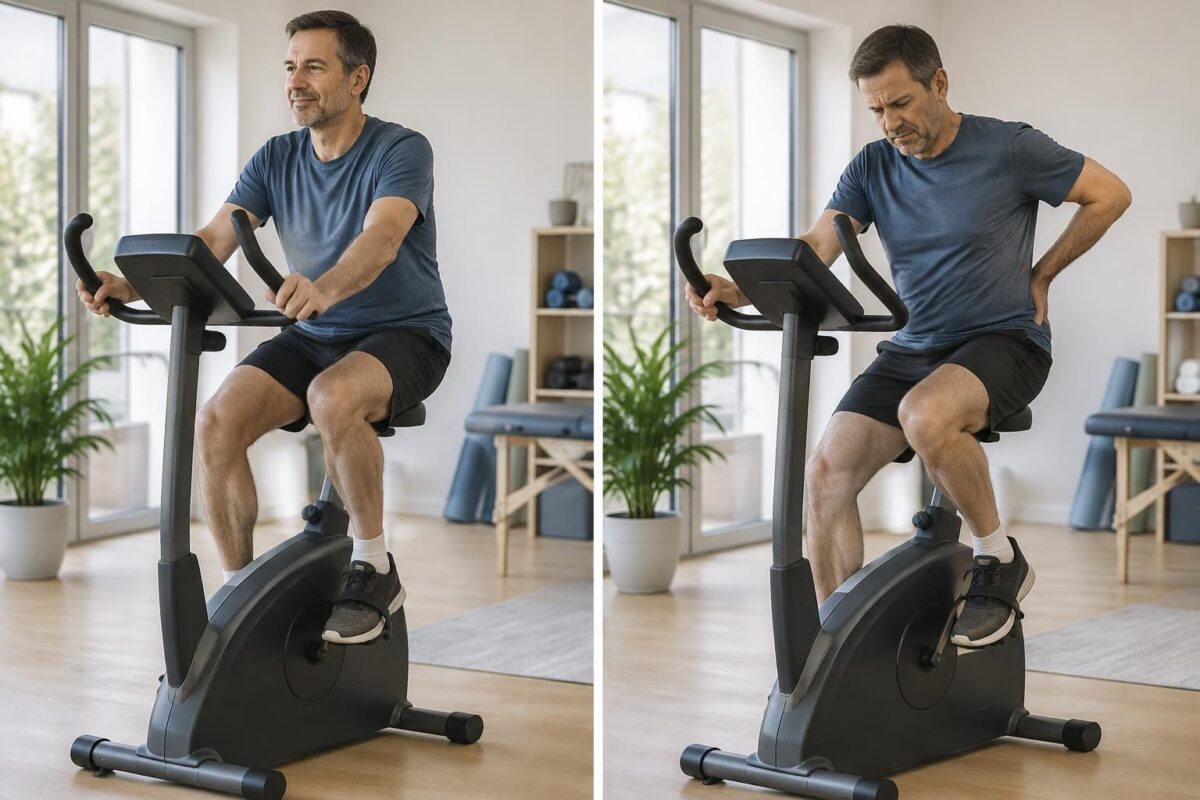
Sciatica and stationary bike: useful or aggravating depending on the case
IN BRIEF The stationary bike with sciatica can help you stay active if the pain is mild and stable. Start with a short session, at low resistance and in a comfortable position. If the pain goes further down the leg,…

Dr Sylvain Desforges, B.Sc., D.O., N.D., osteopath, is the founding president of TAGMED and of the ACMA association. He dedicates his practice to chronic spinal pain, low back pain and symptoms compatible with sciatica, particularly when pain radiates toward the buttock, leg, calf, foot or toes.
Through SOS Sciatique, he publishes educational content on sciatica symptoms, possible causes such as disc herniation, disc narrowing, foraminal stenosis or irritation of a lumbar nerve root, as well as non-surgical approaches that may be considered according to the evaluation. At Clinique TAGMED, care may include, depending on the case, motorized neurovertebral decompression, specific osteopathic care or precision percussion.
For an evaluation related to sciatica treatment in Montreal / Mount Royal or sciatica treatment in Terrebonne, please consult the services available at Clinique TAGMED.
Medical disclaimer
The information published on SOS Sciatique is provided for educational purposes only and does not replace a consultation, diagnosis, opinion or treatment provided by a physician or another authorized healthcare professional. The author of this article is neither a medical doctor nor a specialist in a medical specialty recognized by the Collège des médecins du Québec. The osteopathic, manual medicine or functional support approaches described on this site do not constitute medical acts and are not intended to replace medical follow-up.
Consult a physician or emergency service in cases of loss of bladder or bowel control, anesthesia in the saddle area, significant or progressive weakness in the leg or foot, fever, recent trauma, severe pain or rapid worsening of symptoms. For more details, please read our Legal Notice.