Sciatica in Terrebonne: difficulty walking on heels or tiptoes
24/08/2026
Herniated disc and chronic sciatica: why the pain persists
24/08/2026
IN BRIEF
In brief, sciatica and tingling in the calf result from nerve irritation or compression of the sciatic nerve. This situation manifests as pain that can extend from the lower back to the calf, often accompanied by numbness. The evaluation helps distinguish a common mechanical cause from a case requiring different management and leads to a personalized and gradual treatment. The benefits include a reduction in pain, improved mobility, and prevention of recurrences, generally without surgery. In Montreal, this service is particularly recommended for those seeking a non-surgical approach tailored to their situation. |
Sciatica is pain related to the irritation or compression of the sciatic nerve. Tingling in the calf may indicate nerve irritation following the path of the nerve down to the calf and foot.
- Key symptom: pain that may radiate from the lower back to the leg, with tingling or numbness in the calf.
- Important: a single symptom does not confirm the cause; a clinical evaluation is necessary to distinguish a mechanical cause from a more complex issue.
- Objective of the evaluation: check mobility, function, and identify warning signs.
- Practical tips: maintain good posture, avoid sudden movements, and stay active with gentle exercises; consult promptly if symptoms persist or worsen.
An appropriate management can relieve pain and prevent recurrences. For an accurate and safe assessment, contact a qualified healthcare professional.
Quick summary: this article explains why tingling in the calf may reflect nerve irritation associated with sciatica, what the clinical signs reveal, how the evaluation process works, and what management options can be considered at the TAGMED Clinic in Montreal or Terrebonne.
Sciatica is pain that occurs when the sciatic nerve is irritated or compressed. Tingling in the calf may be a sign of nerve irritation that travels down this nerve, but this isolated symptom does not establish a precise cause. The sciatic nerve, the longest in the body, starts in the lower back, crosses the buttock, and extends down to the foot. When this nerve is irritated, it can trigger pain that radiates to the calf, accompanied by tingling or numbness, and sometimes muscle weakness.
Typical Signs and Symptoms
Signs associated with irritation of the sciatic nerve in the calf may include:
• Pain radiating from the lower back or buttock to the calf and sometimes to the foot.
• Tingling, pins and needles, or numbness in the leg.
• Muscle weakness that may hinder walking or climbing stairs.
• Pain worsened by prolonged sitting or certain trunk movements.
Possible Causes and Limitations of Isolated Signs
Tingling in the calf does not allow for a unique cause to be determined. Possible origins include irritation from a herniated disc, foraminal or spinal stenosis, muscle tension around the pelvis, or other mechanisms affecting the sciatic nerve. A comprehensive clinical evaluation is necessary to distinguish a common mechanical cause from a situation requiring different management.
Evaluation and Diagnosis
The evaluation conducted by a healthcare professional at the TAGMED Clinic aims to check mobility, function, and warning signs. The goal is to identify the precise cause and determine the best therapeutic approach. The evaluation may include a review of history, an examination of lumbar mobility, simple neurological tests, and observation of impacts on walking and balance. This evaluation determines if management is indicated and what specific options are suitable for the patient.
Possible Management at TAGMED Clinic
At the TAGMED Clinic, management can combine several elements. It may include motorized neurovertebral decompression when appropriate, specific osteopathy, and the use of a precision impactor as needed. The plan is personalized, gradual, and regularly reassessed based on the patient’s response. Care can be offered in Montreal or Terrebonne, depending on availability and the initial evaluation.
Practical Tips for Daily Life
To limit irritation and promote comfort in daily life, prioritize good posture and adjust the work environment to reduce stress on the lumbar spine. Avoid positions that aggravate pain and stay alert to warning signs that require prompt consultation. General advice and personalized follow-up at the TAGMED Clinic will help you clarify what is appropriate for your case.
Resources and Related Information
For further information, you can consult the following resources on topics related to sciatica and symptoms in the calf:
- Sciatica and pain radiating down to the calf
- Numbness in the foot and sciatica in Terrebonne
- Progressive numbness – why not wait
- Extruded disc herniation and sciatica
- Calf pain after driving
For general information and support options, contact Clinique TAGMED.
To avoid any misunderstanding, make sure to use only the trusted resources mentioned in the links above and to follow the advice of a qualified healthcare professional for your situation.
Medical disclaimer: The information and advice provided on this site do not replace the opinion, diagnosis, or treatment of a healthcare professional. Please note that Dr. Sylvain Desforges, osteopath, is neither a medical doctor nor a physician, and is not a specialist in a medical specialty as defined by the College of Physicians of Quebec. Manual therapy, functional medicine, and sports medicine as described on this site exclude any treatment or medical diagnosis made by a physician or medical specialist. Always consult your doctor for any medical questions. For more details, please read our full Legal Notice.
- Analysis Axis: distinguish nerve irritation from another cause.
- Sciatica: pain that follows the path of the sciatic nerve.
- Key Symptom: pain radiating down to the calf or foot.
- Tingling or numbness in the calf or foot.
- Muscle Weakness in the leg
- Aggravating Factors: prolonged sitting, repeated efforts, insufficient rest.
- Possible Causes: herniated disc, spinal canal narrowing, muscle tension.
- Quick Assessment: mobility, warning signs, response to simple gestures.
- Management: gradual and personalized approach based on the patient’s response.
- When to Consult: persistent pain, new weakness, nighttime symptoms, or rapid deterioration.
,

This article summarizes the links between sciatica and tingling in the calf, explaining that these sensations may result from irritation of the sciatic nerve. A clinical assessment is essential to differentiate a common mechanical cause from a problem requiring appropriate and personalized management, and to propose a gradual and safe plan.
What is sciatica and why can it affect the calf?
The sciatic nerve is the longest in the body, originating in the lower back, crossing the buttock, and descending along the leg to the foot. When it is irritated or compressed, symptoms may appear not only in the back but also spread to the calf. This pain is generally referred to as sciatic pain, and it may be accompanied by tingling or numbness in the calf.
Typical Signs
Pain radiating in the leg that starts from the lower back or buttock and follows the path of the sciatic nerve to the calf or foot.
Tingling or numbness in the leg or foot, indicating a disturbance in nerve transmission.
Muscle weakness that may limit walking, climbing stairs, or balance, a sign that the nerve is sufficiently irritated to affect the muscles.
Localized sensitivity in the lower back or buttock, sometimes before the pain descends into the leg.
Pain aggravated in a seated position, as lumbar pressure increases and may amplify nerve compression.
Possible Causes of Irritation
A herniated disc, significant muscle tension around the lumbar spine, or spinal canal narrowing can cause this irritation. A precise diagnosis relies on a comprehensive assessment rather than a single symptom.
Assessment and Diagnosis
The cause cannot be confirmed solely by an isolated symptom. A clinical assessment checks mobility, function, and warning signs. The professional examines how you move, your posture, and your response to certain movements to locate the exact source of compression or irritation.
What the Assessment Covers
Analysis of trunk and limb mobility, sensitivity testing, and observation of muscle strength associated with the path of the sciatic nerve. This process distinguishes a common mechanical cause from a problem that requires specific and gradual management.
Treatment Plan and Recommendations
Recommendations should be gradual, personalized, and adjusted according to the patient’s response. The treatment aims to reduce pain, restore mobility, and prevent recurrence.
Non-surgical Approaches
Targeted exercise programs to strengthen the trunk, gentle stretches for the lumbar spine and leg muscles, and ergonomic advice for everyday life. The use of heat can help relax tensions and controlled stretching gradually improves flexibility. Regular and appropriate physical activity helps reduce pressure on the nerve and improves motor control.
When to Consult and Emergency
Consult promptly if the pain worsens, if marked weakness appears, or if new worrying symptoms occur (for example, loss of bowel control or chest pain). Early assessment helps avoid complications and adjust the treatment plan.
Practical Tips for Daily Life
Adopt a correct posture at work and at home, take active breaks, and prioritize moderate activities that strengthen the trunk without overloading the spine. Avoid sudden movements and heavy loads, and incorporate gentle daily stretches tailored to your sensation of pain. If in doubt or if symptoms persist, a specialized evaluation can determine the best plan for you.
| Assessment Elements | Impact and concise explanation |
|---|---|
| Definition | Sciatica = irritation/compression of the sciatic nerve; tingling in the calf may reflect nerve irritation and requires evaluation. |
| Location | Sciatica follows the lumbar pathway → buttock → leg; tingling in the calf can be isolated and without obvious lumbar pain. |
| Warning Signs | Marked weakness, loss of bladder control, or chest pain require prompt evaluation. |
| Possible Causes | Herniated disc, nerve tension, or narrowing; tingling may indicate nerve irritation without significant radiculopathy. |
| Differential Diagnosis | Peripheral neuralgia vs radiculopathy; requires a clinical examination to distinguish. |
| Triggering Factors | Prolonged sitting and bending/rotation movements may exacerbate; changing posture offers temporary relief. |
| Key Clinical Elements | Radiating pain, paresthesias, and weakness guide evaluation and management. |
| Treatment Approaches | Targeted evaluation + exercises, postural advice; gradual progression based on the patient’s response. |
| When to Consult | Consult promptly if persistence or worsening occurs, or significant loss of sensitivity. |
Testimonials: Sciatica and tingling in the calf — nerve irritation?
Julie, 42 started experiencing tingling in her calf and pain radiating along the nerve after a long car ride. Initially, she thought it was a cramp or muscle strain. After a thorough evaluation, an irritated sciatica was identified. With a personalized treatment plan and targeted exercises, her symptoms quickly eased, and she regained her mobility and sleep. She now describes this sensation as a well-managed nerve irritation through effective posture habits that preserve her progress.
Marc, 55 experienced tingling and pain that radiated from his lower back to his calf. He feared a herniated disc, but the evaluation confirmed an irritation of the sciatic nerve without urgency. With gentle adjustments and progressive exercises, he reduced the pain and can now perform his daily activities without fear of triggering it. He speaks of genuine care and a personalized treatment that changed his perspective.
Sophie, 33 noticed numbness and tingling in her calf after pregnancy. The evaluation targeted nerve irritation and implemented a gradual approach to relieve pain and strengthen her trunk. After a few weeks, she regained comfortable walking and sleep, with less fear of the pain returning.
Jean, 60 suffered from night pain and tingling in his calf that worsened at rest. Through a comprehensive evaluation, the team identified a mechanical cause and proposed a suitable and gradual plan. He notes significant improvement in pain and sleep quality, as well as regained mobility that allows him to resume his favorite activities.
Claire, 48 experienced radiating pain in her leg and tingling that made daily tasks difficult. After a personalized treatment and work on posture and mobility, her symptoms eased, and she can again work and move without pain while feeling supported by a gradual and tailored approach.
Dr. Sylvain Desforges, expert in osteopathy, naturopathy, and manual medicine, is the founding president of TAGMED clinics and the ACMA association. His professional journey is marked by a constant quest for innovation in the healthcare field. He specializes particularly in managing chronic pain in the spine and in addressing nerve irritations that can manifest as tingling in the calf, a typical symptom of sciatica. His commitment is to provide care that is resolutely patient-centered and evidence-based to optimize everyone’s health and well-being.
In his practice, Dr. Desforges relies on a comprehensive clinical evaluation that allows differentiation between transient nerve irritability and a more widespread mechanical issue. This approach involves analyzing mobility, function, and warning signs that may guide the therapeutic plan. His approach is gradual and personalized: each protocol is adjusted according to the patient’s response and the functional objectives to be achieved. This philosophy not only alleviates pain but also preserves and restores the ability to move and live without limitation.
Technically, Dr. Desforges integrates advanced technologies when appropriate. Among the tools he employs are motorized neuro-vertebral decompression methods, laser sessions, and shock wave therapies, used in a targeted manner to reduce inflammation, free nerve roots, and promote recovery of muscular strength. This combination of osteopathy, manual medicine, and contemporary technologies addresses the underlying mechanisms of radicular pain and optimizes long-term outcomes.
Regarding clinical manifestations such as tingling and radiating pain in the calf, his approach aims to identify the precise source: herniated disc, foraminal narrowing, muscle tension, or irritation of a lumbar nerve root. By working on posture, trunk stability, and movement patterns, he seeks to reduce the pressure on the nerve and restore normal function of the muscles innervated by the sciatic nerve. The goal is to prevent recurrences and sustainably improve patients’ daily lives without systematically resorting to invasive treatments.
For those seeking comprehensive expertise, Dr. Desforges offers a coordinated approach at the TAGMED Clinic, where a multidisciplinary team supports each patient throughout their journey. His message is clear: rigorous assessment, tailored therapeutic choices, and measured progress can transform potential nerve irritability into better stability and quality of life. His commitment remains to provide evidence-based care that is accessible and oriented toward tangible and measurable results.
Quick summary: this article explores the link between sciatica and tingling in the calf, highlighting that these signs may represent nerve irritation rather than a single cause. It emphasizes the importance of a clinical assessment to distinguish a mechanical origin from a nerve disorder and involves a gradual and personalized treatment approach.
Key elements and recommendations
Sciatica results from irritation or compression of the sciatic nerve, along which pain may radiate from the lower back to the calf or foot. Tingling and (numbness) may indicate a disruption in nerve transmission and require an appropriate assessment to determine whether the origin is mechanical or otherwise.
Typical signs to watch for include radiating pain that follows the path of the nerve, tingling or numbness, possible muscle weakness, and pain that may worsen in a sitting position or during certain movements. These manifestations can vary in intensity and location depending on the path of the nerve and the underlying cause.
To understand the origin and guide treatment, a clinical assessment is essential. This process allows for checking mobility, function, and warning signs, to target the areas to be treated and adjust the plan based on the patient’s response.
Resorting to a gradual and personalized approach is recommended. This may combine targeted manual adjustments, tailored exercises, and ergonomic advice, aiming not only to reduce pain but also to restore mobility and prevent recurrence. In some cases, the goal is to improve comfort during driving, work, or daily activities while monitoring progress.
When to seek prompt consultation, particularly for calf pain accompanied by marked weakness, loss of bladder control, or systemic signs (fever, significant trauma), a quick evaluation is necessary. Online resources detail factors related to position and driving that may influence symptoms and nerve irritation, such as seat tilt during trips or the effects of long-distance driving. To delve into these aspects, refer to articles such as Sciatica and car seat and signs to watch for during long-distance driving.
For those experiencing tingling or pain in the calf without chest pain or concerning weakness, it may be helpful to explore additional resources on the distinction between nerve irritation and other causes, such as tingling in the legs or symptoms along the nerve path. Useful references address these aspects and the links between calf pain and nerve, including calf pain and possible nerve origin and calf pain and possible nerve origin.
In addition to care, simple habits can support the recovery process: maintaining a correct posture, strengthening trunk muscles, avoiding abrupt movements, and staying active within pain limits. Practical resources also discuss the links between sciatica, tingling, and everyday movements, including driving and prolonged standing or sitting positions, with preventive tips available on recommended sites such as Sciatica – calf pain and Long-distance driving – signs to watch for.
For a personalized approach tailored to your situation, consider an assessment with a qualified health professional who can confirm the origin of tingling in the calf and propose a targeted treatment plan. Online resources and specialized articles can complement the information, but assessment remains the anchor point for effective and safe management of sciatica and associated tingling.

Sciatica and weakness in the thigh: possible lumbar cause
IN BRIEF Sciatica with thigh weakness is a possible manifestation of a lumbar cause irritating a nerve root (L4-L5, L5-S1). Advantages: a quick diagnosis and a targeted treatment plan with rehabilitation to regain strength and mobility and prevent recurrences. Operation:…
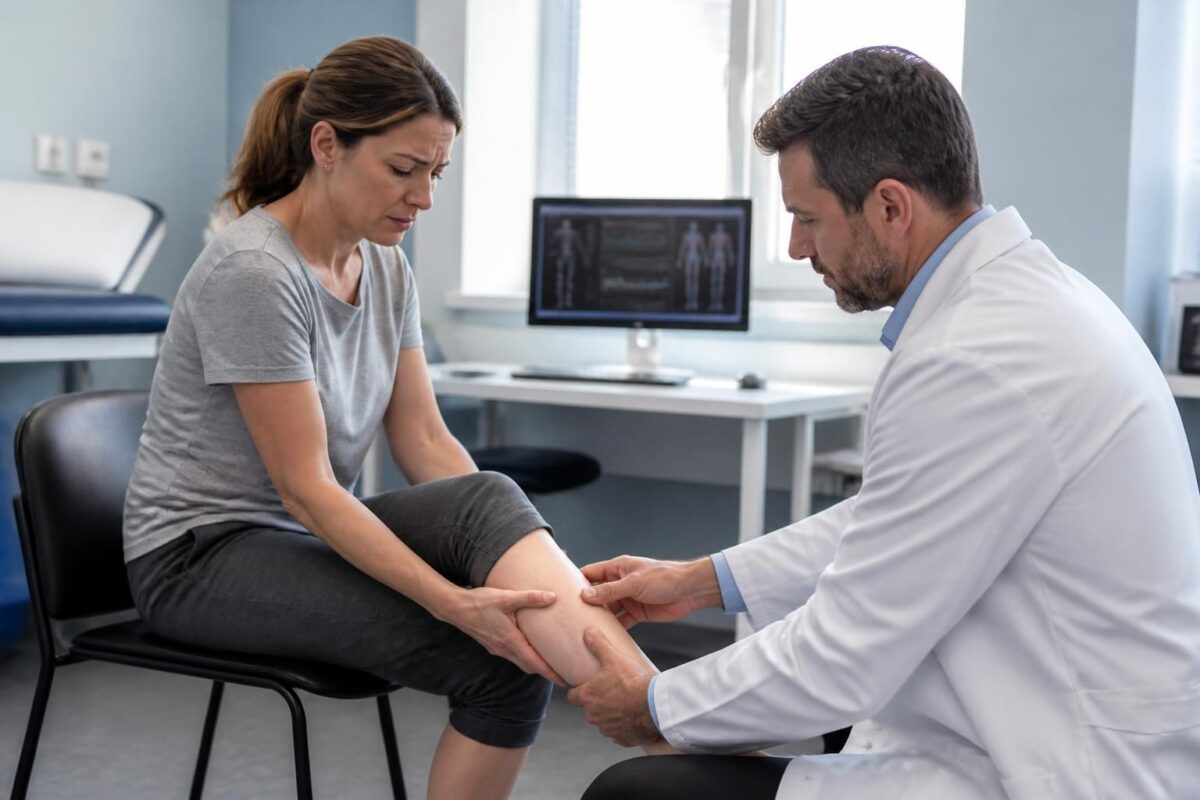
Sciatica and calf weakness: what should be monitored?
IN SHORT In short, sciatica and weakness in the calf describe a lumbar radiculopathy where pain follows the path of the sciatic nerve and may reach the calf. Benefits: a targeted non-surgical management, quick relief, and an improvement in mobility…

Sciatica and difficulty walking on tiptoes: possible S1 root
IN BRIEF In brief, sciatica with difficulty walking on tiptoes may reflect an involvement of the S1 lumbar root. What is it? a radicular pain that can limit foot elevation and walking on tiptoes. What are the benefits? an accurate…

Sciatica and difficulty walking on heels: possible L5 root
IN BRIEF The sciatica associated with a difficulty walking on the heels is generally due to an involvement of the L5 root of the sciatic nerve, with a pathway that starts from the lower back, crosses the buttock, and goes…

Sciatica and difficulty lifting the foot: emergency or quick consultation?
IN BRIEF The drop foot is a weakness of the foot dorsiflexors that causes a steppage gait and may reveal sciatica with compression of the nerve in the lumbar region. When it is associated with sciatic pain and loss of…

Sciatica and loss of strength: a sign not to be taken lightly
IN SHORT In short, sciatica is pain that follows the path of the sciatic nerve. A loss of strength in the leg is a sign that should not be taken lightly. It’s a warning indicating nerve damage that may require…

Sciatica and numb foot sensation: when to consult?
IN BRIEF In brief, sciatica and numbness in the foot refer to pain that follows the path of the sciatic nerve and may be accompanied by tingling or numbness in the foot. This summary specifies when to seek consultation, distinguishing…

Sciatica and the sensation of a numb leg: what does this symptom mean?
IN BRIEF Sciatica and the sensation of a dead leg refer to pain and tingling along the path of the sciatic nerve, from the lower back to the foot. This symptom reflects nerve compression or irritation, most often due to…

Dr Sylvain Desforges, B.Sc., D.O., N.D., osteopath, is the founding president of TAGMED and of the ACMA association. He dedicates his practice to chronic spinal pain, low back pain and symptoms compatible with sciatica, particularly when pain radiates toward the buttock, leg, calf, foot or toes.
Through SOS Sciatique, he publishes educational content on sciatica symptoms, possible causes such as disc herniation, disc narrowing, foraminal stenosis or irritation of a lumbar nerve root, as well as non-surgical approaches that may be considered according to the evaluation. At Clinique TAGMED, care may include, depending on the case, motorized neurovertebral decompression, specific osteopathic care or precision percussion.
For an evaluation related to sciatica treatment in Montreal / Mount Royal or sciatica treatment in Terrebonne, please consult the services available at Clinique TAGMED.
Medical disclaimer
The information published on SOS Sciatique is provided for educational purposes only and does not replace a consultation, diagnosis, opinion or treatment provided by a physician or another authorized healthcare professional. The author of this article is neither a medical doctor nor a specialist in a medical specialty recognized by the Collège des médecins du Québec. The osteopathic, manual medicine or functional support approaches described on this site do not constitute medical acts and are not intended to replace medical follow-up.
Consult a physician or emergency service in cases of loss of bladder or bowel control, anesthesia in the saddle area, significant or progressive weakness in the leg or foot, fever, recent trauma, severe pain or rapid worsening of symptoms. For more details, please read our Legal Notice.