



Sciatica in Terrebonne: sharp pain or persistent pain?
26/07/2026
Sciatica: understanding the difference between cause and aggravating factor
26/07/2026
IN BRIEF
| In brief, sciatica is a pain that follows the path of the sciatic nerve and can extend down to the calf. When it reaches the calf, it indicates a radiculalgia due to lumbar nerve irritation. What is it? It’s a symptom, not an isolated disease. What are the benefits? Rapid and targeted diagnosis, reduced inflammation, and quick recovery of mobility, with tailored non-surgical options. How does it work? Clinical assessment identifies the affected nerve and possible causes (e.g., disc herniation, stenosis, or inflammation), then treatment prioritizes concrete approaches like exercises, pain management, and posture. In Montreal, this service is particularly recommended for lower back pain and radiculalgia to improve quality of life without heavy intervention. |
Sciatica is a pain that follows the path of the sciatic nerve. If the pain descends to the calf, it signals a nerve irritation at the lumbar level, usually a radiculalgia related to a disc herniation or stenosis that compresses a nerve root. Knowing the precise path helps target treatment and alleviate inflammation; watch for warning signs like marked weakness, significant numbness, or sphincter issues that require prompt medical evaluation.
This article written by a healthcare professional explains why pain that extends to the calf may be a sign of nerve irritation at the lumbar level, how to differentiate sciatica from femoral nerve pain, and which approaches to prioritize for relieving inflammation and preserving mobility. You will see the clinical signs to watch for, possible mechanisms, and management options tailored to your situation.
Pain that radiates to the calf often suggests irritation of a lumbar nerve root. The sciatic nerve can originate from L5 and S1 levels, sometimes L4, and transmit pain along the back of the leg down to the calf. This pain is a manifestation of radiculalgia, meaning nerve irritation, and not just simple muscular or joint pain. The path of the pain is a key clue for guiding diagnosis and management.
Understanding the Nerve Pathway and Involved Roots
The sciatic nerve is the longest in the body. It arises from the merging of the L5 and S1 roots (sometimes L4) and provides much of the sensation and motor function of the leg. The femoral nerve takes its roots from L2, L3, and L4 and innervates the front of the thigh. The exact location of the irritation determines whether the painful eruption follows the path behind the thigh and calf (sciatica) or projects towards the front of the thigh (femoral nerve pain).
Causes of Irritation and Role of Inflammation
To understand the pain, it is essential to distinguish two aspects. First, the possible mechanical compression of a nerve root by a disc herniation, narrowing of the lumbar canal, or osteophytes. Then, often in tandem, the elevation of chemical inflammation around the nerve root. The degenerated fluid can trigger an excessive inflammatory response, turning modest pressure into very significant pain. This mechanical and inflammatory combination explains why intensity is not always proportional to the size of a lesion visible on imaging.
Additional factors may exacerbate pain, such as inadequate posture, overweight, or stress that increases the sensitivity of the nervous system. Inflammation and biopsychosocial factors play an important role in the persistence of symptoms and how the patient perceives pain.
Signs and Symptoms to Monitor
Radiculalgia primarily manifests as an electric or shooting pain along the nerve pathway. The calf may be painful, sometimes with paresthesias (tingling) or numbness in the leg or foot. Weakness in lifting the foot or straightening the knee may appear, a sign to monitor closely.
Red flags require urgent evaluation. Paralysis or marked difficulty moving the leg, loss of control over sphincters, or febrile signs accompanying intense pain necessitate prompt medical care.
Diagnosis and Assessment
Diagnosis is initially based on clinical examination and accurate symptom collection. The physician checks the location of the pain and tests muscle strength, reflexes, and sensitivity. Mechanical tests such as the Lasègue test help reproduce the pain and confirm nerve involvement. The Léri test can be used for femoral nerve pain. Imaging, when necessary, is primarily used to complete the picture when symptoms persist or are accompanied by red flags, and does not replace clinical evaluation.
In a modern approach, evaluation also considers the overall context of the patient, including stress, beliefs about pain, and physical activity. This helps to understand why pain persists and how to adapt management.
Differential Diagnosis and Therapeutic Approach
Differentiating sciatica from femoral nerve pain is essential, as the path and involved roots guide therapeutic choices. In practice, several non-surgical approaches may be considered based on the evaluation, including measures aimed at reducing inflammation and stabilizing the spine, without imposing inappropriate exercises or stretches within the discussed conditions. For specialized evaluation and tailored management, some clinics offer targeted non-surgical options.
Useful resources for better understanding these situations exist on websites dedicated to sciatica, such as articles on interpreting calf pain associated with sciatica. To learn more, consult this SOS Sciatica article on interpreting calf pain and sciatica and this other article on Montreal.
Management and Available Options
The goal of management is to reduce inflammation and regain functional mobility. Depending on the assessment, non-surgical approaches may be proposed at the TAGMED Clinic in Montreal or Terrebonne. For patients requiring an osteopathic approach or a motorized neurovertebral decompression, these options may be considered within an individualized plan established by the practitioner after evaluation. For more information about the services offered, you can visit Clinique TAGMED.
In some cases, where nerve damage is severe or progressive, or in the presence of significant motor deficits, the doctor may discuss surgical options. The goal is to restore the space around the nerve root and reduce irritation, taking into account the patient’s overall context.
Resources and supplementary readings
To delve deeper, you will find supplementary explanations on the mechanisms and signs on the dedicated pages for sciatica and its manifestations on the following sites, which remain within the framework of recommended resources: Sciatica and lumbar support and When imaging is not enough. Other useful resources on the causes and manifestations of sciatica are available on Treatment and factors to evaluate before care in Terrebonne.
To learn how the diagnosis evolves with the progression of symptoms, you can also consult the resources on SOS Sciatica.
Medical disclaimer: The information and advice provided on this site do not replace the advice, diagnosis, or treatment of a healthcare professional. Please note that Dr. Sylvain Desforges, osteopath, is neither a medical doctor nor a physician, and is not a specialist in a medical specialty as defined by the Collège des médecins du Québec. Manual medicine, functional medicine, and sports medicine as described on this site exclude any medical treatment or diagnosis made by a physician or a medical specialist. Always consult your doctor for any medical questions. For more details, please read our full Legal Notice.
- Typical pathway: pain following the sciatic nerve down to the calf
- Characteristics: electric or burning pain in the calf
- Associated signs: paresthesias and numbness of the calf or foot
- Potential weakness: difficulty lifting the toe or flexing the foot
- Triggers: worsens with coughing, sneezing, or exertion
- Differentiation: sciatica (posterior pathway) vs. cruralgia (anterior pathway of the thigh)
- Emergencies: paralysis or loss of sphincter control
- Recommended actions: targeted clinical examination and tailored posture/movement advice

This article explains how to recognize pain radiating down to the calf associated with sciatica, how to identify the signals of nerve irritation, and which practical options are preferred for quick and lasting relief without immediately resorting to surgery.
Understanding pain radiating down to the calf
When the sciatic nerve is irritated, the pain can spread from the buttock along the back of the leg and reach the calf. This radiating pain is typical of a radiculalgia and indicates suffering at the level of the lumbar nerve roots, usually L5-S1. The pathway to the calf is not unknown and may be a sign of a nerve conflict rather than a simple muscular issue. The electric or burning nature of the pain, accompanied by tingling, indicates real nerve irritation and requires appropriate evaluation.
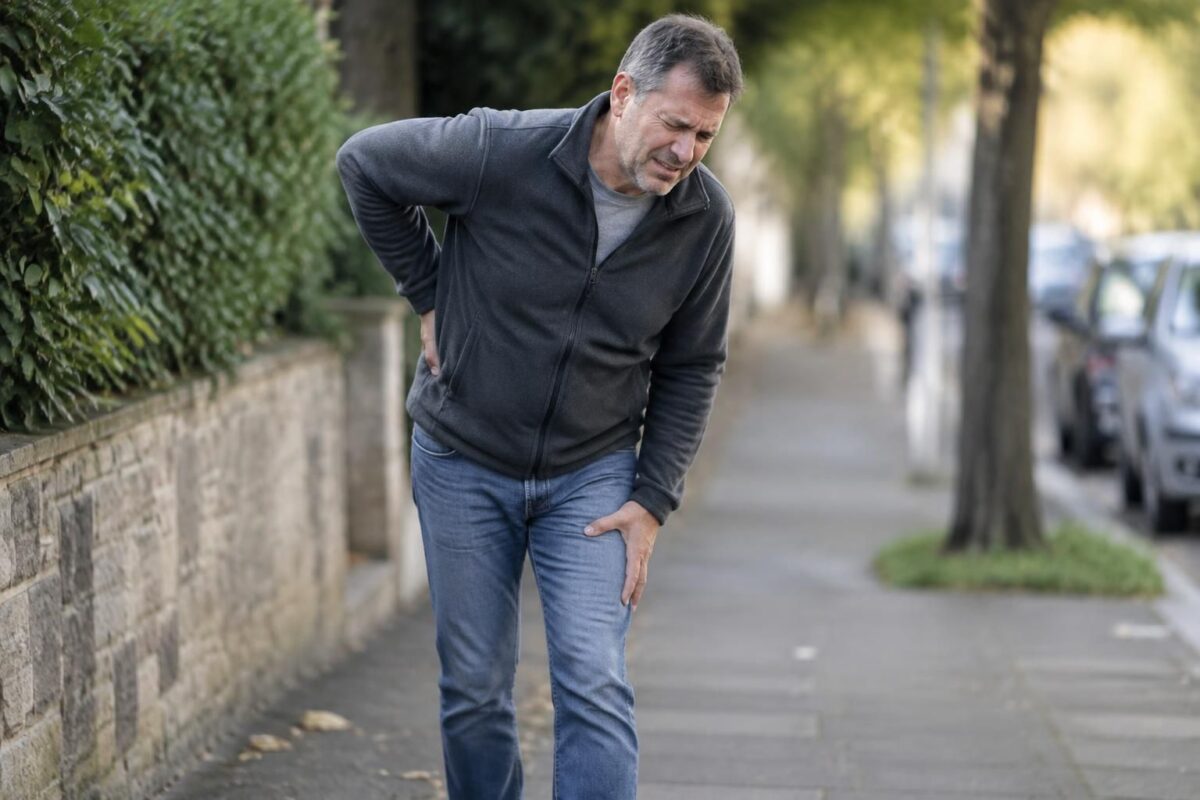
Sciatica and pain that worsens when walking
IN BRIEF A sciatica that worsens with walking is pain radiating from the buttock down the leg, exacerbated by walking. Several causes are possible: this symptom alone does not suffice for a diagnosis. Temporarily reduce walking duration, change positions, and…
Signs and symptoms to watch for
Typical symptoms go beyond the pain felt in the calf. You may observe paresthesias (tingling), numbness, and sometimes weakness in lifting the foot or bending the knee. The pain may worsen with walking, prolonged standing, or certain movements of the trunk and pelvis. If the pain is accompanied by significant loss of sensation or marked difficulty in controlling the leg, it deserves quick evaluation. Also monitor the temporal evolution: pain persisting for several weeks without improvement, or a rapid worsening, should be taken seriously.
Differentiating sciatica from cruralgia
Sciatica irritates the sciatic nerve and typically manifests as irradiation from the buttock to the back of the leg and sometimes to the calf and foot. In contrast, cruralgia affects the crural (femoral) nerve and is more manifested on the front of the thigh, sometimes reaching the knee. The pathway of the pain is thus the first criterion for differentiating these two neuralgias and adjusting treatment.

Sciatica and pain that improves when walking
IN SUMMARY Sciatica is pain that radiates from the lower back or buttock down to the leg, sometimes all the way to the foot. If it decreases with walking, a gentle and regular walk can help limit stiffness and maintain…
Possible causes and diagnosis
Beyond a classic herniated disc, other mechanisms can compress or irritate the lumbar nerve roots: osteoarthritis with osteophytes, lumbar canal stenosis, or simple chemical inflammation around the disc that triggers a significant inflammatory reaction around the nerve. Diagnosis first relies on the interview and clinical examination, focusing on the painful pathway and motor or sensory-motor signs. Imaging is not necessarily first-line and can be considered if symptoms persist or worsen, or if there are red flags.

IN BRIEF Sciatica is pain that often starts from the lower back or buttock and travels down the leg. Pain that worsens at the end of the day may be related to activities or prolonged positions, but it is not…
When to seek emergency care
Some situations require urgent care: paralysis or significant weakness of the leg, loss of urinary or fecal control, saddle anesthesia (sensory disturbances around the anus and perineum), unbearable pain at rest, or associated fever. In these cases, contact emergency services without delay.

Sciatica and pain that worsens in the evening
IN BRIEF more painful sciatic pain in the evening is often related to inactivity, fatigue, and increased attention to sensations. This does not necessarily mean that the nerve is worsening. Gently changing positions, walking for a few minutes, and finding…
Non-surgical approaches and practical advice
Management can be effective without surgery when nerve irritation is identified early and treated properly. Non-surgical approaches such as physiotherapy, osteopathy, and manual therapies focus on restoring mobility and reducing inflammation. Tailored exercises, core strengthening, and stretches for the lower limbs can help reduce pressure on the nerve roots. Daily posture advice, lifting techniques, and regular physical activity tailored to pain promote recovery and prevent recurrences. In some cases, motorized nerve decompression or other gentle techniques may be considered based on the assessment.

Sciatica and pain when turning in bed
IN BRIEF Sciatica can cause pain when turning in bed, as certain movements irritate the lower back or leg. Turn slowly, moving your shoulders and hips together; a cushion between the knees or under the knees can improve comfort. If…
Practical advice and self-care
To support the healing process, prioritize gentle and gradual movements, avoid positions that amplify pain, and stay active within comfortable limits. Apply relative periods of rest and alternate with light activities that are appropriate. Maintain good sitting and standing posture, and incorporate simple back and hip strengthening exercises to stabilize the lower back. If the pain persists beyond a few weeks, or if new signs appear, consult a healthcare professional for a diagnosis and personalized treatment plan.

Sciatica and pain when getting out of bed
IN BRIEF Sciatica upon getting out of bed is pain that radiates from the lower back to the buttock or leg and can be more pronounced after the night. Gradually rising, moving gently, and finding a comfortable sleeping position can…
Sciatica and pain radiating to the calf: sign of nerve irritation
| Criterion | Concise interpretation |
|---|---|
| Location | Radiates down to the calf and sometimes to the foot, a sign of irritation of the sciatic nerve (L5–S1). |
| Pathway | Sciatica: pathway from glute to posterior leg to foot. Cruralgia: anterior pathway of the thigh. |
| Quality of pain | Sciatica: electric/shooting pain. Cruralgia: burning in the front of the thigh. |
| Involved nerves | Sciatica: sciatic nerve (L4–S1). Cruralgia: femoral nerve (L2–L4). |
| Associated signs | Paresthesia and weakness of the foot in sciatica; weakness in knee extension in cruralgia. |
| Red flags | Paralysis or sphincter disturbances; unbearable pain or saddle anesthesia: emergency. |
| Clinical tests | Lasègue’s sign for sciatica; Léri’s sign for cruralgia; evaluation of strength and reflexes. |
| Imaging | MRI/CT not systematic; useful if persistence or red flags; complements diagnosis without replacing it. |
| Initial management | Non-surgical approach: movement, physiotherapy, anti-inflammatories; avoid prolonged rest; postural adaptation. |

Sciatica and difficulty finding a comfortable position
IN BRIEF Sciatica is a pain that often starts in the lower back or buttock and radiates down the leg, sometimes making it difficult to find a comfortable position. Alternating positions, avoiding postures that aggravate the pain, and trying a…
Testimonials on sciatica and pain radiating to the calf — sign of nerve irritation
“For a few weeks, my sciatica has been radiating pain from my lower back down to my calf. I first thought it was muscular, then I realized it was a nerve irritation running down my leg. The pain started like an electric shock and is sometimes accompanied by tingling in the calf. It was the pathway that helped me understand where the pain was coming from and to speak clearly with my doctor.”
“One morning, the pain woke me up with a burning sensation that started in my buttock and radiated down the back of my leg to the calf. Every step ignited this pain, and I felt like an electric shock with every movement. Even when the leg was at rest, the calf remained painful, a clear sign that the nerve was irritated rather than just a simple muscular discomfort.”
“I was surprised to discover that the pain radiating to the calf could be the only significant symptom. It started slowly, then became more intense when I stood or walked. The pathway of the sciatic nerve, which runs from the buttock down to the calf, helped me realize it was a radiculalgia and not just a simple cramp. This encouraged me to seek appropriate care rather than waiting for the pain to pass on its own.”
“After a few weeks, my symptoms evolved towards a better understanding and notable improvement thanks to mobility exercises and better posture. Targeting the pathway of pain — from the lower back to the calf — allowed me to choose suitable activities and avoid movements that exacerbate nerve irritation. My doctor explained that the sciatic nerve can be irritated on multiple levels, and treating inflammation around the nerve root truly helps relieve pain down to the calf.”
“In the event of a sudden onset of intense pain radiating to the calf, I understood the importance of consulting quickly when the pain is accompanied by weakness or unusual signs. Pain that radiates with a feeling of failure in the leg can be a sign of serious nerve irritation. In my case, early management helped prevent worsening and gradually allowed me to resume my daily activities.”
Dr Sylvain Desforges is an osteopath and specialist in chronic pain, with an evidence-based approach and a practice integrating advanced techniques to quickly restore mobility and well-being. In his clinical setting, pain radiating to the calf is often indicative of irritation of one or more lumbar nerve roots, typically related to radiculalgia. This manifestation is not limited to a simple muscular pain: it reflects an altered nerve communication between the spine and the lower limb, requiring precise assessment and appropriate care.
Sciatica and cruralgia represent two painful pathways of nerve origin, but their trajectory can guide diagnosis and treatment. When pain radiates along the back of the leg to the calf and foot, the sciatic nerve and a lumbar origin L5-S1 or sometimes L4 are generally considered. In contrast, pain that is located at the front of the thigh suggests irritation of the femoral nerve and a crural location. Understanding this body mapping is essential to target inflammation and prevent exacerbations while staying vigilant for signs of loss of strength or paralysis that require immediate medical attention.
Pathophysiology is often multifactorial. Mechanical compression—due to a herniated disc, osteoarthritic osteophytes, or spinal canal stenosis—can coexist with a chemical inflammatory component triggered by substances released around the intervertebral disc. In this context, the nerve can become hypersensitive, and even seemingly minimal pressure can manifest as electrical and burning pain that extends to the calf. Other factors, such as muscle tension, inadequate posture, or overweight, can amplify pain and delay healing if the biomechanical causes and inflammatory mechanisms are not addressed simultaneously.
Warning signs should not be ignored. Beyond pain, the presence of paresthesias, weakness in muscle strength, difficulty in lifting the foot or extending the knee, or sphincter disturbances indicate potentially serious nerve sensitivity and require prompt consultation. In Dr. Desforges’ practice, assessment is based on a precise history of the painful trajectory, targeted mechanical tests, and exploration of reflexes and muscle strength to accurately determine the affected nerve and the corresponding vertebral level.
Management prioritizes a multimodal and personalized approach. Osteopathic and manual techniques aim to release tension, restore spinal mobility, and decrease pressure on the roots. Depending on the case, complementary approaches may be integrated, including energy therapies and specific rehabilitation protocols to strengthen the back and lower limb muscles. The goal is to reduce inflammation, restore neural flow, and, most importantly, allow the patient to resume daily activities pain-free.
By combining clinical expertise, precise diagnosis, and therapeutic protocols based on best practices, Dr. Sylvain Desforges supports his patients in understanding their radicular pain and implementing a realistic and effective care plan. His commitment is to offer a management plan that combines safety, effectiveness, and lasting improvement in daily life, so that everyone can regain mobility, autonomy, and quality of life.
This conclusion summarizes the key points when pain radiates to the calf, a sign of nerve irritation along the sciatic nerve. It recalls how to distinguish sciatica and femoral neuralgia by the pain trajectory, emphasizes the importance of understanding the nerve origin, and suggests practical avenues to relieve inflammation and preserve your daily mobility.
The major signal is an electric pain that originates in the buttock and descends along the posterior face of the leg to the calf. When this pain reaches the calf, it typically indicates irritation of a nerve root of the sciatic nerve, not just simple muscle tension. Understanding this trajectory allows for targeting the right nerve and adjusting the treatment to directly address inflammation and pain. For some people, similar pain at the front of the thigh may point more towards femoral neuralgia, highlighting the importance of differential diagnosis.
The mechanisms of irritation are varied. Beyond a herniated disc, chemical inflammation around the disc can amplify pain, even in the presence of mild disc compression. Additional factors like lumbar osteoarthritis, osteophytes, or canal stenosis can reduce nerve space and worsen irritation. In all cases, the role of inflammation should not be underestimated, as it can transform moderate pain into disproportionate pain relative to the extent of a mechanical diagnosis.
The signs to watch for extend beyond pain. Paresthesias (tingling, electric shocks, numbness) and especially growing weakness in the foot or leg (difficulty lifting the foot or bending the knee) recommend prompt medical evaluation. Red flags such as loss of urinary or fecal control, saddle anesthesia, or unexplained hyperalgesic pain require emergency management.
In the face of these symptoms, a structured approach is essential. Clinical examination remains fundamental: precise location of pain, mechanical tests such as the Lasègue sign, and assessment of strength and reflexes. Imaging may be useful when it complements the evaluation or in case of persistent symptoms or signs of severity, but it does not replace overall clinical evaluation or the understanding of the biopsychosocial factors that influence pain. To delve deeper into these aspects, you can consult dedicated resources at the link Sciatica – possible nerve origin.
In practice, treatment varies with non-surgical options adapted to the identified etiology: improving posture and movements, physical therapy, or targeted osteopathy, and, if necessary, specific non-operative techniques to promote decompression and reduce inflammation. To understand the assessment tools and their impact on therapeutic choice, refer to the impact score. You can also explore resources on the causes and comprehensive treatments of sciatica via Causes, symptoms, and treatments.
To track the evolution of your pain configuration and responses to treatment, tools like the follow-up journal or guidance and monitoring guides can help you stay active and informed. If you encounter warning signs, you can consult resources on When to consult?, or monitor symptoms via Symptoms of sciatica to monitor.
To quickly assess the urgency of your situation, universally and practically, consult the Emergency test for sciatica and do not delay in case of doubt. If you seek clear guidance on treatment, read Guidance and treatment of sciatica, and consider specific advice related to sitting and posture, as in Sciatica and sitting on the sofa.
In summary, when the pain descends to the calf, it is essential to aim for a precise assessment of the nerve origin and to quickly adapt therapeutic measures to reduce inflammation and preserve mobility. For personalized support and concrete solutions tailored to your case, do not hesitate to consult a healthcare professional and explore the attached resources.

IN BRIEF Sciatica typically causes pain from the lower back to the buttock and leg; abdominal pain is not a typical sign and may have another cause. An evaluation helps to distinguish symptoms and guide management. Consult quickly if the…

Dr Sylvain Desforges, B.Sc., D.O., N.D., osteopath, is the founding president of TAGMED and of the ACMA association. He dedicates his practice to chronic spinal pain, low back pain and symptoms compatible with sciatica, particularly when pain radiates toward the buttock, leg, calf, foot or toes.
Through SOS Sciatique, he publishes educational content on sciatica symptoms, possible causes such as disc herniation, disc narrowing, foraminal stenosis or irritation of a lumbar nerve root, as well as non-surgical approaches that may be considered according to the evaluation. At Clinique TAGMED, care may include, depending on the case, motorized neurovertebral decompression, specific osteopathic care or precision percussion.
For an evaluation related to sciatica treatment in Montreal / Mount Royal or sciatica treatment in Terrebonne, please consult the services available at Clinique TAGMED.
Medical disclaimer
The information published on SOS Sciatique is provided for educational purposes only and does not replace a consultation, diagnosis, opinion or treatment provided by a physician or another authorized healthcare professional. The author of this article is neither a medical doctor nor a specialist in a medical specialty recognized by the Collège des médecins du Québec. The osteopathic, manual medicine or functional support approaches described on this site do not constitute medical acts and are not intended to replace medical follow-up.
Consult a physician or emergency service in cases of loss of bladder or bowel control, anesthesia in the saddle area, significant or progressive weakness in the leg or foot, fever, recent trauma, severe pain or rapid worsening of symptoms. For more details, please read our Legal Notice.


