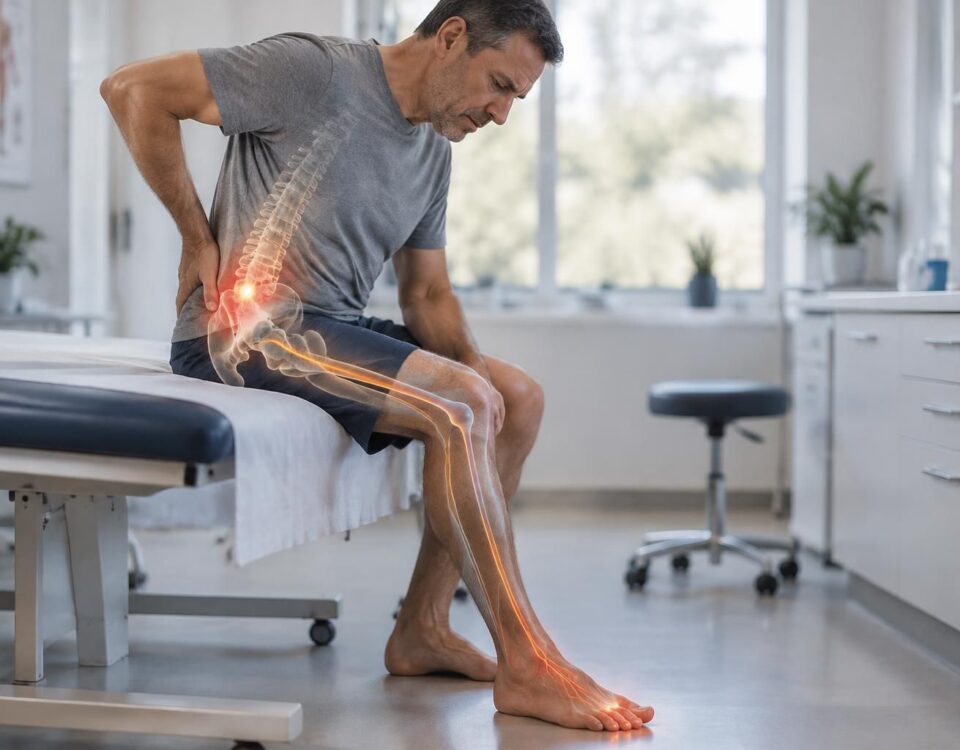
Sciatica Treatment in Terrebonne: Factors to Assess Before Care
25/07/2026
Sciatica and crossed legs: can symptoms worsen?
25/07/2026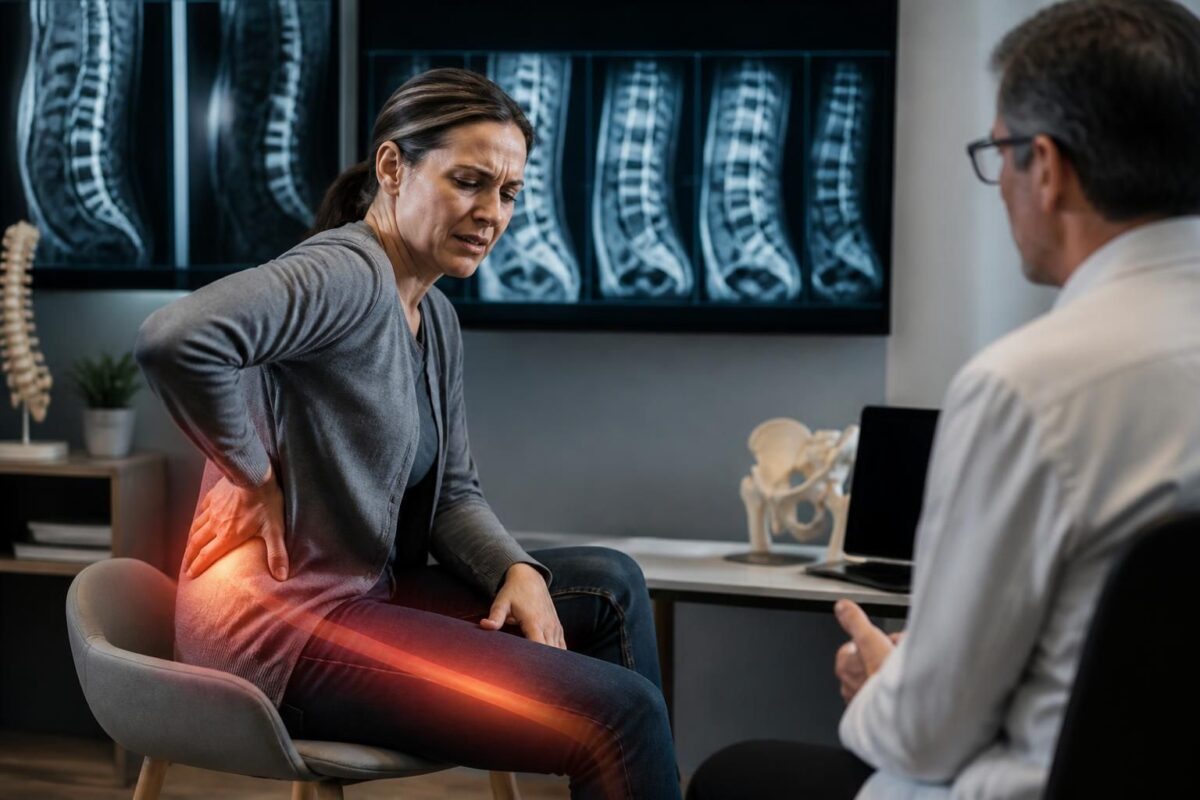
IN BRIEF
In brief, sciatica is pain that follows the path of the sciatic nerve. When <strongimaging is not sufficient to explain the pain, it often involves nerve hypersensitivity and global factors rather than a visible abnormality on the images. The benefits of this approach: recognizing the limitations of imaging, adopting a holistic management strategy, and emphasizing movement, breathing, and strengthening. How does it work? Assess the nervous system, gradually reintroduce movement, correct dynamical posture, and strengthen confidence in the body. Available in specialized clinics, notably in Montreal, this framework helps reduce pain sustainably and improve mobility without solely relying on imaging. |
Sciatica can persist even when imaging is reassuring. Indeed, radiological exams do not measure nerve sensitivity or the mechanisms that fuel the pain. Persistent pain may result from nerve hypersensitivity, the establishment of protective movement, chronic stress, and repetitive postures that maintain the pain. An approach that does not rely solely on imaging is necessary: progressive activity and targeted rehabilitation, work on breathing and dynamical posture, and regular re-evaluation to sustainably reduce pain and restore mobility.
Quick summary: imaging may seem reassuring while the pain persists. This article explains why images do not tell the whole story, what invisible mechanisms sustain sciatica, and how a global clinical approach can help break the deadlock, with management options available at Clinique TAGMED and reliable online resources.
Clear Limits of Imaging
Imaging exams show the structures of the back and nerve. They do not measure the state of the nervous system at the present moment. A nerve can be healthy yet hyperreactive. Pain can be amplified by the brain and the central nervous system. Thus, reassuring imaging does not exclude pain nor guarantee the absence of nerve sensitivity.
To delve deeper into clinical clues and guide management, it may be useful to review related resources, such as the test and symptoms of sciatica.
Non-Structural Factors that Sustain Pain
Hypersensitive nerve: in persistent sciatica, the nerve can be sensitive even without active compression. Mild stimuli become painful.
Fear of movement and excessive body protection: pain hinders daily actions, and this reduction in movement can maintain nerve sensitivity and slow recovery.
Posture and movement: sitting for long periods without variation can limit the mobility of the pelvis and nerve structures, which can sustain the pain.
Stress and mental load: chronic stress increases muscle tension and can maintain pain at a persistent level.
Expectations and interpretation of exams: multiplying exams can increase anxiety and reinforce the idea that a serious problem is present, even when results are reassuring.
To explore these aspects, you can consult resources like Sciatic treatment guidance and Causes and diagnosis of sciatica.
How to Evaluate Pain without Relying Solely on Imaging
An effective evaluation relies on a structured interview and a simple clinical examination. We seek to understand how the pain arises, its impact on activities, variations over time, and signs sensitive to walking or certain movements. The goal is to distinguish structural pain from a sensitive process in the nervous system.
When pain persists despite reassuring exams, a specialized consultation can help. At Clinique TAGMED, the evaluation may integrate osteopathic elements or adapted manual approaches, without imposing invasive actions.
Strategies to Break the Deadlock
Here are key strategies used in practice to reduce nerve sensitivity and promote a return to normal activity:
Reduce nerve system sensitivity: understand that the nerve is not destroyed and diminish fears associated with pain.
Gradually reintroduce movement: daily actions and gentle movements help the nerve to calm down when the movement is non-threatening.
Dynamical posture: prioritize postural variations and positions that allow the pelvis to remain mobile, rather than rigid positions that excessively protect.
Breathing and relaxation: working on regular breathing and abdominal relaxation can influence muscle tension and nerve sensitivity.
Body confidence: gradually resume avoided actions, observe the absence of danger, and expand the comfort zone fosters a better body perception and aids recovery.
To support these strategies, resources and tailored management are available through the Clinique TAGMED, located in Montreal and Terrebonne.
Resources and Management
Additionally, online resources offer information and practical strategies for better understanding and managing sciatica when imaging is insufficient. For example, guides and assessments available on sciatica walk test and accessibility can assist in guiding the initial steps of rehabilitation. For more information on indications, you can refer to sciatic treatment guidance and causes and diagnosis of sciatica.
For clinical perspectives and examples of imaging-limited care, the site neurovertebral decompression can provide general information without prescribing inappropriate exercises.
If you would like to learn more about the options offered at TAGMED Clinic, visit TAGMED Clinic.
Medical disclaimer: The information and advice provided on this site do not replace the opinion, diagnosis, or treatment of a healthcare professional. Please note that Dr. Sylvain Desforges, osteopath, is neither a medical doctor nor a physician, and is not specialized in a medical specialty as defined by the Collège des médecins du Québec. Manual medicine, functional medicine, and sports medicine as described on this site exclude any treatment or medical diagnosis made by a doctor or specialist. Always consult your doctor for any medical questions. For more details, please read our full Legal Notice.
What imaging does not explain
- Imaging can be normal even if pain is present.
- Pain may reflect a hypersensitive nerve rather than a visible lesion.
- The central nervous system can remain alert despite reassuring results.
- Functional and central causes escape imaging.
- Pain can fluctuate without structural progression.
- An absence of visible anomaly does not mean absence of pain.
Axes for understanding and acting
- Global assessment: movement, posture, strength, and daily activity.
- Progressive movement: controlled reintroduction to calm the nerve.
- Breathing and relaxation: reduce tension and sensitivity.
- Fear of movement and beliefs: education and self-management.
- Dynamic posture: variation of positions and pelvic mobility.
- Tailored approaches: manual therapies and targeted rehabilitation.
- Personalized plan and regular follow-up with a professional.

This article explains why imaging is not sufficient to explain pain related to sciatica and offers concrete recommendations for progress when examinations remain reassuring. It explores the invisible mechanisms that maintain pain and the practical strategies to sustainably overcome a painful episode despite normal imaging results.
When imaging does not tell the whole story
What examinations show and what they do not indicate
Imaging, whether MRI or CT scan, allows for ruling out serious causes and identifying anatomical anomalies. However, it does not measure the sensitivity of the nerve or how the nervous system interprets pain signals. Thus, an image may coexist with intense pain in one person and little to no pain in another. The key message is that sciatic pain is not necessarily proportional to the extent of visible anomalies on imaging.
The invisible mechanisms that maintain pain
Nerve hypersensitivity and pain learning
In persistent sciatica, the nerve may become hypersensitive. The brain may learn to interpret low stimuli as threatening, which keeps the alert state and amplifies pain, even in the absence of significant compression observed in imaging. This dynamic is reversible, but it requires a targeted approach to renormalize the nervous system.
The role of movement and fear of movement
Persistent pain often leads to immobilization and avoidance of certain movements. This fear of movement can increase nerve sensitivity and slow healing. Moving in a suitable and progressive manner helps to relearn that movement is not a threat, which decreases nociceptive activation.
Practical recommendations when imaging is reassuring
Reduce the sensitivity of the nervous system
Accepting that the nerve is not destroyed and working on body confidence can decrease pain signals. Activities without threat and reasonable pain monitoring are favored, without seeking to provoke discomfort repeatedly.
Gently revive movement
Establish an appropriate routine: regular walking, simple daily tasks, and light exercises that do not trigger severe pain. The goal is to increase the frequency of movements rather than their intensity, so that the nerve calms down through non-aggressive movement.
Dynamic posture and breathing
Adopting a dynamic posture with frequent posture changes and deep abdominal breathing helps to release tensions, particularly in the psoas area, and reduce nerve reactivity.
Confidence and targeted rehabilitation
Gradually returning to avoided movements and noticing the absence of danger allows for progressively expanding the comfort zone and reinforcing the perception of control over pain, a key factor in rehabilitation.
About the author
Dr Sylvain Desforges, osteopath, osteopath and specialist in lower back pain and sciatica, offers a holistic approach focused on movement, breathing, and body confidence. Founder and president of TAGMED and active in initiatives dedicated to spinal health, he is committed to helping his patients sustainably overcome pain through non-surgical strategies and personalized care.
| Assessment Axis | Concise Clinical Impact |
|---|---|
| Imaging Limitations | Imaging may be normal while pain persists; it does not assess nerve sensitivity. |
| Radicular Pain without Obvious Lesion | The nerve may be irritated without visible compression detection. |
| Hyperreactivity of the Nervous System | Pain can become central without detectable injury. |
| Role of Movement | Rest prolongs pain; progressive movement soothes the nerve. |
| Psycho-Emotional Context | Stress and anxiety amplify pain and slow healing. |
| Fears and Vigilance | The fear of diagnosis fuels pain and vigilance. |
| Reassuring Clinical Signs | Fluctuating pain, improvement with walking, no progressive weakness. |
| Non-imaging Therapeutic Approaches | Comprehensive plan based on movement, breathing, and adapted posture. |
| When to Reassess | Rapid changes or neurological signs require reassessment. |
Testimonials: when imaging is not enough to explain sciatica pain
Claire, 38 years old: “My imaging revealed nothing abnormal, and yet the pain in my leg kept returning. It was discouraging, as if the diagnosis remained unknown. I discovered that what matters is not just what the image shows, but how the nerve reacts on a daily basis. With an approach focused on progressive movement and breathing, the pain gradually decreased, and I regained true mobility.”
Paul, 50 years old: “My MRI showed a minimal protrusion, but no clear symptom that fully explained it. The pain returned in cycles and made me anxious. My practitioner helped me understand the key element: the nerve can become hypersensitive even without obvious compression. By working on breathing, relaxation, and tailored exercises, I was able to break the cycle of pain and resume my daily activities.”
Sophie, 29 years old: “I had almost no back pain, but an acute pain in my leg that blocked my days. It was an ‘atypical’ sciatica that imaging did not really capture. Thanks to an approach that values gentle movement, dynamic postures, and effective stress management, the pain subsided, and I was able to bring life back to my routines.”
Luc, 60 years old: “The pain returned in cycles while my tests remained stable. I understood that the problem was not a severe injury but nerve sensitivity maintained by stress and posture. By reintroducing movement and adjusting my way of moving daily, the pain settled, and I find longer periods without pain.”
Nathalie, 45 years old: “After years of pain, the imaging was reassuring, but the pain persisted. I learned to overcome fear and to reclaim simple, gradual actions. With targeted exercises and tailored breathing, I noticed concrete and lasting improvement, even when the images remained unchanged.”
Arnaud, 52 years old: “I was told it wasn’t necessarily a matter of bone or disk, but that the nervous system can keep the pain signal active. I was guided towards a strategy that combines controlled movement, dynamic posture, and relaxation. Today, the sciatica no longer dominates my daily life, and I can consider my activities without anticipated fear.”
Dr. Sylvain Desforges is a practitioner whose career stands out for an integrative approach to back pain, particularly in cases of sciatica where imaging does not tell the whole story. Osteopath, naturopath, and specialist in manual medicine, he articulates a practice based on clinical observation and active listening to the patient, rather than solely on the interpretation of radiological exams. This perspective was born from the observation that MRIs or scans can remain reassuring while pain persists, disrupting daily life and the patient’s confidence. His work illustrates a commitment to placing the human at the heart of care and converging knowledge to enhance the quality of life of those affected.
As the founding president of TAGMED clinics and ACMA association, he has dedicated his practice to the management of chronic pain, with particular attention paid to sciatic pain throughout his career. His approach emphasizes the cautious integration of advanced technologies where relevant: motorized spinal decompression, laser therapy, and shock waves are part of a range of tools used in a targeted and individualized manner. The goal is to provide measurable results while respecting the natural healing mechanisms of the human body.
The traditional posture, which can be viewed as a simple “back prevention” label, is insufficient to explain pain that may manifest in the leg without marked back pain. For Dr. Desforges, the problem often lies in a combination of biological, neurological, and psychosocial factors. Thus, he focuses on differentiating imaging from the actual mechanisms that cause pain. The nervous system can become hypersensitive, and stimuli that were once benign can become painful when pain centralization occurs. This awareness guides his work towards interventions that soothe the nervous system and restore functional mobility.
Moreover, clinical experience shows that patients progress when education is combined with movement. Progressive programs, focused on breathing, stress control, and daily actions, help restore body confidence and dispel fears associated with movement. Dr. Desforges prioritizes an approach that connects the explanation of mechanisms with tangible progression: simple and safe exercises, dynamic posture, and a measured reintroduction of previously avoided activities. In this logic, pain is seen as a signal improved by adapted activity rather than as a fate imposed by imaging.
The work around sciatica without the deployment of a comprehensive examination is also an invitation to rethink the therapeutic journey. For him, effectiveness comes from a structured strategy, based on clinical evidence and tailored to each individual. This philosophy is reflected in his choices of care: a progressive approach, continuous evaluation, and close collaboration with the patient to build a restored and sustainable comfort zone. His commitment is to transform the unknown and anxiety related to pain into a clear path toward symptom reduction and regained autonomy.
To learn more about his approach and the services offered by TAGMED, one can rely on his practice and associated resources, which emphasize personalized and evidence-based care. The proposed journey aims to reconcile the patient with their body, restore mobility, and offer a better quality of life in the face of pain that often escapes imaging but does not elude human and tailored care.
This quick introduction reminds us that when imaging is not sufficient to explain sciatic pain, it is necessary to broaden the perspective: pain can be real and persistent even if radiological examinations appear reassuring. An approach centered on movement, breathing, and confidence in the body often allows for a lasting way out of a deadlock, without waiting for imaging to provide all the answers.
The heart of the matter is that imaging does not systematically illuminate the dynamics of pain. A sciatica may endure even when images do not show major lesions, or conversely, be barely visible despite marked pain. This reflects the complexity of the nervous system: pain is modulated by sensory, motor, and emotional factors that elude solely radiological readings.
Clear evidence shows that pain can persist despite an imaging assessment that does not reveal serious anomalies, and it can even fluctuate independently of MRI or CT scan results. In this context, it is essential to distinguish between true and living pain and the sole signal provided by imaging, in order to avoid excessive trust in the images and to direct care toward actionable levers.
The invisible mechanisms that explain this discordance involve particularly a nerve hypersensitivity, an activation of the central nervous system that transforms simple stimuli into pain, and psychosocial factors such as stress, fear of movement, and rigid postural habits. The result is a pain that can maintain itself through movement and thinking patterns, even when the imaging is reassuring.
To move forward, a holistic approach is favored: relearning safe movement, strengthening support muscles, and working on breathing and relaxation to reduce neuromuscular tension. Dynamically reworking posture and rebuilding confidence in the body allow the nervous system to lower its vigilance and for pain to gradually diminish.
In practice, favoring adapted and progressive physical activity, targeted rehabilitation exercises, breathing techniques, and strategies to reduce anxiety around pain can transform the experience of sciatica. If imaging is insufficient to explain the pain or if symptoms persist, consulting a specialist who can assess functional, sensory, and emotional aspects remains a key approach to develop a personalized and effective plan.

Disc herniation and tingling in the toes
IN BRIEF A disc herniation is a disc that bulges beyond its contour; tingling in the toes can sometimes be related to irritation of a lumbar nerve, without MRI sufficiently confirming the cause. An examination connects the image, symptoms, and…

Disc herniation and numbness in the foot
IN BRIEF A disc protrusion is a bulging of a spinal disc; it does not always cause symptoms. If it irritates or compresses a lumbar nerve root, it may lead to tingling or numbness in the foot. An evaluation helps…
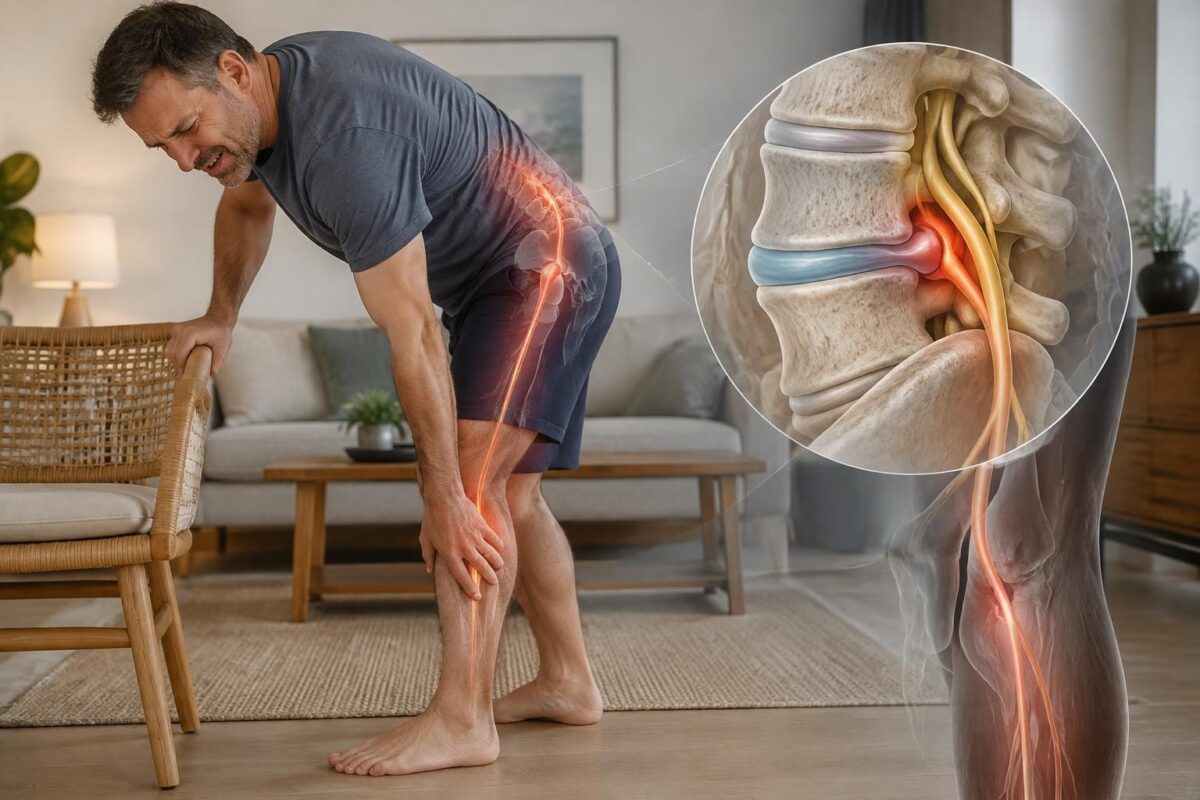
IN BRIEF A disc protrusion is a bulging of a disc that can irritate a nerve root and cause pain radiating down into the buttock and the calf, sometimes with tingling. However, it does not always cause symptoms. Evaluation helps…

Disc herniation and pain behind the thigh
IN BRIEF A disc protrusion is a bulging of a spinal disc, often without symptoms. A pain behind the thigh can be muscular or, if it originates from the back and is accompanied by tingling or numbness, related to nerve…

Disc herniation and pain in the buttock
IN SHORT A disc protrusion is a disc that bulges without its outer layer being ruptured. If it irritates a nerve root, it can contribute to buttock pain, sometimes accompanied by radiation down the leg, tingling, or numbness. It can…

L5-S1 protrusion and sciatic pain: pathway to the foot
IN BRIEF A L5-S1 disc protrusion is a disc that slightly bulges between the lumbar and sacral vertebrae. If it irritates a nerve root, pain may radiate from the lower back or buttock down the back of the leg to…

L4-L5 protrusion and sciatic pain: possible signs
IN BRIEF A L4-L5 disc protrusion is a bulging of the disc between two lumbar vertebrae. If it irritates the L5 nerve root, it can cause sciatica radiating from the buttock to the side of the leg and the top…
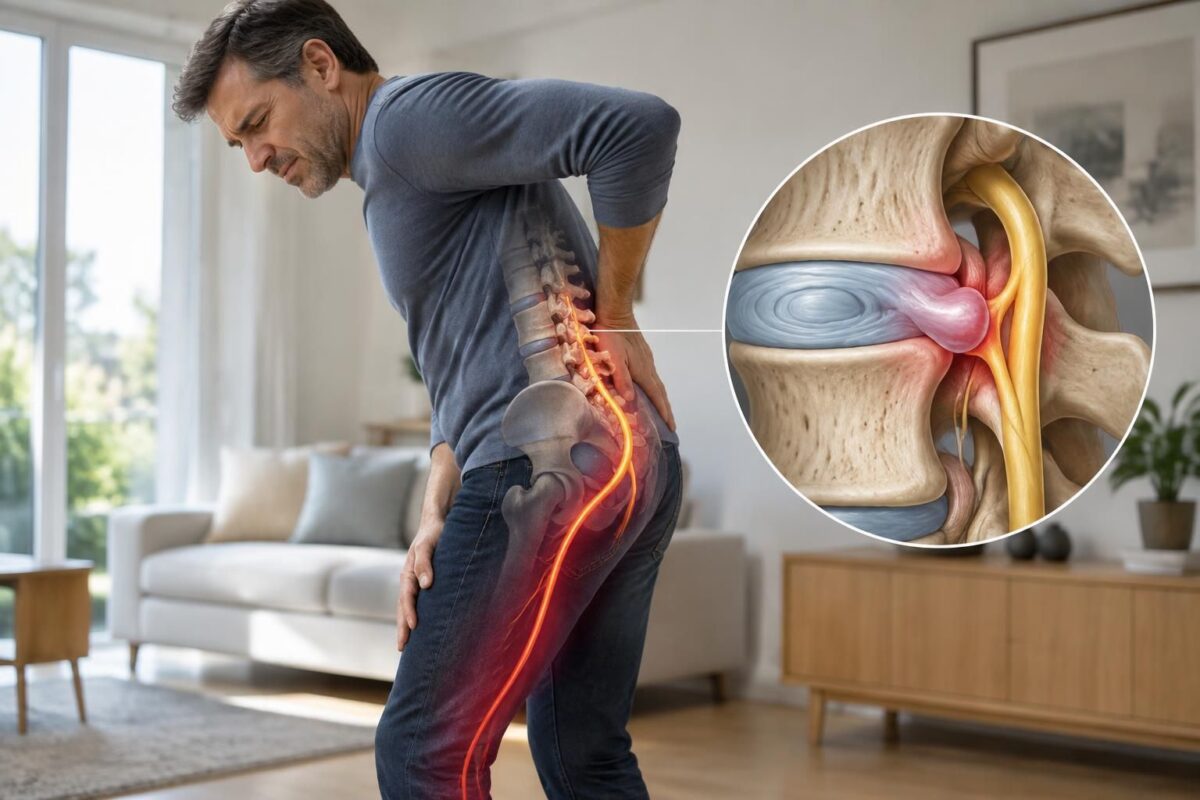
Disc protrusion and sciatica: when the disc touches a nerve root
IN BRIEF A disc protrusion is a disc that extends beyond its usual contour. If it irritates a nerve root, it can contribute to sciatica, with pain radiating into the buttock or leg, sometimes accompanied by tingling or weakness. An…

Dr Sylvain Desforges, B.Sc., D.O., N.D., osteopath, is the founding president of TAGMED and of the ACMA association. He dedicates his practice to chronic spinal pain, low back pain and symptoms compatible with sciatica, particularly when pain radiates toward the buttock, leg, calf, foot or toes.
Through SOS Sciatique, he publishes educational content on sciatica symptoms, possible causes such as disc herniation, disc narrowing, foraminal stenosis or irritation of a lumbar nerve root, as well as non-surgical approaches that may be considered according to the evaluation. At Clinique TAGMED, care may include, depending on the case, motorized neurovertebral decompression, specific osteopathic care or precision percussion.
For an evaluation related to sciatica treatment in Montreal / Mount Royal or sciatica treatment in Terrebonne, please consult the services available at Clinique TAGMED.
Medical disclaimer
The information published on SOS Sciatique is provided for educational purposes only and does not replace a consultation, diagnosis, opinion or treatment provided by a physician or another authorized healthcare professional. The author of this article is neither a medical doctor nor a specialist in a medical specialty recognized by the Collège des médecins du Québec. The osteopathic, manual medicine or functional support approaches described on this site do not constitute medical acts and are not intended to replace medical follow-up.
Consult a physician or emergency service in cases of loss of bladder or bowel control, anesthesia in the saddle area, significant or progressive weakness in the leg or foot, fever, recent trauma, severe pain or rapid worsening of symptoms. For more details, please read our Legal Notice.