


Sciatica: when imaging is not enough to explain the pain
25/07/2026
Sciatica in Terrebonne: sharp pain or persistent pain?
26/07/2026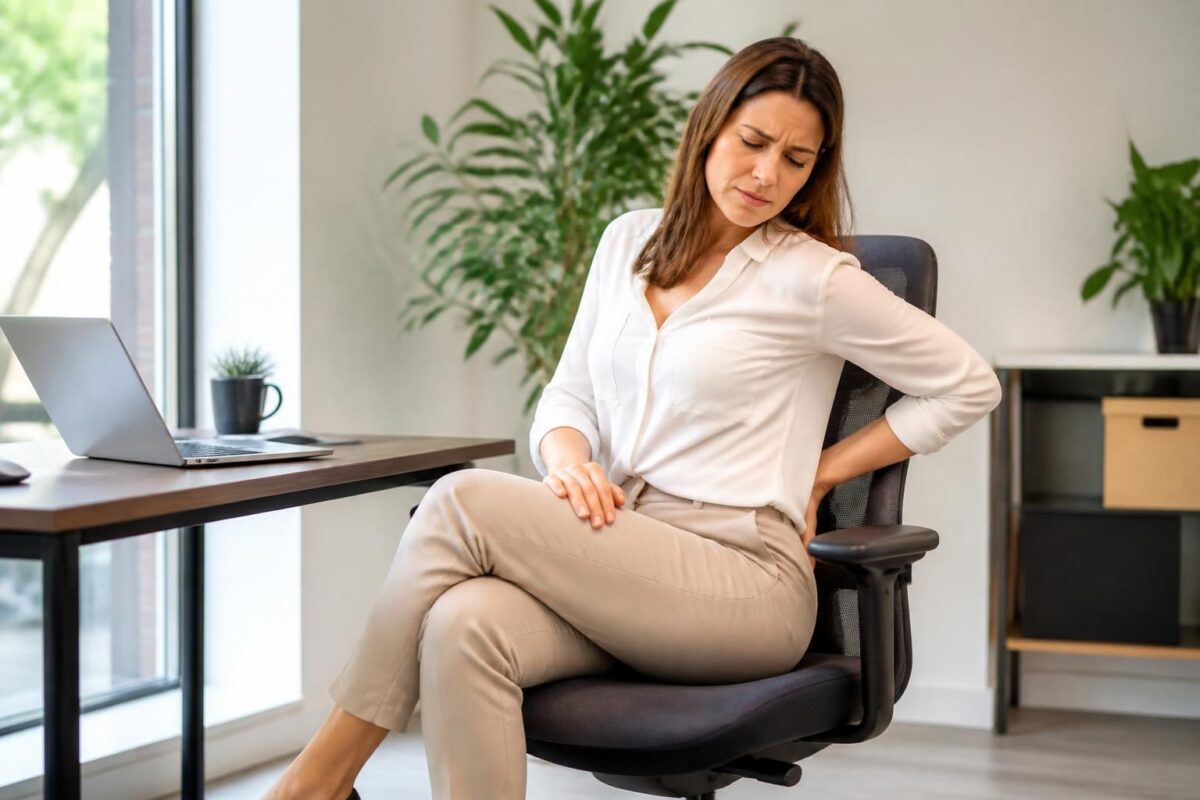
IN BRIEF
| What is sciatica and crossed legs? Sciatica is pain caused by irritation or compression of the sciatic nerve, which can radiate from the lower back to the leg. The theme of sciatica and crossed legs examines whether this posture can worsen symptoms and how to manage them daily. The benefits? Understanding this interaction helps to avoid postures that worsen pain and to adopt postures and daily habits that reduce pressure on the nerve and promote recovery. It also allows one to stay active without increasing symptoms. How does it work? Crossing crossed legs can alter pelvic alignment and increase tension on lumbar discs and the sciatic nerve, which may amplify pain in some individuals and be better tolerated by others. In practice, it often suffices to alternate positions, prioritize keeping the back straight, and take regular breaks to limit symptoms and maintain mobility. |
Yes. Sciatica and crossed legs can, in some individuals, worsen the pain. Crossing the legs destabilizes the pelvis and increases pressure on the lumbar canal, which can intensify the painful pathway of the sciatic nerve (lower back → buttock → leg).
To limit the risk, prioritize good postures and actions in daily life:
- Avoid crossing the legs for long periods
- Sit on a chair with lumbar support and feet flat
- Change positions and get up every 30 to 45 minutes
- Adjust bedding and sleep on your side with a pillow between your knees when possible
In case of very severe pain or neurological signs (significant weakness, loss of sensation), you should consult a doctor quickly.
This text, written by a health professional, answers the question of sciatica and crossed legs: can symptoms worsen? The mechanisms involved are explained, along with signals to watch for and simple actions to limit risks, without suggesting unsupervised exercises. You will discover how to identify your aggravating factors, when to consult, and which posture and movement measures to favor in daily life.
Crossed legs can alter pelvic alignment and increase pressure on lumbar discs and the sciatic nerve when you move or remain in position. This pressure can intensify pain that starts from the lower back and follows the pathway of the nerve to the knee or foot. Each individual is different, but the onset or worsening of symptoms may be related to the duration and intensity of the crossed position.
Several mechanisms explain this risk. A slight or persistent twisting of the torso, associated with prolonged sitting or standing posture, can increase stress on the lumbar structures. Pain may then manifest or worsen in the buttock and back of the leg. For some individuals, symptoms decrease when the position is corrected and postural breaks are increased.
To better understand the effects of postures and movements, you can consult dedicated resources on Sos Sciatique — lumbar twists and on other pages of sossciatique.com. These sources explain how twists and postural variations can influence pain.
What Can Worsen Symptoms
Positions that maintain the pelvis in rotation or increase pressure on lumbar discs can exacerbate pain. Staying with crossed legs for too long is a frequent factor. Repeated twisting and poorly coordinated movements of the torso can also contribute to irritation of the nerve.
In practice, prolonged sitting and actions that require a rounded back or trunk flexion without bending the knees can increase pressure on the spine and the sciatic nerve.
How to Limit Risks in Daily Life
Encourage a stable posture and regular breaks. Use a chair with lumbar support and keep your feet flat. Change positions every 30 to 45 minutes. Avoid crossing your legs for an extended period and favor a position that maintains spinal alignment.
For sleep, prefer a side position with a pillow between your knees or the “frog” position (legs slightly bent and apart). This type of posture can reduce pressure on the sciatic nerve and promote restful sleep. An appropriate mattress can help maintain spinal alignment without excessive tension.
In case of pain, avoid prolonged immobility. Move gently and listen to your body’s signals. If pain persists despite postural adjustments, consult a healthcare professional for an appropriate evaluation.
Additional resources describe how postures and lumbar twists affect pain (useful link). To learn more about posture and exercise aspects, visit sossciatique.com.
When to Consult and What Options to Consider
Consult quickly if you experience intense pain that does not respond to rest and posture measures. Other signs require urgent evaluation, such as significant weakness or loss of sensation, or urinary or bowel dysfunction.
If professional management is necessary, your doctor may suggest different options based on the cause and severity. In some cases, a consultation at a TAGMED clinic in Montreal or Terrebonne may be considered to evaluate available and suitable options for your situation.
To better understand the mechanisms and aggravating factors, additional resources are available on Sciatica and trunk twisting, and other pages related to Sciatica.
Key Points on Neurovertebral Decompression and Specific Situations
In discussions about approaches to decompression or other spinal pathologies, avoid unsupervised exercises or stretches. Comprehensive information is available on Neurovertebral Decompression and the affiliated sites included in your resource list. Always consult your doctor before undertaking any action or treatment.
To delve into the technical aspects and treatment comparisons, certain clinics and resources like TAGMED offer clinical perspectives in Montreal or Terrebonne. Consult your doctor about the options that suit you.
For additional insights, you can consult the following resources: Sciatica that doesn’t go away and pain aggravated by trunk flexion.
The information above aims to shed light on the link between sciatica and crossed legs. They do not replace a personalized medical consultation.
Medical disclaimer: The information and advice provided on this site do not replace the opinion, diagnosis, or treatment of a healthcare professional. Please note that Dr. Sylvain Desforges, osteopath, is neither a medical doctor nor a physician and is not specialized in a medical specialty as defined by the Collège des médecins du Québec. Manual medicine, functional medicine, and sports medicine as described on this site exclude any treatment or medical diagnosis made by a physician or medical specialist. Always consult your doctor for any medical questions. For more details, please read our complete Legal Notice.
- Crossed legs can imbalance the pelvis and increase tension on the sciatic nerve.
- Disc pressure can increase when sitting if the back is not well supported.
- Effect is variable depending on the person and the painful side.
- Avoid prolonged crossing; prefer a chair with lumbar support and flat feet.
- Move and alternate positions every 30–45 minutes to limit pressure.
- Sleep: prefer the side position with a pillow between the knees; avoid sleeping on the stomach.
- When performing actions, keep the back straight, legs slightly bent, and load close to the body.

Quick summary: this article answers the question Sciatica and crossed legs: can symptoms worsen? You will learn about the mechanisms involved, why crossing your legs for long periods can be problematic, and what habits to adopt to limit pain while staying active.
Understanding the impact of crossed legs on sciatica
Sciatica results from irritation or compression of the sciatic nerve, which runs down the leg from the lower back. The position of the legs directly influences the pressure on the spine and the nerve. While sitting, the pressure on the lumbar discs can increase by about 40% compared to standing. Crossing the legs can create pelvic asymmetry and alter back alignment, which can amplify tension on the nerve when this posture is maintained. In other words, it is not the crossing alone that creates pain, but the combination of prolonged crossing and repetitive or prolonged static actions that can worsen symptoms.
Crossed legs: what to avoid
The crossing of legs can become an aggravating factor when it is part of a prolonged sitting routine. Staying in this posture for long periods encourages pelvic tilt and uneven compression of the lumbar spine. The risk increases if you combine this habit with other postural errors such as sitting on a chair without lumbar support or slumping on the couch. Crossing legs “for long periods” should be considered a warning sign, especially if pain is already present or if it radiates to the buttock and down the leg.
How to sit and move to limit risks
To reduce pressure on the sciatic nerve, prefer a height-adjustable chair with lumbar support, feet flat on the floor, and back straight. Avoid crossing your legs for long periods and take breaks every 30 to 45 minutes to stand up and walk for a few minutes. A small lumbar cushion can be helpful if the seat does not provide sufficient support. When you need to get up, prefer movement with bent knees and a well-aligned back to avoid abrupt actions that would increase pressure on the discs.
Good practices in daily life and prevention
Beyond preventing positions that irritate the nerve, the key is to integrate habits that support the spine. Aim for at least 30 minutes of moderate physical activity per day, even during a mild painful flare-up. Physiotherapy and postural rehabilitation help strengthen the deep back muscles and learn to recognize warning signals. During the night, prefer a side position with a pillow between the knees and a mattress that is neither too hard nor too soft to maintain spinal alignment. Finally, everyday actions, such as lifting objects with bent knees and a straight back, help reduce recurrences.
When to seek emergency consultation
Quickly check if the pain is extreme, if there is paralysis or loss of sensation in the perineum, or accompanying urinary/non-sensitive signs (incontinence, inability to control the sphincter). Systemic signals such as fever or difficulty breathing also require prompt management.
| Aspect | Concise impact on symptoms |
|---|---|
| Lumbar pressure | Crossing may increase pressure on the disks and the sciatic nerve, especially without lumbar support. |
| Pelvic alignment | Crossing may shift the pelvis and amplify tension on the sciatic nerve. |
| Trunk stability | Instability can cause micro-movements irritating the sciatic nerve. |
| Duration of exposure | Staying crossed for a long time increases the risk of aggravation and may slow recovery. |
| Pain phase | In the acute phase, favor neutral positions and avoid prolonged crossing. |
| Circulation | Crossing can hinder circulation and increase tingling sensations. |
| Sleep and rest | Avoid positions that distort the spine; favor lying on the side with a pillow between the knees. |
| Practical advice | Chair with lumbar support, change position every 30–45 minutes, limit crossing. |
| Alternatives | Favor a neutral position and gentle exercises prescribed by a professional. |
Testimonial 1 — Alex, 42 years old: “When I cross my legs while sitting for long hours, my sciatica wakes up, and the pain can go up to my lower back. I’ve noticed that the pressure on my lumbar disks increases in this position.” “Since I’ve prioritized a chair with lumbar support and take breaks every 30 to 45 minutes, the symptoms calm down and I recover faster.”
Testimonial 2 — Camille, 29 years old: “At my home office, I used to cross my legs while looking at the screen, and my sciatica screamed. Since I avoid this position and sit up straight with my feet flat, taking regular breaks, the pain is less present.”
Testimonial 3 — Marc, 55 years old: “While doing my household chores, I found myself crossing my legs or standing still; I noticed an increase in pain. By adopting a posture of sitting up straight, knees bent with the load close to my body, and avoiding mistakes like crossing my legs for long periods, the pain improves.”
Testimonial 4 — Sophie, 37 years old: “I often work seated, and the temptation to cross my legs was strong. Additionally, I added a lumbar backrest and take frequent breaks; my sciatic issues handle the days better, and I sleep better without the pain settling in for long periods.”
Dr. Sylvain Desforges is a leading practitioner in the fields of osteopathy, naturopathy, and manual medicine. As the founding president of TAGMED clinics, he also leads the ACMA association, demonstrating a career dedicated to health innovation and continuous improvement of care approaches. His work focuses on managing chronic pain and integrating advanced technologies to optimize patients’ quality of life. His approach prioritizes a comprehensive and personalized assessment to provide concrete and effective solutions to complex issues like sciatica.
Regarding the topic “Sciatica and crossed legs”, his message remains clear: posture directly influences the pressure exerted on the sciatic nerve and can affect the intensity of symptoms. Dr. Desforges does not just apply treatments; he seeks to understand the motor and postural patterns specific to each patient. In practice, this translates into attentive listening, guided mobility, and simple yet concrete advice that preserves the alignment of the spine and reduces tension around the nerve.
Beyond posture, the doctor integrates therapies and modern technologies to support healing. Spinal decompression, laser, and shock waves are part of an arsenal designed to quickly relieve pain and promote recovery. This multidisciplinary approach is complemented by physiotherapy programs, strengthening exercises, and daily life advice to prevent recurrences and sustainably improve postural comfort.
For patients suffering from sciatica who are questioning the potential effects of positions like crossed legs, the offering from TAGMED clinics is based on evidence and personalization. Dr. Desforges provides a comprehensive assessment, tailored care, and regular follow-ups to optimize function and well-being. To discover his approach and the available services, bring your journey to the TAGMED clinic and consider a consultation suited to your situation.
Quick summary: when sciatica brings pain, leg positions can influence the pressure on the nerve. Crossed legs can, for some individuals, increase lumbar compression and intensify the pain along the nerve’s pathway. This article details how to avoid actions that worsen symptoms and offers practical tips to reduce tension, encourage rest, and promote recovery without prolonged bed rest.
Impact of Crossed Legs on Sciatica
Positions where one crosses their legs can alter pelvic alignment and increase pressure on the lumbar discs, especially when the spine is already sensitive. In this context, pain can radiate from the lower back down to the back of the leg, sometimes to the foot. The risk is not universal: some people tolerate this posture better, while others experience marked aggravation. To understand the mechanisms and aggravating factors, it may be helpful to evaluate how your body reacts when you cross your legs for long periods.
To explore the nuances between pain and muscular symptoms, and distinguish nerve pain from muscular discomfort, you can consult resources such as this page on pain in the back thigh, which can help identify typical signals of neuralgia versus muscle pain. A professional perspective can also help, especially if the pain is recurrent or associated with other signs.
Recommended Posture and Daily Movements
To limit risks when you need to sit, prioritize a chair with good lumbar support, feet flat, and reduced pelvic rotation. Avoid staying crossed for long periods and alternate positions every 30 to 45 minutes. A slight idea of support under the lumbar curve can provide temporary relief and prevent symptom aggravation.
Regarding daily movements, favor a lifting technique with bent knees and a straight back, rather than leaning forward with straight legs. Simple actions like climbing stairs or picking up an item should be done with an aligned posture: back straight, load close to the body, and using leg muscles rather than the back.
For those looking for practical cues, a simple test might be helpful: observe how your pain reacts when you walk or when you sit differently. Resources like sciatic walking test and other guides can complement your self-assessment and direct you toward useful adjustments.
Relief and Prevention Options
Beyond position adjustments, pain management can rely on various approaches: regular gentle activities, targeted physiotherapy, and appropriate postural techniques. Staying active, rather than becoming confined to absolute rest, is often beneficial to limit chronicity. Measures like moderate walking, swimming, or yoga can help strengthen back muscles and improve flexibility while reducing pressure on the sciatic nerve.
In case of persistent pain, options such as epidural infiltration can be discussed with a specialist, and physiotherapy can help correct postural patterns and restore function. For technical aspects and specific indications, you will find information on sciatic infiltration and various treatment approaches. Additionally, advice on wearing a lumbar support and assessing its usefulness in specific cases is available here: sciatica and lumbar support useful or aggravating depending on the case.
To prevent recurrences and adopt sustainable habits, consult resources dedicated to posture and positions to avoid, such as this page on positions to avoid and prevention guides available on TAO Yin Institute and Hello Santé.
For a summary of recommendations and scientific references, you can consult dedicated sources on scientific references, or explore collections of practical tips and examples of actions to avoid on Atelier Colette.

Sciatica and popular stretches: why to stay cautious
IN BRIEF Sciatica causes pain that radiates from the lower back down the leg. Popular stretches, such as the pigeon pose or hamstring stretches, are not always suitable: pulling on an irritated nerve can worsen the symptoms. Favor gentle movements,…

Sciatica and Pilates: movements to adapt
IN SHORT Sciatica causes pain that can radiate from the lower back down to the leg. The Pilates Reformer can promote a gradual return to movement and strengthen core control, provided that the movements, range, and resistance are adapted. Favor…

Sciatica and core stability: variable tolerance depending on symptoms
IN BRIEF Core strengthening in case of sciatica consists of progressively strengthening the trunk muscles. Its tolerance varies depending on pain and symptoms: suitable without worsening the pain, it can support mobility and the resumption of activities, but does not,…

Sciatica and lunges: leg pain to watch out for
IN BRIEF Sciatica is pain that starts from the lower back or buttock and radiates down the leg. If a lunge triggers or worsens this pain, stop the movement and adjust your activity: this exercise does not address sciatica. Consult…

Sciatica and deadlifts: risk depending on the cause
IN BRIEF Sciatica and deadlifts are not always incompatible: the risk depends on the cause of the pain and its intensity. During acute episodes, it’s best to avoid heavy loads and seek medical or physiotherapy advice before resuming. A gradual…

Sciatica and squats: why caution is needed
IN BRIEF Sciatica does not always prohibit squats, but a deep or loaded squat can aggravate symptoms, especially during a flare-up. Gradually resume with a neutral back and a comfortable range of motion, and stop if the pain travels down…
Sciatica and stationary bike: useful or aggravating depending on the case
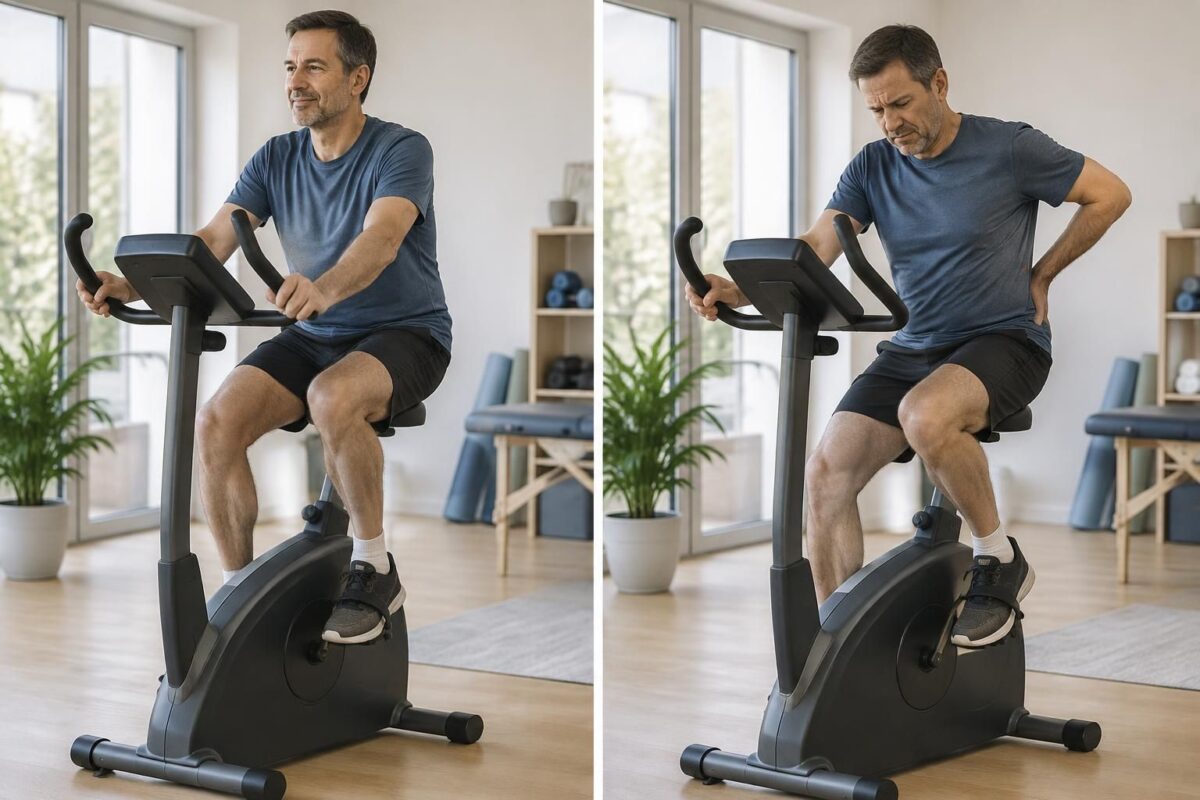
IN BRIEF The stationary bike with sciatica can help you stay active if the pain is mild and stable. Start with a short session, at low resistance and in a comfortable position. If the pain goes further down the leg,…

Sciatica and cycling: sitting, bending, and symptoms
IN BRIEF Sciatica is pain related to irritation of the sciatic nerve, which can extend from the buttock down to the leg. Cycling may sometimes be possible if symptoms are mild and stable: a comfortable seat, a less bent posture,…

Dr Sylvain Desforges, B.Sc., D.O., N.D., osteopath, is the founding president of TAGMED and of the ACMA association. He dedicates his practice to chronic spinal pain, low back pain and symptoms compatible with sciatica, particularly when pain radiates toward the buttock, leg, calf, foot or toes.
Through SOS Sciatique, he publishes educational content on sciatica symptoms, possible causes such as disc herniation, disc narrowing, foraminal stenosis or irritation of a lumbar nerve root, as well as non-surgical approaches that may be considered according to the evaluation. At Clinique TAGMED, care may include, depending on the case, motorized neurovertebral decompression, specific osteopathic care or precision percussion.
For an evaluation related to sciatica treatment in Montreal / Mount Royal or sciatica treatment in Terrebonne, please consult the services available at Clinique TAGMED.
Medical disclaimer
The information published on SOS Sciatique is provided for educational purposes only and does not replace a consultation, diagnosis, opinion or treatment provided by a physician or another authorized healthcare professional. The author of this article is neither a medical doctor nor a specialist in a medical specialty recognized by the Collège des médecins du Québec. The osteopathic, manual medicine or functional support approaches described on this site do not constitute medical acts and are not intended to replace medical follow-up.
Consult a physician or emergency service in cases of loss of bladder or bowel control, anesthesia in the saddle area, significant or progressive weakness in the leg or foot, fever, recent trauma, severe pain or rapid worsening of symptoms. For more details, please read our Legal Notice.


