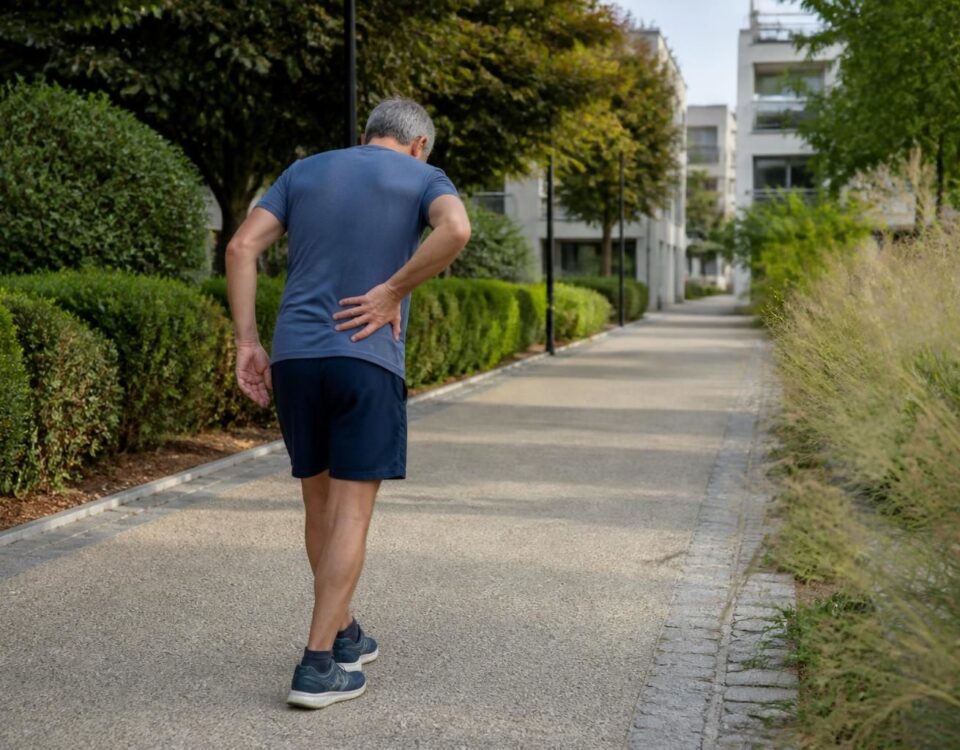
Sciatica in Terrebonne: lower back pain with a shooting pain in the leg
26/08/2026
Herniated disc and painful cough: disc pressure and nerve irritation
26/08/2026
IN BRIEF in English
| In short, sciatica related to tingling in the big toe may reflect an injury to the L5 root of the sciatic nerve. Definition: pain that follows the path of the nerve, starts from the lower back and reaches the top of the foot and the big toe. Advantages: quick diagnosis, effective conservative management, with physiotherapy and symptomatic treatments; frequent improvement in a few weeks to a few months. How it works: evaluation of the painful path and neurological signs; MRI can confirm a herniated disc and guide treatment; the majority of cases can be managed locally with monitoring of emergency signs. In Montreal and Mont-Royal, this service aims to quickly relieve pain and promote return to activity. |
Brief summary: Sciatica and tingling in the big toe — possible L5 root involvement
Sciatic pain can extend from the lower back to the dorsum of the foot and affect the big toe when the L5 root is irritated or compressed. Paresthesias (tingling) and sometimes weakness in dorsiflexion may accompany this picture.
- Common origin: lumbar disc herniation compressing L5; other mechanisms such as foraminal stenosis or spondylolisthesis; sometimes piriformis syndrome may simulate sciatica.
- Diagnosis: targeted clinical examination and lumbar MRI to confirm root location and cause; EMG helpful if doubt persists.
- Management: first-line conservative treatment (appropriate activity, analgesics, NSAIDs, physiotherapy); possible injections; surgery considered as a last resort in case of failure or motor deficit.
- Clinical objective: quickly relieve pain, protect the nerve, and promote return to activity through non-surgical approaches when relevant.
First paragraph: pain that radiates to the big toe may reflect an injury to the L5 root of the sciatic nerve. A quick diagnosis, supported by clinical evaluation and imaging, allows for targeted non-surgical management, often effective within a few weeks to a few months. This article, written by Dr Sylvain Desforges, osteopath, describes the mechanisms, signs, and treatment options available in Montreal and Terrebonne.
Understanding the link between the L5 root and the big toe
The sciatic nerve is the longest in the body. Its L5 root can be compressed by a lumbar disc herniation or by other constrictions around the nerve pathway. When L5 is affected, the pain follows the path of the nerve: buttock, outer side of the leg, dorsum of the foot, and big toe. Paresthesias or weakness in dorsiflexion may accompany the pain.
Typical clinical signs
Pain radiating to the top of the foot and the big toe. Tingling or burning sensation on the dorsum of the foot. Possible weakness in lifting the foot. The uncertainty is clarified by clinical examination and imaging.
Main causes and mechanisms
The most common cause is a lumbar disc herniation compressing the L5 root (at the L4-L5 or L5-S1 level). Other mechanisms include foraminal stenosis, spondylolisthesis, and sometimes peripheral causes like tarsal tunnel syndrome or local compressions. Piriformis syndrome may also produce similar symptoms in some individuals.
Diagnosis and imaging
The evaluation is based on the interview and neurological examination. The painful pathway, presence of paresthesias, and motor weakness, especially during dorsiflexion, are assessed. Lumbar MRI confirms the root location and cause. An EMG can specify the age and exact level of the injury.
Management options
Initial conservative approach: appropriate activity, analgesics, and anti-inflammatories according to patient profile. In case of persistent pain, options like injections may be discussed. Surgery is considered as a last resort, in cases of failure of conservative treatment or progressive motor deficit.
At the TAGMED Clinic in Montreal or Terrebonne, the patient can benefit from optimized non-surgical management. The objective is to reduce inflammation around the root and promote return to activity. Available interventions include specialized osteopathic techniques and, where conditions allow, a motorized neurovertebral decompression. For more information on options and specific cases, see the associated resources.
To delve deeper, you can consult the following resources:
sciatica and pain on the top of the foot – possible L5 root,
numbness of the foot while driving,
sciatica big toe L5,
Terrebonne – difficulty walking
In addition to public sources, osteopathy and targeted manual approaches play a central role in the multidisciplinary management of radicular pain. The therapeutic plan is tailored to each patient and may include, when relevant, specialized interventions offered by TAGMED.
Supplementary resources on symptoms related to the sciatic nerve and the L5 pathway can be found on dedicated pages, including those describing the relationships between sciatica and foot tingling and specific contexts such as driving or prolonged sitting. For more information, refer to the links above.
This content is provided as part of the care offer of TAGMED and is based on the knowledge and practices of professionals affiliated with recognized associations and institutions in the field.
Reminder: the advice provided does not replace an individual medical consultation. For any doubts or signs of emergency, quickly consult a healthcare professional.
To learn more about specific contexts, also check the following resources:
tingling at bedtime,
movement to watch out for after the vehicle,
Terrebonne – walking on heels or toes
Practical Notes: prioritize suitable and progressive activity, and avoid sudden twists. On the top of the foot, certain activities put less strain on painful dorsiflexion, and warning signs should be monitored.
Written by Dr. Sylvain Desforges, B.Sc., D.O., N.D., osteopath, founding president of TAGMED. Useful link: TAGMED Clinic.
Medical disclaimer: The information and advice provided on this site do not replace the opinion, diagnosis, or treatment of a healthcare professional. Please note that Dr. Sylvain Desforges, osteopath, is neither a medical doctor nor a physician, and is not specialized in a medical specialty as defined by the Collège des médecins du Québec. Manual medicine, functional medicine, and sports medicine as described on this site exclude any medical treatment or diagnosis made by a doctor or medical specialist. Always consult your doctor for any medical questions. For more details, please read our full Legal Notice.
- Origin L5: often related to a lumbar disc herniation or foraminal narrowing compressing the L5 root.
- Pain pathway: travels from the buttock, follows the nerve to the top of the foot and the big toe.
- Motor signs: difficulty lifting the foot (dorsiflexion) which may impair walking on heels.
- Sensory signs: paresthesias or burning sensation on the dorsum of the foot and the big toe.
- Diagnosis: clinical examination + lumbar MRI to confirm L5 radicular compression.
- Initial management: suitable activity, analgesics/anti-inflammatories, and physiotherapy.
- Complementary options: epidural injections if pain persists despite treatment.
- Emergencies/Surgery: surgery as a last resort after treatment failure or progressive motor deficit.
- Warning signs: urinary disturbances, progressive weakness, loss of perineal sensation (cauda equina).
- Treatment goal: relieve pain, protect the nerve, and allow a gradual return to activities.

This guide presents recommendations regarding sciatica accompanied by tingling in the big toe, potentially related to damage to the L5 root of the sciatic nerve. It explains the possible causes, the signs to monitor, the role of imaging, and management options, prioritizing the use of non-surgical methods for rapid relief and enabling a gradual return to activity.
Understanding the link between sciatica and pain in the big toe
The sciatic nerve is the longest in the body and emerges from several lumbar roots, including L5. When this root is irritated or compressed, pain may radiate from the lower back to the dorsum of the foot and affect the big toe. This pain may be accompanied by paresthesias (tingling) and, in some cases, weakness in lifting the foot (dorsiflexion), which can alter gait.
Causes and diagnosis
The most common cause is a lumbar disc herniation that compresses the L5 root between the L4-L5 or L5-S1 segments. Other possible mechanisms include foraminal stenosis, spondylolisthesis, or tensions related to non-vertebral structures such as the piriformis muscle. The diagnosis relies on the medical history and clinical examination, followed by a lumbar MRI to confirm radicular location and cause. In some cases, an electromyography (EMG) may help specify the duration and level of the lesion.
Recommended management approach
Initial approach and autonomy
The priority is conservative treatment. Adopt a suitable activity and avoid movements that worsen pain. Use analgesics and non-steroidal anti-inflammatory drugs when appropriate, and prioritize physiotherapy to strengthen back muscles, increase flexibility in the spine, and improve mobility. Targeted exercises for dorsiflexion and trunk stability promote a return to walking and prevention of recurrences. Proper posture and a gradual increase in activities are essential.
Complementary options
If pain persists despite initial treatment, epidural injections may be considered to reduce inflammation around the root. Multidisciplinary approaches, such as osteopathy or other targeted manual techniques, may be integrated when conditions allow. In cases requiring more targeted relief or failure of conservative measures, options such as motorized neurovertebral decompression or other non-surgical interventions may be discussed before considering surgery, reserved as a last resort.
Warning signs and when to seek emergency care
Consult quickly in case of loss of urinary control or perineal numbness, progressive weakness in the leg, fever, recent trauma, or severe pain associated with significant loss of sensation. Signs such as cauda equina syndrome require urgent medical attention.
Preventing and promoting recovery
To prevent recurrences and facilitate recovery, focus on core strengthening and leg muscles, prioritize regular and suitable walking, and protect the spine with correct daily movements. Maintain a tolerated activity level and avoid sudden twists. Clear communication with your healthcare professional and therapeutic education will help you understand the mechanisms of your pain and actively participate in your recovery.
| Aspect | Concise Elements |
|---|---|
| Frequent Origin | Lumbar disc herniation compressing the L5 root is the main cause. |
| Pain Pathway | Pain following the sciatic nerve up to the top of the foot and the big toe. |
| Motor Signs | Possible weakness in foot dorsiflexion. |
| Sensory Signs | Paresthesia on the dorsum of the foot and the big toe. |
| Diagnosis | Clinical examination and lumbar MRI confirm L5 and compression. |
| Initial Management | Conservative approach: adapted activity, analgesics/NSAIDs, and physiotherapy. |
| Complementary Options | Epidural injections possible if pain persists. |
| Surgical Indication | Surgery after treatment failure or motor deficit. |
| Urgent Issues to Monitor | Urinary disorders, progressive weakness, loss of perineal sensitivity. |
| Montreal/Mont-Royal Specificity | Goal: to relieve quickly and facilitate return to activity. |
Testimonials on Sciatica and Tingling in the Big Toe – Possible L5 Root
“My name is Claire, I am 42 years old, and my pain started in the lower back and then traveled up to the top of my foot and to the big toe. The tingling and burning sensation were part of my daily life. After a thorough evaluation, the doctor mentioned a possible involvement of the L5 root. Thanks to non-surgical management, combining targeted osteopathy and physiotherapy, I noticed a significant improvement within weeks and was able to resume my activities pain-free.”
“I am Antoine, 54 years old. The sciatic pain extended down to my big toe and the dorsum of my foot, with persistent tingling. Examination and MRI confirmed compression on the L5 root caused by a disc herniation. I was directed to a rehabilitation program and adapted osteopathic care, which allowed me to gradually regain walking and return to work in a few weeks without surgery.”
“I am Marie, 33 years old, and I felt an intensified pain along the sciatic pathway affecting the top of the foot and the big toe. The sessions revealed irritation of the L5 root. The treatment focused on movement, strengthening exercises, and gentle manipulations, complemented by proper monitoring. In about two months, I regained my activities while managing the pain, and my sensations returned to normal.”
“My name is Luc, I am 60 years old, and my pain was mostly felt on the top of my foot with intermittent tingling. After a precise evaluation, the cause turned out to be potential radicular involvement on L5. The gentle manipulations and physiotherapy allowed me to improve dorsiflexion and regain normal walking without daily discomfort.”
“I am Sophie, 36 years old. My problem began with a dull pain in the lower back that then traveled down the nerve pathway to the big toe, accompanied by tingling on the top of my foot. The team confirmed a suspicion of L5 root involvement and proposed a multimodal approach focused on targeted exercises and osteopathic care. After a few weeks, the signs significantly decreased, and I can walk and resume my activities without discomfort.”
Dr. Sylvain Desforges, osteopath, naturopath, and manual physician, is the founding president of TAGMED clinics and the ACMA association. His career is dedicated to innovation in healthcare and the management of chronic pain of the spine. He relies on an integrated approach that combines manual techniques, non-surgical interventions, and the use of advanced technological tools, such as motorized neurovertebral decompression, laser, and shockwave therapies. His mission is to provide evidence-based management to optimize the health and well-being of everyone. To understand his approach and the available services, his action is notably deployed within TAGMED Clinic.
In the face of manifestations such as sciatica associated with tingling in the big toe, Dr. Desforges highlights the possible involvement of the L5 root. This presentation is characterized by pain that travels from the lower back to the top of the foot and the dorsum of the foot, possibly accompanied by pain in the big toe. The painful pathway follows the territory of the L5 root and may be accompanied by paresthesias, weakness in dorsiflexion, and progressive recovery when the treatment is appropriate and early.
The diagnosis is based on a rigorous clinical examination and a precise mapping of motor and sensory signs. One looks for pain along the sciatic pathway, weakness during dorsiflexion movements, and sensitivity disorders on the dorsum of the foot. The use of imaging, particularly lumbar MRI, helps confirm a disc herniation or foraminal narrowing compressing the L5 root. In some cases, an electromyographic (EMG) examination may be useful to specify the duration and the precise level of the lesion when the clinical picture is complex.
The management preferred by Dr. Desforges is mostly conservative and personalized. It combines adapted activities, analgesics or NSAIDs when appropriate, and a targeted physiotherapy program to strengthen the deep muscles of the back and leg. Specific osteopathy and movement techniques aim to reduce pressure on the root and restore spinal mobility. Depending on the case, complementary options such as motorized neurovertebral decompression, use of laser or shockwaves may be considered to reduce inflammation and accelerate recovery. Injections may be discussed if pain persists after initial treatment, and surgery remains a last resort option in cases of non-surgical treatment failure or progressive motor deficit.
The therapeutic journey is accompanied by careful monitoring and therapeutic education to help each patient recognize warning signals and gradually resume their activities without risking a relapse. Recovery time typically ranges from a few weeks to several months, with improvement proportional to the rigor of the rehabilitation plan and adherence to the care regimen. Dr. Desforges is committed to ensuring that patients are active participants in their recovery by clarifying pain mechanisms and adapting daily activities to protect the nerve and the spine.
By adopting a multidisciplinary and patient-centered approach, Dr. Desforges focuses on offering non-surgical solutions whenever possible and relevant, while prioritizing transparent communication and clear functional objectives. His commitment is to place each individual at the heart of their care journey in order to promote a quick and sustainable return to an active and pain-free life.
Quick summary: sciatica associated with tingling in the big toe is often related to an injury of the L5 root of the sciatic nerve. The diagnostic process combines a careful clinical examination and imaging elements (notably lumbar MRI), with potential use of electromyography to specify the duration and level of the injury. Management prioritizes non-surgical approaches focused on physiotherapy and symptomatic treatments, and can improve over several weeks to a few months. In the Montreal and Mont-Royal areas, the goal is to quickly relieve pain and foster a return to activity while monitoring warning signals that require urgent medical evaluation.
The pain radiating from the lower back to the top of the foot and the big toe typically results from irritation or compression of the L5 root of the sciatic nerve. This localization explains why some patients describe paresthesias or weakness in raising the foot (dorsiflexion), with pain that follows the path of the nerve to the dorsum of the foot.
In terms of diagnosis, the evaluation aims to confirm the radicular location and the cause, most often a lumbar disc herniation compressing L5 on the L4-L5 or L5-S1 passages, but other mechanisms such as foraminal stenosis or degenerative disorders may be involved. The MRI is the key examination, complemented as needed by functional tests and, if necessary, by an EMG to specify the duration and level in order to guide management.
In terms of treatment, the initial strategy is conservative: adapted activity, analgesics, and anti-inflammatories when appropriate, and targeted physiotherapy to restore mobility, strengthen the trunk and leg muscles, and prevent relapses. Complementary options such as injections may be discussed when pain persists, and surgery remains a last resort if non-surgical treatment fails or if progressive motor deficits appear.
In clinical practice, a multimodal and personalized approach is favored, with regular monitoring of warning signs (urinary disturbances, loss of perineal sensation, or evolving motor weakness) that require rapid management in a potentially urgent context. Information resources and accessible clinical cases can help better understand the mechanisms and care pathways surrounding lumbosciatica and foot pain, especially in Montreal and the surrounding areas.
To deepen your understanding of the mechanisms and management options when this pain affects the top of the foot and is associated with L5 radiculopathy, you can consult specialized resources that detail the causes and manifestations, as well as indications for evaluation and conservative treatments. For example, explore the following pages to enhance your understanding and therapeutic approach:
Sciatica and pain on one side: possible causes,
Sciatica from back to legs: sharp pains from the onset,
Sciatica and intermittent numbness: how to interpret it,
Sciatica in Terrebonne: pain that radiates below the knee,
Sciatica — spinal surgery,
Sciatica — Dev Santé,
Sciatica in Terrebonne: numbness that progresses to the foot,
Numbness of the toes and sciatica,
Sequestered disc herniation and sciatica: why evaluation is important

Sciatica and weakness in the thigh: possible lumbar cause
IN BRIEF Sciatica with thigh weakness is a possible manifestation of a lumbar cause irritating a nerve root (L4-L5, L5-S1). Advantages: a quick diagnosis and a targeted treatment plan with rehabilitation to regain strength and mobility and prevent recurrences. Operation:…

Sciatica and calf weakness: what should be monitored?
IN SHORT In short, sciatica and weakness in the calf describe a lumbar radiculopathy where pain follows the path of the sciatic nerve and may reach the calf. Benefits: a targeted non-surgical management, quick relief, and an improvement in mobility…

Sciatica and difficulty walking on tiptoes: possible S1 root
IN BRIEF In brief, sciatica with difficulty walking on tiptoes may reflect an involvement of the S1 lumbar root. What is it? a radicular pain that can limit foot elevation and walking on tiptoes. What are the benefits? an accurate…
Sciatica and difficulty walking on heels: possible L5 root
IN BRIEF The sciatica associated with a difficulty walking on the heels is generally due to an involvement of the L5 root of the sciatic nerve, with a pathway that starts from the lower back, crosses the buttock, and goes…

Sciatica and difficulty lifting the foot: emergency or quick consultation?
IN BRIEF The drop foot is a weakness of the foot dorsiflexors that causes a steppage gait and may reveal sciatica with compression of the nerve in the lumbar region. When it is associated with sciatic pain and loss of…

Sciatica and loss of strength: a sign not to be taken lightly
IN SHORT In short, sciatica is pain that follows the path of the sciatic nerve. A loss of strength in the leg is a sign that should not be taken lightly. It’s a warning indicating nerve damage that may require…

Sciatica and numb foot sensation: when to consult?
IN BRIEF In brief, sciatica and numbness in the foot refer to pain that follows the path of the sciatic nerve and may be accompanied by tingling or numbness in the foot. This summary specifies when to seek consultation, distinguishing…

Sciatica and the sensation of a numb leg: what does this symptom mean?
IN BRIEF Sciatica and the sensation of a dead leg refer to pain and tingling along the path of the sciatic nerve, from the lower back to the foot. This symptom reflects nerve compression or irritation, most often due to…

Dr Sylvain Desforges, B.Sc., D.O., N.D., osteopath, is the founding president of TAGMED and of the ACMA association. He dedicates his practice to chronic spinal pain, low back pain and symptoms compatible with sciatica, particularly when pain radiates toward the buttock, leg, calf, foot or toes.
Through SOS Sciatique, he publishes educational content on sciatica symptoms, possible causes such as disc herniation, disc narrowing, foraminal stenosis or irritation of a lumbar nerve root, as well as non-surgical approaches that may be considered according to the evaluation. At Clinique TAGMED, care may include, depending on the case, motorized neurovertebral decompression, specific osteopathic care or precision percussion.
For an evaluation related to sciatica treatment in Montreal / Mount Royal or sciatica treatment in Terrebonne, please consult the services available at Clinique TAGMED.
Medical disclaimer
The information published on SOS Sciatique is provided for educational purposes only and does not replace a consultation, diagnosis, opinion or treatment provided by a physician or another authorized healthcare professional. The author of this article is neither a medical doctor nor a specialist in a medical specialty recognized by the Collège des médecins du Québec. The osteopathic, manual medicine or functional support approaches described on this site do not constitute medical acts and are not intended to replace medical follow-up.
Consult a physician or emergency service in cases of loss of bladder or bowel control, anesthesia in the saddle area, significant or progressive weakness in the leg or foot, fever, recent trauma, severe pain or rapid worsening of symptoms. For more details, please read our Legal Notice.