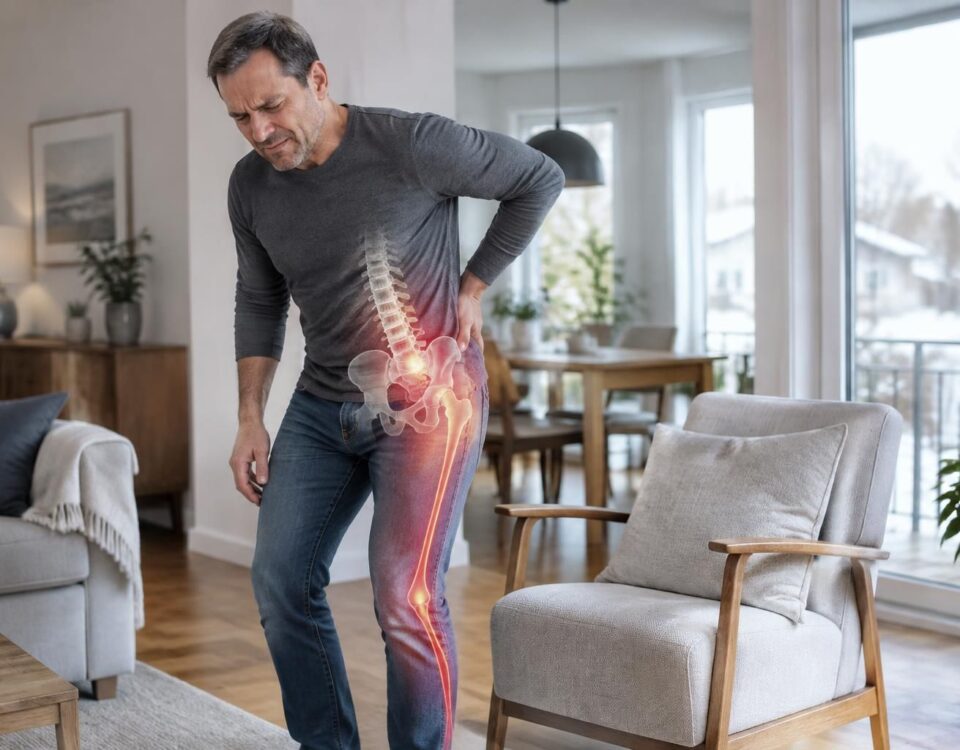



Sciatica in Montreal: foot pain that increases while sitting
29/08/2026
Sciatica and burning sensation behind the thigh
29/08/2026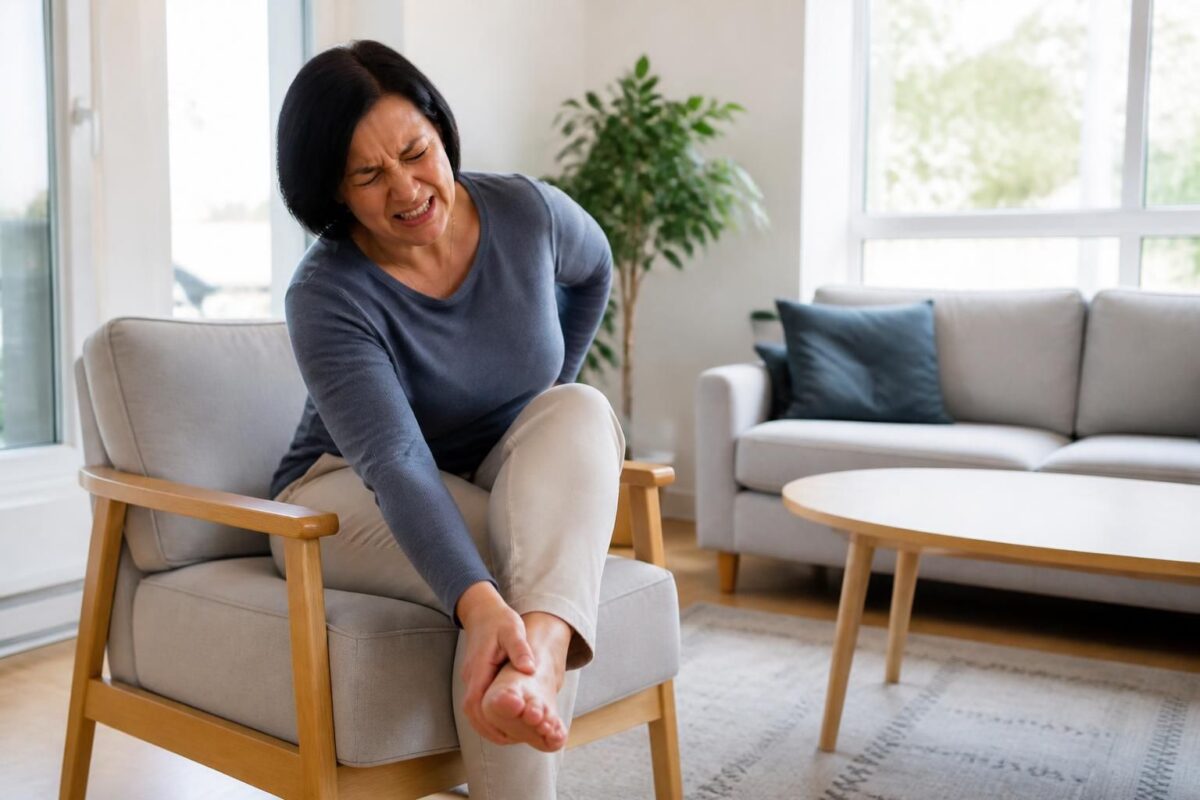
IN BRIEF
| In brief, sciatica in Terrebonne describes a pain that radiates to the foot along the sciatic nerve and worsens when in a sitting position. It can be alleviated by postural adjustments, active breaks, and simple exercises that promote mobility and comfort. In Terrebonne, these quick approaches reduce pain and prevent flare-ups. The principle is based on ergonomics of the workstation, rebalancing tensions, and strengthening the muscles of the trunk and hips. The goal is to regain energy and the ability to move without pain in daily life. |
In Terrebonne, sciatica can manifest as a pain in the foot that increases in a sitting position. This pain results from irritation or compression of the sciatic nerve, often exacerbated by increased pressure on the lumbar discs when the spine is maintained in a prolonged sitting position. Improving ergonomics, varying postures, and integrating active breaks throughout the day can help limit discomfort. If symptoms persist or significant neurological signs occur, consult a health professional.
This article, written by a healthcare professional and expert, addresses sciatica in Terrebonne with foot pain that worsens in a sitting position. It explains simple mechanisms, signals to watch for, and practical gestures focused on ergonomics and postural adjustments. The aim is to reduce pain and preserve mobility at work and home, while providing clinical resources available at TAGMED.
Understanding Sciatica and the Context in Terrebonne
Pain often follows the path of the sciatic nerve. The foot can become painful or numb when sitting for a long time. The most common cause is a herniated disc, but other factors exist such as osteoarthritis, narrowing of the lumbar canal, and certain muscle tensions. Mechanical and inflammatory irritation of the nerve or its root is the common point.
The role of gestures and postures is important. Pressure and tension change based on flexion, extension, and inclination of the trunk. In practice, small postural adjustments can quickly relieve acute pain, while remaining in a position that places too much load on the nerve can reignite symptoms.
To delve deeper into the mechanisms and triggers, you can consult dedicated resources on Sciatica and numbness progressing to the foot.
Impact of Sitting Position on the Sciatic Nerve
The sciatic nerve is sensitive to pressure and repeated stretching. A slumped posture or a seat lacking support increases intra-discal pressure and can irritate an already sensitive nerve root. Conversely, favorable conditions allow the nerve to function smoothly.
Pain often follows a mechanical logic: if leaning forward worsens symptoms and standing up slightly helps, you are likely benefiting from relief by limiting deep flexions at the start. This approach does not exclude future movements but emphasizes their gradual and controlled dosage.
More information on the effects of position in daily life and at work is available on Sciatica and overly inclined car seat.
Signs, Alerts, and When to Consult
Watch for warning signals: increasing weakness in one leg, loss of sensitivity, urinary issues, or pain that persists despite usual measures. In the presence of these signs, a medical evaluation is necessary promptly.
For personalized advice and appropriate evaluation, contact the TAGMED Clinic in Terrebonne or Montreal. More information at TAGMED Clinic.
Ergonomic Strategies and Posture in Daily Life
Establish a progressive ergonomics approach. Vary positions and prefer sitting modes that respect the natural curvature of the lower back. An adapted chair with lumbar support and simple cues can make a significant difference throughout the day.
Some simple and useful principles:
– Place hips slightly above knees and sit on the ischiums, with a lumbar roll to support the lower back.
– Keep feet flat and avoid sudden twists during car journeys.
– Use regular active breaks to move without overloading the nerve.
For illustrated ergonomic advice and practical resources, see the dedicated pages on Sciatica and getting into the car and Overly inclined car seat.
What TAGMED Offers and Associated Resources
Management at TAGMED may include non-surgical approaches tailored to individual assessment. The clinical framework prioritizes safe, patient-centered measures to limit triggering factors and optimize mobility. To explore local options, visit TAGMED Clinic.
Complementary resources cover topics related to sciatica and foot numbness, with structured and accessible information on progressive numbness towards the foot and numbness progressing towards the foot.
For information on decompression options and associated structures, check neurovertebral decompression.
Resources and Useful Links
To dive deeper into practical aspects, you can consult the following resources:
Sciatica and overly inclined car seat – advice on seat inclination and its impact on the spine.
Numbness progressing to the foot – progression of symptoms and indicators to watch for.
Progressive numbness to the foot – Montreal – additional information on the symptomatic journey.
Avoid sudden twists in the car – practical advice for daily commutes.
Sciatica and sitting position – general ergonomic advice (use the resources on the site).
For questions related to pathology and clinical management, consult the resources on sossciatique.com and the dedicated pages on sosherniediscale.com, sosherniateddisc.com or sostunnelcarpien.com.
For general information and resources related to osteopathic practice, refer to the TAGMED Clinic and the ACMA organization.
Medical disclaimer: The information and advice provided on this site do not replace the opinion, diagnosis, or treatment of a healthcare professional. Please note that Dr. Sylvain Desforges, osteopath, is neither a medical doctor nor a physician and is not a specialist in a medical specialty as defined by the Collège des médecins du Québec. Manual therapy, functional medicine, and sports medicine as described on this site exclude any treatment or medical diagnosis made by a physician or specialist. Always consult your doctor for any medical questions. For more details, please read our full Legal Notice.
In case of neurovertebral decompression, herniated disc, protrusion, or foraminal stenosis, this text does not indicate specific exercises or stretches. Consult the resources and professionals at TAGMED for appropriate assessment.
References and professional associations used in this context include TAGMED, ACMA, and the public resources associated with sossciatique.com. For training and information, only the references NUMSS, NAO, National University of Medical Sciences, and National Academy of Osteopathy are relevant according to the official osteopathic framework.
- Symptom Pain radiating to the foot, exacerbated by sitting.
- Origin Irritated sciatic nerve, often related to a herniated disc.
- Alert Weakness or loss of sensitivity requiring prompt consultation.
- Ergonomics Chair with lumbar support, feet flat.
- Active breaks Micro-breaks every 30–60 minutes and light walking.
- Helpful posture Self-stretching and controlled torso rotation during efforts.
- Activity Alternating sitting/standing and gentle stretches.
- Exercises Core strengthening and targeted stretches for hips and hamstrings.
- Terrebonne Customizable action plan with local assessments.
- When to consult Pain persists > 2–3 weeks or nighttime pain.

Quick summary: This article offers practical recommendations for sciatica in Terrebonne, when the pain radiates to the foot and worsens in sitting position. It identifies possible causes, postures to avoid, and alternatives, as well as ergonomic advice and simple exercises to regain mobility, energy, and comfort in daily life.
Understanding Sciatica in Terrebonne
Sciatica manifests as pain following the path of the sciatic nerve, starting from the lower back and potentially descending to the buttock, thigh, and sometimes the foot. In Terrebonne, as elsewhere, mechanical and inflammatory factors can irritate a lumbar nerve root, particularly in the case of a herniated disc, foraminal narrowing, or other imbalances.
Causes and mechanisms
The most common cause remains the herniated disc, but arthritis, lumbar canal stenosis, spondylolisthesis, or tensions related to the piriformis can also trigger pain radiating along the sciatic nerve. Irritation is often mechanical and inflammatory, affecting the nerve root and surrounding tissues.
Why sitting position matters
Prolonged sitting position increases pressure on the intervertebral discs and can maintain or amplify nerve irritation. Repetitive movements, trunk flexion, and immobility contribute to exacerbating the symptoms, while simple postural adjustments can quickly reduce discomfort.
Postures to avoid when sitting
Work posture
Avoid low seating, slouched backs, and soft seats that promote excessive lumbar flexion. Also avoid remaining fixed in front of a screen, with shoulders and neck projected forward. Prolonged sitting can amplify pressure on the discs and stress the nerve roots.
Driving and commutes
Long car journeys often worsen pain if the seatback is too inclined or if the pelvis lacks support. Repeated vibrations and poor trunk alignment can maintain pain and numbness in the foot.
Position alternatives
Favor dynamic sitting sequences and micro-movement: alternate between sitting properly and standing, and introduce small breaks every 20 to 30 minutes to relieve tensions. The goal is to avoid closed lumbar angles and promote micro-movements that respect the natural curvature of the back.
Ergonomics and workstation layout
Choose a chair that supports the lumbar lordosis and whose feet rest flat. Adjust the screen to eye level and use a small lumbar support. When working on a computer, bring the screen closer and keep elbows near the body to reduce cervical and back tensions. In the car, prefer a seat with lumbar support and adjust the seating so that the knees remain at about 90 degrees.
Active routines and breaks
Integrate regular active breaks and gentle stretches targeting the piriformis and hamstrings. Three deep breaths, two standing hip bends, and a 60-second walk can really change tolerance to the sitting position.
Simple exercises and mobilizations
Core strengthening
Light core stabilization exercises and bridges can improve lumbar stability and reduce pressure on the nerve root during sitting positions and daily movements.
Targeted gentle stretches
Perform progressive stretches of the back, glutes, and hips without acute pain. The goal is to improve flexibility and prevent stiffness that worsens foot pain when seated.
When to consult
If foot pain becomes persistent, is accompanied by weakness, loss of perineal sensitivity, urinary issues, or intense pain that does not respond to basic measures, consult quickly. An appropriate assessment can guide personal adjustments and the best therapeutic options suited to your context in Terrebonne.
| Axis | Concise statement |
|---|---|
| Triggers in sitting position | Foot pain that intensifies after prolonged sitting and flexed postures; prefer breaks and micro-movements. |
| Disc pressure and sciatic root | Disc pressure increases in sitting position; adjust lumbar angle and avoid prolonged flexion. |
| Workstation ergonomics | Chair with lumbar support, screen at eye level, feet flat; alternate sitting/standing to limit pain. |
| Postures to avoid | Avoid prolonged lumbar flexion, low seat and leg positions that compress the nerve. |
| Breaks and movements | Adopt active breaks every 20–30 minutes and micro-movements to reactivate circulation. |
| Targeted exercises | Core and hip strengthening and gentle stretches targeting the piriformis and hamstrings. |
| Sleep and rest | Sleep on the side with a pillow between the knees and lumbar support; avoid stomach sleeping and pelvic rotations. |
| Warning signs | Increasing weakness, urinary issues or persistent pain: consult quickly. |
| Expected benefits in Terrebonne | Better mobility, reduced foot pain and prevention of flare-ups through ergonomics and movement. |
Testimonials on Sciatica in Terrebonne: foot pain that increases when sitting
“While working from home in Terrebonne, my foot pain related to sciatica increased with every hour spent in sitting position. After a few sessions and a personalized program focused on ergonomics, my symptoms improved significantly and I can sit without prolonged discomfort.”
“I work on a computer and sciatica sent sharp pains through my foot as soon as I sat down. The ergonomic tips and chair adjustments in Terrebonne, combined with targeted exercises, have decreased the intensity and frequency of the pain.”
“After months of suffering while sitting, I found a multidisciplinary approach in Terrebonne that focuses on movement and active breaks. My foot hurts less and my posture feels more natural by the end of the day.”
“The pain started during car rides and long periods in sitting position toward Terrebonne. With better ergonomics, a neutral posture, and some simple stretches, I felt a real improvement and fewer night awakenings related to sciatica.”
“I went from pain spreading throughout my foot when sitting to a smoother daily routine. The program in Terrebonne taught me how to alternate positions and integrate micro-breaks; now, my foot pain is better managed and my days are more comfortable.”
Detailed biography on Sciatica in Terrebonne: foot pain that increases when sitting
Dr Sylvain Desforges, recognized as an expert in osteopathy, naturopathy, and manual medicine, serves as the founding president of TAGMED clinics and the ACMA association. His professional journey is guided by a desire for innovation in healthcare, with a marked specialization in managing chronic pain and the integration of advanced technologies in service of the patient. In this context, he strives to offer evidence-based approaches to optimize the health and well-being of his beneficiaries, particularly for issues related to sciatica and the discomfort of the foot that can accompany lower limb pain when sitting in Terrebonne and surrounding areas.
His clinical approach combines an in-depth understanding of the general mechanisms of radicular pain with concrete application in the field. In the specific context of Terrebonne, he observes that pain originating from the lower back can radiate along the path of the sciatic nerve to the foot, and it is often exacerbated by prolonged sitting positions, slumped postures, and repetitive movements at work. Drawing on his experience, he believes that each case requires a precise assessment of the mechanical and biological factors that maintain inflammation and nerve compression in order to propose a personalized and progressive treatment plan.
Dr Desforges is a pioneer in integrating clinical technologies that support rehabilitation and reduce sciatic pain. Among the tools he favors are motorized neurovertebral decompression, specialized osteopathy, as well as approaches such as laser and shock wave therapies. These modalities aim to decrease inflammation, restore mobility, and improve tolerance for daily activities in patients who, due to inadequate posture, experience significant limitations when sitting. The goal is clear: to restore the functionality of the back and extremities while strengthening the body’s protective mechanisms against painful episodes.
Over the years, his work with patients suffering from sciatica in Terrebonne has shown that the lumbar angle, hip posture, and intervertebral pressures play a crucial role in the intensity of foot pain. His educational approach emphasizes simple yet effective changes to postural hygiene, the implementation of active breaks, and a progressive rehabilitation plan that combines mobility, stability, and breathing. This approach aims not only to alleviate symptoms but also to prevent recurrences and improve quality of life at work and home.
In practice, Dr Desforges offers a comprehensive assessment that takes into account professional habits, ergonomic constraints, and each person’s personal goals. His team at TAGMED, driven by a multidisciplinary vision, provides coordinated support that may include ergonomic advice, targeted exercises for the trunk and hips, and strategies for managing stress and pain. The commitment is to provide structured and adaptable care so that every patient in Terrebonne can achieve smoother walking, better foot stability, and lasting comfort when sitting, standing, or moving.
For those seeking comprehensive and personalized care, TAGMED clinics offer an integrated approach based on evidence and centered on the patient. The journey can begin with a specialized assessment, followed by a therapeutic plan that combines manual techniques, technological interventions, and advice on posture and ergonomics. The message is clear: by adopting a progressive strategy tailored to your daily reality, pain related to sciatica and painful feet while sitting can be reduced, and the recovered mobility can become a tangible reality in your everyday life in Terrebonne.
Sciatica in Terrebonne: foot pain that increases when sitting can make every movement uncomfortable. This article summarizes the causes, triggers, and practical solutions to relieve pain through better posture, active breaks, and targeted exercises, with reliable resources to support you daily.
Key Points and Recommendations
In the context of Terrebonne, foot pain that worsens when sitting is often related to irritation or compression of the sciatic nerve. Adopting a neutral posture and taking regular active breaks helps reduce pressure on the lumbar discs and decrease nerve irritation.
To limit symptoms, prioritize ergonomics tailored to the workplace: a chair with lumbar support, hips slightly above knee height, screen at eye level, and feet flat on the ground. Avoid positions that keep the back hunched or create prolonged lumbar flexion.
Daily habits play a crucial role: alternating between sitting and standing, performing micro-movements, and integrating gentle stretches for the hips and lower back can improve tissue tolerance and reduce pain intensity.
Practical advice also includes simple exercises to strengthen the trunk and stabilize the spine, without exacerbating pain when sitting. If pain persists, the support of a professional may be helpful to adjust loads and postures.
To delve into ergonomic aspects and the gestures to prioritize, consult the following resources:
Ergonomic advice and sitting position: Sciatica – sitting position.
Links on foot numbness while sitting: Sciatica and foot numbness while sitting.
Context of Terrebonne and variable pain trajectories: Sciatica in Terrebonne – pain that changes route over the days.
For general and specific information: Sciatic foot pain.
Other useful resources on sitting position: Sciatica from sitting.
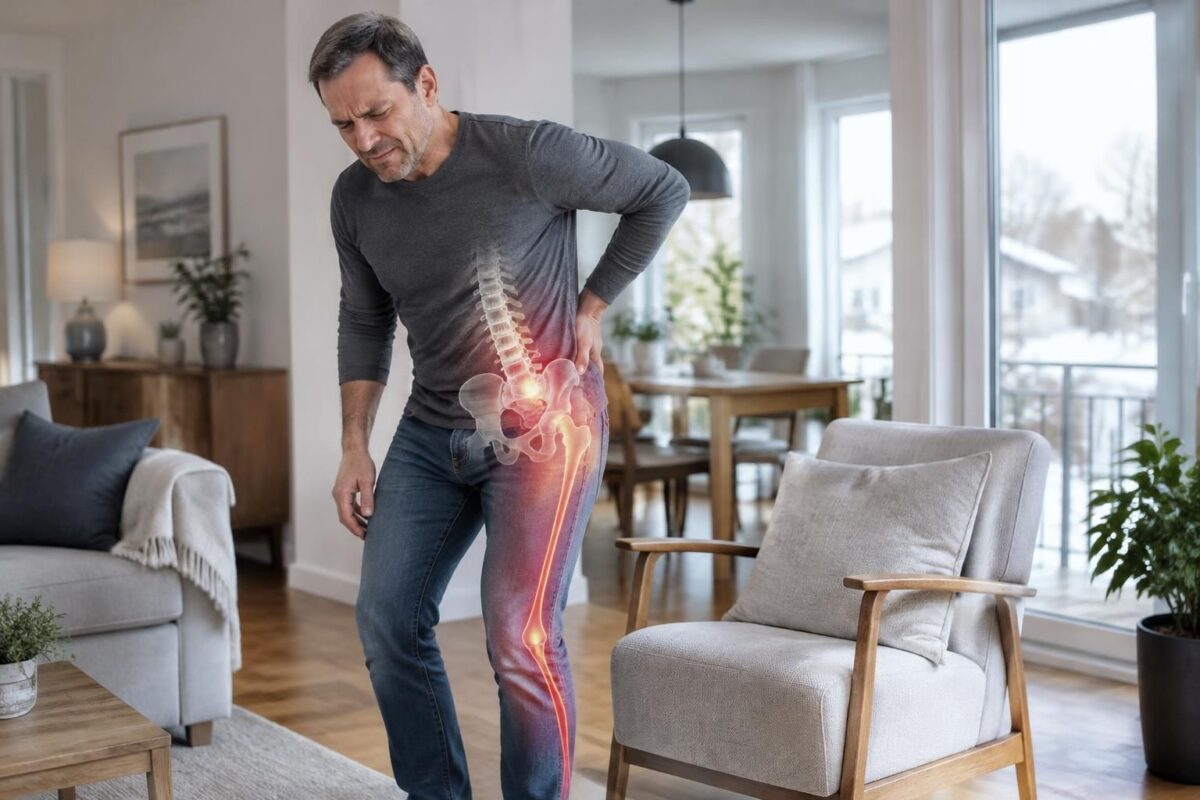
Sciatica in Terrebonne: why L5-S1 is often involved
IN BRIEF Sciatica corresponds to pain related to the irritation of a nerve root, which can extend from the buttock down to the leg. The L5-S1 level is often involved, as a disc herniation or irritation at this location can…
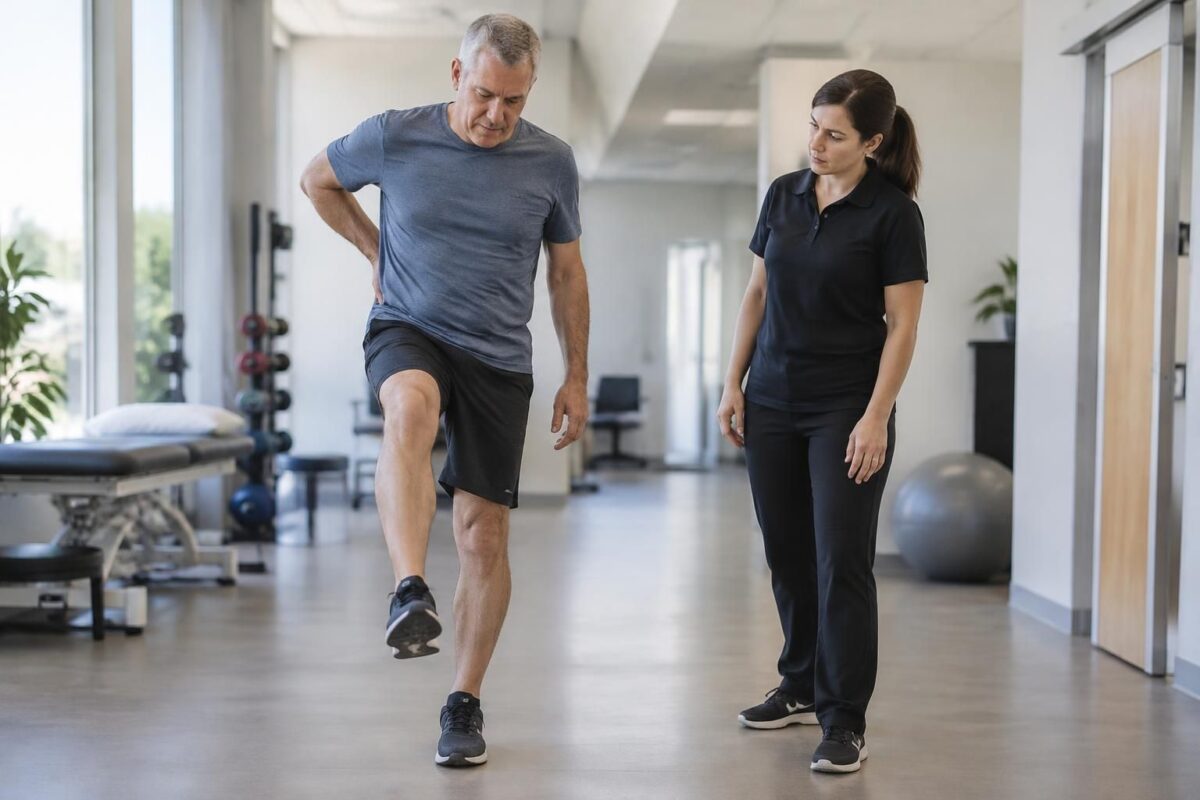
Sciatica in Terrebonne: L5 and difficulty lifting the foot
IN SHORT The L5 sciatica can cause pain or numbness on the side of the leg, the top of the foot, and the big toe, sometimes with difficulty lifting the foot. In Terrebonne, an evaluation compares strength, sensitivity, reflexes, and…
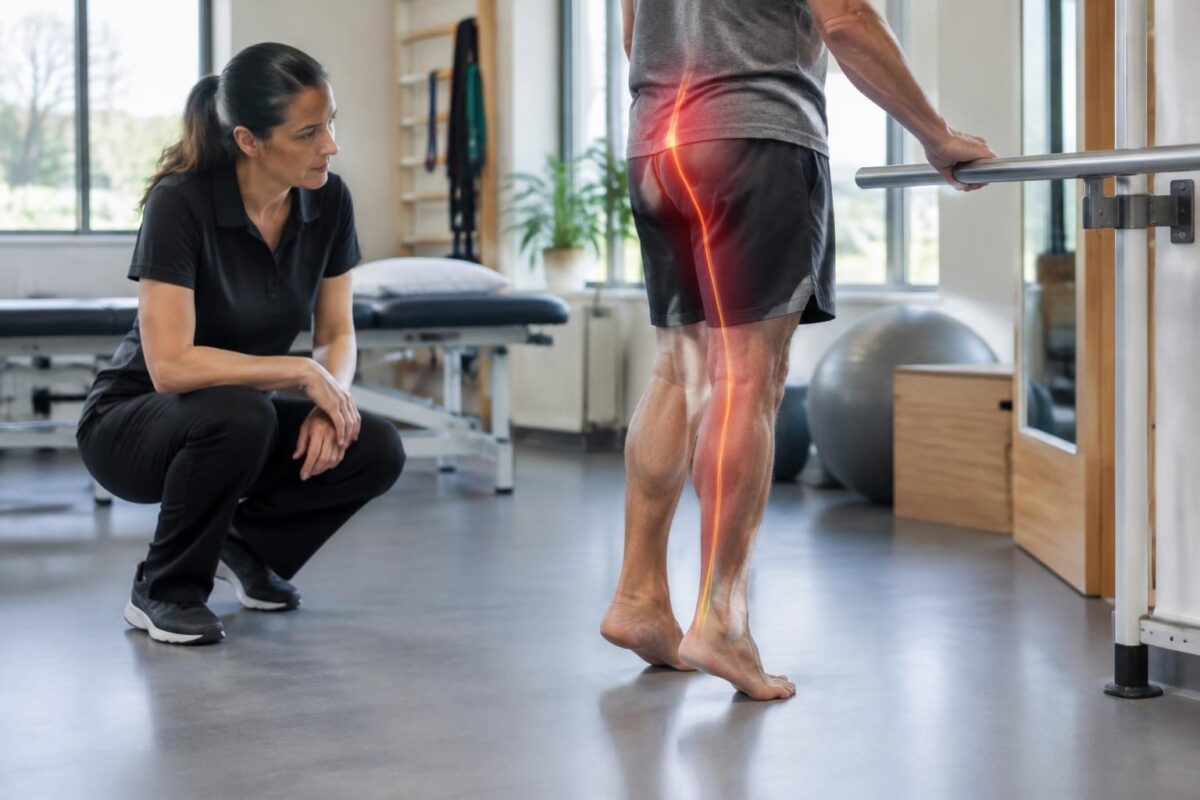
Sciatica in Terrebonne: S1 and difficulty standing on tiptoe
IN SHORT An S1 sciatica can irritate the nerve root associated with the calf and make it difficult to rise onto the balls of the feet. This sign should be evaluated with strength, sensitivity, reflexes, and walking: the pathway of…

Sciatica in Terrebonne: L4-L5 and pain towards the top of the foot
IN BRIEF A L4-L5 sciatica can radiate to the outer side of the leg and the top of the foot, sometimes reaching the big toe. This pathway can guide the assessment, though it does not suffice to confirm the cause:…

Sciatica in Terrebonne: L5-S1 and symptoms in the calf
IN BRIEF A L5-S1 sciatica can cause pain that radiates down the calf, sometimes accompanied by tingling, numbness, or weakness. At Terrebonne, an assessment at the TAGMED Clinic helps to examine the symptom pathways, strength, and sensitivity, and then discuss…

Sciatica in Terrebonne: pain in the big toe, L5 root or another cause?
IN BRIEF Pain in the big toe accompanied by pain in the buttock or leg may be compatible with irritation of the L5 root, but other causes are possible. In Terrebonne, the evaluation notably compares strength, sensitivity, and gait to…

Sciatica in Terrebonne: why the affected root changes the pain path
IN BRIEF Sciatica is a pain related to the irritation of a lumbar nerve root, the path of which varies depending on the affected root. Damage to L5 can radiate to the top of the foot, while damage to S1…

Sciatica in Terrebonne: L4-L5 disc, L5-S1 disc, and leg pain
IN BRIEF Sciatica is pain that travels down the leg when a nerve root is irritated. An injury to the L4-L5 disc often affects the L5 root; an L5-S1 injury affects the S1 root. The path of the pain and…

Dr Sylvain Desforges, B.Sc., D.O., N.D., osteopath, is the founding president of TAGMED and of the ACMA association. He dedicates his practice to chronic spinal pain, low back pain and symptoms compatible with sciatica, particularly when pain radiates toward the buttock, leg, calf, foot or toes.
Through SOS Sciatique, he publishes educational content on sciatica symptoms, possible causes such as disc herniation, disc narrowing, foraminal stenosis or irritation of a lumbar nerve root, as well as non-surgical approaches that may be considered according to the evaluation. At Clinique TAGMED, care may include, depending on the case, motorized neurovertebral decompression, specific osteopathic care or precision percussion.
For an evaluation related to sciatica treatment in Montreal / Mount Royal or sciatica treatment in Terrebonne, please consult the services available at Clinique TAGMED.
Medical disclaimer
The information published on SOS Sciatique is provided for educational purposes only and does not replace a consultation, diagnosis, opinion or treatment provided by a physician or another authorized healthcare professional. The author of this article is neither a medical doctor nor a specialist in a medical specialty recognized by the Collège des médecins du Québec. The osteopathic, manual medicine or functional support approaches described on this site do not constitute medical acts and are not intended to replace medical follow-up.
Consult a physician or emergency service in cases of loss of bladder or bowel control, anesthesia in the saddle area, significant or progressive weakness in the leg or foot, fever, recent trauma, severe pain or rapid worsening of symptoms. For more details, please read our Legal Notice.