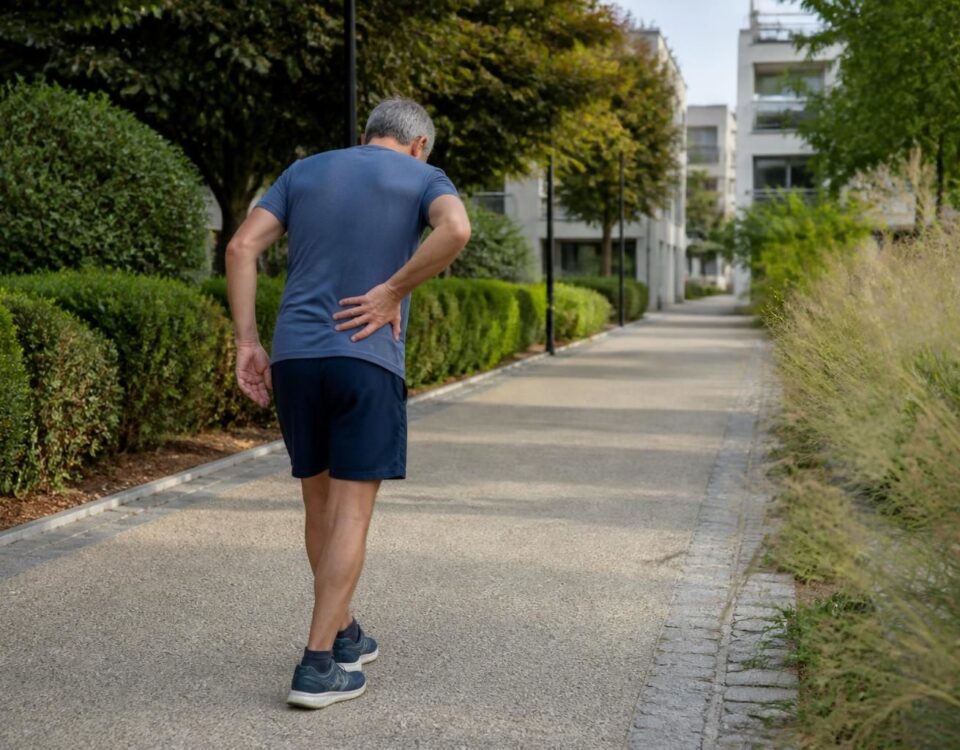



Sciatica in Terrebonne: foot pain that worsens while sitting
29/08/2026
Herniated disc and driving: why symptoms may worsen
29/08/2026
IN BRIEF
|
What is sciatica and the burning sensation behind the thigh? It is a nerve pain that starts from the lower back or buttock and radiates to the back of the thigh, which may be accompanied by a burning sensation or numbness. Benefits: an accurate evaluation allows for quick diagnosis and guidance towards non-surgical treatments and targeted exercises that improve mobility and reduce pain. How it works: the evaluation distinguishes between disc-related sciatica and piriformis syndrome and guides approaches such as physiotherapy, eccentric strengthening, and mobility corrections for a safer return to activity. In Montreal, this service is particularly useful for pain radiating behind the thigh and seeking a non-surgical approach. |
Sciatica often manifests as a burning sensation or electric shock that starts from the lower back or buttock and follows the path of the thigh down to the calf, sometimes to the toes.
This pain is generally unilateral and may worsen during prolonged sitting, coughing, or bending forward. The most common cause is compression of a nerve root, often related to a lumbar disc herniation. Other mechanisms, such as piriformis syndrome, can also cause similar radiation in the thigh.
At the same time, pain behind the thigh may stem from muscular pathologies, particularly involving the hamstrings or tendonopathies. A professional evaluation allows for distinguishing the origins and proposing suitable non-surgical approaches (exercises, mobility, strengthening).
This article, written by a health professional expert, outlines possible causes of a burning sensation behind the thigh within the context of sciatica and provides practical elements to guide evaluation and management. It emphasizes the distinction between nerve-related pain and muscular pain, as well as the options available at TAGMED clinic.
Possible Origins
Sciatica is a nerve pain that can begin in the lower back or buttock and travel behind the thigh to the calf, or even to the toes. The sensation is typically a burning feeling, electric shock, or numbness. It worsens during prolonged sitting, coughing, or bending forward. The painful path often follows the L5 or S1 roots and may be unilateral.
Muscular pain behind the thigh can originate from the hamstrings (biceps femoris, semitendinosus, semimembranosus) or their tendons. It is usually localized in the thigh, appears after a strain or elongation, and worsens with effort or stretching without radiating to the foot. Proximal hamstring syndrome may be confused with sciatica or piriformis syndrome and requires precise evaluation.
Signs and Symptoms to Watch For
Neuropathic pain is characterized by a burning sensation, shocks, or numbness that may extend down to the foot. It is often associated with difficulties in sitting for long periods and may increase with coughing or sneezing.
Muscular pain is localized on the muscle belly, increases with effort and stretching, and does not “rise” to the foot. In some cases, both origins may coexist, especially in athletes with an underlying disc herniation and associated muscular tension.
Diagnosis and When to Consult
A thorough clinical examination allows for differentiating the origins and assessing aggravating factors. In the presence of signs of progressive neurology, incontinence, or significant numbness in the lower limb, imaging is indicated to clarify the diagnosis. In doubtful cases or with alarming symptoms, a lumbar MRI may be requested to distinguish a disc pathology and its implications on the nerve root. For general information, you can consult dedicated resources on Sciatica and Professional Driving: Signs Not to Underestimate.
Therapeutic Approach and Management
At TAGMED clinic, options may include non-surgical interventions tailored to the patient’s precise evaluation. Depending on the case, management may involve specific osteopathic approaches and precise techniques proposed by the clinical team. For situations related to a neurovertebral decompression or disc conditions, the goal is to optimize mobility and reduce pressure on nerve structures, without prescribing inappropriate stretches or exercises for these situations. Additional information on possible approaches can be found on Sciatica in Montreal: Foot Pain and Sitting Position and Sciatica in Terrebonne: Calf Pain Without Significant Lumbar Pain.
For chronic pain, physiotherapy with eccentric strengthening may be considered as part of a comprehensive evaluation of mobility deficits and gait, while remaining aligned with clinical recommendations and the observed outcomes in your particular case.
As a point of information, the use of motorized neurovertebral decompression and specific osteopathy may be considered based on the evaluation and individual needs, at the TAGMED Clinic in Montreal or Terrebonne. To learn more, the clinic’s page outlines the available services and the conditions covered.
Quick overview of options and recommendations
| Therapy | Typical indications | Comments |
|---|---|---|
| Specific Osteopathy | Pain associated with joint or myofascial dysfunctions | Approach focused on individual assessment and tension regulation |
| Motorized neurovertebral decompression | Pathologies discussed during the neuro assessment while remaining within the non-surgical framework | Program proposed in certain clinical situations |
| Physiotherapy / physical therapy | Rehabilitation and muscle strengthening | In this context, effectiveness is evaluated in comparison with other therapies; prefer TAGMED options based on assessment |
For additional information related to sciatica and its repercussions, you can consult the following sources: pain behind the thigh – 8 possible causes, pain behind the thigh – causes and effective solutions, and Sciatica: causes and symptoms.
For resources related to pain behind the thigh and clinical aspects, also check the following pages: Terrebonne: difficulty walking on heels or toes, Montreal: foot pain while sitting, and Disc herniation and recurrence of sciatica.
Some useful general resources on pain behind the thigh and associated approaches are available here: Understanding pain at the back of the thigh – origins and solutions.
For additional information and educational content, you can consult the partner pages related to osteopathy and multidisciplinary care via the links above.
Medical disclaimer: The information and advice provided on this site do not replace the opinion, diagnosis, or treatment of a healthcare professional. Please note that Dr Sylvain Desforges, osteopath, is neither a medical doctor nor a physician, and is not a specialist in a medical specialty as defined by the Collège des médecins du Québec. Manual medicine, functional medicine, and sports medicine as described on this site exclude any treatment or medical diagnosis made by a physician or medical specialist. Always consult your doctor for any medical questions. For more details, please read our full Legal Notice.
Sciatica (nerve origin)
- Origin: lumbarly compressed sciatic nerve (L5/S1)
- Path: lower back → buttock → thigh → calf → foot
- Characteristics: burning, electric shock, numbness
- Aggravating factors: prolonged sitting, coughing, bending
- Typical signs: unilateral pain, radiating to foot
Muscular pain from the back
- Origin: hamstrings (biceps femoris, semitendinosus, semimembranosus)
- Location: pain in the muscle belly, without radiation to the foot
- Common causes: acute strain during a sprint or forced stretching; proximal/distal tendinitis
- Acute phase: RICE; rest; avoid NSAIDs for 48 hours
- Recovery: 1–12 weeks depending on severity; physical therapy and eccentric strengthening

This article guides you to understand the burning sensation behind the thigh and to distinguish a sciatica from discomfort related to the hamstrings. It provides practical recommendations, warning signs, and management pathways to act quickly and promote recovery without immediately resorting to invasive treatments.
Understanding pain behind the thigh
Pain can have two main origins: a neurological origin (sciatica) or a muscular origin (hamstrings). Neurological pain often manifests as a burning or electric sensation that follows the nerve path, starting from the lower back or buttock and descending along the back of the thigh to the calf and sometimes to the toes. In contrast, muscular pain is primarily located on the posterior belly of the thigh and is exacerbated by effort and stretching, without radiation to the foot.

Sciatica and weakness in the thigh: possible lumbar cause
IN BRIEF Sciatica with thigh weakness is a possible manifestation of a lumbar cause irritating a nerve root (L4-L5, L5-S1). Advantages: a quick diagnosis and a targeted treatment plan with rehabilitation to regain strength and mobility and prevent recurrences. Operation:…
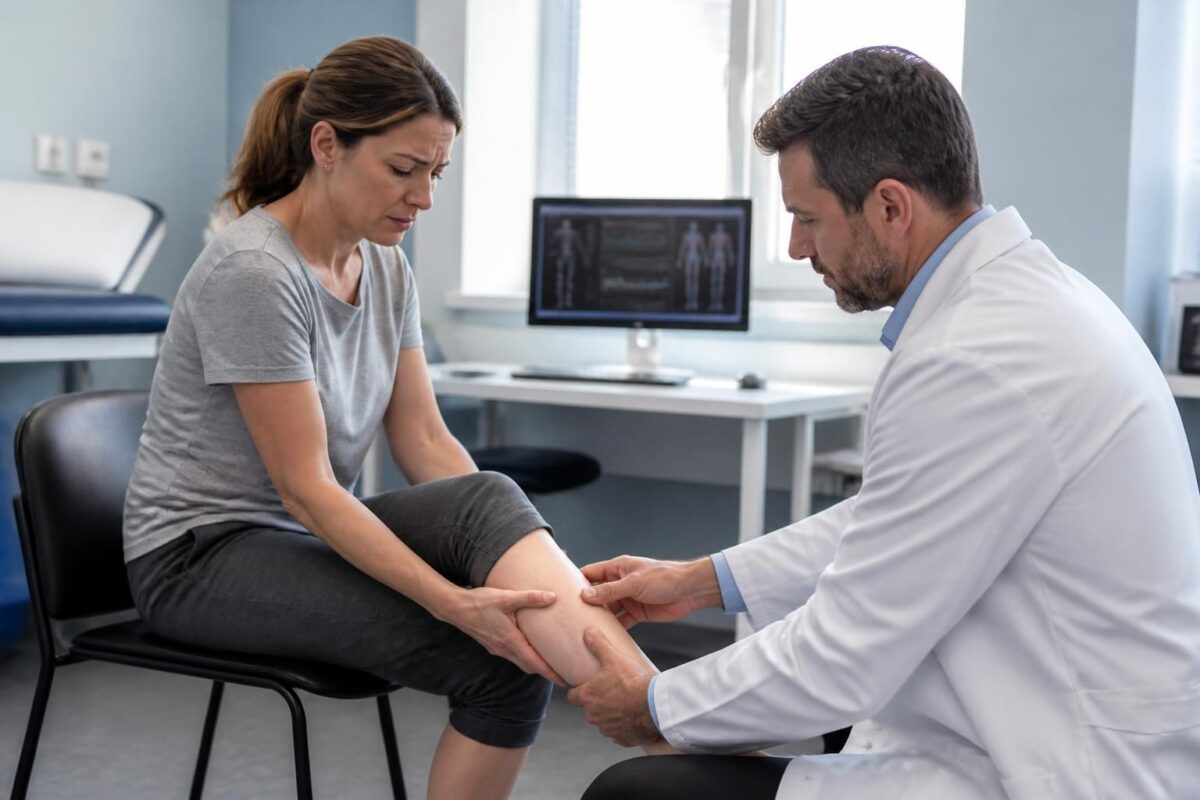
Sciatica and calf weakness: what should be monitored?
IN SHORT In short, sciatica and weakness in the calf describe a lumbar radiculopathy where pain follows the path of the sciatic nerve and may reach the calf. Benefits: a targeted non-surgical management, quick relief, and an improvement in mobility…
Neurological pain origin: Sciatica
Sciatica is pain due to irritation or compression of a lumbar nerve root (typically L5 or S1). It can be caused by a herniated disc or, less frequently, by other conditions such as piriformis syndrome. Typical symptoms include pain that starts from the spine or buttock and runs along the thigh, then the calf to the toes, with a burning or electric shock sensation. This pain is often aggravated by prolonged sitting, coughing, or bending forward, and is most often unilateral. Seeking medical evaluation is important if these signs persist or worsen.

Sciatica and difficulty walking on tiptoes: possible S1 root
IN BRIEF In brief, sciatica with difficulty walking on tiptoes may reflect an involvement of the S1 lumbar root. What is it? a radicular pain that can limit foot elevation and walking on tiptoes. What are the benefits? an accurate…
Sciatica and difficulty walking on heels: possible L5 root
IN BRIEF The sciatica associated with a difficulty walking on the heels is generally due to an involvement of the L5 root of the sciatic nerve, with a pathway that starts from the lower back, crosses the buttock, and goes…
Muscular pain origin: hamstrings
The hamstrings comprise the muscles located at the back of the thigh and their tendons. A strain or elongation occurs during a sprint, a change of direction, or a sudden stretch, with acute pain and a temporary loss of function. Several grades are generally distinguished: mild elongation, partial tear, or complete rupture, with recovery timelines ranging from a few weeks to several months. Proximal or distal tendinosis of the biceps femoris can cause more diffuse pain, often during running or prolonged sitting. Proximal hamstring syndrome presents as pain at the ischial tuberosity and may be confused with sciatica or piriformis syndrome.

Sciatica and difficulty lifting the foot: emergency or quick consultation?
IN BRIEF The drop foot is a weakness of the foot dorsiflexors that causes a steppage gait and may reveal sciatica with compression of the nerve in the lumbar region. When it is associated with sciatic pain and loss of…

Sciatica and loss of strength: a sign not to be taken lightly
IN SHORT In short, sciatica is pain that follows the path of the sciatic nerve. A loss of strength in the leg is a sign that should not be taken lightly. It’s a warning indicating nerve damage that may require…
Practical management plan
Acute phase (D0-D5)
Adopt the RICE protocol: relative rest, icing for 15 to 20 minutes, light compression, and elevation when possible. Avoid sports activities and prioritize gentle pain management. In the first 48 hours, be cautious with anti-inflammatories that may potentially limit muscle regeneration.
Recovery phase (D5-D21)
Incorporate gentle and progressive stretching and prioritize eccentric strengthening of the hamstrings, including exercises similar to the Nordic hamstring curl. Treatment by a physical therapist is recommended to guide progression and ensure appropriate recovery. If the pain is neuro-muscular in origin, the approach may vary based on the precise diagnosis and should be adapted by a professional.
Chronic pain and prevention
In case of persistent pain, physical therapy focused on eccentric strengthening, correction of hip and pelvic mobility deficits, and gait analysis (for runners) can be beneficial. The goal is to prevent relapses by restoring a balanced muscle and postural chain.
When to consult and warning signs
Consult quickly if there is loss of urinary or bowel control, anesthesia in the saddle area, significant or progressive weakness in a leg, fever, recent trauma, or very intense pain that worsens rapidly. If in doubt about the origin of the pain, a medical evaluation and imaging tests like MRI may be indicated to differentiate between disc-related sciatica and a hamstring strain and assess the need for specific treatment.
Practical tips and home exercises
Stay active within your pain limits and adapt your activities. Favor positions that do not excessively load the lumbar spine and take regular breaks if you are sitting for long periods. If disc-related sciatica is suspected, prioritize exercises that do not exacerbate tension on the nerve roots and consult a physical therapist for an appropriate protocol. For the piriformis or hamstrings, focus on targeted stretching and progressive eccentric exercises. If in doubt, prioritize a professional assessment to prevent worsening and guide towards the most effective non-surgical treatment.
| Element | Comparison |
|---|---|
| Origin | Sciatica: neurological origin, pain following the nerve pathway; hamstrings: muscular origin, localized pain in the thigh without distal irradiation. |
| Location | Sciatica: pathway from the buttock to the calf and toes; hamstrings: pain limited to the posterior thigh without distal irradiation. |
| Pain characteristics | Sciatica: burning or electrical discharge with numbness; hamstrings: localized pain, worsened by effort and stretching. |
| Triggers | Sciatica: worsened by prolonged sitting, coughing, or sneezing; hamstrings: worsened by running, stairs, and stretching. |
| Radiation | Sciatica: radiation to the toes; hamstrings: no distal radiation. |
| Evaluation / Diagnosis | Sciatica: clinical examination and MRI if in doubt; hamstrings: clinical examination and imaging if tear suspected. |
| Initial treatment | Sciatica: adapted non-surgical approach; hamstrings: RICE protocol followed by eccentric rehabilitation. |
| Urgency / When to consult | Sciatica: see quickly in case of loss of urinary control or progressive weakness; hamstrings: consult if unbearable pain or suspicion of tear. |
Testimonials on sciatica and burning sensation behind the thigh
My name is Julie, 38 years old, and I have long lived with a burning sensation that started in my lower back and ran up the back of my thigh to my calf. It was typical of a sciatica, and the pain worsened when sitting, complicating work and commutes. After a precise evaluation and a targeted physical therapy plan, the burning decreased, and I regained pain-free mobility in my daily life.
Marc, 52: the pain appeared mainly during car rides or at the office, with a burning sensation radiating in the back of the thigh and calf. It was a sciatica related to nerve root irritation, and it worsened with coughing and prolonged sitting. After treatment, the symptoms significantly reduced, and the burning became much less present in my life.
Claire, 29: pain in the buttock radiating toward the back of the thigh, especially during running. The piriformis syndrome was mentioned, which can mimic a sciatica. With targeted exercises and appropriate therapy, the burning decreased, and I was able to gradually resume my sports activities.
Antoine, 60: after an evaluation and potential imaging exam, a sciatica related to a lumbar disc herniation was confirmed. The non-surgical treatment, focused on strengthening and mobility, changed the symptoms, and the burning significantly reduced, allowing me to resume my commutes and recreational activities.
Sophie, 45: as a runner, I constantly feared pain behind my thigh. I was helped to distinguish between sciatica and a hamstring strain, and I followed eccentric exercises. Within a few weeks, the burning had almost disappeared, and my stride returned without pain.
Detailed biography: Sciatica and burning sensation behind the thigh
In the field of musculoskeletal health, sciatica and the sensation of burning behind the thigh represent a complex clinical story, often marked by two distinct but coexisting origins. On one hand, manifestations of neuro-meningeal origin, related to the path of the sciatic nerve and its branches. On the other hand, purely muscular sources, mainly from the hamstrings. Understanding these two axes allows clinicians to quickly guide diagnosis and adjust treatment to improve the patient’s quality of life.
Scientific sciatica is most often described as pain projected from the lower back or buttock, radiating along the back of the thigh to the calf and down to the feet. This pain may take the form of a burning sensation, an electric shock, or numbness. It worsens with prolonged sitting, during coughing or bending forward, and is usually unilateral. The most common cause remains a lumbar disc herniation compressing a nerve root. Less known but not rare, piriformis syndrome can also trigger pain radiating in the thigh when this deep buttock muscle compresses the sciatic nerve as it exits the pelvis, with increased pain during external rotation and prolonged sitting.
On the muscular side, the hamstrings can be the source of localized pain. A strain or elongation presents as an acute injury, felt like a stab during a sprint, a change of direction, or a forced stretch, with recovery varying according to the grade. Biceps femoris tendinitis causes progressive pain, localized near the ischial tuberosity or near the knee, aggravated by running, stairs, and prolonged sitting positions. Finally, proximal hamstring syndrome manifests as pain at the ischial tuberosity, sometimes confused with sciatica or piriformis syndrome, and may extend into the thigh.
In response to these presentations, the clinical strategy relies on a clear distinction between neurogenic pain and muscular pain. In the acute phase, the RICE protocol (Rest, Ice, Compression, Elevation) helps limit inflammation and hematoma, with temporary cessation of sport and applying ice several times a day. For long-term pain, the goal is to integrate gentle and progressive stretching, followed by eccentric strengthening of the hamstrings, particularly through specific exercises like the nordic hamstring curl. Physical therapy then becomes a central piece, focused on strengthening, hip and pelvic mobility, and gait analysis for the runner.
The diagnosis is refined through a comprehensive clinical evaluation, supplemented when necessary by imaging exams, particularly when there is doubt between a disc herniation, piriformis syndrome, or a complete muscle tear. In chronic pain, a multidisciplinary and evidence-based approach proposes targeted rehabilitation therapies, combining eccentric strengthening and postural corrections. Sometimes, advanced technologies and specialized manual methods are used to optimize neurovertebral decompression, promote vascularization, and reduce muscle tension, always in a logic of safety and effectiveness.
As a therapeutic journey, this biography highlights the necessity for precise diagnosis and a personalized protocol tailored to each patient. Pain radiating behind the thigh requires a nuanced approach, capable of distinguishing neurogenic pain from muscular pain, and proposing targeted and progressive interventions. For anyone facing pain radiating from the buttock to the foot, consulting a healthcare professional remains key to obtaining a tailored and effective care plan, based on evidence and careful monitoring of progress.
Quick summary: sciatica and the burning sensation behind the thigh may originate either from a neurological process involving the sciatic nerve or from a muscular issue of the hamstrings. Knowing the differences helps guide diagnosis and treatment, and non-surgical approaches focused on rehabilitation can provide lasting relief. For more information, consult the resources cited throughout this article.
Origins and manifestations
Sciatica typically manifests as a burning sensation, electric shock, or numbness that starts from the lower back or buttock and radiates to the back of the thigh, then to the calf and sometimes to the toes (L5 or S1 pathway). It worsens in prolonged sitting, during coughing, or when bending forward, and is most often unilateral. The most common cause is a lumbar disc herniation compressing a nerve root. Piriformis syndrome can also cause pain radiating to the thigh when this deep buttock muscle compresses the sciatic nerve as it exits the pelvis. In some cases, pain of neurological origin and pain of muscular origin may coexist.
In parallel, pain of muscular origin may come from the hamstrings: a strain or elongation following a sprint, a change of direction, or a forced stretch, with avulsion pain and functional impairment. Grades 1 to 3 distinguish according to severity. Biceps femoris tendinitis develops progressively and is often proximal (near the ischial tuberosity) or distal (near the knee). Proximal hamstring syndrome manifests at the ischial tuberosity and may be confused with sciatica or piriformis syndrome.
Diagnosis and distinctions
The diagnosis relies on clinical examination complemented by imaging when necessary, particularly lumbar MRI and/or hip MRI to confirm a disc herniation or exclude a complete tear. To better understand signs of numbness and variations in pain behind the thigh, you can refer to dedicated resources like this article and this guide. Other sources complement the clinical picture and differentiating signs, for example, this practical article.
Management and rehabilitation
In practice, non-surgical management prioritizes rehabilitation protocols focused on eccentric strengthening of the hamstrings and correcting mobility deficits of the hip and pelvis. In the acute phase, the RICE protocol (Rest, Ice, Compression, Elevation) is applied, with cessation of sport, icing for 15-20 minutes, 3 times a day, and avoidance of anti-inflammatories during the first 48 hours to not hinder muscle regeneration. After 48 hours, light stretching and eccentric strengthening (examples like nordic hamstring curl exercises) promote recovery. Physical therapy is often recommended, including evaluation of hip and pelvic mobility and, for runners, gait analysis.
For evidence-based protocols and recommendations, you can refer to the HAS and the SFMS.
When to consult and warning signs
Consult quickly in case of loss of bowel or bladder control, anesthesia in the saddle area, significant or progressive weakness of the leg or foot, fever, recent trauma, or severe and rapid pain. In case of diagnostic doubt or suspicion of a complete rupture, a lumbar MRI and/or hip MRI is indicated to clarify the diagnosis.
Best practices and prevention
For persistent or chronic pain, physical therapy focused on eccentric strengthening, hip and pelvis mobility, and gait analysis for runners can be effective. Additional resources on pain behind the thigh and clinical profiles exist, for example this article or Cotation Santé. For Montreal perspectives, refer to this Montreal resource, and other analyses on progressive or intermittent numbness via this article.
This section has been intentionally left blank due to internal guidelines.

Sciatica and numb foot sensation: when to consult?
IN BRIEF In brief, sciatica and numbness in the foot refer to pain that follows the path of the sciatic nerve and may be accompanied by tingling or numbness in the foot. This summary specifies when to seek consultation, distinguishing…

Sciatica and the sensation of a numb leg: what does this symptom mean?
IN BRIEF Sciatica and the sensation of a dead leg refer to pain and tingling along the path of the sciatic nerve, from the lower back to the foot. This symptom reflects nerve compression or irritation, most often due to…

Dr Sylvain Desforges, B.Sc., D.O., N.D., osteopath, is the founding president of TAGMED and of the ACMA association. He dedicates his practice to chronic spinal pain, low back pain and symptoms compatible with sciatica, particularly when pain radiates toward the buttock, leg, calf, foot or toes.
Through SOS Sciatique, he publishes educational content on sciatica symptoms, possible causes such as disc herniation, disc narrowing, foraminal stenosis or irritation of a lumbar nerve root, as well as non-surgical approaches that may be considered according to the evaluation. At Clinique TAGMED, care may include, depending on the case, motorized neurovertebral decompression, specific osteopathic care or precision percussion.
For an evaluation related to sciatica treatment in Montreal / Mount Royal or sciatica treatment in Terrebonne, please consult the services available at Clinique TAGMED.
Medical disclaimer
The information published on SOS Sciatique is provided for educational purposes only and does not replace a consultation, diagnosis, opinion or treatment provided by a physician or another authorized healthcare professional. The author of this article is neither a medical doctor nor a specialist in a medical specialty recognized by the Collège des médecins du Québec. The osteopathic, manual medicine or functional support approaches described on this site do not constitute medical acts and are not intended to replace medical follow-up.
Consult a physician or emergency service in cases of loss of bladder or bowel control, anesthesia in the saddle area, significant or progressive weakness in the leg or foot, fever, recent trauma, severe pain or rapid worsening of symptoms. For more details, please read our Legal Notice.