



Sciatica in Terrebonne: pain and numbness after walking
14/09/2026
Herniated disc and lumbar osteoarthritis: combined causes of sciatica
14/09/2026
IN BRIEF
| In brief, sciatica associated with d difficulty descending stairs is pain that follows the path of a nerve root and intensifies when going down steps, often due to the eccentric effort of the quadriceps and pressure on joint structures. A precise diagnosis may reveal causes such as a herniated disc or lumbar osteoarthritis. The benefits of appropriate management include rapid diagnosis, pain reduction, and restored mobility through targeted rehabilitation and postural advice. Available in the Montreal area, this framework aims to allow you to descend stairs more easily and painlessly without quickly resorting to surgery, while remaining non-invasive in the immediate term. |
Sciatica associated with d difficulty descending stairs is a common phenomenon that limits daily mobility. The pain may follow the path of a nerve root and may be accompanied by burning sensations, tingling, or weakness in the leg.
Descending stairs requires significant eccentric work from the quadriceps and the cartilage around the kneecap, which explains why pain is often more pronounced when going down stairs. Common causes include patellofemoral syndrome, knee osteoarthritis, meniscal injuries, and sometimes lumbar nerve irritation such as a herniated disc.
Effective management is based on targeted approaches: physiotherapy with eccentric strengthening, adapted exercises, and prevention of recurrences; where applicable, complementary solutions such as smart orthotics or regenerative treatments may be considered. A precise diagnosis and a personalized plan allow for quick recovery of mobility and comfort when using stairs.
This article, written by a healthcare professional, explains why Sciatica can make descending stairs particularly painful and difficult. You will discover the most common causes, factors that worsen the pain, and the management options available, including at the TAGMED Clinic and through specialized resources. The goal is to provide clear guidelines and suitable solutions to preserve your mobility in everyday life.
Understanding Knee Biomechanics When Descending
Descending stairs poses a significant eccentric challenge for the knee. The quadriceps lengthens while contracting to slow down the moving body. This action generates compressive force on the kneecap that can reach high levels, especially when joint cushioning is disturbed. If synovial fluid is insufficient or if the synovial membrane is inflamed, friction in the joint can become very painful. To limit these repeated shocks, it is important to maintain muscle flexibility and balance around the patellofemoral joint. With age, mechanical wear and cartilage degeneration play a major role in the onset of pain during descent.
Main Pathologies Responsible for Pain
Patellofemoral syndrome is common in pain at the front of the knee during descent and can cause a creaking sensation.
Knee osteoarthritis (gonarthrosis) manifests as persistent pain and stiffness, especially after a period of inactivity or during demanding activities.
Patellar tendinopathy causes sharp pain under the kneecap during exertion and may limit staircase descent.
Meniscal injury can lead to joint locking, rapid swelling, and sharp pain during repeated movements.
A precise diagnosis requires an appropriate medical evaluation by a rheumatologist or sports physician. Targeted therapeutic approaches exist for each condition.
For further information, consult specialized resources such as Sciatica and pain that decreases while walking and Sciatica and difficulty descending stairs.
Risk Factors and Aggravating Elements
Overweight significantly increases pressure on the knees during descent, exacerbating existing pain.
Sedentary lifestyle leads to loss of strength and coordination in the quadriceps and stabilizing muscles.
Inappropriate footwear or poor limb alignment can amplify joint effort.
Anatomical factors, such as misaligned knees or differences in limb length, and aging, increase the risk of pain during descent.
An individual assessment allows for targeting modifiable elements and preventing painful flare-ups.
For additional resources, see Risk of foot drop.
Innovative Solutions and Treatments
Recent approaches favor personalized clinical modalities. Motorized neurovertebral decompression may be proposed in certain cases, as well as specific osteopathy and the use of a precision punch to target problem areas. Non-surgical options such as PRP (Platelet Rich Plasma) injections can be discussed based on evaluation, with typical costs ranging from 300 to 500 euros depending on the centers. Connected orthotics can also help quickly correct weight distribution during walking to limit stress on cartilage.
When treatment is necessary in Montreal or Terrebonne, patients can turn to Clinique TAGMED for an evaluation and tailored care. To learn more about available solutions and compare options, you can consult the following resources: Clinique TAGMED and sciatica and pain that decreases while walking. For decompression approaches or other related conditions, visit neurovertebral decompression or sosherniediscale.com.
The choice of treatments depends on individual evaluation and may involve coordination with a sports physician, an osteopath, and, if necessary, other specialists. For additional information on non-surgical approaches and care pathways, see SOS Sciatique.
FAQ
Why does going down stairs hurt more than going up? Descending requires intense eccentric contraction where the muscle lengthens while contracting to slow down the weight. This action increases pressure on the kneecap by 3.5 to 5 times body weight, which can intensify existing pain.
To relieve quickly, apply ice for 15 to 20 minutes, and use a patellar brace or slightly elevate the leg after descending. Simple measures can provide temporary relief, but medical evaluation is still recommended if the pain persists.
Which healthcare professional should be consulted for knee problems on stairs? A general practitioner can refer to a rheumatologist or orthopedic surgeon for an accurate diagnosis. Physical therapy or muscle rehabilitation may be proposed over several weeks depending on the diagnosis and symptoms.
For more information on manifestations and management options, see the following resources: Sciatica and pain that decreases while walking, foot pain while walking, and more information.
For clinical options and specialized pathways, consult Clinique TAGMED and Sciatica and difficulty going down stairs.
For resources on neurovertebral decompression and associated conditions, consult neurovertebral decompression and sosherniediscale.
For general information on pain related to descending stairs, you can also consult Santé Hebdo.
To delve into prevention aspects and practical advice, visit Vivre en Santé.
If you are looking for an educational perspective, resources provided by training institutions in osteopathy are accessible through recognized organizations such as ACMA, College of Canadian Osteopaths, and Collège des Ostéopathes Canadiens.
For legal details and official information, please read our complete Legal Notice.
Clinique TAGMED, Montreal and Terrebonne, offers tailored care and personalized evaluation for sciatica and difficulties going down stairs. For more information, consult Clinique TAGMED.
Additional resources: sciatica and pain that decreases while walking, difficulty going down stairs.
Medical disclaimer: The information and advice provided on this site do not replace the advice, diagnosis, or treatment of a healthcare professional. Please note that Dr. Sylvain Desforges, osteopath, is neither a medical doctor nor a physician and is not a specialist in any medical specialty as defined by the Collège des médecins du Québec. Manual medicine, functional medicine, and sports medicine as described on this site exclude any treatment or medical diagnosis made by a physician or medical specialist. Always consult your doctor for any medical questions. For more details, please read our complete Legal Notice.
- Sciatica: pain following one or more nerve roots from the lower back to the leg.
- Descending stairs: eccentric movement of the quadriceps; increased pressure on the kneecap and cartilage.
- Mechanics: descent more demanding than ascent; pain related to wear and inflammation.
- Frequent causes: patellofemoral syndrome, gonarthrosis, patellar tendinopathy, meniscal injury.
- Quick diagnosis: clinical examination; MRI if persistence or associated suspicion.
- Rehabilitation: personalized program; eccentric strengthening and adapted mobility.
- Prevention: weight control, regular activity, suitable shoes.
- Treatments: physical therapy; regenerative options based on evaluation.
- Daily management: gradual descent; adapted technique; avoid heavy loads in crisis.
- When to consult: pain persists, weakness, or neurological signs; referral to physiotherapist or doctor.
- Potential gains: regained mobility, reduced pain, prevention of recurrences.

This text provides practical recommendations on sciatica and difficulties in descending stairs, explaining the mechanism, the most common causes, and approaches for prevention and treatment to restore mobility and comfort in daily life.
Understanding Biomechanics When Descending
Descending stairs is a demanding eccentric effort for the lower limb. The quadriceps lengthens while contracting to slow the moving body, which significantly increases the pressure on the patella and joint surfaces. This strain can cause or worsen pain when knee cushioning is insufficient or when cartilage is degraded. Maintaining good flexibility and balanced muscle alignment is essential to protect the femoropatellar joint from these repeated shocks with each step.
Main Pathologies
Patellofemoral Syndrome
Pain at the front of the knee and a cracking sensation during descent; high frequency among active individuals.
Knee Osteoarthritis (Gonarthrosis)
Persistent pain and stiffness related to cartilage wear; can limit descent and daily activities.
Patellar Tendinopathy
Sharp pain below the patella during sustained efforts, especially when descending, when the patellar tendon is stressed.
Meniscal Injury
Sharp pain, rapid swelling, and possible joint locking occurring after repeated flexion and descent movements.
Risk Factors and Aggravating Elements
Several factors increase the likelihood of pain during descent. Overweight increases the load on the knee; sedentary lifestyle decreases the muscle strengthening necessary for stability; inappropriate footwear or poor alignment (valgus knees, limb length inequality) exacerbate stress on the femoropatellar apparatus; age and cartilage aging further reduce joint resistance.
Innovative Solutions and Treatments
Management relies on a personalized rehabilitation program aimed at eccentric strengthening of the quadriceps and hamstrings, as well as improving motor control and mobility. On average, 15 to 20 physiotherapy sessions can initiate significant improvement. In cases of persistent pain, targeted options such as injections or smart orthotics may be considered depending on clinical evaluation and associated imaging. The goal is to reduce inflammation, improve stability, and preserve function during descent.
Practical Tips for Daily Life
Adopt simple gestures to limit pain during descent: opt for wider and more even steps, place your foot well under your center of gravity, and avoid descending at excessive speed; consider using a cane or temporary aid if necessary and ensure a properly fitting shoe with adequate support. For painful episodes, apply ice for 15 to 20 minutes and prioritize low-impact activities until the pain subsides. Finally, regularly work on mobility and muscle strengthening to maintain lasting joint stability.
Quick FAQ
Why is descending more painful than ascending? Because it places significant demands on the quadriceps in an elongated position and slows the body down, increasing compression on the patella and cartilage.
Which professional should I consult? Start with a doctor or physiotherapist to assess the causes and plan appropriate rehabilitation.
Should exercises be painful? No; they should be progressive and tailored to your pain, supervised if necessary.
| Aspect | Concise Statement |
|---|---|
| Clinical-Biomechanical Framework | Descent is a significant eccentric effort for the quadriceps and patellar tendon, increasing pressure on the patella and cartilage. |
| Common Causes | The main sources are Patellofemoral Syndrome and knee osteoarthritis. |
| Risk Factors | Overweight, sedentary lifestyle, inappropriate footwear, morphological abnormalities, and advanced age increase risk. |
| Key Symptoms | Anterior pain, sensation of locking or instability during descent. |
| Recommended Evaluation | Clinical evaluation by a specialist and, if necessary, MRI to clarify the origin. |
| Prevalence | This pain is common after 50 years old and among athletes. |
| Management and Treatments | Targeted physiotherapy and, as necessary, innovative options such as PRP. |
| Recommended Exercises | Eccentric strengthening of the quadriceps and hamstrings, along with flexibility and balance work. |
| Warning Signs | Severe persistent pain, loss of strength, or significant swelling require prompt consultation. |
Testimonials on Sciatica and Difficulties Descending Stairs
My name is Lucie, 64. For several months, every descent of the stairs has been a torment: with each step, a sciatic pain radiating from my buttock to my heel. I have to stop halfway down the railing, take a deep breath, and continue, but the pain returns with the slightest step. This discomfort has greatly limited my movements at home and at work, and I often dread the next descent.
I’m Pierre, 50. The descent of the stairs is significantly more painful than the ascent: my leg trembles, a sensation of instability overwhelms me, and I fear slipping or falling. The pain starts in the lumbar region and then radiates to the outer thigh and knee. I have had to adapt my daily habits and avoid stairs as much as possible.
My name is Marie, 39. This pain appeared on my way to work and settled in after just a few steps. The sciatica creates a stabbing pain that prevents smooth descent and forces me to look for temporary solutions like using the elevator. I felt a real lack of stability with every step.
Here’s Georges, 72. The pain has taken over my daily commutes and made me fear falling during the descent of the stairs. I had the impression that my leg “was no longer responding” and that each step could be the last. Physiotherapy follow-up and targeted exercises have gradually strengthened the muscles around my knee and improved my confidence in descending the stairs.
I am Clara, 58 years old. After a consultation, I understood that strengthening the muscles around the knee and improving my posture could make a difference. Today, I go down the stairs with less pain and more stability, which has transformed my daily life. The sciatica is still present, but it is less intrusive and better managed thanks to a tailored program.
Detailed biography on Sciatica and difficulty descending stairs
Dr Sylvain Desforges, expert in osteopathy, naturopathy, and manual therapy, is the founding president of TAGMED clinics and the ACMA association. His trajectory has been shaped by a constant quest for innovation in healthcare and a strong commitment to patients suffering from chronic pain. His practice specializes in managing spinal pain and optimizing mobility, with particular attention to manifestations such as sciatica and difficulties descending stairs, which often compromise daily life.
With a career focused on therapeutic innovation, he integrates advanced technologies into his protocols, including motorized neurovertebral decompression, laser approaches, and shock wave therapies. This combination allows for addressing radicular pain and functional limitations without the need for surgery. His approach is based on evidence and personalized assessment to provide concrete solutions for regaining the ability to go up and especially down stairs without pain or fear of relapse.
In his professional discourse, Dr Desforges emphasizes that sciatica pain accompanied by difficulty descending stairs cannot be reduced to a single cause. His work consists of unraveling mechanical and neurological factors: posture, balance, core and lower limb muscle strength, as well as the potential inflammation of nerve structures. Through comprehensive evaluation and technological partners, he guides each patient towards targeted rehabilitation that promotes safe adaptation of daily movements and, primarily, safety when descending stairs.
Through a personalized program, his patients benefit from a balance between osteopathy and functional rehabilitation, focusing on eccentric work of the quadriceps and peripheral muscles, pelvic stability, and improving coordination. Through progressive exercises and tailored education, Dr Desforges helps his patients regain confidence in their movements. Observed results regularly translate into better tolerance for descending stairs, reduced painful episodes, and an overall improvement in quality of life.
His approach aligns with a patient-centered vision: prioritizing non-invasive interventions, supporting autonomy, and promoting a better understanding of the Pain–Movement mechanisms. He reminds that reclaiming the ability to descend stairs is possible through a multidisciplinary strategy, appropriate monitoring, and active patient adherence to the treatment plan. This philosophy is reflected in the services offered by the TAGMED Clinic and in his commitment to providing evidence-based care to optimize health and well-being for everyone.
To learn more about his approach and the services available at the TAGMED Clinic, contact the establishment directly and request a personalized evaluation. Dr Sylvain Desforges and his team are committed to guiding you step by step towards regained mobility and a more serene descent of stairs.
This article explores sciatica and the difficulties associated with descending stairs, describing the biomechanical mechanisms, the most common pathologies, risk factors, and innovative treatment options, as well as practical advice for relieving and preventing pain. For more in-depth information, you can consult specialized resources like TAGMED and specific guides on symptoms and available treatments.
Understanding biomechanics during descent
Descending stairs places significant demands on the eccentric system of the lower limb muscles. The quadriceps control the body’s speed while lengthening, which generates increased pressure on the kneecap and surrounding cartilage. This load can reach several times the body weight, and insufficient synovial fluid or inflammation of the synovial membrane can worsen the pain. Maintaining appropriate muscle range and flexibility is crucial for protecting the femoropatellar joint during daily exertion. Additional resources on the mechanisms of sciatica and the impacts of stairs are available through online guides and specialized clinics. For technical information and exercise examples, see the resources available on MSD Manuals and the pages dedicated to stairs.
Pathologies and their manifestations
Several conditions can turn descending stairs into a major difficulty. The femoropatellar syndrome manifests as pain in the front of the knee and crackling sounds around the kneecap. Knee osteoarthritis (gonarthrosis) causes persistent discomfort and stiffness, especially in those over 65 years of age. Patellar tendinopathy results in sharp pain under the kneecap during exertion, and a meniscal tear can present with locking and rapid swelling. Each of these conditions requires a targeted diagnostic approach and may require specific interventions, ranging from active rest to more advanced treatments such as injections or tailored rehabilitation. For additional readings on these pathologies, consult specialized resources like medical guides and reference websites mentioned below.
Risk factors and aggravating elements
Different factors related to lifestyle and morphology can increase the risk of difficulties descending stairs. Overweight mechanically increases the load on the knees, sedentary lifestyle promotes quadriceps weakness, and inappropriate shoes can alter leg alignment. Anatomical abnormalities such as valgus alignment or asymmetries in limb length will modify joint stress. With age, cartilage naturally degrades, amplifying joint fragility. Early monitoring and preventive measures focused on movement and muscle strengthening can delay the onset of pain and preserve mobility. Practical resources and prevention advice are available in dedicated guides and online self-assessment pages.
Innovative Solutions and Treatments
Management of pain related to descending stairs has evolved towards a personalized approach, integrating biomechanical assessment and targeted rehabilitation strategies. Physical therapy remains the cornerstone of initial treatment, with sessions focused on eccentric strengthening of the quadriceps and hamstrings. In some cases, PRP (Platelet-Rich Plasma) injections may be considered to stimulate tissue regeneration. Technological solutions, like connected orthotics, allow for real-time monitoring and adjustment of weight distribution during walking to limit stress on cartilage. For practical information and personalized advice, refer to specialized resources and consult the dedicated pages on walking science and joint pain management.
FAQ
Why is descending more tiring than ascending? Descent involves intense eccentric contraction that lengthens the muscle while resisting movement, generating force on the kneecap that can be 3 to 5 times greater than that observed during ascent. To relieve locally, applying ice for 15 to 20 minutes can help, and devices such as a patellar brace or leg elevation can provide initial relief. Resources explain these mechanisms and available treatment options.
Which professional should I consult for knee problems on stairs? Initially, a general practitioner can refer to a rheumatologist or orthopedic surgeon for an accurate diagnosis, then a physical therapist can take charge of muscle rehabilitation over several weeks. For additional information and tailored advice, specialized guides and websites are available that reference current approaches.
For additional references and information on symptoms, causes, and treatments, see especially the following resources: SGCA, Viva Senior, and the pages dedicated to sciatica on France Monte Escalier. For clear information on symptoms and painful paths, also consult the resources on Sciatica L5 and Sciatica – heel. Global guides on lower back pain and sciatica are accessible via MSD Manuals.

Sciatica and pain worsened while sitting: consider the disc?
IN BRIEF Sciatica aggravated in a seated position may be related to irritation of a nerve root, sometimes caused by a herniated disc. Remaining seated can exacerbate pain that radiates from the buttock down the leg, but this symptom alone…

Sciatica and pain relieved while seated: consider stenosis?
IN BRIEF A sciatica relieved in a seated position may suggest a lumbar stenosis and neurogenic claudication, but this sign alone is not sufficient for a diagnosis. Observing walking, weakness, and symptom evolution helps guide the evaluation and compare signs…
Sciatica and pain that worsens when walking
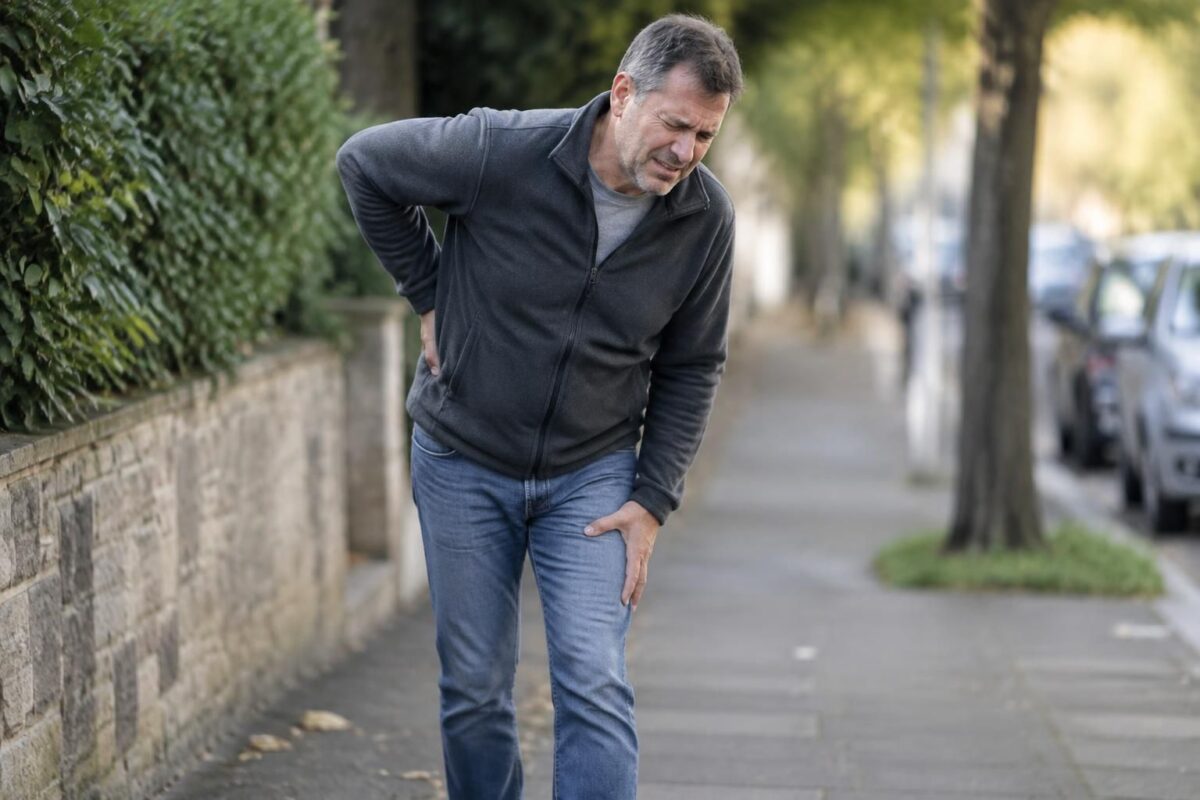
IN BRIEF A sciatica that worsens with walking is pain radiating from the buttock down the leg, exacerbated by walking. Several causes are possible: this symptom alone does not suffice for a diagnosis. Temporarily reduce walking duration, change positions, and…

Sciatica and pain that improves when walking
IN SUMMARY Sciatica is pain that radiates from the lower back or buttock down to the leg, sometimes all the way to the foot. If it decreases with walking, a gentle and regular walk can help limit stiffness and maintain…

IN BRIEF Sciatica is pain that often starts from the lower back or buttock and travels down the leg. Pain that worsens at the end of the day may be related to activities or prolonged positions, but it is not…

Sciatica and pain that worsens in the evening
IN BRIEF more painful sciatic pain in the evening is often related to inactivity, fatigue, and increased attention to sensations. This does not necessarily mean that the nerve is worsening. Gently changing positions, walking for a few minutes, and finding…

Sciatica and pain when turning in bed
IN BRIEF Sciatica can cause pain when turning in bed, as certain movements irritate the lower back or leg. Turn slowly, moving your shoulders and hips together; a cushion between the knees or under the knees can improve comfort. If…

Sciatica and pain when getting out of bed
IN BRIEF Sciatica upon getting out of bed is pain that radiates from the lower back to the buttock or leg and can be more pronounced after the night. Gradually rising, moving gently, and finding a comfortable sleeping position can…

Dr Sylvain Desforges, B.Sc., D.O., N.D., osteopath, is the founding president of TAGMED and of the ACMA association. He dedicates his practice to chronic spinal pain, low back pain and symptoms compatible with sciatica, particularly when pain radiates toward the buttock, leg, calf, foot or toes.
Through SOS Sciatique, he publishes educational content on sciatica symptoms, possible causes such as disc herniation, disc narrowing, foraminal stenosis or irritation of a lumbar nerve root, as well as non-surgical approaches that may be considered according to the evaluation. At Clinique TAGMED, care may include, depending on the case, motorized neurovertebral decompression, specific osteopathic care or precision percussion.
For an evaluation related to sciatica treatment in Montreal / Mount Royal or sciatica treatment in Terrebonne, please consult the services available at Clinique TAGMED.
Medical disclaimer
The information published on SOS Sciatique is provided for educational purposes only and does not replace a consultation, diagnosis, opinion or treatment provided by a physician or another authorized healthcare professional. The author of this article is neither a medical doctor nor a specialist in a medical specialty recognized by the Collège des médecins du Québec. The osteopathic, manual medicine or functional support approaches described on this site do not constitute medical acts and are not intended to replace medical follow-up.
Consult a physician or emergency service in cases of loss of bladder or bowel control, anesthesia in the saddle area, significant or progressive weakness in the leg or foot, fever, recent trauma, severe pain or rapid worsening of symptoms. For more details, please read our Legal Notice.


