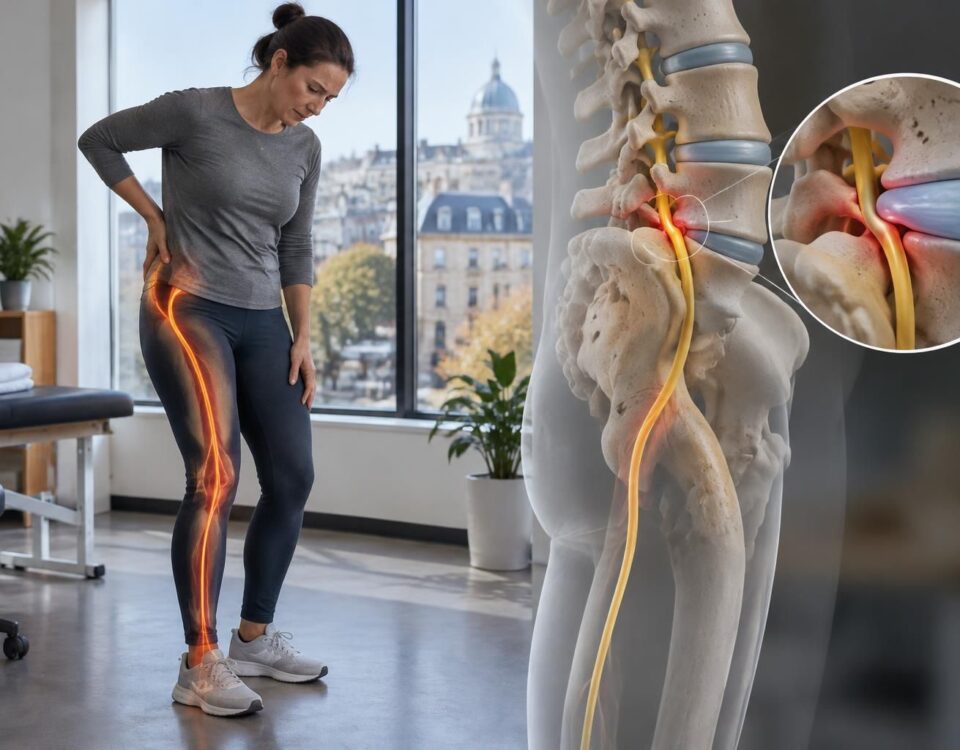
Sciatica and frequent breaks while walking
16/09/2026
Sciatica in Terrebonne: loss of sensation in the toes
17/09/2026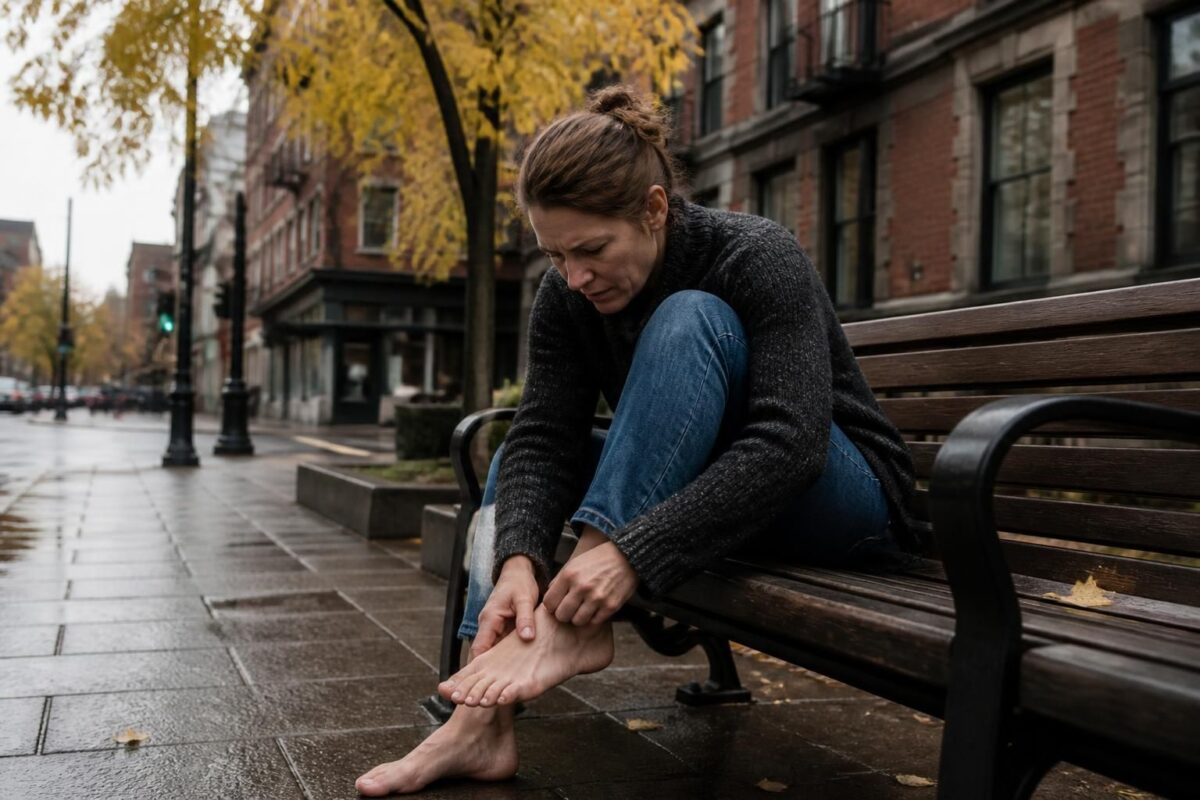
IN BRIEF
In brief, sciatica associated with a loss of sensitivity in the toes is pain that starts in the lower back and can radiate down to the foot. In Montreal, this service offers an effective non-surgical approach based on a personalized assessment, stretching exercises, and manual therapies, with complementary options if necessary (injections or surgery) to relieve symptoms and prevent chronicity. This strategy aims to restore mobility and comfort while providing a clear and tailored pathway for the patient. |
Sciatica in Montreal may manifest as a loss of sensitivity in the toes, often accompanied by tingling or numbness, indicating irritation or compression of a lumbar root.
Common causes: compression of the sciatic nerve due to a herniated disc, protrusion, disc pinching, or foraminal stenosis.
Typical management: multidisciplinary and non-surgical approach with stretching exercises, manual therapy, and inflammation management. In case of severe or persistent symptoms, options such as epidural injections or, sometimes, surgery may be considered.
Early diagnosis: it is important to consult quickly to prevent chronicity of symptoms and to tailor treatment to your case.
In Montreal, TAGMED Clinic offers a structured assessment and tailored care based on the evaluation, aiming to relieve pain and restore mobility.
To schedule a consultation and receive personalized advice, contact us today.
Quick summary: this article explains sciatica in Montreal and the loss of sensitivity in the toes. It describes possible causes, assessment, and treatment options available at TAGMED Clinic, prioritizing non-surgical approaches when evaluation allows.
Sciatica is pain that can radiate from the lower back to the buttock, thigh, and sometimes the foot. Numbness of the toes is a common manifestation of this pain and may be accompanied by tingling, burning, or electric shocks. The sciatic nerve is the largest nerve in the body; its compression can cause a loss of sensitivity, which varies depending on the trajectory and level of compression.
Understanding Toe Numbness and Its Link to Sciatica
The sciatic nerve can be compressed by a herniated disc, a protrusion, or stenosis, disrupting nerve signals to the toes. Frequent causes also include peripheral neuropathy, vitamin B12 deficiency, or pressure points related to ill-fitting shoes. The painful trajectory can target a single toe or several, and symptoms may progress along the leg.
The affected areas depend on the level of the lumbar spine involved. For example, L4-L5 lesions often affect the big toe, while L5-S1 affects the 1st and 2nd toes, and S1-S2 may affect the 4th and 5th toes. This topography helps the clinician specify the lumbar origin and the location of the irritated nerve.
Assessment and Diagnosis
At TAGMED Clinic, the assessment aims to link the pain trajectory, neurological signs, and mobility tests. Sensitive areas are identified, along with signs of weakness and indications requiring medical referral. The goal is to propose a tailored care plan and avoid chronicity of symptoms.
Treatment Options in Montreal
Treatment generally begins with non-surgical measures tailored to the evaluation. The goal is to reduce nerve irritation and improve function.
Depending on the case, options at TAGMED Clinic may include:
– Motorized spinal decompression to target mechanical stresses on the discs and nerve roots.
– Specific osteopathy tailored to the patient’s mobility, compensations, and tolerance.
– Precision impactor for an instrumented and targeted intervention when indicated by the evaluation.
In cases of severe and persistent pain, complementary options may be considered based on the evaluation, including epidural injections or surgery when conservative treatments fail or when progressive neurological deficits appear. For symptoms related to suspected significant compression, decompression may be discussed as part of the overall assessment, without recommending stretching or specific exercises as a sole treatment.
For further reading, discover resources related to sciatica and its trajectory on specialized sites: Sciatica and Thigh Weakness – Possible Lumbar Cause, Sciatic Pain in Terrebonne – Incomplete Trajectory, Sciatica in Montreal – Pain in the Leg After Prolonged Standing, and Numbness in the Foot and Sciatica.
For specific aspects related to decompression and associated pathologies, you can also consult spinal decompression and dedicated resources on discs at Herniated Disc and Herniated Disc – Approach.
At TAGMED Clinic, the goal is to avoid industrial options like the automatic resort to repeated stretching when they are not suited to the clinical evaluation. A cautious and progressive approach, guided by evaluation, is preferred.
Additional information on the journey and painful pathways can be found through public resources dedicated to sciatica and painful pathways on Clinique TAGMED.
Elements to monitor during the progression of symptoms: increased numbness, progressive weakness, pain that extends or persists after exertion, and any signs of neurological involvement requiring prompt management.
Contacts and location:
Clinique TAGMED – Montreal / Mount Royal: cliniquetagmed.com
Clinique TAGMED – Terrebonne: cliniquetagmed.com
For more information on the pathways and symptoms, consult the dedicated pages on SOS Sciatique and related resources.
Medical disclaimer: The information and advice provided on this site do not replace the opinion, diagnosis or treatment of a health professional. Please note that Dr. Sylvain Desforges, osteopath, is neither a doctor of medicine nor a physician, and is not a specialist in any medical specialty as defined by the Collège des médecins du Québec. Manual therapy, functional medicine, and sports medicine as described on this site exclude any treatment or medical diagnosis made by a doctor or medical specialist. Always consult your physician for any medical questions. For more details, please read our complete Legal Notice.
- Key sign: loss of sensation and tingling in the toes.
- Pathway: pain or tingling descending from the lower back to the foot.
- Alert: marked weakness, difficulty walking or persistent nighttime pain.
- Frequent causes: compression of the sciatic nerve (disc herniation, protrusion, stenosis).
- Quick assessment: clinical examination focused on the pathway and the sensitivity of the toes.
- Non-surgical approaches: osteopathy, manual therapy and stretching exercises.
- Advanced options: motorized neurovertebral decompression or precision impactor based on evaluation.
- In Montreal: make an appointment for a personalized evaluation and an adapted care plan.

This article presents recommendations for sciatica in Montreal with loss of sensation in the toes. You will discover possible causes, signs to monitor, non-invasive treatment options, and when to consider more advanced approaches, in order to regain mobility and comfort without delay.
Understanding toe numbness related to sciatica
The loss of sensation in the toes is a neurological symptom characterized by a reduction in feeling, sometimes accompanied by tingling. In the context of sciatica, it most often occurs when the sciatic nerve is compressed or irritated. This nerve extends from the lower back to the foot, which explains why sensations may affect one or more toes depending on the site of compression.
The pathway and extent of numbness vary depending on the affected level. Some conditions specifically target the big toe, others certain toes, while some cases see numbness extend to the foot and leg. Frequent causes include a disc herniation, a disc protrusion, a disc pinching, or a foraminal stenosis. Other factors like peripheral neuropathy or vitamin deficiencies may also contribute.
Practical approaches and recommendations in Montreal
Early assessment and personalized plan
An assessment by a professional helps confirm the nerve origin and rule out other causes. A personalized plan aims to limit reserves and establish realistic steps to improve symptoms and quality of life.
Non-invasive treatments and support
Targeted stretching exercises for the sciatic nerve, combined with appropriate manual therapies, can reduce compression and restore mobility. The alternating application of heat and cold can help depending on the inflammatory stage. Specific osteopathy allows interventions to be tailored to the patient’s tolerance and mobility.
Practical aids such as proper footwear and orthotic supports can reduce pressure points and improve walking stability. A gradual and tolerable approach is preferred to avoid aggravating nerve irritation.
Medication treatments and advanced options
Depending on the case, non-steroidal anti-inflammatory drugs and muscle relaxants may be recommended to reduce inflammation and spasms. In refractory cases, epidural injections may be discussed for temporary relief. Surgery remains an option when conservative treatments fail or when neurological deficits progress rapidly.
When to consider more advanced options
The doctor will assess whether an approach like decompression or other targeted interventions is appropriate. Each patient benefits from a tailored plan based on the intensity of symptoms and the impact on daily activities.
When to seek prompt care and warning signs
Seek prompt care in cases of progressing numbness, increasing weakness, or loss of bladder or bowel control. Signs like severe pain after trauma, associated fever, or persistent nighttime pain require urgent medical evaluation.
Concrete action plan for Montreal
Note the affected areas and evolution of symptoms to facilitate consultation. Start with gentle and progressive exercises, avoiding movements that worsen numbness. Look for a specialized sciatica clinic in Montreal for a structured evaluation and a care plan tailored to your situation, with regular follow-ups to adjust treatment according to the results.
| Aspect | Concise statement |
|---|---|
| Nature of the symptom | Loss of sensitivity in one or several toes, related to sciatica, observed in Montreal. |
| Typical path | From the lower back to the buttock, then to the foot; the affected toes depend on the level of the root (L4-L5 or L5-S1). |
| Common causes | Nerve compression due to disc herniation or protrusion, foraminal/spinal stenosis, neuropathies, ill-fitting shoes in Montreal. |
| Associated signs | Pain radiating along the path, paresthesias, slight weakness, pain exacerbated by certain movements. |
| Recommended diagnosis | Comprehensive clinical evaluation; mobility tests; if necessary, imaging or electrodiagnostic in Montreal. |
| Initial approach | Tailored conservative plan: targeted stretches, manual therapy, management of inflammation. |
| Non-medicated options | Specific osteopathy, physiotherapy, appropriate orthotics and supports, available in Montreal. |
| When to consider injections or surgery | Persistence or progressive neurological deficit; evaluation for injections or surgery as needed. |
| Urgency and warning signs | Loss of bladder or bowel control, saddle anesthesia, significant weakness or rapid progression requiring prompt intervention. |
Testimonials on sciatica and numbness of the toes in Montreal
“In Montreal, I experienced a loss of sensitivity in my toes that worsened over time and seemed related to sciatica extending down to my foot. Daily life became difficult and each step was uncertain. Thanks to a personalized plan combining targeted stretches, manual therapy, and postural advice, sensitivity returned and my mobility is restored.”
“As a resident of Montreal, my toes were constantly numb, especially at the end of the day, and the sciatica extended down to my heel. I feared I would no longer be able to engage in my usual activities. After multidisciplinary support, the numbness decreased and my movements became fluid again.”
“In Montreal, the lack of sensitivity in my toes would wake me at night and disturb my sleep. The diagnosis of sciatica allowed for a plan that tackled the numbness and improved my sensation in my foot. I found a true solution without surgery.”
“Active and lively in Montreal, the numbness in my toes limited my sports and professional performance. After a comprehensive evaluation and treatment focused on the sciatic nerve, I regained my mobility and my natural sensation.”
“In Montreal, I was looking for a solution for my loss of sensitivity in my toes related to a sciatica. The proposed plan, including progressive exercises and manual therapies, spared me from surgery and allowed me to resume my activities. Today, my toes are regaining their sensitivity and my life is back to normal.”
Dr. Sylvain Desforges, a recognized osteopath in Montreal, embodies a multidisciplinary approach that combines osteopathy, naturopathy, and manual medicine. As the founding president of TAGMED clinics and the ACMA association, he directs his practice towards managing chronic pain of the spine and sciatica, particularly when loss of sensitivity in the toes may manifest. His commitment is based on active listening and rigorous clinical evaluation, to propose a personalized therapeutic pathway that restores mobility, comfort, and quality of life.
His approach is grounded in evidence-based logic and therapeutic innovation. He integrates advanced technologies, including motorized neuro-spinal decompression, laser, and shockwaves, to optimize the management of patients presenting irritation or compression of lumbar nerve roots. This combination of techniques aims to reduce inflammation, restore nerve function, and allow for a gradual return to daily activities, while remaining focused on the patient’s goals and tolerances.
In the context of sciatica and more broadly of nerve dysfunction, Dr. Desforges favors an approach that goes beyond symptomatic relief. He emphasizes precise and early diagnosis to prevent the chronicity of symptoms, especially when signs such as numbness of the toes or pain radiating down to the foot indicate involvement of lumbar roots. His work is based on a clear definition of the painful trajectory, functional tests, and a progressive and personalized treatment plan.
For residents of Montreal and surrounding areas, TAGMED offers services within clinics located in Montreal/Mont-Royal and Terrebonne. This dual presence allows for enhanced accessibility and close collaboration with other healthcare professionals to ensure coherent and tailored management for each profile. Dr. Desforges relies on a solid professional network to provide a comprehensive and sustainable solution to sciatica and loss of sensitivity in the toes.
According to each patient’s needs, he can offer a range of specialized care: motorized neuro-spinal decompression, specific osteopathy, and precision percussor, combined with targeted exercises and lifestyle advice. This personalized approach takes into account the patient’s tolerance, mechanical limitations, and functional objectives, to avoid movements that could exacerbate pain while promoting a gradual and sustainable recovery.
Engaged in the dissemination and education around sciatica, Dr. Desforges participates in training initiatives and publishes content aimed at better understanding symptoms, causes, and non-surgical treatment options. His goal is clear: to provide evidence-based care that optimizes the health and well-being of his patients. For more information on his approach and the available services, it is advisable to contact the TAGMED clinics in Montreal/Mont-Royal and Terrebonne to plan an assessment tailored to each situation.
This text summarizes the link between sciatica in Montreal and numbness of the toes, explaining the causes, signs, and management options while presenting local resources for an appropriate non-surgical approach when possible. Early assessment helps prevent the chronicity of symptoms and directs toward personalized management in the Montreal area.
Note: The content below is structured to provide you with a clear view of the mechanisms, therapeutic choices, and resources available in Montreal. It is based on the principles of assessment and management outlined in the guides dedicated to sciatica and toe numbness.
The symptom of toe numbness is a decrease in sensitivity often accompanied by tingling. It mainly results from compression of the sciatic nerve, the largest nerve in the body, and can vary depending on the level of compression: L4-L5 primarily affects the big toe, L5-S1 involves the first and second toes, while S1-S2 may concern the fourth and fifth toes. This mapping explains why some toes may be affected differently.
Sciatica is a major cause of this numbness, manifesting as pain that can radiate from the buttock down to the foot, associated with sensations of burning, electric shocks, or tingling along the nerve path. This triad – pain, numbness, and possible weakness – must be accurately assessed to determine the lumbar origin and the best therapeutic pathway. For Montreal, patients often seek a structured approach that connects the painful pathway to neurological signs and possible care options, with particular attention to the evolution of symptoms.
Effective solutions for relieving numb toes related to sciatica rely on a multimodal approach. Targeted stretching exercises, manual therapy (osteopathy or physiotherapy), and postural adjustments form the non-drug basis. Anti-inflammatories and muscle relaxants can reduce inflammation and spasms that irritate the nerve. In more severe cases, epidural injections or, if necessary, surgery may be considered. The importance of early diagnosis cannot be underestimated to avoid the chronicity of symptoms and quickly target the appropriate treatment.
In Montreal, you can seek specialized assessment that links the pain pathway, neurological signs, and non-surgical care options. For example, the care offered by the TAGMED Clinic includes approaches such as motorized neurovertebral decompression, specific osteopathy, and the use of precision impactors when relevant. For more information on local resources and available options, consult the dedicated pages on the TAGMED website and regional guides.
To delve deeper into symptoms, pathways, and treatment approaches, several online resources provide additional information, including pages addressing walking and pauses, pain going down stairs, and assessment profiles on The Spine Page – Sciatica assessment Montreal.
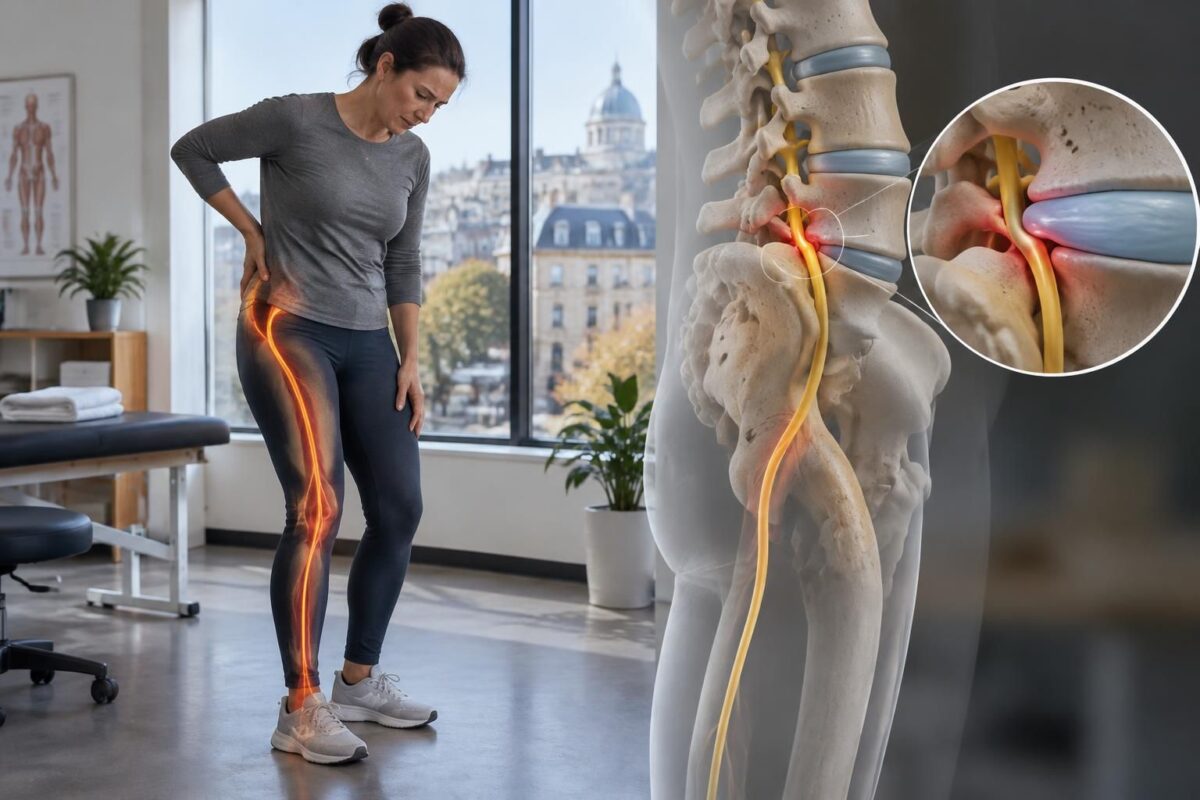
Sciatica in Montreal: nerve root, disc, and foramen explained simply
IN BRIEF Sciatica corresponds to pain linked to the irritation of a nerve root, sometimes near a lumbar disc or a narrowed foramen. In Montreal, distinguishing an L4-L5 issue that may affect the L5 root from an L5-S1 problem that…

Sciatica in Montreal: understanding L5-S1 foraminal compression
IN BRIEF L5-S1 foraminal compression is a narrowing of the opening where a nerve root exits, which can cause sciatica with pain, tingling, or weakness in the buttock and leg. In Montreal, an assessment allows for correlating symptoms, clinical examination,…

Sciatica in Montreal: why L5-S1 is often involved
IN BRIEF The sciatica L5-S1 often corresponds to irritation of the S1 root, sometimes related to a herniated disc. The pain may start in the buttock and descend behind the thigh to the calf or the foot. In Montreal, understanding…

Sciatica in Montreal: L5 and difficulty lifting the foot
IN BRIEF The difficulty in lifting the foot with sciatica can indicate weakness related to the involvement of the L5 root, sometimes caused by a herniated disc. This foot drop increases the risk of falling and requires prompt medical evaluation;…

Sciatica in Montreal: S1 and difficulty rising up on the toes
IN BRIEF S1 sciatica can cause pain from the buttock to the calf and foot, as well as difficulty getting on tiptoe. This weakness may suggest irritation of the S1 nerve root, but is not sufficient to establish a diagnosis.…

Sciatica in Montreal: L4-L5 and pain towards the top of the foot
IN BRIEF The sciatica related to L4-L5 can radiate from the lower back to the buttock and the leg; pain on the top of the foot may suggest involvement of the L5 root, but the pathways vary and symptoms overlap.…

Sciatica in Montreal: pain in the big toe, L5 root or another cause?
IN BRIEF Pain that radiates toward the big toe may indicate irritation of the L5 root, sometimes related to a herniated disc, but other causes are possible. In Montreal, evaluating the pain pathway, strength, sensitivity, and walking helps guide management…

Sciatica in Montreal: why the affected root changes the pain pathway
IN BRIEF Sciatica refers to pain or nerve symptoms that vary depending on the affected lumbar root. Pain, tingling, or numbness may manifest in the buttock, thigh, calf, or foot. Understanding this distribution helps guide the assessment, without diagnosing based…

Dr Sylvain Desforges, B.Sc., D.O., N.D., osteopath, is the founding president of TAGMED and of the ACMA association. He dedicates his practice to chronic spinal pain, low back pain and symptoms compatible with sciatica, particularly when pain radiates toward the buttock, leg, calf, foot or toes.
Through SOS Sciatique, he publishes educational content on sciatica symptoms, possible causes such as disc herniation, disc narrowing, foraminal stenosis or irritation of a lumbar nerve root, as well as non-surgical approaches that may be considered according to the evaluation. At Clinique TAGMED, care may include, depending on the case, motorized neurovertebral decompression, specific osteopathic care or precision percussion.
For an evaluation related to sciatica treatment in Montreal / Mount Royal or sciatica treatment in Terrebonne, please consult the services available at Clinique TAGMED.
Medical disclaimer
The information published on SOS Sciatique is provided for educational purposes only and does not replace a consultation, diagnosis, opinion or treatment provided by a physician or another authorized healthcare professional. The author of this article is neither a medical doctor nor a specialist in a medical specialty recognized by the Collège des médecins du Québec. The osteopathic, manual medicine or functional support approaches described on this site do not constitute medical acts and are not intended to replace medical follow-up.
Consult a physician or emergency service in cases of loss of bladder or bowel control, anesthesia in the saddle area, significant or progressive weakness in the leg or foot, fever, recent trauma, severe pain or rapid worsening of symptoms. For more details, please read our Legal Notice.