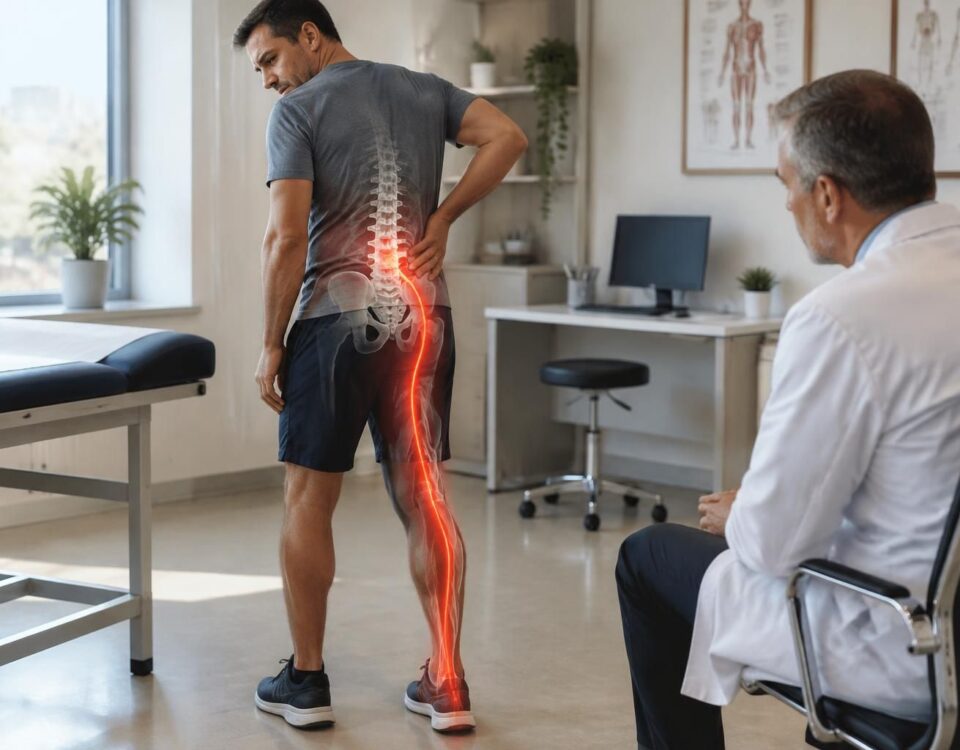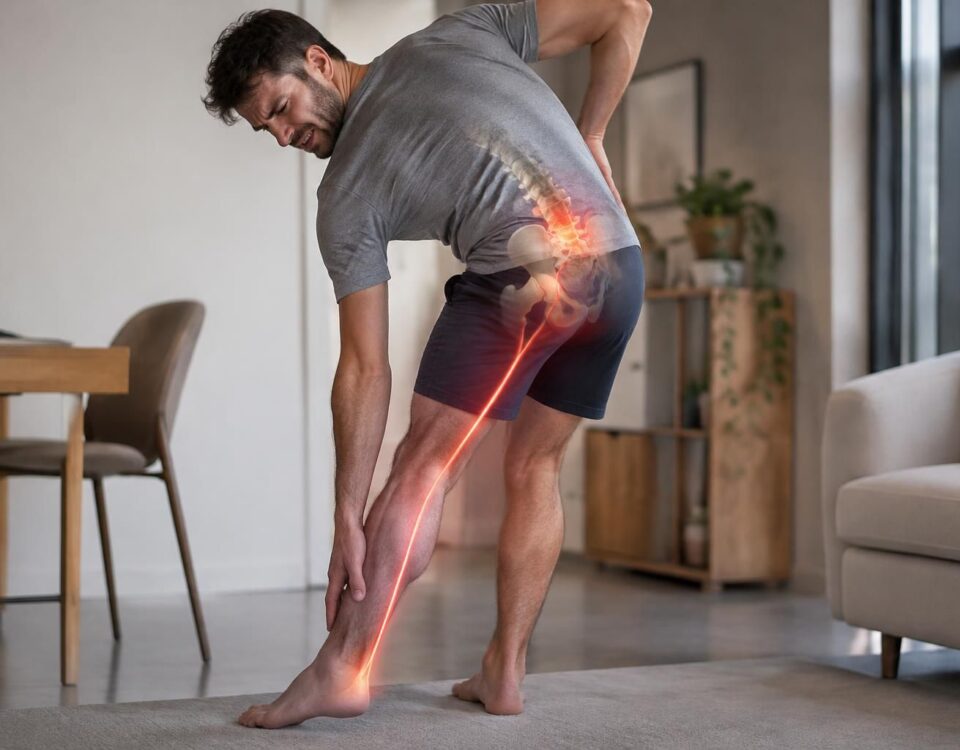



Acute sciatica: typical symptoms to recognize
05/11/2026
Sciatica in Montreal: L5-S1, canal, foramen, and nerve compression
06/11/2026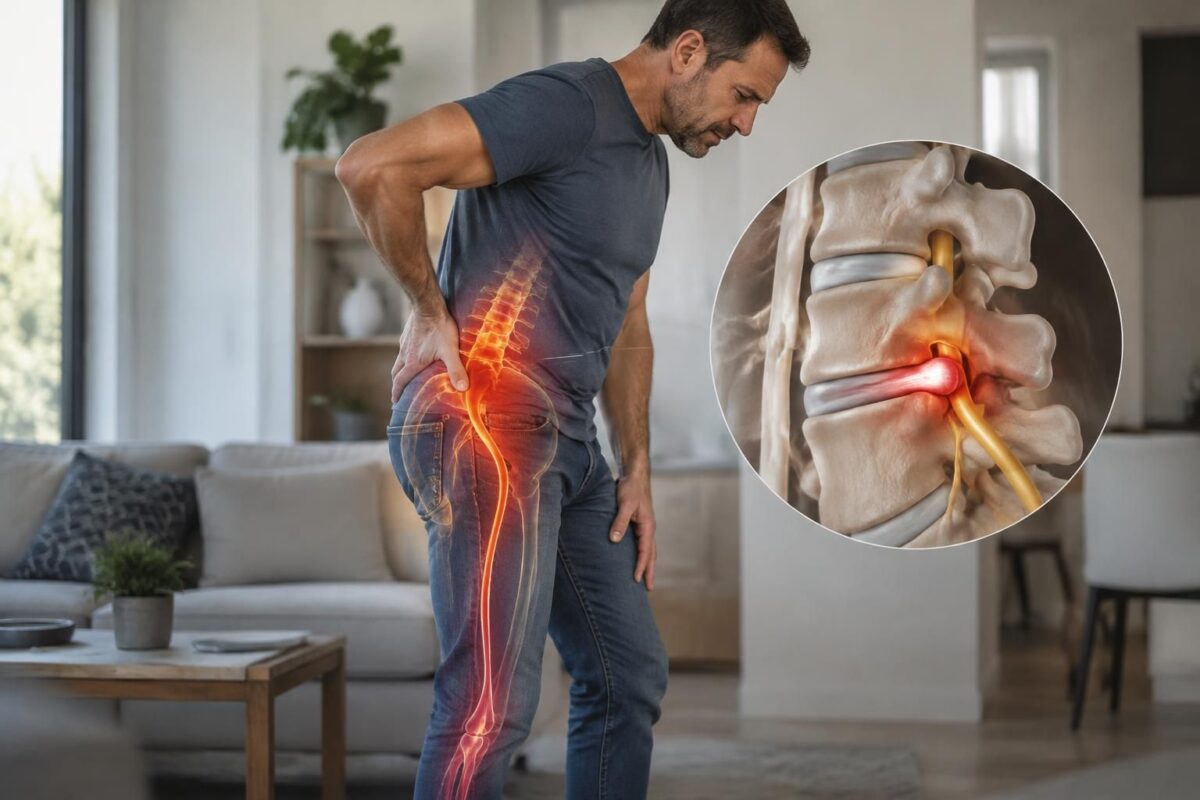
IN BRIEF A L4-L5 disc bulge is a protrusion of the lumbar disc that can contribute to pain in the buttock or leg if a nerve root is irritated. An MRI in a neutral position does not always show what varies with movement; a clinical evaluation and, in some cases, a dynamically MRI can help clarify the situation. Management is generally tailored to the symptoms and may include non-surgical approaches. |
A L4-L5 disc bulge can sometimes irritate a nerve root and cause pain that radiates down the buttock or leg, sometimes with tingling or numbness. However, an MRI abnormality alone is not sufficient to confirm the cause of the symptoms: it must be interpreted alongside the clinical examination.
If the pain persists despite a conventionally normal MRI, a healthcare professional may reassess the situation and determine if further tests are indicated. Seek prompt consultation in case of progressive weakness of the leg or foot, loss of urinary or bowel control, or numbness in the saddle area.
A L4-L5 disc bulge may be visible on imaging without solely explaining leg pain. The body’s position can alter the appearance of the disc, and an MRI performed in a neutral position does not always show what happens during movements. Therefore, interpretation must consider symptoms, clinical examination, and imaging results. This article presents possible causes, the limitations of conventional MRI, and options for non-surgical management.
What does a disc bulge at L4-L5 mean?
The L4-L5 disc is located between the fourth and fifth lumbar vertebrae. It helps distribute loads and allows movements of the lower back. A disc bulge describes an overflow of the disc beyond its usual contour. This finding does not automatically mean that a nerve is compressed or that the disc is causing the pain.
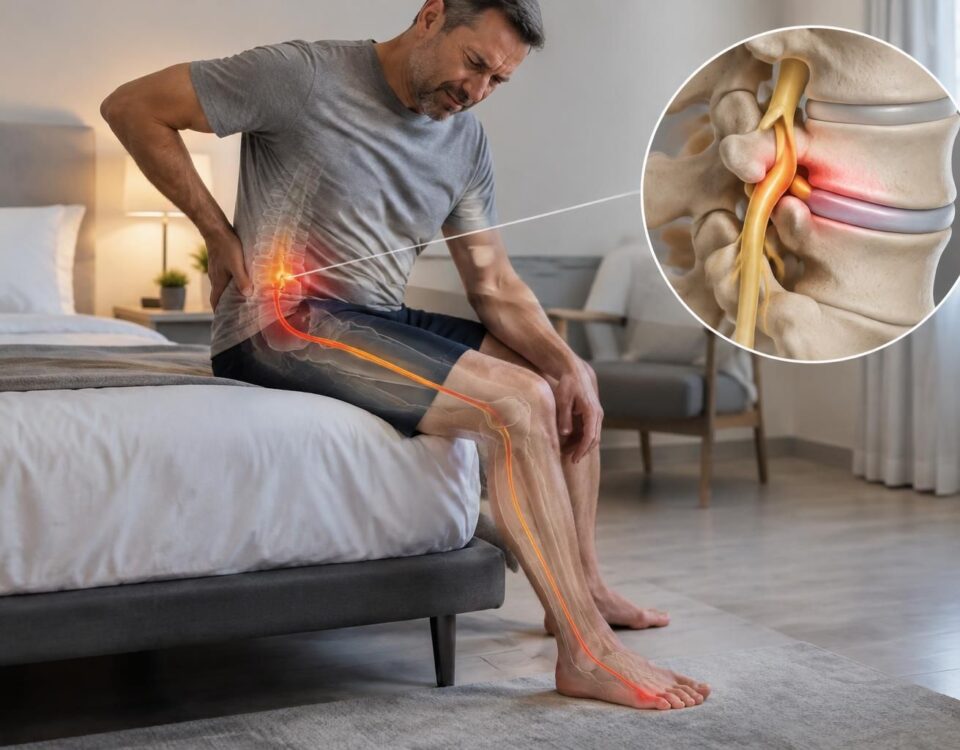
Pain may, however, arise if the disc irritates a nerve root or if other structures contribute to the symptoms. Low back pain may also accompany pain that radiates from the buttock down the thigh, calf, or foot. To better understand the link between a bulging disc and sciatica-type pain, visit our page on sciatica and disc bulge.
Why can pain radiate down the leg?
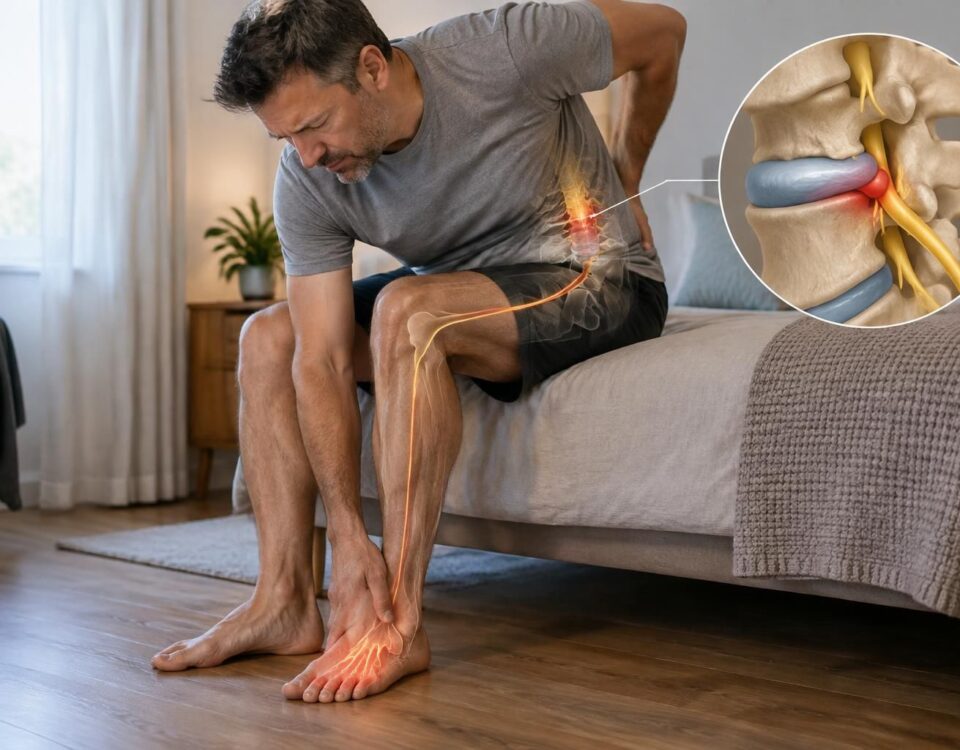
Irritation of a lumbar nerve root can cause pain, tingling, or numbness in a part of the leg. Symptoms vary depending on the affected root. An injury to L5 can, for example, be associated with sensations towards the side of the leg or the top of the foot. Pain on the outer edge of the foot can also have multiple causes. It does not, by itself, confirm a specific lesion. For more information, visit the page on disc protrusion and L5 irritation as well as the one on pain on the outer edge of the foot.
A report from an MRI indicating a bulge without visible compression is not sufficient to rule out any nerve-related cause. Conversely, a visible abnormality on the MRI does not prove that it is the source of the symptoms. The professional evaluating the situation must compare imaging with the location of the pain, numbness, strength, and other clinical signs.
Disc bulge L5-S1 and pain toward the foot
IN SHORT A L5-S1 disc bulge corresponds to a disc that slightly overruns between the last lumbar vertebra and the sacrum. It can irritate a nerve root and cause pain resembling sciatica down to the foot, but this anomaly visible…
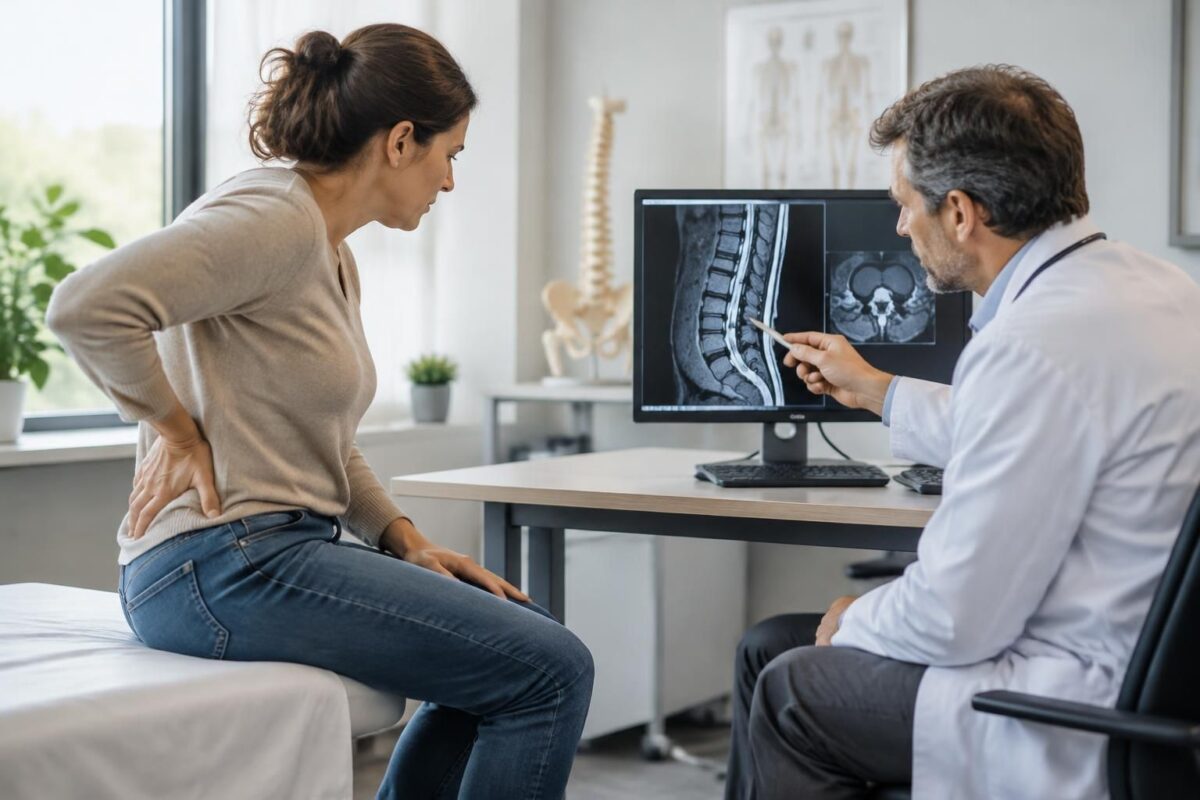
Disc bulge and sciatica: possible cause or simple discovery?
IN SHORT A disc bulge is a diffuse protrusion of a disc, sometimes associated with sciatica, but often discovered incidentally on imaging. To determine if it explains symptoms, one must compare the image to their path, the neurological examination, and…
Conventional MRI and disc bulge in motion
A conventional lumbar MRI typically shows the spine in a lying and relatively neutral position. However, the shape of the disc can vary depending on posture and load. In some cases, a bulge that appears limited in images taken at rest may appear more pronounced in flexion or extension.
What a cine-MRI can show
The cine-MRI, also called dynamic MRI or kinetic MRI, allows for observation of the spine in different positions. A study published in the journal Spine in 2008 reported an increase in the degree of herniation in some patients when images were taken in flexion or extension rather than in a neutral position. Results varied depending on the size of the initial bulge and the position studied.
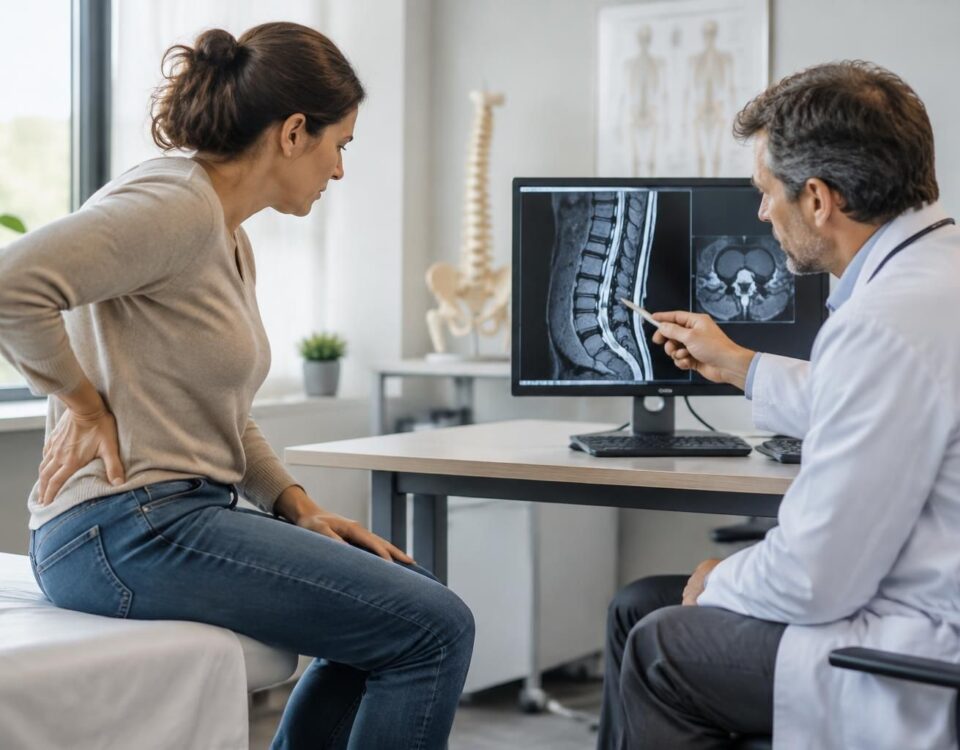
These results indicate that dynamic imaging can provide information in certain cases where symptoms and conventional MRI do not match. They do not mean that everyone with leg pain needs a cine-MRI. The choice of examination depends on clinical assessment and the healthcare professional’s decision. A dynamic MRI does not replace a medical examination and does not guarantee that an observed abnormality explains the pain.
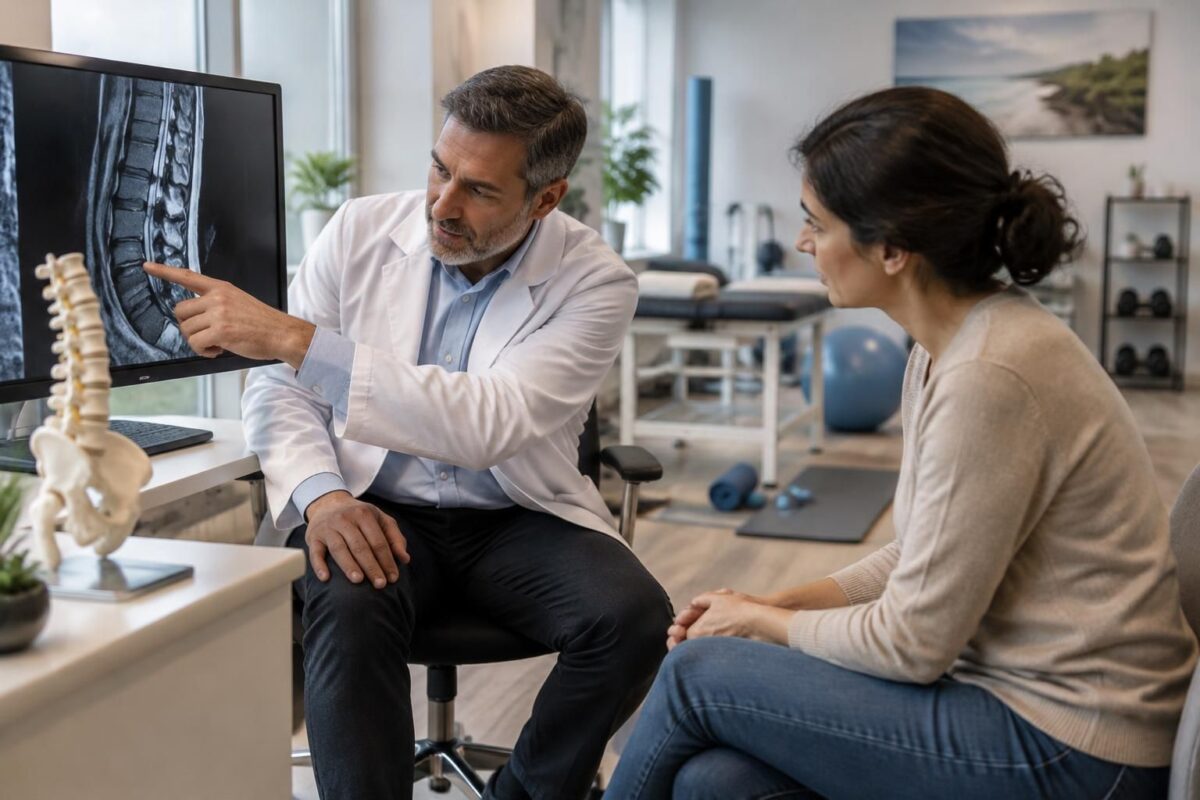
Lumbar Disc Protrusion and the Choice of a Non-Surgical Approach
IN SHORT A disc protrusion is a bulging of a disc between the vertebrae; it often does not cause any symptoms. If it is accompanied by pain, a non-surgical approach may include appropriate activity, prescribed medications, and progressive rehabilitation. It…
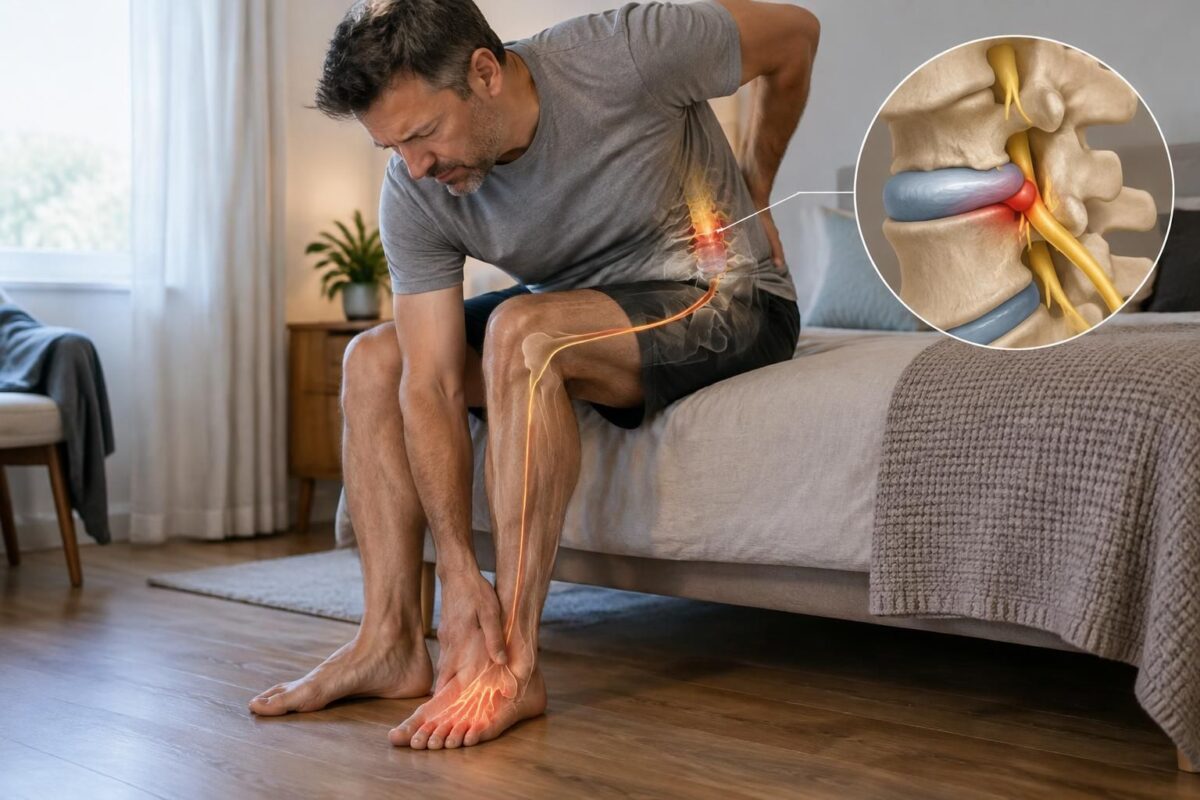
Disc herniation and pain on the top of the foot
IN BRIEF A disc protrusion is an intervertebral disc that bulges without necessarily rupturing. Pain on the top of the foot may sometimes be related to irritation of a lumbar nerve, but it does not alone confirm disc involvement. An…
Evaluating symptoms associated with L4-L5
The healthcare professional considers the duration and intensity of the pain, its path, and possible neurological signs. They may also examine sensitivity, strength, and reflexes. These elements help to determine if a nerve root might be irritated and whether additional tests are necessary.
Symptoms consistent with nerve irritation may include pain radiating down the leg, tingling, or a feeling of numbness. New or progressive weakness warrants special attention. L4-L5 symptoms are not the same in all individuals, and other issues can produce similar sensations.
To better understand evaluation options when pain arises in the Terrebonne area, visit our page on sciatica pain in Terrebonne.
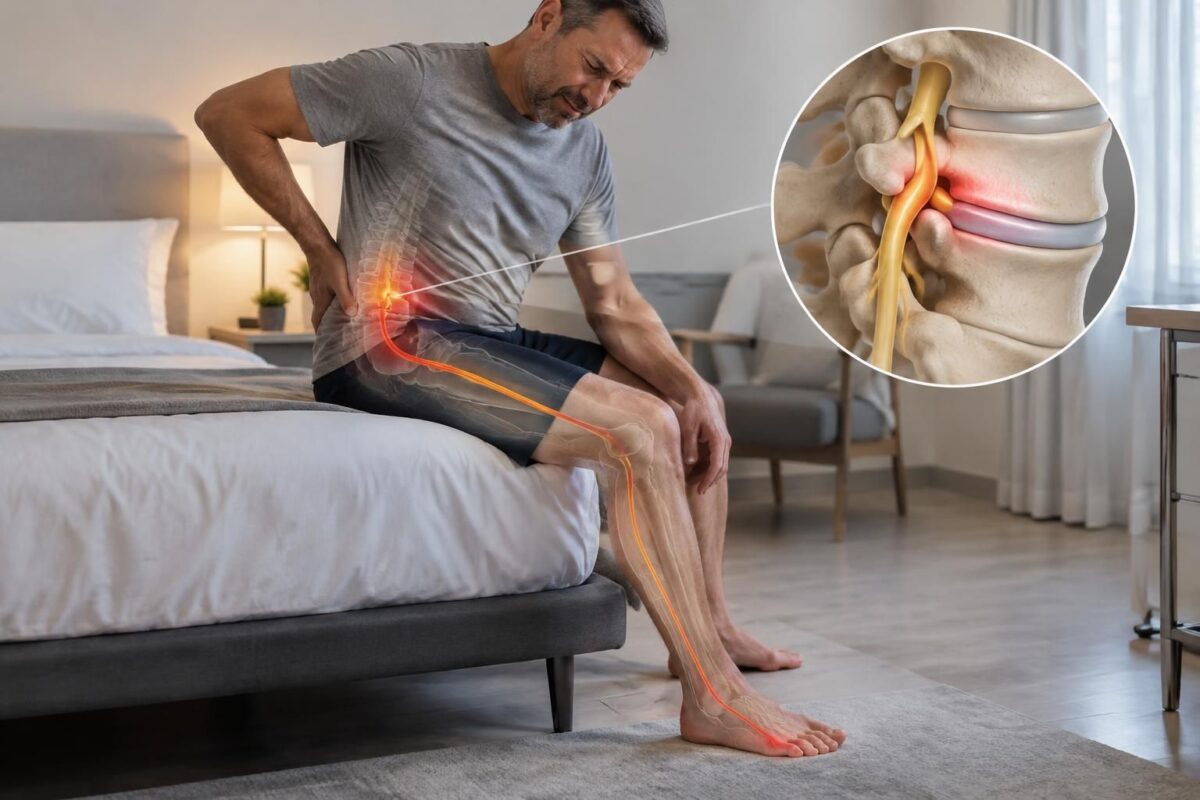
Disc protrusion and pain on the outer edge of the foot
IN BRIEF A disc bulge is a bulging of the disc that can sometimes irritate a nerve root and cause pain down to the outer edge of the foot. However, this pain is not always related to the disc: a…
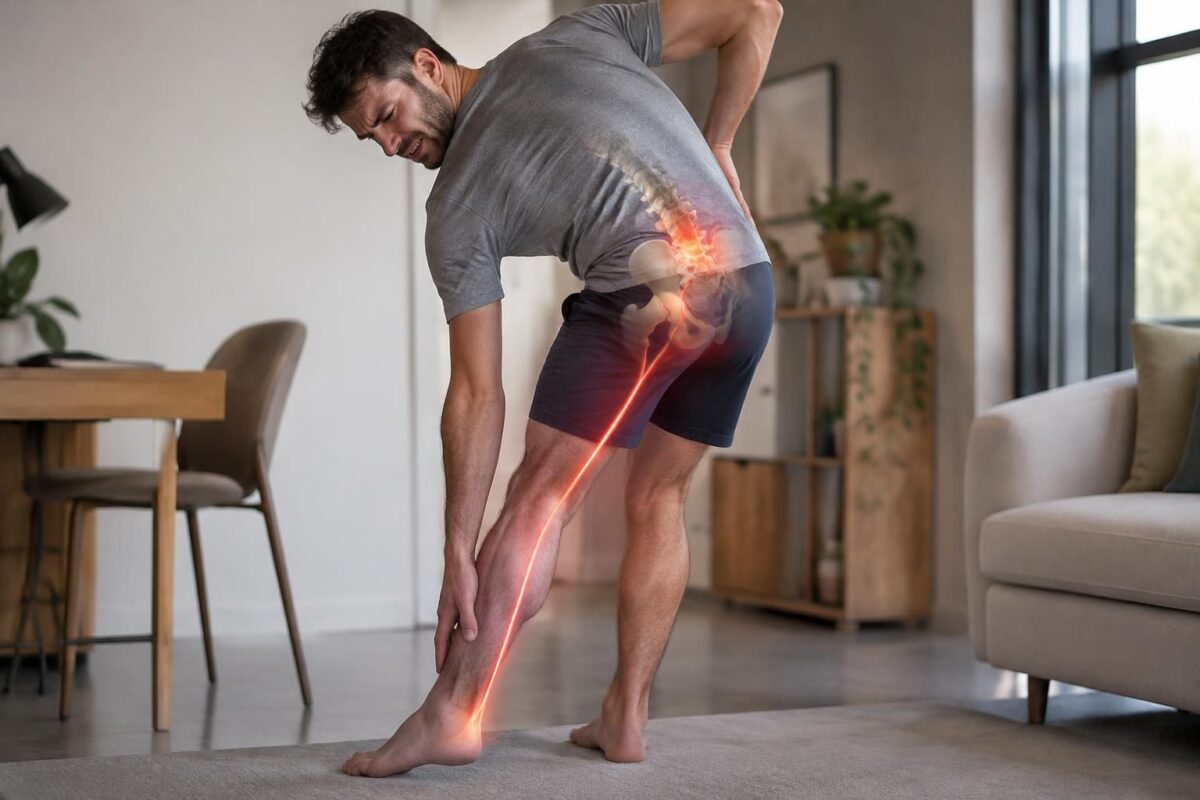
IN BRIEF A disc herniation is a bulging of a disc in the spine, often without symptoms. If it irritates a lumbar nerve root, the pain may radiate down the leg to the foot and sometimes be felt in the…
Non-surgical management of disc bulge
Management depends on symptoms, examination, and imaging results. In several situations, a non-surgical approach may be considered before an intervention. It must be tailored to the individual and reassessed based on progress. No treatment can guarantee a specific recovery duration or the same outcome for everyone.
At the TAGMED Clinic, the assessment may lead to care such as specific osteopathy or motorized neurovertebral decompression, depending on the individual’s case and eligibility. These approaches do not replace a medical assessment and may not be suitable for every situation. To learn about the available services, visit the sciatica treatment page in Terrebonne or the TAGMED Clinic website.
A quick consultation with a physician or an emergency service is necessary in cases of loss of bladder or bowel control, numbness in the saddle area, significant or progressive weakness, fever, recent trauma, or rapid deterioration. These signs require immediate assessment.
About the Author
Sylvain Desforges, B.Sc., D.O., N.D., Doctor of Osteopathy and Naturopath, is the founding president of TAGMED and the ACMA association. His practice focuses on chronic pain of the spine, lower back pain, and pain associated with sciatica, particularly when it radiates to the buttock, leg, or foot.
Through SOS Sciatique, he publishes educational content on the symptoms of sciatica, possible causes, and non-surgical approaches that may be considered after an assessment. The care offered at the TAGMED Clinic may include, depending on the case, motorized neurovertebral decompression, specific osteopathy, or precision percussion.
For an evaluation related to sciatica treatment in Montreal or Mont-Royal, or sciatica treatment in Terrebonne, check the available services at the TAGMED Clinic.
Medical Disclaimer
Medical disclaimer: The information and advice provided on this site do not replace the opinion, diagnosis, or treatment of a healthcare professional. Please note that Sylvain Desforges, B.Sc., D.O., N.D., Doctor of osteopathy, is neither a medical doctor nor a physician, and is not a specialist in any medical specialty as defined by the Collège des médecins du Québec. Manual medicine, functional medicine, and sports medicine as described on this site exclude any treatment or diagnosis made by a physician or a specialist. Always consult your doctor for any medical questions. For more details, please read our Complete Legal Notice.
Key Points on L4-L5
- A disc bulge may be present without solely explaining the pain.
- Nerve irritation may cause pain from the lower back to the buttock and leg.
- Pain may sometimes radiate down to the foot; the trajectory varies depending on the affected nerve root.
To Monitor and Evaluate
- Note painful areas, tingling, and movements that worsen symptoms.
- The MRI must be interpreted alongside the clinical examination; an image alone is not enough to confirm the cause.
- Consult quickly if weakness arises or worsens; emergency in the case of urinary or intestinal issues or numbness in the saddle area.

An L4-L5 disc bulge may be accompanied by lower back pain radiating into the buttock or leg, but an MRI image alone is not sufficient to confirm the cause of the symptoms. The evaluation must consider their trajectory, the neurological examination, and their evolution. If the MRI performed in a neutral position appears normal or unclear, dynamic imaging may sometimes be discussed with a physician, although it is not necessary or indicated for everyone.
Understanding L4-L5 Disc Bulge and Leg Pain
The disc located between the L4 and L5 vertebrae helps distribute loads and allows movements of the lower back. A disc bulge refers to a protrusion of the disc; this finding is common and does not automatically mean that a nerve is compressed. However, leg pain may be compatible with irritation of a nerve root, especially when accompanied by tingling, numbness, or a sensation of weakness.
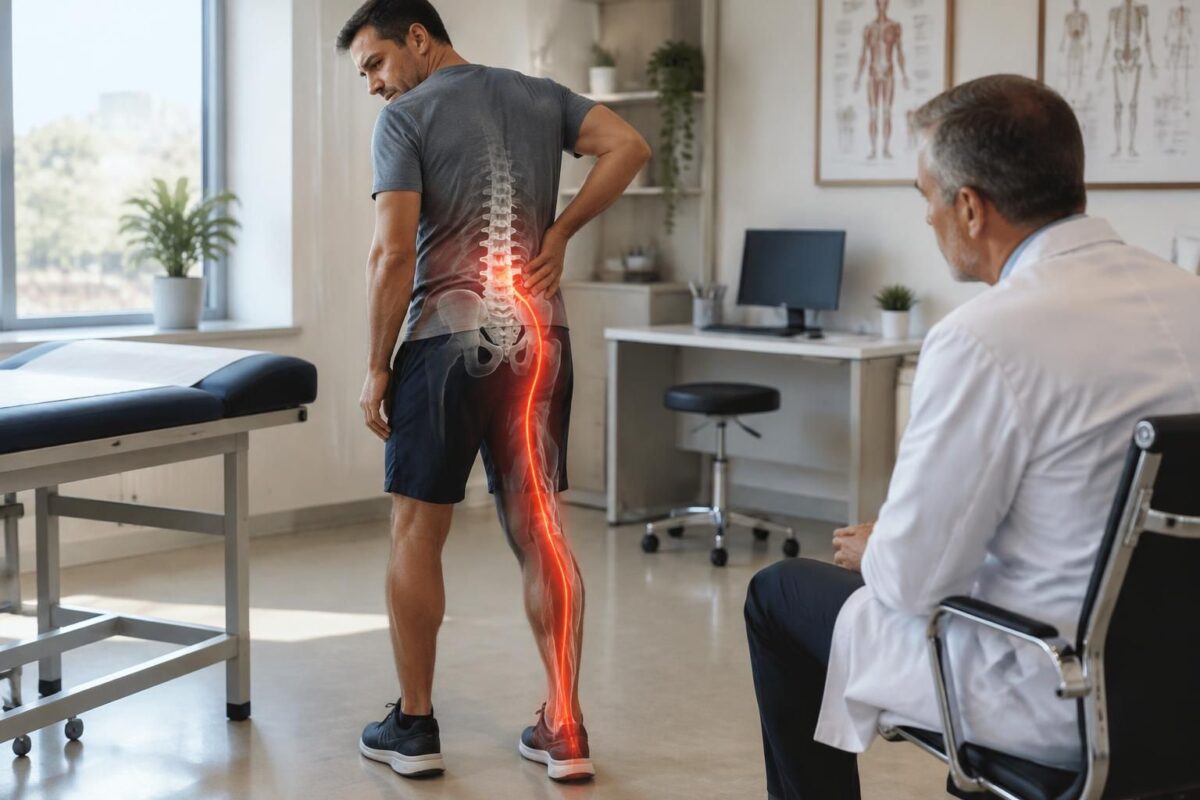
The location of symptoms varies among individuals. A healthcare professional will assess their trajectory, the movements that exacerbate them, muscle strength, sensitivity, and reflexes. These elements help determine whether the observed bulge corresponds to the symptoms or if it is a finding without a direct link.
Why an MRI in Neutral Position May Not Show Everything
A conventional MRI is generally performed when the person is immobile, in a given position. However, the shape of the disc and the space available around the nerve structures may vary with posture and movements. A cine-MRI or dynamic MRI allows for observation of the spine in different positions, such as flexion or extension. It can provide additional information in certain selected cases, but it does not replace a clinical examination and is not a routine examination for all lower back pain.
A study published in 2008 reported changes in the significance of certain disc hernias between images taken in a neutral position and those obtained in flexion or extension. These results do not mean that every person with leg pain needs dynamic imaging. The choice of examination should be discussed with a physician, depending on the symptoms, the examination, and the results already available.
Recommendations for Management
Evaluate Symptoms
If the pain persists, worsens, or limits activities, make an appointment with a doctor or qualified healthcare professional. Avoid drawing your own conclusions from the imaging report. Clearly mention where the pain radiates, how long it has been present, and any numbness or changes in strength.
Favor a gradual approach
According to the assessment, non-surgical management may be considered first. This may include maintaining tolerated activities, adapted exercises, and appropriate manual therapy. Osteopathy or motorized neurovertebral decompression can be considered after evaluation; their benefits depend on the case and are not guaranteed. Follow-up allows for monitoring progress and modifying recommendations if necessary.
To reduce some strain on the back, keep objects close to your body when lifting and avoid combining a pronounced bend with rotation under load. The fibers of the disk resist various forces, but no isolated posture can predict an injury on its own.
When to seek help quickly
Consult immediately in cases of loss of urinary or bowel control, numbness in the saddle region, significant or progressive weakness in the leg or foot, fever, recent trauma, or severe pain that rapidly worsens.
Medical warning: this content is educational and does not replace a consultation, diagnosis, or treatment by a licensed professional. The author is neither a doctor nor a specialist in a medical field recognized by the College of Physicians of Quebec. Osteopathy care and functional approaches do not replace medical follow-up.
| Element to consider | What it may indicate |
|---|---|
| L4-L5 disc bulge on MRI | An imaging abnormality that does not, by itself, prove the cause of the pain. |
| Pain radiating to the buttock or leg | May be compatible with nerve irritation; a clinical examination is necessary. |
| Numbness or tingling | To be reported to the healthcare professional, especially if persistent or worsening. |
| MRI performed in neutral position | May not show certain variations related to spinal movements. |
| Persistent symptoms despite inconclusive MRI | Justify reevaluation; dynamic imaging may be discussed depending on the case. |
| Non-surgical management | May be considered after evaluation, depending on symptoms and their evolution. |
| Progressive weakness, urinary or bowel issues | Consult a medical service or emergency department quickly. |
Illustrative testimonials: L4-L5 disc bulge and leg pain
Note: the stories below are fictional examples, created for educational purposes. They do not correspond to verified testimonials and do not predict the evolution of an individual.
“My MRI showed a disc bulge, but my leg still hurt.”
After several weeks of lower back pain, Marc also experienced shooting pains in his buttock and the back of his thigh. His MRI report mentioned an L4-L5 disc bulge, with no clear nerve compression. The pain persisted, especially after sitting for long periods. His healthcare professional explained that an MRI image must be interpreted with symptoms and clinical examination: the bulge could be relevant but was not enough to establish the cause of the pain.
“The pain radiated down to my calf, even though the imaging seemed concerning.”
Julie described low back pain accompanied by tingling in her leg. She feared that the lack of obvious compression on the MRI meant her symptoms were not real. During her assessment, the team considered the distribution of pain, sensitivity, and leg strength, in addition to the imaging report. She received advice tailored to her situation, and medical follow-up was recommended based on the evolution of her symptoms.
“Certain movements increased the pain in my leg.”
Antoine noticed that bending forward or lifting a load away from his body could worsen his pain. His examination suggested possible lumbar irritation, but no symptom alone confirmed the origin of the problem. He learned to temporarily modify the movements that triggered his symptoms and to discuss with a professional the options for non-surgical management. The response to treatment and the evolution of the pain needed to be reassessed rather than assumed.
“I needed to understand the link between my MRI and my symptoms.”
After reading the mention L4-L5 on her report, Nadia sought to determine if her disc bulge explained her pain down to the foot. Her professional clarified that imaging results do not always directly correspond to the intensity or location of symptoms. A comprehensive assessment, taking into account the medical history, physical examination, and neurological signs, is necessary to guide the next steps.
Pain that radiates down the leg can have multiple causes. Consult a healthcare professional for an appropriate evaluation. In the case of significant or progressive weakness, loss of urinary or bowel control, or numbness in the saddle region, seek urgent medical assistance without delay.
L4-L5 disc bulge and leg pain: understanding symptoms and management options
An L4-L5 disc bulge refers to a protrusion of the disc located between the fourth and fifth lumbar vertebrae. This imaging finding does not automatically mean that the disc is the cause of the pain: bulges may be observed in individuals who have no symptoms. Conversely, persistent pain in the lower back or leg may sometimes be present even if an MRI performed in a lying position shows no obvious compression.
When symptoms appear, they vary from person to person. Irritation of a nerve root in the lumbar region can cause pain that radiates to the buttock, thigh, calf, or foot. Sensations of tingling, numbness, or weakness may also occur. These signs do not, by themselves, confirm that an L4-L5 bulge is responsible: their interpretation must take into account clinical examination, symptom evolution, and imaging results.
The body’s position can also influence symptoms. A conventional MRI generally shows the spine in a neutral position, while the stresses on the discs change during flexion, extension, or carrying a load. Published work on dynamic MRI has reported that certain lumbar hernias were more visible when the spine was examined in motion. This approach can provide insight in selected situations, but it is not necessary for every patient and does not replace medical evaluation.
The structure of the disc helps to understand its sensitivity to stresses. Its outer shell is made up of fibrous layers whose orientation varies from layer to layer, while the center contains a softer tissue. A combination of flexion and rotation, especially when lifting an object away from the body, can increase mechanical stresses. This does not mean that a specific movement necessarily leads to an injury: context, repetition of efforts, physical condition, and other factors can also play a role.
Management depends on the individual case and the potential presence of neurological damage. In the absence of emergency signs, a non-surgical approach may be considered after evaluation by a qualified professional. It may include advice to temporarily adapt certain activities and individualized functional care. At TAGMED Clinic, services may include specific osteopathy or motorized neurovertebral decompression, depending on the evaluation and relevance for the person. No method guarantees the same outcome for everyone; progression must be monitored, and the plan adjusted as needed.
A prompt medical consultation is indicated in the case of significant or progressive weakness of the leg or foot, loss of urinary or bowel control, or numbness in the saddle area. Severe pain, rapid worsening, fever, or recent trauma also warrant immediate evaluation. These signs require verification that no urgent condition is at play.
About the Author
Sylvain Desforges, B.Sc., D.O., N.D., Doctor of Osteopathy and naturopath, is the founding president of TAGMED and the ACMA association. His practice focuses particularly on chronic spinal pain, lower back pain, and symptoms compatible with sciatica. He is interested in integrating manual approaches and technologies, including neurovertebral decompression, laser, and shockwave therapy when they are appropriate for the evaluated situation.
Medical Warning
This content is provided for educational purposes and does not replace a consultation, diagnosis, or treatment by a physician or other authorized health professional. The author is neither a doctor nor a specialist in a medical specialty recognized by the Collège des médecins du Québec. The approaches described do not constitute medical acts and do not replace medical follow-up.
A disc bulge at L4-L5 may coexist with lower back pain radiating into the buttock or leg, but imaging alone does not determine the cause of the symptoms. The body’s position can alter the appearance of the disc; thus, the interpretation must take into account the clinical examination, pain distribution, and neurological signs.
Interpreting an L4-L5 Disc Bulge and Leg Pain
On MRI, a disc bulge is a protrusion of the disc beyond its usual limits. It may be present without causing pain. Conversely, a person may experience pain radiating into the buttock, thigh, calf, or foot while the MRI performed in a neutral position shows no obvious compression of a nerve root. An imaging result must therefore be correlated with the symptoms and examination of the health professional. To better understand the terms used in a report, check out this article on disc bulges, stenosis, and leg symptoms.
A study published in the journal Spine in 2008 reported that some lumbar hernias appeared more significant on images obtained in flexion or extension than on images taken in a neutral position. Of patients whose discs were normal or had a bulge of less than 3 mm in neutral position, an increase of more than 3 mm was observed in some participants in extension and flexion. These results illustrate the potential effect of position but do not mean that dynamic MRI is necessary or appropriate for all individuals. The decision for further examinations rests with the professional evaluating the situation.
An L4-L5 bulge may be associated with lower back pain, but leg pain may have other explanations. The evaluation considers strength, sensitivity, reflexes, and movements that reproduce or modify the symptoms. To distinguish possible causes and understand the manifestations of sciatica, you can refer to this sciatica guide. Resources dedicated to L4-L5 and L5-S1 discopathy and lumbar discopathy can also help clarify these terms without replacing personalized evaluation.
The structure of the disc contributes to its resistance: its fibrous ring is made up of layers whose fibers are oriented differently around the nucleus. A combination of flexion and rotation, especially when lifting a load away from the body, can increase stresses in the lumbar region. However, this alone does not determine the cause of an injury or predict the evolution of symptoms. Handling and activity modification advice can be discussed with a professional; see also the resources on disc bulging.
When symptoms allow, a non-surgical management approach may be considered and adjusted according to progress, limitations, and examination results. It may include advice on activities, adapted exercises, or manual approaches, after verifying that they are suitable for the situation. Possible options related to disc protrusion and non-surgical approach, as well as osteopathic management of sciatic pain, should be discussed on a case-by-case basis. To learn about the services and evaluation modalities, check out the information on sciatica treatment or possible mechanical causes in Terrebonne.
Significant or progressive weakness in the leg or foot, loss of bladder or bowel control, or numbness in the saddle area requires urgent medical evaluation. Also consult quickly if the pain worsens significantly, occurs after trauma, or is accompanied by fever. This information is educational and does not replace a consultation, diagnosis, or treatment by a licensed healthcare professional.
About the author
Sylvain Desforges, B.Sc., D.O., N.D., Doctor of Osteopathy and naturopath, is the founding president of TAGMED and the ACMA association. He dedicates his practice to chronic spinal pain, lower back pain, and pain compatible with sciatica, especially when the pain radiates to the buttock, leg, calf, foot, or toes.
Through SOS Sciatique, he publishes educational content on the symptoms of sciatica, possible causes such as herniated discs, disc compression, foraminal stenosis, or irritation of a lumbar nerve root, as well as non-surgical approaches that may be considered based on the evaluation. At the TAGMED Clinic, care may include, depending on the case, motorized neurovertebral decompression, specific osteopathy, or precision impactor.
For an evaluation related to sciatica treatment in Montreal / Mont-Royal or sciatica treatment in Terrebonne, please check the services available at the TAGMED Clinic.
Medical disclaimer
The information published on SOS Sciatique is provided for educational purposes and does not replace a consultation, diagnosis, opinion, or treatment performed by a physician or another licensed healthcare professional. The author of this article is neither a physician nor a specialist in a medical specialty recognized by the Collège des médecins du Québec. The osteopathy, manual medicine, or functional support approaches described on this site do not constitute medical acts and are not intended to replace medical follow-up.
Consult a physician or emergency service in case of loss of urinary or bowel control, numbness in the saddle area, significant or progressive weakness of the leg or foot, fever, recent trauma, severe pain, or rapid worsening. For more details, please read our Legal Notice.

Intervertebral disc protrusion and pain in the big toe
IN BRIEF A disc protrusion is a bulging of the disc that can irritate a lumbar nerve root, particularly L5, and cause pain, tingling, or numbness down to the big toe. This symptom alone does not confirm a disc origin:…
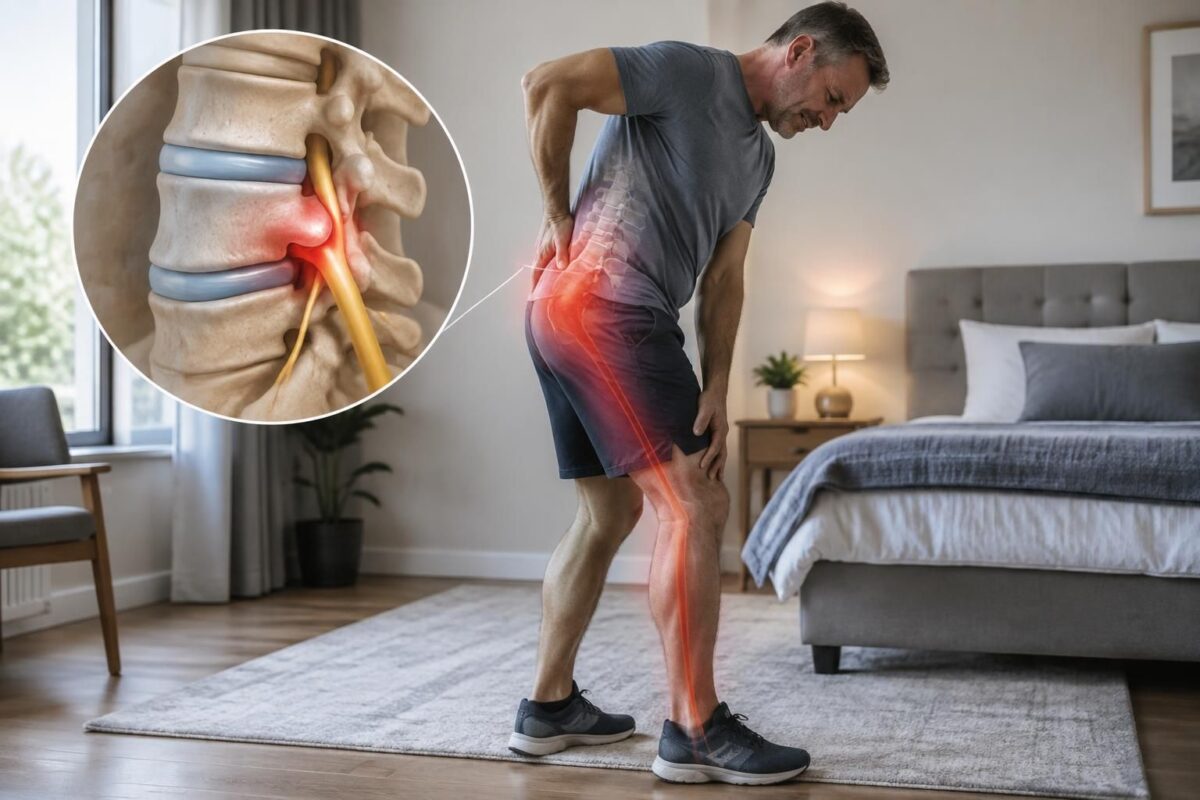
Disc herniation and pain radiating below the knee
IN BRIEF A disc protrusion is a deformation of a disc in the spine that can irritate a nerve root. If the pain extends below the knee, with tingling or weakness, this may suggest sciatica, although this alone does not…

Sylvain Desforges, B.Sc., D.O., N.D., docteur en ostéopathie
Dr Sylvain Desforges, B.Sc., D.O., N.D., osteopath, is the founding president of TAGMED and of the ACMA association. He dedicates his practice to chronic spinal pain, low back pain and symptoms compatible with sciatica, particularly when pain radiates toward the buttock, leg, calf, foot or toes.
Through SOS Sciatique, he publishes educational content on sciatica symptoms, possible causes such as disc herniation, disc narrowing, foraminal stenosis or irritation of a lumbar nerve root, as well as non-surgical approaches that may be considered according to the evaluation. At Clinique TAGMED, care may include, depending on the case, motorized neurovertebral decompression, specific osteopathic care or precision percussion.
For an evaluation related to sciatica treatment in Montreal / Mount Royal or sciatica treatment in Terrebonne, please consult the services available at Clinique TAGMED.
Medical disclaimer
The information published on SOS Sciatique is provided for educational purposes only and does not replace a consultation, diagnosis, opinion or treatment provided by a physician or another authorized healthcare professional. The author of this article is neither a medical doctor nor a specialist in a medical specialty recognized by the Collège des médecins du Québec. The osteopathic, manual medicine or functional support approaches described on this site do not constitute medical acts and are not intended to replace medical follow-up.
Consult a physician or emergency service in cases of loss of bladder or bowel control, anesthesia in the saddle area, significant or progressive weakness in the leg or foot, fever, recent trauma, severe pain or rapid worsening of symptoms. For more details, please read our Legal Notice.