
Sciatica in Terrebonne: disc bulge and buttock pain
25/11/2026
IN BRIEF
| Sciatica with loss of urinary control can indicate serious nerve compression, notably cauda equina syndrome. Sudden difficulty urinating, incontinence, loss of sensation in the perineum, or weakness in the leg require immediate evaluation in the emergency department. Prompt management allows for assessing the compression and reducing the risk of complications; do not wait for a regular appointment. |
A sciatica accompanied by loss of urinary control, sudden difficulty urinating, or loss of sensation in the perineum may signal serious nerve compression, notably cauda equina syndrome. This is a medical emergency: go immediately to the emergency room or call emergency services. Do not wait to see if symptoms pass, especially if there is weakness in one leg.
A sciatica accompanied by loss of urinary control, sudden difficulty urinating, or loss of sensation around the perineum requires immediate medical evaluation. These signs may indicate significant nerve compression, particularly cauda equina syndrome. Go to the emergency department without delay, or call 911 if you cannot safely move. Sciatica corresponds to pain that follows the path of the sciatic nerve, often from the lower back to the buttock and leg. A herniated disc or another cause can irritate or compress a nerve root. In rare cases, significant compression of the nerves located at the base of the spine also disrupts control of the bladder or bowel. A herniated disc does not directly “push” on the bladder. However, it can compress the nerves involved in urinary control. To better understand this connection, consult our article on herniated discs with numbness and signs of nerve irritation. You can also read this page about the differences between herniated discs and bulging discs. Seek immediate consultation if back pain or sciatica is accompanied by any of the following signs: A frequent urge to urinate, by itself, does not confirm nerve compression. However, any new urinary change associated with back pain or sciatica warrants prompt medical advice. If you experience retention, incontinence, or loss of perineal sensation, do not wait for a follow-up appointment. Cauda equina syndrome occurs when several nerves at the base of the spine are severely compressed. It can cause urinary or bowel dysfunction, loss of sensation in the perineal area, and weakness in the legs. These symptoms require emergency evaluation, as delay can increase the risk of lasting complications. A loss of strength may manifest as difficulty lifting the foot, walking on heels, or standing on tiptoes. Tingling in the big toe may also be related to irritation of a nerve root, notably L5. Read also our article on sciatica and tingling in the big toe. If you lose control of your bladder or cannot urinate normally with sciatica, go to the hospital immediately. Call 911 if your symptoms are severe, if your weakness worsens, or if you cannot move safely. Do not drive yourself if your leg is weak or if pain prevents you from driving safely. Tell the medical staff when the symptoms started and how they have evolved. Specify whether you can urinate, if you feel your bladder filling, if you have had leaks, and if you experience numbness around the perineum. Also report any weakness, even if the pain remains moderate. Do not attempt to treat these signs with exercises, stretches, or manual therapies before medical evaluation. Loss of urinary control with nerve symptoms requires urgent medical examination first. At the hospital, the medical team examines strength, sensation, and reflexes. They also check the nature of urinary issues and the presence of loss of perineal sensation. Depending on the results, imaging, often an MRI, may help detect nerve compression. A specialist then determines the necessary treatment. Management depends on the cause and severity of the signs. Significant compression may require urgent intervention. The decision is made by the medical team after examination and imaging. Clinical care does not replace this hospital evaluation. Pain that radiates below the knee, numbness, or tingling may accompany nerve irritation. These manifestations do not automatically indicate an emergency, but new weakness or worsening should be promptly reported to a healthcare professional. For more information, consult our articles on pain below the knee and pain experienced when bending forward. For general information on urinary issues related to a herniated disc, you can also consult this article from SOS Sciatica: herniated disc and urinary problems. Once the emergency is ruled out or addressed by the medical team, the professional managing your follow-up can explain the options suitable for your situation. The TAGMED Clinic offers services in Montreal and Terrebonne for certain musculoskeletal pains, following appropriate medical evaluation. These services do not replace emergency care and do not treat cauda equina syndrome. For more information about the services, visit the TAGMED Clinic, or the pages dedicated to the treatment of sciatica in Montreal and Mont-Royal and the treatment of sciatica in Terrebonne. Sylvain Desforges, B.Sc., D.O., N.D., Doctor of Osteopathy and Naturopath, is the founding president of TAGMED and the ACMA association. His practice focuses on chronic pain of the spine, lower back pain, and pain associated with sciatica, particularly when the pain radiates down to the buttock, leg, calf, foot, or toes. Through SOS Sciatica, he publishes educational content on the symptoms of sciatica, its possible causes, and non-surgical approaches that can be considered after evaluation. At TAGMED Clinic, care may include, as appropriate, motorized neurovertebral decompression, specific osteopathy, or precision impactors. Medical Disclaimer: The information and advice provided on this site do not replace the opinion, diagnosis, or treatment of a healthcare professional. Please note that Sylvain Desforges, B.Sc., D.O., N.D., Doctor of osteopathy, is neither a medical doctor nor a physician, and is not specialized in a medical specialty as defined by the Collège des médecins du Québec. Manual medicine, functional medicine, and sports medicine as described on this site exclude any treatment or medical diagnosis made by a physician or medical specialist. Always consult your physician for any medical questions. For more details, please read our Complete Legal Notice. Consult a doctor or emergency service in case of loss of bladder or bowel control, numbness in the saddle region, significant or progressive weakness in the leg or foot, fever, recent trauma, severe pain, or rapid deterioration. The author of this article is neither a doctor nor a specialist in a medical specialty recognized by the Collège des médecins du Québec. The approaches of osteopathy, manual medicine, or functional support described on this site do not constitute medical acts and are not intended to replace medical follow-up.Why can sciatica affect the bladder?
Urinary issues that require urgent evaluation
Cauda equina syndrome: an emergency to recognize
What to do in case of loss of urinary control?
Go to the emergency department without delay
Clearly describe your symptoms
How do professionals assess the situation?
Other signs of sciatica to watch for
After medical evaluation
About the author
Warning Signs
Immediate Reflex

A sciatica accompanied by a loss of bladder control, sudden difficulty urinating, or numbness between the legs may indicate severe nerve compression, particularly a cauda equina syndrome. This is a medical emergency: go to the emergency room immediately or call 911. Do not wait to see if symptoms improve and do not try to treat them solely with manual care.
Why Urinary Disorders Are Concerning
Sciatica generally causes pain that starts in the lower back and radiates to the buttock or leg. It is often linked to irritation of a nerve root, sometimes due to a herniated disc. In most cases, it does not involve loss of bladder control.
In contrast, significant compression of the nerves located at the lower spine can disrupt urinary and bowel functions, as well as sensitivity in the perineum. The cauda equina syndrome is rare but requires urgent evaluation, as a delay in treatment can increase the risk of complications.

Sciatica and pain with saddle numbness
IN BRIEF Cauda Equina Syndrome refers to pain radiating down the leg accompanied by a loss of sensation around the genitals, anus, or inner thighs. This symptom may indicate severe nerve compression: it is not discomfort to treat at home.…

Sciatica and pain with progressive weakness
IN BRIEF Sciatica causes pain that radiates from the lower back down the leg; however, progressive muscle weakness is not a symptom to be taken lightly. It requires quick medical evaluation to search for the cause and determine the appropriate…
Recognizable Warning Signs
A Sudden Change in Bladder Control
Consult immediately if you are unable to urinate, if you feel that your bladder is not emptying, or if urinary incontinence appears suddenly with lower back pain or sciatica. A leak should not be automatically attributed to pain, age, or another cause without medical evaluation.
A Loss of Sensitivity or Strength
A sensation of numbness around the genitals, anus, or inner thighs—sometimes described as a saddle anesthesia—is also concerning. New or progressive weakness in one leg, a foot dragging on the ground, or loss of bowel control reinforces the urgency. These signs can appear together or separately.

Sciatica and pain with general discomfort
IN BRIEF A sciatica causes pain that starts in the lower back or buttock and radiates down the leg. A general discomfort, especially if accompanied by fever or rapid worsening, should not be automatically attributed to sciatica: consult a healthcare…

Sciatica and pain with a history of cancer: caution
IN BRIEF Sciatica causes pain that can radiate from the lower back down to the leg. With a history of cancer, new, persistent, or worsening pain should be quickly evaluated by a healthcare professional: its cause must be identified before…
What to Do Without Delay
In the presence of urinary loss of control, sudden urinary retention, or numbness in the perineum, go to the emergency room immediately or call 911. If possible, ask someone to accompany you. Do not delay your departure to make a clinic appointment, try exercises, or wait for pain relief treatment.
Clearly explain to the medical staff when the symptoms started, how they have progressed, and whether they affect one or both legs. Mention any urinary or bowel changes, even if they seem embarrassing or difficult to describe. This information helps the team quickly assess the situation.

Sciatica and pain with unexplained weight loss
IN BRIEF Sciatica causes pain that can radiate from the lower back to the buttock and leg. Associated with unexplained weight loss, it requires medical evaluation to investigate the cause: this sign alone does not confirm a precise diagnosis. Consult…

Sciatica and pain with fever: why consult?
IN BRIEF Sciatica with pain and fever deserves a medical evaluation: fever is not usual in simple sciatica and may signal an infection or another problem requiring care. Consult promptly, especially if the pain is intense or worsening. In cases…
How the Emergency Is Evaluated
Healthcare professionals can assess strength, sensitivity, and reflexes, and then request imaging, usually an MRI when indicated and available. Depending on the results, specialized advice and urgent treatment, sometimes surgical, may be necessary. Only a medical examination can determine the cause: symptoms alone are not sufficient to confirm a herniated disc or cauda equina syndrome.

Sciatica and pain after trauma: warning sign
IN BRIEF A sciatica after trauma is pain that starts from the lower back or buttock and can radiate down the leg after a fall or impact. An assessment helps to investigate the cause and determine the appropriate course of…
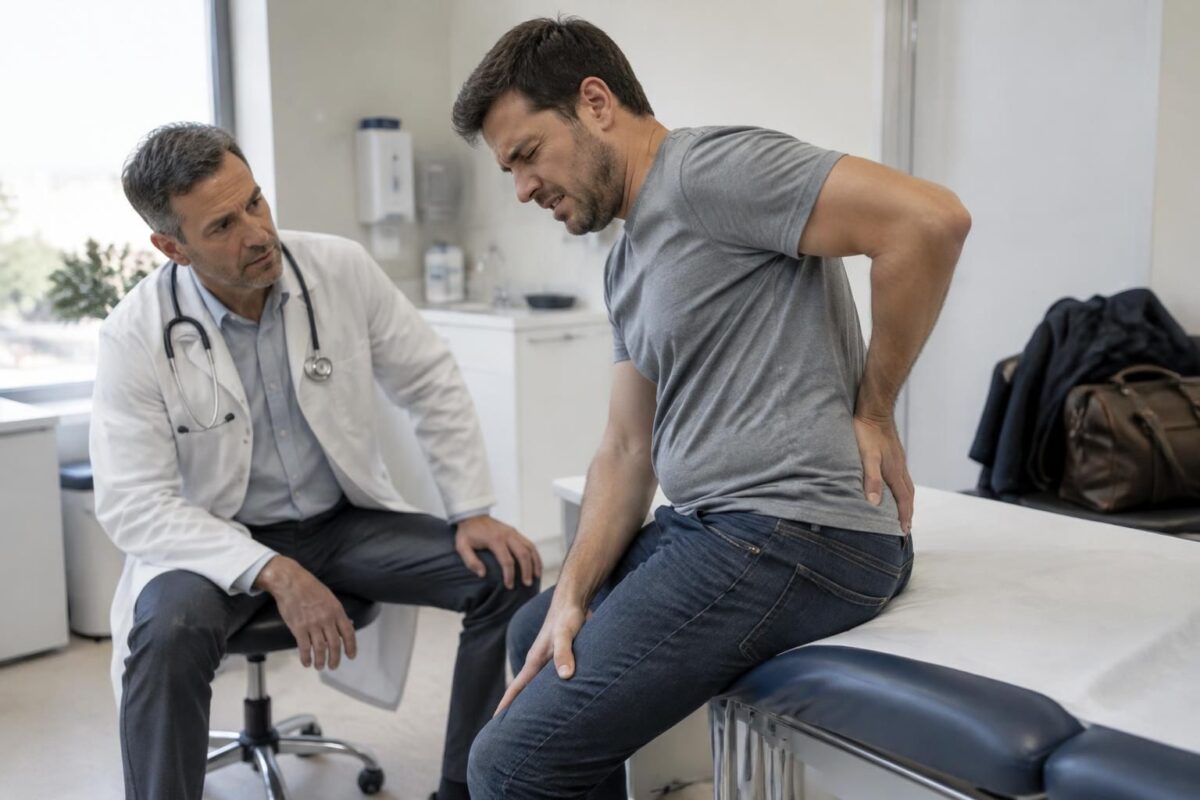
Sciatica and pain that appeared after an accident
IN BRIEF Sciatica after an accident is pain related to irritation or compression of the sciatic nerve, sometimes triggered or revealed by a fall or impact. It can start from the lower back or buttock and radiate down the leg.…
Key Points to Remember with Sciatica
Pain that radiates down the leg does not automatically indicate an emergency. However, the onset of urinary problems, loss of perineal sensation, or significant weakness changes the situation. Do not wait for deterioration: a quick evaluation is the most prudent course of action.
| Observed Signal | Action to Take |
|---|---|
| Loss of urinary or bowel control | Emergency immediately |
| Sudden inability to urinate | Emergency immediately |
| Numbness in the perineum or inner thighs | Emergency immediately |
| New or progressive weakness of a leg or foot | Medical evaluation without delay |
| Sciatica accompanied by these signs | Do not wait or attempt to treat it only at home |
Sciatica and Loss of Urinary Control: Illustrative Testimonials of a Medical Emergency
The testimonials below are fictional and illustrative situations. They do not correspond to identifiable patients and do not allow for diagnosis. Sciatica accompanied by new urinary issues may indicate serious nerve compression, notably cauda equina syndrome.
“I could no longer urinate normally”
After several days of lower back pain radiating down my leg, I had difficulty emptying my bladder. I felt like it was full, but almost nothing came out. Since this change occurred at the same time as the sciatica, I went to the emergency room without delay. The medical team evaluated my symptoms and determined the necessary tests.
“I experienced urinary leakage and loss of sensation between my legs”
My lower back pain had worsened and part of my leg was numb. Then I noticed unusual urine leakage and decreased sensation around the perineum. I felt embarrassed to mention it, but I reported it immediately to the emergency staff. These symptoms were taken seriously and evaluated quickly.
“My foot was getting weak in addition to the pain”
The pain started from my back and radiated down to my foot. Gradually, I had trouble lifting it and tripped while walking. I had no urinary issues, but this new loss of strength worried me. I sought medical advice the same day rather than waiting for it to pass.
To remember: sudden difficulty urinating, retention, new incontinence, loss of sensation around the perineum or genitals, or significant or progressive weakness of a leg or foot require urgent medical evaluation. If these signs are present, go to the emergency room immediately or call emergency services. Do not attempt to treat the situation solely through exercises or manual therapies.
A frequent urge to urinate, by itself, does not indicate nerve compression. However, if the change is sudden, occurs with sciatica, or is accompanied by loss of sensation, difficulty emptying the bladder, or weakness, report it promptly to a healthcare professional.
Sciatica and Loss of Urinary Control: A Medical Emergency to Recognize
Pain that radiates from the lower back into the buttock or leg may correspond to sciatica, often related to irritation of a nerve root. In most cases, it is painful, but does not constitute a life-threatening emergency. However, the onset of urinary issues associated with back pain or sciatica changes the situation: certain signs can indicate serious nerve compression and require immediate medical evaluation.
A sudden loss of bladder control, new incontinence, or conversely, unusual difficulty urinating or an inability to empty the bladder should not be trivialized. The risk is particularly concerning if these symptoms appear with decreased sensation between the legs, around the genitals or anus. This area is sometimes described as the “saddle” region. New or increasing weakness in a leg, a foot dragging on the ground, or associated bowel issues also raise the alert level.
In some situations, these manifestations may suggest a cauda equina syndrome, a severe compression of the nerve roots located in the lower spine. This diagnosis cannot be made remotely, and not all urinary issues are caused by a herniated disc. However, it is impossible to reliably distinguish between a benign problem and an urgent neurological impairment at home. If a urinary problem suddenly appears along with low back pain or sciatica, go to the emergency room immediately or call emergency services. Do not wait for a routine appointment and do not try to resolve the situation through exercises or manual treatments.
The speed of medical evaluation is important, as prolonged nerve compression can lead to lasting consequences, particularly regarding strength in the legs, sensation, and control of the bladder or bowel. In the hospital, the team will evaluate the symptoms, perform a neurological examination, and may request imaging, often an MRI, to look for compression. Management depends on the findings and observed severity; specialist advice and, in some cases, intervention may be considered. Only professionals responsible for the evaluation can determine the appropriate course of action.
Extreme pain that does not improve despite prescribed treatment, or a new loss of strength in the leg or foot, also warrants immediate medical advice. Pain is not the only indicator of severity: weakness may appear even if the pain seems moderate. To assist the medical team, clearly indicate when the symptoms started, how they are evolving, and whether you have noticed difficulty urinating, leakage, loss of perineal sensation, or muscle weakness.
Sylvain Desforges, B.Sc., D.O., N.D., is the founding president of TAGMED clinics and the ACMA association. His practice focuses on chronic pain and non-surgical approaches, including neurovertebral decompression, laser treatments, and shockwaves, when appropriate after evaluation. The information presented here is educational and does not replace a diagnosis or medical follow-up. The author is neither a physician nor a specialist in any recognized medical specialty. Osteopathic care or functional support should never delay urgent consultation in the presence of sudden urinary problems, perineal anesthesia, or significant or progressive weakness.
A sciatica accompanied by loss of bowel control, sudden difficulty urinating, or loss of sensitivity in the perineum may indicate significant nerve compression, particularly cauda equina syndrome. This situation requires immediate medical evaluation: do not wait to see if the symptoms pass and go to the emergency room.
Signals that require immediate consultation
A pain radiating down the leg does not, by itself, mean that it is an emergency. However, if it is accompanied by urinary retention, incontinence, loss of sensation between the legs, or around the genitals, these signs must be taken seriously. You can learn more about saddle numbness associated with sciatica and the possible links between disc herniation and urinary disorders.
A new or progressive weakness in a leg or foot also requires prompt medical advice, even if the pain is not extreme. A foot dragging on the ground or sudden difficulty walking on heels or toes may correspond to motor deficits. To better understand this sign, consult the information on paralytic sciatica and foot numbness with sciatica.
In the presence of sudden urinary disorders, loss of sensitivity in the perineum, or significant weakness, go to the emergency room without delay or call emergency services if you cannot move safely. Do not drive if your strength or sensitivity is diminished. A clinical evaluation and, depending on the situation, imaging may be necessary to check for nerve compression and quickly determine the appropriate care.
A disc herniation may be the source of nerve compression, but only a healthcare professional can determine the cause of the symptoms. Persistent or worsening pain also deserves evaluation, as explained on our page about sciatica and constant pain. A sneeze or strain may exacerbate certain pains, but this sign alone does not confirm a diagnosis: consult the information on sciatic pain increased by sneezing or effort and the clinical significance of an extruded disc herniation.
This information is educational and does not replace a consultation, diagnosis, or treatment by a qualified healthcare professional. In case of loss of bowel or urinary control, numbness in the saddle area, significant or progressive weakness, fever, recent trauma, or rapid deterioration, consult a doctor or an emergency service immediately.

Sylvain Desforges, B.Sc., D.O., N.D., docteur en ostéopathie
Dr Sylvain Desforges, B.Sc., D.O., N.D., osteopath, is the founding president of TAGMED and of the ACMA association. He dedicates his practice to chronic spinal pain, low back pain and symptoms compatible with sciatica, particularly when pain radiates toward the buttock, leg, calf, foot or toes.
Through SOS Sciatique, he publishes educational content on sciatica symptoms, possible causes such as disc herniation, disc narrowing, foraminal stenosis or irritation of a lumbar nerve root, as well as non-surgical approaches that may be considered according to the evaluation. At Clinique TAGMED, care may include, depending on the case, motorized neurovertebral decompression, specific osteopathic care or precision percussion.
For an evaluation related to sciatica treatment in Montreal / Mount Royal or sciatica treatment in Terrebonne, please consult the services available at Clinique TAGMED.
Medical disclaimer
The information published on SOS Sciatique is provided for educational purposes only and does not replace a consultation, diagnosis, opinion or treatment provided by a physician or another authorized healthcare professional. The author of this article is neither a medical doctor nor a specialist in a medical specialty recognized by the Collège des médecins du Québec. The osteopathic, manual medicine or functional support approaches described on this site do not constitute medical acts and are not intended to replace medical follow-up.
Consult a physician or emergency service in cases of loss of bladder or bowel control, anesthesia in the saddle area, significant or progressive weakness in the leg or foot, fever, recent trauma, severe pain or rapid worsening of symptoms. For more details, please read our Legal Notice.