How osteopathy acts on chronic pain in the upper limbs
29/06/2026
Why osteopathy is a lasting solution for everyday well-being
29/06/2026
In short
| In short, Osteopathic manipulations To treat the hip pain constitute an approach non-invasive, centered on the Mobility adjustment of the articulation and on the work of neighboring structures (lumbar spine, muscle and viscera). The objective is to obtain a pain reduction and an Improving mobility with a Prevention of recurrences, without surgery or medication. Operation is based on a Overall assessment And some Targeted techniques, supplemented by appropriate exercises. In Montreal, this service is particularly recommended for active and athletes suffering from joint or muscle imbalances that limit walking and daily activities. |
The Osteopathic manipulations for hip pain offer an approach non-invasive and targeted To restore mobility and reduce pain. By relying on a Overall assessment From the pelvis, the lumbar spine and the surrounding tissues, the osteopath adapts the gestures to correct mechanical dysfunctions and prevent recurrences.
- targeted joint manipulations to find the Hip mobility and reduce pain.
- actions on the Lumbar spine and pelvi-basin structures in order to limit the pain referred to the hip.
- techniques myotensive and work on soft tissues to release tension and improve circulation.
- Approach functional and personalized advice to strengthen stability and prevent future episodes.
Osteopathic manipulations offer a global and non-invasive approach to treating hip pain. This article presents the key principles, the techniques used, the indications and the limits. The objective is to improve the mobility of the joint, to reduce pain and to promote the overall function of the body, without systematically resorting to drugs.
Assessment and diagnosis
The evaluation begins with the identification of blockages and tensions around the hip, pelvis and lumbar spine. The practitioner listens to the symptoms, observes the movements and checks the alignment of osteo-articular structures. The goal is to determine the areas that limit mobility and to plan the appropriate manipulations.
osteopathic techniques used
The approaches are grouped around four main families. The Structural techniques Consist of brief impulses to release joint blockages and restore mobility. The Myotensive techniques Use patient-controlled contractions to reduce muscle tension around the hip and pelvis. The Functional techniques Aim for proprioceptive rehabilitation and reorganization of movement patterns through guided positions and postures. The Visceral techniques Can occur when internal tensions or grips influence hip mobility. The common objective is to obtain better mobility, less pain and lasting functional restitution.
To deepen these approaches and their foundations, you can consult specialized resources on sites like Techniques in osteopathy and Articles on osteopathic techniques. Examples of intervention frameworks and demonstrations can also be viewed on How osteopathy acts on chronic back pain.
Indications and contraindications
Osteopathic manipulations are mainly aimed at Mechanical dysfunctions hip and associated structures, especially when pain is related to mobility restriction or postural imbalance. They can also be useful when symptoms come from a lack of lumbar spine mobility or soft tissue imbalance around the joint. On the other hand, contraindications include cases of advanced degenerative lesions, certain joint infections and other states requiring specific medical care. For additional information, see the dedicated resources on Osteopathy and posture.
Session process
A typical session begins with an anamnesis and listening to the symptoms. Then comes the targeted examination of the hips, pelvis and spine. The practitioner chooses one or more techniques adapted to the identified dysfunction. Each procedure is performed with respect for the patient’s pain and aims to avoid unnecessary pain. The number of sessions varies according to the severity and chronicity of the pain, but improvements can appear from the first sessions.
Advantages and limits
The benefits include a non-drug approach, attention to the whole body and improved mobility without surgery. The limitations due to the variability of the results according to the case and the importance of the associated causes (trauma, osteoarthritis, visceral disorders). In some cases, the use of other specialties may be necessary for full support. To better understand the overall framework of osteopathic techniques, you can consult Osteopathy and sports recovery.
Prevention and practical advice
To reduce the risk of long-term pain, maintain a Regular physical activity, favor adapted movements and adopt a good posture on a daily basis. Osteopathy can help identify imbalances and propose individualized preventive measures during the sessions. Additional resources on osteopathic techniques and their therapeutic framework are accessible via guides such as Osteopathic techniques, an art of touch and Correct chronic imbalances.
Medical Disclaimer: The information and advice provided on this site does not replace the health professional’s diagnosis or treatment. Please read our full legal notice for more details.
- Structural techniques : Targeted mobilization of joint blockages, brief impulse and strict control, without pain.
- Myotensive techniques : active contractions of the patient against resistance to lift stiffness and restore mobility.
- Functional techniques : Corrections in the comfortable position maintained ~90 seconds to reset the neuromuscular spindles.
- Soft visceral techniques : Subtle adjustment of the organs and abdominopelvial tissues to reduce referred pain.
- Soft and myofascial tissues : release of muscles and fascias around the hip to improve extensibility.
- Lumbar spine rebalancing : treatment of lumbar dysfunctions likely to radiate to the hip.
- Main objective : Restore mobility, reduce pain and improve function and posture.
- Typical indications : Hip pain related to imbalances, benign bursitis, tendinopathies and referred pain of spinal origin.
- Progress : personalized plan, adapted number of sessions, first possible results quickly.
- Benefits : non-invasive, adapted progression, reduction of medication, prevention of recurrences.
- Security : initial evaluation and compliance with contraindications; orientation if necessary.
- Integration : complementary to physiotherapists and medical services, coordination for optimal recovery.

Osteopathic manipulations for hip pain offer a non-invasive and targeted approach, aimed at restoring mobility, reducing pain and preventing recurrences. This article presents the principles, the main techniques and the conditions for which they apply, emphasizing the importance of an accurate diagnosis and a personalized treatment plan. We distinguish structural, muscular and functional approaches, as well as gentle techniques modulating proprioception. The goal is to improve hip function while preserving overall body balance.
Basics and objectives of hip manipulations
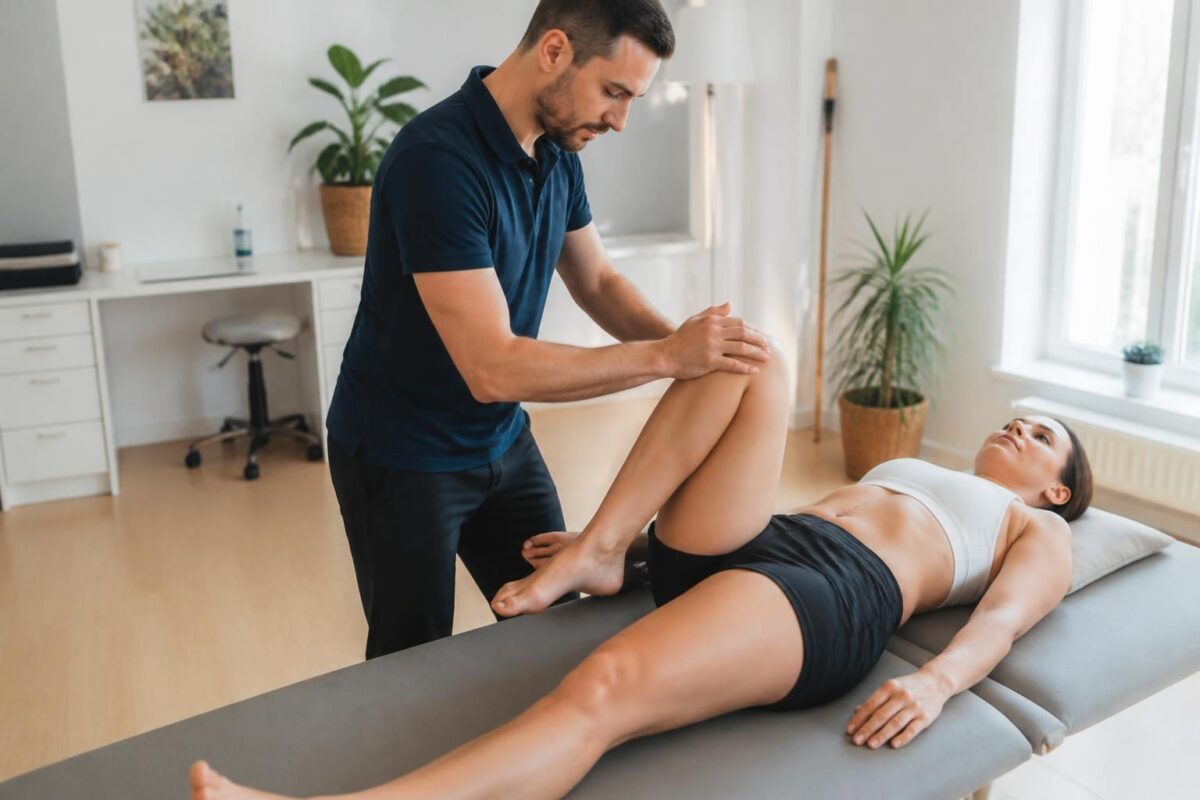
Osteopathic manipulations are based on the idea that reversible dysfunctions of musculoskeletal structures can generate or amplify hip pain. By fluidizing joint movements and releasing peri-articular tensions, they aim to reduce mechanical blockages and promote recovery of the extension and rotation of the coxo-femoral joint. The techniques adapt to the intensity and location of the pain, while remaining centered on the safety and comfort of the patient.

How osteopathy improves the quality of life of active people
In short In short, theosteopathy is a global approach that Optimizes mobility and the function of the body of ACTIVE PEOPLE, for a better quality of life. It helps prevent injury and reduce Musculoskeletal pain While promoting the Sports recovery.…

Osteopathy and sports recovery: prepare the body for lasting performance
In short In short, Osteopathy and Sports recovery is one Global manual approach that sustainably prepares the body for the effort by restoring mobility and circulation After the effort. It is a discipline that acts on the sinews, the joints,…
Structural techniques and joint adjustments
Structural manipulations are a reference for treating joint mobility restrictions around the hip. The gestures are carried out with progressive tensioning and precise positioning of the patient to restore a normal amplitude. A brief impulse movement can occur, sometimes accompanied by a characteristic noise linked to the cavitation of synovial fluid. The fundamental framework remains non-pain during the intervention and respect for the patient’s sensations at each stage.
Indications and benefits
These techniques apply in particular in the event of benign sprains, mechanical restrictions linked to stiffness or a point blockage, and when a postural imbalance influences the hip. Expected effects include immediate or gradual improvement in mobility, decreased pain and improved functional recovery when walking and daily gestures.
Why Osteopathy Is Essential For Recovery People
In short In short, Osteopathy in convalescence is an approach manual and holistic which helps to accelerate the recovery by restoring The balance, the mobility and a good circulation fabrics. it contributes to Reduce the pain, support the Back to…

Osteopathic manipulations to strengthen post-traumatic muscles
In short In short, Osteopathic manipulations for Strengthen post-traumatic muscles constitute a gentle manual approach aimed at restoring the mobility, reduce the pain and facilitate the Functional rehabilitation After a injury. What is Is it? A series of precise gestures…
Muscular and functional techniques
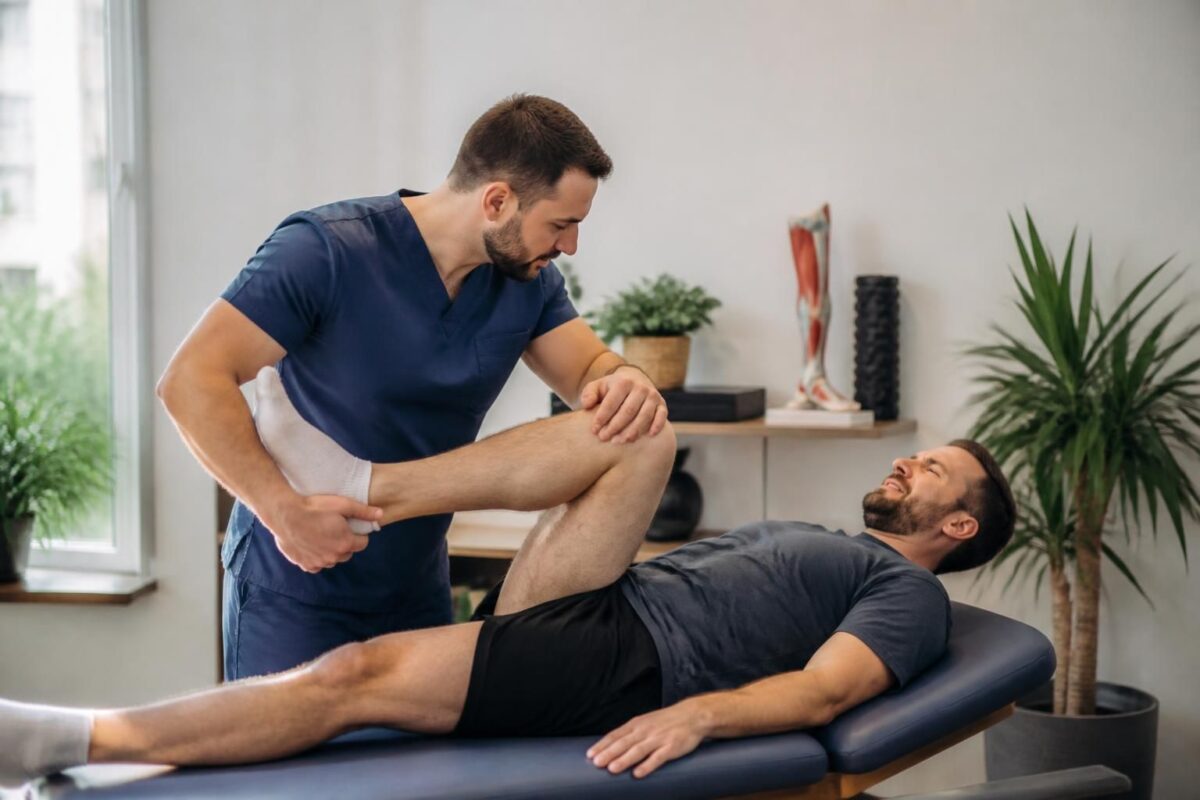
Myotensive approaches and functional techniques target soft tissue and muscle chains around the hip. The active contractions of the patient, guided by the practitioner, make it possible to release tension and normalize the muscular length without excessively stressing the cartilages. Functional techniques incorporate briefly maintained comfort positions to reorganize neuromuscular patterns and reactivate musculo-tendinous spindles.
Indications and benefits
These methods are particularly suitable for athletes with muscular imbalances, people with retractions or contractures, and those seeking active participation in the treatment. They often precede structural adjustments or replace them when contraindications exist.

Osteopathy and prevention of work-related musculoskeletal disorders
In short theosteopathy is one Manual approach that restores body balance and prevents MSD related to work. Its advantages: reduction of tension, improvement of mobility and prevention of chronic pain. She is preventive and healing, suitable for office and trades…

The benefits of osteopathy to treat muscle imbalances
In short theosteopathy is a manual approach to restore themuscle harmony and postural considering the body as a whole. Its main benefits include the reduction of aches and tensions, the improvement of the mobility and from the posture, and prevention…
Gentle approaches and precautions
Atraumatic functional techniques, which modulate proprioception, have a high safety profile and are suitable for patients who are fragile or in recovery. Visceral and craniosacral approaches, when practiced, should be used with discernment and on the basis of a solid diagnosis, remaining aware of their controversial status in the scientific literature. If in doubt, a prior medical assessment remains recommended.
Osteopathy and chronic leg pain: regaining an optimal quality of life
In short In short, Osteopathy is one Global manual approach aimed at reducing Chronic leg pain and improve the quality of life. What is it? Non-drug therapy using the hands to identify restrictions and treat lesional chains. How does it…
How osteopathy supports recovery after complex surgery
In short In short, Post-operative osteopathy is an approach fresh which supports the recovery After a Complex surgery. It helps to reduce the pain and the fatigue, improves the mobility and accelerates the healing thanks to a better vascularization and…
Practical advice and prevention
To optimize the results, combining specific reinforcement and mobility exercises with an adapted posture and an ergonomics adapted to everyday life is essential. Maintaining a healthy weight, practicing a regular low impact activity and adopting targeted stretches can reduce the risk of recurrence. Finally, favoring an early consultation in the event of persistent pain makes it possible to quickly adjust the treatment plan and to avoid worsening.
| Element | Concise description |
|---|---|
| Main objective | correct the Reversible dysfunctions of the musculoskeletal and myo-fascial system to reduce the pain and restore the mobility. |
| Major Techniques | techniques structural and myotensive To free up blockages and improve the Joint mobility. |
| phases of a session | Precise diagnosis, suitable positioning, controlled pulse or guided contraction, then reassessment. |
| Anatomical target | Peri-articular joints and soft tissues, lumbar spine and vertebral junctions to influence the hip and referred pain. |
| directions | pains of hip benign, sprains, contractures and postural imbalances in active ingredients, without organic pathologies. |
| contraindications | Advanced degenerative decay, proven disc herniation and inflammation requiring prior medical advice. |
| Duration and types of techniques | structural – a few seconds; Myotensives – 3 to 5 contractions; Functional – 90 seconds. |
| Expected benefits | Improvement of the mobility and reduction of pain, with an approach non-invasive and patient-centric. |
| Overall approach and objectives | Approach holistic Connecting hip, spines and internal organs to prevent recurrences and optimize body function. |
Testimonials on osteopathic manipulations for hip pain
Luc, 46, computer scientist, testifies that his Hip pain were mitigated thanks to treatments centered on the Osteopathic manipulations. He describes having found a mobility correct and a significant decrease in pain after a few sessions, without the need for medication or surgery.
Sophie, a regular jogger, says that she suffered from persistent pain in the hip during training. After a targeted approach focused on tensioning and balancing the tissues around the joint, she was able to resume racing with less discomfort and better stability Postural. She emphasizes the importance of a personalized plan and patience during treatment.
Marc, an active man, suffered from mild osteoarthritis and recurring discomfort on the hip which limited his daily gestures. According to him, the Osteopathic manipulations reduced inflammation and brought back a flexibility muscular, allowing him to perform daily gestures without pain and without drug addiction.
Claire, retired, presented with pain projected towards the groin and tension in the lumbar region. She describes the Tissue techniques and osteopathic corrections as gentle but effective, with a gradual return to the mobility And a lasting feeling of lasting in the hip and lower back.
Alexandre, a dynamic executive, suffered from an acute episode after an ill-adapted stride. After a series of sessions focused on Osteopathic correction and targeted exercises, it reports a marked improvement in the pain and from the function preservation, allowing him to resume his professional and sporting activity with more serenity.
Specialized biography: osteopathic manipulations to treat hip pain
Dr. Sylvain Desforges, osteopath renowned, is recognized for its approach centered on Osteopathic manipulations suitable for the treatment of hip pain. Founding President of the Tagmed Clinic and the ACMA Association, he puts the heart of his practice in health innovation and the integration of advanced techniques. his career is unfolding around the management of Chronic pain and the application of complementary technologies, such as spinal decompression, laser therapies and shock waves, in order to optimize the function and well-being of its patients. His approach is based on rigorous assessment and evidence-based care, with particular attention to the mobility and quality of life of people with hip pain.
In his work, he considers the Osteopathic techniques Like a sum of tools articulated around anatomy, biomechanics and neurophysiology. Although manipulation is not a universal solution, they are a targeted approach to correcting reversible dysfunctions of the musculoskeletal and myo-fascial system. Regarding hip pain, the objective is to restore safe and lasting mobility, favoring interventions that respect the body and minimize risks. In practice, about 85% of the consultations concern mechanical problems of the spine and peripheral joints, and the hips find a central place there when the diagnosis allows it.
The Structural techniques are a reference for dealing with hip and adjacent areas mobility restrictions. After accurate evaluation and patient positional adjustment, a brief, controlled pulse can be applied, sometimes associated with a “shadow” or joint cavitation phenomenon. The fundamental reminder remains the non-pain and safety at every intervention. Furthermore, the Myotensive techniques and functional are part of a progressive logic: they actively mobilize the patient through targeted contractions and appropriate positions to release musculo-aponeurotic tensions and restore the extensibility of the tissues, while involving the patient in his recovery.
These approaches find their application in hip pain related to mild osteoarthritis, trochanteric bursitis, tendinopathies, or lumbar dysfunctions that radiate to the coxofemoral joint. An important part of the work is to consider the hip as a reflection of a system that can be unbalanced by the lumbar spine, the pelvis and even visceral factors. The practitioner thus focuses on a holistic vision: rebalancing the postural chains, correcting muscle imbalances and, when necessary, directing towards additional evaluations in order to exclude organic pathologies.
To accompany these techniques, Dr. Desforges integrates gentle and precise approaches, adapted to the age and physical condition of patients. The protocol favors measured progression, clear objectives and careful monitoring of results. The results can sometimes appear from the first sessions, with an improvement in mobility, a reduction in pain and better stability of the hips in athletes as well as in active or sedentary people.
To learn more about its approach and services available, contact the TagMed Clinic to discuss a personalized plan focused on osteopathic manipulations and overall well-being.
This summary highlights how the Osteopathic manipulations can process the hip pain favoring an approach holistic, a Targeted evaluation and appropriate techniques, while ensuring the safety and active participation of the patient. To deepen the mechanisms and approaches, specialized resources offer additional perspectives, in particular on the effects of manipulations and their place in the prevention of musculoskeletal disorders.
The Osteopathic manipulations dedicated to hip pain are part of a process overall and personalized who seeks to restore mobility and reduce pain without systematically resorting to invasive acts. By combining techniques structural, myotensive and functional, the approach aims to treat reversible dysfunctions of the musculoskeletal and myo-fascial system, while respecting the contraindications and based on an early diagnostic evaluation.
In the context of hip pain, improved joint mobility and harmonization of lumbar and pelvic chains play a central role. Manipulations often work by reducing mechanical blockages and correcting postural imbalances that contribute to pain and limitation of daily gestures. This approach can also extend to nearby structures, such as the lumbar spine and surrounding tissues, in order to optimize the overall function and reduce projected pain.
The integration of an initial medical diagnosis is essential to guide the osteopathic treatment and to identify situations where additional examinations or specialized care are necessary. In addition to manipulations, practical advice and targeted exercises can promote recurrence prevention and sustainably improve stability and quality of life. For active and sports patients, the goal is to improve performance while reducing the risk of overuse and relapse.
For those who wish to extend the exploration of the benefits and mechanisms of osteopathic approaches, several resources offer a detailed presentation of the techniques and their indications, including preventive approaches and specific benefits for joint health. See for example the resources dedicated to osteopathy and prevention and the techniques used in current practice. Additional readings on techniques and aesthetic and functional indications can enrich understanding and clinical application.
To enrich your perspective, you can consult resources such as
Osteopathy and sciatic pain – a durable and natural solution,
Essential osteopathy for physically demanding professions,
and Why Osteopathy Is A Global Approach to Well-Being For additional insights into the overall approach and benefits for articulatory health.
Specialized resources also evoke the links between hip and viscera, and associated techniques, while underlining the importance of a prior medical diagnosis and a personalized therapeutic plan. For a practical perspective and case examples, you can check out pages dedicated to hip pain and osteopathy, such as those that discuss appropriate causes, symptoms and treatments.
Finally, prevention remains a central axis: maintenance of a healthy weight, regular physical activity, adapted postures and ergonomic advice facilitate the maintenance of a functional and less painful hip in the long term. Osteopathic approaches, when combined with body listening and targeted actions, provide an effective and sustainable way to improve mobility, reduce pain and promote overall well-being.

Dr Sylvain Desforges, B.Sc., D.O., N.D., osteopath, is the founding president of TAGMED and of the ACMA association. He dedicates his practice to chronic spinal pain, low back pain and symptoms compatible with sciatica, particularly when pain radiates toward the buttock, leg, calf, foot or toes.
Through SOS Sciatique, he publishes educational content on sciatica symptoms, possible causes such as disc herniation, disc narrowing, foraminal stenosis or irritation of a lumbar nerve root, as well as non-surgical approaches that may be considered according to the evaluation. At Clinique TAGMED, care may include, depending on the case, motorized neurovertebral decompression, specific osteopathic care or precision percussion.
For an evaluation related to sciatica treatment in Montreal / Mount Royal or sciatica treatment in Terrebonne, please consult the services available at Clinique TAGMED.
Medical disclaimer
The information published on SOS Sciatique is provided for educational purposes only and does not replace a consultation, diagnosis, opinion or treatment provided by a physician or another authorized healthcare professional. The author of this article is neither a medical doctor nor a specialist in a medical specialty recognized by the Collège des médecins du Québec. The osteopathic, manual medicine or functional support approaches described on this site do not constitute medical acts and are not intended to replace medical follow-up.
Consult a physician or emergency service in cases of loss of bladder or bowel control, anesthesia in the saddle area, significant or progressive weakness in the leg or foot, fever, recent trauma, severe pain or rapid worsening of symptoms. For more details, please read our Legal Notice.