

Osteopathy and prevention: avoiding musculoskeletal imbalances
29/06/2026
How osteopathy acts on chronic pain in the upper limbs
29/06/2026
In short
|
The Osteopathic techniques to improve Muscle endurance are targeted approaches that optimize the functioning of chains musculoskeletal and of Cardio-respiratory system. they increase stamina and resistance to effort, improve the Venous return and the breathing, and strengthen the Neuromuscular coordination. Their operation is based on Muscle energy techniques, the Diaphragmatic release and mobilizations that optimize tissues and ranges of motion. In Montreal, this service is particularly useful for endurance athletes looking to optimize their recovery and performance. This remedy is adaptable to each discipline and aims to prevent injuries while accelerating recovery. |
The Osteopathic techniques intended for Muscle endurance Offer an effective approach to optimize performance without increasing joint stress. By favoring Muscle energies and contractions controlled against resistance, they facilitate the recapture ofATP and strengthen the Neuromuscular coordination. The Diaphragmatic release Improve it Venous return and the breathing, participating in a better Muscle oxygenation and to a endurance increased. The Joint mobilizations and the lymphatic drainage Reduce tension and ignition, promoting faster recovery and better fluidity of movements. adapted to each athlete, these techniques aim for a Muscle consistency and an Optimized energy consumption during prolonged efforts.
This article presents osteopathic techniques intended to strengthen muscle endurance. You will discover how targeted manual approaches improve oxygenation, circulation and efficiency of muscle chains. The text, written by a specialist practitioner, exposes simple mechanisms and gestures applicable to the daily life of athletes. You will read clear points about the action of osteopathy in performance and recovery.
The Osteopathic techniques intended for muscular endurance aim to optimize the Cardiorespiratory capacity, the muscle mechanics and theMusculoskeletal balance. They act on breathing, mobility and neuromuscular coordination to reduce energy waste and prolong effort. This approach combines rigor and manual intuition to support long-term performance.
Strengthening endurance by ventilatory optimization
The quality of breathing directly influences oxygen supply and venous return. Through techniques on the chest and diaphragm, osteopathy improves ventilatory dynamics and tissue ventilation. The result is a better Muscle oxygenation and an available energy more stable during exercise.
Improved muscle mechanics and coordination
Osteopathic gestures target muscle chains and joints to facilitate movement amplitudes and fluidity of gesture. This reduces parasitic voltages and increases the Motor precision and the Neuromuscular coordination, which results in a Better efficiency during repeated efforts.
Musculoskeletal balance and prevention of exhaustion
An optimal balance of the muscle and joint chains decreases compensation. This improves trunk stability and Postural stability, promotes economical movements and protects against microtraumas that interrupts training and performance.
Recovery, Active Recovery and Return to Effort
Osteopathic techniques support the recovery After exertion through lymphatic drainage and tissue relaxation. They promote restful sleep and stress reduction, facilitating quick return to training. diaphragmatic work and targeted mobilizations accelerate the rehabilitation and preparation for the next sessions.
To deepen the links between osteopathy and performance, you can consult dedicated resources on sossciatica.com and on sossciatica.com. These publications address in particular how muscle energy and mobility support endurance on a daily basis.
Additional advice and practical approaches can also be found on sossciatica.com and on sossciatica.com.
For those who are preparing for competitions and want to optimize the benefits, the integration of osteopathic sessions with training practices can be discussed with the responsible practitioner. The goal is a Sustainable performance and an Prevention of energy drops during intensive training phases.
In order to explore additional perspectives, consult the associated resources on Tagmed Clinic and on sossciatica.com.
To learn more about endurance mechanisms and associated osteopathic interventions, also refer to specialized resources available through professional platforms dedicated to sports osteopathy and muscle recovery at the sites mentioned above.
Disclaimer: The information provided in this article does not replace a medical consultation. Consult a healthcare professional for an assessment that is appropriate for you.
Medical Disclaimer: The information and advice provided on this site does not replace the health professional’s diagnosis or treatment. Please note that Dr. Sylvain Desforges osteopath is neither a doctor of medicine nor a doctor, and is not a specialist in a medical specialty as defined by the Collège des Médecins du Québec. Manual medicine, functional medicine and sports medicine as described on this site exclude any medical treatment or diagnosis made by a doctor or specialist doctor. Always consult your doctor for any medical questions. For more details, please read our full legal notice.
- muscle energy — Techniques that strengthen ATP and coordination.
- Diaphragmatic release — Improvement of breath and venous return.
- Joint mobilizations — Increase in the amplitude and fluidity of gestures.
- Neurovegetative regulation — Optimization of recovery and reduction of fatigue.
- lymphatic drainage — Acceleration of recovery and reduction of inflammation.
- Postural balance — Rebalancing of muscle chains to limit energy waste.
- Neuromuscular coordination — Improved synchronization and movement efficiency.
- Planning and Recovery — Integration of rest and nutrition to support endurance.

This article presents how osteopathic techniques can improve theMuscle endurance By optimizing energy, breathing and movement. By combining Muscle energy techniques, the Diaphragmatic release And some Joint mobilizations, the osteopath acts on the muscle chains and the nervous system to increase endurance while preserving joint safety. You will discover clear principles, concrete applications and practical advice to integrate these approaches into your preparation.
The foundations of osteopathic techniques for endurance
Sustainable performance is based on the harmonious interaction between cardiorespiratory, muscular and nervous systems. Better circulation, better used energy and optimized neuromuscular coordination help maintain effort for longer without premature exhaustion. Sports osteopathy aims to reduce energy waste during repeated gestures and to harmonize muscle chains in order to improve overall endurance.

How osteopathy improves the quality of life of active people
In short In short, theosteopathy is a global approach that Optimizes mobility and the function of the body of ACTIVE PEOPLE, for a better quality of life. It helps prevent injury and reduce Musculoskeletal pain While promoting the Sports recovery.…
Muscle energy techniques: strengthen energy efficiency
Principle and mechanisms
Muscle energy techniques invite the athlete to perform active contractions against resistance, which stimulates the connective tissue, improves coordination and promotes the recapture of ATP. This dynamic approach strengthens neuromuscularity and increases the Muscle resilience During prolonged efforts, without unnecessarily increasing the joint load.
Practical application
In practice, these techniques are integrated into specific sessions where the athlete works force and the flexibility By synchronizing breathing and movement. The objective is to optimize the energy autonomy of the muscles, to improve the economy of the movement and to delay the appearance of local fatigue.

Osteopathy and sports recovery: prepare the body for lasting performance
In short In short, Osteopathy and Sports recovery is one Global manual approach that sustainably prepares the body for the effort by restoring mobility and circulation After the effort. It is a discipline that acts on the sinews, the joints,…
Diaphragmatic release and breathing optimization
Impact on venous return and oxygenation
The Diaphragmatic release Improves the play of the respiratory muscles and facilitates venous return. By modulating the rhythm and amplitude of breathing, it supports better oxygenation of muscle fibers, increases airflow and promotes effective ventilation during sustained efforts.
Integration into training
Targeted diaphragm sessions can be placed at the beginning or end of the session to prepare breathing for exercise or facilitate recovery. This approach contributes to better management of stage fright and increased mental and physical endurance.
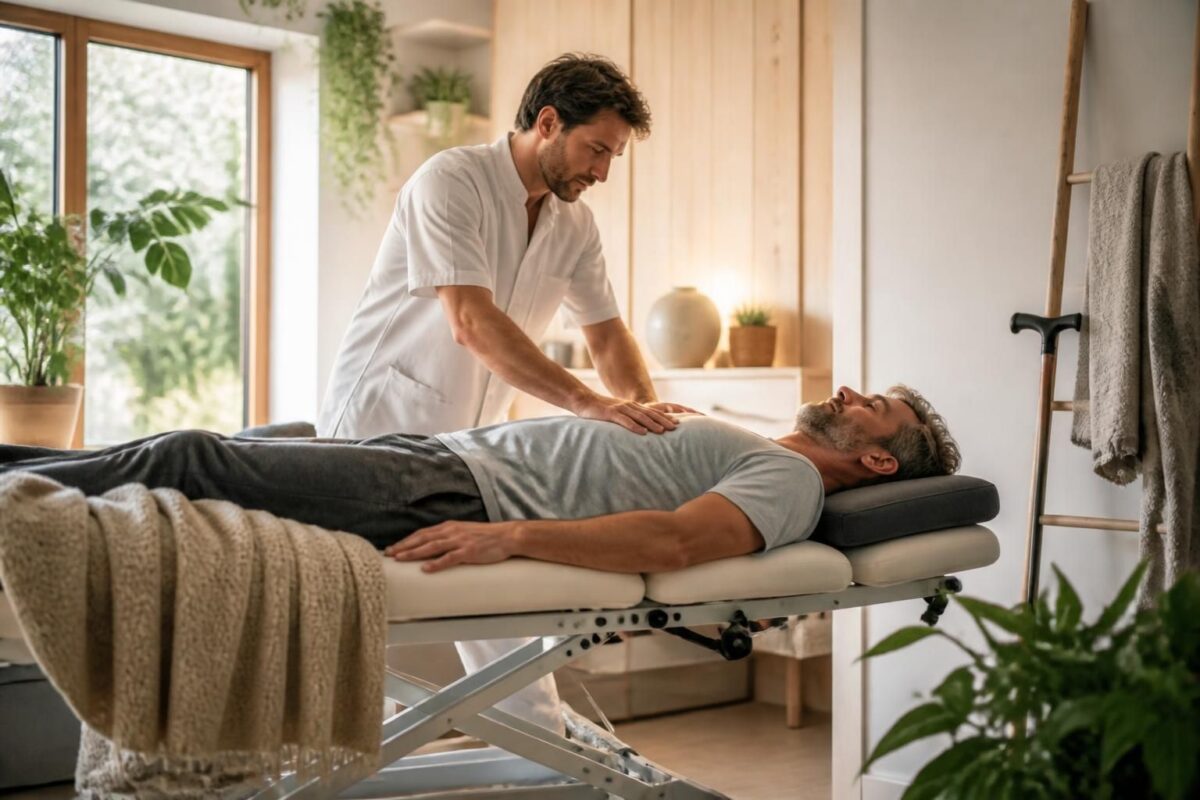
Why Osteopathy Is Essential For Recovery People
In short In short, Osteopathy in convalescence is an approach manual and holistic which helps to accelerate the recovery by restoring The balance, the mobility and a good circulation fabrics. it contributes to Reduce the pain, support the Back to…
Joint mobilization and movement economy
Improvement of amplitude and efficiency
Soft joint mobilizations aim to restore a fluid and harmonious amplitude of movements. By limiting restrictions and resistances, they reduce the effort required to perform repeated gestures and reduce overall energy expenditure.
Prevention and stabilization
A balanced musculoskeletal system promotes better stability and reduces the risk of pain or micro-inflammation that hinders prolonged training. This stability is a pillar of sustainable endurance.

Osteopathic manipulations to strengthen post-traumatic muscles
In short In short, Osteopathic manipulations for Strengthen post-traumatic muscles constitute a gentle manual approach aimed at restoring the mobility, reduce the pain and facilitate the Functional rehabilitation After a injury. What is Is it? A series of precise gestures…
Practical integration into sports preparation
To take advantage of the benefits, plan osteopathy sessions upstream and downstream of the intensive training phases. The osteopath can coordinate with health and training professionals to optimize the follow-up, recovery and adaptation of protocols. Each athlete benefits from a personalized program, adjusted to their sport, level and endurance objectives.

Osteopathy and prevention of work-related musculoskeletal disorders
In short theosteopathy is one Manual approach that restores body balance and prevents MSD related to work. Its advantages: reduction of tension, improvement of mobility and prevention of chronic pain. She is preventive and healing, suitable for office and trades…
Follow-up and additional advice for endurance
In addition to osteopathic care, favor a global approach: Adapted nutrition, sufficient hydration, restful sleep and active recovery. Advice on posture, warm-up and recovery phases will help maintain the effectiveness of techniques and sustain muscular endurance.

The benefits of osteopathy to treat muscle imbalances
In short theosteopathy is a manual approach to restore themuscle harmony and postural considering the body as a whole. Its main benefits include the reduction of aches and tensions, the improvement of the mobility and from the posture, and prevention…
Osteopathic techniques to improve muscle endurance
| Technical | Concise effect on endurance |
|---|---|
| Muscle energy techniques | Activate the Neuromuscular contraction and Improves ATP availability, supporting theendurance. |
| Diaphragmatic release | Optimizes venous return and the ventilation, favoring theendurance during sustained efforts. |
| Joint mobilizations | improve the mobility and reduce energy costs related to Compensatory movements. |
| Fascial relaxation | Free them Fasial tensions and fluidify Movements, improving muscle efficiency. |
| lymphatic drainage | Reduces inflammation and accelerates recovery Post‑Effort. |
| Soft cranial techniques | Reduces the stress and optimize the jitters, supporting theendurance. |
| Targeted neuromuscular stimulation | Improves the coordination and the Muscle recruitment during efforts. |
| Balancing postural chains | warn them disymetries, optimize the Muscle synergy and the fluidity movement. |
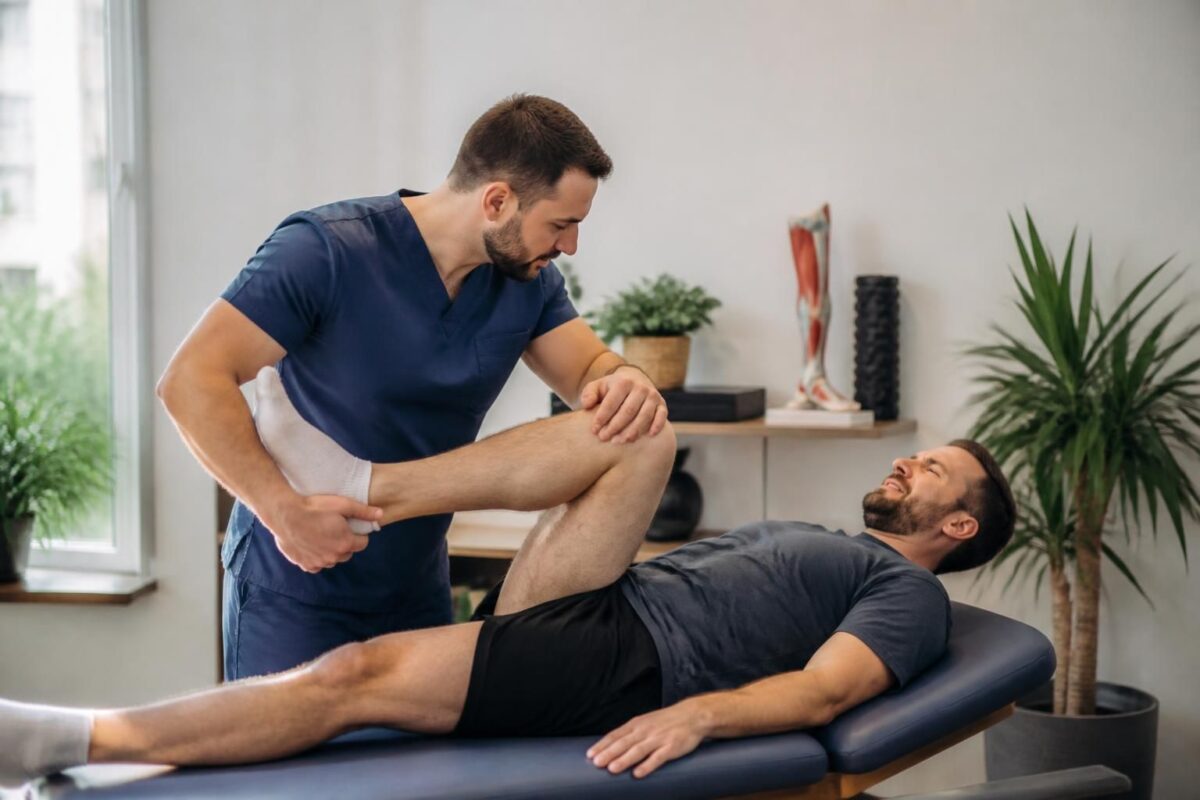
Osteopathy and chronic leg pain: regaining an optimal quality of life
In short In short, Osteopathy is one Global manual approach aimed at reducing Chronic leg pain and improve the quality of life. What is it? Non-drug therapy using the hands to identify restrictions and treat lesional chains. How does it…
Testimonials on osteopathic techniques to improve muscle endurance
Claire, triathlete : “Since my first sessions focused on Muscle energy techniques and the Diaphragmatic release, my endurance lasts longer. I feel a better Neuromuscular coordination And a smoother breathing that allows me to maintain a stable rhythm on the long portions of my workouts. »
“This targeted approach gives me the confidence to go further during long outings and to recover more quickly between sessions, without feeling excessive fatigue in the thighs,” she adds.
Marc, marathon runner : “My sessions of Joint mobilizations and Muscle energy techniques have improved theendurance and effort management over 42 km. Breathing is more effective and my muscles retain their tone for longer. »
“Work on the Venous return And the fluidity of movement allows me to avoid big drops in speed and to conclude my marathons with more regularity. »
Zoe, long distance swimmer : “In swimming, endurance is everything. Thanks to Muscle energy techniques and at the Diaphragmatic release, I gained in breathing underwater and stability of the trunk. My repeated series become longer and more effective. »
“The improvement of therange of motion and from the Neuromuscular coordination Helps me to keep a constant thrust and limit cramps, even at the end of the session. »
Antoine, road cyclist : “The Osteopathic techniques that I apply with my osteopath have boosted my Performance Endurance : better contractions, more effective breathing, and optimized venous return during exercise. »
“I feel that my muscles are better oxygenated and that my recovery is faster after long climbs, which allows me to chain workouts without excessive weariness. »
Lea, rower : “The use of Muscle energy techniques and of Diaphragmatic release transformed my ability to hold the effort in competition. My endurance is more constant, and my breathing technique is more fluid even when the intensity level rises. »
“!– /wp:paragraph –>
The doctor Sylvain Desforges, expert in osteopathy, naturopathy and manual medicine, is a recognized voice in the field of innovation in health care. as founding president of tagmed and association acma, he forged an integrative approach that emphasizes the optimization of vitality and performance. His work is based on evidence-based practice, designed to help athletes push their limits while preserving their health capital. His background and achievements testify to a lasting commitment to clinical and educational excellence.
In his approach, theSports osteopathy is aimed not only at post-workout restoration, but also for gradual improvement in endurance muscular. The objective is to harmonize the musculoskeletal chains, to facilitate effective breathing and to strengthen neuromuscular coordination. This approach is based on a detailed understanding of the interdependent systems of the body and on the use of appropriate techniques that optimize oxygen supply, energy production and venous return during exercise.
Among the key levers, Muscle energy techniques play a central role. They invite the muscle to actively work against targeted resistance, which stimulates ATP reuptake and improves muscle synchronization. associated with Joint mobilizations Fine and controlled, these methods strengthen the ability to generate and transmit force with a better regulated energy expenditure. Another crucial element, the Diaphragmatic release Participates directly in better ventilatory mechanics and more effective venous return, two determining factors for maintaining endurance during sustained efforts. Osteopathic techniques also target fascia and soft tissue, in order to reduce internal friction points and improve fluidity of movement.
The approach of Preparation for Endurance Prioritizes a postural and functional evaluation, making it possible to identify imbalances that could limit performance. By integrating the appropriate techniques before training, after the sessions and during recovery periods, the practitioner helps to reduce tension, optimize joint amplitudes and increase fatigue tolerance. This approach aims to lasting improvement performance, with a reduction in energy waste and better management of stress-related physiological stress.
In practice, osteopathic work is part of a logic of collaboration with all the professionals who surround the athlete. The use of precise and progressive techniques is personalized according to the sport, level and background, in order to ensure continuous progress towards a Increased endurance. The therapeutic journey is intended to be holistic: it combines manual mastery with recovery, nutrition and training advice adapted to support long-term performance, while protecting the overall health of the athlete. To find out more about his approach and the services offered, it is possible to inquire with his firm.
To quickly summarize this overview, the Osteopathic techniques dedicated to theMuscle endurance Play on energy, mechanics and venous return in order to optimize performance. by combining muscle energy, Diaphragmatic release, Joint mobilizations and lymphatic drainage, they reduce energy expenditure, increase neuromuscular coordination and accelerate recovery. The goal is to get better Muscle endurance, more effective breathing and smoother movement over the long term.
Synthesis
The Muscle energy techniques Promote the recapture of ATP, increase the strength and precision of gestures, and support better neuromuscular coordination, essential to preserve endurance during prolonged series.
The Diaphragmatic release Optimizes breath and venous return, which helps to improve endurance in sustained effort and reduce diaphragmatic fatigue.
The Joint mobilizations and the Mobility techniques Improve range of motion and fluidity, limiting energy losses from compensations and recurring voltages.
The lymphatic drainage And the work on the fascias allows better elimination of toxins and faster recovery between sessions, supporting the progression of endurance.
Practical integration: plan the sessions around training, combine them with physiotherapy, nutrition and sleep for lasting optimization. To explore these approaches, see the following resources: How Osteopathy Improves Lymph Circulation, Osteopathy, an asset for athletes, Techniques to improve muscle endurance.
In short, the osteopathic approach offers a synergy between neuromuscular stimulation, improved circulation and optimized recovery, making Osteopathic techniques a key component of any program aimed at Muscle endurance sustainable.
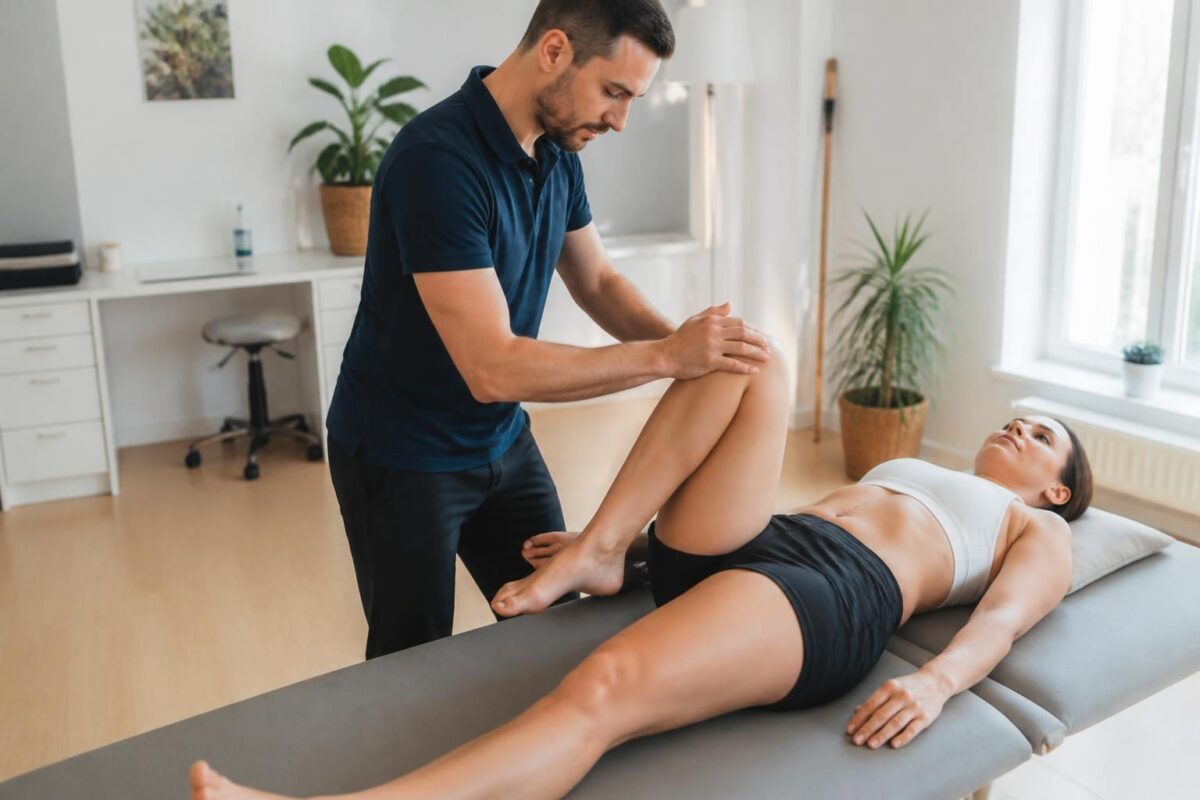
How osteopathy supports recovery after complex surgery
In short In short, Post-operative osteopathy is an approach fresh which supports the recovery After a Complex surgery. It helps to reduce the pain and the fatigue, improves the mobility and accelerates the healing thanks to a better vascularization and…

Dr Sylvain Desforges, B.Sc., D.O., N.D., osteopath, is the founding president of TAGMED and of the ACMA association. He dedicates his practice to chronic spinal pain, low back pain and symptoms compatible with sciatica, particularly when pain radiates toward the buttock, leg, calf, foot or toes.
Through SOS Sciatique, he publishes educational content on sciatica symptoms, possible causes such as disc herniation, disc narrowing, foraminal stenosis or irritation of a lumbar nerve root, as well as non-surgical approaches that may be considered according to the evaluation. At Clinique TAGMED, care may include, depending on the case, motorized neurovertebral decompression, specific osteopathic care or precision percussion.
For an evaluation related to sciatica treatment in Montreal / Mount Royal or sciatica treatment in Terrebonne, please consult the services available at Clinique TAGMED.
Medical disclaimer
The information published on SOS Sciatique is provided for educational purposes only and does not replace a consultation, diagnosis, opinion or treatment provided by a physician or another authorized healthcare professional. The author of this article is neither a medical doctor nor a specialist in a medical specialty recognized by the Collège des médecins du Québec. The osteopathic, manual medicine or functional support approaches described on this site do not constitute medical acts and are not intended to replace medical follow-up.
Consult a physician or emergency service in cases of loss of bladder or bowel control, anesthesia in the saddle area, significant or progressive weakness in the leg or foot, fever, recent trauma, severe pain or rapid worsening of symptoms. For more details, please read our Legal Notice.