Osteopathic techniques to ease nervous tensions
28/06/2026
Osteopathy and sciatic pain: a lasting and natural solution
28/06/2026
In short
| In short, Osteopathy better lymphatic circulation By promoting the free mobility of fluids and the resorption of metabolic waste, as part of the global tissue movement. This approach helps to reduce edema, support the immune system and improve cell nutrition. It acts through gestures adapted to each patient, in particular the Diaphragmatic release, the Myofascial techniques and visceral mobilizations, to rebalance lymph flow and tissue respiration. Result: more fluid veno-lymphatic return, less heaviness and easier recovery after injury or surgery, all in a setting personalized and painless. |
In osteopathy, Improved lymph circulation is based on a global approach that favors the fluidity and theself-regulation of the body. The objective is to restore fluid movement and Tissue breathing rather than applying an isolated technique.
- Diaphragmatic release To promote veno-lymphatic return
- Fascial and visceral mobilizations In order to restore inter-tissue slippage and prevent stagnation
- Myofascial techniques and cranio-sacral work To support lymphatic rhythm and cellular nutrition
The result is a better lymphatic circulation, a reduction in edema and increased mobilization of the body’s immune and metabolic resources.
This article explains how theosteopathy can improve lymphatic circulation. It describes the physiological mechanisms, the role of the tissues and the specific gestures, without mechanizing the treatment. The goal is to promote fluidity, theself-regulation and the rebalancing of fluid exchanges throughout the organization.
The lymphatic system ensures the return of interstitial fluids and supports the immune defenses. It depends on tissue mobility and pressure variations in all fascias. Osteopathy considers this circulation as an expression of the vital movement and seeks to restore its continuity.
The basics of lymphatic circulation
The lymph carries fluids, proteins and cell debris that do not directly reach the blood. The flow is supported by the Diaphragmatic mobility, the Muscle contractility and the oscillations of the fascias. When these mechanisms deteriorate, stagnation may appear and disrupt cellular exchanges.
Role of osteopathy in this system
theosteopathy is not limited to a massage. The practitioner listens to the tissues, identifies restriction areas and seeks to re-move fluids and membranes. This approach aims to Continuity of movements and sustainable improvement of the lymphatic circulation.
Key osteopathic mechanisms
Three elements support osteopathic action on lymph. Diaphragmatic mobility Acts like a central pump. muscle contractility Introduces local liquid propulsion. Fascial oscillations And the arterial pulsation create micro-movements that facilitate lymph flow.
Protocol and gestures of the osteopath
The practice is based on three axes. Diaphragmatic release To improve veno-lymphatic return. Harmonization of large collectors such as the thoracic canal and peripheral regions. Peripheral rebalancing edematous or congestive areas. The work combines Soft pumping techniques, of Visceral mobilization and, where appropriate, cranio-sacral approaches to support lymphatic rhythm.
Indications and physiological effect
Osteopathic lymphatic drainage may be useful after trauma, or when faced with Venous congestion, edema or functional immune disorders. Physiologically, it promotes veno-lymphatic return, reduces interstitial pressure and improves cell nutrition. This approach can also support the regulation of the autonomic nervous system, inducing general relaxation.
Contraindications and precautions
As with any approach to traffic, some situations require caution or abstention. Progressive cancers, active infections, unstabilized cardiac or kidney failure, phlebitis or recent thrombosis are among the situations to be assessed with the attending physician. A prior clinical assessment is essential.
Resources and additional readings
To deepen, resources and articles on theOsteopathy and lymphatic drainage exist on several specialized sites. For example, you can consult resources dealing with the link between inflammation, drainage and osteopathic approach on pages dedicated to arthritis or sports recovery. Further information about the importance of osteopathy in active aging or in the management of recurrent pain can be found on the following professional sites:
– Osteopathy and arthritis – Relieving pain on a daily basis (ssciatica.com)
– Sports recovery and athletic performance (ssciatica.com)
– Prevent overuse injuries (ssciatica.com)
– Osteopathy and active aging (ssciatica.com)
– neurovertebral decompression (decompressioneurovertebrale.com)
For treatments and general information, you can also consult the resources of the TagMed Clinic and other affiliated professional sites.
– Tagmed Clinic (cliniquetagmed.com)
– Lymphatic drainage and care of herniated discs (sosherniediscale.com)
– herniated discs and lymphatic drainage (SosherniatedDisc.com)
– Carpal tunnel and lymphatic syndrome (sostunnelcarpal.com)
Medical Disclaimer: The information and advice provided on this site does not replace the health professional’s diagnosis or treatment. Please note that Dr. Sylvain Desforges osteopath is neither a doctor of medicine nor a doctor, and is not a specialist in a medical specialty as defined by the Collège des Médecins du Québec. Manual medicine, functional medicine and sports medicine as described on this site exclude any medical treatment or diagnosis made by a doctor or specialist doctor. Always consult your doctor for any medical questions. For more details, please read our full legal notice.
content concerning the treatment of sciatica with the neurovertebral decompression and specific losteopathy and other specific conditions: in articles dealing with neurovertebral decompression, herniated disc, disc bulge, foraminal stenosis, spinal stenosis, disc pinching or disc degeneration, avoid suggesting exercises Or stretching.
.two-column-lymph{ column-count:2; column-gap:40px; } .two-column-lymph ul{ list-style:none; padding:0; Margin:0; } .two-column-lymph li{ break-inside: avoid; margin-bottom:8px; } .two-column-lymph Strong{ font-weight:600; }
- Diaphragmatic release To optimize the return Venolymphatic.
- Fascial mobilizations Releasing slip inter-tissular.
- Harmonization of large collectors and of chest.
- Appropriate approach to the network tissue, no standardized gesture.
- Visceral rebalancing and release of tensions hindering the lymph.
- Global approach associate movement, breathing and tone muscular.
- Stimulation of lymph return and Reduction of stasis.
- Conscience tactile and membrane work to support the lymphatic flow.

This article presents how theosteopathy can improve the lymphatic circulation By promoting fluid movement and tissue self-regulation, through a global approach that respects the dynamics of the body and adapts to each patient.
Physiological foundations of lymphatic circulation
The lymphatic circulation Ensures the return of interstitial fluids to the venous compartment, supports the immune defense and participates in metabolic purification. It complements the venous network by draining proteins and cellular debris that do not directly reach the bloodstream. This function is essential for maintaining tissue nutrition and preventing buildups that can influence the vitality of organs and muscles.
Functional anatomy
The lymphatic network includes fine-walled capillaries, collectors and ganglion relays, going up to the main ducts. These structures fit into the fascias and muscular planes, which explains their mechanical dependence on the overall mobility of the body. Lymph propulsion is based on three key mechanisms: diaphragmatic mobility during breathing, muscle contractility and fascial oscillations associated with arterial pulsation.

How osteopathy improves the quality of life of active people
In short In short, theosteopathy is a global approach that Optimizes mobility and the function of the body of ACTIVE PEOPLE, for a better quality of life. It helps prevent injury and reduce Musculoskeletal pain While promoting the Sports recovery.…

Osteopathy and sports recovery: prepare the body for lasting performance
In short In short, Osteopathy and Sports recovery is one Global manual approach that sustainably prepares the body for the effort by restoring mobility and circulation After the effort. It is a discipline that acts on the sinews, the joints,…
The osteopathic approach and fluidity
In osteopathy, lymph is perceived as the expression of vital movement and the free flow of fluids. A fascial, visceral or joint mobility restriction can slow this flow locally and create tissue stasis. The objective is then to restore the continuity of subtle movements in order to support general homeostasis and to improve cell nutrition.
The law of fluidity and the role of the fascias
In the osteopathic perspective, the circulation of fluids depends on the dynamics of the fascias, true vectors of tissue continuity. Tensions or fasciary rigidity can block inter-tissue slippage and promote lymphatic micro-obstructions. By listening to these tension zones, the osteopath promotes the reorganization of the flow and the reoxygenation of the tissues.
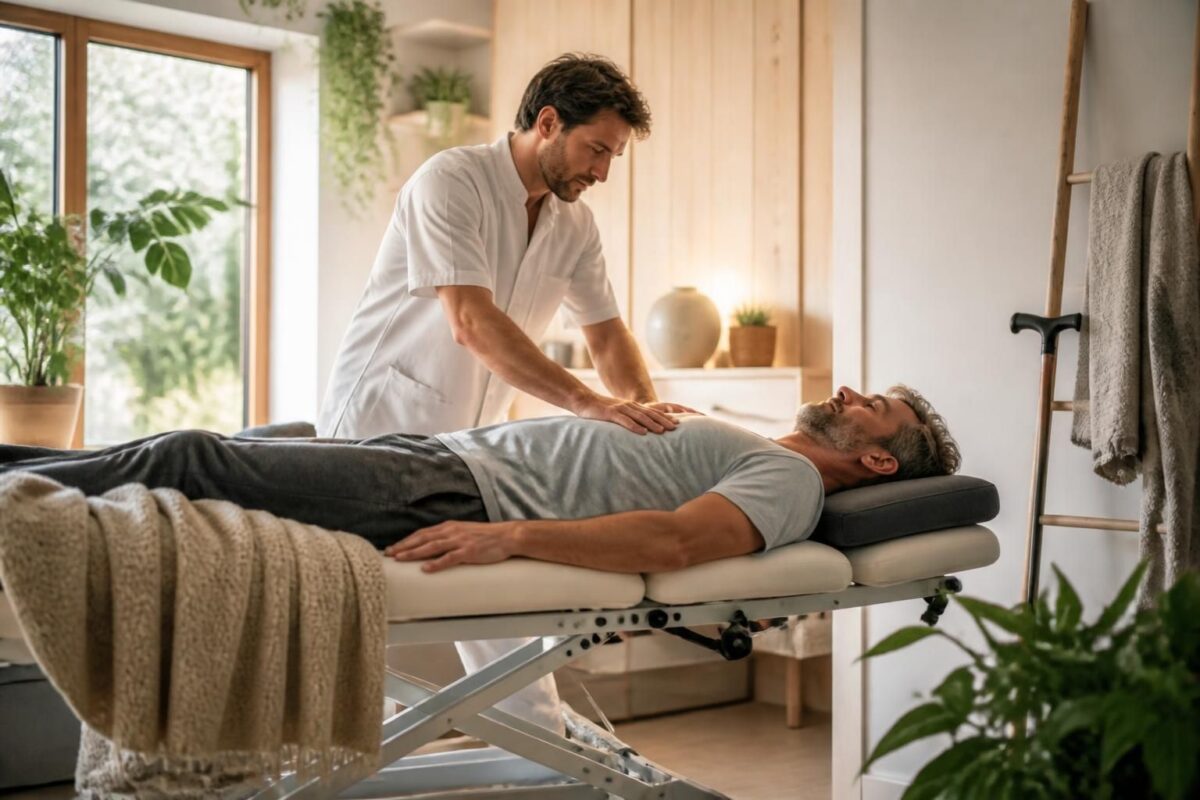
Why Osteopathy Is Essential For Recovery People
In short In short, Osteopathy in convalescence is an approach manual and holistic which helps to accelerate the recovery by restoring The balance, the mobility and a good circulation fabrics. it contributes to Reduce the pain, support the Back to…

Osteopathic manipulations to strengthen post-traumatic muscles
In short In short, Osteopathic manipulations for Strengthen post-traumatic muscles constitute a gentle manual approach aimed at restoring the mobility, reduce the pain and facilitate the Functional rehabilitation After a injury. What is Is it? A series of precise gestures…
The osteopathic device: gestures and principles
Osteopathic intervention is not limited to reproducing technical drainage gestures; It adapts to the tissue logic of each patient, integrating the globality of mechanical, visceral and fluid interactions. This customization makes each session more effective and more respectful of the body.
Treatment sequence and techniques
The approach favors a Diaphragmatic release To improve veno-lymphatic return, a Harmonization of large collectors and an Peripheral rebalancing congested areas. Gentle pumping techniques, visceral mobilizations and myofascial approaches support lymph movement and tissue breathing, guided by a hand that listens to the body and respects its spontaneous rhythm.

Osteopathy and prevention of work-related musculoskeletal disorders
In short theosteopathy is one Manual approach that restores body balance and prevents MSD related to work. Its advantages: reduction of tension, improvement of mobility and prevention of chronic pain. She is preventive and healing, suitable for office and trades…

The benefits of osteopathy to treat muscle imbalances
In short theosteopathy is a manual approach to restore themuscle harmony and postural considering the body as a whole. Its main benefits include the reduction of aches and tensions, the improvement of the mobility and from the posture, and prevention…
Indications and physiological effects
This osteopathic drainage can occur in post-traumatic or post-surgical edema, circulatory slowness, heavy legs, venous congestion, lymphedema and delays in recovery after infection. By promoting veno-lymphatic return, it reduces interstitial pressure, improves cellular nutrition and contributes to regulating the vegetative nervous system, bringing relaxation and general well-being.
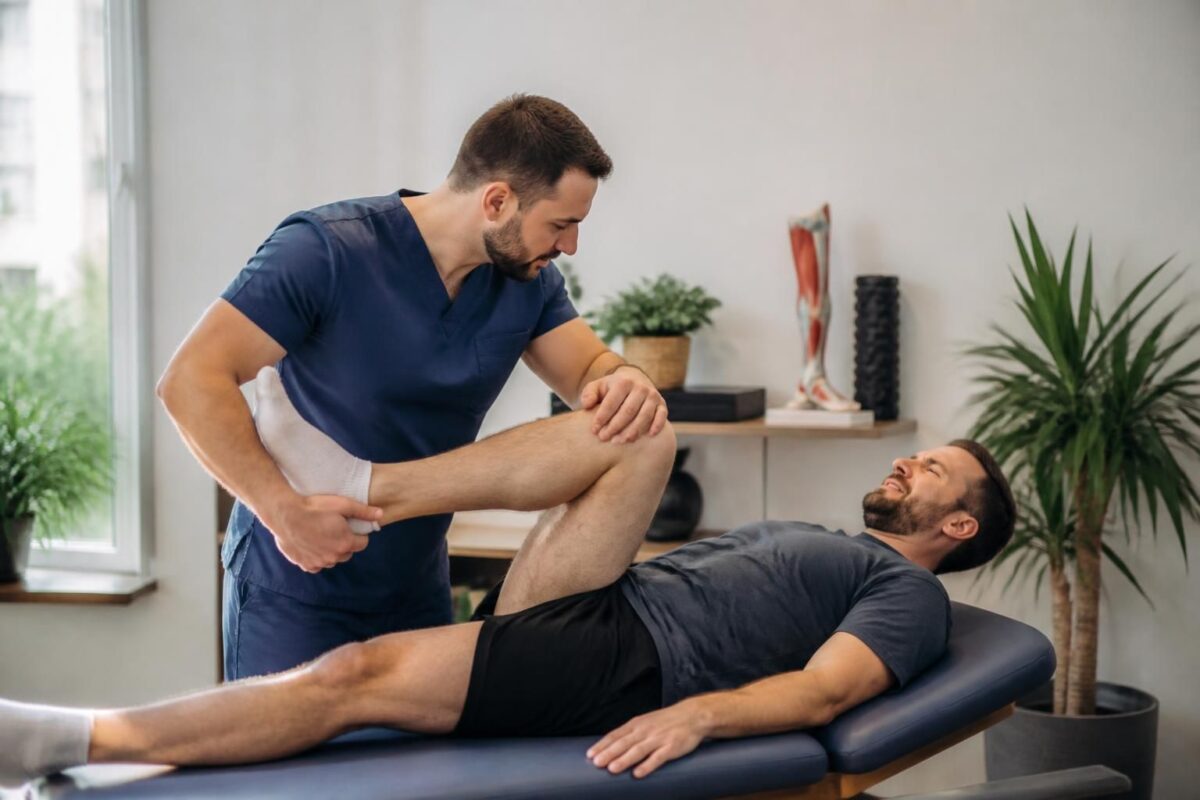
Osteopathy and chronic leg pain: regaining an optimal quality of life
In short In short, Osteopathy is one Global manual approach aimed at reducing Chronic leg pain and improve the quality of life. What is it? Non-drug therapy using the hands to identify restrictions and treat lesional chains. How does it…
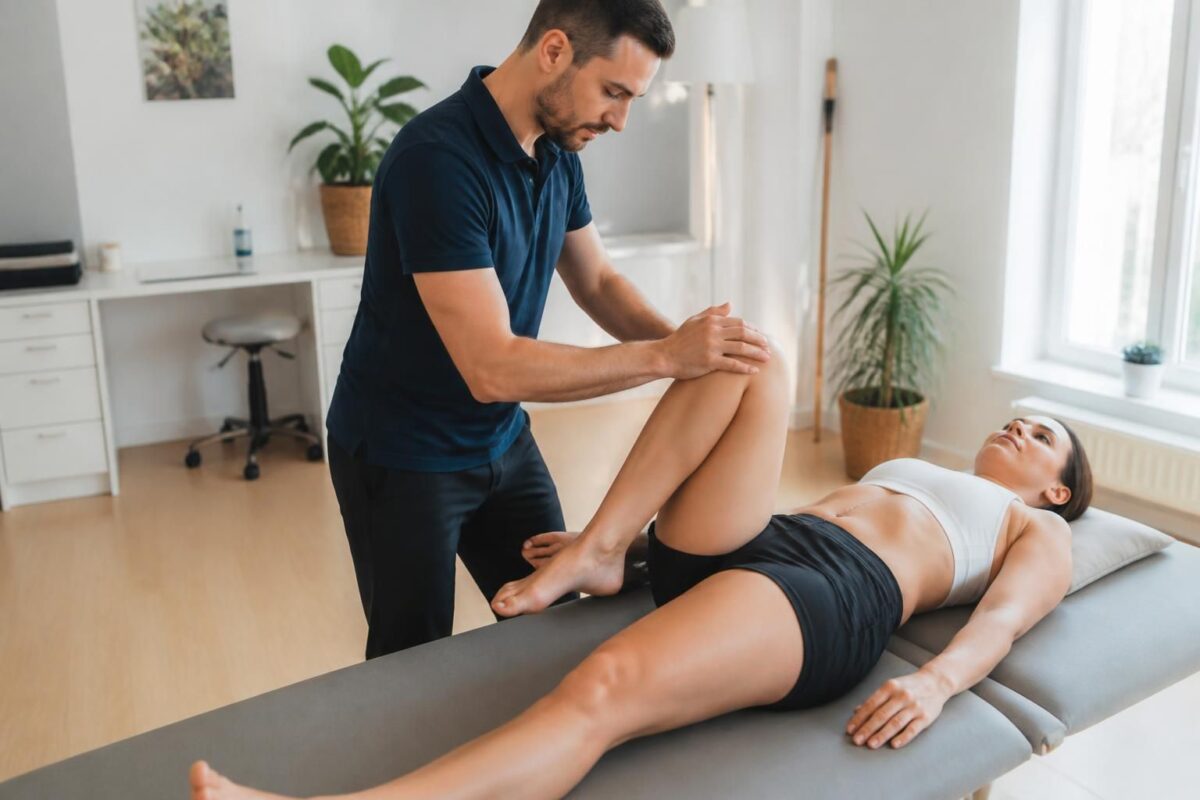
How osteopathy supports recovery after complex surgery
In short In short, Post-operative osteopathy is an approach fresh which supports the recovery After a Complex surgery. It helps to reduce the pain and the fatigue, improves the mobility and accelerates the healing thanks to a better vascularization and…
Precautions and safety
Some situations require caution or abstention: progressive cancers, active infections, unstabilized heart or kidney failure, phlebitis or recent thrombosis. Preliminary clinical evaluation and coordination with the attending physician remain essential to ensure a safe and appropriate approach.
| Aspect | Concise description |
|---|---|
| Physiological mechanisms and lymph propulsion | Losteopathy promotes Diaphragmatic mobility and the Muscle pump for the Back veno-lymphatic. |
| Role of fascias and the tissue network | The slip fascia And the movement of the collectors are released to improve the lymph flow. |
| holistic approach | We act in a logic holistic linking musculoskeletal, visceral and fluidic planes. |
| Diaphragmatic release | release the diaphragm Optimizes flow and lymph return in the thorax and abdomen. |
| Visceral mobilization | Visceral manipulations promote resorption and propulsion around the liver and mesentery. |
| Typical session sequence | Touch diagnosis followed by targeted interventions on Oedematous areas and large collectors. |
| Clinical indications | Post-traumatic edema, peripheral congestion, lymphedema and circulatory slowdown. |
| Expected physiological effects | improvement of Back veno-lymphatic, reduction of theinflammation and better cellular nutrition. |
| Precautions and contraindications | Pre-assessment and adaptation in case ofActive infections or vascular conditions. |
Testimonials: how osteopathy improves lymphatic circulation
“Since my first sessions, I have noticed that the lymphatic circulation became more fluid and less crowded. theosteopathy Is not just a massage: it respects internal dynamics and revives lymph propulsion, which reduced my edema and improved my recovery after exercise. »
“As a sportswoman, recovery is crucial. Targeted diaphragm and fascia intervention, associated with lymph collector work, accelerated toxin resorption and reduced heaviness after training. My lymphatic circulation is more responsive and my muscles relax faster. »
“After a minor surgery, osteopathic work helped to defog the tissues, relaunch the flow and limit postoperative edema. I feel that my lymphatic circulation returns to normal faster and my energy is better. »
“My doctor said the numbers weren’t worrying, but I felt constantly swollen. Thanks to the global approach to osteopathy, the circulation of fluids has rebalanced and my skin has regained its softness; A real feeling of lightness in the legs. »
“For me who suffered from congestion and recurrent inflammation, the objective was to support the immune system through better circulation of fluids. Osteopathy harmonized lymphatic dynamics and I found better management of infections and less fatigue. »
“I remained skeptical at first but I was convinced by the gentleness of the gesture and the precision of the diagnosis. The improvement of the lymphatic circulation was noticeable from the first weeks and resulted in more tonic skin and a general feeling of well-being. »
“As an employee having to sit for a long time, I had heavy ankles and edema. Since osteopathic treatment, the lymphatic circulation has improved, the swelling decreases at the end of the day and I find endurance. »
“This approach is a real accompaniment to the movement of fluids and tissue respiration. Osteopathy is not limited to a massage: it acts on the continuity of internal exchanges and offers better listening to the body, which is immediately reflected in my lymphatic circulation and my daily energy. »
This biography sheds light on the journey of an osteopath recognized for his integrative approach to health. Expert in osteopathy, in naturopathy And in manual medicine, he is committed to aiming for excellence in care, guiding his patients towards a better quality of life. Founding President of TAGMED and a key player in ACMA, he combines clinical innovation and scientific rigor to offer support based on evidence and experience, particularly in the management of Chronic pain and the integration of advanced technologies.
at the heart of his work is the lymphatic circulation, major vector of vitality and material exchange within the body. For him, the lymphatic system is not a technical isolation but a pillar of fluid physiology, which supports immune defense and metabolic detoxification. The lymph embodies tissue mobility and the functional balance of internal exchanges, and its optimization becomes a gateway to better bodily harmony.
In its practice, the osteopathic approach considers the l1ymphasm as the expression of vital movement. A mobility restriction at the level of the fascias, visceral organs or joints can hamper this flow locally, leading to stagnations and metabolic disturbances. The goal is to restore the continuity of subtle movements that allow the body to regulate itself naturally, in order to improve tissue respiration and nutritional intake to cells.
According to a vision that is based on the foundations of osteopathy, bodily fluids – blood, lymphatic and interstitial – depend on a common balance. A fluid circulation of the lymph is associated with reduced congestion, decreased edema, and tissue revitalization. This tissue logic invites a gentle and progressive accompaniment, respecting the internal dynamics of the body and the unique rhythm of each patient.
The fascias play a key role here: they form a three-dimensional network where the lymphatic vessels travel. The slightest restriction can hinder inter-tissue slippage and create micro-obstacles. When listening to palpatory, the osteopath identifies these tension zones and releases them, facilitating the reorganization of the flow and the reoxygenation of tissue. This approach aims at global reharmonization, and not just a one-time action on a symptom.
The osteopathic approach of lymphatic drainage is not confined to the reproduction of technical gestures. It adapts to the tissue logic of each patient, taking into account mechanical, visceral and fluid interactions. In practice, it revolves around clear axes: diaphragmatic release to promote veno-lymphatic return; harmonization of large lymphatic collectors; and peripheral rebalancing to normalize edematous or congestive areas.
The techniques employed range from gentle pumping applied to infiltrated tissues, visceral mobilizations promoting organ release, and cranio-sacral work that supports membrane motility and lymphatic rhythm. The initiator of the touch favors the “listening hand”, a light but constant approach aimed at reviving the spontaneous movement of the fluid and preserving the integrity of the tissues.
The indications cover a broad spectrum: post-traumatic or post-surgical edema, circulatory slowdown, heaviness of the legs, venous congestion, digestive disorders linked to mesenteric stasis, or even functional immune support. Physiologically, this practice stimulates veno-lymphatic return, decreases interstitial pressure and optimizes cellular nutrition, while promoting regulation of the neurovegetative system and a state of general relaxation.
For patients, this translates into better recovery, reduced inflammation and a lasting feeling of lightness. Osteopathy, far from being a simple massage, becomes a global approach aimed at restoring the breathing and fluidity of the tissues, in order to support the natural self-regulation of the body and to improve the well-being durably.
This article offers an osteopathic reading of lymphatic drainage, considering it not as a simple isolated technique, but as a vector of fluidity and self-regulation of the body. it connects the lymphatic circulation to the mobility of fascias, at diaphragm and tissue respiration, and details the physical mechanisms as well as the clinical indications that allow theosteopathy Optimize fluid flow and cellular nutrition, with additional online resources.
from a perspective osteopathic, lymphatic circulation is a reflection of the vitality and self-regulation of tissues. Drainage is not a simple massage: it is a question of accompanying the physiological movement of the fluid, by favoring the continuity between diaphragm, fascias and collecting networks.
To enrich your understanding, you can consult these resources in particular: Osteopathy and lymph circulation, Improvement of the lymphatic system thanks to osteopathy, and Harmonize body and mind.
The mechanisms involved revolve around three main axes: Diaphragmatic mobilization which acts as a central pump, themuscular action and the Fascial oscillations that create micro-displacements of liquids. This approach aims to restore Freedom of flow and prevent areas of stasis that alter tissue nutrition and immunity.
The practice is based on a Palpatory listening and a touch reflective, where the listening hand guides gestures adapted to each patient in order to relaunch the spontaneous movement of fluids and to support the Tissue breathing.
The clinical indications cover in particular the edemas post-traumatic or post-surgical, circulatory slowdown, limb heaviness, venous congestion, post-infective disorders and certain functional immune damage, while remaining attentive to contraindications and coordination with the attending physician.
In clinical practice, this approach is part of a Processing sequence articulating Diaphragmatic release, Rebalancing of collectors and Peripheral rebalancing, with an adaptation of techniques according to individual physiology and constant vigilance with regard to precautions.
Complementary resources make it possible to observe the effects and mechanisms in various contexts, in particular through readings on the links between osteopathy and lymphatic system, the reduction of tensions linked to physical stress and the benefits of a non-invasive approach to general well-being.

Dr Sylvain Desforges, B.Sc., D.O., N.D., osteopath, is the founding president of TAGMED and of the ACMA association. He dedicates his practice to chronic spinal pain, low back pain and symptoms compatible with sciatica, particularly when pain radiates toward the buttock, leg, calf, foot or toes.
Through SOS Sciatique, he publishes educational content on sciatica symptoms, possible causes such as disc herniation, disc narrowing, foraminal stenosis or irritation of a lumbar nerve root, as well as non-surgical approaches that may be considered according to the evaluation. At Clinique TAGMED, care may include, depending on the case, motorized neurovertebral decompression, specific osteopathic care or precision percussion.
For an evaluation related to sciatica treatment in Montreal / Mount Royal or sciatica treatment in Terrebonne, please consult the services available at Clinique TAGMED.
Medical disclaimer
The information published on SOS Sciatique is provided for educational purposes only and does not replace a consultation, diagnosis, opinion or treatment provided by a physician or another authorized healthcare professional. The author of this article is neither a medical doctor nor a specialist in a medical specialty recognized by the Collège des médecins du Québec. The osteopathic, manual medicine or functional support approaches described on this site do not constitute medical acts and are not intended to replace medical follow-up.
Consult a physician or emergency service in cases of loss of bladder or bowel control, anesthesia in the saddle area, significant or progressive weakness in the leg or foot, fever, recent trauma, severe pain or rapid worsening of symptoms. For more details, please read our Legal Notice.