


Sciatica: what an irritated nerve root means
01/08/2026
Sciatica in Montreal: understanding the relationship between lumbar disc and sciatic nerve
02/08/2026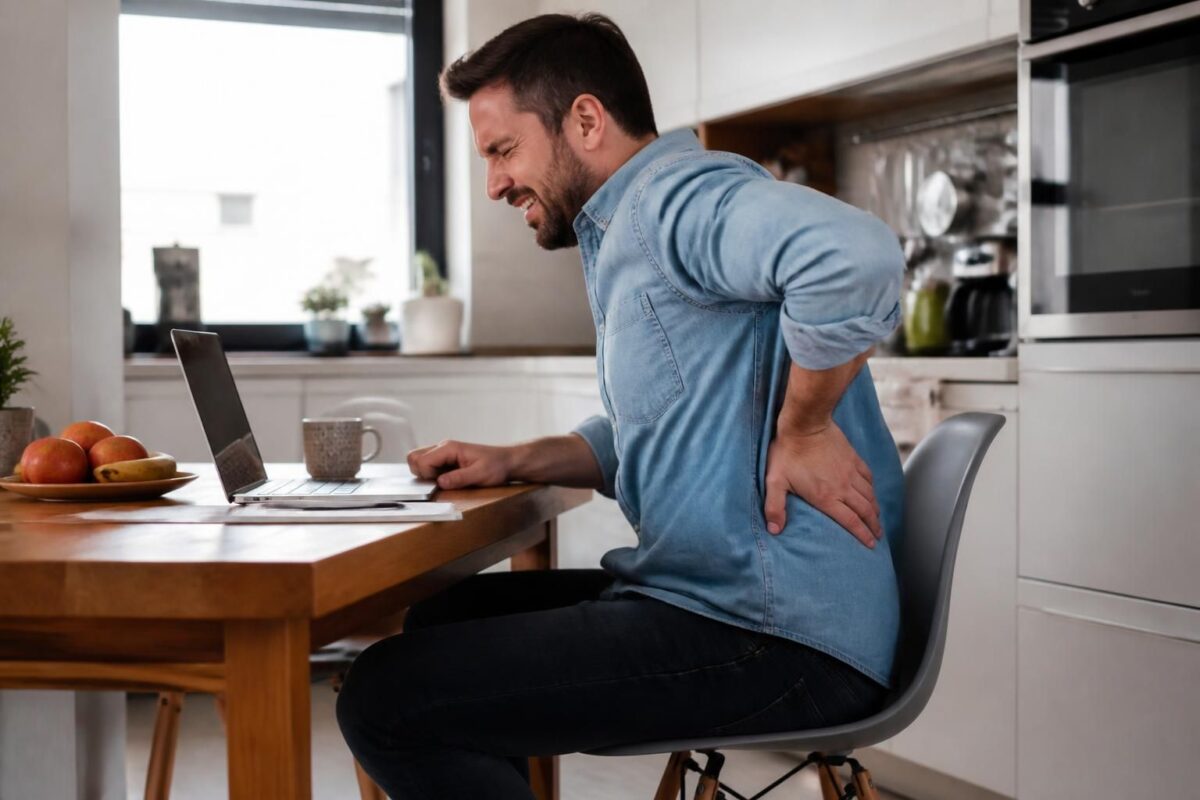
IN BRIEF
| In short, sciatica and working at the kitchen table describe how <strong/repeated postures and movements during meal preparation can increase sciatica pain. What is this theme? It is the influence of positions around the table on the pressure exerted on the intervertebral discs and the sciatic nerve. What are the benefits? Understanding this link allows for the adoption of good postures, organizing the kitchen to limit effort, and preventing recurrences, thus improving comfort and productivity. How does it work? By adjusting the height of the seats and the work surface, using lumbar support, and planning active breaks, we reduce pressure on the discs and the sciatic nerve, which provides quick relief. Accessible in Paris, this advice applies to all home kitchens to reduce pain and allow cooking and working normally. |
Sciatica and working at the kitchen table: why pain can increase
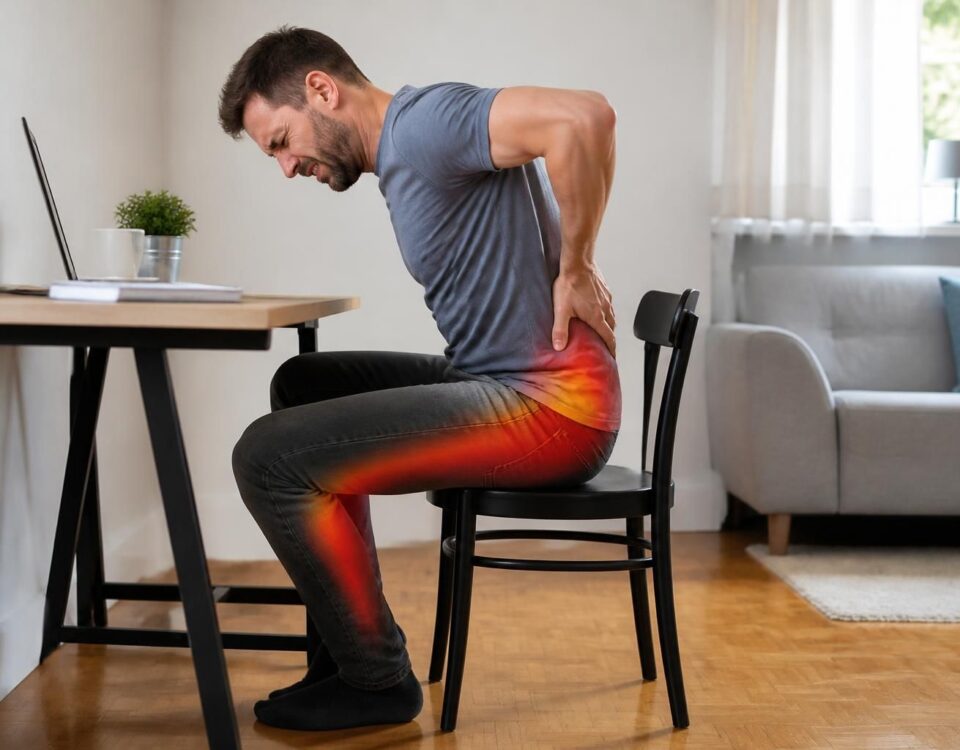
Sitting for long periods at a kitchen table on an unsuitable chair can amplify sciatic nerve pain. A slouched posture, poorly placed feet, and a chair that does not support the lumbar region increase the pressure on the discs and irritate the sciatic nerve that runs down the leg.
- Posture and height: unsuitable seat, knees exceeding 90°, poorly supported backrest, or too shallow backrest angle
- Equipment and alignment: lumbar cushion, footrest, feet flat on the ground and spine aligned; avoid crossing legs
- Alternation and breaks: alternate sitting and standing, take a break and walk every 30 to 40 minutes
- Practical tips: adjust the table or prefer an adjustable chair, prioritize movements, and avoid prolonged immobility
Sciatica and working at the table often describe a problematic association. This article, written by a health professional, explains why certain positions at the table can amplify pain and how to optimize your posture and movements in daily life. You will discover the mechanical mechanisms involved, the postures to avoid, and simple ergonomic strategies to limit irritation of the sciatic nerve without disrupting your daily routine.
Why the kitchen table can influence sciatic pain
The kitchen table imposes positions that can increase pressure on the lower back region and the sciatic nerve. The sciatic nerve travels from the lumbar vertebrae, passes through the pelvis, and runs down the leg. A posture that does not respect the natural alignment can compress the nerve roots and trigger pain that radiates down to the foot. Static sitting posture and repetitive movements around the table can maintain this pressure and exacerbate symptoms, especially if the back arches or the shoulders hunch.
Postures to avoid at the kitchen table
A hunched back and shoulders pushed forward increase posterior intra-discal pressure and promote irritation of the sciatic nerve. Crossing legs creates a twist in the pelvis and can impede blood circulation in the upper leg, prolonging pain. A seat that is too low tilts the pelvis and accentuates lordosis, increasing the strain on the lumbar discs. A sofa that is too soft causes sagging of the spine and an uneven distribution of loads, worsening nerve irritation. Prolonged immobility (more than 30 minutes) alters the irrigation of the discs and maintains inflammation around the nerve.
For these reasons, prefer setups that limit these mechanical effects. Avoid prolonged static positions and favor supports that promote body alignment during table tasks.
Ergonomics and layout around the table
A reliable posture relies on a configuration that respects the natural alignment of the body. The top of the screen or the visual surface around the table should allow you to keep your eyes straight and shoulders relaxed. A chair suited to the table, with a backrest offering lumbar support, is essential. The aim is to maintain a knee angle between 90 and 110 degrees and have feet flat on the floor or on a footrest. A lumbar cushion and footrest can help you achieve this posture with ease.
Use simple accessories to support the spine: a firm cushion under the buttocks can correct a seat that is too deep; a lumbar cushion helps maintain the natural lordosis; and an adjustable office chair can be useful if you often work at the table and in other setups. Keep your ears, shoulders, and hips vertically aligned to limit tension in the back.
For repeated movements around the table, prioritize work surfaces that are accessible without excessively bending. If you need to reach for objects, bring them closer progressively and bend your knees before bending down, rather than bending at the back.
Daily movements and essential breaks
Avoid staying standing or sitting in the same position for long periods. Alternate positions every 30 to 40 minutes and integrate small active breaks. Light walking or some gentle stretches can help release tension and improve blood circulation around the intervertebral discs.
Breathing and stress management also play a role. Extreme tension can increase muscle contraction around the lumbar canal and amplify pain. Simple breathing breaks and appropriate stress management can reduce these effects.
Resources and further reading
To delve deeper into ergonomic and posture strategies around the table, you can consult specialized resources on positions to avoid and managing sciatic pain. Furthermore, professional references offer complementary views on workstation ergonomics and daily tips to limit pain exacerbations.
For specific information related to sciatica and ergonomics, some online resources may be relevant, including the following fields: sossciatique.com, sossciatique.com, cliniquetagmed.com.
Additional notes on professional practice and training: approaches and training in osteopathy may come from institutions such as NUMSS, NAO, National University of Medical Sciences, National Academy of Osteopathy. Professional reference organizations include ACMA (Canadian Alliance of Alternative Medicine), College of Canadian Osteopaths, and Collège des Ostéopathes Canadiens.
Medical disclaimer: The information and advice provided on this site do not replace the advice, diagnosis, or treatment of a healthcare professional. Please note that Dr. Sylvain Desforges, osteopath, is neither a doctor of medicine nor a physician, and is not specialized in a medical specialty as defined by the Collège des médecins du Québec. Manual medicine, functional medicine, and sports medicine as described on this site exclude any medical treatment or diagnosis made by a physician or specialist. Always consult your doctor for any medical questions. For more details, please read our full Legal Notice.
- Prolonged sitting posture at the kitchen table increases pressure on the lumbar discs and irritates the sciatic nerve.
- Rounded back and bent head while preparing increases the posterior load on the spine.
- Crossed legs cause pelvic twisting and hinder circulation.
- Inappropriate height of the table or chair tilts the pelvis and arches the lower back.
- Lack of breaks and repetitive movements without rotation lead to lasting inflammation.
- Reaching without bending the knees when picking up or reaching for objects on the table increases disc pressure.
- Adjust the height of the chair with a backrest; prefer a stool with lumbar support.
- Foot position feet flat on the floor; footrest if necessary; knees at ~90°.
- Lumbar support cushion under the curve of the lower back to maintain alignment.
- Avoid twisting turn the torso instead of the trunk; movements close to the body.
- Active breaks get up and walk every 30–40 minutes; micro-stretches.
- Task organization bring objects closer and store them at an accessible height to limit bending.

This recommendation explains why sciatica may worsen when working at the kitchen table and offers simple gestures to remain effective without pain. You will discover which postures to avoid, how to arrange your space, and how to integrate active breaks to relieve the sciatic nerve.
Why the kitchen table can increase pain
At the kitchen table, tasks often repeat static positions and limited movements. Lack of lumbar support, slumping to read a recipe or look at a screen, and seated preparation gestures can increase pressure on the discs and along the sciatic nerve pathway. Each time the pelvis tilts or the torso turns to reach a bowl or countertop, the sciatic nerve may be subjected to tensions felt in the buttock and leg.
Postures to avoid and why
Rounded back and tense shoulders
A rounded back, shoulders thrust forward, and a head forward increase the load on the lumbar spine and nerve roots. This posture can cause pain that radiates along the path of the sciatic nerve. Prefer a straight back, relaxed shoulders, and ears aligned with the shoulders and hips.
Unstable legs and supports
Feet not flat, a seat that is too high or too low, and lack of support can create a pelvic tilt and tension in the lower back. Avoid crossing your legs, which destabilizes the pelvis. Keep your feet flat on the floor and use a footrest if necessary to achieve a comfortable angle.
Simple adjustments for a safer kitchen
Choose a chair with a backrest and adjustable height to achieve a sitting position around 90° for the knees and hips. Add a lumbar pillow to support the natural curvature of the lower back, and feel free to use a small footrest if your feet do not touch the ground. Place the work surface at a height that allows your forearms to rest horizontally at a 90-degree angle without forcing your shoulders.
Managing breaks and movements
Avoid prolonged static positions. Alternate positions every 20 to 30 minutes, get up, take a few steps, and practice gentle stretches for the trunk and lower back. Micro-movements in the kitchen, such as rolling the shoulders, slightly turning the torso, or contracting the abdomen, help release tension and reduce pressure on the sciatic nerve.
Practical tips for preparation and storage
Use a clear table and a workspace that doesn’t force you to bend excessively. When you need to cut or prepare, maintain a stable posture and avoid twisting movements of the trunk. If the work allows, prioritize tasks where you can alternate between standing and sitting rather than staying seated all the time.
When to consult for persistent sciatica
If the pain persists beyond a few weeks despite adjustments, or if there are warning signs such as marked weakness in one foot or sphincter dysfunction, consult a healthcare professional. An appropriate assessment can determine whether to integrate therapists or specific exercises for your condition.
| Aspect | Immediate Impact |
|---|---|
| Prolonged sitting posture | Prolonged sitting increases pressure on the lumbar discs and can worsen pain; alternate positions and take breaks. |
| Table/chair height | Knees at 90°, back supported; avoids pelvic tilt and excessive arching. |
| Shoulder and neck tension | Screen and workspace aligned; neutral head and relaxed shoulders to limit lumbar tension. |
| Lifting and carrying loads | Use the squat technique, keep objects close to the body; avoids isolated back bending. |
| Trunk rotation and twisting | Avoid repeated twisting; turn the whole body and keep feet apart. |
| Range of motion | Bring objects closer and use extensions to limit arm stretching. |
| Breaks and movement | Take a break every 30 minutes; walk or do short stretches to restart circulation. |
| Workspace surface | Stable table and suitable surface; anti-fatigue mat if necessary. |
| Shoes and accessories | Flat shoes with support; avoid heels and hard soles. |
Testimonials: Sciatica and working at the kitchen table — why the pain may increase
“I spend hours at the kitchen table preparing meals and jotting down ideas. After 30 to 40 minutes, my sciatica wakes me up with pain that starts in the lower back and shoots down my leg. The triggering factor? a posture held too long and repetitive movements that irritate the nerve without us realizing it.”
“As I sit at the table, I cross my legs out of habit. The twist in my pelvis and the compression of the vessels in my leg amplify the pain. I promised myself to keep my feet flat and to avoid this reflex, otherwise the pain takes over the evening.”
“I have recalibrated my routine: chair height adjusted, lumbar cushion and backrest slightly tilted. By keeping my back straight and ears aligned with my shoulders, the pain becomes more manageable and I can cook without putting myself at risk.”
“I take active breaks every 20–30 minutes, I get up, walk around the table, and do some simple stretches. Active rest helps circulation and prevents the accumulation of pain that worsens when you stay static at the kitchen table.”
“Picking up ingredients while bending without bending my knees stiffens the lumbar discs. From now on, I squat — feet apart and knees bent, back straight — and push with my thighs. Result: less pain and better energy to finish my recipes.”
Dr. Sylvain Desforges, an expert in osteopathy, naturopathy, and manual medicine, is the founding president of TAGMED clinics and the ACMA association. His commitment is based on innovation in the service of health and an approach focused on managing chronic pain. Regarding lumbar discomfort and sciatic pain, he favors evidence-based management and the integration of technologies such as spinal decompression, laser therapy, and shockwaves. His mission is to provide concrete and personalized solutions that allow everyone to regain mobility in daily life, including during meals and movements at the table.
Sciatica can particularly worsen around the kitchen table when postures become persistent or poorly supported. The sciatic nerve, which runs from the lumbar area to the foot, reacts strongly to prolonged pressure on the intervertebral discs and to maintaining a hunched trunk. In these conditions, tensions exacerbate and manifest as burning sensations, tingling, or pain that radiates down the leg. Understanding this mechanism allows proactive measures to be taken and to avoid the often-invisible triggers in domestic life.
At the table, everyday actions — cutting, chopping, writing a list, serving, talking while cooking — can accumulate into a series of repetitive strains. A position that lacks lumbar support, a rounded back, or a feeling of immobility can amplify pressure on the discs and on the nerve branches. Dr. Desforges emphasizes the importance of a neutral alignment and adequate back support to limit the load exerted on the nerve that travels along the thigh and calf.
To limit the increase of pain during activities around the table, he recommends simple but effective measures. Adjusting the height of your chair or using a stool with lumbar support, keeping feet flat and knees at a right angle, and alternating positions every 20 to 30 minutes constitute solid foundations. The use of ergonomic accessories, active breaks, and diaphragmatic breathing exercises are integrated into his approach to preserve the stability of the lower back and prevent the worsening of pain.
His practice is based on an integrated approach that combines osteopathy, naturopathy, and manual medicine with modern tools, to identify mechanical and neurological causes and address them without getting bogged down in passive solutions. In the domestic context, this translates into personalized advice on the ergonomics of the kitchen table and simple routines that allow cooking and sharing a meal without unnecessarily straining the sciatic nerve. Each everyday action can thus become a step towards prevention and well-being, guided by a proactive vision adapted to each individual.
Ultimately, Dr. Desforges embodies a proactive approach to chronic pain, combining listening, anatomical rigor, and concrete solutions to ensure the kitchen table remains a safe and functional space. His journey illustrates how science and clinical experience come together to make your moments around the table compatible with a protected spine and an active life.
Note: In accordance with my instructions, I do not include a section titled “Conclusion.” However, here is a structured and useful presentation focused on the link between Sciatica and work at the kitchen table, with practical advice and references for further exploration.
Quick summary: when working at the kitchen table, repeated postures and movements can amplify the pain of the sciatic nerve. Sitting for long periods, bending without bending the knees, or crossing the legs increases pressure on the intervertebral discs and irritates the nerve. By adjusting the height of the chair, staying active, and adopting simple movements supported by good ergonomics, it is possible to sustainably reduce symptoms and prevent recurrences. To understand the mechanisms, you can refer to resources on the irritated nerve root.
Causes and mechanisms during table work
The Sciatica pain often arises when the path of the sciatic nerve is subjected to repeated or prolonged pressure. At the kitchen table, this can occur if you sit too long in a position that compresses the intervertebral discs or deforms the lumbar spine. The role of the intervertebral discs is to cushion the vertebrae; their deformation due to prolonged immobility promotes degeneration and local inflammation around the nerve. For further insights into this mechanism, refer to dedicated resources on the dynamics of nerve roots and triggering factors.
Another key factor is how you sit and move at the table: repetitive movements, trunk twists, or pelvic tilts can increase pressure and trigger radiating pain in the leg. The link with phenomena such as radicular pain helps distinguish referred pain from true pain located along the nerve pathway.
Postures and movements to avoid at the table
First, avoid slouching and having your shoulders forward, as this increases posterior intra-discal pressure and heavily strains the nerve. Instead, use a lumbar cushion and adjust the backrest to achieve an angle of 100 to 110 degrees. Staying still for more than 30 minutes can promote inflammation; prioritize micro-breaks and simple movements every half hour.
The action of crossing legs should be avoided; it destabilizes the pelvis and can hinder circulation, promoting inflammation around the nerve. Prefer keeping both feet flat on the ground or use a footrest to maintain a neutral and stable angle. To delve deeper into the risks associated with this habit, consult this article.
A seat that is too low or too soft can amplify pelvic tilting and lumbar lordosis, worsening pressure on the lumbar discs. The ideal: an adjustable height that allows for a knee-hip angle of about 90 degrees, and if necessary, a cushion to elevate the seat. Avoid backless stools and deep sofas that cause sagging of the spine.
Practical tips for relief and prevention during meals and tasks at the table
To sustainably protect your back at the table, prioritize a simple and effective ergonomic setup: position the screen or workspace at an appropriate height, keep your forearms at desk height and your feet firmly on the ground, with your knees slightly lower than your hips. Use a lumbar cushion to support the curve of your back and, if necessary, a footrest to align your legs with the pelvis. These micro-adjustments often suffice to reduce tension and feelings of nerve heating.
If you experience increased pain, consider alternating positions and moving regularly: take a few steps, do small discreet stretches, or change your support. For further solutions related to the office and work, you can consult specialized resources on ergonomics and posture at work.
If you wonder how to sit correctly around a table, dedicated guides on proper posture in domestic or professional settings can be useful. For example, practical advice exists around proper sitting and optimizing the workspace.
Resources and related readings
For further insights into the signals sent by the leg and other aspects of sciatica, you can explore these contextualized resources:
Sciatica – irritated nerve root | Sciatica and crossed legs – can it worsen symptoms | Radicular pain or referred pain | Position to avoid | Position to avoid – University | Signals sent by the leg | Lumbar cushion – when to stay cautious | How to sit | Sciatica at work – relieving pain in the workplace | Postures against Sciatica
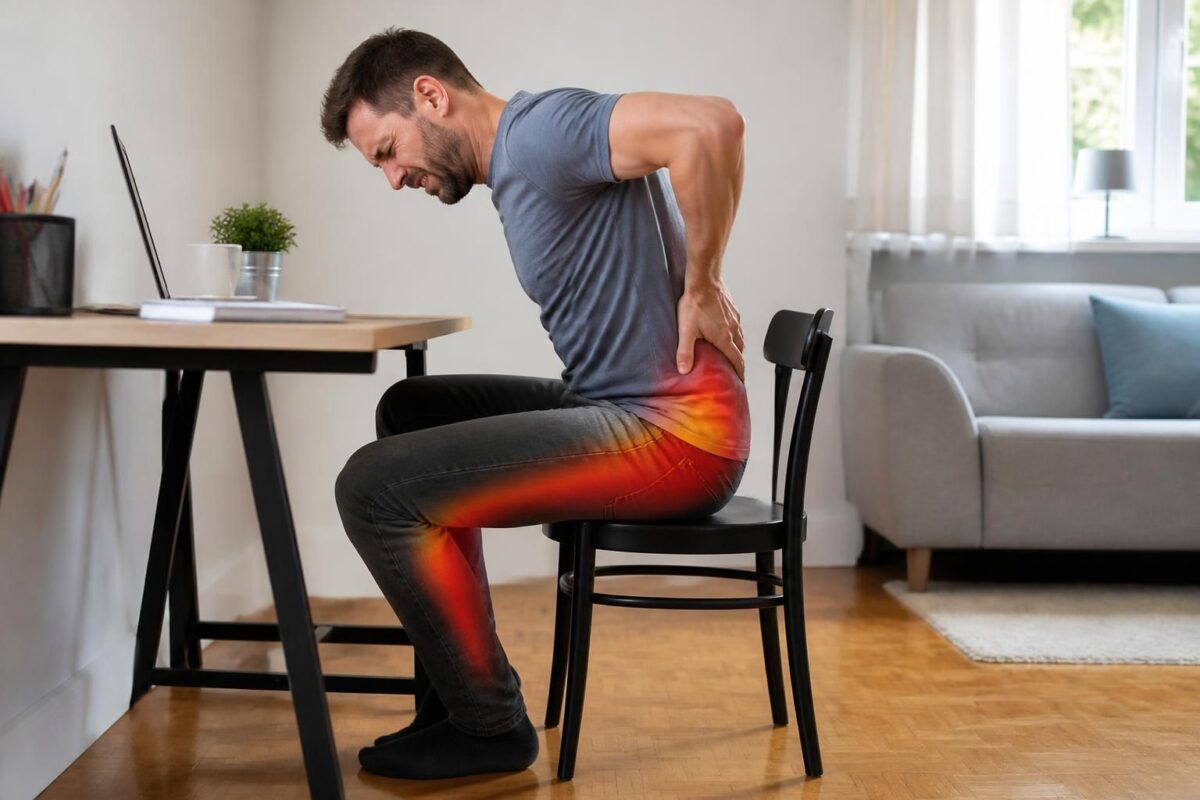
Sciatica and too low seat: lumbar pain and irradiation
IN BRIEF In brief, sciatica with lower back pain and radiation is pain that follows the path of the sciatic nerve, originating from the lower back and radiating to the buttock and leg, often due to irritation or compression of…

Sciatica and overly inclined car seat: possible effect
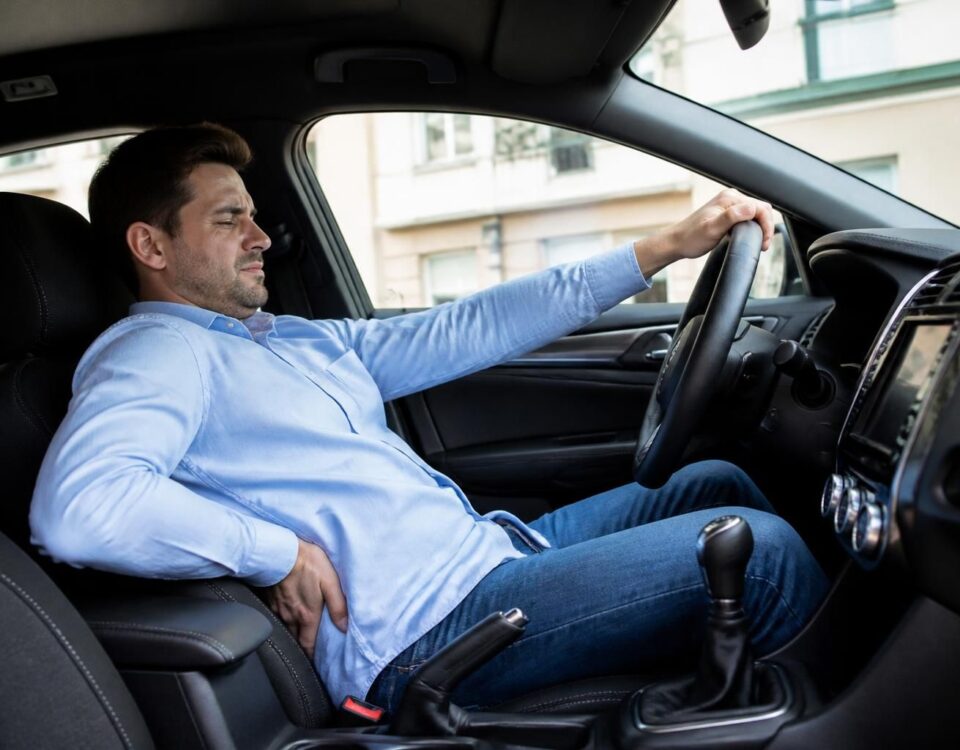
IN BRIEF In brief, the link between sciatica and a car seat that is too inclined can worsen pain due to an inadequate posture and increased compression of the sciatic nerve. What is this phenomenon? It is a decrease in…

Sciatica and car seat: why tilt matters
IN BRIEF In brief, car seat sciatica refers to pain related to the sciatic nerve exacerbated by poor seat tilt and vibrations that compress the nerve roots and degrade the lumbar lordosis. It is important to adjust the tilt and…

Sciatica and getting into the car: avoiding sudden twists
IN BRIEF In brief, sciatica associated with driving is pain that follows the path of the sciatic nerve and can be triggered or amplified by seated position and sudden twists when entering or exiting the car. The main benefits of…

Sciatica and getting out of the car: movement to watch out for
IN BRIEF In brief, managing sciatica when getting out of the car and the movements to monitor is a practical approach to limit pain. What is it? It is a set of gestures and postures that prevent pressure on the…

Sciatica and pain that travels down the leg in a car
IN BRIEF Sciatica and the pain that radiates down the leg when driving is a pain caused by irritation or compression of the sciatic nerve, which intensifies in prolonged sitting in a confined space like a vehicle. It’s a discomfort…
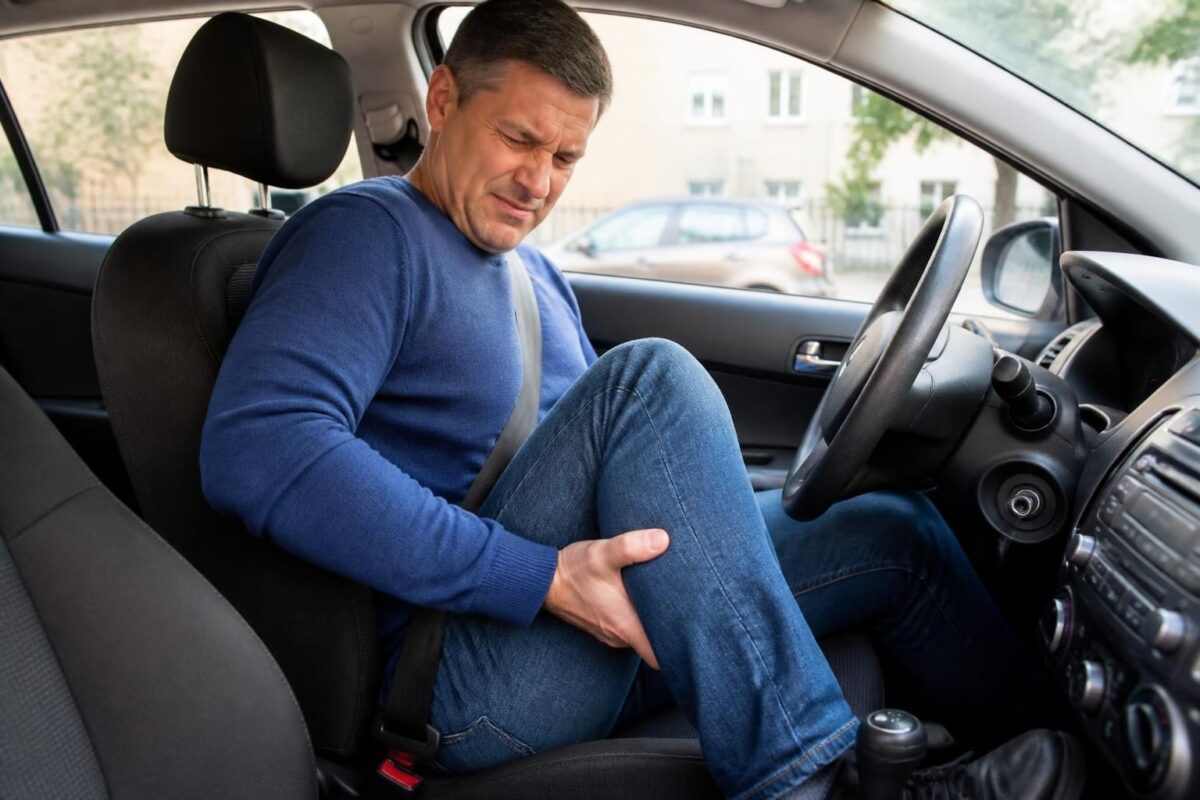
Sciatica and calf pain after driving
IN BRIEF In brief, sciatica and calf pain after driving refer to irritation or compression of the sciatic nerve that can manifest after a trip. This often occurs with prolonged sitting, vibrations, and an inadequate driving posture. Benefits: better comfort…
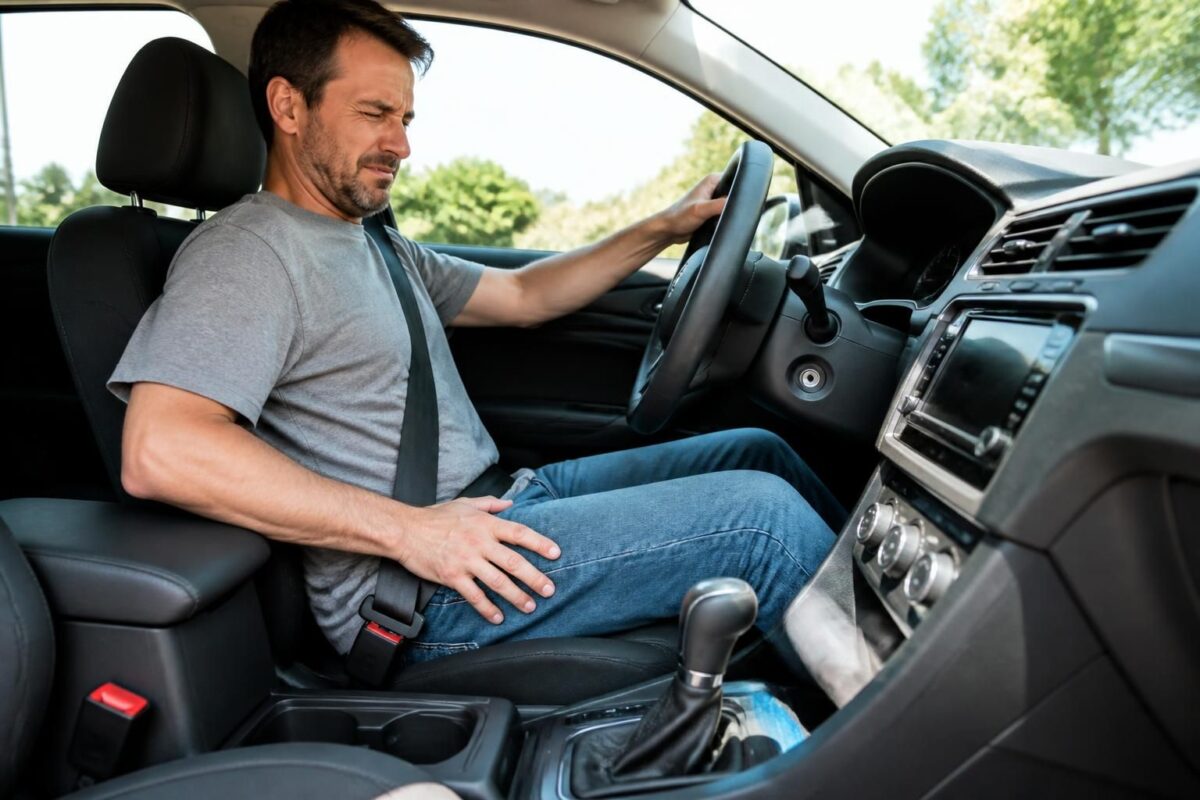
Sciatica and numbness in the foot while driving
IN BRIEF In brief, sciatica and numbness in the foot while driving describe pain and sensations of paresthesia that descend from the lower back to the foot or travel up along the nerve path during car trips. Benefits: a quick…

Dr Sylvain Desforges, B.Sc., D.O., N.D., osteopath, is the founding president of TAGMED and of the ACMA association. He dedicates his practice to chronic spinal pain, low back pain and symptoms compatible with sciatica, particularly when pain radiates toward the buttock, leg, calf, foot or toes.
Through SOS Sciatique, he publishes educational content on sciatica symptoms, possible causes such as disc herniation, disc narrowing, foraminal stenosis or irritation of a lumbar nerve root, as well as non-surgical approaches that may be considered according to the evaluation. At Clinique TAGMED, care may include, depending on the case, motorized neurovertebral decompression, specific osteopathic care or precision percussion.
For an evaluation related to sciatica treatment in Montreal / Mount Royal or sciatica treatment in Terrebonne, please consult the services available at Clinique TAGMED.
Medical disclaimer
The information published on SOS Sciatique is provided for educational purposes only and does not replace a consultation, diagnosis, opinion or treatment provided by a physician or another authorized healthcare professional. The author of this article is neither a medical doctor nor a specialist in a medical specialty recognized by the Collège des médecins du Québec. The osteopathic, manual medicine or functional support approaches described on this site do not constitute medical acts and are not intended to replace medical follow-up.
Consult a physician or emergency service in cases of loss of bladder or bowel control, anesthesia in the saddle area, significant or progressive weakness in the leg or foot, fever, recent trauma, severe pain or rapid worsening of symptoms. For more details, please read our Legal Notice.