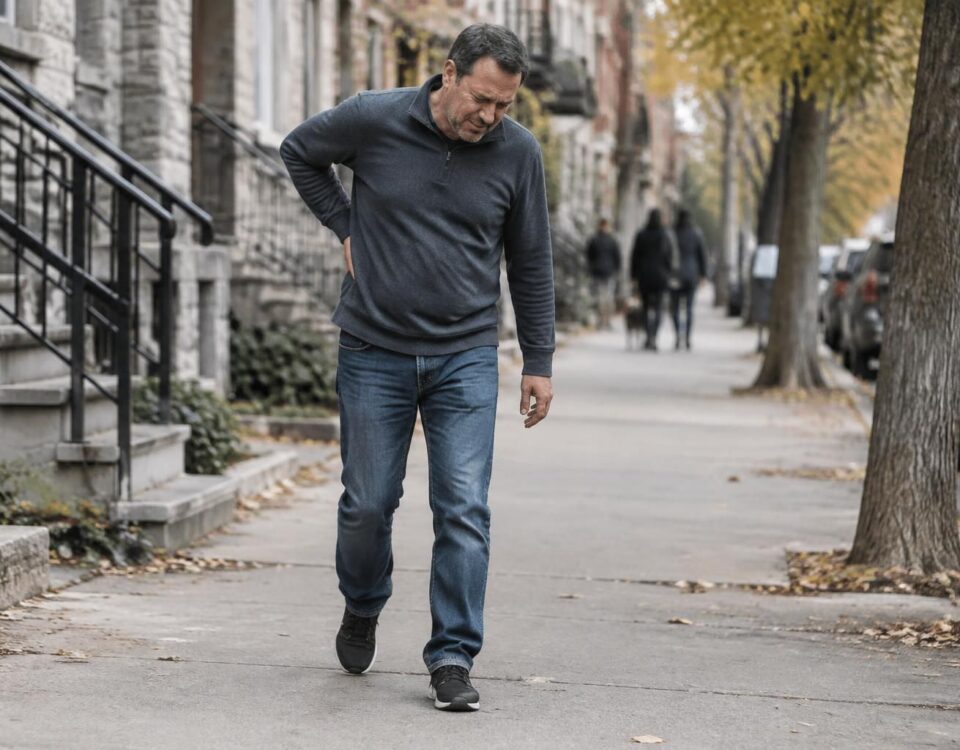
Sciatica and pain that radiates lower: sign to watch for
08/08/2026
Sciatica in Terrebonne: heel pain and possible S1 root
09/08/2026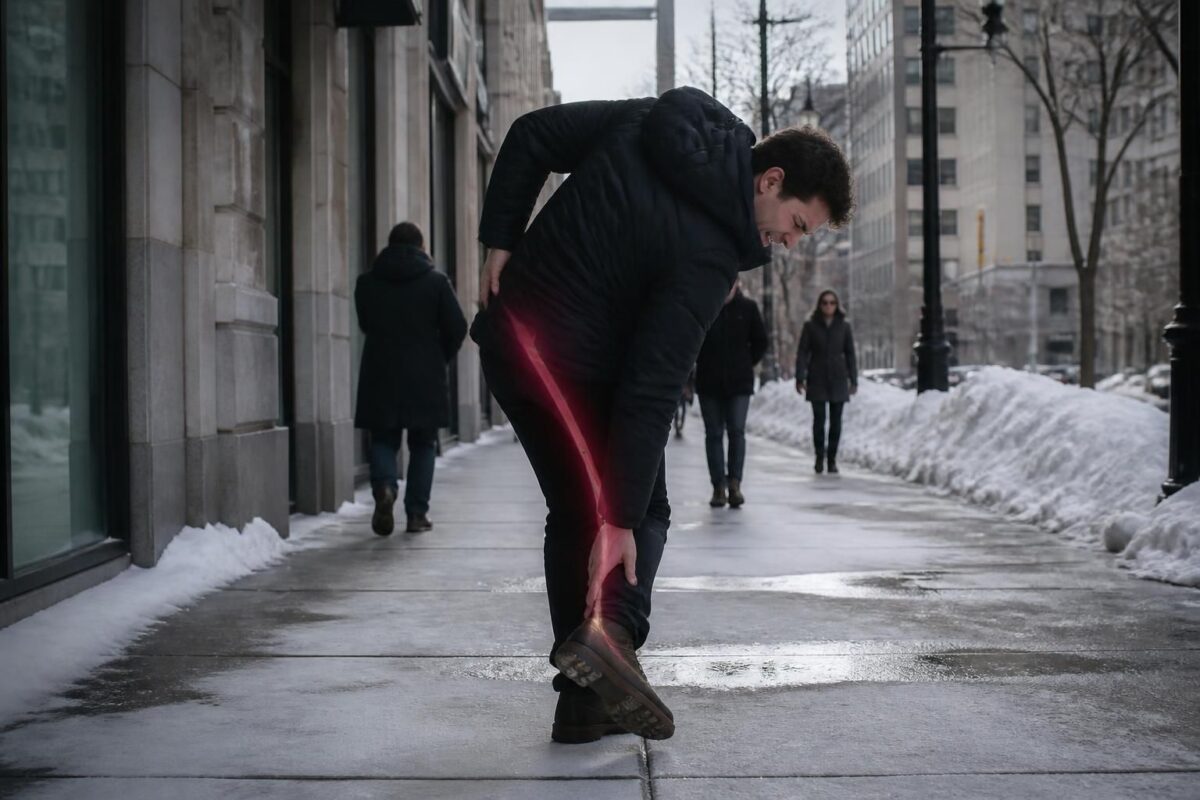
IN BRIEF
| Sciatica is pain related to the compression or irritation of the sciatic nerve, the longest nerve in the body, often associated with the L5 and S1 roots. In some cases, damage to the S1 root can explain pain that radiates to the heel and may be accompanied by tingling or weakness. In Montreal, this phenomenon is quickly addressed by specialized professionals who prioritize non-surgical and personalized approaches (postural education, rehabilitation, and manual techniques) and targeted examinations if necessary. The goal is rapid and lasting improvement of pain and mobility, with a reduction in the risk of recurrence, without immediately resorting to surgery. |
In Montreal, sciatica can manifest as pain in the heel and involve the S1 root, signs of sciatic nerve involvement at the L5-S1 level.
This pain typically follows the path of the nerve and may be accompanied by sensations in the buttock, thigh, or leg, with possible foot weakness. The diagnosis is based on clinical examination and evaluation of the painful path; imaging is considered if symptoms persist or if concerning signs arise.
Treatment aims to promote movement and rehabilitation (physiotherapy), control inflammation and pain with medications, and may include injections or, rarely, surgery depending on the cause and response to treatment.
This article presents the link between heel pain and the S1 root in the context of sciatica in Montreal. It explains what sciatica is, the typical signs, diagnosis, and the non-surgical management options available locally, along with resources and advice for a safe approach.
What is Sciatica and the S1 Root
Sciatica is pain caused by compression or irritation of one or more roots of the sciatic nerve. It is the largest and longest nerve in the body, and it can be affected by damage to the S1 root, located between the L5 and S1 vertebrae. This root controls sensitive areas and part of the foot’s motor function. When the S1 root is affected, the pain can radiate from the lower back to the heel and the sole of the foot, with sensations of burning, tingling, or numbness. The painful pathway can follow the course of the nerve to the heel and arch of the foot and may be accompanied by pain in the buttock and back of the leg.
Pain may arise from a lumbar disc (particularly between L4-L5 or L5-S1), foraminal narrowing, a narrow lumbar canal, or a pelvic muscle strain. To understand the links between disc herniation and nerve pain, see sciatica and lumbar disc herniation understand the link.
The Pathway and Typical Signs
The pain follows the path of the sciatic nerve. It can affect the back of the thigh, then the calf and heel. Sensory symptoms may appear such as tingling or hypersensitivity. Muscle weakness or loss of strength may occur if the root is severely irritated or compressed.
The key point is that the pain may be focused on the heel or arch of the foot when the S1 root is involved. For details on the anatomy and pathway of the roots, refer to specialized resources available online, including documents that describe the link between L4-L5 and L5-S1 locations and the corresponding symptoms here.
Diagnosis and When to Consult
The diagnosis is based on a clinical examination and questioning of the circumstances of onset. The doctor looks for pain along the sciatic pathway and evaluates muscle strength, sensitivity, and reflexes. Tests such as the Lasegue maneuver may reproduce the pain. Additional tests are considered if pain persists despite proper treatment or if there are alarming signs (loss of bladder or bowel control, marked progressive weakness, fever, suspicion of infection or tumor).
To deepen diagnostic understanding and assessment perspectives, you can consult resources that address the pathway of the sciatic nerve and possible causes here.
Treatment Options in Montreal and Neurovertebral Decompression
Treatment is based on non-surgical measures tailored to each patient. Approaches include medical advice, pain management, and non-invasive interventions. At the TAGMED Clinic in Montreal, care may include approaches such as motorized neurovertebral decompression and other osteopathic or manual techniques when indicated by the assessment. For consultations related to sciatic treatment in Montreal, you can refer to Treatment of sciatica in Montreal.
Several online resources detail non-surgical options and the safety of therapeutic choices, including the perspective of non-surgical care, and guides on how to choose a safe approach according to symptoms here. Well-known resources on neurovertebral decompression and associated options provide additional information without recommending specific exercises in this context.
For those seeking an overview of the causes and mechanisms surrounding sciatic pain and the relationship with disc herniation, see general explanations and distinctions between lumbosciatica and sciatica here and Doctissimo.
Note that some online documents emphasize the importance of avoiding hasty decisions and taking the time to evaluate options before moving towards radical intervention. Specific resources address this point for Terrebonne and the associated decisions here.
For a review of the elements to consider when it’s time to decide on a treatment, specialized pages describe the pathway and evaluation criteria, with points of caution and lifestyle advice to limit recurrences and chronicity.
Additional resources and useful contacts for the care pathway in Montreal and surrounding areas help clarify choices, notably through safety approach advice and pages directing towards non-surgical treatments.
Reference and training materials for professionals and patients are also available, with information on approaches in osteopathy and the professional bodies that regulate these practices, such as ACMA and other recognized associations.
For practical dimensions and testimonials on patient journeys, you can consult resources that detail pain trajectories and the decisions to be made before acting.
General reference for definition and potential pathways on another health resource: Doctissimo.
Medical disclaimer: The information and advice provided on this site do not replace the opinion, diagnosis, or treatment of a healthcare professional. Please note that Dr. Sylvain Desforges, osteopath, is neither a medical doctor nor a physician, and is not a specialist in a medical specialty as defined by the Collège des médecins du Québec. Manual medicine, functional medicine, and sports medicine as described on this site exclude any treatment or medical diagnosis made by a physician or medical specialist. Always consult your doctor for any medical questions. For more details, please read our full Legal Notice.
Heel symptom Radiating pain along the sciatic nerve down to the heel and sole.
S1 root Pain and tenderness along the S1 pathway; possible foot weakness.
Other signs Tingling, numbness, and pain in the buttock/posterior thigh.
Alert Significant loss of strength or sphincter problems require medical emergency.
Montreal context Quick consultation with a local doctor for sciatica evaluation.
Diagnosis Clinical examination; Lasègue maneuver; imaging if uncertain (MRI/CT scan).
Management Physiotherapy, targeted exercises, regular posture and walking; heat for contractures.
Advanced options Epidural injection if necessary; surgery is rare in cases of persistent pain or emergency.
Prevention Lifestyle: physical activity, weight control, quitting smoking, and proper lifting techniques.

This article presents, for Montreal, the essential markers if you are suffering from sciatica with potential pain at the heel and possible involvement of the S1 root. You will discover the signs to watch for, the diagnostic pathway, treatment options, and pragmatic actions to limit recurrences, helping you to act quickly and effectively.
What is sciatica and the role of the S1 root
Sciatica refers to pain related to compression, irritation, or inflammatory reaction of one of the roots of the sciatic nerve. It is the longest nerve in the body and arises from different lumbar roots, the two main ones being L5 and S1. The S1 root can exit at L5-S1 to innervate part of the foot and leg, which explains why issues with this root sometimes manifest as symptoms in the heel and the arch of the foot.
Pain in the heel and S1: why
When the S1 root is involved, the pain may travel down the nerve pathway to the heel and the sole of the foot. Signs such as tingling, a burning sensation, or some weakness in the muscles that facilitate walking may accompany this picture. Sensitivity and coordination of the foot may be disturbed, sometimes resulting in a slightly altered gait.
Signs and symptoms: how heel pain manifests
Pain related to sciatica typically radiates along the sciatic nerve pathway: buttock, posterior thigh, then leg and sometimes down to the heel and arch of the foot. Some people describe an electric shock sensation during movements or twists; others experience a persistent discomfort in the foot or paresthesia in the areas innervated by S1.
The pain may be associated with low back pain and stiffness of the spine, forming a lumbosciatica. In more advanced cases, muscular weakness or coordination impairment of the foot may be observed, which can affect walking.
Warning signs
Signals requiring a quick consultation: marked loss of strength in a lower limb, sphincter disturbance (incontinence or retention), pain that worsens significantly at night, associated fever, marked bilateral pain or rapidly developing neurological symptoms. In these situations, emergency care is essential.
Diagnosis and Assessment in Montreal
The diagnosis is primarily based on clinical examination and questioning; the doctor evaluates the painful pathway, sensitivity, strength, and reflexes. The Lasègue sign may be sought to reproduce the pain and confirm radicular involvement. Additional examinations (X-rays, MRI, or CT scan) are considered if there are signs of progression, atypical symptoms, or persistent pain despite appropriate treatment. In practice, a general practitioner in Montreal can refer to a rheumatologist or spine specialist if necessary to delve into the etiology and management options.
Therapeutic Options and Practical Advice
The treatment of sciatica aims to reduce pain, restore mobility, and prevent recurrences. The use of analgesics and non-steroidal anti-inflammatory drugs may be considered in the first few days, with an appropriate duration limit and under medical supervision. Muscle relaxants may be suggested if there are contractions. A prolonged rest period is avoided; the goal is to maintain gentle and adapted physical activity, particularly walking, as soon as the pain allows.
After the acute phase, physiotherapy and a program of targeted exercises (stretching, strengthening the trunk, and the foot and leg muscles) are recommended. Sessions of lumbosacral rehabilitation help improve posture and prevent recurrences. In case of persistence or disabling painful events, epidural injections for analgesic purposes can be discussed with a rheumatologist. Surgery remains rare and reserved for severe forms or when conservative treatments do not provide relief after several weeks.
Complementary approaches such as osteopathy or chiropractic do not replace conventional treatments for genuine sciatica; however, they may be considered as supplementary aid after medical advice, particularly to improve mobility and muscle tensions.
Preventing Recurrences and Lifestyle
For Montreal and elsewhere, preventive measures revolve around an active lifestyle and managing risk factors: regular adapted physical activity, weight loss if necessary, quitting smoking, a balanced diet, and sufficient hydration. Adopt daily habits that protect the back and lower back: bend your knees to pick up an object, alternate sitting and standing positions, and favor a neutral posture during professional and domestic activities.
| Aspect | Concise Elements |
|---|---|
| Location and pathway | Pain starting from the lower back or buttock, radiating to the heel and/or plantar surface according to L5/S1 |
| Root involved | Concerns L5 or S1, with the possibility of heel involvement |
| Main symptoms | Radiating pain, numbness and/or weakness of the foot or toes; possible electric shocks |
| Urgency to monitor | Notable loss of strength, sphincter disorder, fever, acute night pain or bilateral pain → seek immediate consultation |
| Typical causes | Lumbar disc herniation, foraminal stenosis, piriformis syndrome, spondylolisthesis; rare infections or tumors |
| Useful examinations | Clinical examination; Lasegue maneuver; imaging (MRI/CT scan) if in doubt or progression |
| Initial treatment | Analgesics/anti-inflammatories, lumbosacral rehabilitation, and adapted activity |
| Role of osteopathy | Postural evaluation and targeted mobilizations to relieve pain and improve mobility |
| Prevention | Lifestyle hygiene, regular activity, adapted posture, and safe daily habits |
| Progression and follow-up | Improvement generally over weeks; recurrence risks = prevention and follow-up recommended |
Patient Testimonials in Montreal on Sciatica: Heel Pain and Possible S1 Root Involvement
In Montreal, I suffered from a heel pain that traveled along the nerve and made me fear an involvement of the S1 root. The diagnosis was made quickly, and I was guided towards an approach focused on manual techniques and a specific exercise program. Today, the sciatica is largely under control, and my walking has become fluid again.
I too, living in Montreal, struggled to understand why the pain originated from my lower back and nestled into my heel. The doctor explained to me that this could be due to sciatica affecting the S1 root. After a few weeks of rehabilitation and personalized advice, I noticed significant improvement, and I can once again enjoy my activities without pain.
In consulting in Montreal, I learned that the pain can follow the pathway of the sciatic nerve and target the heel via the S1 root. The proposed approach was non-surgical and focused on simple gestures, exercises, and postural improvement. A few sessions later, the heel pain diminished, and I resumed my daily movements without discomfort.
For all those residing in Montreal and experiencing similar symptoms, know that the evaluation may reveal possible involvement of the S1 root and that non-invasive solutions exist. My heel and foot have regained their comfort thanks to personalized support and advice tailored to my lifestyle.
Dr. Sylvain Desforges, expert in osteopathy, naturopathy, and manual medicine, is a key figure in the medical landscape of Montreal. Founder and president of TAGMED clinics and the ACMA association, he dedicates his knowledge to helping people suffering from chronic pain related to the spine and nerve manifestations such as sciatica. His dynamic approach is based on innovation and the integration of cutting-edge technologies to optimize patient care, notably through solutions such as motorized spinal decompression, laser treatment, and shockwave therapy. His goal is to provide evidence-based care to sustainably improve the health and well-being of Montreal residents.
In the Montréal context, sciatica can manifest as pain that follows the path of the sciatic nerve and may involve the heel via the S1 root. This root, which emerges between L5 and S1, can lead to pain radiating towards the heel, the arch of the foot, and the outer edge of the foot, sometimes accompanied by tingling, muscle weakness, or a slowdown in walking. The link between lower back pain and pain in the lower limbs is common, and it should be noted that symptoms can sometimes be localized, for example, only at the back of the leg or heel, depending on the precise level of nerve disturbance. This presentation requires careful evaluation to determine whether neurological involvement targeting S1 is at play and what management strategy to adopt.
The diagnostic approach advocated by Dr. Desforges is based on a comprehensive and thorough evaluation. After a detailed medical history, the neuro-muscular examination and provocative maneuvers, including tests like the Lasègue maneuver, the physician can clarify the painful path and identify warning signs. Additional tests will only be considered if there is diagnostic doubt or suspicion of severe involvement requiring intervention; the goal is to avoid treatment delays and propose an individualized strategy.
The proposed treatment is resolutely non-surgical when possible and relies on a combination of manual therapies and active programs. The approach includes osteopathy and manual medicine techniques, a back rehabilitation plan guided by a physiotherapist, and posture advice suitable for daily life. Additionally, Dr. Desforges may incorporate technologies such as motorized spinal decompression, laser, and shockwave therapy to reduce inflammation, improve mobility, and accelerate return to activity. A key step is educating the patient about daily movements, work postures, and maintaining a lifestyle that limits risk factors, such as being overweight and lack of activity.
For Montreal residents suffering from a condition combining lower back pain and radicular symptoms directed towards the heel, the approach proposed by Dr. Sylvain Desforges offers a structured and personalized alternative, centered on functional improvement and pain reduction in alignment with scientific evidence. The goal is to enable a gradual and sustainable recovery while minimizing risks and recurrences through interdisciplinary coordination and attentive follow-up over time. To discover his approach and the services offered, contact Clinique TAGMED.
This synthesis reminds us that sciatica can manifest as pain affecting the heel when the S1 root is irritated or compressed, or when the path of the sciatic nerve is involved. It emphasizes the importance of a medical evaluation in Montreal to distinguish mechanical causes such as disc herniation or spinal canal stenosis and to identify emergency signs requiring prompt management. The preferred management framework initially emphasizes non-surgical measures and an appropriate rehabilitation, while monitoring the evolution of symptoms and the risk of recurrence.
The heel may be affected when the S1 root is involved, which can cause intense pain behind the calf and foot, and sometimes weakness of the foot. To better understand the mechanisms and distinguish a radicular pain from referred pain, it is useful to rely on specialized resources and evaluate the painful path and associated neurological signs.
The diagnosis is based on the medical history and clinical examination, with particular attention to warning signs such as loss of strength, sphincter disturbances, or pain that worsens at night. In complicated or persistent cases, additional tests may be necessary, and a consultation with a rheumatologist or surgeon may be considered. To enrich the evaluation, seeking additional medical advice may be relevant at certain points.
Initial management relies on active measures: maintaining appropriate activity, engaging in targeted rehabilitation, and adopting good postures in daily life. Posture advice and therapeutic exercises can be offered by healthcare professionals, and professional adjustments (office ergonomics, active breaks) can help reduce the risk of recurrence. For practical advice and examples of adaptation, consult dedicated resources on office breaks and posture in front of the couch.
For individuals located in Montreal, specialized evaluation and follow-up services remain accessible through resources dedicated to sciatica evaluation in Montreal. In cases of radiating pain spreading towards the heel and foot with signs of involvement of the S1 root, a coordinated and gradual management is recommended, and it may be useful to explore the support options available in local clinics. To delve deeper, you can consult the pages on evaluation and the various aspects of sciatica pain, including the distinctions between radicular pain and referred pain, as well as advice on work and the postures to adopt daily.
To learn more about the mechanisms and management strategies, see the following resources: sciatica and pain localization, radicular pain vs referred pain, breaks at the office and adaptation, Sciatica, leg pain, path from lower back to leg, position to monitor on couch, and sciatica evaluation Montreal.
Sciatica in Montreal: L5 and difficulty lifting the foot
IN BRIEF The difficulty in lifting the foot with sciatica can indicate weakness related to the involvement of the L5 root, sometimes caused by a herniated disc. This foot drop increases the risk of falling and requires prompt medical evaluation;…

Sciatica in Montreal: S1 and difficulty rising up on the toes
IN BRIEF S1 sciatica can cause pain from the buttock to the calf and foot, as well as difficulty getting on tiptoe. This weakness may suggest irritation of the S1 nerve root, but is not sufficient to establish a diagnosis.…

Sciatica in Montreal: L4-L5 and pain towards the top of the foot
IN BRIEF The sciatica related to L4-L5 can radiate from the lower back to the buttock and the leg; pain on the top of the foot may suggest involvement of the L5 root, but the pathways vary and symptoms overlap.…

Sciatica in Montreal: pain in the big toe, L5 root or another cause?
IN BRIEF Pain that radiates toward the big toe may indicate irritation of the L5 root, sometimes related to a herniated disc, but other causes are possible. In Montreal, evaluating the pain pathway, strength, sensitivity, and walking helps guide management…

Sciatica in Montreal: why the affected root changes the pain pathway
IN BRIEF Sciatica refers to pain or nerve symptoms that vary depending on the affected lumbar root. Pain, tingling, or numbness may manifest in the buttock, thigh, calf, or foot. Understanding this distribution helps guide the assessment, without diagnosing based…

Sciatica in Montreal: L4-L5 disc, L5-S1 disc, and leg pain
IN BRIEF Sciatica refers to pain that can radiate from the lower back or buttock down the leg, sometimes related to nerve irritation near the L4-L5 or L5-S1 discs. The level of the disc alone is not sufficient to identify…

Sciatica in Montreal: understanding the lumbar levels on an MRI
IN BRIEF A lumbar MRI shows the levels of the spine, such as L4-L5 and L5-S1, where a narrowing or herniation may sometimes be associated with sciatica. In Montreal, understanding these images along with the pain pathway, walking, and neurological…

Sciatica L4-L5 in Montreal: Possible pain, numbness, and weakness
IN BRIEF The L4-L5 sciatica refers to irritation of a lumbar nerve root that can cause pain radiating down the leg, tingling, or weakness. In Montreal, an evaluation allows for examining the symptoms and guiding the treatment based on their…

Dr Sylvain Desforges, B.Sc., D.O., N.D., osteopath, is the founding president of TAGMED and of the ACMA association. He dedicates his practice to chronic spinal pain, low back pain and symptoms compatible with sciatica, particularly when pain radiates toward the buttock, leg, calf, foot or toes.
Through SOS Sciatique, he publishes educational content on sciatica symptoms, possible causes such as disc herniation, disc narrowing, foraminal stenosis or irritation of a lumbar nerve root, as well as non-surgical approaches that may be considered according to the evaluation. At Clinique TAGMED, care may include, depending on the case, motorized neurovertebral decompression, specific osteopathic care or precision percussion.
For an evaluation related to sciatica treatment in Montreal / Mount Royal or sciatica treatment in Terrebonne, please consult the services available at Clinique TAGMED.
Medical disclaimer
The information published on SOS Sciatique is provided for educational purposes only and does not replace a consultation, diagnosis, opinion or treatment provided by a physician or another authorized healthcare professional. The author of this article is neither a medical doctor nor a specialist in a medical specialty recognized by the Collège des médecins du Québec. The osteopathic, manual medicine or functional support approaches described on this site do not constitute medical acts and are not intended to replace medical follow-up.
Consult a physician or emergency service in cases of loss of bladder or bowel control, anesthesia in the saddle area, significant or progressive weakness in the leg or foot, fever, recent trauma, severe pain or rapid worsening of symptoms. For more details, please read our Legal Notice.