How Osteopathy Improves Post-Sports Injury Recovery
27/06/2026
Osteopathy and osteoarthritis: regain functional mobility
27/06/2026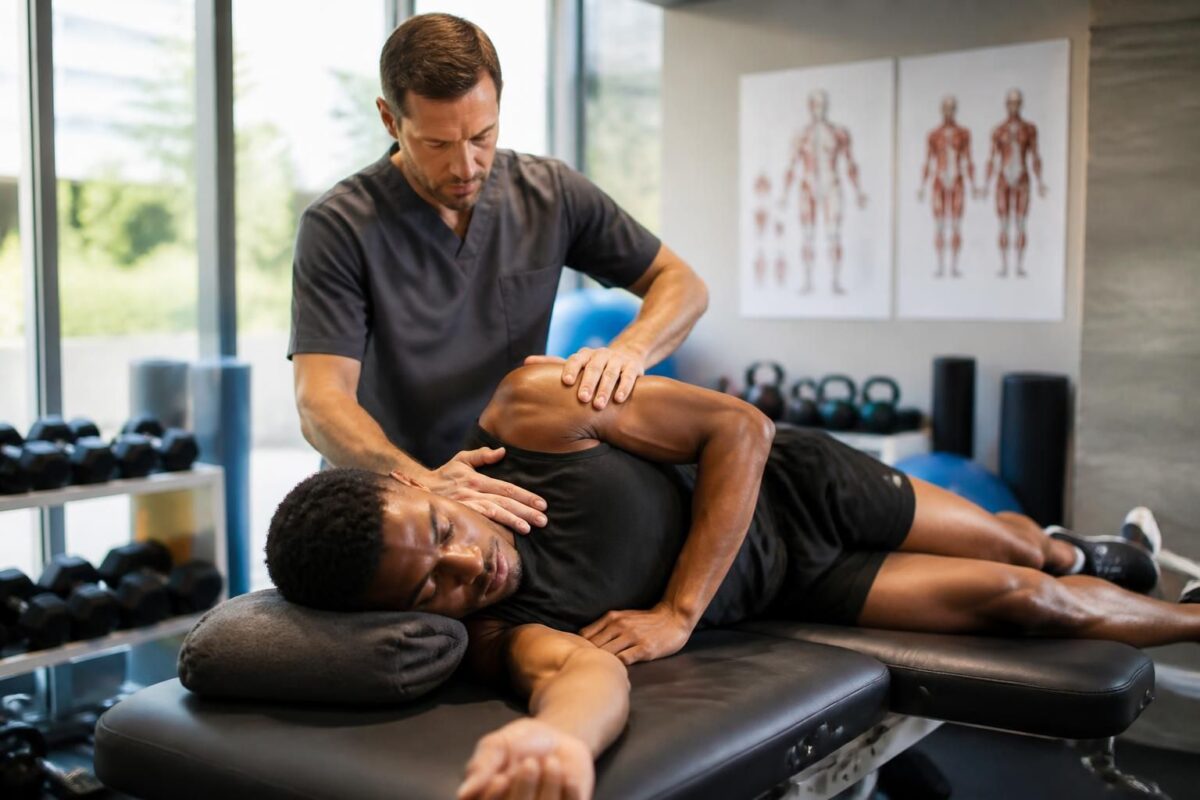
In short
| In short, theOsteopathy for top athletes is a global manual approach aimed at optimizing the mobility, theMusculoskeletal balance and the recovery to support performance and prevent injuries. its main benefits include the Injury prevention, theImproved neuromuscular coordination, a Accelerated recovery and a better Resilience to training. Operation is based on a Overall assessment movement and muscle chains, then adapted interventions to restore a harmonious dynamic. In Montreal, this service is particularly recommended for athletes wishing to last in their practice and optimize their preparation. |
For top athletes, osteopathy is a strategic lever: it Optimizes performance, Preserves longevity and Reduces the risk of injury correcting imbalances, improving the mobility and the Neuromuscular coordination. Its global and personalized approach allows a prevention, a recovery Faster and better efficiency of technical gestures, while integrating into the training and recovery program.
In the world of elite sports, performance cannot be sustainable without strong body health. Osteopathy offers a global approach that acts on mobility, balance and recovery. It completes training with precise manual interventions to improve coordination and reduce the risk of injury. This article exposes the concrete benefits for high-level athletes and offers ways to integrate practical integration into a training and recovery schedule.
Joint mobility and fluidity of gestures
Osteopathy aims to restore the mobility of the joints and to release the tensions that hinder technical gestures. A better range of motion improves the performance and efficiency of sports actions. In practice, this results in a smoother execution of movements and a reduction in the effort necessary to achieve the key gestures of the discipline.
Recovered mobility allows the body to use energy more efficiently and prevent blockages that can lead to recurring pain. To enrich your understanding, dedicated resources on sossciatica.com address the holistic approach and benefits for athletes.
Correction of imbalances and injury prevention
The body often presents asymmetries related to the repetition of gestures and posture. The osteopath assesses these imbalances and proposes interventions that act on muscle chains and local tensions. The objective is a more harmonious distribution of loads and better tolerance to effort.
This approach helps to prevent overload and injuries related to intensive training, such as tendinopathies and lower back pain, while supporting more effective recovery after the sessions. Examples and testimonials can be consulted on sossciatica.com, in particular through resources focused on global well-being and prevention.
Balance and neuromuscular coordination
Motor coordination and proprioception play a key role in performance. Osteopathy improves neuromuscular integration and body perception in space. This improvement translates into more precise gestures, safer changes of direction and better stability during intense efforts.
For athletes, this means measurable gains in technical control and execution speed. Resources dedicated to sports osteopathy and performance are available on specialized sites and in publications associated with the holistic approach.
Recovery and performance
Recovery is made more active and effective thanks to osteopathic techniques that promote the circulation and relaxation of tissues. Lymphatic drainage and muscle relaxation can help reduce body aches and accelerate the return to training.
Better nutrient circulation and faster evacuation of metabolic waste support recovery and preparation for next efforts. To deepen these aspects, specific resources can be found on platforms focused on recovery optimization and physical well-being.
Practical integration into the athlete’s program
Osteopathy is integrated into the athletes’ preparation and recovery plans, in coordination with the medical staff and coaches. The clubs and federations that adopt this approach note a better consistency between training, recovery and performance.
Recognized training and practices include organizations such as NUMSS and NAO, as well as National University of Medical Sciences and National Academy of osteopathy. Exchanges with professional associations, such as ACMA and the College of Canadian Osthopaths, make it possible to structure the use of osteopathy in an ethical and safe framework.
Useful links and resources
To further explore the global approach and benefits for athletes, check out specific resources on sossciatica.com, including articles on osteopathy and overall well-being and shoulder tensions.
To learn more about integrating osteopathy into sports courses, visit Cliniquetagmed.com and discover how osteopathic care is part of a tracking offer suitable for top athletes. Other useful and in-depth information can be found on decompressioneurovertebrale.com and sosherniediscale.com, which address related aspects of spinal health and stress prevention.
Additional resources on sports osteopathy and its contribution to performance can be consulted through the articles available on sossciatica.com and via content dedicated to the holistic approach and the prevention of muscle tension.
To access dedicated content and sports performance case studies, you can refer to the partner pages listed above and choose the resources that match your discipline and level of training.
Medical Disclaimer: The information and advice provided on this site does not replace the health professional’s diagnosis or treatment. Please note that Dr. Sylvain Desforges osteopath is neither a doctor of medicine nor a doctor, and is not a specialist in a medical specialty as defined by the Collège des Médecins du Québec. Manual medicine, functional medicine and sports medicine as described on this site exclude any medical treatment or diagnosis made by a doctor or specialist doctor. Always consult your doctor for any medical questions. For more details, please read our full legal notice.
- Mobility and improved joint amplitude for more fluid technical gestures.
- Correction of postural imbalances and load distribution to prevent overload.
- Neuromuscular coherence and proprioception Optimized for precise coordination.
- Injury prevention and reducing the risk of overwork during training cycles.
- faster recovery and decrease in pain After the effort.
- Traffic and lymphatic drainage Improved for more effective elimination of toxins.
- maintenance of the performance during the training and competition phases thanks to targeted preparation.
- Approach personalized, aligned with the schedule and high-level objectives.
- Early detection of risk factors and interventions proactive.
- Complementarity with physiotherapy and nutrition for an integrated plan.
- Optimization of theEnergy saving and gestural technique.
- Support for the Active recovery and preparing for the next deadline.

In the field of high-level sport, osteopathy offers an exclusive approach that optimizes mobility, balance and recovery, while limiting the risk of injury. This article presents the main benefits, explained in a practical way and immediately applicable to elite athletes.
Mobility and joint amplitude
the techniques of mobilization and gentle handling aim to restore a amplitude complete and fluid joint. By releasing restrictions, technical gestures become more natural and less expensive in terms of energy. This improvement translates into better execution of movements, a reduction in localized fatigue and a reduction in repetitive tensions. For example, a more mobile ankle can optimize the stride of a runner, while increased shoulder mobility benefits athletes from snowshoeing or swimming.

How osteopathy improves the quality of life of active people
In short In short, theosteopathy is a global approach that Optimizes mobility and the function of the body of ACTIVE PEOPLE, for a better quality of life. It helps prevent injury and reduce Musculoskeletal pain While promoting the Sports recovery.…

Osteopathy and sports recovery: prepare the body for lasting performance
In short In short, Osteopathy and Sports recovery is one Global manual approach that sustainably prepares the body for the effort by restoring mobility and circulation After the effort. It is a discipline that acts on the sinews, the joints,…
Correction of imbalances and injury prevention
A comprehensive approach helps identify Postural imbalances and overloaded muscle chains. By rebalancing the loads and releasing localized tensions, overloads are prevented, which frequently lead to tendinopathies, low back pain or chronic inflammation. Custom tracking allows you to get a prevention Effective and sustainable, adapting the daily exercises and gestures to the discipline and the competition schedule.
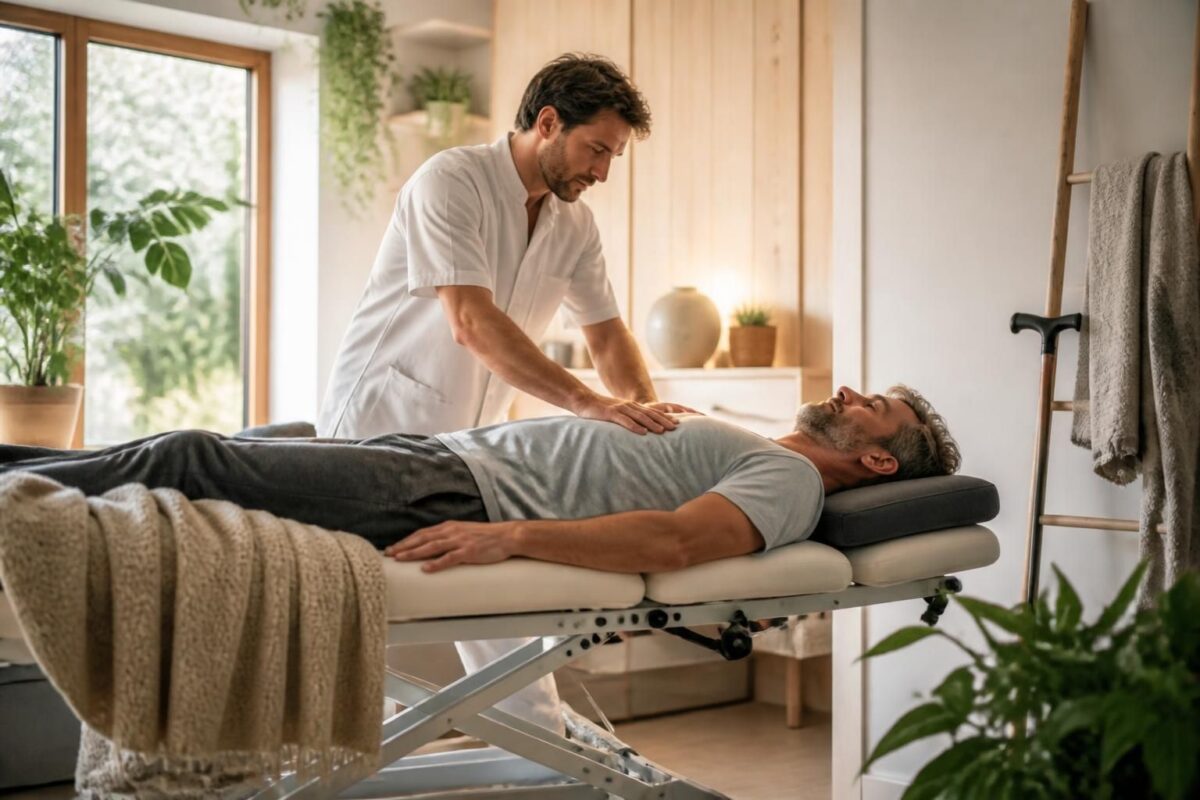
Why Osteopathy Is Essential For Recovery People
In short In short, Osteopathy in convalescence is an approach manual and holistic which helps to accelerate the recovery by restoring The balance, the mobility and a good circulation fabrics. it contributes to Reduce the pain, support the Back to…

Osteopathic manipulations to strengthen post-traumatic muscles
In short In short, Osteopathic manipulations for Strengthen post-traumatic muscles constitute a gentle manual approach aimed at restoring the mobility, reduce the pain and facilitate the Functional rehabilitation After a injury. What is Is it? A series of precise gestures…
Coordination, proprioception and performance
Neuromuscular integration is at the heart of performance. Osteopathy improves proprioception and the motor responses, which translates into more precise gestures, safer changes of direction and better stability during interaction with the gaming environment. This optimization is also felt in the reduction of the risks of false movements and falls, thus strengthening the performance over time.
Example by discipline
In athletics, trunk stability and hip mobility improve stride; In team sports, the coordination of support and technical gestures translates into more effective actions and less muscular dysfunction.

Osteopathy and prevention of work-related musculoskeletal disorders
In short theosteopathy is one Manual approach that restores body balance and prevents MSD related to work. Its advantages: reduction of tension, improvement of mobility and prevention of chronic pain. She is preventive and healing, suitable for office and trades…

The benefits of osteopathy to treat muscle imbalances
In short theosteopathy is a manual approach to restore themuscle harmony and postural considering the body as a whole. Its main benefits include the reduction of aches and tensions, the improvement of the mobility and from the posture, and prevention…
Recovery and fatigue management
Lymphatic drainage, muscle relaxation and improvement of blood circulation accelerate the evacuation of metabolic waste and promote tissue repair. This active recovery allows you to return to training more quickly and maintain a Training load elevated without exacerbating pain. Post-effort sessions turn into real performance levers, not passive rest time.
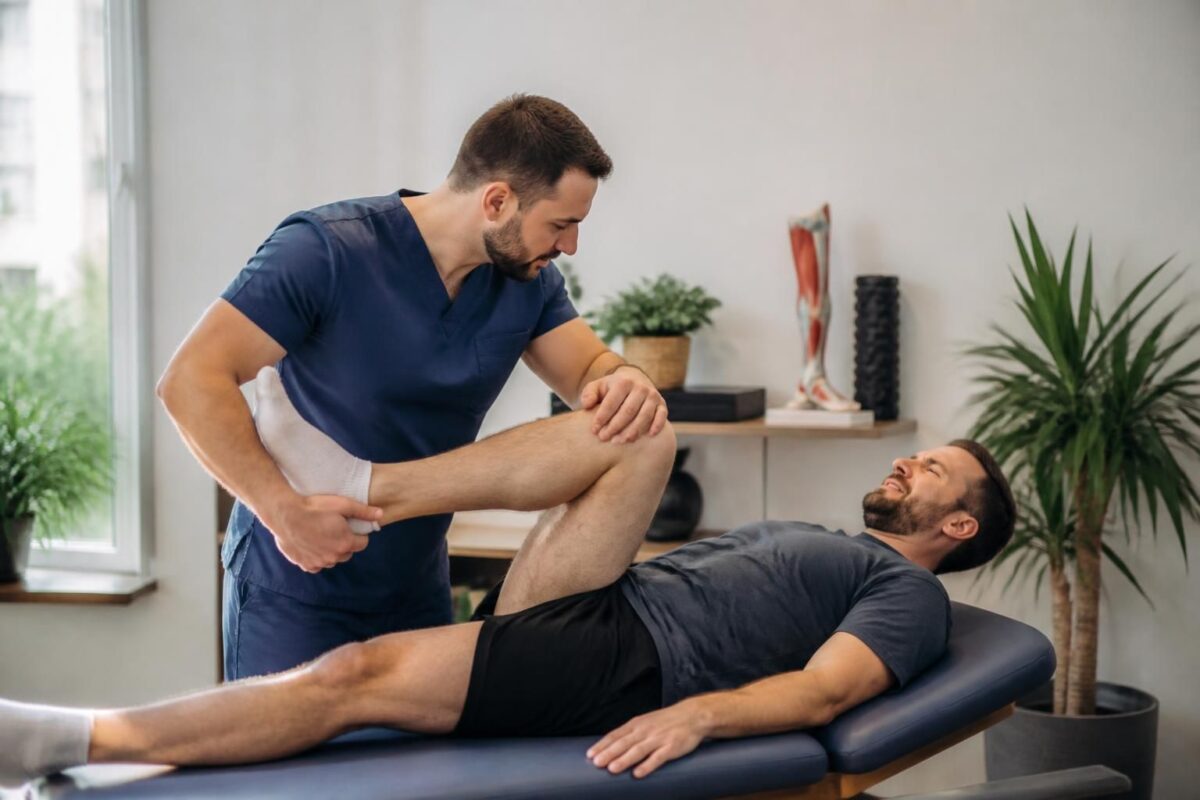
Osteopathy and chronic leg pain: regaining an optimal quality of life
In short In short, Osteopathy is one Global manual approach aimed at reducing Chronic leg pain and improve the quality of life. What is it? Non-drug therapy using the hands to identify restrictions and treat lesional chains. How does it…
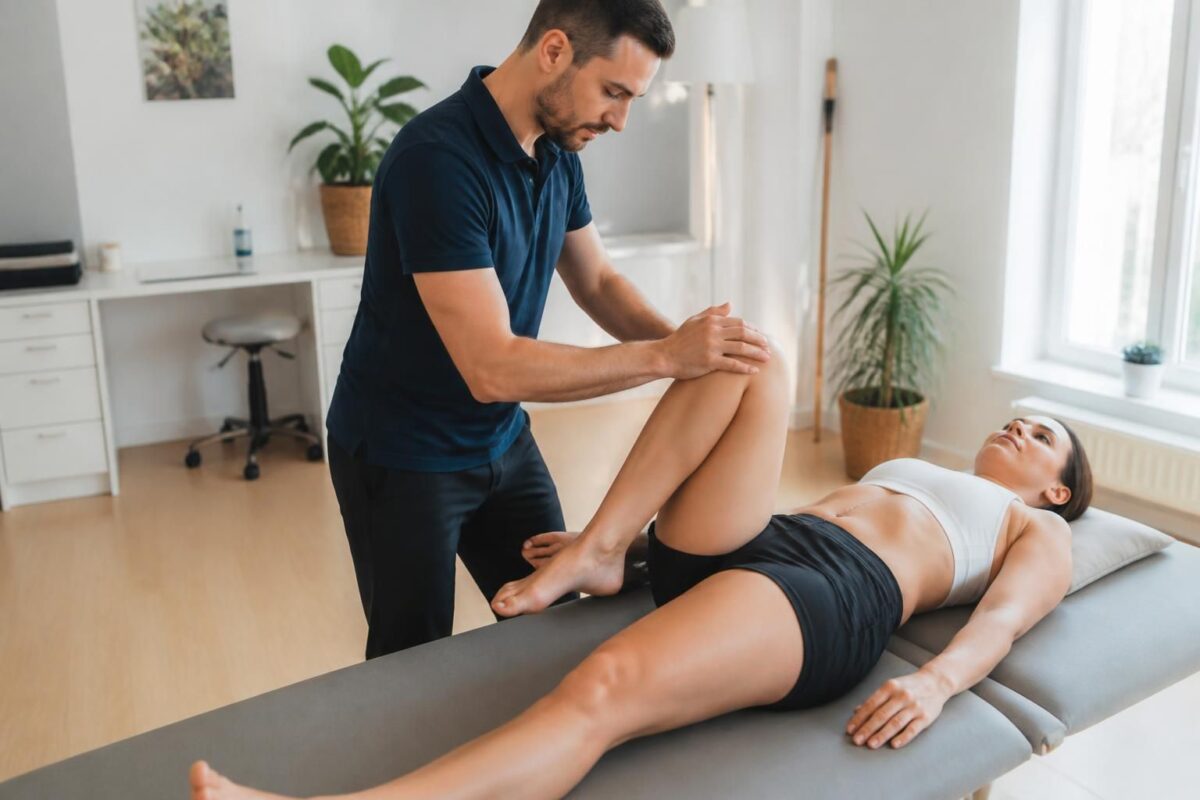
How osteopathy supports recovery after complex surgery
In short In short, Post-operative osteopathy is an approach fresh which supports the recovery After a Complex surgery. It helps to reduce the pain and the fatigue, improves the mobility and accelerates the healing thanks to a better vascularization and…
Strategic integration for top athletes
To maximize impact, osteopathy is part of the training schedule with pre-activity sessions to release tensions, then post-activity to optimize recovery. One Regular follow-up Allows you to adjust the protocols according to the seasonal cycle, the competition phases and the specific requirements of each discipline. The approach remains personalized, focused on prevention and the Sustainable performance.
Advantages of osteopathy for top athletes
| Dimension | snide profit |
|---|---|
| Mobility and amplitude | better Amplitude joints for Technical gestures more efficient |
| Alignment and posture | corrects postural imbalances to reduce expense |
| Neuromuscular coordination | Optimizes the proprioception and the Motor responses |
| Injury prevention | detects risk factors and prevents injuries |
| Recovery | promotes the circulation and drainage to recover faster |
| Movement efficiency | Makes the movement more effective and energy-saving |
| Personalized follow-up | planning adapted to the discipline and at calendar training |
| Tension management | releases tension and improves the recovery post-effort |
| Sports durability | contributes to a practice lasting By limiting the microtrauma |
Testimonials on the benefits of osteopathy for top athletes
“As a top athlete, I had blockages that slowed my performance. After several months of osteopathic follow-up, I found a Joint mobility fluid and a coordination more precise, which boosted my performance and accelerated my recovery between competitions. »
“The sessions targeted my muscle imbalances and improved my proprioception. Result: less pain, more fluidity in gestures and a prevention Effective injuries during intensive training periods. »
“For me, a high-level cyclist, osteopathy has rebalanced my muscle chains and strengthened my mobility hips and ankles, which allowed me to maintain the pace and optimize my recovery after each step. »
“In basketball, the prevention Sprains and elongations gained in reliability thanks to posture adjustments and better Neuromuscular coordination. My game is safer and my performances fly away without compromising recovery. »
“In endurance, osteopathy acts as a lasting lever: it improves Postural stability, reduces pain and helps maintain a cadence regular over the distance, with a recovery Faster. »
“In bodybuilding, the Scapular mobility and gentle manipulations streamlined the technique and gave me the security necessary to progress without injury, thanks to a Personalized follow-up. »
“For multi-disciplinary sports, the integration of osteopathy into routine has enriched the Neuromuscular coordination, the mobility and the recovery, allowing a continuity of training and lasting results even in times of peak competition. »
Osteopathy stands out as a key partner for top athletes, offering an approach overall which aims to optimize the mobility, thePostural balance and neuromuscular coordination. By placing the body as a whole, this discipline makes it possible to act on the specific constraints of the sports movement while strengthening the prevention mechanisms. It is not only a question of treating occasional pain, but of anticipating the overload factors that slow down performance and influence the competitive schedule.
The Joint mobility is at the heart of the performance. Thanks to gentle mobilization and targeted manipulation techniques, the osteopath restores a fluid amplitude of technical gestures. For a sprinter, better flexibility of the hips and ankles can transform the stride; For a tennis player, increased shoulder and elbow freedom can change the effectiveness of the exchanges. This improvement in the fluidity of the movements translates into a reduction in the necessary effort and a better economy of racing or strikes.
Osteopathic work also focuses on musculoskeletal imbalances that expose athletes to uneven loads and recurrent injuries. By adopting a global perspective of the body, the osteopath identifies tense or underused muscle chains and proposes progressive corrections. This approach makes it possible to avoid localized overloads, to prevent tendinopathies and low back pain, and to promote a homogeneous distribution of forces during intense training and competitions.
THE DEVELOPMENT OF THEbalance and coordination is another key dimension. Neuromuscular integration and proprioception are reinforced by precise interventions that improve body perception in space and the muscle response adapted to each technical gesture. In disciplines such as football, basketball or martial arts, this improvement translates into better stability during quick actions and a lower propensity for clumsy gestures.
In terms of injury prevention, osteopathy is part of a logic of preparation and of recovery active. The techniques used, in particular myofascial relaxation and mobilization, are accompanied by a guided warm-up and protocols adapted to the profile and discipline of the athlete. The goal is to identify and deal with tensions before they take root, and adjust training to preserve abilities throughout the season.
Recovery is an essential lever for elite athletes. Osteopathy can optimize the return to training through circulatory support, targeted lymphatic drainage and muscle relaxation that reduce body aches and accelerate tissue repair. This approach, integrated into a global performance plan, enables the sessions to be chained with a Effective recovery and sustainable and to preserve athletic capabilities over the long term.
Finally, sports osteopathy is a strategic component of a training program, in collaboration with coaches, nutrition and sleep. By promoting robust musculoskeletal health and optimized mobility, it contributes to a Sustainable performance and a sporting career that is gaining strength and longevity.
This text highlights the benefits of theosteopathy for the top athletes, showing how this manual approach can optimize the mobility, prevent injury and accelerate the recovery. Integrated in the training and recovery plan, it acts as a performance partner capable of correcting imbalances, improving neuromuscular coordination and supporting a sustainable and more efficient sports career.
The heart of osteopathy lies in improving the Joint mobility and in the correction of Musculoskeletal imbalances, which results in a better fluidity of the technical gestures and a reduction in fatigue related to the effort. Athletes often see a Improved coordination and increased injury prevention through targeted interventions that respect the integrity of muscle chains and fascias. To deepen this mechanism, we can consult the resources that explain how osteopathy acts on musculoskeletal imbalances and posture.
The Injury prevention is a major axis of sports osteopathy. By integrating routines ofwarming up adapted, corrections postural And a personalized follow-up, osteopathy contributes to reducing microtraumas and extending the sports career. This approach is part of a proactive philosophy that makes it possible to limit interruptions related to injury and to optimize the continuity of training. To learn more about preventive mechanisms, refer to the specialized resources dedicated to the prevention of muscle injuries.
In terms of recovery, osteopathic techniques promote better circulation and targeted lymphatic drainage, accelerating waste disposal and tissue repair after exercise. Muscle relaxation and improvement in vascularization support a faster and more efficient recovery in performance, while reducing aches and feelings of heaviness. Specialized resources detail how these approaches optimize recovery in top athletes.
To optimize the results, it is useful to associate supply and Exercises at home to the osteopathic approach. Appropriate nutrition supports tissue repair and immune system, while simple exercises between sessions enhance muscle flexibility and tone. Dedicated experts and guides share concrete tips to harmonize osteopathy and sports lifestyle, including resources on posture and recovery.
To go further and nurture your thinking, you can consult resources that explain the interactions between osteopathy and performance, including how osteopathy supports recovery after an accident, or how it can correct postural imbalances and improve local blood circulation. Published articles and expertise offer additional perspectives on the impact of these practices in high-level athletes.

Dr Sylvain Desforges, B.Sc., D.O., N.D., osteopath, is the founding president of TAGMED and of the ACMA association. He dedicates his practice to chronic spinal pain, low back pain and symptoms compatible with sciatica, particularly when pain radiates toward the buttock, leg, calf, foot or toes.
Through SOS Sciatique, he publishes educational content on sciatica symptoms, possible causes such as disc herniation, disc narrowing, foraminal stenosis or irritation of a lumbar nerve root, as well as non-surgical approaches that may be considered according to the evaluation. At Clinique TAGMED, care may include, depending on the case, motorized neurovertebral decompression, specific osteopathic care or precision percussion.
For an evaluation related to sciatica treatment in Montreal / Mount Royal or sciatica treatment in Terrebonne, please consult the services available at Clinique TAGMED.
Medical disclaimer
The information published on SOS Sciatique is provided for educational purposes only and does not replace a consultation, diagnosis, opinion or treatment provided by a physician or another authorized healthcare professional. The author of this article is neither a medical doctor nor a specialist in a medical specialty recognized by the Collège des médecins du Québec. The osteopathic, manual medicine or functional support approaches described on this site do not constitute medical acts and are not intended to replace medical follow-up.
Consult a physician or emergency service in cases of loss of bladder or bowel control, anesthesia in the saddle area, significant or progressive weakness in the leg or foot, fever, recent trauma, severe pain or rapid worsening of symptoms. For more details, please read our Legal Notice.